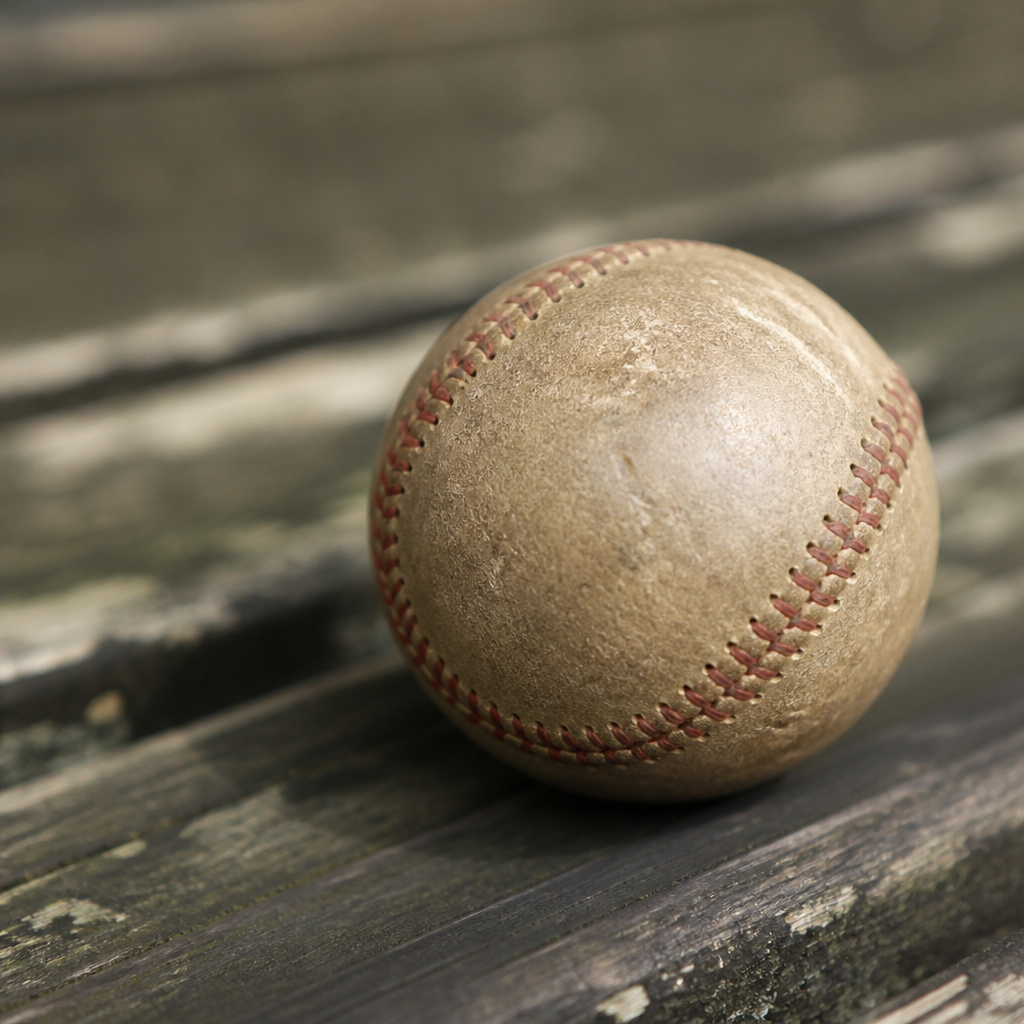
The Deadball Era Baseballs define one of the most misunderstood periods in sports history. In professional baseball, the Deadball Era usually refers to roughly 1900 through 1919, a span when games were low scoring, home runs were rare, bunting and baserunning were central tactics, and pitchers held a structural advantage that modern fans can barely imagine. The baseball itself sat at the center of that environment. Teams did not cycle in fresh, bright, tightly wound balls after every foul or scuff. Instead, the same ball often stayed in play deep into the game, growing softer, darker, misshapen, and harder to see. That single fact changed offense, defense, strategy, safety, and even the economics of the sport.
When people ask why the same ball stayed in play for so long, the answer is not simply thrift, though cost mattered. It was a product of rules, manufacturing limits, umpire discretion, league culture, and an accepted style of play that rewarded contact hitting over power. In my work researching early baseball equipment standards and game accounts, one pattern appears constantly: writers of the period treated a dirty baseball as normal, not defective. Pitchers expected to work the ball, fielders expected to react to softer contact, and batters expected to guess at a moving, often stained object coming from sixty feet six inches away.
Understanding Deadball Era baseballs matters because equipment conditions help explain the entire era. Fans often compare batting lines across generations without accounting for the object every play revolved around. A used ball did not carry as well off the bat, especially after repeated impact loosened the winding and the cover lost shape. It also picked up tobacco juice, mud, grass, and leather dye, making spin harder to read and late movement more deceptive. Add legal and semi-legal doctoring, wider strike zones at points in the era, uneven fields, and evolving ballpark dimensions, and the result was a game built on pressure rather than slugging. To understand Deadball Era offense, pitching, and safety, you have to start with the baseball itself.
What defined a Deadball Era baseball in actual play
A Deadball Era baseball was not a different sport object in the modern marketing sense, but in practical use it behaved differently from the lively, frequently replaced balls used today. Early twentieth-century major league baseballs were still wound-core balls with leather covers, yet consistency from ball to ball was lower than modern standards achieved through industrial precision. More important, once a ball entered play it remained there through abuse that would remove a modern ball almost immediately. Foul tips, spikes, fence strikes, infield dirt, rain, and repeated compressive impact changed its performance.
The term “dead” did not mean the ball could not be hit hard. It meant the run environment was suppressed, and one cause was reduced liveliness after use. A softened ball compresses differently at contact, transferring less efficient energy off the bat. Covers became scuffed, seams lifted, and the sphere lost aerodynamic stability. That mattered because the early game emphasized line drives, bunts, hit-and-run plays, stolen bases, and first-to-third aggression. A baseball that no longer jumped off the bat limited extra-base power and made inside-the-park action more common than over-the-fence home runs.
Contemporary accounts show that players recognized these effects clearly. Ty Cobb built value through speed, placement, and relentless baserunning rather than waiting for a ball to carry. Honus Wagner pressured defenses with contact and intelligence. Pitchers like Christy Mathewson and Eddie Plank benefited from a ball that could be manipulated physically and visually. The baseball was not merely passive equipment; it was an active strategic condition shaping roster construction and game planning across both leagues.
Why the same baseball stayed in play so long
The simplest reason was economy. Baseballs cost money, and clubs were far less willing than modern organizations to use dozens in one afternoon. Owners guarded expenses carefully, especially before the sport developed its later revenue scale from broadcasting and major sponsorship structures. If a ball remained technically usable, it stayed on the field. Umpires had authority to replace damaged balls, but standards for “unusable” were much looser than current practice. Unless a ball unraveled, became too hard to see even by period standards, or left the park entirely, it could continue in play.
Supply conditions also mattered. Manufacturing quality was improving, but there was less expectation of absolute uniformity and less logistical appetite for massive per-game ball consumption. Fans often kept foul balls and home run balls, but the routine replacement culture did not yet exist. Today, television visibility, gambling integrity monitoring, pitcher safety protocols, and league standardization all favor rapid exchange. In the Deadball Era, none of those systems pushed as strongly toward a fresh ball after minor wear.
There was also a tactical reason hidden inside the habit. Pitchers liked aged baseballs because a used, discolored, scuffed ball was easier to manipulate and harder for hitters to track. Before the 1920 rules crackdown on doctored pitches and before the routine requirement for cleaner baseballs, a veteran pitcher could exploit every mark. A darker ball emerging from a shadowed mound or late-afternoon light gave the hitter less time to identify spin and trajectory. Keeping the same ball in play was not just accepted; in many parks it actively preserved the pitcher’s edge.
How dirty, scuffed baseballs changed hitting and pitching
Dirty baseballs affected vision first and flight second. A clean white ball allows a hitter to pick up release point, seam orientation, and spin cues. Once the cover turns brown-gray, carries grass stains, or gets smeared with licorice, mud, and tobacco spit, those cues degrade. Hitters in the Deadball Era often faced exactly that problem. Pitch recognition became guesswork. That is one reason batting approaches favored choking up, slashing contact, bunting, and using the entire field instead of selling out for loft.
Pitchers benefited aerodynamically as well. Scuffs alter airflow, allowing unexpected break and late movement. Even without modern terminology, pitchers understood that a nicked or cut cover behaved differently. The spitball, shine ball, emery ball, and mud ball all exploited surface manipulation. Some were legal for stretches; some existed in a tolerated gray zone. The result was not only lower offense but less predictable offense. A ball that had already taken several hard contacts could wobble, sink, or dart in ways that made authority contact difficult.
That environment explains why single-season home run totals stayed modest. In 1909, the major league home run leaders hit 10 in the National League and 9 in the American League. Those totals reflect ballpark size and strategy too, but ball condition was central. By contrast, once cleaner baseballs and a livelier offensive environment arrived in the 1920s, power output changed dramatically. Babe Ruth’s 54 home runs in 1920 were not a random anomaly; they were part talent, part tactical revolution, and part equipment-and-rule context shifting under the sport.
Rules, umpire discretion, and the tolerance for doctored pitches
Baseball’s rules did not require the constant ball replacement modern viewers assume. Umpires judged whether a ball was too damaged for use, but practical thresholds were broad. A ball could be misshapen, stained, and heavily worn yet remain legal. That discretion created variability from game to game and park to park. Some umpires were quicker to remove battered balls; others let them live almost indefinitely. Inconsistent enforcement is one reason broad era labels are useful but never complete. The Deadball Era was a real pattern, not a perfectly uniform machine.
Pitch doctoring compounded that pattern. The spitball was widely used, and pitchers employed substances and abrasives to alter break. After Ray Chapman’s death in 1920, Major League Baseball moved toward cleaner baseballs and stronger limits on tampering, though a group of established spitball pitchers was grandfathered temporarily. The Chapman tragedy mattered because it dramatized a danger players had long accepted: a darkened baseball traveling at high velocity could become nearly invisible in poor light.
| Factor | Effect on the baseball | Effect on the game |
|---|---|---|
| Extended use | Softened core, dirt buildup, shape loss | Less carry, fewer home runs, more small-ball tactics |
| Scuffs and cuts | Irregular airflow around the ball | Later movement, tougher contact, more pitcher advantage |
| Low replacement standards | Dark, hard-to-see baseballs remained in play | Reduced hitter recognition and increased safety risk |
| Doctored surfaces | Artificial shine, moisture, abrasion | Sharper break on specialty pitches |
League policy after 1920 did not erase every old habit overnight, but it marked a line. Cleaner, more frequently replaced baseballs reduced the hidden assistance pitchers had enjoyed. Standardization matters in baseball history because small rule adjustments can cascade through every plate appearance. The long life of each ball was one of those adjustments, and once that life shortened, the sport’s statistical profile changed with it.
The strategic world built around a less lively baseball
Deadball Era strategy makes perfect sense once you accept the condition of the baseball. Managers pursued one run because one run was often enough. Sacrifice bunts, steals, hit-and-run calls, squeezes, and aggressive advancement on errors were not quaint habits; they were rational responses to a run-scoring environment where stringing together power swings was unlikely. In many seasons, league batting averages and slugging percentages sat far below later offensive peaks, and parks often featured expansive outfields that turned hard contact into long chases rather than automatic home runs.
This is why stars from the era must be evaluated on terms that fit their game conditions. Ty Cobb’s peak value came from elite bat-to-ball skill, pressure on defenders, and extraordinary baserunning judgment. Eddie Collins and Max Carey weaponized speed. Walter Johnson dominated with overwhelming velocity, but he also worked within a context where the ball aged in his favor. Even hitters who had power by period standards often aimed for gaps and chaos, not simply fences.
Ballpark design reinforced the pattern. Before outfield walls standardized around fan-friendly home run distances, many parks had deep alleys or unusual dimensions. A softened baseball hit into those spaces produced triples more readily than cheap home runs. As a result, offensive excitement looked different. The Deadball Era was not dull to people who understood it. It was tense, tactical, and unforgiving, with every bunt angle and lead off first base carrying weight.
Safety, visibility, and the end of the practice
The habit of keeping one baseball in play so long had a human cost. As daylight faded in late-inning games, a stained ball became difficult for hitters to see, particularly against dark uniforms, crowded backgrounds, or weather haze. Ray Chapman’s fatal beaning by Carl Mays in August 1920 remains the most cited turning point. Chapman was struck in the head by a pitch many observers believed he never saw clearly. Protective batting helmets did not yet exist, and the tragedy forced the sport to confront risks that had been normalized for decades.
Economic change also helped end the practice. Baseball’s popularity and financial structure were expanding, making it easier for leagues to absorb the cost of more frequent ball replacement. At the same time, fans were responding to a livelier offensive game. Cleaner baseballs, restrictions on doctored pitches, and an emerging home run culture aligned with what spectators increasingly wanted to see. The baseball itself became part of baseball’s modernization.
By the early 1920s, the shift was unmistakable. Umpires were instructed to put new balls into play more often, especially when existing ones became dirty or damaged. That policy improved visibility, reduced some forms of pitcher manipulation, and increased offensive consistency. Historians sometimes debate exactly where the Deadball Era ends, but on the question of the baseball’s in-game lifespan, the sport moved decisively away from the old model after 1920.
How to read Deadball Era statistics and legacy today
The main lesson is that Deadball Era baseballs are not a trivia detail; they are a core interpretive key. If you compare players across eras without accounting for ball condition, rule enforcement, park geometry, and tactical norms, you flatten baseball history into misleading numbers. A .300 hitter in 1908 achieved that mark under sensory and strategic conditions unlike those facing a hitter in 1930 or 1999. Likewise, a pitcher’s dominance in the 1910s must be read with awareness of the hidden help supplied by dark, worn baseballs and tolerated surface tampering.
For a Baseball Eras hub, this subject connects outward in every direction. It links to the rise of the live-ball game, the transformation of pitching rules, the emergence of Babe Ruth, the evolution of ball manufacturing, and the changing economics of Major League Baseball. It also explains why older game accounts emphasize bunting, steals, scratch hits, and fielding pressure. The baseball stayed in play so long because the sport accepted that condition, benefited from it tactically, and had not yet fully priced its dangers.
Remember the essential point: the same ball stayed in play because owners saved money, umpires allowed it, pitchers preferred it, and the game’s culture treated wear as ordinary. That choice shaped everything fans now associate with the Deadball Era, from low home run totals to dramatic inside play and serious visibility risks. If you want to understand this era accurately, start with the ball, then follow how that one object influenced every pitch, swing, and strategic decision. Explore the rest of the Baseball Eras topic with that lens, and the whole history becomes clearer.
Frequently Asked Questions
What does “Deadball Era” mean, and why was the baseball itself so important during that period?
The Deadball Era generally refers to Major League Baseball from about 1900 to 1919, a period defined by low-scoring games, very few home runs, and an offensive style built around bunts, stolen bases, hit-and-run plays, and aggressive baserunning. While many fans assume the term only describes weak hitters or dominant pitchers, the condition of the baseball was one of the biggest reasons the game looked so different. A single ball often stayed in play for a long time, becoming softer, darker, misshapen, and harder to drive with authority. That meant even well-struck balls tended to lose carry, which made extra-base hits and home runs much less common than they would become in later eras.
The ball mattered because it directly shaped strategy. A fresh, tightly wound, clean baseball is easier to see and travels farther off the bat. A used Deadball Era ball did the opposite. As it accumulated dirt, grass stains, tobacco juice, scuffs, and loose seams, hitters had a much harder time tracking it, squaring it up, and driving it into the gaps or over the fence. Pitchers benefited as the same worn ball became more unpredictable and easier to manipulate. In practical terms, the baseball was not just equipment; it was a core reason the sport rewarded precision, speed, sacrifice, and field pressure over raw slugging.
Why did the same baseball stay in play for so long during the Deadball Era?
The biggest reason was simple economics and custom. Baseballs cost money, and professional teams in the early 20th century did not treat them as near-disposable game pieces the way modern baseball does. Today, balls are routinely replaced after foul tips, dirt marks, or minor scuffs, but during the Deadball Era, clubs expected a baseball to remain in use until it was truly unusable. If a ball could still be thrown, hit, and fielded, it usually stayed in the game.
Game administration also worked differently. Umpires were far less likely to remove a ball after ordinary wear, and fans who retrieved foul balls often did not promptly return them. That reduced the available supply during a game and encouraged even longer use of the remaining balls. On top of that, the culture of the sport had not yet shifted toward standardization and constant replacement. The expectation was durability, not freshness. As a result, one baseball might absorb innings of contact, weather, infield dirt, and repeated abuse before it was finally discarded. That extended lifespan had major competitive consequences because the ball got progressively duller, softer, and less lively the longer it remained in play.
How did a worn, dirty baseball change the way pitchers and hitters played?
For pitchers, an old baseball was a major advantage. A darkened, roughened ball was harder for hitters to see out of the hand, especially in an era with inconsistent field conditions and games often extending into dim late-afternoon light. Pitchers could also take advantage of scuffs, loosened seams, and surface wear to create unusual movement. On top of that, many pitchers at the time openly used substances and methods that would be banned or tightly regulated today, including the spitball and other doctored-ball techniques. The longer the same baseball stayed in use, the easier it became to manipulate. That gave pitchers structural help well beyond their own natural skill.
For hitters, the same conditions created serious obstacles. A softened ball did not jump off the bat the same way a fresh one did, so line drives lost force and deep fly balls died in the outfield. Visibility was also a real problem. By the later innings, a baseball might be so stained and battered that batters struggled simply to pick it up clearly. That made clean contact harder and rewarded a different style of offense. Instead of waiting for big swings and long drives, teams relied on bunting, slap hitting, advancing runners one base at a time, and forcing defensive mistakes. In that sense, the aging baseball did not just influence outcomes at the margins; it helped define the entire tactical identity of the era.
Was the long use of one baseball a major reason home runs were so rare in the Deadball Era?
Yes, it was one of the most important reasons, although not the only one. A baseball that had been hit repeatedly and exposed to dirt, moisture, and wear simply did not travel as well as a new one. As the ball softened and loosened, it lost resilience. Even when hitters made strong contact, the result was more likely to be a long out, a single, or a ball fielded in play rather than a towering drive over the fence. That is a major reason home run totals from the period look so low compared with later decades.
Other factors reinforced the effect. Ballparks were often enormous by modern standards, with deep power alleys and outfield dimensions that made home runs difficult even with solid contact. Hitting philosophy also emphasized placement and pressure rather than upper-cut power. But the condition of the baseball remained central because it reduced carry throughout the game. The contrast became much clearer after rule and equipment changes around the end of the era, especially when cleaner baseballs were introduced more regularly and certain pitcher advantages were limited. Offense, particularly power hitting, rose sharply. That shift helped demonstrate just how much the old practice of keeping a battered ball in play had suppressed home run hitting.
What changed after the Deadball Era that ended the practice of keeping the same ball in play so long?
The end of the Deadball Era was not caused by a single rule in isolation, but by a combination of safety concerns, equipment handling changes, and broader reforms to how the game was managed. One of the most important shifts was the move toward replacing dirty or damaged baseballs more often. League officials increasingly recognized that dark, misshapen baseballs were both unfair to hitters and dangerous. A cleaner ball was easier to see and produced a more consistent style of play. The tragic 1920 death of Ray Chapman after being struck by a pitch underscored the risks of poor visibility and accelerated pressure for cleaner, more frequently changed baseballs.
At roughly the same time, baseball also restricted some of the pitching practices that had flourished under older conditions, most notably the spitball, though a number of pitchers were grandfathered in temporarily. The cumulative effect was dramatic: hitters saw the ball better, the ball stayed livelier, and power became a more reliable offensive weapon. This was the environment into which Babe Ruth emerged as a transformational figure, helping symbolize the shift from a game built on attrition and manipulation to one increasingly shaped by extra-base power. So while the Deadball Era is often remembered as a quaint strategic age, its end came in part because the sport deliberately moved away from letting one abused baseball dictate the style and safety of play.