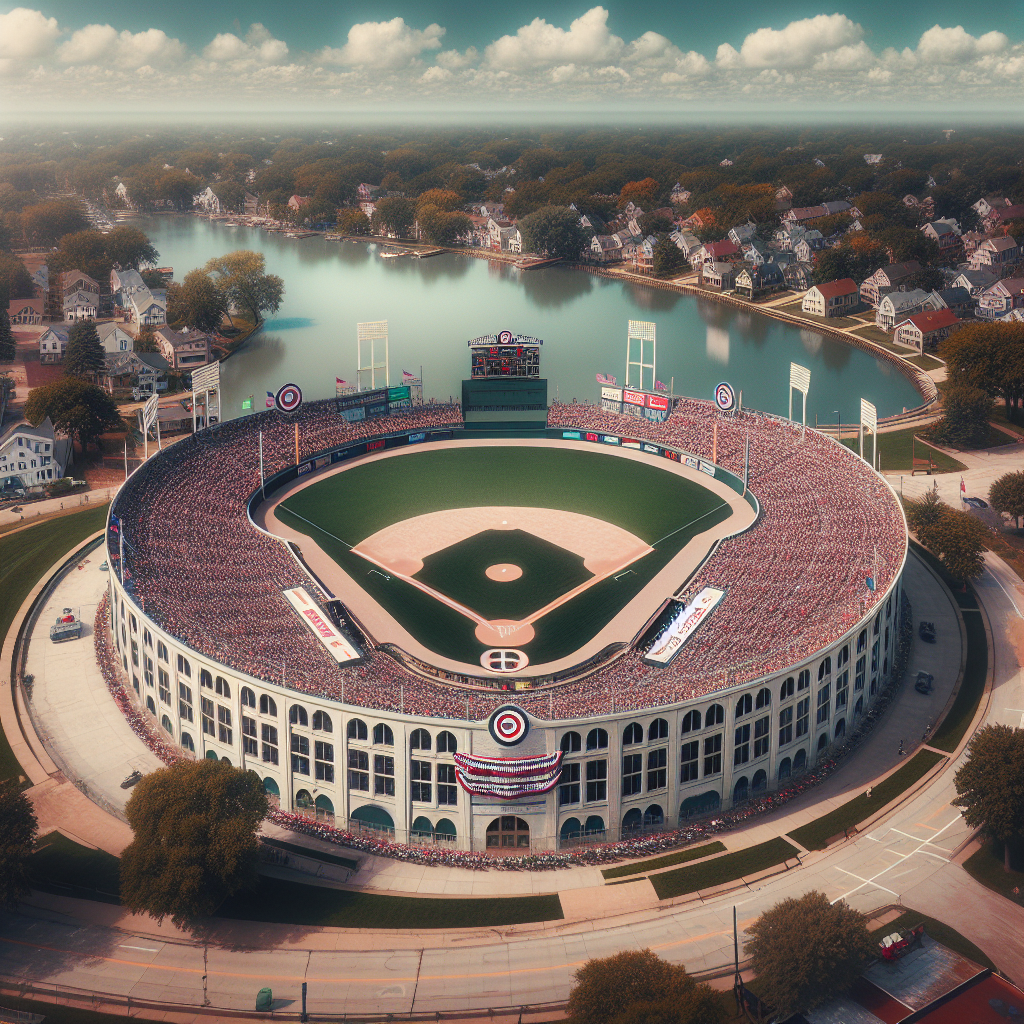
Cleveland Stadium, affectionately known as “The Mistake by the Lake,” is an iconic venue that holds special memories for many baseball fans. Located on the shores of Lake Erie, this monumental structure was more than just a ballpark; it was a hub of community, culture, and history. For decades, it stood as a testament to the passionate spirit of Clevelanders who would brave the unpredictable weather of Northern Ohio to watch their beloved Indians play. The stadium’s official opening was on July 1, 1931, and it immediately positioned itself as a multi-use facility, hosting not only baseball but also football games, concerts, and various civic events.
At its inception, Cleveland Stadium was among the largest ballparks ever built, designed to seat up to 78,000 spectators. This sheer size made it an architectural marvel of its time. However, with such grandiosity came issues. The vast spaces often meant that fans seated in certain areas felt a great distance from the action on the field. Despite these design challenges, Cleveland Stadium became an integral part of the city’s identity, enduring both triumphs and tribulations in its lifetime.
The Early Years: Optimism and Challenges
In its early years, the stadium was a source of pride for the city. The grand opening was celebrated with much fanfare, featuring an exhibition game between the New York Yankees and the Cleveland Indians. Babe Ruth, the Sultan of Swat, hit the first home run at Cleveland Stadium, signaling the beginning of a new era in Cleveland sports.
However, sustaining high attendance proved challenging. The stadium’s capacity might have been an engineering marvel, but filling those seats was another story. In the early stages, the Great Depression also played a role in affecting turnout. Despite this, Cleveland Stadium managed to stay relevant, thanks in part to the versatility of its design, which allowed it to host a variety of events beyond baseball.
The Golden Era: 1940s and 1950s
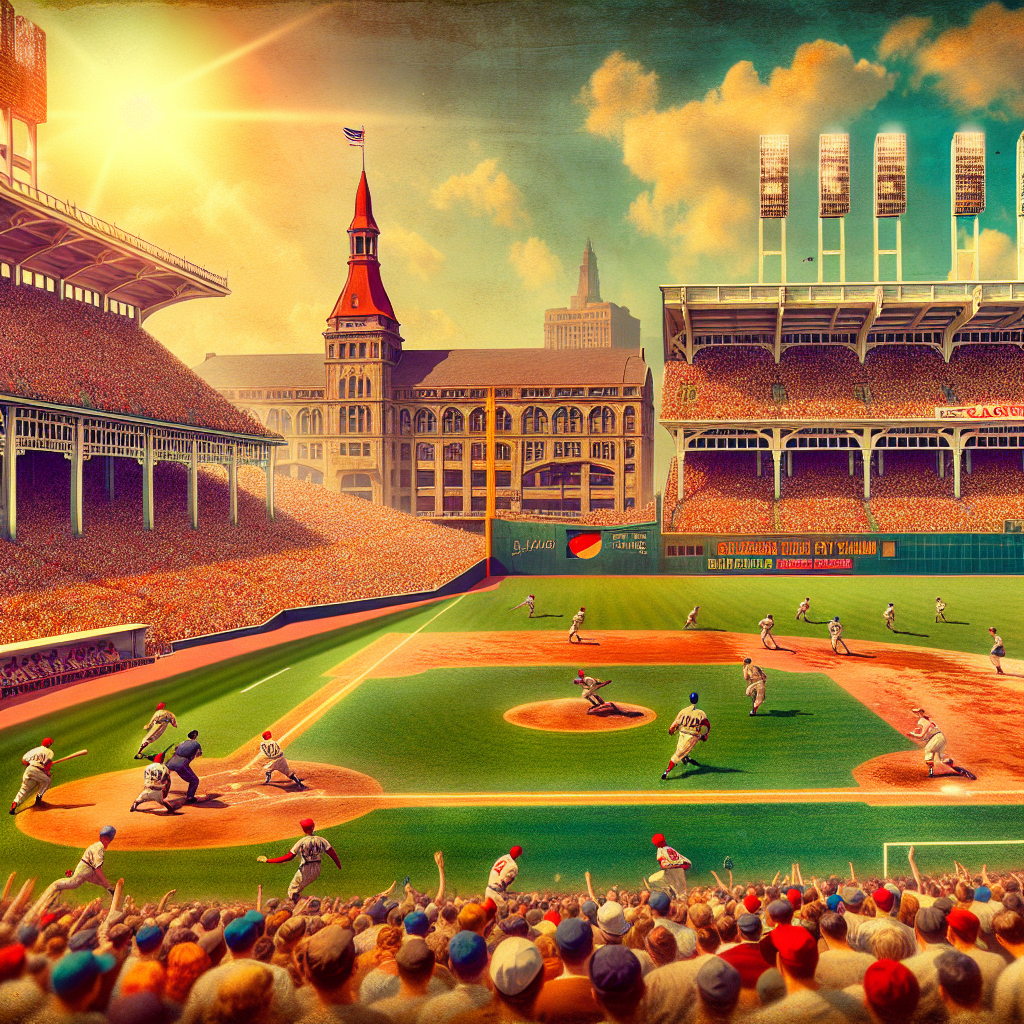
The stadium truly came into its own during the 1940s and 1950s, a period often referred to as its golden era. This was a time of resurgence for the Cleveland Indians, culminating in a World Series Championship in 1948. The Indians boasted a roster filled with future Hall of Famers, including the likes of Bob Feller, Lou Boudreau, and Larry Doby. These stars drew massive crowds and filled Cleveland Stadium with an unprecedented level of excitement.
One of the most memorable moments came on October 10, 1948, when the Indians secured the World Series title by defeating the Boston Braves. The victory parade saw tens of thousands of Clevelanders flooding the streets, celebrating a triumph that seemed to belong as much to the city as it did to the team. It was a defining moment that immortalized Cleveland Stadium in the annals of baseball history.
A Declining Attraction: 1960s and 1970s
Despite the glory of the previous decades, Cleveland Stadium struggled to maintain its status in the 1960s and 1970s. The once-booming attendance figures began to dwindle, a reflection of the team’s inconsistent performances and the changing dynamics of Major League Baseball. While the stadium continued to host significant events, the wear and tear of time became more apparent.
Many fans remember this period as a mix of nostalgia and frustration. Legendary moments were few and far between, but dedicated supporters continued to make their pilgrimage to the old ballpark. Renovations were minimal, and by the end of the 1970s, the stadium was often viewed as outdated compared to the newer, more modern facilities springing up across the country.
The Final Years: Transitioning to Jacobs Field
The 1980s and early 1990s marked the final chapter for Cleveland Stadium. By this time, it had become evident that the stadium was no longer suitable for the needs of modern baseball. Attendance continued to lag, and significant structural issues made it clear that a change was necessary.
In 1994, the Cleveland Indians transitioned to the newly constructed Jacobs Field, now known as Progressive Field. This move marked the end of an era. Cleveland Stadium’s final baseball game was played on October 3, 1993, a bittersweet farewell for many fans. The old stadium continued to host the Cleveland Browns for a few more years until it was eventually demolished in 1996, making way for the newly built FirstEnergy Stadium.
Legacy and Cultural Impact
Despite its many challenges, Cleveland Stadium left an indelible mark on the city and its baseball heritage. It was more than a venue; it was a communal space where memories were made, friendships were forged, and civic pride was celebrated. Over the years, it hosted numerous events that went beyond the world of sports, including concerts by legendary artists such as The Rolling Stones and U2, as well as significant political rallies.
The term “The Mistake by the Lake” might have been coined to highlight the stadium’s many flaws, but it also underscores the deep, unyielding affection that Clevelanders hold for this iconic structure. It’s a name that evokes a smile, a nod of recognition, and a wealth of stories shared across generations. While the stadium itself no longer stands, its spirit lives on in the memories of those who experienced its grandeur and its oddities firsthand.
Conclusion
Cleveland Stadium’s story is a rich tapestry of triumphs, challenges, and transitions. It was a pillar of Cleveland sports culture through good times and bad, adapting to the city’s evolving needs. From its grand opening in the early 1930s to its eventual demolition in the mid-1990s, the stadium served as a backdrop for countless unforgettable moments in baseball and beyond.
As we look back on the era of Cleveland Stadium, it is clear that its legacy goes beyond mere bricks and mortar. It symbolizes the resilience and passion of a city that has seen its fair share of ups and downs. While new venues like Progressive Field have taken its place, the memories of Cleveland Stadium continue to be cherished by those who witnessed its storied past.
Today, as fans flock to modern ballparks with state-of-the-art amenities, it’s important to remember the roots of the game and the iconic venues that paved the way. Cleveland Stadium may have been dubbed “The Mistake by the Lake,” but in the hearts of many, it remains a beloved chapter in the history of baseball.