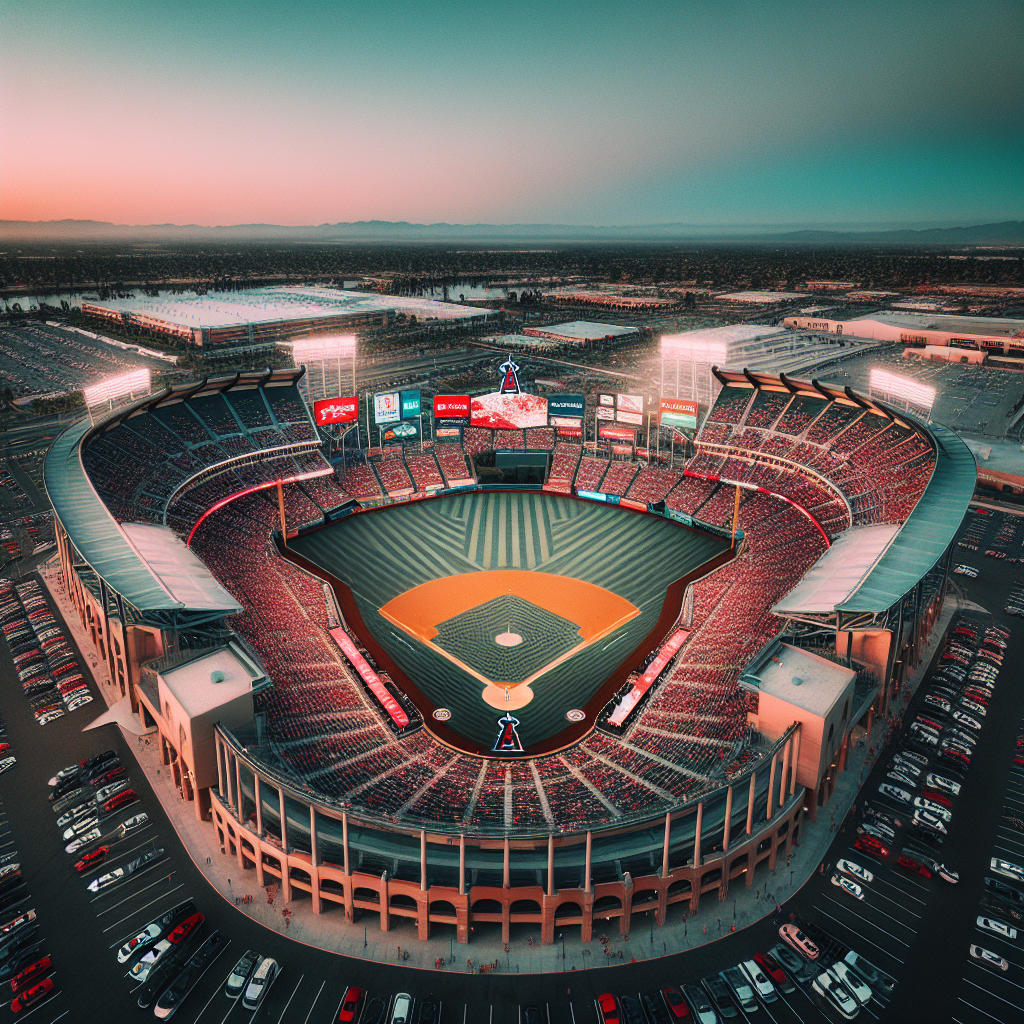
Anaheim Stadium, often referred to as “The Big A,” is a symbol of baseball in Orange County, California. It has been home to the California Angels (now the Los Angeles Angels) since its inception in the mid-1960s. This iconic ballpark holds a special place in Major League Baseball (MLB) history, not only for its architecture but also for its role in the growth of the Angels franchise and its significance to the Southern California sports scene.
A Dream Takes Shape: The Stadium’s Early Years
Anaheim Stadium was born out of a dream to bring Major League Baseball to Orange County. In the early 1960s, California was becoming a sports powerhouse. The Dodgers had already found success in Los Angeles after moving from Brooklyn in 1958, and the San Francisco Giants were thriving up north. The area between those two cities, however, lacked a major league team.
Enter Gene Autry, a Hollywood cowboy star and country singer who would become the owner of the California Angels. Autry was determined to build a team that could compete with the Dodgers and Giants while giving Orange County its first major sports franchise. His vision was to construct a stadium that could host baseball games and capture the excitement of the sport for local fans.
Construction on Anaheim Stadium began in August 1964, with a budget of $24 million (equivalent to over $200 million today). The stadium was designed as a multi-use facility, with the intention of eventually accommodating both baseball and football. Its location, just off the I-5 freeway and close to Disneyland, made it an accessible destination for both local residents and tourists alike.
Anaheim Stadium officially opened on April 19, 1966, when the Angels played their first game there, defeating the Chicago White Sox 3-1. The new ballpark was instantly recognized for its unique features, particularly the large “Big A” scoreboard in left field, which became a symbol of the stadium itself.
The Evolution of the Ballpark
Anaheim Stadium was originally designed to seat over 43,000 fans, but it wasn’t long before the park underwent changes to keep up with evolving trends in the sports world. By the 1970s, stadiums were increasingly designed to host multiple sports, and in 1980, Anaheim Stadium followed suit. The ballpark was expanded to seat over 65,000 fans as part of a deal to accommodate the NFL’s Los Angeles Rams, who relocated to Anaheim.
While this renovation boosted capacity, it came at a cost to the stadium’s charm. The expansion enclosed the stadium, blocking views of the nearby San Gabriel Mountains and giving the park a more generic, concrete feel. This was a common issue in multi-purpose stadiums of the era, where the original design aesthetic was often sacrificed for functionality.
For baseball fans, Anaheim Stadium lost some of its allure, but it continued to host memorable moments on the diamond. The Angels’ first playoff appearance came in 1979, sparking excitement throughout Orange County. Fans packed the stadium to cheer on stars like Nolan Ryan and Rod Carew, as the team came within one game of the World Series, before falling short in the American League Championship Series (ALCS) to the Baltimore Orioles.
Returning to a Baseball-First Design
In the 1990s, the Rams moved back to Los Angeles, leaving Anaheim Stadium as a baseball-only venue once again. This led to a major renovation, beginning in 1996, aimed at restoring the ballpark to its original design intent—focused on baseball.
The renovation project, led by Disney (which owned the Angels at the time), included the removal of the upper deck sections and other features that had been added to accommodate football. The seating capacity was reduced to around 45,000, and the ballpark’s sightlines were greatly improved. The most noticeable change was the reinstallation of the “Big A” scoreboard in the parking lot, where it once again served as a beacon for baseball fans.
The reimagined Anaheim Stadium (later renamed Edison International Field and eventually Angel Stadium of Anaheim) had a more intimate, fan-friendly feel. The renovations also incorporated a rock formation and water features beyond the outfield wall, which added to the atmosphere and became a signature element of the ballpark.
Iconic Moments at Anaheim Stadium
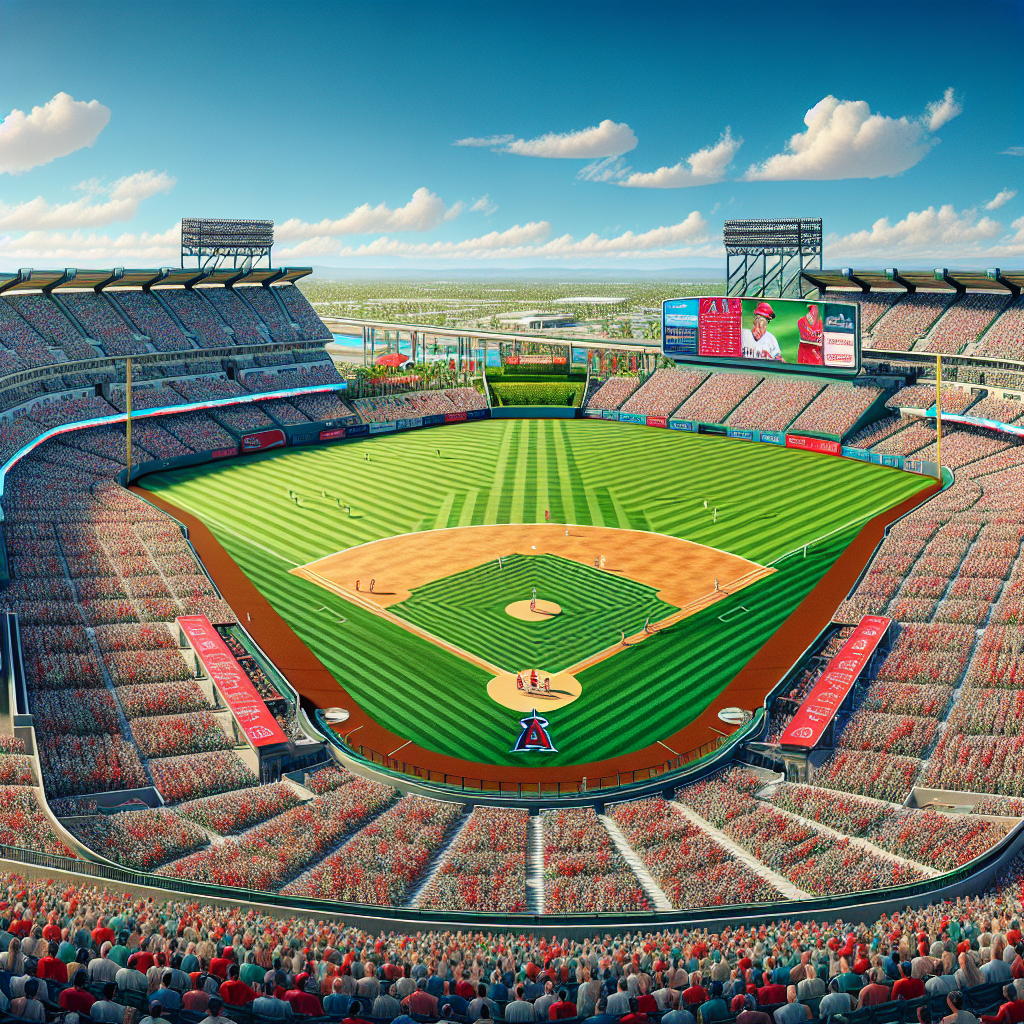
Throughout its history, Anaheim Stadium has hosted countless memorable moments, many of which have become a key part of baseball lore. One of the most iconic moments came in 2002, when the Angels won their first and only World Series. The Halos, led by players like Troy Glaus, Garret Anderson, and closer Troy Percival, captivated fans during their Cinderella run to the championship. The World Series-clinching Game 7 against the San Francisco Giants took place at Anaheim Stadium, cementing the ballpark’s place in history.
Another unforgettable event occurred in 1995, when the Angels retired Nolan Ryan’s number 30 jersey. Ryan, who pitched for the Angels from 1972 to 1979, remains one of the most celebrated players in franchise history, and his fiery fastball and record-breaking strikeout performances are still talked about by fans today. The ceremony, held in front of a packed house, was a fitting tribute to one of the game’s greatest pitchers.
In addition to these moments, Anaheim Stadium has also been the site of numerous All-Star Games, including the 2010 MLB All-Star Game. The stadium has seen home run milestones, unforgettable defensive plays, and a variety of MLB legends grace its field, all contributing to its reputation as a premier baseball venue.
Community and Cultural Impact
Anaheim Stadium has long been more than just a place to watch baseball. It has served as a community hub for Southern California residents and a key element in the broader Orange County cultural landscape. The stadium’s proximity to Disneyland makes it part of the region’s tourist appeal, offering visitors a chance to experience a baseball game along with other iconic Southern California destinations.
Additionally, the ballpark has played host to a wide range of non-baseball events over the years, including concerts, religious gatherings, and even motor sports. Acts like The Rolling Stones, U2, and Bruce Springsteen have performed at Anaheim Stadium, further embedding it into the local entertainment scene.
For many fans, attending an Angels game at Anaheim Stadium is more than just a sporting event—it’s a tradition. Whether it’s grabbing a hot dog, watching fireworks after a win, or hearing the crack of a bat on a sunny California afternoon, the experience is part of the fabric of life in Orange County.
The Modern Era: Angel Stadium Today
Today, Angel Stadium remains one of the oldest ballparks in Major League Baseball, but it continues to be a beloved venue for baseball fans. The Angels’ ownership group has invested in maintaining and updating the facility, ensuring that it remains competitive with newer ballparks around the league. Recent upgrades include improved concession options, fan areas, and technology features that enhance the game-day experience.
Despite its age, Angel Stadium remains a top destination for baseball enthusiasts, especially during key rivalry games against the Los Angeles Dodgers. The atmosphere in the stadium during these matchups is electric, with fans from both teams filling the ballpark, making it feel like one of the most important games of the season.
Looking to the Future
While Angel Stadium has stood the test of time, questions about its future have arisen in recent years. There has been talk of potential renovations, or even a new ballpark for the Angels, as ownership explores options to keep the franchise competitive on and off the field. For now, though, Anaheim Stadium remains a cherished part of the Angels’ identity and a symbol of baseball in Southern California.
No matter what the future holds, the legacy of Anaheim Stadium is firmly cemented in baseball history. From its early days as the California Angels’ home in the 1960s to its role in hosting a World Series champion in 2002, the stadium will always be a defining feature of Orange County sports culture.
Frequently Asked Questions
1. What is the history behind Anaheim Stadium being chosen as the home for the California Angels?
When Anaheim Stadium, fondly known as “The Big A,” was built in the mid-1960s, Orange County was poised for expansion both demographically and economically. The California Angels, established in 1961 by Gene Autry, sought a new home base that could cater to their vision of growth. The choice of Anaheim as the location for the new stadium was strategic. It provided easy freeway access, being located close to Interstate 5, making it convenient for fans traveling from both Los Angeles and the surrounding Orange County areas. Additionally, Anaheim offers a mild, temperate climate, perfect for an outdoor baseball park. The decision was also driven by the city’s eagerness to raise its profile and establish itself as a hub of entertainment in Southern California. Construction began in 1964, designed by the firm of Burgee and Harms, and took just under two years to complete.
2. How has Anaheim Stadium impacted the growth and development of the Los Angeles Angels franchise?
Anaheim Stadium has been instrumental in the growth and success of the Angels franchise. Prior to the opening of the stadium, the Angels had played their home games at Dodger Stadium, which presented logistical challenges and competition for attention with the already established Los Angeles Dodgers. The move to Anaheim allowed the Angels to create their own identity and fan base in Orange County. The stadium’s intimate design, complete with excellent sightlines and a picturesque backdrop, created a welcoming environment for baseball lovers. Over the decades, the stadium witnessed numerous significant moments in Angels history, including playoff runs and milestones reached by legendary players. Additionally, the stadium’s presence aided in increasing the value of the franchise, providing them with a stable, centrally-located venue that continuously draws crowds.
3. What are some unique architectural and logistical features of Anaheim Stadium?
Anaheim Stadium, with its distinctive design, has undergone several renovations to continuously improve both its aesthetic appeal and functionality. Originally designed as a multi-purpose venue, the stadium had to accommodate both baseball games and football until 1996 when it was renovated to be more baseball-specific. Its most iconic feature was a large “A”-shaped scoreboard that stood 230 feet high, a landmark both fans and passersby along the highway found memorable. Additionally, recent renovations have added luxury suites and improved facilitative features like expanded concourses and additional concession areas to enhance the fan experience. The stadium sits several decks below street level, which was an intentional design choice to protect spectators from high winds, a common occurrence in the area.
4. What is the cultural significance of the stadium in Orange County and its surrounding communities?
Anaheim Stadium isn’t just a venue, but a cultural beacon in Orange County. It represents the area’s rise to prominence in the sporting world and exemplifies the communal passion for baseball. The stadium has created a sense of belonging and unity for families and fans who share their enthusiasm for the Angels. Over the decades, it became a gathering place not just for sports events, but also for concerts and community initiatives, further embedding itself into the fabric of the community. The success of the Angels inspired successive generations to embrace baseball, aiding in the establishment of youth sports camps and local baseball leagues, feeding the growth of future talent. Moreover, as one of the longest-standing landmarks in the county, the stadium remains a potent symbol of tradition and sportsmanship in Southern California.
5. How does Anaheim Stadium compare to other MLB stadiums in terms of amenities and experience?
Anaheim Stadium offers a unique blend of history, modern amenities, and a quintessential Southern California experience. While some MLB stadiums showcase ultra-modern architecture and automated amenities, Anaheim maintains a balance, integrating the nostalgic with the functional. It may not have the most elaborate technological features compared to newer stadiums, but recent renovations ensure fans have access to contemporary conveniences such as high-definition screens, Wi-Fi access, and state-of-the-art sound systems. The stadium features a wide array of food options that celebrate both traditional baseball fare and local cuisine. Moreover, its clean design, open-air ambiance, and the backdrop of the picturesque San Gabriel Mountains provide an unmatched viewing experience. For many fans, the charm of Anaheim Stadium lies in its ability to transport them back in time while enjoying a game in a thoroughly modern setting.