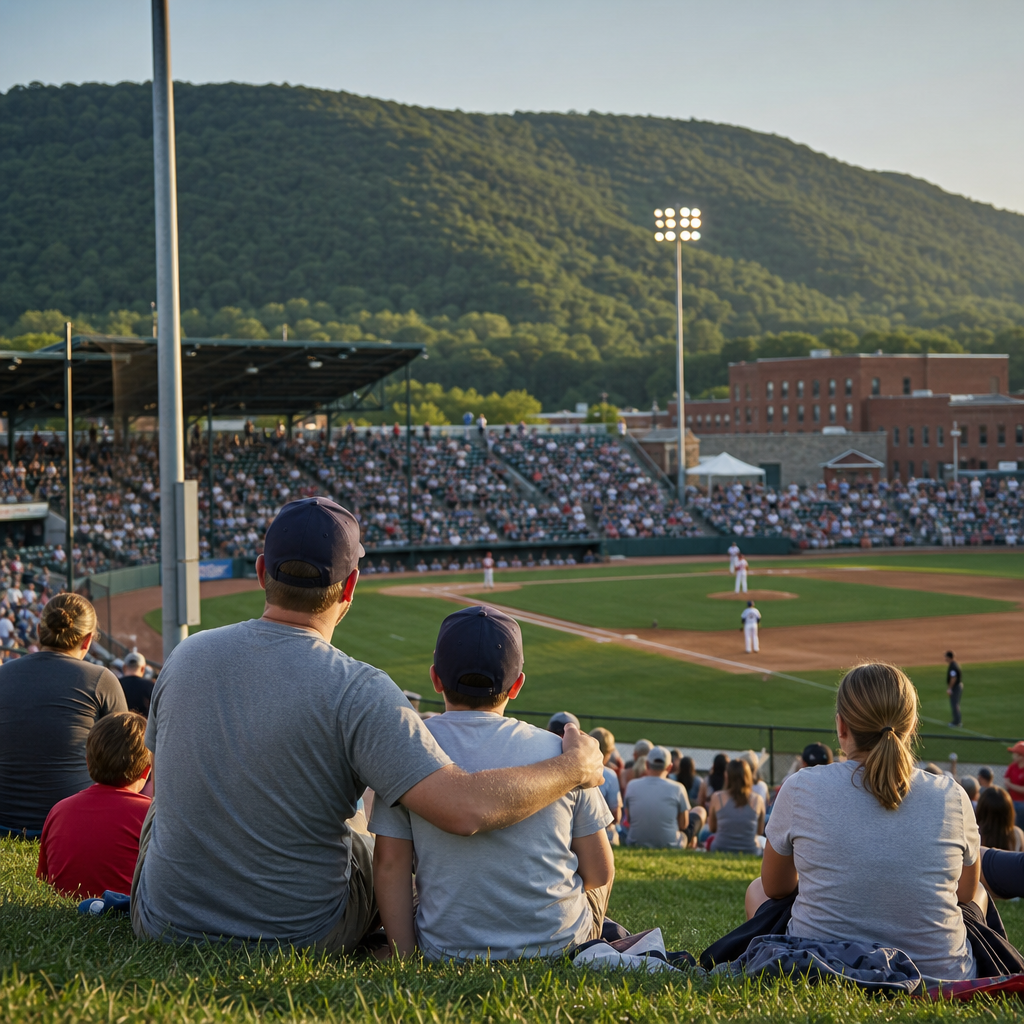
Minor league towns live on a different baseball rhythm, one measured not by national television windows or nine-figure payrolls, but by school-night first pitches, postgame fireworks, and the steady return of neighbors to the same ballpark all summer. In these communities, baseball is not simply entertainment. It is local infrastructure: a civic gathering place, an economic driver, a branding tool, a youth development engine, and often a source of identity that outlasts team names, leagues, and affiliations. When people talk about minor league baseball, they usually mean professional clubs below Major League Baseball, but the concept also overlaps with summer collegiate teams, independent leagues, and developmental circuits that serve similar community functions. Across that wider landscape, the question is the same: how does a team in a small or midsize market shape everyday local life? The answer matters because these clubs often operate where one venue, one mascot, and seventy home dates can influence downtown traffic, seasonal hiring, charitable giving, and how residents describe their town to outsiders. I have seen this firsthand in markets where a ballpark transformed an underused district into an active evening corridor, and in places where a team’s cancellation left a visible hole in the local calendar. Baseball in these towns creates more than scorelines. It creates rituals, partnerships, and shared memory.
The Ballpark as a Civic Anchor
In minor league towns, the ballpark functions like a town square with a schedule. Residents may come for baseball, but the venue quickly becomes a flexible civic asset used for festivals, job fairs, school events, charity walks, holiday celebrations, movie nights, and youth clinics. That mixed use matters because smaller markets rarely have many mid-sized venues capable of hosting several thousand people in a safe, organized environment with parking, restrooms, concessions, and event staff already in place. A downtown stadium in particular can change how people move through a city. Before first pitch, families eat at nearby restaurants, workers meet for drinks after offices close, and retailers benefit from foot traffic that otherwise would have dispersed to highways and suburbs.
Examples across the United States show this pattern clearly. The Durham Bulls helped make Durham Athletic Park iconic and later became central to the city’s broader redevelopment story around Durham Bulls Athletic Park and the American Tobacco campus. In Indianapolis, Victory Field has long been cited by urban planners and sports business analysts as a successful downtown stadium that integrates baseball with convention traffic, office demand, and neighborhood activity. In Montgomery, Alabama, Riverwalk Stadium contributed to a larger downtown repositioning effort tied to riverfront development. These outcomes are never caused by baseball alone, but baseball often supplies the dependable calendar of events that makes adjacent private investment less speculative.
The civic role also extends to symbolism. Team names, logos, and promotions usually pull from local history, geography, industry, or folklore. That is why clubs such as the Toledo Mud Hens, Rocket City Trash Pandas, and Buffalo Bisons feel rooted rather than generic. The identity work is deliberate. A recognizable brand gives residents a simple way to signal belonging, whether through caps at the grocery store or school spirit nights at the park. In many towns, the ball club becomes one of the few local brands that people wear proudly year-round.
Economic Impact Beyond the Turnstiles
Minor league baseball does not produce the scale of a major league economy, but its local impact is more direct than many casual observers assume. Teams hire full-time front office staff and large seasonal crews for ticketing, concessions, groundskeeping, security, promotions, cleaning, and production. They purchase from local vendors, printers, caterers, electricians, and maintenance firms. Visiting teams use hotels, buses, and food service. Fans spend money before and after games. If a club draws 250,000 to 500,000 fans in a season, even modest per-cap spending can ripple through nearby businesses.
Economists rightly caution that sports impact claims are often overstated, especially when public subsidies are involved. Much spending is substituted from other local entertainment options rather than newly created. That critique is valid, and towns should evaluate stadium projects with disciplined assumptions, not boosterism. Yet in smaller markets, the practical value of a baseball team is not measured only by abstract regional multipliers. It is also seen in how the team stabilizes seasonal commerce, gives local firms sponsorship inventory they can actually afford, and supports a cluster of service jobs that fit students, retirees, and part-time workers.
| Community Effect | How Baseball Creates It | Typical Local Example |
|---|---|---|
| Downtown spending | Regular home dates bring repeat evening traffic | Restaurants adding game-night specials and extended hours |
| Seasonal employment | Teams staff concessions, gates, promotions, and grounds crews | High school and college students working summer shifts |
| Small business marketing | Affordable sponsorships and in-park advertising | Local banks, dental offices, and car dealers buying signage |
| Tourism support | Visiting clubs and weekend series create hotel demand | Families pairing games with local festivals or museums |
| Public revenue support | Sales taxes and facility fees tied to event activity | Mixed-use districts seeing stronger year-round occupancy |
Ownership structure and league type influence these outcomes. Affiliated minor league clubs tied to Major League organizations typically benefit from more consistent player pipelines and clearer operating standards. Independent teams may have greater local flexibility in branding and promotions but face more volatility. Summer collegiate leagues often run leaner models, relying heavily on host families and community volunteers, yet they can still generate meaningful downtown activity. For a miscellaneous hub covering the wider minor leagues and college baseball ecosystem, the key point is that local value depends less on formal classification than on attendance frequency, stadium location, and management quality.
Community Identity, Tradition, and Belonging
Baseball works especially well in local communities because its cadence encourages repetition. Football can dominate headlines, but it does not create the same volume of shared nights. A minor league season offers dozens of chances for residents to return, sit with familiar faces, and build routine. Over time, that routine becomes tradition: a church group attending every Friday, a grandfather keeping score with a grandchild, a neighborhood choosing one section as its unofficial home. These repeated interactions are how institutions become part of civic memory.
Teams strengthen that bond through highly localized programming. Theme nights celebrate regional foods, military bases, heritage groups, schools, and nonprofits. Alternate identities often reference local culture in a way that feels playful but meaningful. The best promotions are not random gimmicks. They are signals that the club understands the place it represents. I have worked with teams that learned an important lesson quickly: a promotion only resonates when residents recognize themselves in it. A mascot can be absurd, but the cultural reference still has to be authentic.
This identity function becomes even more important in towns without major league franchises, major universities, or large arts institutions. The ball club may be the most visible public-facing organization in the market. It gives the town a logo, a soundtrack, and a summer calendar. It also creates a neutral social space. In polarized times, that matters. People who disagree on almost everything can still stand for the anthem, debate a manager’s bunt decision, and laugh at a between-inning race. Those interactions are not trivial. They are part of how social trust is maintained at the local level.
Youth Development and Grassroots Baseball Culture
Minor league towns often use baseball to connect aspiration with access. Professional and collegiate players are physically close, visible, and reachable in ways major leaguers are not. Kids can shag batting-practice balls, attend clinics, get autographs by the dugout, and imagine a pathway from local Little League fields to higher levels of the sport. That proximity helps participation because role models feel real rather than distant. Coaches and parents understand this instinctively. When children see players in the grocery store or at school reading programs, baseball becomes part of normal life.
The strongest organizations build structured youth pipelines around that visibility. They run camps, instructional clinics, reading incentives, anti-bullying assemblies, and equipment drives. Some partner with RBI programs, local park districts, and travel organizations to widen access. Others use foundation grants to subsidize registration fees or renovate fields. These efforts matter because baseball and softball carry genuine cost barriers, including bats, gloves, cleats, helmets, uniforms, and travel. A community team cannot solve every participation problem, but it can lower friction and direct attention toward underserved neighborhoods.
Summer collegiate clubs also play a distinctive role here. Because roster turnover is high and players often stay with host families, they tend to be deeply visible in community life for a short period. That can produce strong mentoring relationships. In several college summer markets, I have seen players volunteer at camps by day and then sign autographs after games at night, creating a link between amateur development and local fandom. The impact is less about prospect pedigree than accessibility. Young players respond to people they can meet, question, and emulate.
Schools, Nonprofits, and Local Business Partnerships
A successful minor league team behaves less like a standalone entertainment company and more like a partnership platform. Schools use ballparks for reward trips, graduations, band performances, and career exposure. Nonprofits use game nights for fundraising, awareness campaigns, and volunteer recruitment. Chambers of commerce use stadium spaces for networking events. Local businesses use suites and picnic areas to retain clients and reward employees. Each partnership broadens the club’s value beyond ticket sales and helps justify the team’s role in the community.
The mechanics are practical. A school reading program might reward students with free tickets for hitting monthly goals. A food bank might receive a donation for every stolen base or every ticket package sold through a themed fundraiser. A hospital system might sponsor wellness messaging, first-aid stations, and community screenings. These arrangements create recurring touchpoints between the team and institutions residents already trust. From an operations standpoint, that trust is invaluable. It lowers marketing costs, improves group sales, and keeps the organization relevant even when on-field performance is mediocre.
For local business owners, minor league partnerships are often more attainable than advertising with larger properties. A regional HVAC company can sponsor a foul pole, an in-game promotion, or a youth clinic for a fraction of the cost of top-tier sports inventory. Because the audience is local and repeat attendance is common, the impression quality is often high. Owners can also activate sponsorships directly by handing out coupons, hosting employee nights, or integrating branding into customer loyalty campaigns. The team becomes a business-to-community connector, not just a media buy.
Challenges, Change, and Long-Term Sustainability
Not every baseball town story is positive, and credibility requires acknowledging the pressure points. Stadium financing can divide residents, especially when public money is requested for upgrades or new construction. MLB’s 2020 minor league reorganization reduced affiliated teams and changed travel structures, leaving some communities to pursue independent or collegiate alternatives. Facility standards, player housing expectations, and maintenance costs continue to rise. Attendance can be hit by weather, inflation, competition from streaming entertainment, or simply a few weak promotional seasons.
There is also the challenge of proving value in measurable terms. Community pride is real, but city councils and county commissions still need budgets, projections, and accountable operators. The most resilient organizations understand that nostalgia is not a business model. They invest in customer data, dynamic ticketing, food and beverage upgrades, social content, and year-round event bookings. They also diversify use of the stadium so the venue is active outside the baseball season. Concerts, high school tournaments, holiday markets, and corporate events can materially improve revenue stability.
When towns approach baseball strategically, the sport remains remarkably adaptable. Some communities have replaced lost affiliated teams with summer collegiate clubs and discovered that lower operating costs, local host-family networks, and strong community access can still produce a vibrant civic asset. Others have leaned into distinctive branding and fan experience to offset market size limitations. The lesson from decades of minor league and college baseball operations is straightforward: teams endure when they are woven into local life, governed responsibly, and treated as community institutions rather than interchangeable entertainment products.
Minor league towns show why baseball still matters at the community level. A team can animate downtown blocks, create jobs, support small businesses, strengthen schools and nonprofits, and give residents a shared identity that feels specific to place. The exact model may vary across affiliated clubs, independent leagues, and summer collegiate programs, but the local effect follows the same logic: frequent games create repeated gathering, repeated gathering creates tradition, and tradition builds durable civic value. That value is strongest when operators are disciplined about partnerships, honest about economics, and committed to access for families and young players.
For readers exploring the broader minor leagues and college baseball landscape, this miscellaneous hub is the starting point because it connects the business, cultural, developmental, and civic sides of the sport. Understanding roster rules or league structures is useful, but understanding how baseball shapes local communities explains why these teams survive, evolve, and matter so deeply to residents. If you want to go deeper, use this hub to explore stadium development, team branding, youth outreach, summer collegiate models, and the changing economics of lower-level baseball in towns that make the game feel closest to home.
Frequently Asked Questions
Why do minor league baseball teams matter so much to small and midsize towns?
Minor league baseball teams often matter to local communities because they fill a role that goes far beyond sports. In many towns, the ballpark functions as a regular civic gathering place where families, students, retirees, business owners, and local officials all share the same space in a way few other institutions can replicate. The schedule itself helps build that connection. Unlike a once-a-year festival or an occasional concert, minor league baseball creates a steady rhythm throughout the summer, giving residents repeated opportunities to come together on school nights, weekends, and holidays. Over time, those routines become part of how a town experiences itself.
These teams also help reinforce local identity. A minor league club usually carries the town’s name, reflects regional culture in its branding, and becomes a visible symbol residents can rally around whether they are lifelong locals or recent arrivals. Even when affiliations, leagues, or team names change, the broader tradition of “going to the ballpark” often remains. That continuity matters. It gives communities a shared reference point that can survive political disagreements, economic shifts, and demographic change. In practical terms, the team becomes a source of civic memory, community pride, and local storytelling, all while providing affordable entertainment that keeps residents engaged with their own town rather than looking elsewhere for a sense of excitement and belonging.
How does a minor league team affect the local economy?
A minor league team can influence the local economy in both direct and indirect ways. Directly, teams create jobs tied to game-day operations, stadium maintenance, concessions, security, ticketing, promotions, groundskeeping, and front-office administration. While many of these positions are seasonal or part-time, they still generate income and work experience for local residents, especially students, young workers, and people seeking supplemental employment. In addition, teams buy from local vendors, partner with area sponsors, and often rely on regional service providers for printing, catering, maintenance, transportation, and event support.
Indirectly, the presence of a ballpark can help drive spending across a broader district. Restaurants, bars, coffee shops, parking operators, hotels, and retail businesses frequently benefit from game-night foot traffic, especially when the stadium is located downtown or near a commercial corridor. Special events such as opening day, rivalry series, holiday promotions, youth tournaments, and postgame fireworks can bring visitors from nearby communities who spend money beyond the ticket price. Over time, a successful baseball venue may also contribute to place branding and redevelopment by making an area feel more active, more family-friendly, and more investable.
That said, the economic impact is usually most meaningful at the local scale, not as a cure-all for every municipal challenge. Minor league baseball is best understood as part of a wider community ecosystem. It works especially well when the team is integrated with nearby businesses, downtown planning, tourism efforts, and year-round event programming. In that context, baseball can serve as a reliable anchor that supports local commerce, extends visitor activity into the evening, and gives residents another reason to spend time and money in their own community.
In what ways do minor league teams help build community identity and civic pride?
Minor league teams are unusually effective at building civic pride because they make community identity visible, repeatable, and shared. The team name, logo, mascot, uniforms, and in-game traditions often draw from local history, geography, industry, folklore, or humor. That branding is not just decorative. It gives the town a public-facing personality and turns regional quirks into assets people can celebrate. Residents wear the merchandise, businesses display team signs, schools hold spirit nights, and social media fills with game-day photos. All of that reinforces the idea that the team is part of the town’s collective image.
The emotional side of civic pride is just as important. Minor league baseball is intimate in a way major sports often are not. Fans can sit close to the field, recognize stadium staff, interact with mascots, and attend enough games to feel genuine ownership over the experience. Children grow up associating summer with the same entrance gates, snack stands, and between-inning traditions their parents remember. That generational continuity builds attachment not only to the team, but to the place itself. It turns ordinary evenings into a long-running local tradition.
Teams also contribute to civic pride by showing up in public life beyond the stadium. Players and mascots visit schools, hospitals, libraries, and community events. Front offices support charity drives, local fundraisers, and nonprofit partnerships. When done well, those efforts signal that the team is invested in the town’s well-being rather than simply operating within its borders. As a result, the club becomes more than an entertainment brand. It becomes a recognizable civic partner that helps residents feel their town has energy, character, and something worth gathering around.
How do minor league ballparks support families, youth programs, and local social life?
Minor league ballparks are often among the most accessible public entertainment spaces in a community, which makes them especially valuable for families and youth engagement. Compared with many major sporting events, minor league games are generally more affordable, easier to attend, and less logistically overwhelming. Parents can bring children without treating the outing as a major financial commitment, and the stadium environment is usually designed with family-friendly promotions, interactive areas, theme nights, and postgame activities. That accessibility matters because it allows baseball to become part of everyday local life rather than a rare luxury.
For young people, the influence extends beyond attending games. Teams frequently partner with Little League organizations, high schools, summer camps, reading programs, and youth nonprofits. They host clinics, invite youth teams onto the field, recognize student achievements, and create moments that make children feel seen in a public setting. Those interactions can strengthen a child’s connection to sports, learning, and community participation all at once. Even for kids who do not play baseball, the ballpark can serve as an early lesson in public life: how communities gather, celebrate, volunteer, and support shared institutions.
On a broader social level, the ballpark often acts as a low-pressure meeting place for the town itself. Friends reconnect there, coworkers organize outings, churches and civic groups hold events, and multi-generational families gather in one venue. In a time when many communities struggle to maintain common spaces that welcome different ages and backgrounds, minor league baseball offers a rare setting where social mixing happens naturally. That may be one of its most important contributions. The game provides the backdrop, but the deeper value often comes from the relationships, routines, and local ties that are strengthened in the stands.
Can a minor league town keep its baseball identity even when teams, affiliations, or leagues change?
Yes, and in many cases that is one of the defining strengths of a true minor league baseball town. Affiliations change, leagues reorganize, ownership groups come and go, and team names sometimes get rebranded to match new marketing strategies or broader shifts in the sport. Yet in communities with a deep baseball tradition, the identity is often rooted less in a specific corporate structure and more in the enduring habit of local support. Residents may remember different eras of the franchise, different logos, and different parent clubs, but what persists is the expectation that summer includes baseball and that the ballpark remains a community landmark.
This resilience comes from the fact that the local meaning of the team usually outlives the formal baseball business model attached to it. Fans are not just attached to player development pipelines or league alignments. They are attached to memories, rituals, and place. They remember first games with parents or grandparents, championship runs, rain delays, mascot antics, school fundraisers, fireworks nights, and the feeling of seeing neighbors in the same seats each season. Those experiences create a durable sense of belonging that can survive organizational change.
At the same time, maintaining that identity requires intentional work. Town leaders, team executives, sponsors, and residents all play a role in preserving the connection. Investing in the ballpark, documenting local history, keeping traditions alive, and ensuring the team remains visible in schools and civic events can help a community hold onto its baseball culture even during transitions. In that sense, a minor league town’s baseball identity is not guaranteed by the league office. It is sustained locally, through memory, participation, and the repeated choice to treat the team as part of the community’s fabric rather than just another entertainment option.