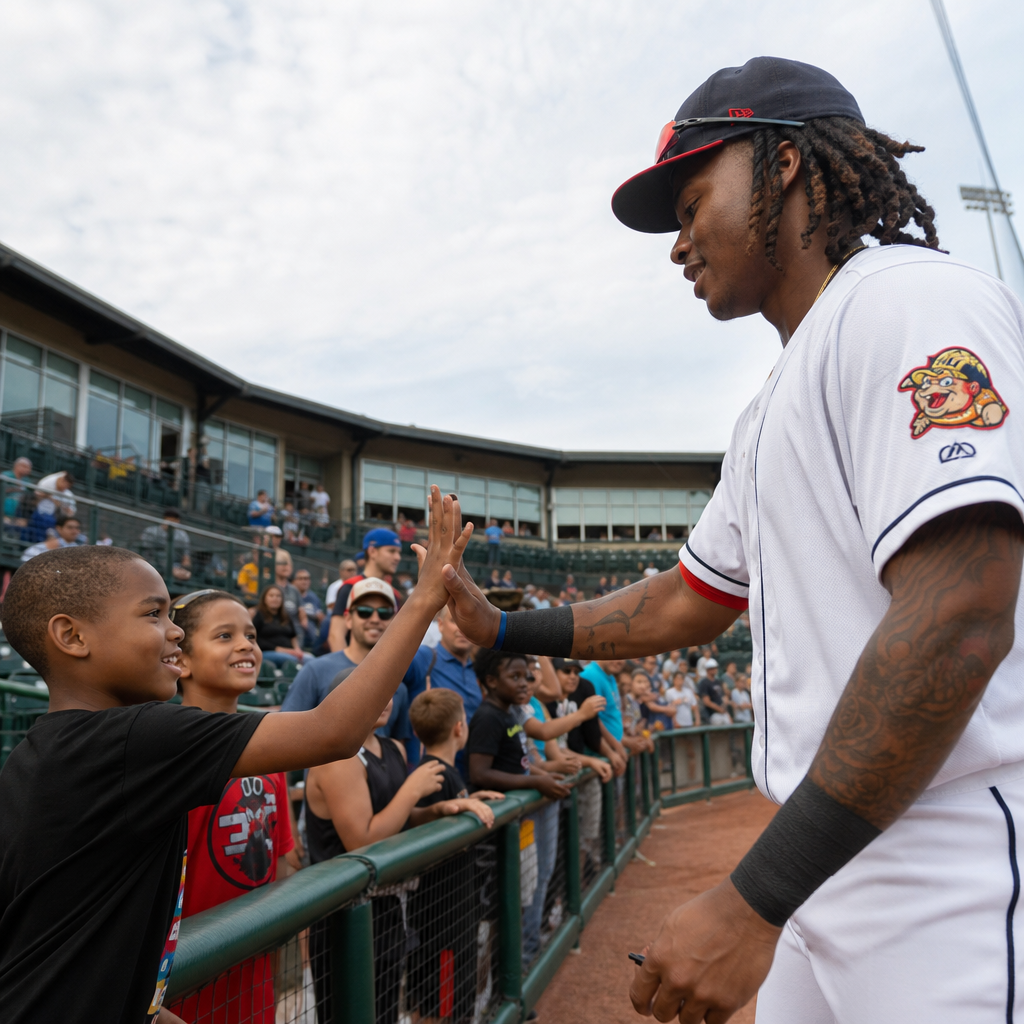
Minor League Baseball has long been more than a developmental system for future major leaguers; it has served as a public square where American communities negotiate identity, access, and change. In practical terms, social change refers to shifts in attitudes, rules, and institutions that alter how people live together. When that change happens through sports, it often starts at the local level, where families gather, schools partner with clubs, and civic leaders see the ballpark as a shared space. That is why Minor League Baseball matters. Its teams are woven into smaller cities and regional markets where issues such as racial integration, labor conditions, disability access, education, military service, gender equity, and cultural representation are not abstract debates but visible realities. I have worked with community-facing sports content and local club initiatives, and the pattern is consistent: minor league organizations move faster than larger institutions because they are closer to their audiences. They test ideas in real neighborhoods, with real consequences, and successful efforts often spread upward or outward.
Unlike Major League Baseball, which is driven by national media rights and global branding, the minors depend on attendance, sponsorships, municipal relationships, and trust. That business model can constrain clubs, but it also creates unusual leverage for social impact. A team that wants to increase youth literacy, honor overlooked histories, improve stadium accessibility, or create pathways for underserved athletes can integrate those goals directly into ticketing, promotions, school visits, and game-day operations. For readers exploring Minor Leagues and College Baseball, this hub covers the miscellaneous but essential territory where baseball intersects with civic life. It explains how minor league clubs have influenced integration, community inclusion, education, cultural celebration, and local activism, while also acknowledging the limits of what sports can accomplish. The key point is direct: Minor League Baseball helps communities rehearse social progress in ways that are concrete, affordable, and visible. Its greatest strength is proximity, and that proximity gives the sport an outsized role in shaping everyday social change.
How Minor League Baseball Became a Local Engine for Change
Minor League Baseball developed as a fragmented network of leagues tied to towns, employers, rail lines, and regional economies. That structure made clubs highly responsive to local pressures. When communities changed, teams often had to change with them or risk losing relevance. In the twentieth century, the minors mirrored segregation, labor inequality, and exclusionary customs common across the country. Yet they also became places where those barriers could be challenged earlier or more visibly than in other institutions. Ballparks were among the few public venues where people from different backgrounds gathered regularly, making them useful testing grounds for broader acceptance. Owners and executives did not always act from idealism; often they acted because inclusion expanded audiences, improved talent pipelines, or strengthened public standing. Even so, the outcome mattered.
A good example is racial integration in organized baseball below the major league level. After Jackie Robinson broke Major League Baseball’s color barrier in 1947, change across the minor leagues was uneven, contentious, and deeply local. Some affiliates integrated quickly because winning required access to the best players. Others resisted under pressure from segregation laws, hostile crowds, or reluctant business partners. That unevenness is important because it shows how social change actually works: not as one clean national decision, but as a series of local confrontations over who belongs. Teams, city officials, law enforcement, and fans all played roles in determining whether integrated rosters could train, travel, eat, and compete safely. In many towns, the presence of Black players forced communities to confront discrimination in hotels, restaurants, and seating arrangements. Baseball did not solve racism, but it exposed it in public and created repeated moments where fairness had to be defended.
The same local logic applies today. Minor league clubs often support causes that feel modest compared with national reform campaigns, yet their impact can be substantial because it reaches people where they live. Reading programs, heritage nights, sensory-friendly spaces, free clinics, and transportation partnerships are not symbolic extras when they are built into a season-long calendar. They are mechanisms for access. A team with 66 home games has dozens of opportunities to normalize inclusion. That repetition changes culture.
Integration, Representation, and the Public Meaning of the Ballpark
Representation in Minor League Baseball has never been limited to who appears on the field. It includes who is hired in front offices, which histories are celebrated, what languages appear in marketing, and which neighborhoods are invited into the stadium. The most meaningful clubs understand that representation must be operational, not decorative. In practice, that means recruiting staff from the local community, building relationships with Black churches, Latino civic groups, tribal organizations, immigrant associations, and disability advocates, and then reflecting those partnerships in programming that lasts beyond a single promotional night.
One of the clearest modern examples is the widespread adoption of culturally specific identity campaigns, including Copa de la Diversión, now known as MiLB Copa. These programs allow clubs to honor Hispanic and Latino communities through alternate team names, merchandise, music, food, and storytelling rooted in local heritage. When executed well, they do more than create collectible jerseys. They validate the people who already support the club but may not have seen their culture centered in official branding. Teams such as the Eugene Exploding Whales or the Fresno Tacos have shown how playful identities can still carry serious community meaning when paired with outreach, Spanish-language media, and partnerships with local organizations. The lesson is simple: cultural recognition works when it is attached to listening, not just marketing.
Historic acknowledgment matters too. Many clubs have embraced Negro Leagues education through exhibits, theme nights, and partnerships with museums or historians. This matters because baseball history in many minor league cities includes exclusion, barnstorming, segregated seating, and parallel Black baseball traditions that were long minimized. When a team publicly tells that fuller story, it helps a community understand its own past with greater honesty. I have seen attendance campaigns become much stronger when clubs stop treating history as nostalgia and start treating it as civic memory. Fans respond to authenticity.
| Area of social change | How minor league teams contribute | Practical local effect |
|---|---|---|
| Racial inclusion | Integrated rosters, heritage programming, historical education | Broader public acceptance and fuller community narratives |
| Educational access | Reading challenges, school partnerships, player visits | Higher student engagement and family participation |
| Disability inclusion | ADA upgrades, sensory rooms, captioning, flexible seating | More families can attend comfortably and consistently |
| Economic opportunity | Seasonal jobs, internships, local vendor contracts | Stronger ties between clubs and local workers |
| Cultural representation | Bilingual marketing, local food, themed identities, community nights | Fans see themselves reflected in the club experience |
Representation also includes gender. Women have long influenced minor league baseball as owners, executives, broadcasters, grounds crew leaders, athletic trainers, and community relations directors, even when public recognition lagged behind reality. As more women enter baseball operations and leadership roles, clubs send a visible signal to young fans about who can belong in the sport. That is social change in a very direct form. The ballpark becomes a workplace model as well as an entertainment venue.
Education, Youth Development, and Access Beyond the Diamond
If one asks how Minor League Baseball changes lives most consistently, the answer is through youth engagement. Teams are uniquely suited to educational work because they combine recognizable public figures, accessible price points, and recurring contact with schools. Across the minors, clubs run reading incentive programs that reward students with tickets, merchandise, or on-field recognition. These programs succeed because they connect literacy to aspiration and belonging. A child who may not respond to a generic school reward often responds to the chance to visit a ballpark, meet a mascot, or hear a player read aloud.
The strongest organizations go further by aligning outreach with measurable local needs. In cities with lower third-grade reading proficiency, clubs often partner with school districts, libraries, and nonprofit literacy groups. In college towns, teams can collaborate with education departments, student volunteers, and summer learning programs. Because this article serves as a hub within Minor Leagues and College Baseball, that connection matters: college baseball programs frequently share facilities, coaching knowledge, internship pipelines, and volunteer labor that amplify what a minor league team can achieve. A local university’s sport management students may run community surveys; education majors may assist with reading nights; nutrition departments may support healthy concessions campaigns. These ties turn baseball into a local ecosystem for development.
Affordability is another major factor. Compared with major league pricing, minor league games remain one of the more accessible live sports experiences for families, youth teams, and school groups. That affordability creates social value because shared public experiences should not be reserved only for high-income households. A family that cannot afford an NFL or MLB outing may still attend several minor league games each season. Those visits expose children to teamwork, civic ritual, and positive role models. There are tradeoffs, of course. Even minor league tickets, parking, and concessions can strain lower-income families, especially after facility upgrades or ownership changes. The most community-minded clubs address this by offering school-distributed ticket banks, nonprofit donations, low-cost weekday packages, and transportation assistance through local sponsors.
Youth clinics also matter, especially when they are designed for broad participation rather than elite travel-ball talent. Free or low-cost clinics can introduce baseball and softball to children who lack equipment, private coaching, or family familiarity with the sport. Some teams now include adaptive clinics for children with physical or developmental disabilities, helping families experience the game in a welcoming environment. Those details are significant. Inclusion becomes credible when it is built into scheduling, staffing, and facility design.
Accessibility, Labor, and the Often Overlooked Side of Inclusion
Social change in Minor League Baseball is not only about public messaging. It also involves structural questions: who can physically access the ballpark, who gets paid fairly, and whose labor is made visible. Accessibility has improved meaningfully since the Americans with Disabilities Act established enforceable standards, but implementation still varies by stadium age, renovation budget, and local commitment. The best venues provide wheelchair seating with companion options, clear sightlines, accessible restrooms, assisted listening devices, digital captioning, stroller-friendly paths, and sensory-friendly accommodations for guests with autism or sensory sensitivities. These are not luxury features. They are baseline conditions for participation in public life.
Older parks present a familiar challenge. Historic charm can conflict with universal design. I have seen clubs handle this well by treating accessibility as an operational priority rather than a compliance box. That means consulting disabled fans directly, auditing routes from parking lots to seats, training ushers on respectful assistance, and publishing clear accessibility information online before game day. Transparency matters because families often decide whether to attend based on confidence, not just ticket price. A club that answers practical questions clearly builds trust.
Labor is the other side of the conversation. Minor league baseball has faced well-documented criticism over player pay, housing conditions, travel burdens, and seasonal employment precarity. Recent changes, including MLB’s assumption of greater control over the development system and increased attention to player housing standards, have improved some conditions, but the issue remains central to any honest discussion of social impact. A sport cannot claim to advance communities while overlooking the people whose labor sustains the product. Clubhouse staff, concession workers, grounds crews, interns, and game-day employees are part of the social fabric too.
This is where community credibility is tested. A team that champions inclusion publicly should also examine wages, scheduling, internship quality, and vendor relationships. Seasonal sports employment will never resemble a conventional full-time workplace, but fair treatment still matters. Better labor practices reduce turnover, improve service, and strengthen a club’s standing with local institutions. Social change is more persuasive when internal operations match public values.
Community Activism, Memory, and What Comes Next
Minor League Baseball’s civic role is strongest when clubs act as conveners. Because they are less politically polarized than many formal institutions, teams can host blood drives, disaster relief collections, military family support nights, voter information efforts, and nonprofit fundraisers without losing the shared atmosphere that makes the ballpark useful. During crises, that convening power becomes tangible. Teams have turned parking lots into food distribution sites, stadiums into vaccination centers, and promotional channels into rapid information networks. Those actions matter because they convert brand attention into public utility.
Still, there are limits. A heritage night does not erase inequality. A scholarship program does not fix underfunded schools. A charitable giveaway cannot substitute for fair housing, public transit, or equitable healthcare. The value of Minor League Baseball lies not in replacing public policy, but in reinforcing community norms that make better policy more imaginable and more broadly supported. Sports create repeated, visible examples of cooperation across lines of age, race, class, language, and ability. That symbolic work is not sufficient on its own, but it is not trivial either.
Looking ahead, the clubs most likely to matter will be those that tie entertainment to measurable local outcomes. That means tracking participation in reading programs, surveying accessibility needs, supporting multilingual communication, preserving neglected baseball history, and building year-round partnerships rather than one-night campaigns. It also means connecting more deliberately with college baseball, community colleges, and local schools so that the regional baseball landscape functions as a pipeline for learning, employment, and belonging. For a miscellaneous hub page, that is the central takeaway: the most important stories in minor league baseball are often the ones happening beyond the box score. They unfold in front offices, parking lots, classrooms, and neighborhoods where the game helps people see one another more fully.
Breaking barriers is rarely dramatic in the minors. More often, it looks like a sensory room that lets a child stay for nine innings, a bilingual promotion that tells a family the club sees them, a historical exhibit that corrects a city’s memory, or a fairer workplace that respects the people behind the show. Those actions build trust over time. If you are exploring Minor Leagues and College Baseball, use this hub as a starting point, then dig into the connected stories on access, education, labor, heritage, and community identity. The enduring benefit of Minor League Baseball is not only that it develops players. It develops publics, and communities that learn together are better prepared to change together.
Frequently Asked Questions
How has Minor League Baseball historically contributed to social change in American communities?
Minor League Baseball has historically influenced social change by operating at the neighborhood and regional level, where public life is most immediate and personal. Unlike larger professional leagues that can feel distant from everyday experience, minor league clubs are embedded in the daily rhythms of their communities. Ballparks have long functioned as civic gathering places where people from different backgrounds share space, traditions, and conversation. That matters because social change often begins not with sweeping national declarations, but with repeated local interactions that reshape attitudes about who belongs, who is welcome, and what a community values.
Over time, minor league teams have reflected and helped accelerate changes in race relations, labor expectations, gender inclusion, disability access, and public engagement. As local institutions, they have been influenced by school systems, city governments, neighborhood organizations, and fan expectations. When communities pushed for broader participation and fairer treatment, teams often became visible sites where those demands played out. In many towns, the ballpark became a place where integration, charitable outreach, youth opportunity, and public recognition of underrepresented groups could move from abstract ideals into visible practice. That is one reason Minor League Baseball deserves attention in conversations about social change: it has repeatedly translated cultural shifts into community-level experiences that people can see and feel.
Why is Minor League Baseball especially well positioned to shape attitudes at the local level?
Minor League Baseball is especially effective at shaping local attitudes because its scale encourages familiarity, access, and trust. Fans are physically closer to players, coaches, and team staff than they are in most major professional sports environments. Tickets are generally more affordable, stadiums are more intimate, and team identities are often tied directly to the cities and regions they represent. This creates a setting where community values are not just marketed but lived out in a visible way. When a minor league organization supports inclusive programming, educational partnerships, or local advocacy efforts, those choices are seen not as distant corporate messaging but as part of the shared life of the town.
That local credibility gives teams unusual cultural influence. Families attend games together, schools organize outings, nonprofit groups use the venue for awareness campaigns, and civic leaders often treat the stadium as a public-facing community asset. Because of that ecosystem, a team can normalize inclusion simply by making it routine: celebrating diverse cultural traditions, improving accessibility, partnering with youth organizations, recognizing local activists, or creating programs that expand participation in sports. These actions may seem modest on their own, but they can have lasting effects because they are repeated in front of the same community over time. Minor league clubs help shape the social imagination of a place by showing what shared space can look like when it is intentionally welcoming and community-minded.
In what ways have minor league teams addressed issues such as inclusion, access, and representation?
Minor league teams have addressed inclusion, access, and representation through both symbolic gestures and practical policies. On the symbolic side, many clubs have used themed events, heritage nights, community spotlights, and local partnerships to acknowledge groups that were once marginalized or overlooked in public sports culture. These efforts can help audiences see their communities more fully represented in one of the most visible public spaces in town. Representation in this setting matters because it communicates that the ballpark belongs to more than one type of fan, family, or tradition.
On the practical side, meaningful change often comes from operational decisions. Teams can improve physical accessibility for disabled fans, develop multilingual communication materials, expand affordable ticketing options, support transportation partnerships, and create youth clinics that reach neighborhoods with fewer recreational resources. They can also work intentionally on hiring, internships, and community advisory relationships so that the organization itself reflects the population it serves. When representation extends beyond promotions and becomes part of staffing, outreach, and decision-making, it becomes more credible and sustainable. Minor League Baseball’s role in social change is strongest when clubs understand that inclusion is not only about celebration, but also about reducing barriers to entry and participation for people who have historically been left out.
Can a baseball team really influence broader social issues, or is its impact mostly symbolic?
A baseball team can absolutely influence broader social issues, although the nature of that influence is often incremental rather than revolutionary. Sports organizations rarely solve structural problems on their own, but they can help shift public norms, build local coalitions, and create visible examples of fairness, access, and shared belonging. That influence is significant because many social issues persist not only through laws and institutions, but also through habits, expectations, and unspoken boundaries. A minor league team can challenge those boundaries by changing who is centered, who is welcomed, and whose stories are publicly honored in a community setting.
The impact becomes especially meaningful when symbolic actions are paired with sustained engagement. For example, a team that hosts community conversations, funds youth development, partners with educators, supports neighborhood initiatives, and creates accessible fan experiences is doing more than branding itself as inclusive. It is using its platform, facilities, and public trust to strengthen civic life. In that sense, Minor League Baseball often acts as a bridge institution, connecting entertainment with education, business, and local government. Its role in social change is not usually to replace public policy or grassroots organizing, but to reinforce and amplify them in a place where people already come together. That combination of visibility and community integration gives minor league clubs a real, measurable role in shaping local culture.
What lessons does Minor League Baseball offer about the relationship between sports and social change today?
Minor League Baseball offers an important lesson that social change in sports is most durable when it is rooted in everyday community experience. National headlines often focus on major controversies, superstar activism, or league-wide policy shifts, but minor league environments remind us that lasting change is frequently built through smaller, repeated acts of inclusion and public engagement. When a club consistently works with schools, invites community organizations into the ballpark, lowers cost barriers, improves accessibility, and reflects local diversity in its programming, it helps redefine what communal space should look like. Those actions teach fans that sports are not separate from society; they are one of the places where society practices its values.
Another key lesson is that proximity matters. Because minor league teams are woven into local identity, their choices carry emotional and civic weight. They can make social change feel less abstract and more personal, showing how fairness and belonging operate in real places among real people. For today’s sports organizations, that means public commitment is most effective when it is matched by local accountability, tangible access, and long-term relationships. Minor League Baseball demonstrates that sports can be a powerful vehicle for change not simply because people love the game, but because the game creates recurring opportunities for communities to gather, reconsider old assumptions, and imagine a more inclusive public life together.