The Ray Chapman incident remains one of baseball’s most sobering moments because it connects a single fatal pitch to larger questions about player safety, equipment standards, and how the sport responds to preventable risk. In baseball history, the phrase “Ray Chapman incident” refers to the August 16, 1920 beaning of Cleveland shortstop Ray Chapman by New York Yankees pitcher Carl Mays, a blow that caused Chapman’s death the next day. It is still the only on-field fatality directly caused by a pitched ball in Major League Baseball. When people search this topic, they usually want more than the basic timeline. They want to know what happened, why it happened, whether helmets existed, how the game changed afterward, and why this event still belongs in any serious discussion of scandals and controversies in sports.
I have worked through old game accounts, rule histories, and equipment timelines often enough to know this story is regularly reduced to one dramatic sentence. That misses the point. Chapman’s death was not just a tragic accident; it exposed a cluster of conditions that made baseball more dangerous than many fans now realize. Dirty, darkened baseballs stayed in play for long stretches. Hitters often faced pitchers in low evening light. Protective headgear was rare, improvised, and widely resisted. The culture of the sport normalized inside pitching and accepted risk that would be intolerable today. Understanding the Ray Chapman incident means understanding that baseball safety evolved slowly, unevenly, and usually only after public pressure forced the issue.
This article serves as a hub for the miscellaneous side of scandals and controversies within baseball history because Chapman’s case sits at the intersection of ethics, governance, technology, and memory. It raises practical questions about league responsibility, umpire enforcement, medical response, and equipment adoption. It also links naturally to related topics such as the spitball era, beanball culture, the transition to cleaner baseballs, and later debates over mandatory helmets. If you need the direct answer, here it is: Ray Chapman died after being struck in the head by a pitch, and his death became a key reference point in baseball’s gradual movement toward safer balls, brighter play conditions, and eventually standardized batting helmets.
What happened on August 16, 1920
The incident occurred at the Polo Grounds during a game between the Cleveland Indians and the New York Yankees. Carl Mays, a submariner known for a hard fastball and a forceful delivery, threw a pitch that struck Chapman in the head. Contemporary accounts say Chapman appeared to make no move to avoid the ball, and some witnesses believed he simply never saw it. The ball hit with such force that Mays initially fielded it, apparently assuming it had been batted back toward him. Chapman collapsed near home plate. He was taken from the field and later underwent surgery, but he died early the next morning. Cleveland went on to win the 1920 World Series, and many teammates carried Chapman’s memory through that season, but the emotional weight never left the story.
Several conditions help explain why the pitch was so catastrophic. The baseball itself was likely darkened and scuffed, which was common before the live-ball reforms fully took hold. Pitchers routinely doctored balls with mud, tobacco juice, licorice, or spit, making them harder for hitters to pick up. In addition, the Polo Grounds had late-day shadows that could complicate visibility. Chapman was also known for crowding the plate, which increased his vulnerability to an inside pitch. None of these factors excuses the outcome or reduces the role of the pitch itself, but together they show that the incident emerged from a hazardous playing environment rather than from one isolated freak event.
Why Ray Chapman’s death shocked baseball
Chapman was not a marginal player. He was Cleveland’s starting shortstop, a gifted bunter, a fast baserunner, and a respected teammate in his twenties, newly married and in the middle of a successful career. His death cut through the sport because it happened to a prominent everyday player in a pennant race, before thousands of spectators, at a time when baseball was trying to restore public trust after the Black Sox scandal. The optics were devastating. Newspapers covered the human tragedy, but they also questioned whether the sport had become careless about obvious safety hazards. For league executives, the event was impossible to dismiss as bad luck alone.
The public reaction also reflected how baseball occupied American culture in 1920. The game was marketed as a national institution, disciplined yet honorable, rough but fundamentally fair. Chapman’s death disrupted that image. Fans could accept bruises, broken fingers, and collisions as part of play, but a fatal head injury from an ordinary pitch crossed a line. That is why the Ray Chapman incident endures under the broad banner of scandals and controversies. No one was accused of intending to kill him, yet the controversy centered on whether baseball’s leadership had tolerated conditions that made such a death foreseeable. In modern risk management language, the sport had allowed a known hazard to persist without adequate controls.
The baseball safety problems exposed by the incident
The most immediate issue was ball visibility. Before the early 1920s reforms, one baseball could remain in play for extended periods, becoming stained, misshapen, and difficult to track. Today, fresh white baseballs enter the game constantly after scuffs or dirt accumulation. That standard exists for a reason. Batters have only fractions of a second to identify rotation, speed, and location. A darkened ball reduces reaction time further, especially against a sidearm or submarine pitcher like Mays. In practical terms, Chapman may have been trying to bunt or simply failed to see the pitch until impact.
A second issue was the culture around head protection. Variations of protective caps had been proposed before 1920, including padded inserts and experimental headgear, but they were not mainstream, and many players considered them awkward or unmanly. Baseball culture tends to resist equipment changes when they alter appearance, comfort, or perceived toughness. I have seen the same pattern repeated in later debates over flap helmets, catcher masks, and youth face guards. The lesson is consistent: players rarely adopt protective gear quickly unless leagues set clear standards and manufacturers produce equipment that balances safety with performance.
A third issue was medical readiness. Baseball in 1920 lacked the sideline trauma protocols now standard across professional sports. There were no concussion spotters, no neurologic baseline testing, and no emergency action plans comparable to modern requirements. Chapman was transported for treatment, but the chain of response reflected the medicine of the era rather than a coordinated sports safety system. His case reminds us that equipment alone never solves player safety. Rules, field conditions, officiating, and emergency care all matter.
How the game changed after Chapman
Baseball did not mandate batting helmets immediately after Chapman’s death, and that delayed response is one of the most important facts to understand. The sport changed first through ball management and style of play. Umpires became more willing to replace dirty or damaged baseballs, improving visibility for hitters. The broader transition away from the dead-ball era accelerated, and cleaner baseballs helped produce the offensive environment associated with the 1920s. While Babe Ruth’s rise had multiple causes, the fresh-ball policy was one of them. Safer, more visible baseballs and livelier offensive results moved together.
Other reforms came gradually. Beanballs remained part of baseball’s tactical culture for decades, and head injuries did not disappear. What changed was the seriousness with which leagues, teams, and inventors revisited protective headgear. Over time, players such as Roger Bresnahan, decades earlier, and later innovators and team doctors pushed versions of protective caps and liners. Adoption stayed inconsistent until the mid-twentieth century, when helmet designs improved and public tolerance for avoidable head trauma declined. The long lag between the Ray Chapman incident and universal helmet standards is itself evidence of how slowly sports institutions often react after tragedy.
Helmet evolution from experiment to requirement
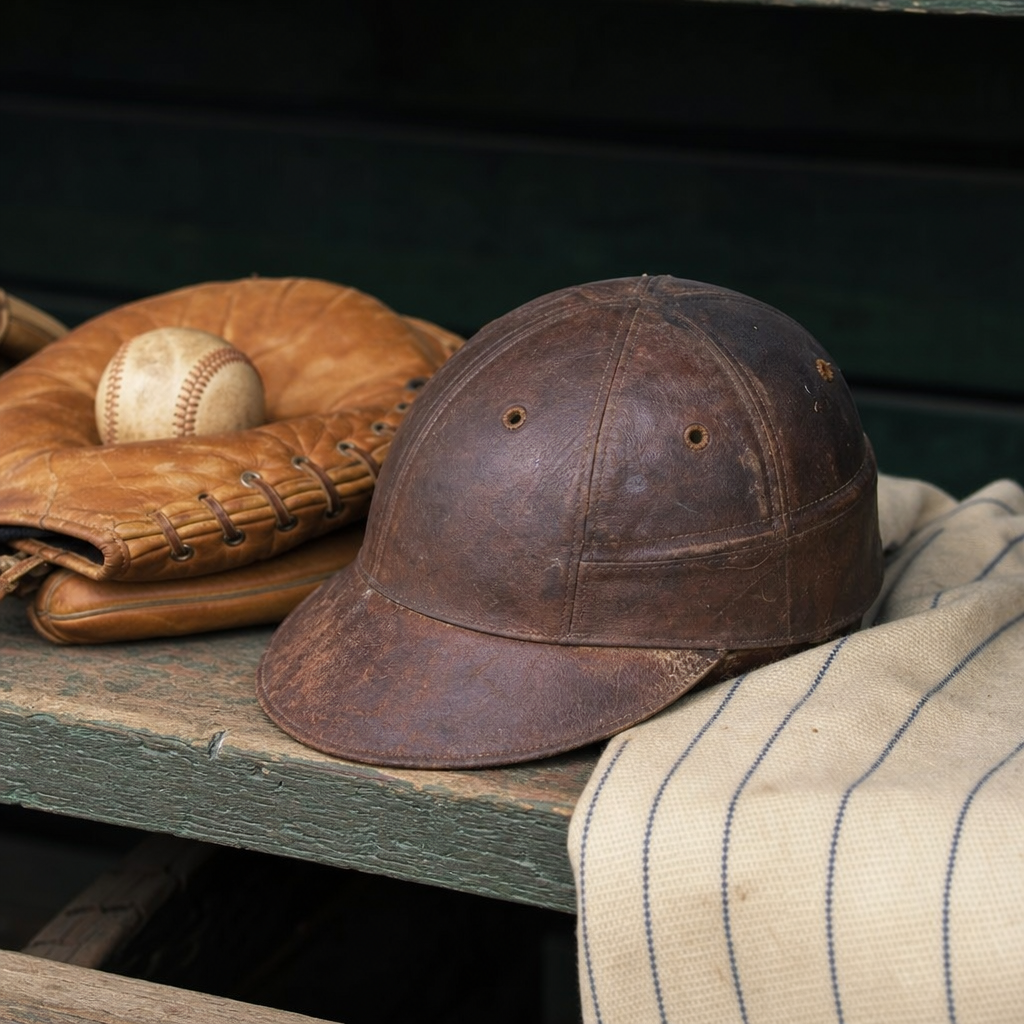
Early batting helmets were not true helmets in the modern sense. They ranged from padded caps to fiber shells inserted under or over standard baseball caps. Their main problems were bulk, heat, poor fit, and player resistance. By the 1940s and 1950s, manufacturers began producing more practical hard-shell designs, and teams experimented with them unevenly. Branch Rickey strongly supported protective headgear after witnessing severe injuries, and the Pittsburgh organization became a notable adopter. The National League required some use of protective helmets for certain players in 1956, and Major League Baseball eventually expanded mandatory helmet requirements, though veteran clauses delayed universal compliance.
| Period | Helmet development | Why it mattered |
|---|---|---|
| Pre-1920 | Padded cap ideas and isolated experiments | Showed safety concerns existed before Chapman |
| 1920s-1930s | Continued discussion, limited practical adoption | Revealed cultural resistance and design shortcomings |
| 1940s-1950s | Harder shells and team-level trials | Made protection more realistic for everyday use |
| 1956 onward | League rules began requiring helmets in stages | Shifted safety from personal choice to formal policy |
| 1971 onward | Broader mandatory use with remaining exceptions phased out | Established the modern expectation of head protection |
Modern batting helmets are the product of materials science, standards testing, and repeated injury analysis. Contemporary models use molded shells, energy-absorbing liners, ear protection, and, increasingly, jaw guards. At amateur levels, certification standards from bodies such as NOCSAE shape design requirements, while professional leagues work through their own approval processes. The important point is that helmet evolution did not happen because one invention solved everything. It happened because repeated injuries, public scrutiny, engineering improvements, and rule mandates converged over decades. Chapman’s death remained a reference point in that process because it illustrated the worst possible consequence of inaction.
Why this incident belongs in scandals and controversies
Some historians hesitate to place the Ray Chapman incident under scandals because there was no proven malicious intent by Carl Mays. That caution is fair, but the controversy is broader than personal blame. The scandal, in institutional terms, lies in baseball’s tolerance for conditions that increased fatal risk: dark baseballs, permissive spitball culture, weak equipment standards, and a macho resistance to protective gear. Mays himself was polarizing, and his reputation affected how the event was remembered, yet the deeper issue was governance. When a league knows a hazard exists and delays corrective action, controversy is unavoidable whether or not any individual intended harm.
This broader framing also makes Chapman’s case a useful hub topic for miscellaneous baseball controversies. It links to how leagues regulate dangerous play, how innovations are delayed by tradition, and how public outrage influences rulemaking. The same pattern appears in later debates about catchers blocking the plate, collisions at second base, concussion protocol, and pitcher enforcement around foreign substances. Sports history is full of moments where custom survives until tragedy forces reform. Chapman’s story is among the clearest examples because the causal chain is direct, emotionally resonant, and historically documented.
What the Ray Chapman incident means today
Today, the Ray Chapman incident matters because it teaches that player safety rarely improves through goodwill alone. It improves when leagues identify risk, standardize equipment, enforce rules, and accept that tradition is not a defense for preventable harm. In baseball, that lesson extends beyond helmets. It informs youth pitch-count rules, protective netting for spectators, concussion evaluation, and ongoing debates about facial protection for pitchers and infielders. The sport is safer now because earlier generations paid a human price for the hazards they normalized.
The key takeaway is simple. Ray Chapman’s death was a tragedy, but the lasting significance of the Ray Chapman incident is the way it exposed baseball’s unsafe practices and helped drive the long evolution of batting helmets and ball-handling reforms. If you are building out coverage under scandals and controversies, use this page as the hub that connects equipment history, rule changes, medical response, and baseball’s uneasy relationship with risk. From here, explore related cases, compare later safety reforms, and read the individual subtopic articles that deepen each part of the story.
Frequently Asked Questions
What was the Ray Chapman incident, and why is it so significant in baseball history?
The Ray Chapman incident refers to the tragic event on August 16, 1920, when Cleveland Indians shortstop Ray Chapman was struck in the head by a pitch thrown by New York Yankees submarine pitcher Carl Mays at the Polo Grounds. Chapman collapsed after being hit, was taken for medical treatment, and died the following day from his injuries. His death remains the only on-field fatality in Major League Baseball directly caused by a pitched ball, which is why the event occupies such a serious place in the sport’s history.
Its significance goes far beyond the box score. Chapman’s death exposed how vulnerable players were in an era before modern protective equipment, advanced emergency response, and standardized safety rules. At the time, batters did not wear helmets, ball conditions were often poor, and visibility could be compromised by scuffed, darkened, or dirty baseballs that stayed in play much longer than they do today. The incident became a defining example of how tradition and toughness had long outweighed safety concerns in baseball. In retrospect, it stands as one of the clearest moments showing that the game’s customs needed to evolve in order to protect players from preventable harm.
How did the conditions of baseball in 1920 contribute to the tragedy?
Several conditions common to the Deadball Era and the early 1920s helped create the danger surrounding the Ray Chapman incident. One of the most important was the condition of the baseball itself. At that time, the same ball was often used for extended stretches, even after it became dirty, soft, and difficult to see. Pitchers commonly doctored baseballs with spit, dirt, tobacco juice, or other substances, and scuffed balls were not unusual. As a result, hitters could have trouble picking up the ball’s flight, especially in late-afternoon light.
Carl Mays was also known for a delivery that made the ball especially hard to track. He threw from a low submarine angle, and accounts from the period suggest Chapman may not have seen the pitch clearly before it struck him. There were no batting helmets in standard use, and medical care on the field was nowhere near as developed as it is in the modern game. Even basic emergency protocols were limited by comparison to today’s standards. Taken together, these factors did not excuse the tragedy, but they do explain why baseball’s environment at the time was far less safe than modern fans might assume. The incident highlighted not just one pitch, but an entire system in which visibility, equipment, and protective standards lagged far behind the risks players faced.
Did Ray Chapman’s death immediately lead to batting helmets in Major League Baseball?
No, Ray Chapman’s death did not produce an immediate league-wide helmet requirement, and that delayed response is one of the most revealing parts of the story. Although the incident shocked the baseball world, helmets were not adopted right away. For many years, players and decision-makers resisted head protection for a combination of cultural and practical reasons. Baseball had a deeply rooted toughness ethos, and many players viewed protective headgear as unnecessary, uncomfortable, or even stigmatizing. Early helmet designs also lacked the comfort, fit, and performance qualities needed for broad acceptance.
Instead of causing instant reform, Chapman’s death became part of a longer safety conversation that unfolded gradually over decades. Teams and inventors experimented with forms of protective headgear, but widespread use remained inconsistent. It was not until much later that helmet adoption accelerated, and Major League Baseball eventually moved toward mandatory helmet policies. This slow evolution matters because it shows how sports often change: even after a clear warning sign, institutions may take years to align technology, rulemaking, and player acceptance. In that sense, the Ray Chapman incident was not the sole cause of batting helmets, but it was an early and powerful catalyst in the broader movement toward head protection.
How did the Ray Chapman incident influence helmet evolution and player safety standards over time?
The long-term impact of the Ray Chapman incident can be seen in how baseball gradually rethought player safety, especially around head injuries. While helmet development was not immediate, Chapman’s death remained a haunting reference point whenever the sport discussed dangerous pitches, visibility, or protective equipment. Over time, baseball moved away from older practices that made the game more hazardous. Cleaner baseballs, tighter equipment standards, and eventually the normalization of batting helmets all reflected a broader shift toward risk reduction.
Helmet evolution itself was incremental. Early protective designs were often experimental and not universally embraced, but the concept gained traction as awareness of head trauma grew. As manufacturers improved materials and design, helmets became lighter, more durable, and more practical for regular use. Major League Baseball eventually required helmets for batters, and later refinements included better interior padding, ear-flap protection, and higher manufacturing standards. In the modern era, concerns about concussions and other head injuries have continued to push helmet technology forward.
What makes Chapman’s story so important in this context is that it symbolizes the cost of waiting too long to address obvious danger. His death became part of baseball’s institutional memory, reminding the sport that tradition alone cannot justify preventable risk. Today’s helmet rules and safety expectations were shaped by many incidents and many decades of change, but the Ray Chapman incident remains one of the earliest and most sobering events in that history.
Why does the Ray Chapman incident still matter in discussions about sports safety today?
The Ray Chapman incident still matters because it raises timeless questions about how sports respond to known risk. At its core, the story is not only about a single tragic pitch; it is about whether governing bodies, teams, and players act quickly enough when danger becomes undeniable. That question remains highly relevant in modern conversations about concussions, protective gear, emergency medical planning, and rule changes designed to prevent catastrophic injury.
Chapman’s death is also a reminder that safety progress is often reactive. Rules and equipment improvements frequently arrive only after a serious injury forces the issue into public view. Looking back at 1920, it is easy to see how accepted practices—such as poor ball visibility, minimal protective gear, and limited medical preparedness—left players exposed. The lesson for today’s sports world is that waiting for consensus can carry a human cost. Baseball’s later embrace of helmets and stronger safety standards shows that reform is possible, but Chapman’s story underscores why proactive prevention is better than delayed response.
For readers and fans, the incident remains significant because it connects history to the present. It helps explain why protective equipment standards matter, why leagues continually review avoidable hazards, and why conversations about athlete welfare should never be dismissed as overcaution. The Ray Chapman incident endures because it marks the moment when baseball’s romance with tradition collided with the reality that player safety must come first.