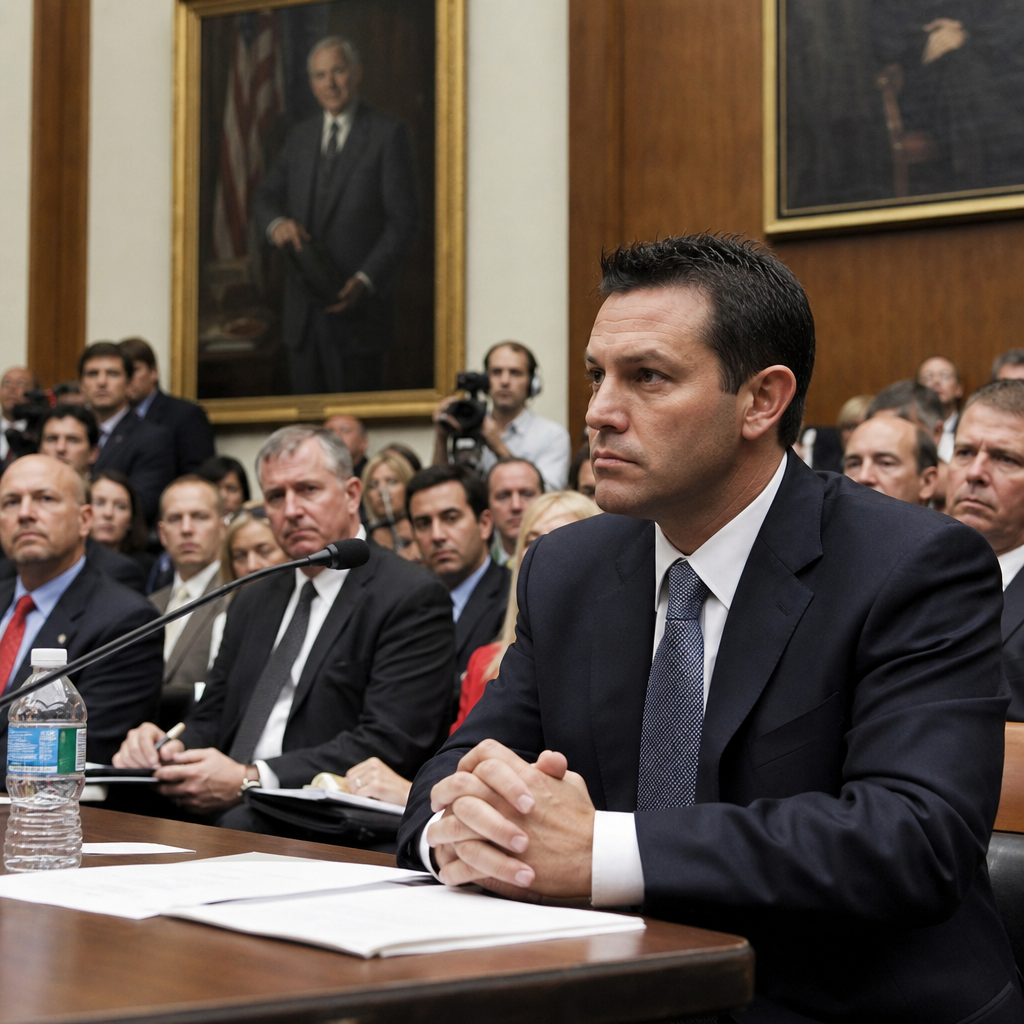
The 2005 Congressional steroid hearings marked a turning point in modern sports, because they put Major League Baseball, its stars, and its labor practices under national scrutiny in a way no commissioner’s memo or sports page investigation ever had. When lawmakers summoned players, executives, and union figures to Capitol Hill in March 2005, the issue was larger than home run totals. Congress was examining whether performance-enhancing drugs had distorted competition, misled fans, endangered young athletes, and exposed a major American institution as unwilling to police itself. For anyone studying scandals and controversies in baseball, these hearings sit at the center of the story, connecting the anabolic steroid era, the BALCO investigation, the Mitchell Report, Hall of Fame debates, and the long cleanup that followed.
In practical terms, the hearings were a public investigation by the House Government Reform Committee into steroid use in baseball. Performance-enhancing drugs included anabolic steroids, human growth hormone, and related substances used to increase strength, recovery, or muscle mass. Baseball was “on trial” not in a courtroom, but in the court of public opinion and federal oversight. I have covered and analyzed this period for years, and the lasting lesson is clear: the hearings mattered because they transformed what had been treated as a clubhouse issue into a governance crisis. They forced direct answers to basic questions fans were asking: Who knew? Who benefited? Why did the sport move so slowly? And could records from the late 1990s and early 2000s still be trusted?
The importance of the 2005 congressional steroid hearings also lies in their hub function within baseball’s broader scandal history. Almost every major controversy in the era runs through this event. Mark McGwire’s evasive testimony, Rafael Palmeiro’s finger-pointing denial, Sammy Sosa’s selective memory, Jose Canseco’s accusations, and Commissioner Bud Selig’s defense of league policy created enduring reference points. Later developments, including Palmeiro’s suspension, Barry Bonds’s legal battles, Alex Rodriguez’s admissions, and stricter Joint Drug Prevention and Treatment Program rules, all make more sense when viewed through the hearings. If you want one entry point for the miscellaneous controversies surrounding baseball’s steroid era, this is it: a moment when statistics, ethics, labor law, medicine, politics, media pressure, and fan trust collided on live television.
Why Congress got involved
Congress did not investigate baseball simply because home run numbers looked suspicious. Lawmakers stepped in because the issue had become a public health and consumer trust problem. The Bay Area Laboratory Co-Operative, better known as BALCO, had already become a national story after federal investigations linked elite athletes to designer steroids such as THG, or tetrahydrogestrinone. Grand jury testimony leaks, reporting by the San Francisco Chronicle, and Jose Canseco’s 2005 book Juiced pushed steroid allegations into mainstream political conversation. Members of Congress argued that if baseball would not enforce meaningful safeguards, the government had a duty to ask why.
There was also precedent for congressional interest in sports when leagues touched broader social concerns. Baseball had long enjoyed symbolic status as a national pastime, and televised hearings gave lawmakers a high-visibility platform to discuss youth behavior. Several representatives explicitly linked Major League players to teenage imitation. The logic was simple and politically effective: if children believed muscle and performance came from illegal or dangerous drugs, baseball’s failures reached beyond box scores. That framing turned a league policy dispute into a matter of national responsibility.
The timing mattered. MLB had a testing policy by 2005, but many observers considered it weak. Penalties were lighter than those in the NFL and Olympic systems, testing methods lagged, and the collectively bargained structure with the Major League Baseball Players Association limited unilateral league action. From experience covering labor disputes, this is where outsiders often miss the real tension. The hearings were not just about “catch the cheaters.” They were about whether the league and union had built a system that could credibly deter use while respecting collectively bargained rights. Congress judged the answer to be no.
The hearing room and the major figures
The witness list made the event unforgettable. Commissioner Bud Selig and MLBPA head Donald Fehr represented the institutional power centers. Current and former stars included Mark McGwire, Sammy Sosa, Rafael Palmeiro, Curt Schilling, and Jose Canseco. Their reputations, speaking styles, and strategic choices shaped public memory. McGwire’s line that he was “not here to talk about the past” instantly became shorthand for evasion. Palmeiro delivered one of the most dramatic denials in sports history, emphatically stating, “I have never used steroids. Period.” Sosa repeatedly said he had never tested positive, while Canseco positioned himself as the whistleblower willing to describe how widespread use had become.
Schilling played a distinct role because he arrived prepared to condemn steroid use in moral and competitive terms. His testimony gave Congress a cooperative star witness and contrasted sharply with players who cited legal risk, privacy concerns, or union boundaries. Selig argued that baseball had made progress and needed room to continue reforms. Fehr emphasized collective bargaining and warned against political grandstanding. In the room, you could see the fault lines clearly: institution versus reform, privacy versus transparency, and reputation management versus fact-finding.
The hearing’s optics mattered as much as the testimony. Televised images of muscular sluggers seated before lawmakers turned abstract allegations into a civic drama. Baseball was being judged not by earned run average or on-base percentage, but by candor. That is why the hearing remains a hub topic in scandal coverage. It fused performance data, leaked evidence, media narratives, and legal caution into a single national spectacle.
What the players said and why it resonated
Each player’s testimony carried a different message. McGwire’s refusal to answer direct questions about his own steroid use was legally understandable, but publicly disastrous. He wanted to avoid self-incrimination and keep the focus on youth prevention. Instead, many fans heard a non-denial. Palmeiro chose the opposite strategy: unequivocal denial. That made his later positive test for stanozolol in August 2005 especially damaging, because it retroactively transformed his testimony from forceful defense into a symbol of the era’s dishonesty. Sosa’s fragmented answers, including uncertainty about interpreters and recollections, generated skepticism even without immediate proof.
Canseco was the most inflammatory witness because he supplied names, methods, and clubhouse context. His credibility was contested, but his willingness to describe injections, sourcing, and player culture gave Congress what the others mostly would not: specifics. In scandals, specificity often beats status. A less beloved witness who provides detail can influence the story more than a superstar protecting his image. That is exactly what happened here.
The directness of these moments explains why the hearings continue to appear in retrospectives, documentaries, and Hall of Fame discussions. They gave the public simple, replayable scenes that condensed a complex issue into memorable testimony.
| Figure | Role at hearings | Key message | Long-term impact |
|---|---|---|---|
| Bud Selig | Commissioner | Baseball was addressing the issue | Pressure increased for stronger league policy |
| Donald Fehr | Players union head | Testing and discipline required bargaining | Highlighted labor limits on rapid reform |
| Mark McGwire | Retired star | Would not discuss past personal use | Became the era’s defining image of evasion |
| Rafael Palmeiro | Active star | Issued absolute denial | Positive test later destroyed his credibility |
| Jose Canseco | Former player | Use was widespread and organized | Helped validate broader suspicion of the era |
How the hearings changed baseball policy
The most concrete legacy of the 2005 congressional steroid hearings was policy acceleration. Baseball already had a drug program, but after the hearings it became politically and commercially untenable to defend a softer system. MLB and the MLBPA moved toward tougher penalties, more comprehensive testing, and stronger investigative mechanisms. The penalties adopted later in 2005 were substantially stricter than the earlier framework: a 50-game suspension for a first offense, 100 games for a second, and a lifetime ban for a third. That structure signaled that baseball finally understood deterrence had to be visible and severe.
Testing also evolved. Laboratories needed to detect a wider range of substances, chain-of-custody procedures had to withstand legal scrutiny, and baseball had to align more closely with standards used in other elite sports environments. While no testing regime is perfect, the post-hearing reforms made it harder to dismiss MLB’s system as symbolic. In my view, this is one of the clearest examples in sports governance of public embarrassment forcing overdue institutional modernization.
The hearings also laid groundwork for later accountability measures, especially former Senator George Mitchell’s investigation. The 2007 Mitchell Report did not emerge in a vacuum. It followed a period when league credibility had been badly damaged and independent review became a practical necessity. The report named players, traced supplier networks, and documented systemic weaknesses. Whether one agrees with every evidentiary choice in that report, the political conditions that made it possible were forged in 2005.
The effect on players, records, and Hall of Fame debates
The hearings changed how fans interpreted baseball achievement. Before 2005, many observers suspected steroid use but still consumed the home run boom as entertainment. After the hearings, suspicion became a standard lens for evaluating late-1990s and early-2000s numbers. Records by Barry Bonds, McGwire, and Sosa no longer sat apart from the drug conversation; they were inseparable from it. Even players never named in formal cases found their physiques, aging curves, and power spikes questioned.
Hall of Fame voting became the most visible arena for this moral accounting. Writers and fans debated whether suspected or confirmed users should be judged by historical context, written rules, or character clauses. Palmeiro’s candidacy suffered not only because of his suspension, but because his testimony made the case feel like deception layered onto drug use. Bonds and Roger Clemens faced different legal and evidentiary paths, yet the hearings helped define the standard atmosphere of doubt around their candidacies. The public had watched baseball’s credibility fracture in real time, and Hall voters carried that memory for years.
This period also reshaped how teams evaluated risk. Front offices became more sensitive to reputational exposure, contract protection language, and medical oversight. Clubhouses changed too. Younger players entered a sport where testing was stricter, media scrutiny was relentless, and casual discussion of “supplements” no longer sounded harmless. That cultural shift may be less dramatic than a televised hearing, but it is one of the event’s deepest consequences.
Media, public trust, and the broader scandal ecosystem
The 2005 hearings were a media event as much as a policy event, and that distinction matters. Sports radio, cable news, newspapers, and early online commentary all amplified the spectacle. Clips of McGwire and Palmeiro circulated far beyond baseball audiences. For general news consumers, the hearings became the easiest way to understand the steroid era: famous players, sharp questions, visible discomfort, and moral stakes. Media packaging simplified the story, but it also ensured that baseball could not contain the damage through internal statements alone.
As a hub topic under scandals and controversies, the hearings connect to several adjacent subjects that deserve further reading. BALCO explains the legal and pharmaceutical pipeline. The Mitchell Report explains the league’s later fact-finding response. Barry Bonds, Alex Rodriguez, and Manny Ramirez represent major player-centered case studies in denial, exposure, suspension, and legacy management. The evolution of drug testing explains how enforcement matured. Hall of Fame voting explains how scandal outlives the careers involved. Together, these topics form the broader miscellaneous map of baseball controversy, and the 2005 hearing is the central junction linking them.
Public trust never fully returns through one rule change or one commissioner statement. It returns when institutions show they can detect misconduct, punish it consistently, and speak honestly about past failures. Baseball struggled with that sequence. The hearings forced the honesty phase, even if many witnesses resisted it. That is why they remain essential history rather than old political theater.
The 2005 congressional steroid hearings put baseball on trial and exposed a sport that had benefited from soaring offense while failing to build a credible anti-doping system. Congress intervened because the issue touched competition, labor policy, public health, and consumer trust. The testimony of Bud Selig, Donald Fehr, Mark McGwire, Rafael Palmeiro, Sammy Sosa, Curt Schilling, and Jose Canseco gave the public a vivid framework for understanding the steroid era. Some witnesses defended institutions, some protected themselves, and some provided damaging detail, but together they confirmed that baseball’s drug problem could no longer be minimized.
The hearings mattered because they changed what came next. Stronger penalties, more serious testing, independent investigation, and lasting Hall of Fame consequences all followed from the pressure created in 2005. They also reshaped the way fans read records and remember stars. In the wider landscape of baseball scandals and controversies, this event functions as a hub because it ties nearly every major steroid-era storyline together. If you are building a deeper understanding of the sport’s most contentious chapter, use these hearings as your starting point, then continue into BALCO, the Mitchell Report, and the individual player cases that defined the era.
Frequently Asked Questions
What were the 2005 Congressional steroid hearings, and why were they such a major moment for baseball?
The 2005 Congressional steroid hearings were a series of high-profile appearances before the U.S. House Committee on Government Reform in March 2005, focused on the use of performance-enhancing drugs in Major League Baseball. What made them so significant was not just the subject matter, but the stage. This was no longer a debate confined to clubhouses, sports talk radio, or investigative reporting. It became a national political event, with some of the biggest names in baseball testifying under oath before lawmakers and television cameras.
The hearings mattered because they transformed the steroid issue from a sports controversy into a public accountability crisis. Congress was examining whether baseball had failed to protect the integrity of competition, whether players had gained unfair advantages, whether fans had been misled, and whether the league and the players’ union had tolerated a culture that allowed drug use to flourish. In that sense, baseball itself was effectively “on trial.”
They also landed at a time when the so-called Steroid Era had already raised years of suspicion. Extraordinary power numbers, rapidly changing physiques, and revelations from federal investigations had eroded public trust. By bringing players, executives, and union representatives to Capitol Hill, Congress elevated those concerns into a broader conversation about ethics, labor policy, health risks, and the responsibility of major sports institutions to police themselves. The hearings became a turning point because they forced baseball to confront these questions in a way it had long resisted.
Who testified at the hearings, and why did their testimony attract so much attention?
The witness list was one of the biggest reasons the hearings drew enormous national attention. Major League Baseball commissioner Bud Selig appeared, as did MLB Players Association head Donald Fehr. Team executives and medical experts were also part of the proceedings. But the public fascination centered on current and former star players, including Mark McGwire, Sammy Sosa, Rafael Palmeiro, Curt Schilling, and José Canseco, each of whom represented a different side of the steroid conversation.
José Canseco had already become a central figure because he publicly alleged widespread steroid use in baseball and named prominent players in his book. His testimony fed the perception that the problem was far more extensive than many in the sport had admitted. Mark McGwire’s appearance became especially memorable because he repeatedly declined to discuss whether he had used steroids, saying he was not there to talk about the past. That response frustrated lawmakers and became one of the defining images of the day.
Sammy Sosa denied ever using illegal performance-enhancing drugs, while Rafael Palmeiro delivered one of the hearing’s most famous moments by emphatically telling Congress, “I have never used steroids. Period.” Curt Schilling, by contrast, took a more direct anti-steroid position and framed the issue in moral and competitive terms. The testimony drew such intense attention because these were not obscure figures. They were central personalities from baseball’s most visible era, and many had helped shape the home run boom that had brought fans back to the sport after the 1994 strike. Watching them answer questions under oath gave the public a rare look at how uneasy, defensive, and consequential the steroid issue had become.
Why did Congress get involved in Major League Baseball’s steroid problem in the first place?
Congress became involved because the steroid issue touched on concerns that extended beyond sports entertainment. Lawmakers argued that professional athletes serve as role models, especially for young people, and that the use of performance-enhancing drugs in baseball could influence amateur athletes and students to experiment with dangerous substances. From that perspective, the issue was tied not only to fair play in the majors, but also to public health and youth behavior.
There was also a governance question. Major League Baseball had long enjoyed a special cultural and legal status in American life, and critics believed the sport had not acted aggressively enough to address mounting evidence of steroid use. Congress wanted to know whether the league and the players’ union had created weak testing systems, tolerated loopholes, or prioritized labor peace and revenue over enforcement. By hauling baseball officials and players before a committee, lawmakers signaled that if the sport would not regulate itself effectively, outside pressure might force change.
At the same time, the hearings reflected the political theater that often accompanies congressional oversight. Baseball was one of the country’s most beloved institutions, and a hearing involving famous sluggers was guaranteed to draw cameras and headlines. But reducing the event to pure spectacle misses the larger point. Congress was probing whether a major American industry had permitted a culture that compromised health, honesty, and competition. Even if lawmakers had no direct role in running baseball, they had the power to pressure it publicly, and in 2005 they used that power in a highly visible way.
What impact did the hearings have on MLB’s drug policies and the sport’s public image?
The hearings accelerated change in both policy and perception. On the policy side, they intensified pressure on Major League Baseball and the MLB Players Association to strengthen their drug-testing program. Prior testing rules had widely been viewed as too weak, too infrequent, and too easy to evade. After the hearings, the sport moved toward tougher standards, including more rigorous testing, stronger penalties, and a broader commitment to enforcement. The public shaming element of the congressional process made it much harder for baseball to maintain half-measures.
Just as important, the hearings permanently altered the way fans and historians looked at the era. Before 2005, many people suspected steroid use but could still treat it as rumor, innuendo, or background noise to record-breaking performances. After the hearings, steroid use became central to how the period was interpreted. Home run totals, MVP races, contract negotiations, and even Hall of Fame debates were all reexamined through the lens of performance-enhancing drugs.
The damage to baseball’s image was substantial. The sport’s leadership appeared reactive rather than proactive, and several star players came across as evasive, combative, or carefully lawyered. That did not mean the hearings destroyed baseball’s popularity, but they did undermine trust. Fans became more skeptical of extraordinary performances, and the sport entered a long period of reputational repair. In many ways, the hearings forced MLB to choose between protecting the myths of its recent past and restoring confidence in its future. The league ultimately leaned into stricter oversight because the old approach was no longer sustainable.
How should fans and historians view the legacy of the 2005 steroid hearings today?
Today, the hearings are best understood as a watershed moment in the history of modern sports accountability. They did not begin baseball’s steroid problem, and they did not solve it overnight. But they changed the terms of the conversation. After March 2005, it was no longer possible for baseball to treat performance-enhancing drugs as a manageable public relations issue. The hearings made clear that the problem implicated competitive integrity, labor relations, player health, media credibility, and the trust between the sport and its audience.
For historians, the hearings also serve as a lens for understanding the contradictions of the Steroid Era. Baseball benefited enormously from the power surge and spectacle of the late 1990s and early 2000s, particularly as it worked to recover from the damage of the 1994 strike. Fans, media outlets, sponsors, and league officials all participated, to varying degrees, in a culture that celebrated the results while asking limited questions about the methods. The hearings exposed that collective denial. They showed that the issue was not simply about a few rogue players, but about a system that often lacked the will to confront what was happening in plain sight.
For fans, the legacy is more complicated than simple outrage or cynicism. The hearings remain a reminder that sports are never only about numbers on a stat sheet. They are also about trust, values, incentives, and institutions. The 2005 testimony did not erase the achievements of that era, but it did ensure those achievements would always be debated in a different light. In that sense, the hearings endure not just as a baseball story, but as a case study in what happens when a major cultural institution is finally forced to answer, in public, for what it allowed behind the scenes.