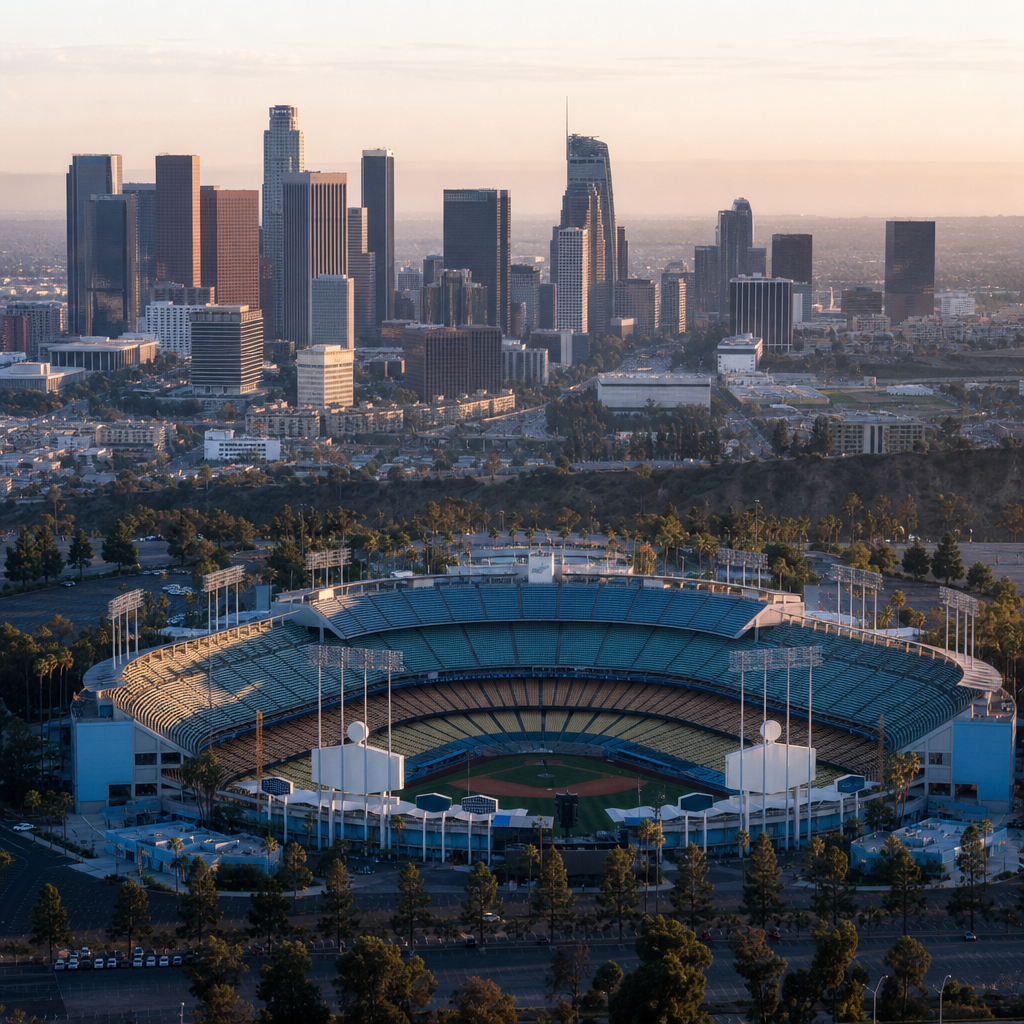
The Dodgers’ move to Los Angeles remains one of the most consequential and disputed franchise relocations in American sports history. More than a simple change of address, the transfer of the Brooklyn Dodgers to Southern California in 1958 reshaped Major League Baseball, accelerated the rise of coast-to-coast professional sports, and left generations of fans arguing over whether progress justified the human and civic costs. In any serious review of baseball scandals and controversies, this story belongs near the center because it combined business pressure, political maneuvering, urban redevelopment, media ambition, and public heartbreak in one decision.
To understand why the controversy still matters, it helps to define relocation in practical terms. A sports franchise relocation occurs when an owner moves a team from one city to another, usually to pursue stronger revenues, a better stadium deal, or a larger growth market. The Dodgers’ relocation fits that definition, but it also went further. It exposed how tightly sports can be tied to public land, civic identity, and displacement. I have worked through relocation case studies for years, and the Dodgers’ example is the one I return to most often because nearly every modern argument about stadium subsidies, fan loyalty, owner leverage, and municipal power appears here in an early and unusually vivid form.
The core facts are straightforward. Team owner Walter O’Malley sought a modern stadium to replace aging Ebbets Field in Brooklyn. New York politics, land constraints, and Robert Moses’s resistance to O’Malley’s preferred plan helped stall local solutions. At the same time, Los Angeles officials were eager to attract a major league club and offered a path to a new ballpark in Chavez Ravine. The result was the Dodgers’ departure from Brooklyn after the 1957 season, followed immediately by the New York Giants’ move to San Francisco. Baseball, once concentrated in the Northeast and Midwest, became a truly national major league.
Yet the bare timeline does not explain the emotional power of the issue. For Brooklyn supporters, the Dodgers were not just an entertainment property. They represented borough pride, neighborhood continuity, and the daily rituals that connect working-class communities to civic life. For residents affected by the Chavez Ravine land saga, the move also symbolized a different kind of loss: families displaced by a tangled sequence of housing promises, condemnation actions, and redevelopment politics. That double legacy is why this article serves as a hub within the broader scandals and controversies topic. The Dodgers’ move to LA touches ownership ethics, city planning, race and class, media strategy, and the modern economics of sports.
Why Brooklyn Was Vulnerable to Losing the Dodgers
The popular version of the story says O’Malley simply abandoned loyal fans for money. Money mattered, but the structural pressures were real. Ebbets Field, opened in 1913, had charm and history, but by the 1950s it lacked the parking capacity, roadway access, and revenue-generating design that owners increasingly viewed as essential. Baseball attendance patterns were changing as suburbanization accelerated after World War II. Fans who once arrived by streetcar and elevated train were driving from farther distances, and newer stadium concepts prioritized large parking lots and automobile access.
O’Malley wanted a Brooklyn replacement near Atlantic and Flatbush, often described as a domed stadium proposal integrated with transit. Robert Moses, New York’s powerful planning figure, favored a city-owned stadium in Flushing Meadows, Queens, a site that later became Shea Stadium. That disagreement was decisive. From an owner’s perspective, control over stadium revenue streams mattered as much as location. Concessions, parking, scheduling, and adjacent development all affect franchise value. O’Malley believed he could not secure the land package and autonomy he needed in Brooklyn, while Los Angeles promised speed, land, and political will.
There was also a broader league context. By the mid-1950s, franchise mobility had become more plausible. The Boston Braves had moved to Milwaukee in 1953 and immediately drew large crowds, proving that relocation could deliver a financial jolt. Owners across baseball were watching metropolitan growth trends, and Southern California was impossible to ignore. Los Angeles County was booming in population, advertising, and corporate relevance. If baseball intended to remain culturally dominant against football and television, a West Coast footprint offered strategic advantages.
The Los Angeles Offer and the Chavez Ravine Dispute
Los Angeles did not simply receive the Dodgers through market size alone. The city assembled a political and land strategy that made relocation feasible. The key site was Chavez Ravine, a hilly area near downtown that had been home to Mexican American communities including Palo Verde, La Loma, and Bishop. In the early 1950s, the land had been targeted for a public housing project under the Housing Act environment of the era. Residents were encouraged or pressured to sell, often under promises tied to redevelopment. When anti-public housing politics later killed the original plan, the land remained in public hands, setting the stage for a new use.
This is where the controversy deepens. The Dodgers did not personally initiate the earliest displacement in Chavez Ravine, but the team benefited from the conditions redevelopment created. In 1958, Los Angeles voters approved a referendum connected to the land transfer and stadium arrangement, but public approval did not erase the grievances of families who had lost homes and community ties. The final removals in 1959, including the widely photographed eviction of the Arechiga family, became defining images of state power and broken promises. Any balanced account of the Dodgers’ move must include those residents, because the stadium story and the displacement story cannot honestly be separated.
| Issue | Brooklyn Position | Los Angeles Position | Why It Mattered |
|---|---|---|---|
| Stadium site | Dense urban constraints around Ebbets Field | Large tract at Chavez Ravine | Land availability determined speed and scale of development |
| Parking and access | Limited auto infrastructure | Auto-oriented regional planning | Postwar fans increasingly traveled by car |
| Political support | Conflict with Robert Moses and city priorities | Aggressive municipal courting | Government alignment often decides relocation outcomes |
| Public cost | No settled modern stadium solution | Land transfer linked to redevelopment controversy | Taxpayers and residents bore indirect and direct consequences |
In plain terms, Los Angeles offered the combination owners usually seek: a growth market, leverage-friendly politics, and a facility path that promised long-term revenue. But unlike cleaner relocation narratives, this one ran through a landscape already marked by contested public policy. That is why historians, urban scholars, and fans still debate whether the Dodgers were visionary pioneers, opportunistic beneficiaries, or both.
Walter O’Malley, Public Power, and the Ethics of Relocation
Walter O’Malley remains a polarizing figure because the evidence supports competing interpretations. Critics portray him as the owner who betrayed Brooklyn while using stadium demands to extract maximum advantage. Supporters argue that he faced genuine infrastructure limits, lacked cooperation from New York power brokers, and did what many executives would do when blocked locally and welcomed elsewhere. My reading, after comparing this case with later NFL, NBA, and MLB moves, is that O’Malley was neither a cartoon villain nor a passive victim of circumstance. He was a highly capable negotiator who understood that scarcity of franchises creates leverage and that civic emotion can be converted into political pressure.
The ethical issue is not whether a business leader may pursue better conditions. It is whether a team, which trades heavily on public loyalty and civic symbolism, has obligations that exceed normal corporate behavior. Fans invest time, identity, and often taxpayer money into franchises. Cities help build infrastructure, police traffic, and market teams as public assets. In that environment, pure market logic feels inadequate. The Dodgers controversy became an early test of whether community attachment has enforceable value. In practice, it usually does not, which is one reason fans still view relocations as uniquely painful even when they make financial sense.
Public officials also deserve scrutiny. Robert Moses is central because his refusal to support O’Malley’s preferred Brooklyn site helped narrow the owner’s options. Yet Los Angeles officials were equally strategic, presenting the move as a civic triumph while minimizing or compartmentalizing the social cost attached to Chavez Ravine. When governments compete for teams, transparency often weakens. Benefits are highlighted, while displacement risks, subsidy burdens, and opportunity costs receive less attention. That pattern did not start with the Dodgers, but the Dodgers made it visible on a national scale.
How the Move Changed Baseball and American Sports
The Dodgers’ relocation permanently altered the geography and business model of Major League Baseball. By moving west with the Giants following close behind, the league broke its eastern concentration and created a true national map. Travel logistics expanded, television value increased, and the sport positioned itself in two booming California markets. That shift had real downstream effects. West Coast stars gained local platforms, youth participation widened, and baseball’s commercial calendar became more national in scope.
Dodger Stadium, which opened in 1962, reinforced the long-term logic of the move. It became one of baseball’s most recognizable venues and a durable revenue asset. The franchise flourished in Los Angeles, drawing large crowds and building a multigenerational fan base. From a purely operational standpoint, the relocation worked. That outcome is important because successful relocations tend to normalize the practice. Owners in later decades could point to the Dodgers as proof that leaving an older urban home for a larger or more modern market could strengthen a franchise for generations.
At the same time, success in Los Angeles did not erase what Brooklyn lost. The borough’s baseball identity vanished overnight, and National League baseball left New York entirely until the Mets arrived in 1962. Even then, the Mets were not a full substitute for the emotional fabric of the Dodgers. The lesson is simple: business success and moral legitimacy are not the same thing. A move can be financially brilliant and still remain culturally unforgiven.
Why the Controversy Endures in the Miscellaneous Hub
Within the broader scandals and controversies landscape, the Dodgers’ move belongs in a miscellaneous hub because it intersects several categories at once rather than fitting neatly into only one. It was a relocation dispute, a public-land controversy, a political negotiation, a media event, and a long-running argument about who truly owns a team’s identity. That complexity makes it a useful entry point for readers exploring related subjects such as stadium financing fights, owner leverage tactics, fan revolts, and redevelopment conflicts tied to sports venues.
It also endures because the arguments feel current. Every time a franchise threatens relocation over a stadium package, the same questions return. How much should a city pay to keep a team? What promises are made to residents near a proposed site, and are those promises enforceable? Does an owner’s legal right to move settle the moral question? The Dodgers case shows that the sharpest controversies are rarely about one decision alone. They are about layers of power: private capital, public authority, community voice, and historical memory.
For readers using this page as a hub, the central takeaway is that the Dodgers’ move to LA was not controversial merely because Brooklyn was sad to lose a team. It was controversial because the move sat at the intersection of ambition and displacement, innovation and exclusion, civic growth and civic rupture. Understanding that tension makes every other sports relocation story easier to read clearly. If you are exploring scandals and controversies across sports history, use this case as your baseline: follow the land, follow the politics, follow the money, and always ask who pays the hidden price. Start there, and the rest of the subtopic comes into sharper focus.
Frequently Asked Questions
Why did the Brooklyn Dodgers move to Los Angeles in the first place?
The Dodgers moved from Brooklyn to Los Angeles for a mix of financial, political, and strategic reasons, not because of a single sudden decision. By the 1950s, owner Walter O’Malley was frustrated with Ebbets Field, which he viewed as outdated, hard to expand, and poorly suited to the car-centered future of American sports. He wanted a modern, privately controlled stadium with better parking, stronger revenue potential, and more room for long-term growth. In Brooklyn, however, he ran into political resistance and competing visions about where and how a new ballpark should be built. New York City official Robert Moses favored a different site and a different financing approach than O’Malley wanted, and the two men never reached a workable agreement.
Los Angeles, by contrast, offered something much bigger than just a new home. It offered access to a rapidly growing population, a booming postwar economy, and the chance to place Major League Baseball on the West Coast in a serious way. Moving there gave the Dodgers a first-mover advantage in one of the most promising sports markets in the country. The relocation also fit a broader national trend: professional sports were becoming more mobile, more corporate, and more oriented toward expansion and television. So while many Brooklyn fans saw the move as betrayal, O’Malley and his supporters saw it as a business decision shaped by the changing economics of baseball. That tension between emotional loyalty and commercial logic is exactly why the move remains so controversial.
Why is the Dodgers’ relocation considered controversial rather than just a normal business decision?
The controversy comes from the fact that the Dodgers were not just any franchise. In Brooklyn, they were deeply woven into the borough’s identity, culture, and daily life. For many fans, the team represented neighborhood pride, working-class resilience, and a bond that went beyond wins and losses. When the Dodgers left after the 1957 season, it was experienced not merely as a business transaction but as a civic wound. Families who had supported the club for generations felt abandoned, and the loss intensified broader anxieties about urban decline, political power, and whose interests counted in mid-century America.
The move is also controversial because it raised difficult questions about the obligations sports owners owe to their communities. Supporters of relocation argue that ownership had to think about stadium economics, attendance trends, and the future viability of the franchise. Critics respond that this reasoning ignores the public trust aspect of major sports teams. Unlike ordinary companies, teams benefit from emotional loyalty, civic investment, and often public cooperation. When they leave, the damage is social as well as financial. In the Dodgers’ case, the bitterness lasted for decades because Brooklyn did not simply lose a team; it lost a symbol. That is why the relocation is still discussed in the same breath as major sports controversies and not treated as a routine corporate move.
How did the move to Los Angeles change Major League Baseball?
The Dodgers’ move to Los Angeles dramatically transformed Major League Baseball by helping turn it from a more regionally concentrated league into a truly national enterprise. Before 1958, the major leagues were heavily centered in the Northeast and Midwest. By relocating to Southern California, the Dodgers opened the door to a coast-to-coast baseball presence and demonstrated that franchises could thrive in new, rapidly expanding metropolitan areas. The New York Giants moved to San Francisco at the same time, and together those relocations changed the map of professional sports in the United States.
The impact went beyond geography. The move influenced scheduling, travel, media strategy, and the league’s long-term expansion mindset. Baseball now had to think in national rather than largely eastern terms, including time zones, air travel, and television audiences spread across the country. The success of the Dodgers in Los Angeles also showed owners that relocation could unlock immense financial upside if a team entered a large, underserved market. In that sense, the Dodgers’ move became a model, for better or worse, for later franchise decisions in multiple sports. It helped modernize baseball’s reach, but it also normalized the idea that even iconic teams could be uprooted if owners believed the economics favored relocation.
What was the human cost of the Dodgers’ move to Los Angeles?
The human cost is one of the most important reasons the relocation remains morally and historically disputed. In Brooklyn, the cost was emotional and cultural. Fans lost a team that had been part of family tradition, neighborhood identity, and local memory. The Dodgers were not an abstract brand to Brooklyn supporters; they were a living presence in the borough. Their departure left behind anger, grief, and a sense of powerlessness that was felt across generations. For many people, the issue was not simply that baseball changed, but that ordinary fans had no meaningful voice in a decision that reshaped their community.
In Los Angeles, the story carried another layer of controversy connected to land use and displacement, particularly in Chavez Ravine. The land that became associated with Dodger Stadium had already been at the center of bitter conflict involving Mexican American communities, housing debates, and forced removals. Although the full history is complex and predates the Dodgers’ arrival, the team’s move became linked in public memory with the painful transformation of that area. As a result, the Dodgers’ relocation is often discussed not just as a sports story but as part of a larger conversation about urban development, political power, and the people who bear the cost of civic progress. That combination of heartbreak in Brooklyn and displacement in Los Angeles gives the controversy unusual depth compared with many other franchise moves.
Did the success of the Dodgers in Los Angeles justify the move?
That depends on what standard of judgment is being used, which is why the debate has never really ended. If the question is whether the move succeeded in business and competitive terms, the answer is clearly yes. The Dodgers became one of baseball’s premier franchises in Los Angeles, drew massive fan support, gained a lasting foothold in a huge market, and helped make the city one of the sport’s most important centers. From the standpoint of league growth, media reach, and long-term franchise value, the relocation was enormously successful. It helped prove that Major League Baseball could thrive on a national scale and not just in its traditional eastern strongholds.
But if the question is whether success erased the ethical, emotional, and civic harm caused by the relocation, many historians and fans would say no. Financial achievement does not automatically settle questions of loyalty, community obligation, or public consequence. Brooklyn’s loss remained real even as Los Angeles celebrated its gain. Likewise, the painful history surrounding the stadium site in Los Angeles complicates any simple triumphal narrative. So the most accurate answer is that the move was undeniably successful in reshaping baseball, yet still legitimately controversial in human terms. That dual reality is precisely what makes the Dodgers’ relocation one of the defining case studies in American sports history.