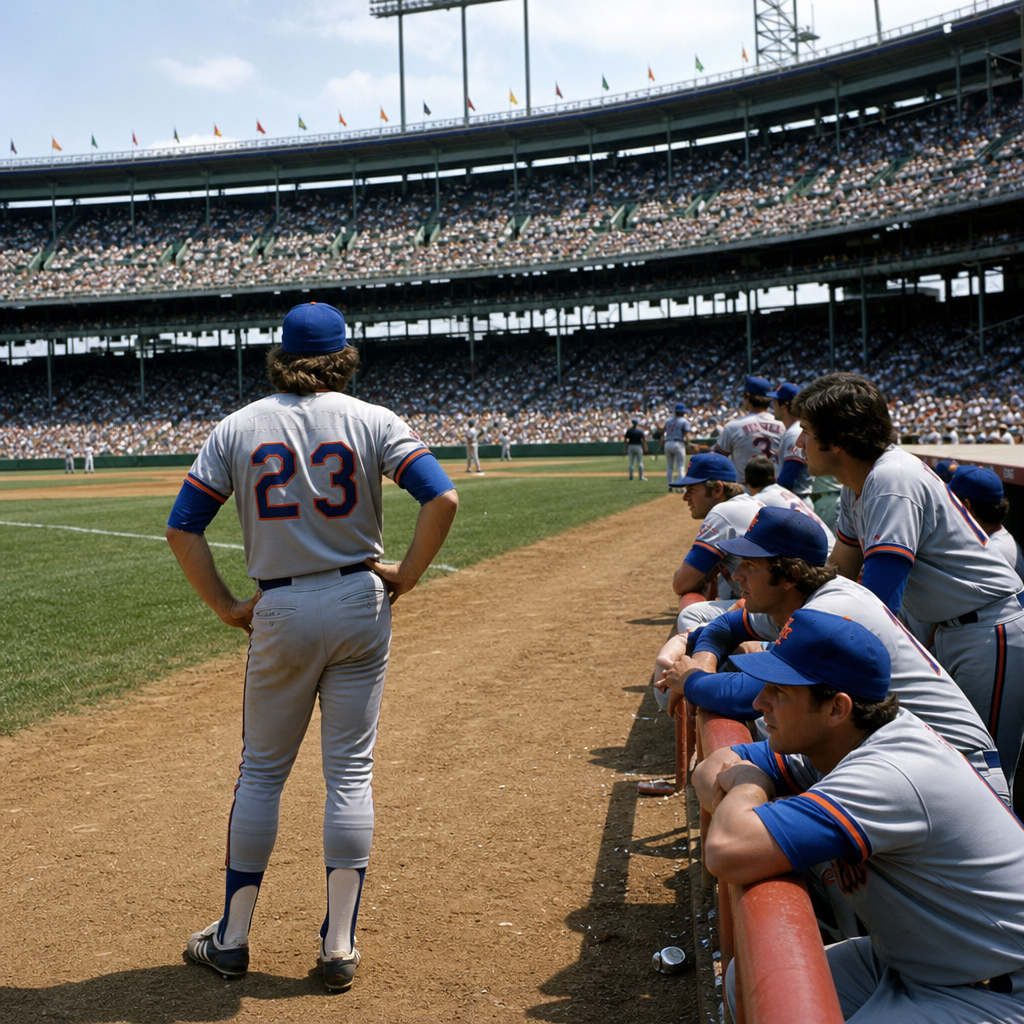
The 1981 split-season format remains one of Major League Baseball’s most controversial emergency solutions, a playoff structure created after a midseason players’ strike halted the sport for fifty days and left owners, players, broadcasters, and fans arguing over fairness. In simple terms, a split season means the standings are divided into two separate races: teams leading their divisions before the interruption qualify for the postseason as first-half champions, while clubs with the best records after play resumes qualify as second-half champions. MLB adopted that approach in 1981 to salvage television revenue, preserve a meaningful pennant race in both leagues, and avoid the commercial disaster of returning to games that no longer affected the standings for many clubs.
I have spent years working through baseball labor history, game logs, postseason formats, and franchise records, and the 1981 season always stands out because the problem was not just the strike itself. The larger issue was what happened when league officials tried to patch a broken calendar with a format that looked neat on paper but created obvious competitive distortions. Teams that dominated one half could relax in the other. Teams that performed consistently across the full season could be excluded. Clubs with inferior overall records could reach October. For a sport that traditionally rewards six months of accumulation, that felt like a breach of competitive logic.
This article serves as a hub for the wider Miscellaneous branch within baseball scandals and controversies because the split-season debate touches nearly every recurring issue in the sport: labor conflict, commissioner power, postseason expansion, television influence, fan trust, and the unintended consequences of rule changes made under pressure. Understanding 1981 helps explain why baseball now treats schedule integrity, tie procedures, playoff qualification rules, and collective bargaining communication with much greater caution. It also clarifies why many historians cite the season as a warning that even a temporary fix can leave a permanent mark on the game’s credibility.
Why the Strike Forced an Unusual Format
The players’ strike began on June 12, 1981, and lasted until July 31, wiping out 713 games. The central dispute involved compensation for free-agent signings, specifically whether owners should receive player compensation beyond the amateur draft when they lost premium talent. Labor tensions had already been rising through the 1970s, and this stoppage became the first in-season strike to cancel regular-season games. Once an agreement was reached, MLB had to answer a basic question quickly: how do you restart a season that no longer has a balanced number of games available and still produce a postseason inventory attractive to networks and sponsors?
League leaders considered several options. They could have resumed the season with winning percentage deciding division titles, shortened everything and gone straight to league championship series, or added extra playoff rounds. The split-season model won out because it created immediate stakes for nearly every market. The Yankees, Athletics, Phillies, and Dodgers were declared first-half division winners. Everyone else started a fresh race beginning in August. From a business perspective, this was rational. From a sporting perspective, it was deeply flawed, because the first-half winners still played regular-season games despite already owning postseason spots, and the reset effectively erased months of legitimate performance for teams chasing those leaders.
How the 1981 Split-Season Format Worked
Under the adopted system, each division produced two qualifiers, one from each half, and those clubs met in a newly created Division Series before the League Championship Series. If the same team won both halves, the club with the next-best full-season record in that division would qualify. That contingency never became necessary, but its presence revealed how improvised the system was. MLB was inventing postseason logic on the fly, something that rarely reassures players or fans.
The mechanics were easy to explain but hard to defend. A team could clinch the first half, slump badly after the strike, and still enter October. Another club could finish with the best overall record in baseball yet receive no special protection beyond whatever happened within its half. That is exactly why critics still call 1981 a case study in procedural fairness versus commercial necessity.
| Division | First-Half Winner | Second-Half Winner | Notable Controversy |
|---|---|---|---|
| AL East | New York Yankees | Milwaukee Brewers | Baltimore had a better full-season record than New York |
| AL West | Oakland Athletics | Kansas City Royals | Kansas City reached playoffs with a losing overall record |
| NL East | Philadelphia Phillies | Montreal Expos | St. Louis posted the best full-season divisional record but missed out |
| NL West | Los Angeles Dodgers | Houston Astros | Cincinnati had the best overall record in the division and missed playoffs |
The Teams Hurt Most by the Format
No franchise symbolizes the 1981 controversy better than the Cincinnati Reds. Cincinnati finished 66-42, the best overall record in the National League West and the best record in baseball by winning percentage, yet failed to make the postseason because the Dodgers won the first half and the Astros won the second. Under almost any standard full-season format, the Reds are in. Under the split season, they were out. That single fact remains the clearest argument against the structure.
The St. Louis Cardinals were similarly damaged in the National League East. St. Louis finished 59-52, the best overall record in the division, but neither won the first half nor the second half. The result was startling: two teams with stronger cumulative records than multiple playoff qualifiers stayed home. In the American League East, Baltimore also ended with a better overall mark than first-half winner New York but did not qualify. These examples matter because they show the issue was not a rare edge case. The format repeatedly punished consistency.
Kansas City illustrates the opposite side of the imbalance. The Royals reached the playoffs by winning the AL West second half even though they finished 50-53 overall, a losing record. That remains one of the most cited examples whenever baseball analysts discuss whether postseason systems should reward short bursts over full-season quality. In my review of historical pennant races, few formats so clearly detached qualification from overall excellence.
Why Fans, Players, and Media Called It Unfair
The criticism centered on three practical points. First, the format created unequal motivation. Once teams such as the Yankees or Dodgers had secured first-half berths, their incentive structure changed. Managers still wanted to win, but roster usage, pitcher workloads, and urgency could not match the desperation of clubs chasing the second-half title. Second, the reset devalued cumulative achievement, which cuts against baseball’s identity as a marathon season built on depth and durability. Third, it encouraged strategic distortions, because teams were effectively playing two different seasons with one interrupted roster.
Writers at the time noted another problem: the standings became harder for casual fans to understand. Baseball usually thrives when pennant races are intuitive. In 1981, a team could trail in the full-season standings yet still hold the only position that mattered. That confusion weakened trust. When fans believe the table no longer reflects who has actually played the best baseball, controversy expands beyond statistics and becomes emotional.
Players also recognized the inconsistency. Clubhouse reactions varied, but many understood that the new rules changed the value of every game already played. In labor disputes, that matters. Even after the strike ended, the format reminded everyone that the consequences of bargaining failure would not be shared equally. Some teams inherited a clean path; others inherited structural disadvantage.
Postseason Results and the Optics Problem
The playoff bracket only sharpened debate. In the American League, the Yankees beat the Brewers and the Athletics before losing the World Series. In the National League, the Dodgers beat the Astros and Expos, then defeated New York to win the championship. Because Los Angeles had won the first half and ultimately the World Series, supporters of the format sometimes argue that the best teams still rose. That defense is incomplete. A champion emerging from a flawed system does not make the system fair; it only means a strong club survived it.
Optics mattered. The Royals, despite a losing overall record, were given the same October opportunity as stronger clubs excluded entirely. The Reds watched from home despite outperforming every team in their division across the full season. The split season thus produced a legitimacy problem, not because every qualifier was unworthy, but because the selection criteria clashed with the common-sense reading of the standings.
What 1981 Revealed About Baseball Governance
The split-season controversy exposed how reactive MLB governance could become during crisis management. Commissioner Bowie Kuhn and league officials needed a workable schedule fast, yet speed narrowed the range of acceptable solutions. The result was a format driven heavily by recoverable gate receipts and broadcast commitments. That is not unusual in professional sports, but baseball’s long regular season makes commercial interventions more visible because every game traditionally contributes to one continuous ledger.
The lesson was institutional. Rules for extraordinary circumstances should be designed before the emergency arrives. Modern leagues now devote far more attention to contingency planning, from weather postponement protocols to expanded playoff tiebreak language and jointly bargained scheduling procedures. In that sense, 1981 became a governance case study: if competitive integrity is not defined in advance, business pressure will define it later.
The Lasting Legacy Within Baseball’s Controversy History
As a hub topic within Miscellaneous controversies, the 1981 split-season format belongs beside other disputes that were not about cheating on the field but about the framework surrounding the game. It connects to labor wars, postseason expansion debates, replay-era rule disputes, commissioner interventions, and ownership decisions shaped by television economics. Historians return to 1981 because it demonstrates that a controversy does not require scandal in the criminal sense. Sometimes the scandal is procedural: fans can see the rules, understand them, and still conclude the sport has violated its own standards.
The season also influenced how later playoff expansions were discussed. When MLB added the wild card in 1995 and expanded further in later decades, one recurring argument was that any new path to October had to preserve a meaningful connection to full-season merit. The 1981 backlash helped establish that benchmark. Rewarding more teams is acceptable; ignoring overall performance is not. That distinction remains central whenever leagues redesign formats.
The 1981 split-season format matters because it shows how a league can solve an immediate business crisis while creating a longer credibility crisis. MLB succeeded in restoring a postseason after the strike, but the chosen method undermined confidence by excluding elite full-season clubs such as the Reds and Cardinals while admitting weaker qualifiers such as the Royals. The controversy endures not as a footnote, but as a clear example of how emergency rules can distort competitive balance, confuse fans, and tarnish legitimate accomplishments.
For readers exploring the broader Miscellaneous side of baseball scandals and controversies, this episode is an essential starting point. It links labor relations, scheduling policy, playoff design, media pressure, and public trust in one compressed season. The key takeaway is straightforward: in baseball, format is never neutral. The structure of a season shapes who benefits, who is harmed, and whether the final standings feel earned. If you are building out your understanding of the sport’s most debated decisions, continue through the related articles in this hub and compare how other controversies changed the game beyond the box score.
Frequently Asked Questions
What was the 1981 split-season format in Major League Baseball?
The 1981 split-season format was an emergency scheduling and playoff solution created after a midseason players’ strike shut down Major League Baseball for fifty days. Because the strike interrupted the regular season and made a normal standings race impossible, league officials divided the year into two separate competitions. The teams leading each division before the stoppage were declared first-half champions, and once play resumed, the standings effectively reset so teams could compete for second-half titles. Those first-half and second-half winners then advanced to a newly created Division Series round, with the winners moving on to the League Championship Series and then the World Series.
In practical terms, this meant the season was treated as two mini-seasons rather than one continuous pennant race. The format was intended to preserve a meaningful postseason despite the lost games, but it immediately raised questions about competitive balance. Teams that had built strong overall records before the strike could benefit greatly, while clubs that were improving or positioned to make a second-half run found the rules had changed in the middle of the year. The plan solved the logistical problem of how to stage a playoff tournament, but it did so in a way that many players, managers, writers, and fans viewed as improvised and inherently uneven.
Why was the split-season format considered so controversial?
The format was controversial because it created a postseason structure that often did not reward the best overall teams across the full 1981 season. In a normal year, standings accumulate continuously, so every game contributes to one race. Under the split-season system, however, the first half and second half were treated separately, which meant a team could dominate one portion of the season, clinch a playoff spot, and then have relatively little at stake afterward. At the same time, a club with one of the best combined records in baseball could miss the postseason entirely if it failed to finish first in either half.
That disconnect between total performance and playoff qualification was the core fairness issue. One of the most commonly cited examples is the Cincinnati Reds, who finished with the best overall record in Major League Baseball that year yet did not make the postseason because they placed second in both halves of their division. Meanwhile, other teams with inferior full-season records reached October because they happened to win one segment. To critics, that outcome exposed the format’s biggest flaw: it rewarded timing more than consistency. The strike itself already frustrated fans, and the split-season arrangement added another layer of resentment because it appeared to reshape the pennant race in a way that felt arbitrary.
How did the 1981 players’ strike lead to this unusual playoff system?
The 1981 players’ strike emerged from a labor dispute between Major League Baseball owners and the players’ union, largely centered on compensation tied to free-agent signings. When negotiations broke down, players walked out in June, and the season was suspended for nearly two months. That interruption created an immediate crisis for the league. A large block of games had been lost, the original schedule could not simply be restored, and baseball still needed a way to determine division winners and stage a postseason that broadcasters and owners considered financially essential.
The split-season model became the compromise solution because it allowed MLB to preserve competitive urgency after the stoppage. By recognizing division leaders from before the strike as first-half champions and then restarting the standings race for the second half, the league could market the resumption of play as a fresh pennant chase rather than a damaged, incomplete season. From an administrative standpoint, it was a practical response to a messy situation. From a competitive standpoint, though, it introduced major distortions. The format was not the product of long-term planning or broad consensus; it was a rapid fix designed under pressure, which helps explain why its logic looked more defensible in the boardroom than on the field.
Which teams and outcomes are most often mentioned when discussing the unfairness of the 1981 split season?
The Cincinnati Reds are the clearest example and the team most frequently referenced in any serious discussion of the split-season controversy. Cincinnati posted the best overall record in baseball in 1981, but because the Reds finished second in both the first-half and second-half standings of their division, they were excluded from the playoffs altogether. That result has long stood as the strongest argument against the system. In most baseball formats, a team with the sport’s top overall record would be a central postseason participant. In 1981, the structure prevented that entirely.
Other awkward outcomes also fueled criticism. Some teams that secured a first-half title had less urgency in the second half because their playoff berth was already locked in, while clubs buried by a poor first half were suddenly revived by the reset. That imbalance affected strategy, motivation, and roster management. The format also created matchups in the newly added Division Series that were not necessarily between the strongest teams, but simply between clubs that had peaked at the right moment within each half. For historians and fans looking back, the controversy is not just about one unlucky team; it is about how the structure produced results that felt disconnected from the larger body of work over the entire season.
What is the long-term legacy of the 1981 split-season format?
The long-term legacy of the 1981 split-season format is that it remains one of the most debated emergency measures in modern baseball history. It is remembered less as a successful innovation and more as a cautionary example of what can happen when a league must redesign competitive rules in the middle of a season. The system did allow Major League Baseball to complete the year, crown a World Series champion, and recover some lost revenue after the strike. In that narrow sense, it achieved its short-term goal. But it also left behind a lasting impression that the postseason field had been shaped by circumstance more than by pure merit.
Historically, the 1981 season is often cited in discussions about labor disputes, playoff expansion, and the importance of competitive integrity. It showed that fans care deeply not just about whether games are played, but whether the rules governing those games feel fair and coherent. The split-season format also helped reinforce a broader lesson for sports leagues: emergency solutions may be necessary, but they can carry reputational costs if they produce outcomes that seem inconsistent with season-long performance. Even decades later, the 1981 format is still brought up because it sits at the intersection of labor conflict, business pressure, and baseball’s enduring commitment to the idea that standings should reward sustained excellence.