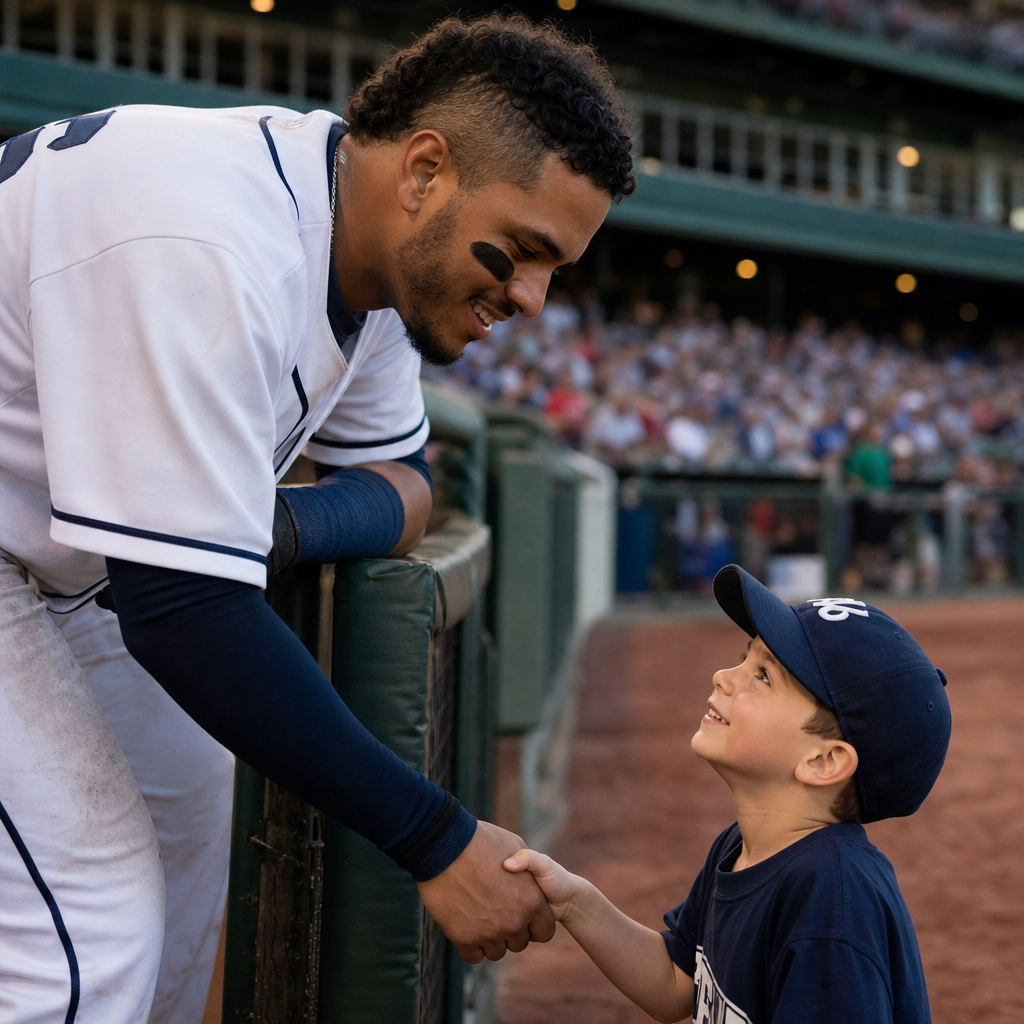
Overcoming adversity is one of the defining themes of minor league baseball, where long bus rides, modest salaries, roster uncertainty, and constant evaluation shape players, coaches, and entire communities. In this context, adversity means more than losing games or slumping at the plate. It includes recovering from serious injuries, navigating releases and demotions, handling financial pressure, adjusting to new countries and languages, and preserving confidence while competing for a job that may disappear overnight. I have covered and worked around minor league environments long enough to know that the stories people remember are rarely only about prospect rankings. They are about resilience under daily strain. For readers exploring the broader world of minor leagues and college baseball, this hub matters because it connects human experience to player development, front office decisions, fan engagement, and the structure of the sport itself. Inspirational stories from the minor leagues are not sentimental side notes. They are a practical lens for understanding how baseball careers are built, interrupted, and sometimes revived against long odds.
Why adversity is central to the minor league experience
Minor league baseball produces adversity by design. The system is developmental, competitive, and unforgiving. Players are drafted out of college or high school, signed internationally as teenagers, or arrive as undrafted free agents with little margin for error. Most earn far less than major leaguers, and until recent pay increases many relied on host families, shared apartments, offseason jobs, and meal planning that looked more like budget survival than elite sports nutrition. Even now, conditions vary by organization and level. A player can go from a modern spring complex to a six hour overnight bus ride, sleep poorly, and still be expected to perform the next afternoon.
Roster churn adds another layer. Promotions are celebrated, but demotions, injured list assignments, rehab stints, and releases are routine. I have seen players pack their clubhouse stalls in ten minutes after a transaction post, then sit on a bus the same night wondering whether another club will call. That instability tests identity. When baseball operations departments use terms such as option value, projection, command profile, and swing decisions, they are making rational competitive judgments. The player experiencing those judgments is living something far less abstract. This is why adversity stories resonate so strongly in the minor leagues: they reveal the emotional cost behind organizational language.
For a hub page within minor leagues and college baseball, this theme also links naturally to related subjects. College development, NIL-era decision making, the MLB Draft, player wellness, biomechanics, sports psychology, international scouting, and community baseball all intersect here. Adversity is the thread that ties them together, because every pathway into professional baseball eventually confronts uncertainty, adaptation, and recovery.
Injury comebacks show how development is rarely linear
The most visible adversity stories involve injury, especially elbow reconstruction, shoulder damage, hamstring setbacks, and concussion recovery. Tommy John surgery is often discussed casually now, but the reality is grueling. A pitcher may spend twelve to eighteen months rebuilding range of motion, strength, feel for spin, and game intensity. Velocity can return before command returns. Command can return before confidence returns. I have watched pitchers dominate bullpen sessions yet struggle once hitters stand in the box, because trust in the arm is different from physical clearance.
A strong example is the many lower round college pitchers who reinvent themselves after surgery. One common path looks like this: a starter loses a season, returns with reduced innings limits, moves to relief, gains two ticks of velocity in shorter stints, and suddenly becomes a legitimate prospect. Organizations such as the Dodgers, Guardians, Rays, and Brewers have repeatedly demonstrated how injury rehabilitation can merge with role redesign. The comeback story is inspiring not because the player simply returns, but because he often returns as a different athlete with a different plan.
Position players face equally difficult recoveries. An infielder coming back from an ACL tear must regain first step quickness, lateral movement, confidence around the bag, and timing at the plate after months away from live velocity. Statistics can lag behind underlying progress. That is why smart player development staffs rely on force plates, motion capture, bat speed data, sprint metrics, and workload tracking rather than batting average alone. Fans looking for inspirational minor league stories should pay attention to those hidden markers. They often tell the real comeback story weeks before the box score does.
Mental resilience matters as much as physical tools
Baseball is uniquely demanding because failure is public, repetitive, and measurable. A hitter can make quality swing decisions for a week and still go 3 for 24. A pitcher can execute six good sliders, hang one, and see his outing defined by the mistake. In the minor leagues, where jobs are fragile, this pressure compounds quickly. Sports psychologists, mental skills coordinators, and performance coaches have become essential in modern organizations because resilience is trainable. Breath work, visualization, journaling, pre pitch routines, and postgame review frameworks are now standard tools, not fringe ideas.
From experience, the most inspiring players are often the ones who learn to separate identity from results. They stop treating every 0 for 4 as a verdict on their future. Instead, they evaluate process: chase rate, contact quality, attack angle, zone control, and readiness. This shift sounds simple, but it can save careers. Consider the fringe outfielder who is demoted after expanding the zone under pressure. If he learns to recover plate discipline and accept walks again, his on base percentage may recover before his batting average does. To casual fans, it can look like a minor adjustment. Inside a clubhouse, everyone understands it as emotional discipline under stress.
Mental health challenges also deserve direct attention. Anxiety, depression, homesickness, and burnout are real in the minors. The travel schedule is isolating, and many players are far from family support. Clubs now provide more counseling resources than they once did, but access and usage still vary. Inspirational stories should not flatten these struggles into slogans. The honest lesson is that asking for help is often part of perseverance, not a contrast to it.
International players overcome cultural and logistical barriers
Some of the most compelling adversity stories come from international signees adjusting to a professional environment in a new language and culture. A teenager from the Dominican Republic or Venezuela may arrive with significant talent but limited English, unfamiliar food, new training expectations, and pressure to support family members financially. Japanese, Korean, Cuban, Colombian, Panamanian, and Curacaoan players all face their own adjustment patterns depending on age, signing route, and prior competition level. The challenge is not only baseball. It is acculturation under scrutiny.
Organizations that support these players well usually invest in language instruction, cultural liaisons, housing help, nutrition guidance, and mentorship from bilingual staff or veteran teammates. Those details matter. I have seen simple interventions, such as translated scouting reports or clearer clubhouse communication, reduce avoidable stress and unlock better performance. When an international prospect breaks out in High A or Double A, the story is often bigger than a new batting line. It may reflect years of adaptation that outsiders never saw.
Examples across baseball support this pattern. Players who were once viewed as raw often make major jumps after settling off the field. Improved communication helps them understand swing changes, defensive positioning, strength plans, and advance reports. Confidence rises when daily life becomes less chaotic. That is why the best inspirational minor league stories should include context about language, immigration logistics, remittances, and family separation. Without that context, the public misses the full scale of the achievement.
Undrafted players and late bloomers redefine what prospect success looks like
Not every inspirational story begins with a bonus headline. Many start with a player being overlooked. Undrafted free agents, independent league signings, converted position players, and seniors from smaller college programs routinely populate minor league clubhouses. Their adversity is less dramatic in one sense and more constant in another. They begin with lower status, fewer developmental guarantees, and less tolerance for slow starts. To survive, they must create value quickly and clearly.
Baseball history offers plenty of proof that these players matter. Major leaguers such as J.D. Martinez, Mike Piazza, Kevin Kiermaier, and Whit Merrifield did not follow the clean, top prospect script. In development settings, I have repeatedly seen overlooked players gain traction by making one sharp, measurable improvement: adding bat speed through a refined strength program, tightening a breaking ball shape with high speed video and Rapsodo feedback, or improving swing decisions enough to force promotion discussions. Inspiration in the minors often looks like incremental skill acquisition stacked over time.
| Adversity type | Typical obstacle | How players respond | Development outcome |
|---|---|---|---|
| Injury recovery | Lost reps and uncertain timeline | Rehab progression, role change, workload monitoring | Return with improved fit or new arsenal |
| Release or demotion | Confidence drop and reduced opportunity | Independent ball, winter ball, mechanical reset | Second chance with clearer identity |
| International transition | Language and cultural barriers | English study, mentorship, routine building | Better communication and steadier performance |
| Undrafted path | Little organizational margin | Specific skill gains backed by data | Promotion through undeniable production |
This pattern matters for college baseball readers as well. Older prospects from mid major conferences or Division II programs often enter pro ball with polish but limited hype. Their stories show that development is not owned by pedigree. It is driven by adaptation, health, opportunity, and persistence.
Communities, host families, and clubhouse support systems shape survival
Adversity in the minors is rarely overcome alone. Host families, athletic trainers, strength coaches, bullpen catchers, translators, clubhouse managers, and veteran teammates form the support network that keeps players stable enough to improve. Fans often celebrate the player who made it, but inside the game many of the most important victories happen because someone helped a struggling prospect eat better, sleep more consistently, manage recovery, or simply talk through a rough week.
Host families are especially significant at lower levels. They provide housing, transportation, routine, and emotional grounding. I have heard players describe host homes as the reason they got through an early season after an injury or a difficult call from home. That support has practical performance value. Better sleep and lower stress improve reaction time, recovery, and decision making. In a sport where tiny margins matter, stable living conditions can influence whether a player holds his mechanics together in the eighth inning of a long road trip.
Clubhouse culture matters too. Strong environments normalize honest feedback without humiliation. They celebrate process gains, not just promotions. They let players fail, adjust, and try again. Organizations increasingly understand that player development is not just biomechanics and analytics. It is an ecosystem. The inspirational stories that endure usually reveal a healthy ecosystem somewhere in the background.
Why these stories matter for fans, prospects, and the future of the sport
Inspirational stories from the minor leagues matter because they humanize a system that can otherwise feel transactional. They help fans understand that player development is neither a video game nor a straight ladder. They show prospects and college players what professional baseball actually demands: adaptability, emotional control, coachability, and patience. They also remind teams that investment in housing, nutrition, mental health, and communication is not charity. It is competitive infrastructure.
For a miscellaneous hub within minor leagues and college baseball, this topic should point readers outward. Injury recovery stories connect to training science and medical care. International adjustment stories connect to scouting and player services. Undrafted success stories connect to college recruiting, the draft, and alternative pathways such as independent ball and summer leagues. Clubhouse support stories connect to labor conditions, community partnerships, and fan culture. In other words, adversity is not a side topic. It is the map that links the entire subtopic together.
The core takeaway is simple. Minor league baseball is full of inspirational stories because the environment continuously tests people in visible and invisible ways. The players who advance are not always the most famous or most naturally gifted. Often, they are the ones who learn fastest after disappointment, accept support, and keep building one adjustment at a time. If you want to understand the minor leagues more deeply, follow the adversity stories closely. They will teach you more about the sport than rankings alone ever can.
Frequently Asked Questions
Why is adversity such a central part of life in the minor leagues?
Adversity is woven into the daily reality of the minor leagues because the environment is built around uncertainty, competition, and sacrifice. Unlike the major leagues, where players often have more stability, better pay, and clearer roles, minor league athletes are constantly fighting to keep their spot, earn a promotion, or simply stay healthy long enough to be noticed. Long bus rides, crowded schedules, lower salaries, and frequent roster moves create physical and mental strain that goes far beyond what fans see during a game. Every day can bring a new challenge, whether that means adjusting to a different coaching staff, adapting to a new position, or responding to a slump while knowing someone else is ready to take your place.
What makes these circumstances especially meaningful is that adversity in the minor leagues is rarely one-dimensional. A player may be dealing with an injury while also worrying about finances. Another may be trying to learn a new language, fit into a new culture, and prove himself on the field at the same time. Coaches and support staff often face similar pressures, balancing player development with the realities of changing rosters and organizational demands. These conditions test discipline, resilience, and self-belief in a very public way. That is why stories from the minor leagues are so compelling: they reveal how progress is often built not in comfort, but through repeated setbacks, quiet perseverance, and the decision to keep going when the path forward is anything but guaranteed.
What kinds of obstacles do minor league players commonly have to overcome?
Minor league players face a broad range of obstacles, and many of them extend well beyond performance on the field. Physical setbacks are among the most obvious. Injuries can derail an entire season, delay development, or change the trajectory of a career. A pitcher recovering from elbow surgery or a position player returning from a torn ligament is not just rebuilding strength; he is often trying to regain timing, confidence, and trust in his own body under intense evaluation. At the same time, there are performance-based challenges such as prolonged slumps, mechanical issues, role changes, and the pressure of competing against other talented players for limited opportunities.
There are also major off-field difficulties that can be just as demanding. Financial pressure remains a defining issue for many players, especially those trying to support themselves through a long season with modest pay. Housing arrangements can be temporary and unstable, and travel can be exhausting. International players may face language barriers, homesickness, and the challenge of adapting to unfamiliar routines, food, and expectations. Then there is the emotional uncertainty of roster moves. Being demoted, released, or left off a developmental path can feel deeply personal, even when it is part of the business of baseball. What makes these obstacles so important in an inspirational story is not just their severity, but the way players respond to them. The most memorable journeys often come from athletes who learn how to endure disappointment, make adjustments, and keep working without losing sight of why they started in the first place.
How do injury comebacks in the minor leagues become inspirational stories?
Injury comebacks become inspirational because they reveal a version of competition that is rooted in patience, humility, and persistence rather than instant success. When a minor league player suffers a serious injury, the challenge is rarely limited to the medical diagnosis. Recovery can involve months of rehabilitation, isolation from teammates, and the emotional toll of watching games instead of playing in them. For a player whose future already depends on development and visibility, losing valuable game time can feel devastating. There is often fear involved as well: fear of reinjury, fear of falling behind, and fear that the organization may move on before the player is fully ready to return.
What makes these stories powerful is the work that happens away from the spotlight. Comebacks are built through repetitive rehab sessions, careful mechanical adjustments, and small milestones that most fans never see. A player may celebrate throwing pain-free for the first time, running at full speed again, or simply rejoining teammates for practice. These moments matter because they represent a reclaiming of identity after months of uncertainty. When an athlete returns and performs well, the achievement feels earned on a deeper level. Even when the comeback does not lead directly to stardom, it can still be inspiring because it demonstrates resilience in its purest form. It shows how athletes confront frustration, rebuild confidence, and prove that progress is possible even after a major interruption to their dreams.
Why do releases, demotions, and roster uncertainty matter so much in minor league baseball stories?
Releases, demotions, and roster changes matter because they capture the fragile nature of a minor league career. In this system, a player is often only as secure as his most recent performance, health status, or organizational fit. A demotion can force someone to question whether he is moving backward. A release can make years of sacrifice feel suddenly vulnerable. Even players who are performing well may live with the awareness that baseball decisions are influenced by depth charts, prospect rankings, age, and long-term organizational priorities. That constant uncertainty creates an emotional intensity that makes every setback feel immediate and personal.
These moments become especially meaningful in inspirational stories because they test identity. Many players have spent most of their lives defining themselves through baseball, so being told they are no longer on a roster or not moving up as expected can be a profound challenge. The response to that challenge often reveals character more clearly than success does. Some players recommit to training, refine their approach, and come back stronger. Others discover leadership qualities, mental toughness, or a renewed love for the game during periods when recognition is limited. Even when the outcome is not a dramatic rise to the majors, there is real inspiration in the ability to absorb disappointment without giving up. These stories resonate because they reflect a universal truth: setbacks are painful, but they can also become turning points when people choose growth over defeat.
What can fans and readers learn from inspirational stories in the minor leagues?
Fans and readers can learn that perseverance is rarely glamorous, but it is often where the most meaningful growth happens. Minor league baseball offers a clear look at ambition stripped of comfort. The players are talented, but talent alone is never enough. They have to adapt, recover, remain coachable, and keep showing up in environments that are physically tiring and emotionally demanding. That reality makes their stories relatable even to people who have never played baseball. Anyone who has faced rejection, uncertainty, financial stress, injury, or self-doubt can recognize the emotional patterns at work in these journeys.
These stories also remind readers that success should not be measured only by headlines or final destinations. In the minor leagues, overcoming adversity might mean returning from injury, staying mentally engaged after a demotion, helping teammates through difficult stretches, or continuing to compete with professionalism despite uncertain odds. Those victories may not always lead to fame, but they reflect discipline, courage, and personal growth. For fans, that perspective deepens appreciation for the game by revealing the human effort behind every box score. For readers more broadly, it offers a practical and inspiring lesson: resilience is not a single dramatic moment, but a series of choices made under pressure, often when no one is watching. That is what gives minor league stories their lasting power.