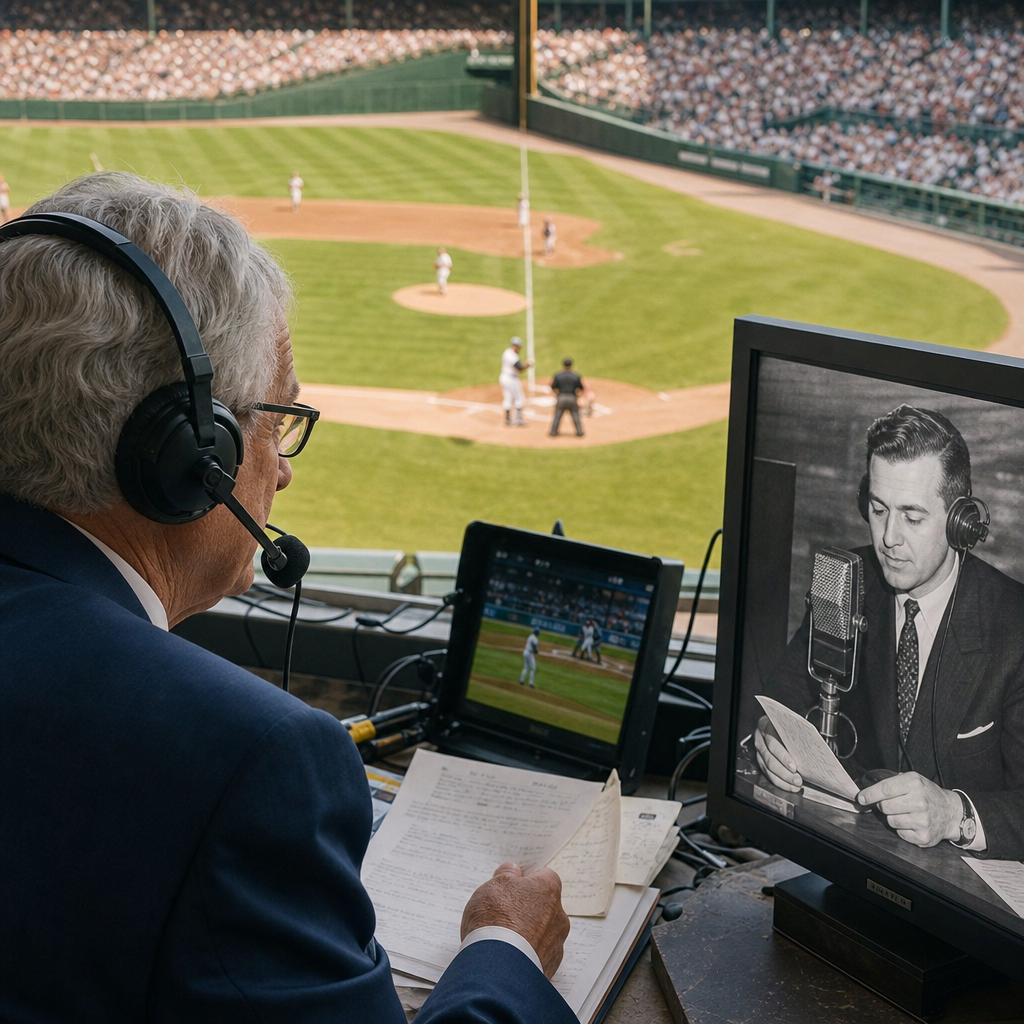
Baseball commentary has evolved from a lone announcer painting pictures over crackling radio to multi-platform productions that combine Statcast data, ultra-high-definition cameras, social clips, alternate broadcasts, and real-time audience interaction. In baseball, commentary means more than play-by-play description; it includes color analysis, rules explanation, storytelling, pregame framing, postgame breakdown, and the production choices that shape how fans understand a game. As a hub within innovations and changes in baseball, modern media and broadcasting techniques matter because they influence fan education, league reach, advertising models, and even how teams and players build public identity. I have worked on digital sports content and live event coverage, and one lesson holds across formats: the words behind the mic are only one layer of the product. The full broadcast now depends on timing, graphics, camera systems, research tools, distribution platforms, and editorial judgment that can serve a casual viewer and a dedicated analyst at the same time.
Understanding this evolution helps explain why a modern baseball broadcast feels so different from one produced even fifteen years ago. Traditional radio demanded imagination and precise verbal pacing. Early television shifted emphasis toward visuals but still relied heavily on broad narration because camera angles were limited and on-screen information was sparse. Today, broadcasters work inside a dense information environment. Viewers expect instant pitch type, exit velocity, spray charts, injury context, replay reviews, and social-ready highlights within seconds. They also expect personality. National booths, local crews, streaming-exclusive teams, and former players all bring different priorities, from tactical analysis to entertainment. The result is a commentary ecosystem shaped by technology, audience behavior, and business strategy. To understand modern media and broadcasting techniques in baseball, it helps to track the major shifts in format, tools, talent, and distribution that turned commentary into one of the sport’s most influential innovations.
From Radio Storytelling to Multi-Camera Television Language
The foundation of baseball commentary was built on radio, where announcers such as Red Barber and Vin Scully mastered descriptive economy, rhythm, and scene-setting. On radio, the broadcaster had to tell listeners where the runners were, how the wind looked, what the crowd sounded like, and why a pitching sequence mattered. That skill still matters today, especially in audio-first products, but television changed the language of commentary by reducing the need to describe what the eye could already see. The best TV play-by-play voices learned to leave space, using fewer words during live action and more words between pitches, innings, and replay sequences. Color commentators, many of them former players or managers, expanded the format by adding clubhouse stories, mechanics, scouting observations, and strategic insight.
As television production improved, commentary adapted to new visual grammar. Center-field cameras standardized the pitcher-hitter confrontation. Tight replay angles made footwork, tag timing, and swing paths easier to explain. Super slow motion changed how analysts discussed spin, release points, and catcher setup. Producers began coordinating closely with the booth so commentary could anticipate replays instead of merely reacting to them. In practical terms, that meant a modern analyst could explain why a shortstop shaded toward the hole before the director cut to a wide shot showing defensive positioning. This interdependence between booth and truck became a defining characteristic of modern baseball broadcasting. Commentary was no longer a standalone craft; it became part of a synchronized production system designed to teach, entertain, and maintain pace during a sport built on pauses.
The Data Revolution and the Rise of Analytical Commentary
No force changed baseball commentary more dramatically than the integration of advanced statistics. Before the 2000s, broadcasts relied mainly on batting average, RBI, wins, ERA, and basic splits. Those numbers still appear, but modern commentary increasingly uses on-base percentage, slugging percentage, OPS, strikeout rate, walk rate, weighted runs created plus, expected batting average, and pitch movement metrics. The Statcast era accelerated this shift by delivering measurable events that could be shown on screen and explained quickly: launch angle, exit velocity, sprint speed, route efficiency, spin rate, and catch probability. These metrics gave commentators a common vocabulary for translating complex performance into viewer-friendly terms.
The key innovation was not simply adding more numbers. It was learning which numbers clarify a moment. A strong broadcast does not dump data into every at-bat. Instead, it uses analytics as context. If a hitter rolls over a sinker, the analyst might connect that result to a low average launch angle against arm-side movement. If an outfielder makes a running catch, commentary can explain catch probability and first-step efficiency rather than saying the play was merely athletic. In my experience producing baseball content, the most effective analytical commentary starts with a plain-language answer to the fan’s actual question: Why did that happen? Numbers work when they illuminate cause and consequence. They fail when they become decoration.
| Broadcast element | Earlier approach | Modern approach | Viewer benefit |
|---|---|---|---|
| Hitting analysis | Batting average, RBI, hot streaks | Exit velocity, launch angle, expected stats | Explains quality of contact, not just result |
| Pitching breakdown | Wins, ERA, velocity mentions | Spin rate, movement profile, chase rate, tunneling | Shows why pitches play effectively |
| Defense discussion | Errors, fielding percentage | Positioning, jump, route efficiency, catch probability | Makes range and preparation visible |
| Strategy context | Bunt, steal, hit-and-run by feel | Run expectancy, leverage, platoon data | Connects decisions to game state |
Analytical commentary also created tension that still shapes baseball media. Some fans value traditional storytelling and resent jargon-heavy broadcasts. Some former players distrust metrics detached from game feel. The best crews bridge the gap. They use established research from MLB Statcast, FanGraphs, Baseball Savant, and league trend reports without talking down to viewers or treating analytics as ideology. Good analysts acknowledge limits as well. Small sample sizes mislead. Public metrics do not capture every coaching instruction or health variable. Park effects and scorer judgment can distort interpretation. Modern baseball commentary improved not because analytics replaced instinct, but because responsible broadcasts learned to combine evidence, experience, and visual proof.
Production Technology That Changed What Commentators Can Explain
Modern media and broadcasting techniques in baseball are inseparable from production technology. High-frame-rate cameras allow analysts to show finger placement on a changeup or seam orientation on a cutter. Aerial and wire cameras provide stadium-scale perspective on outfield alignment and baserunning decisions. Isolated player cameras help producers build star-driven narratives around pitchers between pitches or hitters adjusting equipment in the box. Enhanced microphones pick up catcher targets, bat cracks, and infield chatter, adding texture that radio once supplied through verbal description alone. Graphics engines turn complex information into digestible visuals, whether through strike-zone maps, heat charts, or side-by-side release comparisons.
Replay systems transformed rules commentary as much as tactical analysis. Before expanded replay, many disputed calls ended with uncertainty and a quick booth opinion. Now broadcasters routinely walk viewers through review standards, boundary rules, neighborhood-play history, transfer definitions, and whether evidence is clear and convincing. That requires preparation. Successful commentators study the MLB rulebook, production notes, and league interpretations because audiences expect immediate, credible answers during delays. The same is true for pitch clock coverage. When MLB introduced the timer, commentators had to explain disengagement limits, batter readiness, mound visit implications, and how pacing rules affect strategy late in games. The technology enabled sharper visuals, but it also raised the knowledge threshold for everyone on air.
Remote production has been another major change. Some regional and streaming broadcasts now call games from centralized studios rather than traveling full crews to every ballpark. This can reduce costs and expand scheduling flexibility, but it also changes commentary quality. When announcers are not physically present, they can lose peripheral details such as defensive shifts before the pitch, bullpen activity outside the main frame, weather changes, or bench reactions that never hit the program feed. Experienced broadcasters compensate with stronger communication from spotters, statisticians, and producers, yet the tradeoff is real. Fans often notice the difference between a broadcast that feels embedded in the ballpark and one assembled efficiently from afar.
New Voices, New Formats, and Platform-Specific Commentary
Baseball commentary no longer comes from a single main telecast. National networks, regional sports networks, direct-to-consumer streaming services, Spanish-language broadcasts, radio simulcasts, team-produced digital shows, podcasts, whiparound programs, and creator-driven alternate feeds all compete for attention. Each format changes what commentary sounds like. Local broadcasts can build long-term relationships with viewers, weaving team history and season arcs into nightly coverage. National windows often prioritize broader context, postseason implications, and star accessibility for neutral fans. Streaming platforms experiment more aggressively, sometimes featuring celebrity guests, looser pacing, gambling integrations, or youth-oriented presentation styles.
Spanish-language baseball commentary deserves special attention because it has long served as both cultural bridge and stylistic innovator. Broadcasters across Latin American and U.S. markets often deliver higher-energy home run calls, stronger rhythmic phrasing, and a deep connection to the international makeup of modern rosters. Their influence is visible well beyond language-specific feeds. At the same time, former players have become central to modern analysis, not simply because they provide name recognition, but because they can explain pitcher intent, catcher sequencing, clubhouse preparation, and in-game adjustments with practical authority. The strongest ex-player analysts pair that insight with discipline. Knowing the game is different from communicating it clearly. The best translate instinct into teachable language.
Platform-specific commentary is also reshaping editorial choices. A full nine-inning television broadcast can develop themes gradually, but a podcast may spend forty minutes on one bullpen trend, and a social video may need to explain a hidden-ball trick in thirty seconds. That compression changes sentence structure, evidence, and emphasis. In hub terms, baseball media now works as an interconnected system: live game coverage drives clips, clips feed social engagement, social reaction drives studio discussion, and long-form audio or newsletters deepen the subject. Commentary is the thread connecting them all. For teams and leagues, this ecosystem extends reach far beyond the original telecast.
Audience Expectations, Commercial Pressures, and the Future of the Booth
Modern baseball commentary is shaped as much by audience behavior and revenue demands as by technology. Viewers now watch with a phone in hand, compare broadcast calls in real time, and expect highlights almost immediately after a key play. That has pushed producers and commentators toward faster information delivery, cleaner explanation, and more deliberate viral moments. It has also increased scrutiny. Miss a rule interpretation, misidentify a pitch, or overstate a trend, and the correction can circulate online before the inning ends. In my work around live publishing, this feedback loop has made preparation more rigorous. Broadcasters rely on deeper research packets, live statistical support, and constant communication with production teams because audiences can fact-check at broadcast speed.
Commercial realities matter too. Regional sports network instability has forced MLB, teams, and distributors to rethink how games reach fans. Direct-to-consumer packages, blackout debates, and bundled streaming access all affect who hears which voices and on what device. Advertisers also shape commentary environments through sponsored segments, branded analytics features, and betting-related integrations. There is opportunity here, but also risk. If promotional elements overwhelm editorial clarity, the broadcast loses trust. The best booths maintain a clear line between analysis and sales language, using sponsored graphics without compromising honest evaluation of performance or decision-making.
Looking ahead, the future of baseball commentary will likely combine personalization with deeper technical sophistication. Viewers may choose between traditional, analytics-heavy, youth-focused, or team-neutral audio tracks. Artificial intelligence will help with clipping, transcription, translation, and research surfacing, but credible live commentary will still depend on human timing, judgment, and feel for the moment. Automated systems can identify pitch type or generate instant summaries; they cannot fully replicate the restraint of a great call on a walk-off homer or the trust built by a booth that explains a complicated rule without drama or confusion. The evolution behind the mic is therefore not a story of replacement. It is a story of expansion, where commentary has grown from narration into a layered media function that educates fans, enhances access, and keeps baseball legible in a crowded entertainment market.
For anyone following innovations and changes in baseball, commentary is one of the clearest examples of the sport adapting without losing its core. The essentials remain familiar: describe the action, explain the stakes, capture the feeling. What changed is the toolkit. Today’s broadcasters work with advanced metrics, precision replay, richer audio, multiple distribution channels, and audiences that expect both expertise and immediacy. The strongest modern baseball broadcasts succeed because they balance all of it: tradition with analysis, personality with accuracy, speed with context, and production polish with genuine insight. If you are exploring modern media and broadcasting techniques across the sport, use this hub as your starting point and follow each branch deeper, from analytics on air to streaming strategy, multilingual coverage, replay technology, and the next generation of voices shaping how baseball is heard and understood.
Frequently Asked Questions
How has baseball commentary changed from the radio era to today’s multi-platform broadcasts?
Baseball commentary has undergone a remarkable transformation, moving from a largely audio-driven craft to a sophisticated, multi-layered media experience. In the early radio era, the announcer’s primary job was to build the entire game in the listener’s imagination. With no visuals to rely on, broadcasters had to describe the ballpark atmosphere, player movements, defensive alignments, weather conditions, and even crowd reactions with precision and flair. Great radio voices became storytellers as much as play-by-play announcers, turning long stretches of baseball into compelling theater through pacing, personality, and descriptive language.
As television became the dominant platform, commentary adjusted to a new reality: viewers could now see the action for themselves. That changed the broadcaster’s role from pure description to interpretation. Play-by-play became tighter and more selective, while color commentators added context, strategy, and personality. Producers also became more influential, deciding when to cut to replays, graphics, dugout shots, and crowd reactions. Commentary was no longer just a voice; it became part of a coordinated production designed to guide how fans processed the game.
In the modern era, baseball commentary extends far beyond a traditional booth call. Today’s broadcasts integrate Statcast metrics, high-speed cameras, strike-zone visuals, defensive positioning overlays, and near-instant replay analysis. Broadcasters are expected to explain not only what happened, but why it happened, often within seconds. On top of that, commentary now exists across multiple platforms at once, including television, radio, streaming services, team-specific digital feeds, social media clips, and alternate broadcasts tailored to different audiences. Real-time fan interaction, advanced analytics, and highly produced highlight packages have all expanded the scope of the job. What was once a single announcer narrating a game has become a collaborative production ecosystem that blends journalism, performance, technology, analysis, and fan engagement.
What does baseball commentary include beyond basic play-by-play?
Baseball commentary is much broader than simply calling balls, strikes, outs, and runs. Play-by-play remains the backbone of any broadcast because it provides structure and continuity, but modern commentary includes several distinct layers that work together to shape the audience’s understanding. Color analysis is one of the most important of these layers. A former player, manager, or analyst often explains pitch selection, defensive positioning, hitting adjustments, clubhouse dynamics, and momentum shifts that may not be obvious from the raw action alone.
Rules explanation is another major component, especially in a sport filled with nuanced situations involving balks, obstruction, replay reviews, infield fly rulings, and roster decisions. Skilled commentators help casual fans follow those moments without slowing the pace of the broadcast. Storytelling is equally central. Baseball has a rhythm unlike most other sports, and commentary often fills the natural pauses with anecdotes about a player’s development, historical comparisons, organizational trends, or the larger stakes of a series or season. Those stories help turn a nine-inning game into a richer narrative experience.
Pregame framing and postgame breakdown are also part of commentary in the full sense. Before first pitch, broadcasters establish key themes, spotlight important matchups, discuss injuries, and set expectations for how the game may unfold. After the final out, they revisit decisive moments, evaluate strategic choices, interpret performance trends, and connect the result to broader season-long storylines. Production choices matter as well. Which replays are shown, which metrics appear on screen, when the booth brings in a rules expert, and how quickly a key moment is clipped for social platforms all influence the fan experience. In that sense, baseball commentary is not just talking over the game; it is the full editorial and analytical framework through which the game is presented.
How have analytics and technologies like Statcast influenced the way baseball games are called?
Analytics and tracking technologies have fundamentally changed the language and priorities of baseball commentary. Tools such as Statcast introduced a level of measurable detail that was previously unavailable to broadcasters and fans. Exit velocity, launch angle, sprint speed, spin rate, catch probability, route efficiency, and expected batting average are now common parts of the on-air vocabulary. These metrics give commentators the ability to explain results more precisely. A hard-hit lineout, for example, can be framed not as bad luck in a vague sense, but as a ball with elite exit velocity and a high expected average that happened to find a glove.
This has made commentary more evidence-based, but it has also created new demands on broadcasters. The best modern commentators know how to use data as a tool rather than a distraction. They translate advanced information into clear, useful insights that enhance the viewing experience instead of overwhelming it. When done well, analytics sharpen analysis by revealing trends in pitch usage, batter approach, defensive positioning, or fatigue that might otherwise go unnoticed. They also help explain strategic decisions, such as why a team shifted its outfield alignment, why a pitcher abandoned a fastball in certain counts, or why a hitter’s swing path has changed.
Technology beyond analytics has had a similar impact. Ultra-high-definition cameras, super slow-motion replays, strike-zone graphics, bat and ball tracking, and in-game communication tools allow broadcasters to break down moments with far greater precision than in past decades. A close play at first base can be examined from multiple angles within seconds. A pitcher’s release-point change can be shown visually instead of merely described. A catcher’s framing technique can be replayed and annotated. These tools have elevated the standard for commentary because audiences now expect immediate explanation and visual proof. At the same time, the human element still matters. Data can identify patterns, but strong commentary connects those patterns to player psychology, game context, and the emotional flow of competition. The most effective broadcasts balance measurable insight with storytelling and instinct.
Why are storytelling and personality still so important in baseball commentary, even with all the new technology?
Technology can make a broadcast smarter, faster, and more visually impressive, but it cannot replace the human connection that great commentators create. Baseball is uniquely suited to personality-driven commentary because the game has space for conversation, reflection, and narrative development. Unlike faster, more continuous sports, baseball offers pauses between pitches, innings, and mound visits that allow broadcasters to build stories around players, managers, rivalries, ballparks, and eras. Those stories deepen the audience’s investment and help each game feel like part of a bigger baseball world rather than an isolated event.
Personality matters because fans often form lasting relationships with the voices they hear over the course of a season. A trusted broadcaster becomes part of how people experience baseball itself. Tone, humor, timing, curiosity, and authenticity all shape whether a broadcast feels inviting and memorable. Some announcers are beloved for their polished precision, others for their warmth, dry wit, historical recall, or ability to let big moments breathe. Even in a data-rich environment, fans still respond to voices that sound knowledgeable, conversational, and emotionally attuned to the game.
Storytelling also provides context that raw numbers cannot. Statistics can tell viewers that a player is in a slump, but a skilled commentator can explain how that slump relates to mechanical changes, confidence, recent travel, opposing scouting reports, or personal milestones. Technology can show a replay from every angle, but only a compelling broadcaster can place the moment within a team’s season arc or a player’s career journey. In many ways, modern baseball commentary works best when technology supports the story instead of trying to become the story. The visuals, metrics, and production elements are powerful tools, but it is the broadcaster’s voice and perspective that turn those tools into meaning.
What role do alternate broadcasts, streaming platforms, and social media play in the future of baseball commentary?
Alternate broadcasts, streaming platforms, and social media are reshaping baseball commentary by expanding both who the audience is and how the game can be presented. Traditional local and national broadcasts still matter, but they are no longer the only way fans consume commentary. Streaming services have introduced more flexible formats, including team-specific feeds, analytics-focused presentations, personality-led watch-alongs, and broadcasts designed for younger or more casual audiences. This has opened the door to commentary styles that are less formal, more interactive, and more tailored to niche viewer preferences.
Alternate broadcasts are especially important because they acknowledge that not every fan wants the same experience. Some viewers prefer a classic booth with polished play-by-play and veteran analysis. Others want heavier statistical explanation, more humor, simplified rules discussion, or cross-talk that feels closer to a podcast. Baseball, with its deliberate pace and rich strategic layers, adapts well to these variations. Broadcasters and producers can build different versions of the same game without losing the core event, which makes commentary more adaptable than ever before.
Social media has changed the pace and purpose of commentary as well. Calls are now clipped, shared, and judged almost instantly. A memorable home run call, sharp analysis segment, or emotional sign-off can travel far beyond the original broadcast window. This has increased pressure on commentators to be concise, distinctive, and camera-aware, but it has also amplified their reach and cultural impact. Real-time fan reaction, second-screen viewing, and interactive features mean commentary is no longer a one-way delivery system. Increasingly, it is part of an ongoing conversation between broadcasters, teams, platforms, and audiences.
Looking ahead, the future of baseball commentary will likely be defined by