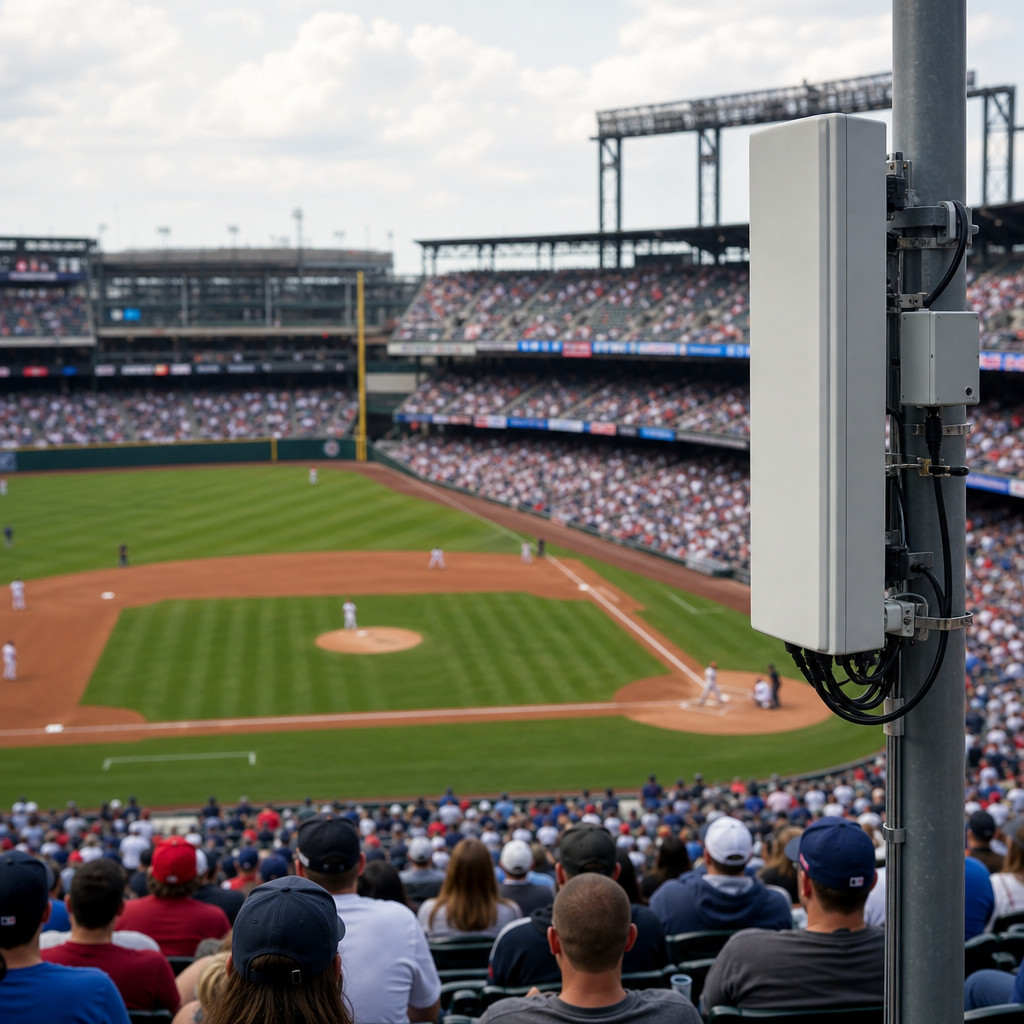
The adoption of 5G technology in baseball stadiums is reshaping how fans watch games, how broadcasters produce coverage, and how teams operate connected venues at scale. In practical terms, 5G refers to the fifth generation of mobile network standards, built to deliver higher bandwidth, lower latency, and far greater device capacity than 4G LTE. In a baseball environment, those capabilities matter because a stadium is one of the hardest wireless settings to manage: tens of thousands of spectators, dozens of camera feeds, point-of-sale systems, security devices, team applications, and media workflows all compete for reliable connectivity at the same time. I have worked on digital venue projects where a network bottleneck turned a promising fan feature into a frustration point, so the leap from legacy wireless to well-designed 5G is not theoretical; it changes what is actually possible on game day.
Baseball is an especially strong fit for advanced wireless infrastructure because the sport has long pauses, layered statistics, regional broadcasting traditions, and an audience that increasingly expects second-screen information during live play. Modern media and broadcasting techniques in baseball now include multi-angle mobile streaming, augmented replay, cloud-based production, in-seat concession ordering, social video publishing, and personalized content in team apps. None of those features performs well if thousands of users are trying to upload highlights, place mobile orders, and stream alternative broadcasts over a congested network. That is why 5G adoption in baseball stadiums is not just an IT upgrade. It is a foundation for modern baseball media, from television compound operations to direct-to-fan digital experiences, and it is becoming a central planning issue for clubs, venue operators, rights holders, and sponsors.
Understanding the shift also requires clear definitions. Low latency means the delay between an action and the network response is minimal, which is critical for live camera control, interactive graphics, and betting-related data products where permitted. Network slicing refers to creating dedicated virtual segments for different uses, such as separating broadcast workflows from public fan traffic. Edge computing means processing data closer to the stadium rather than in a distant data center, reducing delay for replay rendering or app features. Private 5G describes a localized cellular network used by a team, broadcaster, or venue operator for controlled internal operations. Together, these concepts explain why 5G is increasingly linked with baseball’s broader modernization agenda, especially in the areas of media production, venue operations, and premium fan engagement.
Why baseball stadiums are investing in 5G infrastructure
Baseball stadiums are investing in 5G because traditional connectivity models are under pressure from rising media demands and fan expectations. A modern MLB ballpark may host more than 30,000 attendees, and many spectators now carry multiple connected devices, from phones and wearables to tablets used by media staff and venue personnel. The network load spikes during obvious moments: first pitch, home runs, close replay reviews, and postgame exits. In older environments, even strong Wi-Fi deployments can struggle when usage patterns are uneven or when uplink demand surges because fans are posting video rather than simply browsing. 5G helps by adding high-capacity cellular service, especially when combined with dense antenna placement, distributed antenna systems, and millimeter-wave nodes in high-traffic seating sections.
Teams and venue operators also see 5G as a revenue enabler. Better connectivity increases the success rate of mobile ticketing, cashless concessions, merchandise sales, and sponsor activations in official apps. It supports richer digital signage and location-based promotions. More importantly for the media side of the business, 5G reduces reliance on expensive wired paths for every new service a broadcaster or content team wants to launch. Remote production workflows can move more camera feeds over managed wireless links, social teams can publish clips faster, and club media departments can support alternative broadcasts without redesigning the entire stadium cabling plan. In my experience, leadership usually approves these projects when technology teams translate network performance into measurable business outcomes: fewer failed transactions, longer app session times, faster content turnaround, and stronger premium sponsorship inventory.
Another driver is competitive differentiation. Ballparks no longer compete only on seating bowl design or concession variety. They compete on digital convenience and media richness. A family comparing venues notices whether mobile entry works smoothly, whether instant replay clips load quickly, and whether seat-upgrade offers arrive before the middle innings. Corporate partners notice whether branded experiences are technically reliable. Regional sports networks and streaming partners notice whether a venue can support more cameras, lower setup friction, and resilient backhaul. For clubs positioning themselves within the broader innovations and changes in baseball landscape, 5G is becoming a visible indicator that the stadium can support next-generation broadcasting techniques rather than merely host a game.
How 5G changes baseball broadcasting and content production
The biggest transformation is in live production flexibility. Traditional baseball broadcasting depends heavily on fixed fiber, camera compounds, replay trucks, and carefully planned cabling routes. Those tools remain important, but 5G expands options. Wireless cameras can move more freely through concourses, bullpens, and fan zones without sacrificing signal quality. Field-level pregame segments become easier to produce with less setup time. Crews can deploy bonded cellular transmission using 5G-enabled encoders from vendors such as LiveU, TVU Networks, and Dejero to send high-quality live video from mobile positions. For shoulder programming, interviews, digital exclusives, and social cut-ins, that flexibility is a major operational gain.
5G also supports remote and cloud production models that became more common after broadcasters sought leaner cost structures and more flexible staffing. Instead of processing every feed entirely onsite, production teams can send camera streams to centralized control rooms where directors, replay operators, graphics teams, and audio specialists work from a hub facility. Lower latency and improved throughput make those workflows more practical, especially for supplemental feeds and secondary broadcasts. Baseball benefits because a single game often generates multiple products: the primary television show, localized language versions, social clips, in-venue board content, and direct-to-consumer streams. When connectivity is robust, producers can create more outputs from the same event without multiplying onsite hardware and crew counts.
Just as important, 5G enables new forms of storytelling. Baseball’s pace creates natural moments for interactive data overlays, alternate camera angles, and personalized viewing options. Fans may choose a pitcher cam, a statcast-style defensive view, or a condensed highlights stream in the official app. Onsite reporters can push live updates from dugout-adjacent positions. Clips can be rendered quickly for social platforms while the game is still unfolding. The result is not simply faster transmission; it is a broader editorial toolkit. A stadium with strong 5G support can function as a live content studio, supplying traditional television, mobile video, and team-owned media simultaneously.
Fan experience, mobile engagement, and in-stadium media
For fans, the most visible impact of 5G technology in baseball stadiums is a smoother, richer mobile experience. High-capacity wireless networks help spectators access mobile tickets, find seats, order food, receive wayfinding prompts, and watch replays without the familiar slowdown that comes when everyone reaches for a phone at once. Teams increasingly use their official apps as digital command centers, combining ticketing, loyalty rewards, parking guidance, concession ordering, and live content. Those features only deliver value when the connection is dependable from the gate to the upper deck.
In-stadium media is becoming more personalized as well. Instead of relying only on the center-field video board, clubs can send tailored notifications based on location, ticket type, or fan behavior. A season-ticket holder might receive access to an alternate camera angle during batting practice. A family in the outfield could get a mascot appearance alert and a discounted kids meal offer. Premium-seat guests may be offered an on-device replay synchronized to the live action. These are not gimmicks when executed properly; they increase app engagement, sponsorship opportunities, and perceived venue quality. Low latency matters here because delayed or failed interactions erode trust quickly.
Augmented and mixed-reality experiences are another area where 5G improves performance. A fan can point a phone at the field and view player stats, pitch information, or historical overlays tied to the action. Interactive scavenger hunts, branded games, and educational content for younger attendees become more reliable when the network can handle graphics rendering and data retrieval rapidly. Baseball’s statistical depth makes this especially compelling. The sport naturally lends itself to layered context, and 5G lets teams deliver that context in real time rather than after a lag that breaks immersion.
Operational uses beyond broadcasting
Although media and broadcasting techniques are the headline use case, stadium operators often justify 5G investment through broader operational gains. Security teams can connect more high-definition cameras and analytics tools across the venue. Facilities staff can monitor smart building systems, from HVAC controls to crowd-flow sensors. Retail and concessions teams can keep handheld point-of-sale devices online during peak innings, reducing abandoned purchases. Grounds crews and engineering staff can use connected tablets, maintenance applications, and instant video diagnostics without hunting for stable connectivity in service corridors or lower-level work areas.
Private 5G can be particularly valuable for these functions because it gives operators more control over quality of service, device enrollment, and security policy. For example, a club may prioritize critical communications for event staff while isolating them from public guest traffic. Some venues pair private 5G with edge computing so video analytics, occupancy data, and digital signage logic can be processed locally. That design reduces dependence on remote cloud paths and improves resilience when external circuits are under stress. In baseball, where game-day operations are highly choreographed and timing sensitive, resilient connectivity has real consequences for safety, staffing efficiency, and customer satisfaction.
| Use Case | How 5G Helps | Baseball Stadium Example |
|---|---|---|
| Live broadcasting | Higher uplink speeds and lower latency for mobile cameras | Pregame field interviews transmitted without long cable runs |
| Fan mobile app | Better performance under heavy crowd density | Instant replay clips and mobile food ordering during a sellout game |
| Operations | Reliable connectivity for staff devices and sensors | Connected POS terminals and maintenance tablets across concourses |
| Security | Support for more video streams and analytics | Crowd monitoring at gates and common areas |
| Premium experiences | Personalized high-bandwidth content delivery | Seat-level alternate angles and sponsor activations in club areas |
Deployment models, challenges, and real-world tradeoffs
Despite the advantages, adopting 5G in baseball stadiums is complex. The physical environment is difficult: steel, concrete, overhangs, and packed seating areas can block or reflect signals. Millimeter-wave 5G offers exceptional speed but shorter range, so venues often need many small cells placed strategically in seating bowls, clubs, entry plazas, and concourses. Mid-band spectrum can provide a more balanced coverage profile, but actual performance depends on spectrum holdings, carrier partnerships, backhaul capacity, and integration with existing Wi-Fi. In most successful projects, 5G complements Wi-Fi rather than replacing it outright.
Cost is another real consideration. Stadium deployments may involve neutral-host systems, distributed antenna upgrades, fiber runs, edge hardware, and ongoing management contracts. Historic ballparks face added constraints because construction access, preservation requirements, and irregular architecture complicate equipment placement. Teams must also coordinate among many stakeholders: carriers, venue owners, broadcast partners, league technology groups, cybersecurity teams, and local authorities. I have seen projects stall not because the radio design was flawed, but because governance was unclear and no one had final authority over shared infrastructure priorities.
There are also practical limits to what 5G alone can solve. If the application architecture is poor, a fast wireless network will not fix a sluggish app. If a broadcaster lacks optimized encoding workflows, lower latency on the access network will not guarantee seamless remote production. Cybersecurity risks rise as more devices connect, especially IoT sensors and unmanaged endpoints brought in by vendors on event days. That is why the best stadium technology programs treat 5G as part of a larger modernization stack that includes identity management, observability tools, content delivery design, and service-level monitoring.
What comes next for baseball’s connected stadiums
The next phase of 5G adoption in baseball stadiums will center on integration, not novelty. Teams are moving beyond proving that fans can get faster speeds and toward connecting ticketing, content, commerce, security, and analytics into one operating model. Expect more hybrid network designs that combine carrier 5G, private 5G, Wi-Fi 6 or Wi-Fi 7, and edge computing. Expect broadcasters to rely more heavily on IP-based workflows and remote production for supplementary feeds. Expect team apps to function more like personalized media platforms than utility tools. As automated cameras, AI-assisted clipping, multilingual commentary feeds, and real-time data products mature, stadium connectivity will become even more central to how baseball is produced and consumed.
The key takeaway is simple: 5G technology in baseball stadiums matters because it supports the full chain of modern media and broadcasting techniques, from camera acquisition to fan replay viewing in the stands. It improves operational reliability, expands content possibilities, and helps clubs create a venue experience that matches today’s digital expectations. It is not a cure-all, and it works best when paired with strong application design, sound governance, and realistic business goals. But when deployed thoughtfully, it turns a ballpark into a connected media environment rather than a passive event space. If you are evaluating innovations and changes in baseball, start with the network layer, because nearly every modern fan and broadcast experience now depends on it.
Frequently Asked Questions
What does 5G actually change inside a baseball stadium compared with older wireless networks?
5G changes the stadium experience by improving three core areas at once: speed, responsiveness, and capacity. Traditional 4G LTE networks can perform well under normal conditions, but baseball stadiums create an unusually difficult environment because tens of thousands of people are trying to upload videos, stream replays, send messages, use team apps, order concessions, and access mobile tickets at the same time. That density puts enormous pressure on wireless infrastructure. 5G is designed to handle far more simultaneous connections, which means fans are less likely to experience congestion during high-traffic moments such as first pitch, home runs, pitching changes, and postgame exits.
Higher bandwidth allows fans to watch instant replays, alternate camera angles, and live statistics on their phones without the buffering that often frustrates users on overloaded networks. Lower latency is equally important because it reduces delay between a live event and the digital content tied to it. That makes interactive features feel much more natural, whether a fan is using augmented reality in the team app, checking real-time player data, or participating in live polls and in-seat experiences. In practical terms, 5G helps transform wireless service from a convenience into a core part of the modern ballpark experience.
It also changes how teams think about stadium operations. Connected entry systems, digital signage, point-of-sale terminals, security tools, and back-of-house communications all benefit from more reliable connectivity. Instead of treating fan Wi-Fi, production workflows, and operational systems as separate technology silos, teams can support a more integrated venue model. That is why 5G is not simply a faster mobile signal in the stands; it is a foundational upgrade that supports fan engagement, media production, and stadium management at scale.
How does 5G improve the fan experience during a baseball game?
For fans, the biggest benefit of 5G is that it makes digital experiences inside the stadium feel immediate and dependable rather than slow and inconsistent. Baseball is a sport rich in statistics, situational analysis, and between-pitch storytelling, so spectators often want more than just the view from their seat. With strong 5G coverage, fans can access live player metrics, pitch tracking, defensive positioning data, fantasy updates, and multiple replay angles in real time. That added layer of information helps deepen engagement without pulling people out of the in-person atmosphere.
5G also supports richer mobile app experiences. Teams can offer seat upgrades, mobile concessions ordering, shorter-line guidance, interactive wayfinding, loyalty rewards, and personalized offers based on where a fan is located in the ballpark. Some venues are exploring augmented reality overlays that let fans point their phones toward the field to see player bios, ball trajectory information, or branded interactive content. These features require both high data throughput and low latency, especially when many users are active at once. Without sufficient network capacity, these kinds of experiences tend to break down under crowd pressure.
Another major improvement is social sharing. Fans expect to post videos, upload photos, go live on social media, and communicate with friends throughout the game. In a packed stadium, that has historically been unreliable. 5G helps maintain performance during peak demand, making it easier for fans to capture and share memorable moments instantly. The result is not just better convenience for attendees, but also more organic digital exposure for teams and venues as fans become active real-time publishers of the game-day experience.
Why is 5G important for broadcasters and media production in baseball stadiums?
5G has become increasingly important for sports broadcasters because it supports more flexible, lower-latency production workflows inside and around the stadium. Baseball coverage relies on a growing number of camera feeds, on-field interviews, mobile reporting positions, statistical overlays, and digital-first content for social platforms and streaming services. Traditionally, many of these workflows depended heavily on fixed wired infrastructure, satellite links, or bonded cellular systems that could be expensive, complex, or limited in scalability. 5G gives production teams a faster and more adaptable way to move high volumes of video and data.
One of the most valuable advantages is the ability to support wireless cameras and remote contribution tools with greater reliability. Camera operators can move more freely through concourses, dugout-adjacent areas, pregame activation zones, or fan sections without sacrificing transmission quality. That mobility allows broadcasters to create more immersive and dynamic coverage. Low latency also matters because live sports production depends on synchronization. Delays can disrupt commentary, replay timing, remote interviews, and multi-camera coordination. 5G helps reduce those delays, which is especially useful as networks and teams experiment with cloud-based and remote production models.
Beyond the main telecast, 5G helps fuel the broader baseball media ecosystem. Teams now produce shoulder programming, behind-the-scenes clips, player features, sponsor activations, and social-first content continuously throughout the event. Because 5G can support rapid file transfers and live streaming from more locations within the venue, content teams can publish faster and operate with fewer physical constraints. This matters in an era when baseball organizations are no longer serving only traditional television audiences; they are also producing content for apps, team-owned platforms, short-form video channels, and global streaming partners.
How do baseball teams and stadium operators use 5G beyond fan connectivity?
While fans often notice 5G through faster mobile service, teams and stadium operators see value in how it supports the entire connected venue. A modern baseball stadium runs on a wide range of digital systems, including mobile ticketing, access control, security cameras, point-of-sale terminals, digital menus, inventory tracking, staff communications, facility monitoring, and emergency response coordination. When those systems operate across a high-capacity, low-latency network environment, the venue becomes more efficient, more responsive, and easier to manage during large events.
For example, operations teams can use connected devices and sensors to monitor crowd flow, concession demand, restroom traffic, equipment status, and environmental conditions in real time. That data can help managers redeploy staff, open additional service points, adjust cleaning schedules, and reduce bottlenecks before they become major problems. Security operations can also benefit from improved connectivity for surveillance systems, incident reporting tools, and communication between command centers and field personnel. In a venue that may host not only baseball games but also concerts and special events, network reliability is central to safe, coordinated operations.
5G can also support long-term innovation strategies. Some teams are exploring private 5G networks or hybrid wireless architectures to serve specific operational use cases with more control and predictable performance. These deployments may connect maintenance systems, broadcast workflows, premium hospitality services, or future automation tools. In that sense, 5G is part of a broader shift toward the intelligent stadium, where data, applications, and infrastructure work together to improve both revenue opportunities and operational decision-making. The value goes well beyond letting fans scroll faster in their seats.
What challenges come with deploying 5G in baseball stadiums?
Deploying 5G in a baseball stadium is not as simple as installing a few antennas and turning on service. Stadiums are architecturally complex venues with concrete, steel, seating bowls, luxury suites, concourses, club areas, back-of-house corridors, and outdoor gathering spaces that all affect signal propagation differently. To deliver consistent coverage, providers and venue partners often need a carefully designed mix of small cells, distributed antenna systems, fiber backhaul, and other supporting infrastructure. The goal is not just to provide blanket signal strength, but to maintain high performance under extreme density when tens of thousands of devices are active at once.
Cost and coordination are also major considerations. A successful 5G deployment usually involves collaboration among mobile carriers, stadium ownership, team executives, technology vendors, broadcasters, and facility operators. Each stakeholder may have different priorities, from fan satisfaction and sponsorship opportunities to production support and operational resilience. Integrating new network layers into an existing ballpark can be especially challenging in older venues that were not originally designed for today’s digital demands. Construction constraints, aesthetics, power availability, and maintenance access all influence how and where equipment can be installed.
There are also strategic questions about return on investment. Teams must determine which use cases will create measurable value, whether through stronger fan engagement, higher concession revenue, improved premium experiences, better production capabilities, or more efficient operations. On top of that, cybersecurity, privacy, and network management become more important as more devices, applications, and critical systems rely on connected infrastructure. For these reasons, 5G adoption in baseball stadiums is best understood as an ongoing transformation rather than a one-time upgrade. The technology offers major advantages, but realizing its full potential requires planning, investment, and a clear operational vision.