Women in baseball are no longer a niche story inside a traditional men’s game; they are a critical force shaping how the sport recruits talent, adopts technology, builds audiences, and opens new revenue streams. In practical terms, this topic covers female players, coaches, executives, broadcasters, analysts, entrepreneurs, and investors whose work changes baseball’s competitive and commercial future. It also includes the systems around them: youth pipelines, equipment design, media rights, sponsorship strategy, sports science, and labor economics. I have worked with baseball organizations on content strategy and technology rollouts, and one pattern is clear across every level of the sport: when women are included intentionally, the game gains better decision-making, broader market reach, and more durable growth.
Understanding women in baseball starts with a simple distinction. Softball and baseball are related but different sports, with different field dimensions, pitching mechanics, and development pathways. Women in baseball refers specifically to female participation in baseball environments, whether in girls’ baseball leagues, professional front offices, research and development departments, player development staffs, or emerging business ventures tied to the sport. That distinction matters because participation data, funding structures, and media coverage often blur the two, making it harder to see where baseball-specific opportunities exist. Once organizations separate the categories, they can measure demand more accurately and invest with greater precision.
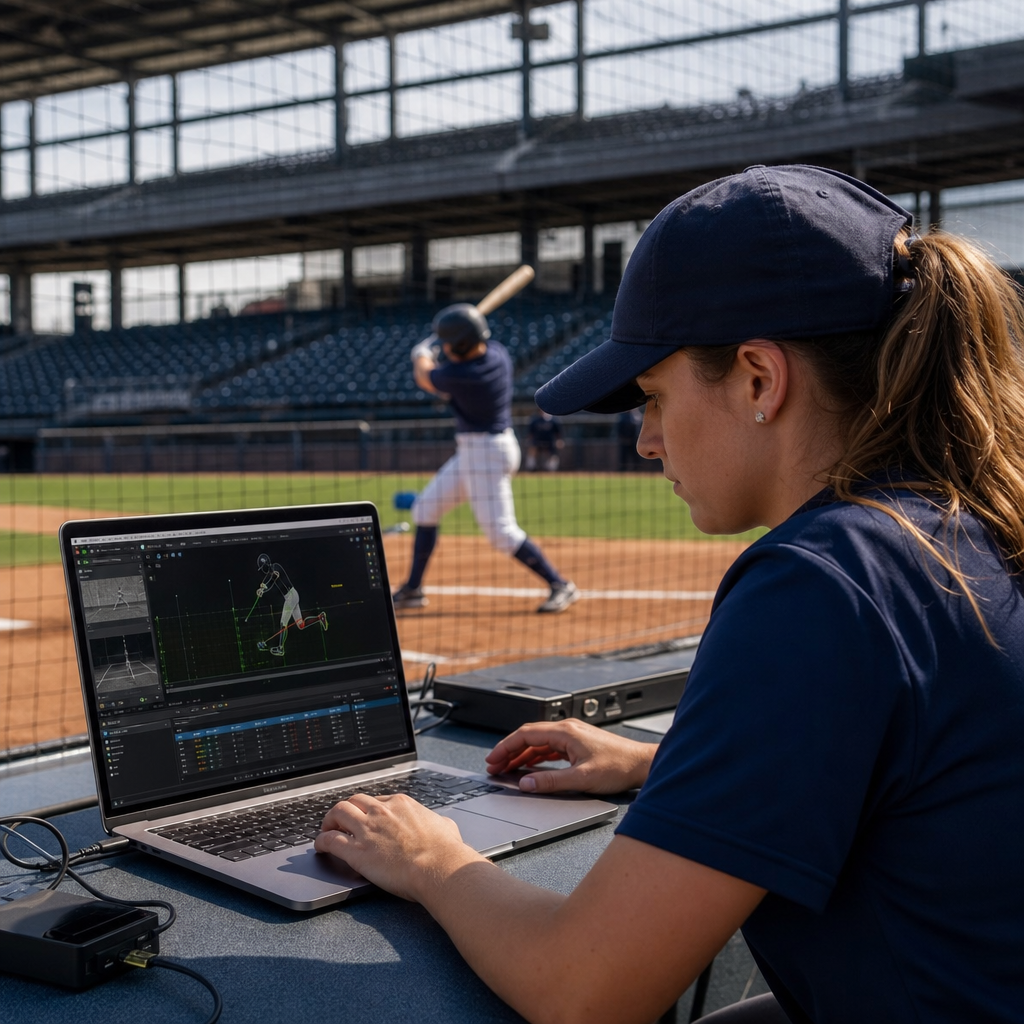
This matters now because baseball is in the middle of simultaneous technological and economic change. Motion capture systems, bat sensors, high-speed cameras, markerless biomechanics, wearable workloads, and AI-assisted scouting are transforming player development. At the same time, teams and leagues are chasing younger audiences, international growth, direct-to-consumer media revenue, and new sponsorship categories. Women are central to both shifts. They are entering baseball operations through analytics and performance science, expanding consumer markets through participation and fandom, and creating overlooked opportunities in apparel, coaching, events, and digital content. For a sport often criticized as slow to evolve, women in baseball represent one of the clearest paths to innovation with measurable business upside.
How participation pathways create technological opportunity
The first economic fact about women in baseball is that participation drives every downstream market. If more girls play baseball, demand grows for coaching, facilities, travel tournaments, uniforms, protective gear, event technology, streaming, and recruiting platforms. Yet the pathway remains fragmented. In many regions, girls are encouraged to switch to softball early, not because baseball is a poor fit, but because baseball infrastructure was built without them in mind. That gap creates room for innovation. Organizations that map the female baseball pathway from tee ball to adult competition can identify where athletes drop out and where products or services can solve access problems.
Technology already helps close some of those gaps. Video platforms such as Hudl, Blast Motion, and Rapsodo-style feedback systems make skill development more portable, reducing dependence on elite local instruction. A girl in a market without dedicated baseball coaching can now capture swings, compare mechanics, and receive remote analysis. In my experience, this matters most at ages twelve to sixteen, when players either receive enough technical support to stay in baseball or are pushed toward other sports by default. Remote coaching is not a complete substitute for live reps, but it lowers friction at the exact point where the pipeline historically narrows.
Equipment design is another underused opportunity. Baseball gear has long been sized down from male specifications rather than engineered for female athletes’ anthropometrics. Better fitting batting gloves, cleats built around foot shape, chest protectors designed for comfort and range of motion, and training apparel that supports high-velocity movement without compromise are not cosmetic upgrades; they improve compliance, confidence, and performance. Brands that treat women’s baseball gear as a category rather than an adaptation can own a market before it becomes crowded. That pattern has already played out in running and soccer, where specialized product lines expanded participation and increased lifetime customer value.
Facilities can evolve as well. Data-informed scheduling software can reserve cage time, mound access, and strength sessions for girls’ baseball programs that historically received leftover hours. Live-streamed local tournaments give families and sponsors visibility, which in turn justifies future investment. These are not abstract benefits. Once participation is visible and measurable, it becomes easier for governing bodies, municipal programs, and private operators to defend budgets and attract partners.
Women in baseball operations, analytics, and player development
One of the biggest technological opportunities in baseball is not a device but a hiring strategy. Women have entered the sport through data analysis, biomechanics, medicine, psychology, operations, and coaching, especially as clubs professionalized departments that once relied on informal networks. Modern baseball decision-making depends on interdisciplinary work: analysts translate TrackMan and Hawkeye data, strength coaches turn force-plate findings into training plans, and player development staff convert information into clear cues. Teams that widen the talent pool improve the quality of those decisions.
Clubs now use integrated stacks that combine video, ball-tracking, bat-tracking, medical records, and scouting notes. Operating these systems requires people who can ask good questions, not just read dashboards. I have seen organizations gain a real edge when they hire outside traditional baseball pedigrees and teach the game context internally. Women with backgrounds in engineering, statistics, physiotherapy, software, and organizational psychology often thrive in these roles because they enter without inherited assumptions about “how baseball has always worked.” That can reduce confirmation bias, which remains a persistent problem in scouting and player evaluation.
Examples across the industry support this trend. Women have served as hitting coaches, minor league coaches, coordinators, general managers in affiliated settings, analysts, and senior executives. Their presence matters beyond symbolism because it normalizes expertise in rooms where authority historically came from playing background alone. Baseball’s best organizations now validate ideas through evidence, repeatability, and communication quality. That shift favors professionals who can synthesize data and explain it clearly to players and coaches.
There is also a labor-market benefit. Baseball teams compete with finance, health technology, and software companies for quantitative talent. Restricting hiring to narrow networks is economically irrational. Expanding recruiting to women in STEM, sports science, and digital media increases the available skill base at a time when clubs are investing more heavily in in-house research and development. The competitive advantage is straightforward: better hiring produces better models, better injury prevention, and better player outcomes.
Business models, revenue growth, and market expansion
Women in baseball create economic opportunity because they expand both supply and demand. On the supply side, more participants, coaches, and professionals increase the talent available to run organizations and events. On the demand side, female athletes and fans represent a larger consumer market for tickets, subscriptions, merchandise, clinics, camps, and branded content. Baseball has often struggled to package itself for audiences beyond inherited fandom. Women-focused baseball programming gives the sport fresh stories and products to sell without inventing an entirely new game.
Sponsorship is one of the fastest paths to monetization. Brands increasingly look for partnerships tied to inclusion, youth development, community health, and measurable social impact. A girls’ baseball academy, a women-led coaching summit, or a streamed development series can attract support from apparel companies, healthcare providers, financial firms, and technology vendors. Sponsors want narratives that connect participation to empowerment and long-term customer relationships. Baseball can offer that, especially when organizations present credible participation data, audience demographics, and year-over-year retention rates.
Media is another growth lever. Digital platforms reduce the old gatekeeping that limited coverage of women in baseball. Teams, leagues, training companies, and creators can distribute behind-the-scenes development stories, mic’d up practices, coaching explainers, and tournament highlights directly to viewers. This is commercially important because niche audiences online can be monetized through ads, membership communities, ticket packages, and merchandise bundles. A well-run content ecosystem also helps future articles on youth development, women’s coaching, baseball analytics careers, and equipment innovation reinforce this hub topic through strong internal relevance.
| Opportunity Area | Primary Technology | Revenue Mechanism | Practical Example |
|---|---|---|---|
| Youth participation | Streaming and scheduling software | Registrations, sponsorships, event fees | Regional girls’ baseball tournament with paid live access |
| Player development | Wearables, video analysis, bat sensors | Coaching subscriptions, camps, remote instruction | Virtual hitting program for players without local specialists |
| Equipment and apparel | Fit testing, material design, ecommerce analytics | Direct sales, repeat purchases, team outfitting | Female-specific cleats and protective gear line |
| Professional services | Data platforms, biomechanics labs | Consulting, staffing, software licensing | Women-led performance consultancy serving academies |
International growth deserves special attention. The World Baseball Softball Confederation and related national programs have shown that girls’ and women’s baseball can scale when federations support competition structure. In markets such as Japan, Canada, Australia, and parts of Latin America, baseball culture already exists; the opportunity is to invest in female pathways inside that culture. For clubs and brands, that means cross-border camps, tournaments, content licensing, and localized retail strategies. The economics improve when baseball stops treating women’s participation as peripheral and starts viewing it as a multiplier on existing infrastructure.
What organizations must fix to turn opportunity into lasting change
The opportunity is real, but it is not automatic. Baseball still faces structural barriers that limit women’s advancement and the market’s full value. The first is inconsistent access to competition. Without enough teams, tournaments, and age-band continuity, athletes struggle to develop, and businesses struggle to forecast demand. The second is underinvestment in measurement. Many organizations do not track girls’ baseball participation separately enough to understand retention, conversion, or spending patterns. If leaders cannot quantify the pipeline, they tend to underestimate it.
Hiring and culture also matter. Bringing women into baseball operations without authority, mentorship, or promotion paths does little to change outcomes. Organizations need transparent role definitions, pay standards, anti-harassment policies, and manager training that supports inclusive communication. Those are not compliance details; they are operational requirements for retaining high-skill employees. Baseball loses value when capable professionals leave because the workplace was built around exclusionary habits rather than performance.
Another fix is better storytelling grounded in substance. Audiences respond when coverage explains what women in baseball actually do: how a coordinator uses edgertronic video to refine pitch grips, how a coach structures constraint-led drills, how an executive models ticket yield for a new event series. Vague inspiration pieces have a place, but sustainable audience growth comes from credible reporting and practical insight. The same principle applies to youth development. Families need clear answers about where girls can play baseball, what training looks like, how recruiting works, and what goals are realistic at each stage.
Finally, leaders should align investment with standards already respected across sports. Use validated testing where possible, protect athlete data privacy, evaluate programs with retention and performance metrics, and build partnerships with schools, local governments, and healthcare providers. The organizations that win will not be the ones making the loudest claims. They will be the ones creating repeatable systems that help women enter baseball, stay in baseball, and generate visible value for the sport.
Women in baseball are an innovation story, a workforce story, and a growth story at the same time. The clearest takeaway is that technological change and economic opportunity reinforce each other. Better tools make participation and development more accessible. Broader participation creates stronger markets for equipment, events, media, and services. Smarter hiring improves baseball operations and widens the sport’s talent base. When clubs, leagues, brands, and community programs treat women as central to baseball’s future rather than adjacent to it, they build a more competitive and more resilient industry.
For this subtopic, the hub question is not whether women belong in baseball. They already do, across player development, analytics, coaching, leadership, entrepreneurship, and fandom. The practical question is where organizations can act next. Start with the basics: measure female baseball participation separately, audit facilities and schedules, review hiring pipelines, identify product gaps, and build content that answers real audience needs. Then connect those efforts to adjacent work on youth development, sports technology, coaching education, and baseball business strategy so progress compounds instead of remaining isolated.
Baseball has spent years looking for ways to modernize without losing its identity. Supporting women in baseball is one of the few changes that does both. It preserves the game’s competitive core while opening new ideas, new consumers, and new sources of value. If you are building within the sport, make this a priority area now: invest in the pathway, invest in the tools, and invest in the people who are already proving what baseball can become.
Frequently Asked Questions
Why are women in baseball becoming such an important force in the sport’s technological and economic future?
Women in baseball are influencing far more than representation. They are helping reshape how the sport identifies talent, evaluates performance, develops products, and reaches new consumers. Female players, coaches, front-office leaders, broadcasters, analysts, entrepreneurs, and investors bring perspectives that often uncover overlooked opportunities in areas such as player development, biomechanics, fan engagement, and commercial strategy. When organizations expand participation and leadership beyond traditional pathways, they tend to widen the talent pool and make smarter decisions about innovation and growth.
From a technology standpoint, women are contributing to data-driven training systems, wearable performance tools, video analysis workflows, and injury-prevention programs that improve outcomes across the game. From an economic standpoint, they help open new sponsorship categories, attract broader audiences, strengthen community programs, and create more inclusive media products. This matters because baseball’s long-term growth depends on finding new participants, new fans, and new revenue streams. Women are central to all three. Their impact is not symbolic; it is operational, measurable, and increasingly tied to the sport’s competitive and financial health.
How is technology creating new opportunities for women in baseball?
Technology is lowering old barriers and creating new entry points throughout the baseball ecosystem. Advanced video platforms, remote coaching tools, motion capture, bat and ball tracking systems, and AI-assisted analysis make it easier to evaluate skill and potential outside traditional scouting networks. That is especially important for female athletes and professionals who may have had less access to legacy pipelines. Digital tools can document performance with more precision, help coaches personalize development plans, and allow players to showcase ability to teams, trainers, and recruiters regardless of geography.
Technology is also creating career opportunities beyond the field. Women are working in sports science, biomechanics, data analytics, product design, broadcast production, digital content, and fan intelligence. As teams and baseball businesses rely more on information systems and performance technology, expertise in these areas becomes a source of influence and leadership. On the consumer side, streaming, social media, and direct-to-fan platforms allow women’s baseball stories to reach audiences without waiting for traditional gatekeepers. That visibility can increase sponsorship value, improve event attendance, and support businesses built around training, apparel, equipment, and media. In short, technology is not just helping women participate in baseball; it is giving them tools to shape how the sport operates and grows.
What kinds of economic opportunities are emerging as women gain visibility and influence in baseball?
The economic opportunities are expanding across multiple layers of the industry. At the grassroots level, there is growing demand for clinics, academies, camps, and development programs designed to support girls and women who want to play baseball rather than being redirected elsewhere. That creates business opportunities for coaches, facility operators, trainers, tournament organizers, and equipment companies. At the professional and commercial level, increased visibility supports sponsorships, branded content, licensing, ticket sales, merchandising, and event partnerships that speak to a wider and more diverse fan base.
There is also strong potential in adjacent markets. Equipment design is one example: companies that invest in fit, comfort, performance, and safety for female athletes can unlock underserved demand. Media is another major area, with opportunities in streaming rights, podcasts, documentaries, social-first storytelling, and broadcast talent. Investors and entrepreneurs are paying attention because audience growth often follows authentic storytelling and underserved consumer segments. When women are included as players, experts, executives, and creators, baseball becomes more relevant to more people. That relevance can translate directly into revenue, whether through media rights, sponsorship packages, youth participation, or new baseball-related products and services.
How do youth pipelines and equipment design affect the future of women in baseball?
Youth pipelines are foundational because long-term growth in any sport depends on early access, coaching quality, competition opportunities, and clear advancement pathways. For many girls interested in baseball, the challenge has not been lack of ability or interest, but inconsistent support structures. When leagues, schools, travel programs, and development academies actively create space for girls to play baseball, the sport benefits from a larger and more competitive talent base. Better pipelines also help identify future coaches, scouts, analysts, and executives, since early participation often shapes later careers across the industry.
Equipment design plays a practical and commercial role in this process. Gear that reflects different body types, fit needs, and comfort requirements can improve performance, confidence, and injury prevention. When equipment is designed with female athletes in mind rather than adapted as an afterthought, it sends a strong market signal that these players matter. That can improve retention in youth baseball and create new demand for manufacturers and retailers. In broader business terms, youth development and equipment innovation work together: one builds participation, the other supports performance and belonging. That combination is essential if baseball wants to create sustainable opportunities for women at every level of the game.
What can baseball organizations, brands, and investors do to support women in baseball in a way that is both meaningful and commercially smart?
The most effective approach is to treat women in baseball as a strategic growth area rather than a side initiative. Organizations can start by investing in access: more clinics, more competition opportunities, more coaching education, and more visible pathways into scouting, analytics, broadcasting, and front-office leadership. They can also improve hiring and promotion practices so women are present in decision-making roles, not only support functions. On the baseball side, teams should use data and technology to evaluate talent inclusively and build development systems that account for different player journeys instead of relying only on outdated assumptions.
For brands and investors, the smart move is to back businesses and platforms with long-term audience potential. That includes media ventures, performance technology, training services, equipment lines, and event properties that serve girls and women in baseball authentically. Sponsorships are most effective when they are tied to real development outcomes, compelling storytelling, and measurable fan engagement. Investors should also look at the surrounding ecosystem, including content production, community programs, youth infrastructure, and commerce opportunities. The commercial logic is straightforward: underserved markets often contain some of the best growth opportunities. Supporting women in baseball is meaningful because it expands access and equity, and it is commercially smart because it broadens participation, strengthens brand relevance, and opens new channels for revenue and innovation.