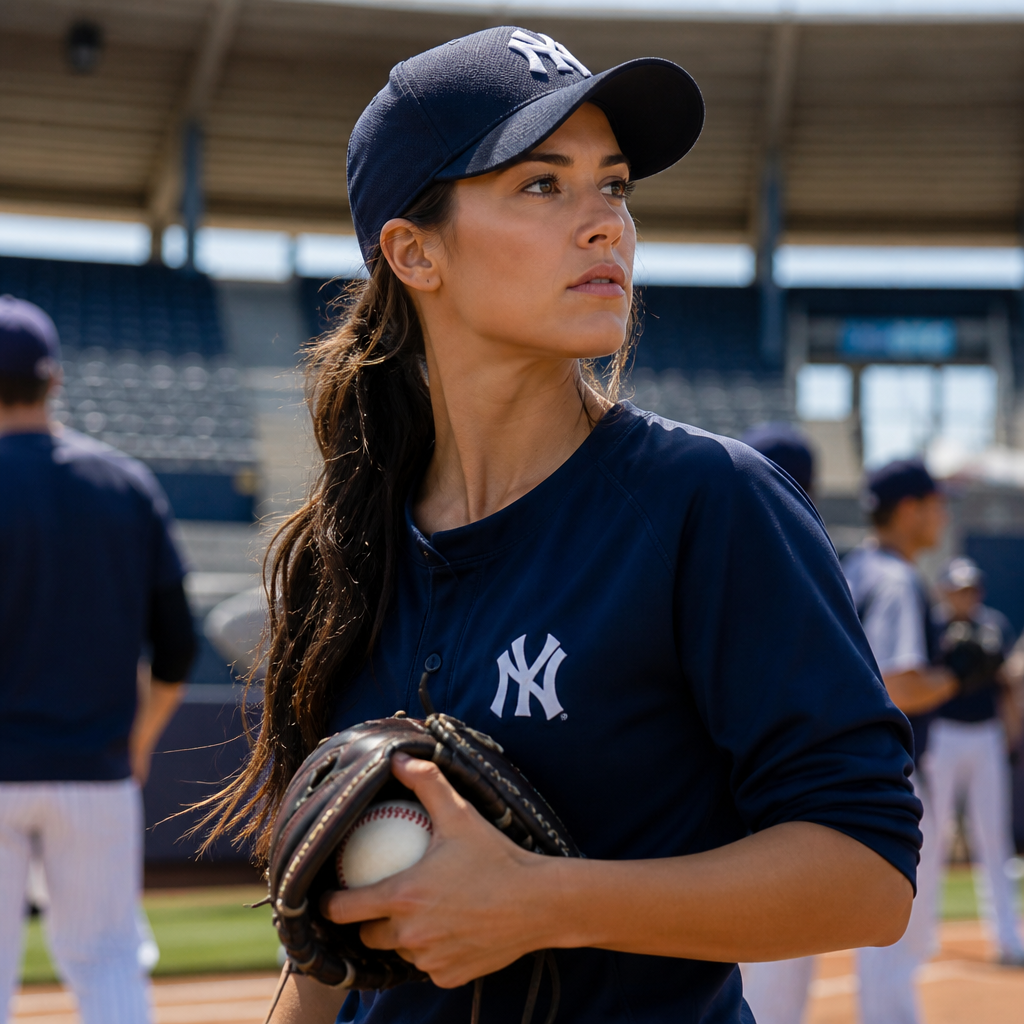
Baseball’s history is often told through box scores, pennant races, and iconic ballparks, yet the sport has always included women in ways that are broader, older, and more influential than many fans realize. “Women in baseball” refers not only to players, but also to executives, owners, scouts, broadcasters, umpires, trainers, writers, entrepreneurs, and community builders whose work shapes how the game is played and understood. “Gender play” in this context means the shifting social and professional roles women have occupied around baseball, from exclusion and novelty to authority and leadership. As a hub within the wider Women in Baseball topic, this article maps the miscellaneous but essential parts of that story: where women have been, what barriers they faced, which breakthroughs mattered, and how the sport continues to change.
This subject matters because baseball is more than a professional league. It is a cultural institution tied to schools, cities, media, labor, and identity. When women enter new baseball roles, the change is not symbolic alone; it affects hiring pipelines, youth participation, fan development, workplace standards, and the public memory of the sport. I have worked with baseball history archives and modern club communications, and one lesson is consistent: when people say women are “new” to baseball, they usually mean newly visible. Women have sold tickets, kept score, managed logistics, trained athletes, negotiated contracts, and promoted local clubs for generations. Understanding that continuity gives readers a better framework for evaluating current headlines and for exploring the linked stories across this subtopic.
At the same time, progress has not been linear. Baseball has offered women opportunity in certain periods and pushed them aside in others. World War II opened space for the All-American Girls Professional Baseball League, but that visibility did not become a stable professional system after the war. Front-office roles expanded in recent decades, yet leadership positions remain unevenly distributed. Media representation improved, but women in baseball still face credibility tests that men in equivalent jobs rarely encounter. A useful hub article therefore needs to balance celebration with analysis. The aim here is to explain the evolving roles of women across baseball’s ecosystem, identify the major categories of contribution, and provide the context readers need before moving into more specialized articles on players, pioneers, leagues, leadership, and culture.
From hidden labor to public presence
Women have been part of baseball since the sport’s amateur roots in the nineteenth century. Newspapers documented women’s ball clubs as early as the 1860s, though coverage often treated them as curiosities rather than competitors. That framing mattered. It established a pattern in which women’s baseball participation was acknowledged, but not granted the same legitimacy as men’s play. In archival materials, I repeatedly see women praised for drawing crowds while their athletic skill is minimized. This distinction shaped everything that followed: women were welcome as entertainment, fundraisers, or symbolic supporters, but less welcome as equal baseball actors.
Even so, women built durable baseball knowledge through forms of labor that were visible inside clubs but undervalued outside them. They organized travel, maintained records, managed hospitality, worked in concession operations, and supported community baseball associations. Wives and daughters of owners, managers, and local promoters often performed administrative functions that today would be recognized as operations, finance, or marketing work. Because these tasks were not always formalized with titles, later histories overlooked them. Yet clubs depended on this labor. In practical terms, baseball’s growth into a stable business required women’s management capacity long before the sport admitted women into many official decision-making roles.
Public presence widened when women entered jobs fans could clearly see: scorekeepers, publicists, reporters, anthem singers, and eventually broadcasters and on-field personnel. Visibility changed the argument. Once women became part of the live baseball experience, fans had to reconcile tradition with evidence. A woman calling a game accurately, negotiating a sponsorship, or running player development logistics made it harder to claim that baseball competence belonged to one gender. That tension still exists, but the historical direction is clear. Women’s baseball work has moved from hidden support to recognized expertise, and that shift is one of the central themes linking every article in this subtopic.
Women as players: participation, exclusion, and persistence
The most familiar entry point into women in baseball is playing, but the playing story is more complex than a single league or era. Women and girls have long played baseball informally, on barnstorming teams, in schools, in industrial leagues, in international competitions, and in amateur adult circuits. The challenge was never proving that women could play baseball. The challenge was building systems that allowed them to continue playing, develop competitively, and earn recognition. Baseball institutions often redirected girls toward softball, which became a valuable sport in its own right but also functioned as a gendered channel that narrowed baseball access.
The All-American Girls Professional Baseball League, founded in 1943, remains the most famous example because it combined elite play, wartime necessity, and national promotion. It preserved fan interest while many male players were serving in the military, and it showcased athletes with strong defensive skills, base running, and adaptability as league rules evolved toward standard baseball. Yet the league also imposed strict presentation rules, including charm school expectations and uniform designs that prioritized femininity over comfort. That contradiction is crucial. The league created opportunity, but it did so within a framework that reassured audiences women would not challenge broader gender norms too directly.
After the league ended in 1954, women’s baseball did not disappear; it fragmented. Players found opportunities in local leagues, international events, and occasional men’s teams, but no major professional structure replaced what had been lost. Recent decades brought new milestones, including women representing national teams in the Women’s Baseball World Cup and girls pushing into boys’ and men’s baseball pathways. Players such as Ila Borders demonstrated that a woman could compete in professional men’s independent baseball, while figures like Kelsie Whitmore expanded contemporary visibility. The lesson is that women’s baseball talent has persisted continuously. What has been inconsistent is institutional support, scouting attention, and a clear developmental ladder from youth participation to elite competition.
Leadership roles in the modern game
One of the most significant changes in baseball has occurred away from the batter’s box. Women now work throughout the industry in baseball operations, player development, analytics, medical services, legal affairs, revenue strategy, and club leadership. These are not ceremonial posts. They influence roster construction, injury prevention, international scouting processes, draft preparation, clubhouse culture, and long-term organizational planning. When Kim Ng became general manager of the Miami Marlins in 2020, the moment drew attention because Major League Baseball had never had a female GM. Inside the industry, however, many people recognized it as the public arrival of expertise that had been accumulating for decades.
Ng’s career is instructive because it followed rigorous baseball pathways: internships, labor relations, assistant general manager positions with the New York Yankees and Los Angeles Dodgers, and senior vice president work with MLB. Her appointment was not a symbolic experiment. It reflected deep institutional knowledge across contracts, collective bargaining, evaluation, and front-office process. Other women have similarly advanced through substantive baseball roles, including Janet Marie Smith in ballpark planning and operations, Raquel Ferreira in executive administration and player development support, and Veronica Alvarez in development and coaching leadership. The pattern worth noting is that progress often accelerates when organizations treat women not as diversity optics but as baseball professionals with specialized competence.
Leadership also includes ownership influence and governance. Women owners and co-owners have affected franchise direction, investment priorities, and public accountability, even if their baseball authority has sometimes been framed through family succession rather than business acumen. Across the minor leagues and college baseball environments, women increasingly manage sponsorships, compliance, communications, and event execution. These positions matter because baseball leadership is cumulative. Decisions on staffing, facilities, youth outreach, and hiring standards shape who enters the game next. A hub article on miscellaneous roles must therefore place leadership at the center: if women help govern baseball, they help determine the sport’s future, not just participate in its present.
Media, storytelling, and who gets believed
Baseball is uniquely dependent on narration. Fans experience the sport through radio cadence, television analysis, beat reporting, newsletters, podcasts, score apps, and documentary storytelling. Women in baseball media have changed not only who speaks about the game, but also which stories become part of its official memory. Pioneers such as Claire Smith, the first woman to receive the BBWAA Career Excellence Award, proved that expert reporting could survive and expose hostile clubhouse cultures. Smith’s coverage helped normalize the idea that women belonged in every reporting space where baseball news was made.
Broadcasting has been equally important. When women call games or serve as analysts, they challenge a longstanding assumption that baseball authority sounds male. The best broadcasters earn trust through preparation, rules knowledge, timing, and the ability to explain pitch usage, defensive positioning, sequencing, and managerial intent in real time. Fans may first notice the barrier being broken, but they keep listening because competence is obvious. That practical reality is why representation in media matters so much: repeated exposure recalibrates public expectations faster than policy statements do.
| Role | Typical responsibilities | Why it matters |
|---|---|---|
| Beat reporter | Clubhouse coverage, transaction news, sourcing, analysis | Shapes daily understanding of teams and holds organizations accountable |
| Broadcaster | Play-by-play, color analysis, pregame and postgame explanation | Builds fan trust and teaches audiences how to read the game |
| Baseball executive | Roster planning, contracts, staffing, strategic decision-making | Directly affects competitive performance and organizational culture |
| Coach or instructor | Skill development, drills, game preparation, feedback | Creates player pathways and expands who sees baseball as possible |
Storytelling extends beyond journalism. Historians, filmmakers, museum curators, and digital archivists have recovered women’s baseball histories that institutions ignored. The National Baseball Hall of Fame and local historical societies have played meaningful roles, but much recovery work still comes from dedicated researchers piecing together newspaper clippings, family collections, and oral histories. This work is not decorative. If a sport cannot accurately remember women’s participation, it will continue to underestimate women’s claims to its future. Better storytelling therefore supports better policy, better hiring, and better fan education across the entire baseball ecosystem.
Coaching, officiating, and player development
Coaching is where baseball knowledge becomes visible under pressure. A coach must diagnose swing decisions, throwing mechanics, pitch design, baserunning reads, and defensive communication, then translate that diagnosis into repeatable improvement. Women have increasingly entered coaching and player development roles at professional and amateur levels, and their advancement matters because it addresses one of the oldest misconceptions in baseball: that understanding the game at an expert level requires having followed a traditional male playing pathway. In practice, good coaching depends on observation, pedagogy, trust, data fluency, and communication. Those skills are not gendered.
Recent milestones illustrate the shift. Alyssa Nakken’s coaching role with the San Francisco Giants and her appearance as the first woman to coach on the field in a regular-season MLB game became a headline because it broke a visual barrier fans had absorbed for decades. Rachel Balkovec’s rise through strength and conditioning, hitting instruction, and minor league management showed another path, one grounded in applied development work. Bianca Smith’s professional coaching opportunities and Veronica Alvarez’s national team and developmental leadership further demonstrate that women are building coaching credibility through daily baseball labor, not one-off visibility moments.
Officiating follows a similar pattern. Umpires need rulebook command, game management skill, positioning discipline, and composure under conflict. Women have officiated baseball at various levels for years, though advancement has been slower than in some other sports. The barriers are structural as much as cultural: limited pipelines, fewer mentors, and evaluation systems historically dominated by men. Still, each woman who succeeds in coaching or officiating expands baseball’s practical imagination. Young players who see women teaching in cages, running bullpens, or managing game flow gain a more accurate view of who belongs in authority within the sport.
The youth pipeline, culture, and what comes next
If readers want to understand the future of women in baseball, the clearest place to look is the youth pipeline. Participation begins with access to teams, fields, equipment, transportation, instruction, and encouragement. Many girls who love baseball leave not because of lack of ability, but because the pathway narrows early. Travel programs may steer them toward softball, schools may not actively support girls trying out for baseball, and families may assume long-term opportunities are too limited to justify the effort. These are solvable problems, but solving them requires intentional design rather than goodwill alone.
Programs such as MLB Develops initiatives, girls baseball showcases, local nonprofit training groups, and national team identification camps have started building stronger pathways. The most effective models share common features: qualified coaching, regular competition against appropriate peers, visibility for scouts and media, and a message that baseball is not a temporary novelty for girls. International growth also matters. Countries including Japan, Canada, the United States, and several Latin American and Asian baseball communities have contributed to women’s baseball structures that create more meaningful competitive opportunities. As those systems improve, they pressure domestic institutions to take girls’ baseball more seriously.
Cultural change, however, is slower than program creation. Baseball remains tradition-heavy, and tradition can either preserve excellence or preserve exclusion. The healthiest direction for the sport is not to erase history but to tell it honestly. Women have always belonged in baseball. What changes over time is whether institutions acknowledge that fact with jobs, resources, facilities, coverage, and respect. For readers using this page as a hub, that is the key takeaway linking every miscellaneous topic ahead: women influence baseball as players, leaders, educators, narrators, and decision-makers, and each role strengthens the game by widening its talent pool and deepening its understanding of itself.
The practical benefit of studying these evolving roles is simple. It makes you better at reading baseball as a whole. You see how leagues are built, how opportunities are limited or expanded, how public narratives shape hiring, and how overlooked contributors sustain the sport between headline moments. If you are exploring the broader Women in Baseball topic, use this article as your foundation, then continue into the detailed profiles, league histories, and role-specific guides that branch from it. The more completely you understand women’s place in baseball, the more completely you understand baseball itself.
Frequently Asked Questions
What does “gender play” mean in the context of baseball?
In this context, “gender play” refers to the changing ways baseball has defined, enforced, challenged, and reimagined gender roles over time. It is not limited to who can step onto the field as a player. It also includes who is seen as qualified to lead a front office, call a game from the broadcast booth, scout amateur talent, umpire professionally, own a franchise, cover the sport as a journalist, or shape baseball culture at the local level. In other words, baseball’s “gender play” is about how the sport has functioned as a social stage where ideas about masculinity, femininity, authority, athleticism, and belonging are constantly negotiated.
That makes the phrase especially useful for understanding baseball history in a fuller way. For generations, women were often present in baseball but pushed to the margins of the official story. Sometimes they were celebrated as novelties, sometimes excluded through formal rules, and sometimes accepted only in carefully limited roles. Yet women still influenced the game through labor, leadership, fandom, business, media, and activism. Looking at baseball through the lens of gender play helps explain why certain roles opened up slowly, why others remained contested, and how cultural expectations shaped opportunity. It also reminds readers that baseball has never been a fixed institution; it has always reflected broader debates about gender and power in American life and beyond.
Have women always been part of baseball, or is their involvement a recent development?
Women have been part of baseball for as long as the sport has existed in organized and informal forms, even if mainstream histories have often treated that involvement as secondary. From the nineteenth century onward, women appeared as players, spectators, promoters, club supporters, and entrepreneurs around the game. In some eras, women played on barnstorming teams or in exhibition settings. In others, they were vital to the growth of baseball as consumers, community organizers, and cultural participants. Their presence was never truly absent; what changed over time was how visible, accepted, and institutionally supported that presence became.
One reason the misconception persists is that baseball history is often told through Major League Baseball statistics and male star narratives. That framework leaves out women whose contributions took place in semi-professional leagues, wartime leagues, Black baseball communities, local clubs, ownership circles, training rooms, newsrooms, and executive offices. The All-American Girls Professional Baseball League, for example, is one of the best-known chapters, but it is only one part of a much larger story. Women also made baseball possible behind the scenes by organizing events, sustaining fan communities, writing about the game, and building pathways for future generations. So while women’s current visibility in baseball may feel more prominent than in the past, their involvement is not new. What is new is the growing recognition that they have always belonged in the sport’s history.
In what roles have women influenced baseball beyond playing on the field?
Women have influenced baseball in nearly every major area of the sport, including ownership, executive leadership, scouting, player development, sports medicine, broadcasting, journalism, officiating, marketing, and grassroots programming. Some have directed organizations from the top, helping shape team identities, business strategies, and long-term development plans. Others have worked in talent evaluation, using analytics, observation, and relationship-building to identify players and support roster construction. Women in training and medical roles have also had a significant impact by helping athletes recover, stay healthy, and perform at high levels over the course of demanding seasons.
Just as important is the cultural influence women have had on how baseball is understood. Broadcasters and writers help define what stories get told, which players are elevated, and how fans interpret the sport. Community leaders and youth coaches expand access to baseball, especially for girls who might otherwise see the game as closed to them. Entrepreneurs and nonprofit organizers create clinics, leagues, mentorship pipelines, and advocacy networks that reshape who gets to participate. Women umpires and on-field officials also challenge assumptions about authority and expertise in one of sports’ most tradition-bound environments. Taken together, these contributions show that baseball is not built only by the players on the diamond. It is built by a network of people whose knowledge, labor, and leadership sustain the game, and women have long been central to that network.
Why has women’s progress in baseball often been uneven or overlooked?
Progress has often been uneven because baseball, like many institutions, has historically reflected wider social barriers related to gender, access, and power. Even when women demonstrated expertise or talent, they frequently faced structural obstacles such as exclusion from leagues, hiring bias, limited media coverage, and assumptions that baseball knowledge was naturally male. In many cases, women were welcomed only when they fit specific cultural expectations, which meant their authority could be questioned more quickly and their opportunities could remain fragile. Advancement did not always follow a straight line; moments of visibility were sometimes followed by retrenchment, erasure, or the relegation of women’s contributions to novelty rather than legitimacy.
Another reason their progress has been overlooked is that baseball storytelling has often prioritized official records, major league milestones, and star-centered mythology. That leaves less room for contributors whose work happened off the field or outside the most famous institutions. If a woman shaped scouting operations, expanded youth participation, changed sports media, or sustained baseball in a local community, her influence might not show up in a box score, even though it mattered deeply. Historical recognition depends on who archives the story, who gets quoted, and whose work is considered central. As scholarship, journalism, and public history continue to widen the lens, more of these contributions are being recovered and properly valued. That process is essential because visibility is not just about celebrating the past; it also affects who feels welcome in baseball’s future.
How are women’s roles in baseball continuing to evolve today?
Today, women’s roles in baseball are evolving through both greater visibility and deeper institutional participation. More women are entering front offices, player development systems, medical and performance staffs, media roles, umpiring pipelines, and ownership or advisory positions. At the same time, youth baseball and grassroots initiatives are creating stronger developmental pathways for girls who want to play, coach, or work in the sport professionally. This evolution matters because representation at multiple levels changes how baseball thinks about expertise. When women are consistently present in decision-making spaces, on broadcasts, in dugouts, and in training environments, the sport moves away from the idea that their participation is unusual and toward the recognition that it is normal, valuable, and overdue.
The evolution is also cultural, not just occupational. Fans, historians, and organizations are increasingly asking broader questions about who baseball serves and whose stories define it. That has encouraged renewed attention to overlooked pioneers, more inclusive hiring practices, and stronger public conversations about access and equity. Challenges certainly remain, including uneven opportunities, persistent stereotypes, and the slow pace of change in some parts of the sport. Still, the direction is significant. Women are not simply being added to baseball as a side note; they are helping reshape the game’s present and future. Understanding that shift allows readers to see baseball less as a closed tradition and more as a living institution that grows through the people who insist on making room within it.