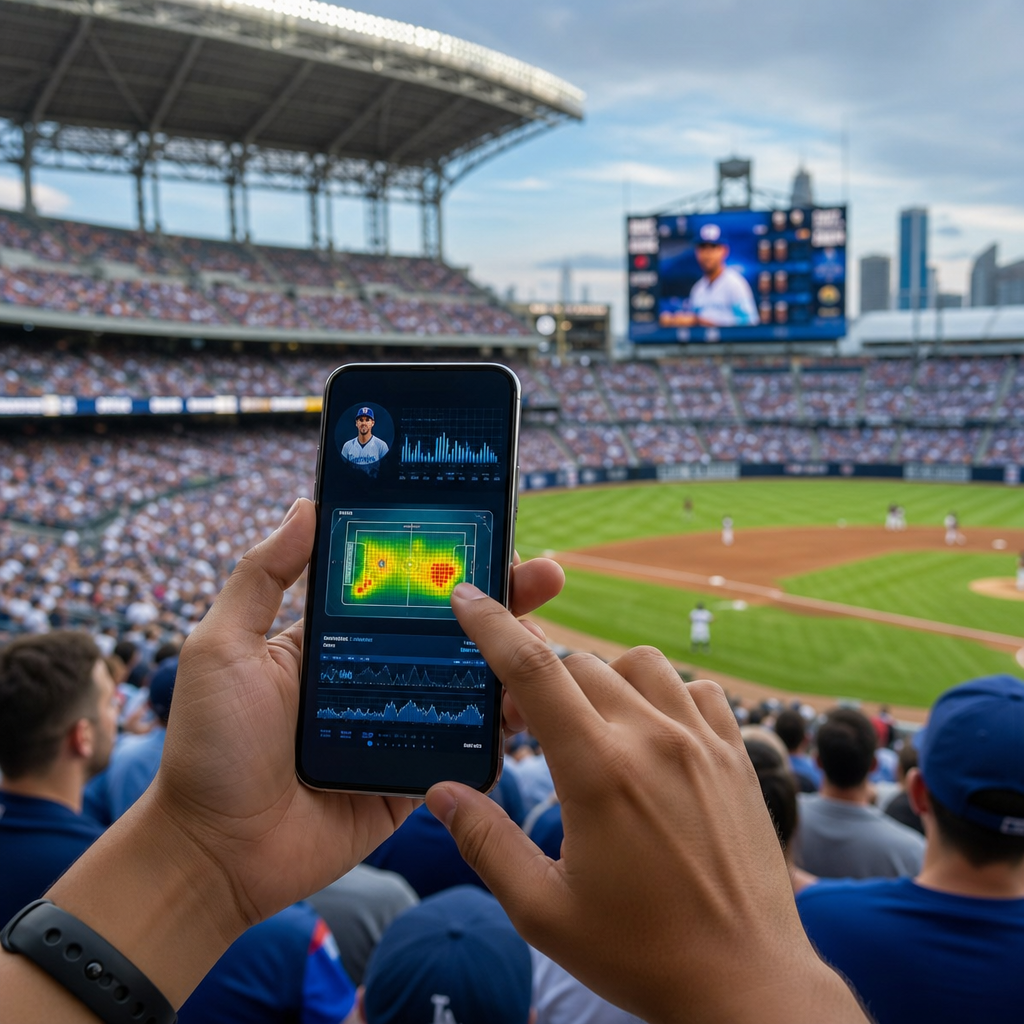
Big data has become one of the defining forces behind modern media and broadcasting techniques in baseball, reshaping how teams, leagues, networks, and streaming platforms personalize fan experiences across every screen. In this context, big data means the large, fast-moving sets of information generated by ticket purchases, app behavior, viewing habits, social engagement, location signals, merchandise sales, fantasy play, and in-stadium activity. Personalization means using that information to tailor what a fan sees, hears, buys, and does, from recommended highlights to custom camera angles and targeted ticket offers. This matters because baseball competes not only with other sports, but with every form of digital entertainment. In my work with sports content and audience analytics, the clearest lesson has been simple: fans stay longer and spend more when coverage feels relevant to them personally. For a subtopic hub on modern media and broadcasting techniques, big data sits at the center because it connects production, distribution, marketing, and monetization into one measurable system.
Baseball is especially suited to data-driven personalization because the sport produces natural pauses, deep statistical traditions, and a long season that creates repeated fan touchpoints. A national broadcast viewer, a local radio listener, a bettor following live odds, and a family attending weekend games all want different experiences. The same raw game can therefore become many products. Broadcasters now use audience segmentation models, customer data platforms, recommendation engines, dynamic ad insertion, and real-time analytics dashboards to decide which content reaches which fan. MLB’s digital ecosystem, regional sports networks, direct-to-consumer streaming services, and social platforms all rely on these methods. The result is a shift away from one-size-fits-all coverage toward adaptive media experiences. Understanding that shift helps explain current innovations in baseball broadcasting and points to where the industry is headed next.
How big data powers personalized baseball media
At a practical level, big data improves fan experience by turning scattered signals into usable audience insight. Data comes from first-party sources such as team apps, email subscriptions, ticketing systems, loyalty programs, and streaming accounts, then gets matched with contextual information like device type, geography, weather, game state, and time of day. Broadcasters and teams use this combined view to predict what a fan is likely to watch, click, share, or buy. If someone regularly watches condensed games on a phone during morning commutes, the platform can prioritize short highlight packages and push notifications rather than full-game prompts. If another user streams every Yankees-Red Sox matchup on connected TV, the service can surface rivalry content, pregame analysis, and premium alternate feeds.
Modern baseball media increasingly runs on this feedback loop. Collection leads to analysis, analysis drives content decisions, and fan behavior then validates or challenges those decisions. Recommendation systems used by streaming companies follow principles familiar from Netflix and YouTube, but baseball adds a stronger live component. During live games, engagement models track drop-off risk and identify moments when fans are most receptive to extra content, such as pitch overlays, win probability graphics, or gambling integrations where legal. In my experience, the most effective organizations do not chase every possible metric. They focus on a handful that map directly to business goals: watch time, retention, conversion, average revenue per user, churn, and sponsor lift. Big data becomes valuable when it supports those decisions consistently and quickly.
Streaming platforms, second screens, and customized viewing paths
The rise of direct-to-consumer streaming has made personalization far more precise than traditional linear television ever allowed. A cable broadcast sends the same program to every household. A streaming platform can deliver different entry points, interface layouts, ad loads, language options, and companion features to different users at the same moment. Baseball has embraced this model through league-owned streaming products, authenticated regional streams, and smart-TV apps that remember previous behavior. A casual fan might open an app and immediately see “best plays from last night,” while a committed fan sees “watch live,” “statcast feed,” and lineup news. That difference is not cosmetic. It reduces friction and increases the chance that each user finds immediate value.
Second-screen behavior is another major driver. Many fans watch games while using phones for social media, fantasy baseball, messaging, or live stats. Broadcasters now design coverage around that reality instead of resisting it. Companion apps can sync with broadcasts and serve pitch-by-pitch data, player cards, polls, and commerce links without interrupting the main feed. The same data layer can also personalize alerts: a fantasy manager gets notice that a reliever entered in a save situation, while a ticket buyer receives an offer for next week’s series after engaging with stadium content. These experiences depend on event data pipelines that process game actions in near real time. Providers such as Stats Perform, Sportradar, and MLB Statcast feeds make that speed possible, while cloud platforms like AWS support the storage and delivery needed at scale.
Smarter broadcasts through audience segmentation and real-time production
Big data is changing not just distribution, but the broadcast itself. Producers can now see how different audience segments respond to graphics, replay packages, commentary topics, and camera usage. If younger viewers retain better during rapid highlight recaps and explainer graphics, a digital-first stream may lean into those formats. If local audiences respond more strongly to player-development stories, a regional telecast can build more content around farm-system call-ups and community ties. This is personalization at the production level, where the show is shaped for audience patterns rather than built only from tradition.
Alternate broadcasts are a clear example. Some baseball streams feature data-heavy presentations with exit velocity, launch angle, and pitch movement overlays. Others use a lighter tone aimed at newer fans, with simplified rules explanations and social-media-driven interaction. Spanish-language broadcasts may emphasize different storytelling rhythms and cultural touchpoints. None of these versions are random. They are informed by viewership data, audience research, and engagement benchmarks. In practice, producers combine quantitative dashboards with editorial judgment. Numbers can show that viewers re-engage after replay clusters or abandon streams during long dead-air stretches, but experienced producers still decide how to balance pace, clarity, and authenticity. The best personalized broadcasts use data to support human storytelling, not replace it.
Advertising, sponsorship, and commerce become more relevant
One reason investment in big data keeps accelerating is that personalization directly improves monetization. In sports media, advertising inventory is limited, live audiences are valuable, and sponsor performance is closely measured. Data allows broadcasters and teams to serve more relevant messages based on known preferences and likely intent. A fan who has browsed family ticket packages may see promotions for weekend games and concession bundles. A frequent merchandise buyer may receive jersey drops tied to a player milestone. A viewer in a legal sports-betting market might get odds content integrated into the stream, while another viewer receives a sponsor message tied to youth baseball clinics. Relevance improves click-through rates and conversion while reducing the fatigue caused by generic promotions.
The same principle applies to sponsorship reporting. Brands increasingly want proof that placements drove outcomes, not just impressions. With digital delivery, platforms can connect exposure to actions such as site visits, app installs, purchases, or contest entries. Dynamic ad insertion makes these campaigns flexible because creative can be swapped by audience segment without changing the underlying broadcast. Programmatic infrastructure also allows campaigns to optimize midseason. When teams and networks can show that a branded feature lifted engagement among a defined cohort, sponsorship becomes easier to renew at higher value. The tradeoff is that measurement must be handled carefully. Privacy rules, consent management, clean-room analysis, and data governance are now basic requirements, especially when combining sports media behavior with customer identities.
What the data says fans want from modern baseball coverage
Across platforms, the strongest pattern is that fans want control, context, and convenience. Control means choosing between live games, condensed replays, key moments, radio audio, alternate commentary, and personalized alerts. Context means understanding what happened and why, through overlays, historical comparisons, player-tracking metrics, and easy-to-read explanations. Convenience means frictionless access on any device with minimal search time. When these three needs are met, engagement rises sharply.
| Fan need | How big data supports it | Baseball media example |
|---|---|---|
| Control | Tracks viewing preferences and feed selection | Serving a stats-heavy alternate stream to repeat power users |
| Context | Links live events to historical and player-performance databases | Showing pitch movement, matchup history, and win probability after each at-bat |
| Convenience | Uses behavioral data to reduce search friction | Opening an app directly to a favorite team’s live game or recap |
| Relevance | Segments audiences for content, ads, and offers | Sending ballpark promotions only to nearby fans likely to attend |
This is why modern media and broadcasting techniques now revolve around integrated data stacks rather than isolated production tools. A baseball fan does not experience content in departmental silos. The highlight clip on social media, the push alert before first pitch, the streaming interface, the in-game graphic package, and the postgame ticket offer all feel like one relationship with the team or broadcaster. Big data makes that relationship coherent. It also helps explain why short-form video, personalized homepage modules, multilingual feeds, and targeted notifications have become standard parts of the baseball media mix rather than side experiments.
Challenges: privacy, bias, and the risk of over-personalization
Personalization is powerful, but it is not automatically beneficial. The first challenge is privacy. Fans are more aware of data collection than they were a decade ago, and regulations such as the GDPR in Europe and the CCPA in California have raised the standard for transparency and consent. Even when baseball organizations operate mainly in the United States, their platforms often reach global audiences, which means privacy practices must be robust. The safest approach is clear disclosure, easy preference controls, limited retention, and strong security around personally identifiable information. Trust can erode quickly if fans feel tracked without understanding the benefit.
The second challenge is bias and narrowing. Recommendation systems can over-serve content to the most engaged segments while neglecting casual fans or underrepresented audiences. A platform that only feeds hard-core statistical content may lose newcomers. An algorithm trained mostly on past high-value customers may underserve future fans with different habits. I have seen this happen when organizations optimize relentlessly for immediate clicks and ignore long-term audience growth. The solution is editorial balance, experimentation, and guardrails around model outputs. Personalized experiences should expand access, not trap fans in narrow content loops. Baseball is at its best when it uses data to meet fans where they are while still inviting them deeper into the sport.
The future of baseball broadcasting and fan experience
Over the next several years, big data will push baseball media toward even more adaptive experiences. Artificial intelligence will improve tagging, clipping, translation, and commentary support, making it cheaper to create many versions of the same game for different audiences. Computer vision and player-tracking systems will generate richer live context, from defensive positioning explanations to individualized player storylines. Connected venues will merge in-stadium and at-home behavior, allowing teams to understand the full fan journey from parking and concessions to streaming and merchandise. Expect more personalized audio options, smarter highlight automation, deeper betting integrations where legal, and commerce that appears naturally inside content rather than after it.
For baseball organizations, the central lesson is not merely that more data is better. The real advantage comes from using the right data to solve specific fan problems. Modern media and broadcasting techniques succeed when they help people find games faster, understand action more clearly, and feel recognized as individuals rather than anonymous viewers. For readers exploring innovations and changes in baseball, this is the hub principle to remember: big data is the operating system behind personalized fan experiences, linking production, distribution, sponsorship, and service into one strategy. Audit the fan journey, identify the highest-friction moments, and build from there. The organizations that do this well will earn stronger loyalty, better monetization, and a broadcast product built for how baseball is actually consumed today.
Frequently Asked Questions
How does big data help personalize fan experiences in baseball?
Big data helps personalize fan experiences in baseball by turning everyday fan activity into actionable insight. Teams, leagues, broadcasters, and streaming platforms collect information from ticket purchases, mobile app usage, viewing history, merchandise transactions, fantasy sports participation, social media engagement, and even in-stadium behavior such as concession purchases or seat upgrades. When those signals are combined, organizations can build a much clearer picture of what different fans care about, when they engage, and how they prefer to follow the game.
That data can then be used to tailor content, offers, and interactions in ways that feel more relevant and timely. A casual fan might receive beginner-friendly highlight packages, rivalry game alerts, or promotional ticket offers for weekend matchups. A devoted fantasy baseball player might be shown advanced player metrics, injury updates, lineup notifications, and customized stat overlays during a live stream. A season ticket holder might receive personalized parking information, concession discounts, and exclusive behind-the-scenes content tied to their attendance history. Instead of delivering the same experience to everyone, big data allows organizations to match the experience to each fan’s habits and interests.
In practical terms, personalization also improves convenience. Fans can be guided toward the most relevant content faster, whether that means a condensed game recap, a live stream on their preferred device, a merch recommendation based on favorite players, or a push notification at the exact moment their team enters a high-leverage situation. The result is a fan experience that feels less generic and more intuitive, which can strengthen loyalty, increase engagement, and make baseball media feel more connected to individual preferences across every screen.
What types of fan data are most valuable for creating personalized experiences?
The most valuable fan data is usually the data that reveals behavior, intent, and context. Transactional data, such as ticket purchases, merchandise orders, subscription activity, and concession spending, is especially useful because it shows what fans are willing to pay for and how often they engage financially with a team or platform. Behavioral data from apps and streaming services is equally important. This includes what games fans watch, how long they watch, which clips they replay, what notifications they open, which articles they read, and what devices they use. Together, those signals help organizations understand both fan commitment and content preferences.
Location and timing data also play a major role. Knowing whether a fan is at the stadium, near the ballpark, at home, or traveling can influence what kind of content or offer makes sense in that moment. A fan attending a game may value mobile ticket support, concession recommendations, parking updates, and exclusive in-venue camera angles. A fan watching remotely might respond better to alternate broadcasts, personalized recaps, or reminders about upcoming games in their time zone. Context matters because personalization is not only about who the fan is, but also about what they are doing right now.
Engagement data from social media, email interactions, loyalty programs, and fantasy participation can deepen that understanding further. Fans who frequently comment on prospect news, share defensive highlights, or spend time with analytics-heavy content likely want a different experience than fans who mainly follow star players or promotional giveaways. The strongest personalization strategies do not rely on a single data source. They combine multiple streams to create a more complete, accurate, and evolving view of fan interests, while also respecting privacy rules and giving users transparency around how their information is used.
How do broadcasters and streaming platforms use big data to improve viewing experiences?
Broadcasters and streaming platforms use big data to shape nearly every part of the viewing experience, from what fans see before a game starts to what appears on screen during live action. Viewing history helps platforms recommend specific games, highlight packages, documentaries, and team-specific content based on prior behavior. If a fan consistently watches late-inning action, clips featuring star pitchers, or games involving division rivals, the platform can surface similar content more prominently. This makes discovery easier and increases the odds that fans spend more time watching.
During live broadcasts, big data also powers more adaptive presentation choices. Networks can use audience behavior to determine which graphics resonate most, when to introduce advanced stats, and how to serve different fan segments. Some viewers may prefer traditional storytelling and key game moments, while others want pitch-level analytics, exit velocity, defensive positioning, and win probability in real time. Data allows platforms to experiment with alternate feeds, personalized overlays, or interactive features that let fans choose the level of statistical depth they want. In that sense, big data supports a more flexible viewing product rather than a one-size-fits-all broadcast.
Big data is also central to retention and engagement strategy. Streaming services analyze where viewers drop off, which devices create friction, what kinds of notifications drive tune-in, and which moments trigger social sharing. Those insights can be used to improve stream quality, refine user interfaces, optimize ad timing, and send smarter reminders before marquee games or key moments. Over time, this creates a viewing experience that feels more responsive to fan habits. Instead of simply broadcasting a game, platforms can build an ecosystem around the fan that is personalized, measurable, and continuously improved through real-world usage patterns.
What are the biggest benefits of personalization for fans, teams, and media companies?
For fans, the biggest benefit is relevance. Personalization reduces noise and helps people get to the content, products, and experiences they actually care about. Rather than searching through generic feeds or broad promotions, fans can receive customized game alerts, tailored highlight reels, player-specific content, easier ticketing options, and merchandise recommendations aligned with favorite teams or athletes. That saves time and makes the overall experience feel smarter and more enjoyable. It can also help newer fans engage with baseball in more approachable ways by offering content that matches their level of knowledge and interest.
For teams and leagues, personalization supports stronger relationships and better business outcomes. When organizations understand fan preferences more clearly, they can market more effectively, improve attendance strategies, increase merchandise sales, and strengthen loyalty programs. Personalized communication tends to perform better than mass messaging because it is more likely to arrive with the right content at the right time. Teams can also use data to improve the in-stadium experience by managing crowd flow, tailoring concession offers, promoting upgrades, and identifying which fan segments are most likely to respond to special events or membership programs.
For broadcasters, networks, and streaming companies, personalization can drive longer watch times, higher subscription retention, better ad performance, and more valuable audience insights. Advertisers benefit too, because campaigns can be targeted more precisely based on fan interests and behaviors rather than broad demographic assumptions. In a crowded media environment, that matters. The organizations that can deliver a seamless, personalized fan journey across television, mobile, streaming, social, and live events are often the ones best positioned to keep attention and grow revenue. When done well, personalization creates value across the entire baseball media ecosystem, not just for one stakeholder.
Are there privacy concerns with using big data to personalize fan experiences?
Yes, privacy concerns are one of the most important issues in any big data strategy, especially when personalization depends on collecting information across apps, ticketing systems, streaming platforms, social channels, and in-stadium technologies. Fans may not always realize how much data is being gathered or how those separate signals are connected. That can create concerns about transparency, consent, and whether organizations are collecting more information than necessary. Location tracking, device identifiers, behavioral profiling, and purchase histories can all be sensitive when combined, even if each data point seems harmless on its own.
Responsible organizations address those concerns by focusing on clear disclosure, meaningful user choice, and strong data governance. Fans should be able to understand what information is being collected, why it is being used, and how it benefits their experience. They should also have accessible options to manage preferences, opt out of certain forms of tracking, or limit how their data is used for marketing and advertising. Security matters just as much as consent. Data systems need protections against breaches, unauthorized access, and misuse, particularly when they involve payment details, account credentials, or precise location information.
There is also an ethical dimension beyond legal compliance. Just because data can be used does not always mean it should be used in every possible way. The best personalization strategies are built on trust. They deliver obvious value to fans, avoid overly intrusive tactics, minimize unnecessary collection, and align with evolving privacy laws and platform rules. In baseball and across the broader sports media industry, long-term success depends on finding the right balance between personalization and respect for the fan. When organizations are transparent and disciplined, big data can enhance the fan experience without undermining confidence or privacy.