Women in the World Series occupy a small but significant place in baseball history, revealing how the sport’s biggest stage has reflected broader debates about gender, labor, visibility, and authority. The phrase can mean several kinds of participation: women playing baseball at a high level, women appearing in World Series roles as owners, executives, reporters, broadcasters, anthem singers, ceremonial figures, or umpires, and women influencing the event indirectly through legal, business, and cultural change. For a hub page within the wider women in baseball topic, “miscellaneous” matters because many milestones did not fit neatly into a single category. They happened around the diamond, in press boxes, front offices, broadcast booths, and club ownership suites, yet each milestone changed who was seen as belonging in the World Series environment.
In my experience researching baseball archives and media guides, the most common misconception is that women have had no real connection to the World Series because no woman has appeared as a player in Major League Baseball’s championship. That statement is technically true, but historically incomplete. Women have participated in World Series history for more than a century, just not in the way most fans first imagine. Some threw ceremonial first pitches that became national news. Some reported from clubhouses when that access was fiercely contested. Some owned teams that reached or won the Series. Some called games on radio or television. Others helped normalize women’s presence in baseball spaces that had long excluded them.
Understanding this history matters for two reasons. First, the World Series is baseball’s most visible annual event, so participation there signals legitimacy. Second, progress at the World Series tends to follow wider change across the sport. When women gained access at the championship level, that usually meant barriers were weakening elsewhere too. This article provides a comprehensive overview of miscellaneous female participation in World Series history, explains the major milestones, and connects them to the larger women in baseball story.
What Counts as Female Participation in the World Series
Female participation in the World Series includes direct, indirect, formal, and symbolic roles. Direct formal roles are easiest to identify: ownership, executive leadership, journalism, broadcasting, and on-field event duties. Indirect participation includes women whose work shaped the conditions of the Series, such as league officials, club decision-makers, and legal advocates who expanded access. Symbolic participation includes first pitches, flag presentations, and other ceremonial acts that reflected public attitudes about women in baseball culture.
The key distinction is between participation in Major League Baseball’s World Series and women’s championship baseball elsewhere. The All-American Girls Professional Baseball League, women’s amateur tournaments, and international women’s baseball competitions all have their own championship histories. They are essential to women in baseball, but they are not the MLB World Series. This article stays focused on the MLB event while recognizing that separate women’s baseball competitions supplied the talent pipeline, public imagination, and proof of concept that women belonged in elite baseball settings.
Another important distinction is visibility versus power. A woman singing the national anthem at a World Series game had visibility. A woman owning a franchise that won the World Series had power. Both matter historically, but not equally. In baseball research, combining them without explanation can flatten the record. The stronger way to interpret women in the World Series is to ask what role they held, what authority came with it, and whether that role expanded opportunities for others.
Early Visibility: Ceremonial Roles and Public Symbolism
Before women gained regular access to baseball institutions, they were often present at the World Series in ceremonial ways. First ladies and prominent women sometimes threw first pitches, appeared in pregame observances, or were highlighted in newspaper coverage as symbols of civic prestige. These moments did not alter roster rules or hiring practices, but they did establish that women could be part of the event’s public image.
One of the most cited early examples is First Lady Helen Taft, who threw a ceremonial first pitch at a Washington Senators game in 1910. That was not a World Series game, but it created a durable precedent for women in nationally visible ceremonial baseball roles. By the time the World Series matured into a mass media spectacle, ceremonial participation by women was familiar enough to be accepted, even while substantive baseball authority remained overwhelmingly male.
This pattern repeated through much of the twentieth century. Women were welcomed as honored guests, celebrities, or patriotic figures sooner than they were accepted as baseball professionals. The contrast is important. Baseball could display women at the World Series while still restricting women from the press box, dugout, scouting department, and umpiring ladder. Symbolic inclusion often came decades before institutional inclusion.
Women Owners and the Closest Route to Championship Power
The clearest path women had to meaningful World Series influence in the twentieth century was ownership. Several women inherited clubs, preserved them, or steered them through transitional periods. Their presence did not mean the sport had become gender-equal, because inheritance was not the same as open opportunity, but it did place women in positions tied directly to championships.
Joan Whitney Payson is central here. A founding owner of the New York Mets, she became the first woman to hold majority control of a National League team. The Mets won the 1969 World Series under her ownership. That achievement matters because it linked a woman not merely to the spectacle of the Series, but to strategic baseball success at the highest level. Payson was not a ceremonial figurehead. She was a committed baseball owner who supported roster building, organizational continuity, and franchise credibility in a difficult New York market.
Another major figure is Dorothy Harvie, part of the ownership group of the Toronto Blue Jays when the club won the World Series in 1992 and 1993. While ownership structures can diffuse authority across multiple investors, Harvie’s presence still marked a rare example of a woman tied to a championship franchise at the sport’s summit. Marge Schott, despite the serious controversies that ultimately defined her public legacy, owned the Cincinnati Reds when they won the 1990 World Series. From a purely historical standpoint, her role shows that women owners were not isolated anomalies by the late twentieth century; they were still uncommon, but undeniably part of World Series history.
| Figure | Role | World Series Connection | Historical Importance |
|---|---|---|---|
| Joan Whitney Payson | Majority owner, New York Mets | 1969 champion | First woman majority owner of a National League team tied directly to a title |
| Dorothy Harvie | Blue Jays ownership group | 1992 and 1993 champion | Woman connected to back-to-back championship ownership |
| Marge Schott | Owner, Cincinnati Reds | 1990 champion | Shows women could hold top franchise authority, despite major off-field controversy |
| Suzanne Johnson | Principal owner, Texas Rangers | 2023 champion | Modern example of female leadership attached to a World Series winner |
In the modern era, Suzanne Johnson’s position with the Texas Rangers adds a contemporary example. When the Rangers won the 2023 World Series, a woman stood as the principal owner of the franchise. That milestone belongs in any current overview because it demonstrates continuity from inherited and family-linked ownership models to today’s more formal executive governance structures.
Women in Journalism: Access to the World Series Press Box and Clubhouse
Sports journalism produced some of the most consequential World Series breakthroughs for women because access determined who could document baseball history. For decades, women reporters faced limits on credentials, seating, travel accommodations, and especially clubhouse entry. Without clubhouse access, a reporter could not do the job on equal terms, particularly during the World Series when deadlines were tight and player quotes drove coverage.
Pioneers such as Melissa Ludtke forced baseball to confront discriminatory access rules. In 1977, while covering the World Series for Sports Illustrated, Ludtke was denied equal clubhouse access at Yankee Stadium. She sued under federal anti-discrimination principles and won a 1978 ruling that required equal access for women journalists. This was a decisive baseball milestone. It did not create a female player pathway, but it permanently changed who could cover the World Series accurately and competitively.
That case matters beyond media history. Once women could enter clubhouses on the same terms as men, newspapers and broadcasters had fewer excuses to sideline them from marquee assignments. The ruling shaped baseball culture, hiring, and public memory because reporters decide which stories become part of the historical record. In practical terms, equal credential access meant women could break news, conduct postgame interviews, and build reputations on baseball’s biggest stage.
By the late twentieth century and into the twenty-first, women became familiar presences in World Series coverage across outlets such as ESPN, FOX, The New York Times, The Athletic, MLB Network, and local beat operations. The significance lies not only in visibility but in normalization. Once women were regularly filing game stories, producing television segments, and asking tactical questions in postgame scrums, their participation stopped being a novelty and became part of baseball’s professional standard.
Broadcasting the Fall Classic: From Exception to Expertise
Broadcasting followed a similar arc, though often with slower progress in top national roles. For many years, women appeared around World Series coverage more often as hosts, sideline reporters, or feature correspondents than as primary play-by-play voices or lead analysts. That imbalance reflected both baseball tradition and the industry’s tendency to reserve authority-coded roles for men.
Even so, women steadily built a record of World Series broadcasting work. Reporters such as Lesley Visser and later Erin Andrews contributed to national postseason coverage. Analysts and hosts on pregame and postgame sets helped shape how audiences understood matchups, bullpen usage, managerial decisions, and player storylines. More recently, women such as Jessica Mendoza have demonstrated high-level baseball analysis on national platforms, bringing scouting language, swing mechanics, and player development insight into mainstream postseason discussion.
The distinction between assignment types still matters. Hosting a studio show is not the same as calling pitches in real time. Yet dismissing studio or field roles would miss how broadcast ecosystems work. World Series coverage is built by layered teams: producers, researchers, rules analysts, sideline reporters, interviewers, hosts, and booth talent. Women now contribute across that chain. The change is substantial because national postseason broadcasts influence how millions of viewers interpret strategy and performance.
From firsthand observation of sports media workflows, the breakthrough often comes when female broadcasters are no longer asked primarily human-interest questions. The stronger indicator of progress is when they are trusted to explain why a manager pulled a starter, how a hitter adjusted to elevated velocity, or why a catcher set up differently against a left-handed pull bat. World Series credibility in broadcasting comes from baseball fluency, and women have increasingly claimed that space.
Executives, On-Field Staff, and the Pipeline to Future Firsts
No woman has yet appeared as a player, manager, or home plate umpire in the MLB World Series, but the pipeline roles matter because they show where future firsts are likely to emerge. Women now work throughout Major League Baseball as general managers, assistant GMs, coaches, analysts, athletic trainers, strength specialists, and league administrators. When those women are employed by clubs that reach the postseason, they become part of the World Series ecosystem even if television cameras seldom emphasize it.
Kim Ng’s career is a good example of how long expertise can precede symbolic breakthroughs. Before becoming MLB’s first woman general manager with the Miami Marlins in 2020, Ng spent decades in senior front-office roles with the White Sox, Yankees, Dodgers, and MLB. While she did not run a World Series team as GM, her career tracks the expansion of women’s authority in precisely the decision-making spaces that produce pennant winners.
On the coaching side, Alyssa Nakken’s appointment to the San Francisco Giants coaching staff in 2020 and her later on-field coaching appearance in a regular-season game marked another meaningful step. It was not a World Series milestone, but it showed a credible route to one. The same applies to female strength coaches, medical personnel, and analysts who now travel with clubs. Their work affects preparation, recovery, matchup planning, and player communication, all of which are central in October.
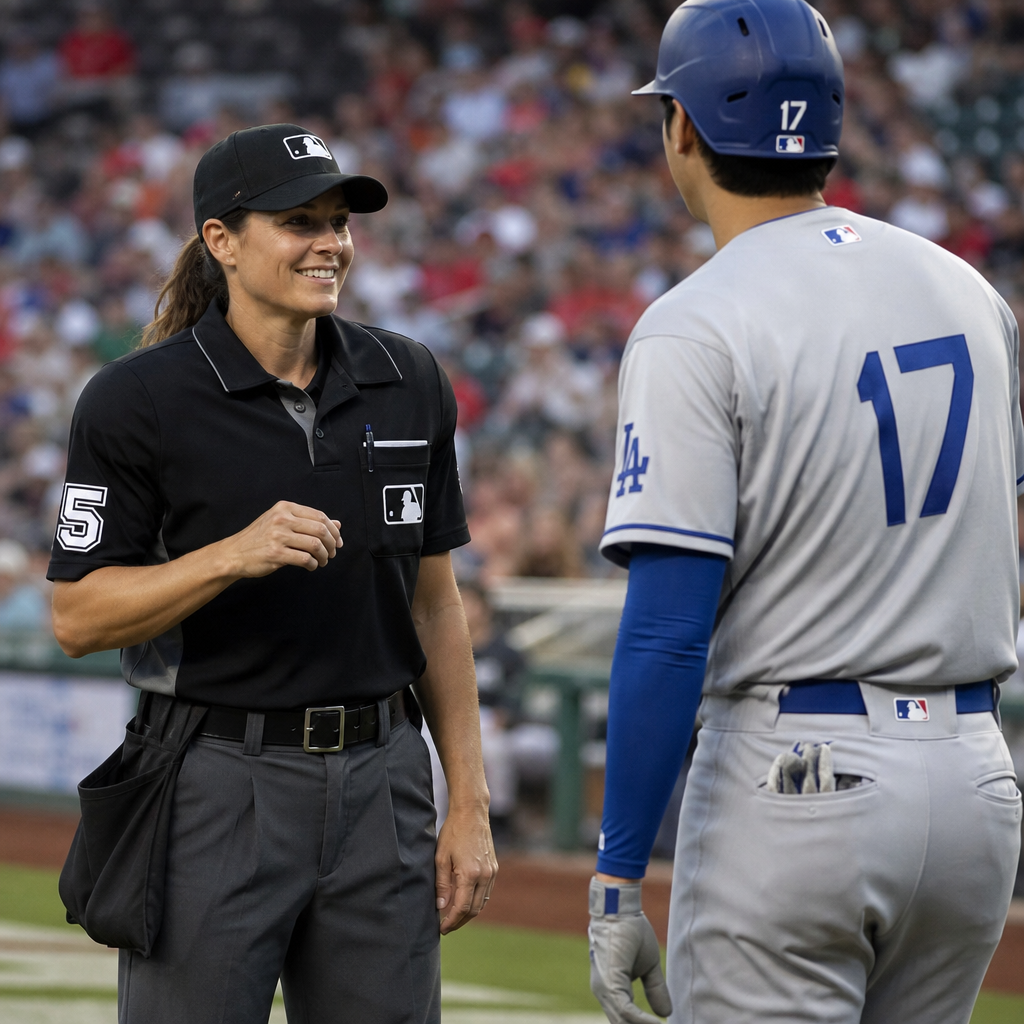
Umpiring remains another frontier. Women such as Jen Pawol have advanced through professional baseball’s umpiring system, demonstrating that a World Series assignment for a female umpire is conceivable if development and promotion continue on merit. In baseball, World Series assignments are not honorary; they are earned through evaluations, postseason performance, and institutional trust. That is why pipeline progress deserves close attention.
Why There Has Never Been a Female MLB World Series Player
The direct question many readers ask is simple: has a woman ever played in the World Series? The answer is no. No woman has played in a Major League Baseball regular-season game, which means none has reached the World Series as a player. The reasons are structural rather than biological shorthand. Baseball built male-only professional pathways early, reinforced them through scouting habits and social norms, and then developed girls’ and women’s baseball less consistently than boys’ and men’s baseball.
Title IX expanded opportunities for girls in sports after 1972, but much of that growth favored softball because schools could add teams more quickly within existing assumptions about gendered sports offerings. As a result, many elite female baseball players had to seek development in scattered travel programs, national teams, or overseas opportunities rather than moving through the dense, well-funded ladder available to male prospects. That matters because MLB players are produced by a long system: youth repetition, advanced coaching, high-level competition, scouting exposure, college or pro development, and durability over thousands of reps.
Women have proven they can excel in baseball itself. Players such as Toni Stone, Mamie Johnson, and Connie Morgan in the Negro Leagues, and later stars on national women’s teams, demonstrated skill, resilience, and baseball intelligence. But excellence in isolated or alternative structures is not the same as equitable access to MLB’s player pipeline. Until that access broadens substantially, the absence of a female World Series player will remain a system outcome, not just an individual one.
The Broader Meaning of Women in the World Series
Women in the World Series history tell us how institutions change: unevenly, visibly, and usually after pressure. The earliest roles were symbolic. Ownership created intermittent power. Journalism won legal access. Broadcasting gained analytical authority. Front-office and coaching roles built the modern pipeline. Each development widened the definition of who belongs at baseball’s highest-profile event.
For readers exploring women in baseball, the main takeaway is that World Series participation should be measured broadly but interpreted carefully. Not every appearance represents equal authority, and not every milestone solved the next barrier. Still, these milestones are cumulative. A woman owner lifting a trophy, a reporter entering a clubhouse by right instead of exception, and a broadcaster explaining postseason strategy on national television all move baseball closer to full inclusion.
The next advances are likely to come through executive leadership, coaching, umpiring, and player development. If you are building out this women in baseball subtopic, use this hub as a guide to the surrounding stories: women owners, women reporters, women broadcasters, women coaches, women umpires, and women players who challenged baseball’s boundaries long before the World Series fully acknowledged them. Follow those threads, and the history becomes clearer, richer, and far more important than a simple list of firsts.
Frequently Asked Questions
Have women ever played in the World Series?
No woman has appeared as an official player in a Major League Baseball World Series game, but that fact only tells part of the story. Women have played baseball at high levels for generations, from barnstorming teams to professional women’s leagues and international competition, yet MLB’s postseason stage remained closed to them because of longstanding structural barriers in organized baseball. For much of the twentieth century, women were steered away from elite baseball pathways and toward softball, even when they had the skill to compete in the baseball talent pipeline. That means the absence of female players in the World Series reflects exclusion as much as it reflects on-field history.
At the same time, the idea of “women in the World Series” is broader than active roster participation. Women have shaped the World Series through ownership, front-office leadership, media coverage, public ceremony, and cultural visibility. Their relationship to the event reveals how baseball’s biggest platform has mirrored larger debates about who gets to be seen as legitimate in the sport. So while there has not yet been a woman taking an at-bat or throwing a pitch in the World Series itself, women have undeniably been part of the World Series story in other meaningful and historically important ways.
In what ways have women participated in the World Series if not as players?
Women have participated in the World Series in a surprising range of roles, and those roles have evolved over time. Some of the most visible examples involve ownership and executive leadership. Women have influenced World Series teams as club owners, co-owners, or decision-makers behind the scenes, helping shape the business direction, public image, and long-term stability of franchises that reached baseball’s championship stage. In those contexts, female participation was not symbolic; it affected how teams were run and how baseball institutions functioned.
Women have also played major roles in journalism and broadcasting connected to the World Series. Female reporters fought for access to clubhouses, dugouts, and interview spaces that had historically been treated as male-only environments. Their presence changed not just who covered the games, but how the stories of the World Series were told to the public. Broadcasters, sideline reporters, feature correspondents, and studio analysts brought women into the event’s national presentation, expanding the range of voices associated with baseball’s biggest series.
Beyond media and management, women have appeared in ceremonial and public-facing roles, including national anthem performances, first pitches, trophy presentations, and other moments that define the event’s pageantry. More recently, women have also advanced in coaching, player development, and umpiring pipelines, making the conversation more forward-looking. Even when women were not centered on the field itself, their participation helped define the World Series as a cultural event, not just a sporting contest.
Why is the history of women in the World Series important to baseball history?
This history matters because the World Series is more than a championship; it is one of baseball’s clearest mirrors of American social values. Looking at women’s participation shows how ideas about gender, authority, labor, and public legitimacy have shaped the sport at its highest level. When women were excluded from playing roles, denied media access, or treated as exceptions rather than professionals, those patterns reflected larger assumptions in society about who belonged in public leadership and who was allowed to claim expertise in sports.
It is also important because women’s contributions were often substantial even when they were underrecognized. Female owners and executives influenced franchises. Female journalists widened public understanding of the game. Women involved in legal, business, and cultural battles around baseball helped push institutions to change, sometimes gradually and sometimes through direct confrontation. Their work affected hiring, access, representation, and the way baseball presented itself to the nation during marquee events like the World Series.
Studying this topic adds depth to baseball history by moving beyond a narrow player-only definition of participation. It helps readers understand the World Series as a stage where power is negotiated as much as trophies are won. That broader perspective is essential for any serious account of the sport’s past because it reveals both what baseball celebrated publicly and what it resisted privately.
How did women break barriers in World Series media coverage and broadcasting?
Women broke barriers in World Series coverage through persistence in professions that often treated them as outsiders. For decades, female sportswriters and broadcasters had to overcome assumptions that they lacked baseball knowledge or did not belong in the spaces where reporting happened. One of the most significant battlegrounds involved clubhouse access. Because postgame reporting depends on direct interviews and observation, excluding women from those spaces effectively limited their ability to do the same job as male colleagues. Legal challenges and public pressure gradually forced baseball to confront that inequity.
As women gained more access, they also gained credibility in the eyes of audiences and employers, though not without resistance. Female reporters covered strategy, labor disputes, player performance, and front-office decisions with the same rigor expected of any top baseball journalist. Over time, women also became more visible on television and radio during the World Series, not only as interviewers but as anchors, analysts, and storytellers. That shift changed the sound and look of baseball coverage on its biggest stage.
The significance of those breakthroughs goes beyond representation. When women entered World Series media roles, they challenged old definitions of authority in sports journalism. Their presence helped normalize the idea that baseball expertise is not gendered. In practical terms, that opened doors for future generations of journalists and broadcasters, making the World Series a more inclusive media environment than it had been in earlier eras.
Could a woman eventually participate on the field in a World Series?
Yes, it is possible, but it would require changes that are developmental as much as symbolic. A woman reaching the World Series as a player would first need a realistic path through youth baseball, amateur competition, scouting, player development, and the minor leagues. Historically, that pathway has been difficult because talented girls and women were often redirected into softball or denied equal opportunities in baseball training environments. The issue has never been only whether a woman could perform at a high level; it has also been whether the sport would consistently invest in her baseball development from an early age.
There are reasons the possibility is taken more seriously now than in the past. Women are increasingly visible in baseball operations, coaching, training, and officiating, and girls’ baseball programs have expanded in several countries. International women’s baseball has also provided stronger competition and greater legitimacy for female players who want to stay in baseball rather than switch sports. Those developments help create a broader foundation for future breakthroughs.
Still, a woman appearing on the field in a World Series would be historically extraordinary because MLB’s talent funnel is so selective and demanding. If it happens, it will likely be the result of years of institutional change, not a sudden novelty moment. That is why the history of women in the World Series matters now: it shows that visibility, access, and authority are built over time, and each gain in one part of the sport can influence what becomes possible on the field later.