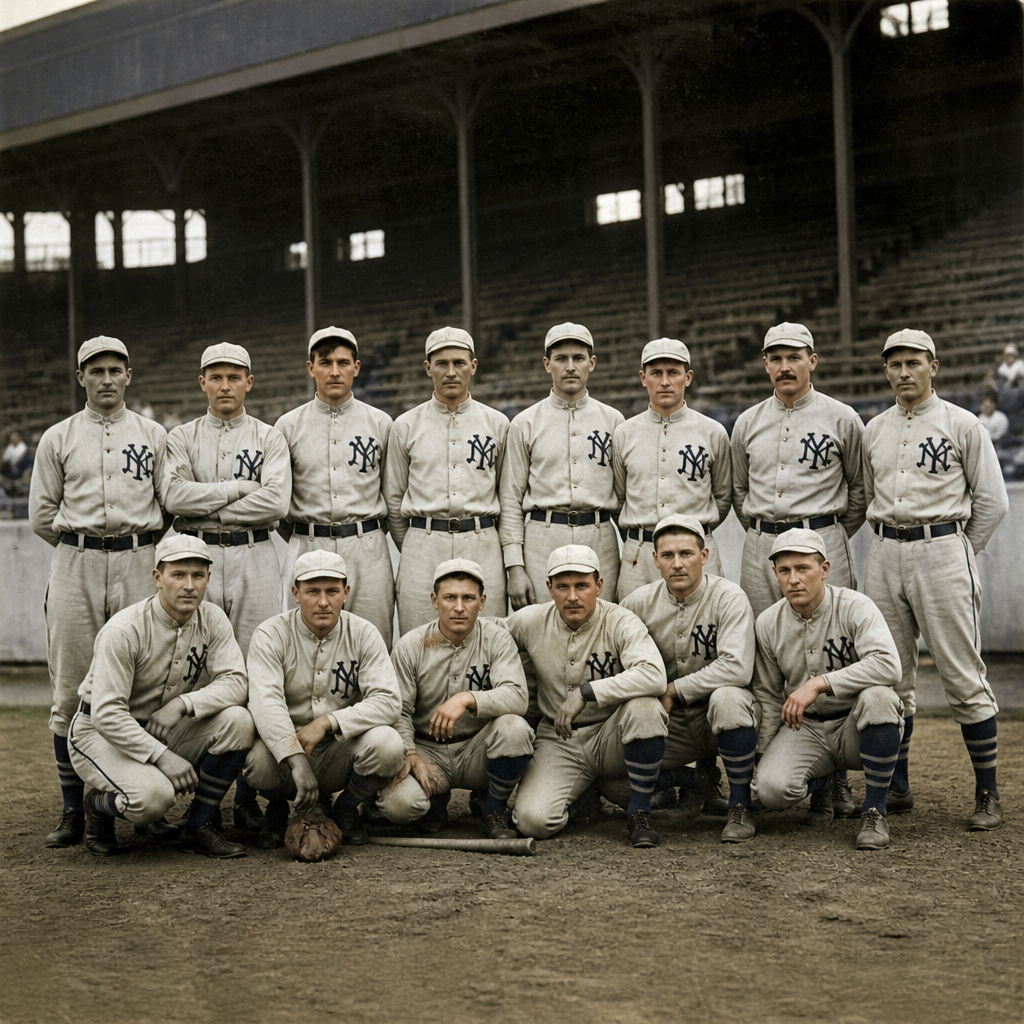
The New York Mutuals stand at the center of any serious discussion of 19th-century baseball because their story connects the amateur age, the first professional leagues, and the unstable business realities that shaped the modern game. Founded in New York City in 1857, the Mutual Base Ball Club became one of the era’s most recognizable teams, first earning prestige in amateur competition and later helping define the rough transition to professionalism. For readers exploring famous baseball teams, the Mutuals matter not simply as an old club with a memorable name, but as a case study in how baseball evolved from loosely organized local contests into a national sport governed by schedules, gate receipts, contracts, and league discipline.
To understand the New York Mutuals, a few terms need clear definition. “Amateur” in mid-19th-century baseball usually meant players were not openly paid, though hidden compensation and soft jobs were common. “Professional” referred to clubs that acknowledged paying players for their services, a major change formalized after the Cincinnati Red Stockings proved the model could attract crowds. The “National Association” was baseball’s first fully professional major league, operating from 1871 through 1875. The “National League,” founded in 1876, tried to replace that looser structure with centralized authority, stronger scheduling rules, and firmer financial standards. The Mutuals played meaningful roles in each stage.
I keep returning to the Mutuals when mapping the full landscape of 19th-century clubs because they reveal how quickly baseball power could shift. Before the Boston Red Stockings became the dominant professional machine, before the Chicago White Stockings emerged as a flagship western club, and before the St. Louis Brown Stockings expanded the game’s reach, New York teams set the cultural tone. The Mutuals were part of that New York baseball world alongside the Knickerbockers, Atlantics, Eckfords, and other pioneering clubs. Their rise reflected urban growth, immigration, newspaper attention, and the popularity of enclosed grounds where spectators paid admission.
This article serves as a hub for 19th-century clubs by using the Mutuals as a throughline. Their history touches nearly every major theme in the subtopic: the amateur code, the first stars, the spread of professionalism, league politics, travel burdens, and early franchise instability. If you want to understand why some clubs survived in memory while others vanished, the Mutuals offer a direct answer. They were talented, influential, and famous in their own time, yet they disappeared because baseball’s new institutions demanded a level of compliance and capitalization that many early clubs could not sustain.
Origins of the Mutuals and the Amateur Baseball World
The Mutual Base Ball Club was organized in Manhattan in 1857, during a foundational period when New York-area clubs were standardizing rules and popularizing the “New York game.” Those rules differed from regional variants such as the Massachusetts game and gradually became dominant through the influence of the National Association of Base Ball Players, founded in 1858. In this amateur environment, clubs were civic institutions as much as sporting teams. Players often came from neighborhoods, social circles, or occupational groups, and competitive prestige mattered at least as much as direct profit.
The Mutuals quickly established a reputation for quality play. Contemporary reports praised clubs not just for winning but for style, discipline, and the ability to attract worthy opponents. Baseball was already becoming a spectator event, and top clubs understood that visibility in newspapers mattered. New York dailies and sporting weeklies devoted increasing space to match reports, lineups, and disputes. That coverage built reputations across cities long before radio or film existed. The Mutuals benefited from this environment, becoming a known brand in an era when club identity depended on recurring public mention and repeated challenges against prominent rivals.
In practical terms, amateur baseball was never as pure as later nostalgia suggested. By the 1860s, elite clubs found ways to secure talent through no-show jobs, expense reimbursements, or other inducements. I have always found the Mutuals especially revealing here because their path mirrors the broader truth: the distinction between amateur and professional was often a matter of disclosure, not entirely of practice. Clubs wanted to win, and winning required reliable players. Once rival teams began compensating athletes more openly, the old language of gentlemanly amateurism became impossible to maintain.
From Amateur Power to Professional Club
The turning point for baseball came after the Civil War, when the sport spread nationally through soldiers, rail travel, and expanding press networks. The Cincinnati Red Stockings’ fully salaried 1869 team demonstrated that professionalism could be marketed successfully, drawing crowds on long tours and proving that gate-driven baseball had real commercial potential. For established clubs like the Mutuals, the lesson was clear: either adapt to the new reality or fall behind more aggressively organized rivals.
The Mutuals embraced professionalism in 1870 and immediately became one of the strongest clubs in the country. Their roster featured accomplished players, and they competed at the highest level during the sport’s unsettled transitional years. In 1871, when the National Association began play as the first professional major league, the Mutuals joined as charter members. That fact alone secures their place in baseball history. They were not peripheral participants; they were one of the clubs helping define what a major league looked like before the structures of the modern game were in place.
The National Association was exciting but chaotic. Clubs arranged schedules unevenly, player movement was loosely controlled, and finances varied dramatically. Teams folded, relocated informally, or declined road trips if receipts looked weak. Yet the league also showcased extraordinary talent and innovation. The Mutuals remained competitive through much of the Association era, though not usually as dominant as Boston, which won all five league pennants from 1871 through 1875. Even so, New York’s presence mattered commercially. A strong club in the nation’s largest city helped legitimize professional baseball and kept eastern media attention fixed on league competition.
One reason the Mutuals are essential in a 19th-century clubs hub is that they bridge several baseball worlds at once. They were old enough to carry amateur prestige, ambitious enough to professionalize early, and visible enough to influence league credibility. Clubs such as the Philadelphia Athletics, Washington Olympics, and Brooklyn Atlantics each illuminate part of that same transformation, but the Mutuals are particularly useful because their full arc extends into the next organizational revolution: the founding of the National League in 1876.
The Mutuals in the National Association and Early Major League Baseball
During the National Association years, competitive balance was shaped by roster concentration, local economics, and the still-primitive state of league administration. Boston’s dominance under Harry Wright is the headline most fans remember, but the Mutuals remained a respected contender and a regular drawing card. Their games mattered because they featured a New York club at a time when the city was already central to American commerce, publishing, and entertainment. Baseball’s early leaders understood that if New York remained engaged, the sport retained national visibility.
On the field, 19th-century baseball looked different from the game modern fans know. Pitchers delivered underhand, gloves were minimal or absent for many players in the earlier years, and strategies emphasized contact hitting, bunting, speed, and exploiting fielding errors. Scores could be high because defensive play was inconsistent by modern standards, fields were irregular, and equipment was crude. The Mutuals operated in that tactical environment and succeeded because they were built for relentless offensive pressure and durable everyday play rather than specialized relief pitching or power hitting, concepts that developed later.
Off the field, revenue came primarily from admissions, making attendance crucial. A wet day, a weak opponent, or a travel problem could materially change a club’s financial outlook. The Mutuals, like other clubs, balanced competitive ambition against practical survival. That tension explains much of early baseball history. It also explains why later league founders believed stricter governance was necessary. The National Association proved that professional baseball could attract sustained interest, but it also exposed the fragility of a league without centralized control over schedules, membership standards, and discipline.
| Club | Founded | Primary Era of Fame | Why It Matters in 19th-Century Baseball |
|---|---|---|---|
| New York Mutuals | 1857 | 1860s-1876 | Links amateur prestige, the National Association, and early National League conflict |
| Cincinnati Red Stockings | 1866 | 1869-1870 | Popularized the openly all-professional team model |
| Boston Red Stockings | 1871 | 1871-1875 | Dominated the first professional major league under Harry Wright |
| Brooklyn Atlantics | 1855 | 1859-1870 | Symbolized pre-league excellence and regional rivalry culture |
| Chicago White Stockings | 1870 | 1870s | Showed the westward growth and commercial scale of elite baseball |
Joining the National League and the Road to Expulsion
In 1876, the National League of Professional Base Ball Clubs replaced the National Association as the leading major league. Led by William Hulbert of Chicago, the new league aimed to solve old problems through stronger central authority. Membership was restricted, scheduling was mandatory, and clubs were expected to complete their obligations even when road games were unprofitable. This was a decisive institutional shift. Teams were no longer just local associations of players and backers; they were league members bound by enforceable rules designed to protect the whole enterprise.
The Mutuals joined the inaugural National League, an indication of their stature despite the turbulence of the previous decade. But the habits of the older baseball economy did not disappear overnight. In September 1876, the Mutuals refused to make a western road trip, reportedly because the trip offered little financial return and the club was struggling. That decision violated league expectations. The National League responded by expelling the Mutuals, along with the Philadelphia Athletics, for failing to complete the schedule. The ruling was severe, but it established an important precedent: the league’s integrity came before the convenience of individual clubs.
This expulsion is one of the most consequential episodes in early baseball governance. It signaled that the new league would not tolerate the flexible, self-interested scheduling behavior that had weakened the National Association. In modern terms, the Mutuals became casualties of professionalization’s next phase. They had adapted once, moving from amateur fame to paid baseball, but they could not fully adapt again to a stricter corporate model that demanded reliable travel, stronger capitalization, and submission to central authority.
After expulsion, the Mutuals did not return to major league status. Like many 19th-century clubs, they faded as institutional baseball reorganized around more durable franchises. Their disappearance can seem abrupt, but it was entirely typical of the era. Baseball before the 1880s was full of talented teams that lacked the financial depth or administrative structure to survive repeated shocks.
Why the Mutuals Matter in a Hub on 19th-Century Clubs
The best hub pages do more than summarize one team; they show how that team unlocks a whole historical field. The New York Mutuals are ideal for that purpose because almost every major question about 19th-century baseball runs through them. How did amateur clubs become professional organizations? Why did New York matter so much to baseball’s early prestige? What weaknesses doomed the National Association? Why did the National League enforce schedules so aggressively? The Mutuals provide concrete answers to each of those questions.
They also remind us that fame in baseball has never depended solely on championships. The Mutuals are not remembered because they built a multigenerational dynasty. They are remembered because they occupied turning points. They were early enough to inherit the status culture of the amateur game and important enough to be invited into both of the first two major professional league structures. Their expulsion, far from making them marginal, made them historically indispensable. It dramatized the exact moment when baseball stopped being a loose confederation of clubs and became a centrally governed league business.
For readers building out knowledge of famous baseball teams, the Mutuals should sit alongside related 19th-century clubs rather than apart from them. The Brooklyn Atlantics illustrate pre-professional supremacy. The Cincinnati Red Stockings explain the professional breakthrough. The Boston Red Stockings show how superior management and roster assembly could create dominance. The Chicago White Stockings and St. Louis Brown Stockings show geographic expansion and commercial resilience. The Mutuals connect all those stories while adding the cautionary lesson that prestige without structural stability is rarely enough.
Legacy, Historical Memory, and What Survives
The Mutuals left no modern franchise line, no active ballpark, and no easy branding continuity, so their memory depends heavily on historians, archival newspapers, and reference works such as those built from the research traditions behind Retrosheet, SABR, and Baseball-Reference. That can make them seem obscure, but obscurity should not be confused with insignificance. Many foundational baseball institutions were created through conflicts involving teams that later disappeared. The Mutuals are one of the clearest examples.
Their lasting legacy is threefold. First, they validate the importance of New York in baseball’s formative decades before today’s familiar major league identities took shape. Second, they demonstrate that professionalism was not a clean break from amateurism but a messy overlap of custom, money, and competitive pressure. Third, their expulsion helped define the National League’s seriousness. By enforcing its rules against a prominent New York club, the league communicated that membership carried obligations. That principle remains central to professional sports administration today.
When you study 19th-century clubs comprehensively, the New York Mutuals emerge not as a footnote but as a hinge. They connect baseball’s neighborhood roots to its national ambitions, and their rise and fall explain why the sport needed stronger institutions to survive. Use the Mutuals as your entry point into the wider world of early clubs, then follow the connected stories of the Atlantics, Red Stockings, Athletics, and White Stockings. Together they show how baseball became durable, commercial, and truly national.
Frequently Asked Questions
Who were the New York Mutuals, and why are they so important in early baseball history?
The New York Mutuals were one of the most influential clubs of 19th-century baseball, and their importance comes from the fact that they were present at nearly every major turning point in the sport’s early development. Organized in New York City in 1857 as the Mutual Base Ball Club, they first built their reputation during the amateur era, when local prestige, civic identity, and club honor drove competition more than formal league structures. In that setting, the Mutuals became a recognized power, playing against many of the best-known teams of the day and helping establish New York as one of the game’s central hubs.
What makes the Mutuals especially significant is that they did not remain just a successful amateur club. They were part of the larger shift that transformed baseball from a loosely organized recreational pastime into a commercial, professional sport. As paid play became more common and clubs began competing for gate receipts, star players, and regional supremacy, the Mutuals adapted. They became one of the teams that bridged baseball’s old culture of gentlemanly amateurism and the more practical, sometimes chaotic world of professionalism.
They also played a meaningful role in the league era that followed. The Mutuals were associated with the National Association, the first fully professional baseball league, and later became one of the charter members of the National League in 1876. That alone puts them at the heart of baseball’s institutional history. Their eventual expulsion from the National League, meanwhile, illustrates just how unstable and unregulated the sport still was. In short, the New York Mutuals matter because their story is not just about one team’s wins and losses; it is about how baseball itself changed in structure, identity, and business practice.
How did the New York Mutuals rise to fame during the amateur era?
The Mutuals rose to prominence at a time when baseball was still developing its identity, and success depended on more than simply talent on the field. In the late 1850s and 1860s, leading clubs gained recognition by consistently defeating respected opponents, maintaining strong club organizations, and building reputations within the growing network of New York-area baseball circles. The Mutuals did exactly that. They emerged from a crowded and competitive scene in which clubs such as the Knickerbockers, Atlantics, Eckfords, and others helped define the early game, and the Mutuals earned a place among those prominent names through sustained strong play.
Their rise also reflected the way baseball functioned socially in the amateur period. Clubs were often tied to neighborhoods, businesses, or social groups, and they competed for prestige as much as for trophies. A successful club could become a point of local pride, drawing spectators and attention even before professionalism was openly embraced. The Mutuals benefited from being based in New York City, where the sport was rapidly expanding and where public interest in major matches was especially strong. Their visibility in that environment helped turn them into one of the best-known teams of the time.
Another key factor was continuity. Many early clubs flashed briefly and faded, but the Mutuals remained relevant as the game changed around them. Their amateur-era fame was not just the result of one standout season; it was built through repeated competition against elite opponents and through their ability to remain a recognizable force as baseball became more organized. That staying power laid the foundation for their later role in professional baseball and is one reason historians continue to treat them as a landmark club rather than a forgotten local team.
What role did the New York Mutuals play in baseball’s transition from amateurism to professionalism?
The New York Mutuals are one of the clearest examples of how baseball moved from informal amateur competition to an openly professional system. In the sport’s earliest decades, many clubs publicly embraced amateur ideals, but under the surface, competition was becoming more intense and more expensive. Strong teams wanted the best players, and the pressure to recruit and retain talent encouraged under-the-table payments, job arrangements, and other indirect forms of compensation. The Mutuals existed right in the middle of that environment and, like other ambitious clubs, were shaped by it.
As professionalism became explicit in the late 1860s and early 1870s, the Mutuals were well positioned to remain relevant because they already had the reputation, player base, and competitive ambition needed to survive in the new order. They were not simply witnesses to the transition; they were participants in it. By competing in the first professional structures and facing the financial realities of paying players and attracting crowds, they helped define what a serious professional club looked like in that unsettled period.
Their story also shows that the move to professionalism was not smooth or clean. It involved shifting loyalties, fragile finances, inconsistent scheduling, and uneven standards of conduct between clubs. Teams had to think not only about baseball quality but also about travel costs, gate revenue, roster management, and league obligations. The Mutuals’ experience demonstrates that professionalism did not instantly create stability. Instead, it exposed the tensions between competitive ambition and business discipline. That is precisely why the Mutuals are so useful in understanding this period: they reveal both the opportunities and the disorder that came with baseball’s transformation into a professional enterprise.
Why were the New York Mutuals expelled from the National League?
The New York Mutuals were expelled from the National League in 1876 because they refused to complete their full schedule, a decision that reflected many of the problems early professional baseball was trying to solve. The newly formed National League was created in part to bring order, reliability, and stronger central control to a sport that had been plagued by instability in the National Association era. League organizers wanted clubs to honor schedules, meet financial commitments, and behave in ways that protected the credibility of the competition. When teams ignored those expectations, the entire structure was threatened.
The Mutuals, along with the Philadelphia Athletics, were removed after declining to make a late-season western road trip once they were no longer in serious contention. From a modern perspective, that can sound like a simple disciplinary matter, but in context it was much more significant. Travel was expensive, scheduling was difficult, and teams often calculated whether finishing out obligations was worth the cost. In the looser environment of earlier professional baseball, such decisions were not unusual. But the National League was trying to establish a stricter model in which club commitments had to outweigh short-term convenience.
The expulsion therefore became a symbol of the league’s determination to assert authority. It sent a message that membership depended on following league rules, not merely on being a famous or historically important club. For the Mutuals, the punishment marked the end of their place in top-level major league baseball. For the sport more broadly, it showed that organized baseball was moving toward a more centralized and disciplined system. Their expulsion is still remembered because it captures the exact moment when baseball’s older, more improvised habits collided with the demands of a modern league structure.
What is the lasting legacy of the New York Mutuals in the history of famous baseball teams?
The New York Mutuals have a legacy that goes far beyond championships or seasonal standings. Their true historical value lies in how completely their story mirrors baseball’s early evolution. They were prominent in the amateur era, active in the first wave of professionalism, connected to the National Association, and present at the birth of the National League. Very few clubs can be placed so directly at the center of so many foundational developments. That makes the Mutuals essential not only in team history but in the larger story of how baseball became an organized national sport.
They also represent a type of team that was crucial in the 19th century but is sometimes overlooked today: the bridge club. These were organizations that linked one version of baseball to another. The Mutuals connected local club culture to league baseball, amateur prestige to commercial competition, and informal governance to stricter institutional control. Because of that, they help modern readers understand that the sport was not built all at once. It emerged through trial, conflict, adaptation, and occasional collapse, all of which can be seen in the Mutuals’ path.
Among famous baseball teams, the Mutuals may not be as instantly recognizable to casual fans as later dynasties, but historians regard them as indispensable. Their name belongs in any serious discussion of baseball’s formative years because they illuminate the sport’s roots in urban club play, its uneasy embrace of professionalism, and the hard lessons that led to stronger league organization. In practical terms, their legacy survives in the very systems modern baseball takes for granted: scheduled league play, club obligations, professional standards, and the idea that a team’s business decisions can shape the future of the entire sport.