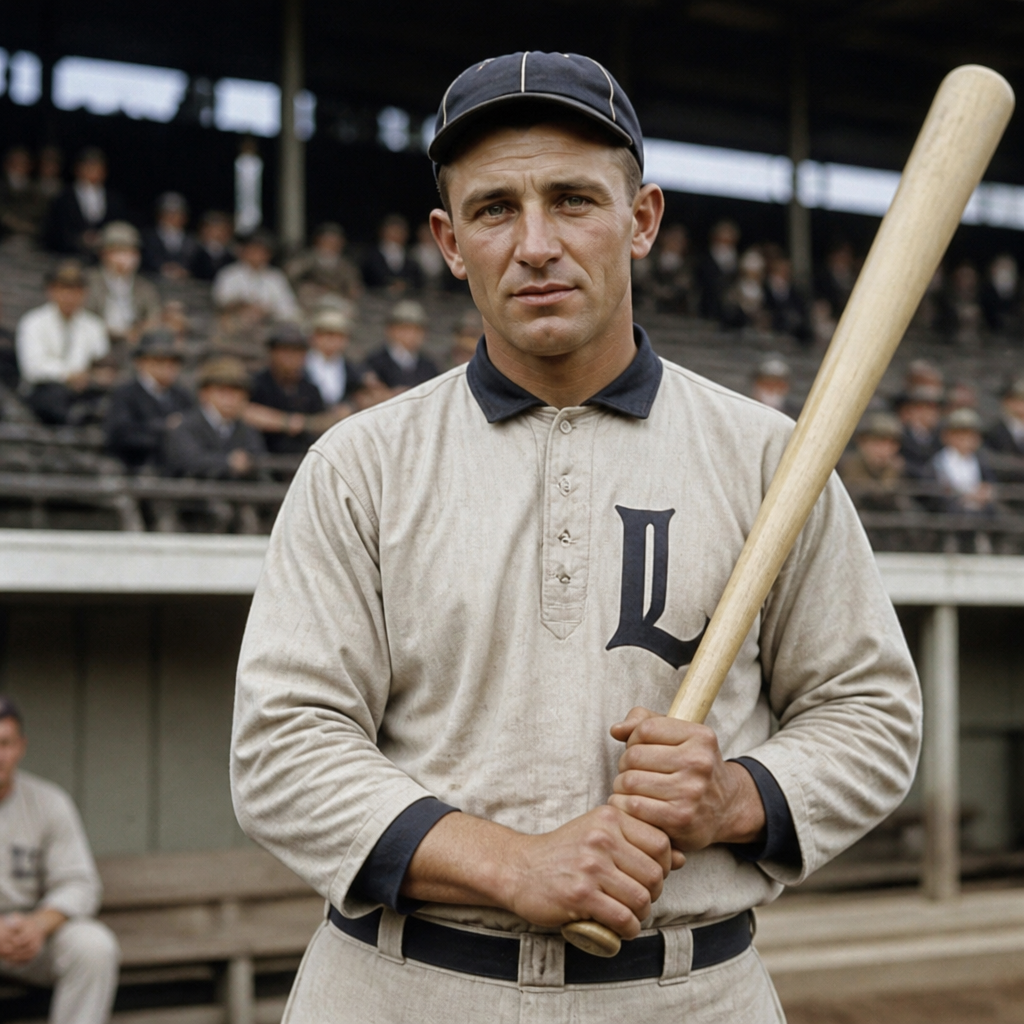
The Louisville Colonels occupy a strange but essential place in baseball history: they were a 19th-century National League club with a poor long-term record, unstable ownership, and limited modern name recognition, yet they helped shape the professional game by developing players, tactics, and connections that reached directly into the dead-ball era. Any serious look at famous baseball teams from the 1800s has to include Louisville, because the franchise links the rough early decades of major league baseball to the rise of enduring stars, especially Honus Wagner. The Colonels matter not simply because Wagner wore their uniform, but because the club’s story reveals how baseball operated before modern farm systems, television money, and stable league structures existed.
In practical terms, the Louisville Colonels were a major league club based in Louisville, Kentucky, that played in the American Association and later the National League during the late 19th century. Their identity shifted with the era. They competed when roster rules were looser, travel was harder, player contracts were less standardized, and owners often treated clubs as speculative businesses. The term “19th-century clubs” refers to the professional teams that competed before 1900, many of them short-lived, regionally influential, and structurally fragile. Some became modern institutions. Others, like Louisville, disappeared while still leaving a measurable imprint on the sport.
From my work studying early league records, Sporting Life coverage, and franchise transaction chains, I have found that Louisville is one of the best examples of why old clubs cannot be judged only by win-loss totals. On paper, the Colonels were often unsuccessful. In context, they were a talent incubator and a case study in how the business of baseball evolved. They produced Hall of Fame-level players, navigated league warfare, and became entangled in the ownership patterns that redistributed elite talent to stronger markets. That makes them a central hub topic for anyone exploring 19th-century clubs such as the St. Louis Browns, Baltimore Orioles, Cleveland Spiders, Brooklyn Bridegrooms, Boston Beaneaters, and Pittsburgh Pirates.
The key question most readers ask is simple: why is Louisville remembered today? The direct answer is Honus Wagner. Before he became the iconic shortstop associated with Pittsburgh and one of the most famous baseball cards ever issued, Wagner developed with Louisville. Yet focusing only on him misses the larger significance. The Colonels also featured Fred Clarke, Tommy Leach, Rube Waddell, and other notable figures, and they reflected the chaotic conditions of 1890s baseball more clearly than almost any surviving brand-name franchise. To understand them is to understand how the professional game moved from instability toward consolidation.
Origins of the Louisville Colonels and their place in 19th-century baseball
The Louisville Colonels began in 1882 in the American Association, a major league that positioned itself as a rival to the National League. The Association welcomed cities and business models the National League viewed skeptically, including lower ticket prices and, in some cases, looser attitudes toward Sunday ball and alcohol sales. Louisville’s inclusion made geographic sense. The city was a commercial center with strong river and rail connections, and Kentucky sat at an important crossroads between the South, Midwest, and East. Baseball entrepreneurs understood that Louisville could support high-level competition even if its long-term market power was smaller than New York, Boston, or Chicago.
Early Louisville teams had moments of respectability, but like many 19th-century clubs they were vulnerable to rapid swings in quality. Contracts changed hands, leagues reconfigured, and player movement could quickly transform a contender into a cellar club. The Colonels joined the National League in 1892 after the American Association collapsed. That move gave the franchise higher formal status but also exposed it to fiercer and more financially stable competition. In the National League’s expanded environment, Louisville often struggled to keep pace with clubs that had deeper rosters or stronger ownership backing.
The broader significance of Louisville’s trajectory is that it mirrors the uncertainty of baseball before modern central governance. Today, fans assume a franchise has fixed territorial rights, durable revenues, and extensive player development systems. In the 1880s and 1890s, none of that was secure. Teams folded, leagues merged, schedules changed, and ownership groups leveraged clubs as assets in larger power plays. Louisville was not an outlier in that respect; it was representative. That is exactly why the club deserves hub status in any comprehensive guide to famous baseball teams of the 19th century.
How the Colonels actually performed on the field
If a reader asks whether the Louisville Colonels were a good team, the honest answer is usually no, at least not over the full life of the franchise. They finished with more losses than wins across their major league existence and endured several poor seasons, including disastrous National League campaigns in the 1890s. One infamous low point came in 1890, when Louisville finished 27-111 in the American Association, a mark that illustrates how uneven team quality could become in the era. However, reducing the club to those records alone creates a distorted picture.
Louisville had competitive peaks. The 1880s brought stretches of solid play, and by the late 1890s the club was no longer merely a punch line. The 1899 Colonels finished 75-77, respectable by the standards of a franchise often overshadowed by larger rivals. More importantly, they did so with a roster packed with future influence. Evaluating 19th-century teams requires more than standings because league context mattered enormously. Schedules were unbalanced, player-manager authority was significant, and clubs often had uneven access to talent due to financial leverage rather than scouting skill alone.
Defensively and strategically, the game Louisville played also differed substantially from the modern version. Gloves were cruder, fields were less standardized, and official scoring treated errors differently than contemporary analysts do. Offensive environments could swing wildly. In some seasons, clubs piled up runs because of rough fields and weak pitching depth; in others, a smart contact hitter or quick baserunner created disproportionate value. When I compare Louisville game accounts to modern expectations, the recurring lesson is that the Colonels were often trying to solve structural disadvantages rather than simply failing to execute.
| Period | League | What defined the club | Historical value |
|---|---|---|---|
| 1882-1891 | American Association | Regional ambition, unstable performance, occasional competitiveness | Shows the rivalry between major leagues in the 1880s |
| 1892-1898 | National League | Frequent losing, stronger competition, ownership strain | Illustrates consolidation after the Association collapsed |
| 1899 | National League | Talent-rich roster including Wagner and Clarke | Bridge season before players shifted to Pittsburgh |
Honus Wagner’s Louisville years and why they matter
Honus Wagner is the main reason many modern readers arrive at the Louisville Colonels, and that gateway is fully justified. Wagner debuted with Louisville in 1897 and immediately displayed the broad athletic ability that would make him one of the greatest players in baseball history. He was not yet the fully formed legend later celebrated in Pittsburgh, but the essential profile was already visible: exceptional bat control, speed, arm strength, adaptability, and unusual physical coordination for a middle infielder. Louisville gave him the stage on which those tools became major league realities.
What stands out in Wagner’s Louisville period is how quickly he proved he was more than a promising newcomer. He hit for average, covered ground in the infield and outfield, and showed the all-around game that 19th-century managers prized. This was an era before specialized bench usage and advanced video scouting, so players who could shift positions and still impact the lineup held enormous value. Wagner’s emergence in Louisville therefore was not a small prelude; it was the beginning of a transformational career under conditions that demanded versatility and durability.
The common question is whether Louisville “made” Honus Wagner. A precise answer is that Louisville developed him at the major league level and placed him in a baseball environment that highlighted his strengths, but his own talent was so extraordinary that stardom likely would have surfaced elsewhere too. What Louisville undeniably did was provide the professional proving ground. When ownership ties later transferred Louisville’s best players to Pittsburgh, Wagner became the crown jewel of that movement. His subsequent fame can obscure the origin point, yet historically the Louisville connection is indispensable.
For a hub article on 19th-century clubs, Wagner’s Louisville years also illuminate a larger pattern. Several old franchises served as incubators whose best players were absorbed by stronger organizations through league contraction, ownership syndicates, or financial advantage. Louisville’s role in Wagner’s rise is one of the clearest examples of that process. It shows how talent concentration shaped baseball before drafts, free agency, and revenue-sharing mechanisms existed.
Other important figures: Fred Clarke, Tommy Leach, Rube Waddell, and ownership power
Although Wagner dominates the legacy, the Colonels were not a one-man historical artifact. Fred Clarke, another Hall of Famer, played for Louisville and managed the club in 1897 and 1898. Clarke was a sharp baseball mind and later became a foundational leader for Pittsburgh. Tommy Leach, who would go on to a distinguished career as a versatile infielder and outfielder, also passed through Louisville. Even Rube Waddell, one of the most gifted and erratic pitchers in baseball history, had a brief connection to the franchise. These names matter because they show Louisville as a concentration point for emerging elite talent.
The central business figure was Barney Dreyfuss, the Louisville owner who also gained control of the Pittsburgh club. In the 1890s, syndicate ownership allowed one person or ownership group to exert influence over multiple franchises. That arrangement created obvious competitive conflicts. Stronger markets could effectively receive the best players from weaker affiliates. Louisville became a classic case. After the National League reduced from twelve teams to eight following the 1899 season, many top Colonels, including Wagner, Clarke, and Leach, moved to Pittsburgh under Dreyfuss’s control.
This transfer was not merely a routine transaction chain. It was one of the clearest demonstrations of how power operated in 19th-century baseball. Fans in Louisville lost a major league club, while Pittsburgh gained a talent core that helped build a powerhouse. When I explain the Colonels to modern readers, this is usually the moment the entire story snaps into focus. Louisville was both a team and a mechanism in baseball’s consolidation. Its players did not vanish when the franchise did; they reappeared at the center of one of the National League’s strongest organizations.
Why the Louisville Colonels are essential in any 19th-century clubs hub
A sub-pillar hub on 19th-century clubs should help readers connect teams rather than treat each franchise as an isolated museum piece. Louisville is perfect for that purpose because the Colonels intersect with nearly every major theme of the era: league rivalry, franchise instability, ownership syndicates, player mobility, regional baseball culture, and the transfer of talent into surviving powers. If you are building out related coverage, Louisville naturally points readers toward the American Association’s St. Louis Browns, the National League’s Pittsburgh Pirates, the collapse of the Cleveland Spiders, and the star-heavy Baltimore Orioles clubs of the 1890s.
Louisville also helps correct a common mistake in baseball history writing: equating fame only with championships. Some teams are famous because they won repeatedly. Others are famous because they reveal how the sport actually functioned. The Colonels belong firmly in the second category. They expose the fragile economics of the period, the imperfect fairness of league governance, and the ways scouting and player usage looked before modern front offices existed. In teaching early baseball, I have often found that students understand the 1890s much faster through Louisville than through a dynasty, because Louisville’s problems were the era’s problems.
There is also a regional importance that should not be overlooked. Louisville was one of the South-border cities that kept top-flight baseball connected to markets outside the northeastern corridor and upper Midwest. The franchise’s existence demonstrated that the sport’s ambitions were broader than the handful of cities that later became permanent fixtures. Even after the Colonels disappeared from the major league map, Louisville remained a meaningful baseball city through minor league history and player development. That continuity strengthens the case for treating the Colonels as more than a historical footnote.
The Louisville Colonels deserve recognition as one of the most revealing clubs in 19th-century baseball. They were not a dynasty, and pretending otherwise would miss the point. Their real significance lies in how clearly they show the sport’s transitional nature: rival leagues battling for markets, unstable finances shaping competitive balance, and extraordinary players emerging before modern systems existed to manage or retain them. Most importantly, Louisville was the National League club that produced Honus Wagner, giving baseball one of its greatest players his first major league platform.
For readers exploring famous baseball teams, Louisville should function as a gateway club. Through the Colonels, you can trace the rise of Wagner, the leadership of Fred Clarke, the ownership strategies of Barney Dreyfuss, and the broader contraction that reshaped the National League at the end of the century. You also gain a practical framework for understanding other 19th-century clubs: judge them by context, connections, and influence, not just by standings. If you are building out your knowledge of early baseball, start with Louisville and then follow the player, league, and ownership links outward to the rest of the era.
Frequently Asked Questions
Why do the Louisville Colonels matter if they were not one of the National League’s most successful teams?
The Louisville Colonels matter because baseball history is not shaped only by dynasties and pennant winners. Some clubs are historically important because of what they reveal about the sport’s development, and Louisville is one of the clearest examples. The Colonels played during a period when professional baseball was still defining itself, and their story reflects the instability, experimentation, and uneven competitive balance that marked the late 19th century. They were a National League franchise with a generally poor long-term record, but they stood at a crucial intersection between the game’s rough early decades and the more recognizable major league structure that emerged in the dead-ball era.
Louisville’s significance also comes from the talent that passed through the organization. The franchise helped develop players who would leave a much larger mark on baseball than the club itself ever did in the standings. Most famously, the Colonels were the team that gave Honus Wagner his major league start, and Wagner would become one of the greatest players in baseball history. In that sense, Louisville served as a bridge: not a dominant institution in its own right, but a proving ground whose influence extended well beyond its own lifespan.
Just as important, the Colonels illustrate how fragile many 19th-century franchises were. Ownership changes, financial pressures, roster turnover, and uneven management were all common realities, and Louisville experienced all of them. Studying the Colonels helps explain why some teams disappeared while others became permanent fixtures. Their story is not simply about losing; it is about how baseball evolved through unstable clubs that still contributed players, ideas, and competitive connections to the sport’s future.
What is the connection between the Louisville Colonels and Honus Wagner?
The connection is direct and foundational. Honus Wagner began his major league career with the Louisville Colonels, making the franchise an essential chapter in the story of one of baseball’s all-time legends. Before Wagner became the iconic star associated with the Pittsburgh Pirates and the dead-ball era, he was a young player in Louisville learning the major league game. That alone gives the Colonels a lasting place in baseball memory, because they were the first major league home of a player widely considered one of the greatest shortstops and all-around performers the sport has ever seen.
Wagner’s rise in Louisville was important not just because of his individual talent, but because it showed that even a struggling club could identify and cultivate elite ability. The Colonels were not a powerhouse, yet they became the launching point for a transformational player. Wagner’s blend of hitting, speed, power for his era, defensive skill, and baseball intelligence would later define him as a superstar, but those qualities first appeared on a major league stage in a Louisville uniform. For historians, that makes the Colonels impossible to ignore.
The Louisville connection also becomes even more significant when viewed through the franchise’s later entanglement with Pittsburgh. As baseball reorganized and ownership interests overlapped, several Louisville players, including Wagner, ended up forming part of the talent pipeline that strengthened the Pirates. That means the Colonels were not merely Wagner’s first stop; they were part of the institutional path that helped place him in the environment where he would become an enduring national figure. In practical terms, Louisville helped produce Honus Wagner both by developing him early and by serving as the franchise context from which his greatness emerged.
Why did the Louisville Colonels struggle so much as a franchise?
The Colonels struggled for many of the same reasons that troubled numerous 19th-century baseball clubs: unstable ownership, financial limitations, inconsistent roster quality, and a professional game that had not yet developed the structural balance fans expect today. Teams in that era often faced uneven revenue streams, uncertain local support, and constant competitive pressure from stronger organizations in bigger or more established markets. Louisville was rarely positioned to dominate under those conditions, and over time that instability translated into a poor long-term record.
Ownership problems played a major role. In early professional baseball, ownership was not always steady, well-capitalized, or strategically organized. Clubs could be run by men with conflicting interests, limited resources, or short-term priorities. That often led to weak continuity in team building. Louisville’s front office and organizational direction were not stable enough to create a sustained contender, and when a franchise is already operating in a volatile baseball economy, that kind of uncertainty becomes even more damaging.
Another issue was the fluid nature of player movement and team construction in the 19th century. Modern fans are used to farm systems, standardized contracts, and institutional depth, but Louisville operated in a much looser environment. Teams could rise or fall quickly depending on a handful of players, managerial decisions, or ownership maneuvers. Even when the Colonels had useful talent, they often lacked the broader organizational strength needed to compete consistently with stronger National League rivals. In other words, Louisville’s struggles were not simply the result of bad luck or bad teams; they reflected the structural realities of an era when many clubs were fighting to survive at all.
How did the Louisville Colonels influence baseball beyond their own existence?
The Colonels influenced baseball by serving as a developmental and organizational link between 19th-century professional ball and the more mature major leagues of the early 20th century. Their direct competitive legacy may be modest, but their indirect impact is substantial. Through the players they introduced, the baseball relationships they participated in, and the strategic environment they inhabited, Louisville helped transmit important pieces of the game into the next era. This is one reason historians continue to treat the franchise seriously despite its lack of championships or broad modern recognition.
One major aspect of that influence was personnel. The Colonels helped shape careers that would matter far beyond Louisville. Honus Wagner is the obvious and most famous example, but the broader point is that teams like Louisville were part of baseball’s talent network at a time when the sport’s future stars were still emerging from a less formalized system. Their role in identifying, fielding, and exposing players to major league competition helped define what baseball would become in the dead-ball years.
They also reflect the tactical and cultural evolution of the game. Late 19th-century baseball emphasized adaptation, experimentation, and aggressive on-field thinking. Teams such as Louisville were part of a baseball world in which strategy was still taking shape and where clubs contributed, even indirectly, to the refinement of play. Add in the franchise’s connections to later National League power structures, particularly through ownership and player transfers, and the Colonels become more than a defunct club. They become evidence of how baseball’s institutional map was redrawn, with weaker franchises sometimes serving as the foundation from which stronger ones were built.
Why should modern fans include the Louisville Colonels in any serious discussion of famous 1800s baseball teams?
Modern fans should include the Louisville Colonels because “famous” in historical discussion does not have to mean “most successful” or “most celebrated today.” A serious look at 19th-century baseball should account for teams that reveal how the sport actually developed, and Louisville does exactly that. The Colonels embody many of the central themes of the era: fragile franchises, inconsistent competitiveness, evolving league structures, and the emergence of elite players from unexpected places. Ignoring them would leave out an important part of how professional baseball moved from its chaotic early decades toward a more stable and recognizable form.
They also deserve attention because they connect multiple layers of baseball history at once. On one level, they were a National League club navigating the harsh realities of 19th-century competition. On another, they were the first major league stage for Honus Wagner, whose later fame would become enormous. And on yet another, they were involved in the ownership and player relationships that linked fading clubs to rising powers. That combination makes Louisville unusually valuable to historians: the team may not have built a dynasty, but it sat near a key turning point in the game’s institutional history.
For modern readers, the Colonels are a reminder that baseball’s past was not built only by the teams that survived into the present. Some of the sport’s most meaningful stories belong to clubs that disappeared but still changed the game. Louisville is one of those clubs. Their record may not inspire awe, but their historical role absolutely should. If the goal is to understand how 19th-century baseball fed directly into the dead-ball era and helped produce legendary figures like Honus Wagner, then the Louisville Colonels are not optional background material. They are a central part of the story.