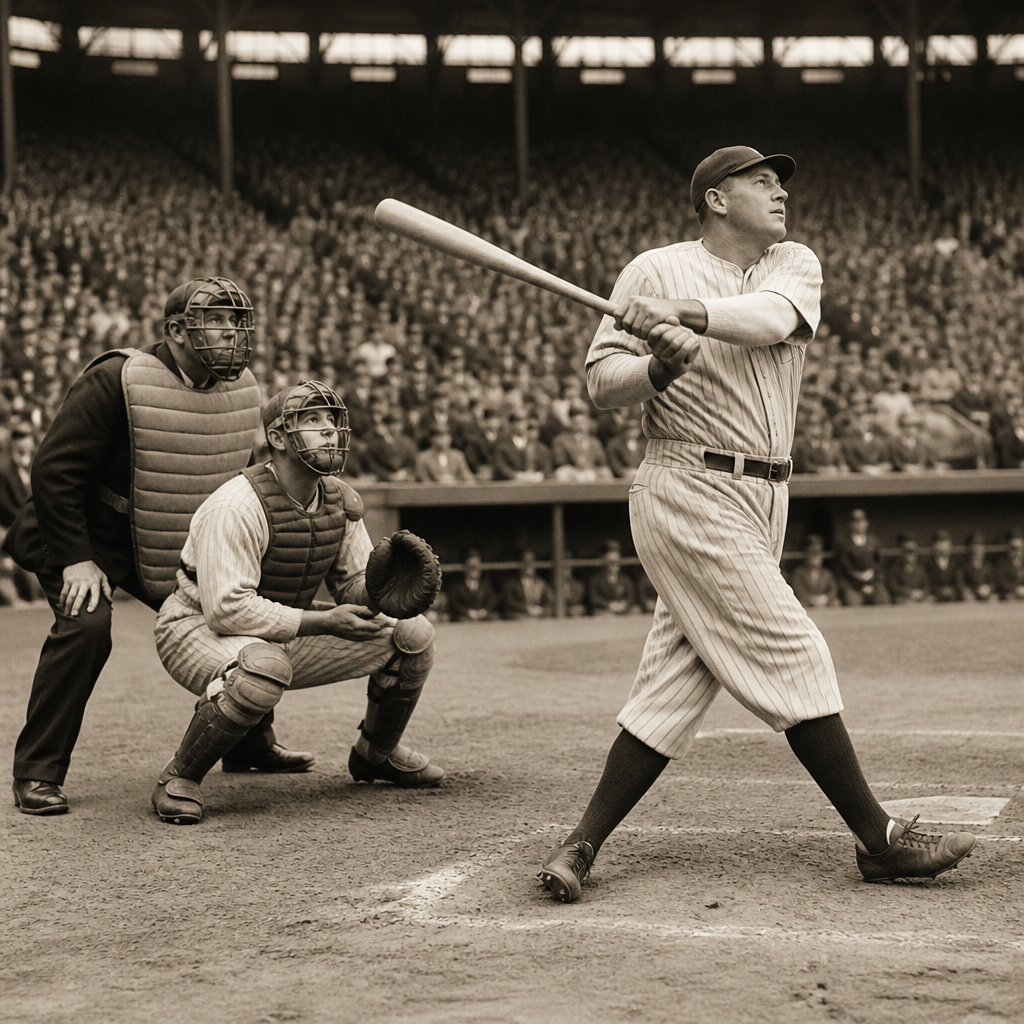
Baseball from 1920 to 1929 was transformed so completely that the decade deserves to be called a revolution, not just a prosperous stretch between dead-ball caution and modern spectacle. When historians refer to the live-ball era, they mean the period when offense surged because of rule enforcement, cleaner baseballs, strategic change, and a new emphasis on power hitting. The phrase Golden Age is also attached to the 1920s because professional baseball became a national entertainment industry, with radio broadcasts, larger urban crowds, stronger stars, and the first truly mass-market fan culture. Babe Ruth stands at the center of that story, but focusing only on Ruth obscures the wider changes that reshaped how the game was played, managed, watched, and governed.
I have always found that the clearest way to explain the 1920s is to start with what disappeared. Before 1920, teams often played for one run at a time, bunting, stealing, hitting behind runners, and exploiting dirty, softened baseballs that were kept in play for long stretches. Pitchers could rely on doctored deliveries, and fielders worked in lower-scoring games where one mistake could decide everything. By the middle of the 1920s, that environment had changed. Owners, league officials, managers, and players adapted to a sport with brighter baseballs, stricter oversight, more extra-base hits, and lineups built to attack. That shift mattered because it redefined baseball strategy, altered roster construction, increased revenue, and created the template for the modern major leagues.
This article serves as a hub for the live-ball and Golden Age subtopic within the broader Baseball Eras landscape. It covers the offensive explosion, the rule and equipment changes behind it, the rise of major stars beyond Ruth, the dominance of the Yankees, the continued strength of the National League, the business and media boom, and the tensions that persisted after the Black Sox scandal. Understanding baseball from 1920 to 1929 means understanding both continuity and disruption: old habits lingered, pitching still mattered, and defense remained decisive, yet the balance of power had moved. The decade made baseball bigger, louder, and more commercially successful, while also forcing the sport to confront integrity, labor, race, and modernization in ways that would shape the decades that followed.
Why the live-ball era began
The live-ball revolution did not start because hitters suddenly became stronger or because Ruth alone taught everyone to swing upward. It began through a convergence of changes. The death of Ray Chapman in 1920 pushed leagues to replace dirty or damaged baseballs more frequently, making the ball easier for hitters to see. Umpires and league presidents cracked down on spitballs and other doctored pitches, though a group of pitchers received grandfather exemptions. Teams also became less willing to trade outs for bases once sluggers proved that one well-struck ball could produce multiple runs. In practical terms, the run environment changed because the ball remained cleaner, traveled better, and invited more aggressive hitting.
The statistical evidence is unmistakable. Ruth hit 54 home runs in 1920, more than every team in the American League had managed in some earlier seasons. League batting averages and slugging percentages rose through the decade, and scoring patterns changed with them. But the deeper story is structural. Managers had to reconsider bunting in front of a dangerous middle order. Pitchers who had survived by changing the condition of the ball found that command, deception, and sequencing mattered more. Outfielders played deeper. Front offices, still primitive by modern standards, began to recognize that lineup impact could be measured not only by batting average but by extra-base authority and run production. The live-ball era was therefore a systemwide adjustment, not a single superstar event.
How strategy changed on the field
One of the biggest myths about the 1920s is that strategy vanished once home runs increased. In reality, strategy evolved. The sacrifice bunt became less central for elite offenses, especially in the American League, because giving away outs in front of sluggers was often a poor bargain. Hit-and-run plays still appeared, but clubs increasingly valued hitters who could drive gaps and force defenses to play honestly. Managers had to think in innings rather than isolated bases. A two-run deficit was no longer fatal, and teams learned that sustained hard contact could overturn games quickly.
Pitching strategy changed as much as offensive philosophy. Starters were still expected to finish what they began, but they had to navigate lineups that punished mistakes harder than before. High strikeout pitchers were valuable, yet so were control specialists who limited free baserunners in a homer-friendly environment. Catchers became more important as planners, not simply receivers, because sequencing against sluggers required precision. Defensively, clubs emphasized range in the outfield and steadier infield hands because more balls were being driven with pace. The live-ball game rewarded complete teams, not just famous bats.
| Feature | Dead-Ball Tendencies | 1920s Live-Ball Tendencies |
|---|---|---|
| Offensive priority | One-run manufacturing | Extra-base damage and sustained scoring |
| Ball condition | Used longer, often dark and scuffed | Replaced more often, cleaner and easier to track |
| Pitcher advantage | Doctored balls and weak contact | Command, movement, and changing eye levels |
| Lineup design | Speed and bat control emphasized | Power, on-base ability, and run producers emphasized |
| Game volatility | Low-scoring, few comeback routes | Deficits more recoverable through one swing |
That strategic transition did not happen uniformly. Some National League clubs retained more traditional tactics longer than the Yankees and other American League powers. Ballpark dimensions also influenced choices. A manager in a spacious park could still prioritize doubles, speed, and fly-ball pressure over pure home run totals. Even so, the direction of the sport was clear by the mid-1920s: outs had become too valuable to surrender casually, and the long ball had become a planning principle.
Stars beyond Babe Ruth
Any serious account of baseball from 1920 to 1929 has to move beyond Ruth because the decade was crowded with elite players whose influence was enormous. Rogers Hornsby was perhaps the most complete right-handed hitter of the era, winning multiple batting titles and producing seasons that remain among the best in major league history. In 1924, he batted .424, a mark untouched since. Hornsby combined bat speed, balance, and uncommon precision, and he proved that the National League was every bit as vibrant offensively as the American League.
Lou Gehrig emerged in the second half of the decade as the perfect live-ball first baseman: durable, powerful, and relentlessly productive. His rise turned the Yankees from a one-man attraction into a machine. Al Simmons, Harry Heilmann, Goose Goslin, Kiki Cuyler, and Paul Waner gave the period breadth, while Hack Wilson and Chuck Klein foreshadowed even bigger offensive totals to come. In pitching, Dazzy Vance dominated with strikeout stuff rare for his time, Grover Cleveland Alexander remained a standard of craft and toughness, and Lefty Grove arrived late in the decade as a bridge to the 1930s. Positionally, catcher Mickey Cochrane and shortstop Joe Cronin represented the value of all-around impact in a changing game.
Defense and baserunning still created stars as well. Tris Speaker, though associated with an earlier style, remained influential through positioning and contact hitting. Frankie Frisch brought speed and versatility to St. Louis. Pie Traynor anchored Pittsburgh with consistent defense and high-level batting. The decade was not simply a parade of sluggers. It was an era in which complete players had to function inside a more explosive offensive context, and the best of them adjusted without losing the subtler skills that still won pennants.
The Yankees, the Cardinals, and the pennant races that defined the decade
The 1920s are often remembered as the decade when the New York Yankees replaced the New York Giants as baseball’s glamour franchise. That is accurate, but it is only half the story. The Yankees won American League pennants in 1921, 1922, 1926, 1927, and 1928, then captured World Series titles in 1923, 1927, and 1928. Their success reflected more than star power. They had financial strength, a huge urban audience, and a home park built for spectacle when Yankee Stadium opened in 1923. Miller Huggins also deserves credit as a disciplined, tactically sharp manager who handled enormous personalities and built lineups that could punish opponents from top to bottom.
The 1927 Yankees became the iconic club of the decade because Ruth and Gehrig overwhelmed the league, but the team’s supporting structure mattered. Earle Combs set the table, Tony Lazzeri added middle-infield offense, Mark Koenig contributed at shortstop, and the pitching staff featured Waite Hoyt, Herb Pennock, and Wilcy Moore. This was not a carnival act; it was a deep roster operating in a favorable run environment better than anyone else.
In the National League, the St. Louis Cardinals under Branch Rickey and manager-player Hornsby, then later under other leaders, offered a different model. They were aggressive, developmental, and organizationally inventive. Their 1926 World Series victory over the Yankees helped establish St. Louis as a major baseball city. The Pittsburgh Pirates and New York Giants also remained formidable, while the Philadelphia Athletics under Connie Mack rose late in the decade with a younger core that would soon dominate. The live-ball era was therefore competitive and regionally diverse, not merely a New York monopoly.
Business, media, and the making of baseball as mass entertainment
The Golden Age label fits because the 1920s changed how baseball reached the public. Radio was the decisive force. Fans who could not attend games in person could now follow pennant races from homes, stores, and barbershops, turning local clubs into daily companions and national stars into household names. Newspaper coverage remained central, with powerful sportswriters shaping reputations, but radio added immediacy and emotional texture. A dramatic ninth inning no longer had to wait for the morning edition.
Attendance surged in many markets, especially where teams won consistently or built modern stadium experiences. Yankee Stadium symbolized the new scale of baseball business: larger crowds, more ticket revenue, more concessions, and stronger brand identity. Owners increasingly understood that star players were not merely athletes but commercial engines. Schedules, exhibitions, and publicity were designed with gate receipts in mind. At the same time, the reserve clause still limited player mobility, and salaries did not rise proportionally with ownership power. The decade expanded baseball’s market while leaving labor relations heavily tilted toward clubs.
This commercial growth also reinforced hierarchy. Wealthy franchises could invest more in scouting and facilities, while smaller-market teams often relied on player development, opportunistic trades, or selling talent. Branch Rickey’s work in St. Louis showed that innovation could narrow the gap. His farm system concepts were not fully matured in the early 1920s, but the groundwork mattered. Baseball was becoming both more popular and more organizationally sophisticated.
Scandal, governance, race, and the limits of the Golden Age
No account of the 1920s is complete without the shadow of the 1919 Black Sox scandal and the appointment of Commissioner Kenesaw Mountain Landis in 1920. Landis restored public confidence by asserting centralized authority and enforcing a hard line on gambling threats. Whether one agrees with all of his decisions, his role was crucial in stabilizing the sport’s reputation during a vulnerable transition. Fans needed to believe that the booming new game was legitimate, and owners needed a figure who could reassure the public.
Yet the decade’s glow had obvious limits. Major League Baseball remained segregated, excluding Black players despite the extraordinary quality of play in the Negro Leagues. That exclusion weakened the major leagues competitively and morally. Any hub page on the live-ball and Golden Age period should direct readers toward Negro League history because stars such as Oscar Charleston, Bullet Rogan, and Turkey Stearnes were contemporaries, not footnotes. The 1920 founding of the Negro National League under Rube Foster was one of the decade’s most important baseball developments, even though it occurred outside white organized baseball.
There were also on-field tradeoffs to the offensive boom. Some critics believed rising home run totals reduced tactical subtlety. Others argued, correctly in my view, that the sport did not become simpler; it became different. More scoring increased pressure on pitchers, fielders, and managers to adapt. Baseball in the 1920s was dynamic, profitable, and culturally dominant, but it was not universally fair, and its institutions still reflected the inequalities of the broader society.
How to study the decade and where this hub leads next
If you are using this page as your starting point for the Baseball Eras topic, the most useful approach is to break the 1920s into connected themes rather than memorize champions and batting leaders. Start with environment: rule enforcement, baseball condition, and park factors. Then study strategy: why bunting declined in some contexts, how rotation expectations stayed heavy, and why offense changed roster construction. From there, move to teams and people: the Ruth-Gehrig Yankees, Hornsby’s hitting brilliance, the Cardinals’ organizational creativity, the Athletics’ rise, and standout pitchers who succeeded despite the harsher scoring climate.
This sub-pillar hub also points naturally toward deeper articles on the 1927 Yankees, Ruth versus Hornsby as era-defining hitters, the evolution from dead-ball tactics to power baseball, the impact of radio on fandom, the Cardinals and early farm system development, and the Negro Leagues during the same decade. Reading the 1920s well means resisting the temptation to collapse everything into one celebrity narrative. The live-ball revolution was broad, measurable, and enduring. It changed how runs were created, how teams were built, how games were sold, and how baseball fit into American life. Explore those connected stories, and the decade becomes far richer than a highlight reel of home runs.
Frequently Asked Questions
What made baseball in the 1920s a true “live-ball revolution” rather than just a high-scoring era?
The change was much bigger than a simple rise in batting averages or home run totals. Baseball in the 1920s underwent a structural transformation that altered how the game looked, how it was played, and how fans experienced it. During the dead-ball years, teams often relied on bunting, hit-and-run plays, stolen bases, and scratch offense because it was difficult to drive the ball consistently for extra bases. By contrast, the 1920s brought a game built around harder contact, cleaner baseballs, and a new willingness to swing for impact rather than merely to manufacture a single run.
Several forces drove that shift at the same time. Umpires more strictly enforced rules that kept baseballs cleaner and more visible, and fresh balls were introduced more often during games. That mattered because older, darkened, scuffed balls had been harder to see and harder to hit with authority. The banning of certain doctored pitches also reduced some of the artificial movement that had favored pitchers in earlier years. At the same time, hitters and managers began recognizing that a well-struck ball could change a game instantly, making power a central offensive strategy rather than an occasional bonus.
The result was not only statistical inflation but a philosophical revolution. Teams rethought roster construction, ballparks became stages for sluggers, and fans embraced the drama of extra-base hits and home runs. In that sense, the live-ball era was revolutionary because it changed baseball’s internal logic. The sport moved away from cautious, incremental offense and toward spectacle, momentum, and star-driven entertainment, creating the foundation for the modern game.
Was Babe Ruth the entire story of the 1920s, or were broader forces reshaping baseball beyond his stardom?
Babe Ruth was unquestionably the decade’s most transformative star, but he was not the entire story. His home run output was so far beyond his contemporaries in the early 1920s that he became the symbol of the new age, yet the broader revolution depended on league-wide changes already unfolding in equipment, rule enforcement, strategy, and business culture. Ruth proved what the new conditions made possible, but the sport itself had been moving toward a different offensive environment and a new entertainment model.
Other stars and trends mattered enormously. Players such as Rogers Hornsby, Al Simmons, Harry Heilmann, Goose Goslin, and Hack Wilson showed that power and aggressive hitting were not isolated phenomena. Hornsby in particular demonstrated that the decade was not just about home runs but about a general explosion in offensive production, including batting average, slugging, and run scoring. Meanwhile, pitchers and managers had to adapt to a game in which one mistake could leave the yard, changing bullpen use, defensive positioning, and game planning.
Beyond on-field play, baseball in the 1920s became a national commercial product. Improved media coverage, radio broadcasts, urban growth, and larger audiences turned the sport into a mass spectacle. Team owners and league officials increasingly understood that stars sold tickets, headlines, and loyalty. Ruth stood at the center of that process, but he was joined by a cast of major figures and by larger institutional changes that helped make baseball the defining professional sport of the decade. So while Ruth was the era’s brightest emblem, the revolution was much wider than one player.
How did rule changes and equipment practices contribute to the offensive explosion of the 1920s?
One of the most important developments was the increased use of clean, new baseballs during games. In earlier years, the same ball might remain in play for long stretches, gradually becoming softer, darker, and more irregular as it was scuffed, spit on, and rubbed into the dirt. Those worn balls were more difficult for batters to track and less likely to jump off the bat. In the 1920s, leagues became more attentive to replacing damaged or dirty balls, which improved visibility and helped hitters make stronger contact more consistently.
Another factor was the crackdown on doctored pitches. Tricks such as the spitball and other altered deliveries had long given pitchers a major advantage by creating late, unpredictable movement. While some veteran pitchers were grandfathered in after the formal ban, the overall environment shifted away from heavily manipulated baseballs and toward cleaner competition between pitcher and hitter. That did not eliminate pitching skill, but it reduced one of the old dead-ball era advantages that had suppressed offense.
These changes interacted with evolving hitting technique. Batters became more likely to swing with lift and intent, rather than chopping down or merely trying to place the ball. Better bats, more aggressive coaching philosophies, and an increased appreciation for slugging all reinforced the offensive surge. It is important to understand that no single rule “caused” the live-ball era. Instead, a cluster of changes made the baseball easier to see, easier to drive, and more central to a style of play that rewarded forceful contact. That combination turned routine offensive opportunities into doubles, triples, and home runs at a much higher rate than before.
Why is the 1920s often called baseball’s “Golden Age” as well as the live-ball era?
The term “Golden Age” reflects more than nostalgia. In the 1920s, baseball became a fully national entertainment industry, with iconic teams, celebrity players, and broad public visibility that reached far beyond local ballparks. The sport captured the imagination of a country experiencing urban expansion, technological change, and a growing appetite for mass entertainment. Baseball games were no longer just regional events; they became part of the shared cultural conversation.
Radio played a major role in that transition. Fans who could not attend games in person could now follow teams and stars from a distance, deepening emotional connection and expanding baseball’s market. Newspaper coverage also grew more vivid and personality-driven, helping create myths around sluggers, pennant races, and World Series drama. Owners benefited from larger crowds, and franchises increasingly recognized the commercial value of spectacle. Ballplayers became recognizable public figures in a way that had been less common in earlier decades.
At the same time, the product on the field was ideally suited to this new media age. The rise in scoring, the dramatic impact of the home run, and the emergence of larger-than-life stars made baseball easier to sell and easier to celebrate. The game seemed faster, louder, and more decisive. Calling the decade a “Golden Age” therefore points to a union of athletic transformation and cultural reach. The 1920s made baseball not only more explosive as a sport but more powerful as a business and as a symbol of American popular culture.
How did the live-ball revolution change strategy for teams, managers, and players across the league?
The live-ball revolution forced everyone in baseball to rethink what winning looked like. In the dead-ball era, managers often prioritized speed, sacrifice bunts, stolen bases, and carefully staged one-run tactics because sustained power was uncommon. In the 1920s, those methods did not disappear, but they became less central as teams discovered that extra-base hits could erase the need for elaborate small-ball sequences. A two-run homer or a gap double could accomplish in seconds what had once required several perfectly executed plays.
This changed roster construction. Clubs began placing a higher premium on hitters who could drive the ball, not just bat handlers who could bunt or slap singles. Lineups were built more deliberately around run producers, and protection in the batting order became a more visible concept. Managers had to think differently about when to trade outs for advancement, because giving away an out made less sense in a higher-offense environment. Defensive priorities shifted as well, since outfielders had to cover more deep contact and pitchers had to navigate lineups capable of sudden damage.
Pitching strategy evolved under pressure. Hurlers could no longer rely as comfortably on weak contact and low-scoring margins. They needed sharper command, more resilience, and new approaches to hitters who were swinging harder and aiming for extra bases. Catchers and managers also had to call games with greater caution, aware that one poorly located pitch might change the scoreboard instantly. In the broadest sense, the live-ball revolution modernized baseball strategy by making power a central organizing principle. Teams still needed speed, defense, and pitching, but they now operated in a game where forceful offense shaped nearly every decision.