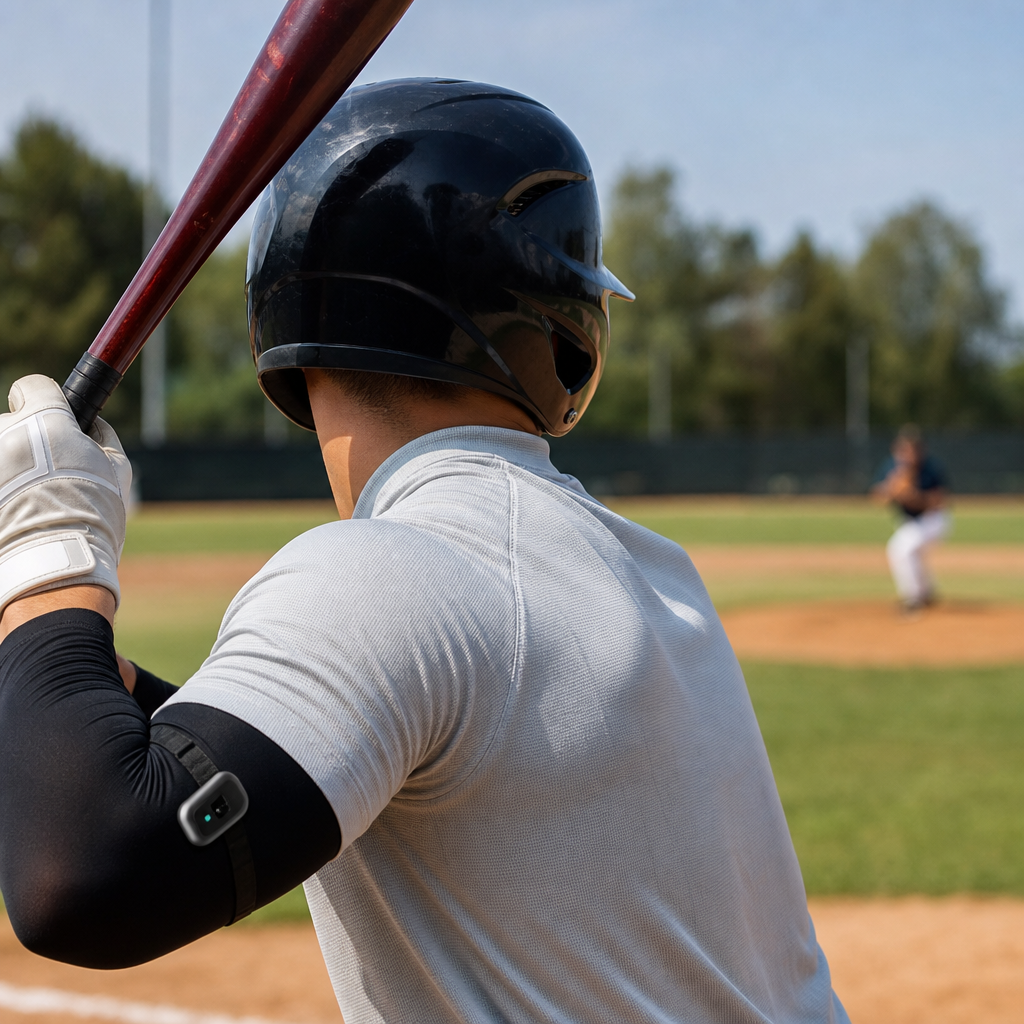
Wearable tech in baseball is changing how players train, recover, and stay safe, and it now sits at the center of technology’s impact on the game. In practical terms, wearable technology means small sensor-based devices embedded in clothing, sleeves, belts, patches, watches, rings, helmets, or other equipment that collect body and movement data during practice, competition, travel, and recovery. In baseball, that data can include workload, heart rate, sleep quality, running speed, arm stress, joint angles, bat speed, reaction time, and heat exposure. Teams use it to answer direct questions that coaches, athletic trainers, front offices, and players ask every day: Is this pitcher nearing a dangerous workload? Is this hitter rotating efficiently? Is this prospect recovering well after travel? Is this summer game creating heat risk?
I have seen the conversation evolve from basic pedometers and stopwatches to integrated systems that combine inertial measurement units, optical heart-rate sensors, GPS alternatives for constrained spaces, force estimation models, and cloud dashboards. The reason it matters is simple: baseball performance depends on repeatable mechanics, availability over a long season, and small competitive edges. A player who gains two miles per hour of bat speed, reduces fatigue-related command loss, or avoids one soft-tissue injury can materially change a team’s season. Wearables help identify those opportunities earlier than observation alone. They do not replace coaching eyes or medical judgment, but they make decisions less dependent on guesswork.
This article serves as a hub for understanding technology’s impact on baseball through the lens of wearables. It covers the core device categories, the metrics that matter, how teams apply the information, where safety benefits are strongest, and what limitations responsible programs must manage. It also connects wearable data to adjacent innovations such as biomechanics labs, video analysis, smart equipment, player development systems, and return-to-play protocols. If you want a clear answer to what wearable tech does in baseball, the answer is this: it turns movement and recovery into measurable inputs that can improve development, support injury prevention, and sharpen game preparation when used carefully and ethically.
What wearable technology includes in modern baseball operations
Baseball wearables fall into several working categories. Biomechanical wearables track body motion through accelerometers, gyroscopes, and magnetometers. These sensors are often worn on the torso, pelvis, forearm, or upper arm to estimate kinematic patterns such as trunk rotation, arm slot consistency, tempo, and segment sequencing. Workload wearables measure effort accumulation across practices, games, bullpens, throws, sprints, and lifts. Recovery wearables monitor heart-rate variability, resting heart rate, respiration, sleep duration, sleep stages, and skin temperature. Safety-oriented wearables can detect impacts, monitor heat strain, or help flag dehydration risk through indirect markers. Equipment-based wearables include bat sensors and smart insoles that estimate force production, foot pressure, and swing characteristics.
At the professional and elite amateur levels, teams rarely rely on one device in isolation. A pitcher might use an arm sensor during throwing, a sleep and recovery wearable overnight, and force plates in the weight room. A position player may pair bat-sensor feedback with high-speed video and cage-based ball tracking. This multi-source approach matters because baseball is a sport of linked systems. A drop in rotational power may stem from fatigue, lower-body stiffness, poor sleep, or an altered movement pattern after minor soreness. Wearables become most valuable when integrated with video, subjective wellness questionnaires, medical history, and coaching context rather than interpreted as stand-alone truth.
Technology’s impact on the game extends beyond player development. Front offices use longitudinal data to manage roster depth and reduce downtime risk. Athletic trainers use daily readiness markers to guide treatment loads. Strength staff adjust lifting intensity around travel and game density. Coaches use mechanical consistency data to support cues that players can feel. Even youth baseball is starting to see simplified versions of these tools, though the quality of instruction around them varies widely. The common thread is that wearables create a feedback loop. Instead of waiting for performance decline or pain to reveal a problem, staff can spot trends while there is still time to intervene.
How wearables enhance performance for pitchers, hitters, and fielders
For pitchers, wearable technology is most often associated with workload and arm health, but its performance value is just as significant. Arm-speed and rotation metrics can help a pitching department understand whether a player is producing velocity efficiently or compensating with excessive effort. Sequencing data can reveal if trunk rotation fires too early, causing the arm to play catch-up and degrading command. A well-run program does not use a sensor to force every pitcher into the same delivery. Instead, it establishes each athlete’s efficient baseline and then watches for deviations tied to fatigue, mechanical drift, or post-injury compensation. In my experience, the best results come when wearable data confirms what the coach and player already suspect, then narrows the adjustment.
Hitters benefit from wearables through measurable swing efficiency. Bat sensors can track attack angle, time to contact, bat speed, and rotational acceleration. Those numbers help separate useful changes from cosmetic ones. If a hitter reports feeling quicker but the sensor shows unchanged time to contact and reduced rotational consistency, the cage session needs a different intervention. Conversely, if bat speed rises after a strength block and the hitter also improves contact quality on a ball-tracking system, the organization has evidence that the physical plan is transferring to skill performance. This is where technology’s impact on the game becomes visible: development conversations become grounded in objective trends, not only in feel or batting practice anecdotes.
Fielders and baserunners also gain from wearables. Sprint load, first-step explosiveness, deceleration patterns, and asymmetries in movement can all be monitored over time. Outfielders covering large distances in hot conditions present a different physiological profile from catchers handling repeated squatting and high-impact foul tips. Infielders may show workload spikes during doubleheader stretches because of explosive lateral movement and throws on the run. Wearables help teams individualize preparation. A center fielder returning from a hamstring issue may need his acceleration volume capped before his top speed is fully restored. A catcher may tolerate hitting volume well but need careful management of cumulative squat load and throwing stress. Better personalization is one of the clearest performance gains these tools provide.
| Wearable category | Typical baseball use | Primary metrics | Practical benefit |
|---|---|---|---|
| Arm and motion sensors | Pitching mechanics, throw monitoring | Arm speed, torque estimates, tempo, slot consistency | Supports workload management and delivery consistency |
| Recovery wearables | Sleep, readiness, travel fatigue | Heart rate variability, resting heart rate, sleep duration, skin temperature | Guides recovery planning and practice intensity |
| Bat sensors | Hitting development | Bat speed, attack angle, time to contact, rotational acceleration | Measures whether swing changes improve game-relevant outcomes |
| Foot or lower-body sensors | Running, fielding, rehab progression | Ground contact, asymmetry, acceleration, load | Helps restore explosive movement safely |
| Impact and heat monitoring | Catcher safety, summer play, training camps | Impact events, heat strain indicators, exertion load | Flags environmental and contact-related risk |
How wearable data improves safety, injury prevention, and return to play
The strongest case for wearable tech in baseball is safety. Baseball injuries often result from accumulated stress rather than one obvious incident. Pitchers can feel normal until the day command disappears or elbow discomfort emerges. Position players can tolerate small compensations for weeks before a hamstring, oblique, or shoulder issue surfaces. Wearables help identify rising risk by making cumulative load visible. That does not mean a device predicts injury with certainty. No reputable sports scientist claims that. What it can do is show that a player’s current workload, movement variability, recovery status, and recent history are trending in a direction associated with elevated risk, giving staff a chance to adjust volume or intensify treatment.
Throwing workload management is the most discussed example. Youth baseball has long relied on pitch counts, and professional organizations layer additional context on top of them: warm-up throws, high-effort max throws, bullpen intensity, innings stress, rest days, and signs of mechanical compensation. A pitcher coming off a high-stress outing with elevated arm-speed variability and poor overnight recovery may need a lighter throwing day even if his raw pitch count was not extreme. This is where wearable data outperforms simplistic limits. It captures the difference between 85 low-stress pitches and 85 high-intent pitches thrown while fatigued in hot weather. Better context leads to safer planning.
Return-to-play work also benefits substantially. After an oblique strain, for example, a hitter may be cleared to swing, but the harder question is whether he is rotating with his normal sequencing and force production. After a shoulder issue, an outfielder may be pain-free yet still displaying lower arm speed or altered torso timing. Wearables allow graded exposure. Staff can compare current movement signatures and workload tolerance against pre-injury baselines, then increase demands in steps. This process aligns with established sports medicine principles: objective progression, symptom monitoring, and validation under sport-specific stress. In real-world settings, that can reduce the risk of rushing an athlete from the training room back into competition before full functional readiness returns.
How teams implement wearables without drowning in data
The biggest operational mistake is collecting more data than a staff can interpret. Good programs start with a limited set of decisions they want to improve. For example: monitor pitcher throwing stress, track sleep during travel, measure bat-speed development in the offseason, and support rehab progression after lower-body injuries. Once those use cases are clear, teams choose devices with acceptable reliability, athlete compliance, and software that integrates with existing performance systems. Reliability matters because low-quality sensors create false confidence. Before scaling any device, staff should test it against known benchmarks and ensure repeated measurements are stable enough to guide action.
Communication determines whether wearables help or fail. Players do not buy in when dashboards become surveillance tools or when every daily fluctuation is treated as an emergency. The best practitioners explain what is being collected, why it matters, and what decisions it influences. They also distinguish between signal and noise. Heart-rate variability can be useful over time, but a single bad night of sleep does not automatically justify shutting down a player. Arm-slot drift may matter if it persists across sessions and aligns with soreness or command loss; it is less meaningful if it appears once during a rainy bullpen. Staff need thresholds, trend analysis, and room for human judgment.
Privacy and governance are equally important. Wearable data can affect contracts, roster decisions, and player trust, so organizations need clear policies on consent, storage, access, and use. Collective bargaining discussions in professional sports have shown that biometric data is not a trivial administrative detail. Ethical programs restrict access, document purpose, and avoid using health-related information opportunistically. This balance matters for younger players too. In high school and college settings, coaches should be especially careful not to overstate what a device can tell them or pressure athletes into sharing more than necessary. Responsible use is part of technology’s impact on the game, because bad process can undermine good tools.
The wider technology ecosystem shaping baseball’s future
Wearable tech matters most when seen as one layer of a broader baseball innovation system. High-speed video shows what happened. Ball- and bat-tracking systems quantify the result. Force plates reveal how the body produced force. Wearables connect those snapshots across time by tracking what the player is doing between captured reps, between games, and between travel days. That continuity is why this topic functions as a hub within the larger story of innovations and changes in baseball. Smart training rooms, biomechanics assessments, recovery monitoring, vision training, and environmental tracking all intersect with wearables.
Looking ahead, the technology will become smaller, less intrusive, and more predictive. Expect better integration of musculoskeletal modeling, improved individualized baselines, and stronger links between performance analytics and medical workflows. At the same time, the essential principle will stay the same: wearable tech in baseball is useful only when it improves real decisions. The teams that benefit most are not the ones with the most sensors. They are the ones that connect data to coaching, respect player trust, and act on clear evidence. For organizations, coaches, and players evaluating this space, the practical next step is straightforward: identify one performance problem and one safety problem, choose a validated wearable that addresses both, and build a simple process around it.
Frequently Asked Questions
1. What is wearable technology in baseball, and how is it used by players and teams?
Wearable technology in baseball refers to compact sensor-based devices that collect and analyze physical, biomechanical, and wellness data while players train, compete, travel, and recover. These devices can be built into sleeves, compression garments, belts, patches, watches, rings, chest straps, helmets, or other pieces of equipment. Their purpose is to give players, coaches, trainers, and performance staff a clearer picture of what is happening inside the body and during movement, rather than relying only on observation or traditional statistics.
In practical baseball settings, wearables are used to track metrics such as heart rate, sleep quality, recovery status, running speed, acceleration, workload, fatigue trends, arm stress, throwing volume, and movement efficiency. For pitchers, that can mean monitoring how much stress the arm experiences over time. For position players, it may involve sprint patterns, agility, exertion, and recovery readiness. Teams can compare data from practices, games, bullpen sessions, strength training, and travel days to better understand how a player is responding physically over the course of a long season.
The biggest value of wearable tech is that it helps turn guesswork into informed decision-making. Instead of simply asking whether a player feels tired, teams can combine subjective feedback with objective measurements. That leads to smarter training plans, better workload management, more individualized recovery programs, and earlier identification of potential issues before they become bigger problems. In modern baseball, wearable technology is not just a gadget trend. It has become a serious performance and player-care tool.
2. How does wearable tech help improve baseball performance?
Wearable tech improves baseball performance by giving athletes and coaches precise, real-time or near-real-time feedback that can be used to refine training and optimize preparation. Baseball performance depends on much more than game-day talent. It is shaped by mechanics, explosiveness, conditioning, recovery, consistency, and how well a player’s workload is managed over time. Wearables help connect all of those factors with measurable data.
For example, a player’s wearable device may show whether they are reaching expected sprint speeds during base running drills, whether their heart rate is recovering efficiently between intervals, or whether poor sleep is affecting readiness and reaction time. A pitcher may use wearable data to monitor throwing intensity, arm stress, and volume across bullpens, live sessions, and games. That information can help performance staff adjust pitch counts, recovery days, and strength work to keep the athlete progressing without overloading the body.
Another major advantage is personalization. Not every player responds the same way to the same workout, travel schedule, or practice load. Wearables allow teams to tailor plans to the individual rather than forcing everyone into a one-size-fits-all model. If one player is showing signs of accumulated fatigue, the staff can modify training. If another is recovering exceptionally well, they may be ready for a more demanding session. Over time, this individualized approach can improve consistency, reduce undertraining and overtraining, and help players perform closer to their peak more often throughout the season.
Wearables also support skill development because movement data can highlight patterns that are not always visible to the naked eye. Small changes in mechanics, explosiveness, or movement quality can be identified earlier, allowing coaches to make targeted adjustments. In a sport where minor performance gains can make a major difference, that kind of insight is extremely valuable.
3. Can wearable technology reduce injuries and improve player safety in baseball?
Yes, one of the most important benefits of wearable technology in baseball is its potential to improve player safety and reduce injury risk. Baseball is a sport built on repeated high-intensity movements, especially for pitchers and other players who throw frequently. Overuse, poor recovery, fatigue, and biomechanical inefficiencies can all increase the likelihood of injury. Wearables help teams monitor those risk factors more closely and respond before they lead to serious physical problems.
For pitchers, arm-care wearables can track throwing workload, arm stress, intensity patterns, and cumulative volume over time. That matters because injuries often do not happen because of one single throw. They develop from repeated stress combined with fatigue and insufficient recovery. If data shows that a pitcher’s workload is spiking or that recovery trends are declining, coaches and medical staff can intervene by adjusting throwing schedules, limiting volume, or emphasizing recovery protocols. Similar principles apply to position players when monitoring sprint load, movement demands, and general physical strain.
Wearables can also help identify warning signs that are easy to miss in a busy season. Elevated resting heart rate, poor sleep, declining recovery markers, or unusual movement patterns may signal that a player is under excessive stress. While these signals do not diagnose injuries on their own, they can prompt earlier evaluation and more proactive care. That is especially valuable in baseball, where small issues can become larger injuries if ignored.
Safety benefits also extend beyond injury prevention. Wearables can support heat management, exertion monitoring, and return-to-play decisions after time away. When used correctly, the technology helps create a more complete picture of player health. The key point is that wearable tech does not replace athletic trainers, doctors, or coaching judgment. It strengthens their decision-making with better information, allowing teams to protect players more effectively over the long term.
4. What kinds of data do baseball wearables collect, and why does that data matter?
Baseball wearables can collect a wide range of data depending on the device and its purpose. Common categories include physiological data, such as heart rate, heart rate variability, body strain, sleep duration, sleep quality, and recovery status. They may also collect movement and performance data, including running speed, distance covered, acceleration, deceleration, change-of-direction patterns, workload, and general exertion. In baseball-specific use cases, some wearables focus on throwing mechanics, arm stress, throwing volume, and movement efficiency.
This data matters because baseball performance and durability are influenced by the total load placed on the athlete, not just what happens during a game. A player may appear fine during practice but still be carrying fatigue from travel, poor sleep, heavy training, or repeated throwing sessions. Wearables help reveal those hidden factors. They provide context that can explain why a player feels sharp one day and flat the next, or why performance trends may be rising or falling over time.
For coaches and performance staff, the most useful aspect of the data is pattern recognition. A single metric on a single day is rarely enough to drive a major decision. But when teams track data consistently, they can identify trends in readiness, fatigue, workload tolerance, and recovery response. That helps them make better decisions about practice intensity, game preparation, rest days, bullpen scheduling, conditioning, and rehabilitation progress.
For players, the value is often more personal and immediate. They can learn how their body responds to sleep habits, hydration, training intensity, travel demands, and recovery routines. That creates opportunities for smarter self-management. In other words, the data matters because it turns vague feelings into actionable insight. When interpreted properly, it helps baseball athletes train more effectively, compete more consistently, and stay healthier over the course of a demanding season.
5. Are there any limitations or concerns with using wearable tech in baseball?
Wearable technology offers major benefits, but it is not perfect, and there are important limitations teams and players need to understand. The first is that data is only useful if it is accurate, interpreted correctly, and applied in context. Not every wearable measures every metric with the same level of precision, and raw numbers can be misleading if users do not understand what they mean. A high workload score or poor sleep reading should not automatically trigger major decisions without considering the full picture, including player feedback, recent activity, travel, medical history, and coaching observations.
Another concern is data overload. Modern wearable systems can produce a huge volume of information, and more data does not always mean better decisions. If coaches or athletes focus on too many metrics at once, they can lose sight of the most meaningful signals. Successful programs usually identify a core set of measurements that align with player development, performance goals, and injury-prevention strategies, rather than trying to monitor everything equally.
Privacy and data ownership are also major issues in baseball. Wearables collect sensitive health and performance information, and players understandably want clarity about who can access that data, how it will be used, and whether it could affect evaluations, roster decisions, or contract discussions. Trust is essential. Organizations that use wearable tech effectively usually have clear policies, strong communication, and a player-first approach to data handling.
Finally, wearable technology should be viewed as a support tool, not a replacement for experience and human expertise. Coaches still need to coach, trainers still need to evaluate, and players still need to communicate how they feel. The best results come when wearable data is combined with medical insight, performance knowledge, and the realities of baseball competition. In that role, wearable tech can be extremely powerful. But like any tool, its value depends on how wisely and responsibly it is used.