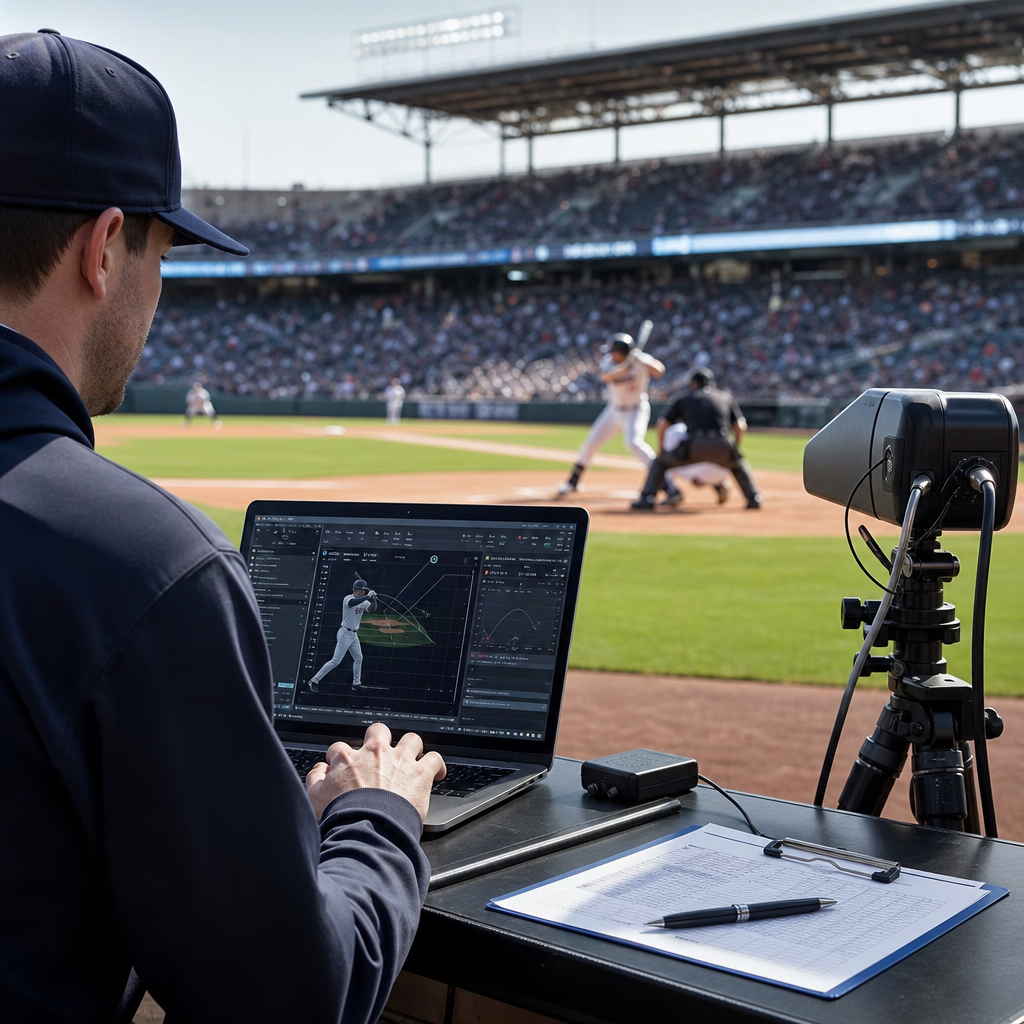
Artificial intelligence is reshaping baseball at every level, from player development and front office planning to broadcast production and fan engagement. In practical terms, AI refers to software systems that identify patterns in large datasets, generate predictions, automate repetitive analysis, and increasingly create new content such as scouting reports, highlight clips, and injury-risk alerts. Baseball has always been a data-rich sport, but the current wave of tools goes beyond traditional spreadsheets and box scores. Teams now combine computer vision, biomechanical modeling, machine learning, natural language processing, and cloud computing to make decisions faster and with more precision than earlier analytics departments could manage.
This matters because baseball rewards tiny edges. A few extra strikes framed over a season, a slight improvement in swing path, or one better bullpen matchup in a playoff series can change careers and championships. I have worked with clubs, coaches, and analysts long enough to see the shift firsthand: what once required hours of manual video review can now be flagged automatically before batting practice ends. AI does not replace baseball judgment, but it changes who has the best information, how quickly they act on it, and how consistently they repeat good decisions. That applies not only in Major League Baseball, but also in college programs, player development labs, youth academies, sports media, and betting markets.
As the hub for technology’s impact on the game, this article explains where AI is already influencing baseball, what problems it solves, where it falls short, and why its next phase will shape roster construction, health management, umpiring support, content distribution, and competitive balance. Understanding AI in baseball means understanding the future of pitching, hitting, scouting, coaching, and the business around the sport.
How AI changes scouting, player evaluation, and roster decisions
AI improves baseball scouting by turning fragmented information into comparable, decision-ready profiles. A modern front office pulls from Statcast tracking, Hawk-Eye camera feeds, wearable sensor outputs, medical records, biomechanics assessments, and unstructured notes from scouts. Machine learning models can score patterns across that mixed data, helping clubs estimate how a player’s tools translate from one league to another, how aging curves differ by body type and position, and which prospects are undervalued because traditional stats lag behind underlying skill indicators.
For example, a hitter in Double-A might post an average batting line but show elite bat speed, strong swing decisions against specific pitch shapes, and unusually consistent point-of-contact data. AI models can identify that hidden upside before results fully appear in the box score. On the pitching side, clubs use pitch clustering to classify arsenals not just by labels like slider or cutter, but by actual movement signatures, release traits, tunneling quality, and how those pitches play off each other. This is how teams find relievers with one elite trait that can be developed into a major league weapon.
Roster construction benefits as well. Decision systems can simulate defensive alignments, matchup choices, travel fatigue, and likely performance under different game contexts. That does not eliminate human discretion; the best organizations use AI as a decision-support layer. Scouting directors still need context about makeup, coachability, and injury history. General managers still weigh clubhouse fit and payroll realities. But AI narrows uncertainty. It helps teams ask better questions, compare risk more honestly, and spot market inefficiencies before rivals do.
Pitch design, hitting development, and individualized coaching
Player development is where AI often produces the most visible gains. Pitching labs use high-speed cameras, force plates, markerless motion capture, and ball-tracking systems to build individualized models of delivery efficiency and pitch quality. AI can detect subtle changes in arm slot, stride timing, trunk rotation, seam orientation, and release consistency that a coach might miss in real time. A pitcher may feel that his slider is sharp, yet the model may show reduced seam-shifted wake effects or lower induced vertical break than his baseline. That early warning allows immediate correction.
Hitters benefit from similar personalization. Bat sensors, video systems, and pitch-recognition platforms can map swing decisions against velocity bands, zones, and pitch types. AI then recommends targeted work: perhaps a hitter needs to improve contact probability on high fastballs above 95 mph, or he chases back-foot breaking balls too often when behind in the count. Rather than generic cage sessions, the player gets a training plan built around his actual weaknesses and game-like pitch environments.
I have seen this approach change how coaches communicate. Instead of vague cues such as “stay closed” or “get on plane,” they can pair clear language with measurable feedback. That matters because players respond differently to information. Some trust visual overlays. Others want a single actionable metric. AI helps coaches adapt instruction to the learner, not just the skill. It also tracks whether an intervention is working over days and weeks, reducing the guesswork that long defined baseball instruction.
| Area | Common AI Inputs | Typical Output | Baseball Benefit |
|---|---|---|---|
| Pitch design | Hawk-Eye data, spin axis, release height, motion capture | Pitch shape optimization | More whiffs, better command plans |
| Hitting development | Bat sensors, zone maps, swing decisions, video | Personalized training drills | Improved contact quality and approach |
| Defense | Reaction times, route efficiency, positioning history | Pre-pitch alignment suggestions | More balls converted into outs |
| Health | Workload logs, biomechanics, sleep and recovery markers | Injury-risk alerts | Smarter workload management |
| Game strategy | Matchups, fatigue, pitch usage, run expectancy | Decision support during games | Better tactical choices |
Injury prevention, workload management, and sports medicine
One of the most important roles of AI in baseball’s future is reducing preventable injury. Pitchers and catchers especially operate under repeated high-stress movements, and teams now monitor workloads with far more sophistication than simple pitch counts. AI models can combine acute and chronic workload data, mechanical deviations, strength assessments, recovery markers, and historical injury records to flag heightened risk. If a pitcher’s shoulder rotation pattern changes after a series of high-effort outings, the system may recommend altered throwing volume, a delayed bullpen, or further medical screening.
This is not science fiction; it builds on standards already used in elite performance departments. Motion capture, force plates, and neuromuscular testing create baselines. AI then looks for deviations that matter. The value is not that it predicts every injury perfectly. No credible practitioner claims that. The value is earlier detection of patterns humans miss when they are juggling dozens of athletes and thousands of data points. In my experience, the best medical-performance groups use AI to trigger conversations, not automatic shutdowns. Context still matters: soreness after a velocity spike means something different than soreness with declining mechanics and poor recovery scores.
For hitters, AI can track asymmetries in rotational power, bat speed decay, and movement efficiency during congested travel periods. For fielders, it can assess acceleration loads and slide impacts. Over time, that leads to more individualized strength plans and smarter scheduling. The larger effect is organizational: clubs that keep more players healthy preserve continuity, reduce replacement-level exposure, and protect long-term investments. As pitcher injuries remain one of the sport’s most expensive problems, AI-driven health management is moving from an innovation to a necessity.
Defense, umpiring support, and on-field strategy
AI is also changing what happens between the lines. Defensive positioning already relies on probabilistic modeling, but newer systems refine recommendations by batter swing path, pitcher movement profile, game state, runner speed, and batted-ball tendencies. That means positioning is becoming dynamic rather than static. Infielders and outfielders can receive more precise pre-pitch guidance based on how a specific pitch is likely to be attacked. Even with shift restrictions, optimization still matters through depth, first step preparation, and outfield route anticipation.
Catcher game-calling is another frontier. Models can estimate expected outcomes of pitch sequences by hitter weakness, prior exposure, count leverage, and pitcher command reliability that day. Good catchers will not follow a tablet blindly, but they can use this information to tighten plans. Bullpen management benefits too. Managers can compare leverage, platoon splits, recent workload, and contact suppression tendencies before choosing a reliever, instead of relying mainly on role labels.
Umpiring support remains controversial, yet AI-assisted strike zone systems are already influencing baseball’s future. Automated ball-strike technology, often tested in the minors, uses camera tracking to evaluate whether a pitch crossed the defined zone. Supporters argue that this improves consistency and fairness. Critics point out that the strike zone is not a perfect rectangle in practice, that catcher setup and hitter posture create edge cases, and that over-automation could remove an element of the game’s human texture. The likely path is hybrid: human umpires retain authority while AI provides challenge-based review or real-time assistance. That compromise preserves pace and accountability while reducing obvious misses.
Broadcasting, fan engagement, and the business of baseball
AI’s influence extends beyond clubs into how baseball is packaged, sold, and understood. Broadcast teams now use automated highlight generation, pitch visualization, win-probability graphics, and natural language tools that turn game data into instant summaries. For fans, that means more accessible explanation of why a game turned when it did. A casual viewer can see not only that a reliever gave up hard contact, but that his release point drifted, his fastball lost ride, and his put-away slider landed in a predictable tunnel. Better context keeps more fans engaged.
Personalization is growing quickly. Streaming platforms can recommend clips based on favorite players, fantasy rosters, betting interests, or local teams. AI-generated translations and captions make content more accessible globally. Ticketing and marketing departments use predictive models to identify attendance patterns, target promotions, and improve pricing strategy. Customer service systems can answer routine questions instantly while routing complex issues to staff. Those gains may seem separate from baseball itself, but they affect revenue, reach, and how younger audiences connect with the sport.
There are business risks. Over-personalized content can narrow fan experience into isolated feeds instead of shared narratives. Data privacy matters when teams and platforms collect detailed behavioral information. And if every broadcast leans too hard on probability graphics and model outputs, the game can feel over-explained rather than more compelling. The organizations that succeed will use AI to deepen storytelling, not flatten it. Baseball still depends on emotion, suspense, and identity, and technology works best when it supports those qualities instead of overwhelming them.
Limits, ethics, and what the next decade will bring
AI is powerful, but it is not neutral and it is not magic. Models are only as good as the data, assumptions, and incentives behind them. If historical data underweights certain player types, the model may repeat that bias in scouting or contract decisions. If wearable data is collected without clear consent or governance, trust erodes quickly. If coaches treat model recommendations as objective truth, they may ignore small-sample context, player psychology, or environmental factors that the system cannot capture well.
The next decade will reward baseball organizations that build strong data governance and clear decision processes. That means documenting model purpose, validating outputs against real outcomes, and making sure coaches, trainers, scouts, and executives understand both strengths and limitations. It also means creating boundaries around sensitive health and biometric data. Players need clarity on what is tracked, who can access it, and how it affects roster status or compensation. Those questions are not side issues; they will shape labor discussions and competitive trust.
What comes next is likely to be more integrated and more invisible. AI tools will fade into daily workflows rather than sit in separate analytics departments. Coaches will receive real-time recommendations through wearable displays and dugout interfaces. Amateur scouting will use broader video-based evaluation from remote events. International player identification will accelerate as computer vision expands access to overlooked markets. And generative systems will help produce reports, translate coaching points, and summarize games instantly. The clubs that benefit most will not be those with the flashiest software. They will be the ones that combine technical capability with baseball judgment, communication skill, and ethical discipline.
AI is shaping baseball’s future because it improves how the sport sees, measures, teaches, and markets itself. Its biggest impact is not one robot umpire or one smart camera. It is the accumulation of better decisions: safer workloads, sharper pitch design, smarter scouting, more precise coaching, stronger fan experiences, and more efficient business operations. Baseball remains a human game decided by players under pressure, but the environment around those players is becoming increasingly intelligent.
The central lesson is straightforward. AI creates value when it turns raw information into useful action without stripping away context. Teams that use it well gain clarity, speed, and consistency. Teams that use it poorly drown in dashboards, overfit to noisy samples, or ignore the people expected to act on the output. The same is true for leagues, media companies, and training programs. Technology works when it serves baseball’s real demands, not when it chases novelty for its own sake.
For anyone following innovations and changes in baseball, AI is the hub topic that connects nearly every other development in the game. It touches biomechanics, strategy, officiating, media, health, and player valuation all at once. Watch how organizations invest in data infrastructure, training labs, broadcast tools, and governance policies, because those choices will define the next competitive era. If you want to understand where baseball is going, start by tracking how intelligently the sport uses AI, and keep exploring the technologies transforming the game.
Frequently Asked Questions
How is AI changing the way baseball teams evaluate players and make roster decisions?
AI is transforming player evaluation by helping teams process far more information than traditional scouting and analytics methods could handle on their own. Instead of relying only on box scores, radar-gun readings, or subjective scouting notes, clubs can now combine biomechanical data, swing-path measurements, pitch movement profiles, tracking-camera outputs, medical histories, workload patterns, and even contextual game situations into a single decision-making framework. AI systems can identify patterns that may not be obvious to human evaluators, such as subtle indicators of future breakout potential, signs that a pitcher’s mechanics are trending toward reduced effectiveness, or matchup tendencies that make a role player more valuable than standard statistics suggest.
In roster construction, AI can support decisions about promotions, demotions, free-agent targets, trade candidates, and long-term player value. For example, a front office may use predictive models to estimate how a hitter’s approach will age, how a pitcher’s arsenal might translate to a new division, or whether a minor leaguer’s underlying metrics suggest he is closer to major league readiness than his traditional stat line implies. The key point is not that AI replaces scouts, coaches, or executives, but that it gives them a more powerful set of tools to validate instincts, challenge assumptions, and make more informed decisions under uncertainty.
What role does AI play in player development and on-field performance improvement?
AI plays a growing role in player development by turning large volumes of training and game data into practical coaching insights. Modern baseball development programs collect information from high-speed cameras, wearable devices, bat sensors, ball-tracking systems, force plates, and motion-capture tools. AI can analyze that information to detect patterns in timing, movement efficiency, pitch release, bat path, defensive reactions, and fatigue. That allows coaches to move beyond broad advice and give players more individualized recommendations based on how their bodies and skills actually perform in real situations.
For pitchers, AI can help identify which pitch shapes are most effective, how release consistency affects command, and whether small mechanical changes might improve velocity or reduce stress on the arm. For hitters, AI can evaluate swing decisions, contact quality, zone coverage, and vulnerability to specific pitch types, then suggest adjustments tailored to the player’s strengths. Defenders can also benefit through better positioning models, reaction training, and scenario-specific preparation. Over time, these systems can track whether changes are working and recommend next steps, creating a feedback loop that is faster and more precise than traditional coaching alone. The result is a more personalized development environment where players can improve performance while reducing wasted reps and guesswork.
Can AI help reduce injuries and manage player health in baseball?
Yes, one of the most promising applications of AI in baseball is injury prevention and workload management. Baseball seasons are long, repetitive, and physically demanding, which makes injury risk difficult to monitor using simple rules or isolated observations. AI can help by analyzing training loads, biomechanics, recovery metrics, prior injury history, sleep and fatigue data, and game usage patterns to detect when a player may be moving toward an elevated risk state. In pitchers especially, where overuse and mechanical inefficiencies can lead to major arm injuries, these systems can offer early warnings before a serious problem becomes obvious.
That said, AI does not predict injuries with perfect certainty, and responsible teams use it as a decision-support tool rather than a medical verdict. A model might flag concerning trends such as declining shoulder stability, altered stride patterns, or abnormal recovery times, but doctors, trainers, strength staff, and coaches still need to interpret the context. Used properly, AI can help guide rest schedules, adjust throwing programs, modify practice intensity, and identify when an athlete needs closer evaluation. As clubs continue to invest in sports science, AI is becoming an important bridge between raw health data and real-world prevention strategies that can protect both player well-being and team performance.
How is AI affecting baseball broadcasts, media coverage, and the fan experience?
AI is reshaping baseball beyond the clubhouse by changing how games are produced, packaged, and consumed. In broadcasting, AI can automatically generate highlight clips, identify key plays in real time, tag players and situations for faster editing, and help deliver more personalized content to fans across digital platforms. Broadcasters and media teams can use these tools to create faster recaps, customized video packages, automated captions, and data-driven graphics that make analysis more accessible to casual viewers without sacrificing depth for serious fans.
For the fan experience, AI can power recommendation systems that suggest highlights, articles, fantasy insights, ticket offers, and merchandise based on viewing habits and team preferences. It can also improve second-screen experiences through real-time stats, predictive win probabilities, conversational chat tools, and interactive summaries tailored to what a fan wants to know. On the content side, AI is increasingly being used to draft social posts, summarize games, create visual assets, and support multilingual communication for broader audiences. While human storytelling remains essential, AI helps baseball organizations deliver faster, more relevant, and more engaging experiences to fans who expect instant access and personalized content.
Will AI replace scouts, coaches, analysts, or front office decision-makers in baseball?
AI is unlikely to replace baseball professionals outright, but it will significantly change how they work. Scouting, coaching, and front office leadership depend on judgment, communication, experience, and context in ways that software alone cannot fully replicate. A scout can evaluate competitiveness, adaptability, body language, and how a player responds to adversity. A coach can build trust, teach adjustments, and motivate an athlete through failure. An executive must balance clubhouse chemistry, budget constraints, organizational philosophy, and long-term risk. These are deeply human responsibilities.
What AI does is make those roles more data-enhanced and, in many cases, more efficient. Analysts can automate repetitive tasks and spend more time on strategic interpretation. Scouts can arrive at ballparks with stronger pregame intelligence and use AI tools to support or challenge their observations. Coaches can pair their teaching instincts with objective feedback from models and tracking systems. Front offices can test more scenarios before making expensive decisions. In the future, the most successful organizations will likely be those that integrate AI without becoming dependent on it, blending machine-driven insights with human expertise. In baseball, as in many industries, the competitive edge will come not from choosing people or AI, but from combining both effectively.