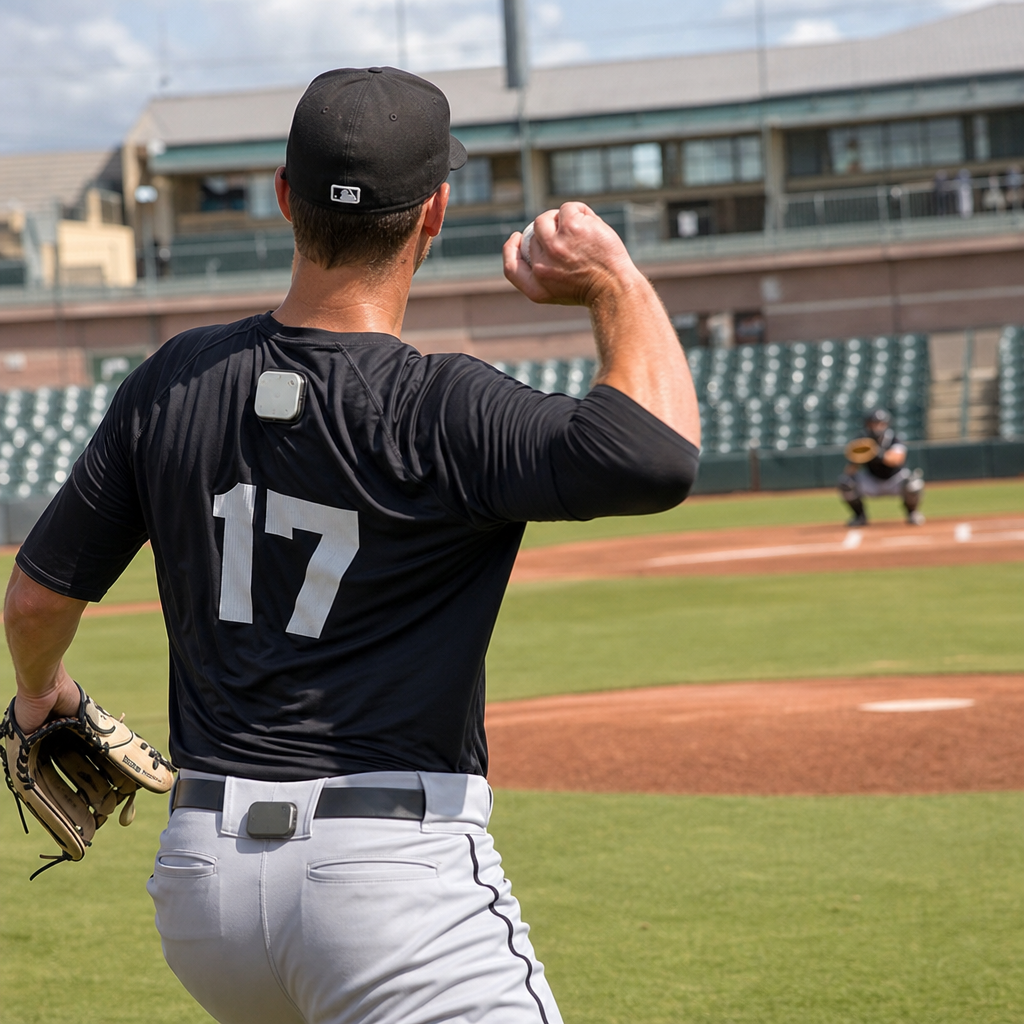
Tracking technology has changed baseball from a game evaluated mainly by box scores and radar guns into one measured through continuous streams of movement data. GPS units, inertial motion sensors, optical tracking systems, and wearable devices now record how players run, throw, swing, and recover, turning previously hidden actions into quantified performance markers. For coaches, analysts, trainers, and front offices, this information sharpens decisions about player development, workload management, injury prevention, positioning, and roster construction. For fans and media, it helps explain why one outfielder takes a perfect route, why a pitcher loses velocity late in an outing, or why a catcher’s transfer time matters as much as arm strength.
In baseball, GPS usually refers to satellite-based location tracking used most often outdoors to estimate distance covered, speed, acceleration, and workload. Motion sensors typically include accelerometers, gyroscopes, and magnetometers packed into wearable units or embedded in equipment. These sensors capture changes in linear acceleration, rotation, and orientation at high sampling rates. In practice, baseball organizations rarely rely on one device alone. They combine wearable sensor data with camera-based systems such as Statcast and Hawk-Eye, force plates, bat sensors, and biomechanics software to build a fuller picture of how the game is played and how bodies handle the demands of competition.
This matters because baseball performance is made up of tiny, repeatable actions. A shortstop’s first step, a pitcher’s hip-shoulder separation, a base runner’s peak acceleration, or an outfielder’s deceleration pattern can decide games and careers. I have seen clubs use tracking data not as a replacement for coaching eyes but as a way to confirm or challenge what coaches think they see. When a player says he feels fresh but his sprint profile has dropped for three straight series, the data can prompt intervention before a hamstring strain becomes inevitable. When a pitcher’s arm slot subtly shifts over several outings, motion sensors can help identify a mechanical change before command collapses.
What Baseball Tracking Technology Includes
Baseball tracking technology covers several overlapping systems, each answering different questions. GPS wearables are strongest at measuring external load in open environments: total distance, high-speed running distance, top speed, acceleration counts, and repeated sprint efforts. Inertial measurement units, or IMUs, add context by measuring body orientation, rotation, jump load, and movement asymmetry. Optical systems such as Statcast, first deployed league-wide by MLB and now driven by Hawk-Eye cameras, track the ball and every player on the field without wearables. That enables public metrics like sprint speed, route efficiency, jump, catcher pop time, and pitch movement.
At the team level, the real value comes from integration. A strength staff may review Catapult or STATSports wearable data during pregame work, while analysts study Statcast running and fielding outputs, and a biomechanics group checks arm-speed readings from sleeve sensors such as Motus. These technologies are not interchangeable. GPS can estimate how much running volume an outfielder accumulated in batting practice and a game, but it cannot fully explain whether his deceleration mechanics are putting excess stress on the groin. An IMU or optical tracking view can. Likewise, camera systems can show that a runner was slow to first base, but a wearable may reveal fatigue patterns across the previous week.
Accuracy depends heavily on environment, placement, and sampling rate. GPS is less reliable indoors and can struggle with short, explosive movements because baseball actions often occur over very small distances. That is why many baseball applications lean on local positioning systems, ultra-wideband tracking, or camera systems for finer resolution. Motion sensors also require careful calibration and interpretation. Raw acceleration data can be noisy, and baseball has enough movement variability that poor data cleaning can create false conclusions. Good organizations treat these devices as measurement tools, not magic answers.
How Teams Use GPS and Motion Sensors on the Field
On-field use starts with workload management. Baseball players do not cover the same ground as soccer midfielders, but their workloads are still significant and highly variable by position. Center fielders may log repeated high-intensity runs. Middle infielders perform frequent explosive starts and lateral changes. Catchers absorb enormous cumulative stress through squatting, blocking, and throwing. GPS and IMU data help staff quantify these demands instead of guessing from innings played alone. A player can appear lightly used in a box score while actually carrying a heavy neuromuscular load from pregame work, stolen-base attempts, and defensive range plays.
Teams also use sensors to break down base running. Coaches can measure first-step reaction, time to peak speed, and how well runners maintain velocity around the bases. If a player’s top speed is fine but his acceleration has slipped, training can shift toward force production and freshness rather than pure speed work. Outfield defense is another major use case. Tracking data shows first movement direction, route efficiency, closing burst, and deceleration under the ball. Those details matter because defensive quality is often lost in broad labels like “good range.” Sensors reveal whether poor jumps come from slow recognition, inefficient angles, or diminished physical output.
Pitchers present the most sensitive application. Wearables and motion sensors can track arm speed, arm stress proxies, trunk rotation, stride timing, and recovery trends. No single metric predicts injury perfectly, and responsible staffs do not claim otherwise. Still, trend analysis is powerful. If a pitcher’s between-start bullpen usually shows stable arm speed and rotational sequencing, then a sudden deviation can trigger a conversation. Combined with subjective soreness reports, force-plate testing, and pitch-tracking data, motion sensors support evidence-based decisions on throwing volume. In development settings, they also help pitchers compare how a cue changes movement pattern, not just whether the ball reached the target.
| Technology | What It Measures Best | Typical Baseball Use | Main Limitation |
|---|---|---|---|
| GPS wearable | Distance, speed, acceleration, workload | Practice and game running load monitoring | Less precise for very short movements |
| IMU motion sensor | Rotation, orientation, movement intensity | Throwing, swinging, jumping, asymmetry analysis | Needs calibration and careful interpretation |
| Optical tracking | Player and ball location in real time | Fielding range, sprint speed, pitch and hit tracking | Infrastructure cost and processing complexity |
| Arm sleeve sensor | Arm speed and throwing workload proxies | Pitcher monitoring and return-to-throw programs | Does not directly measure tissue damage |
Player Development, Biomechanics, and Skill Improvement
Player development is where tracking technology often delivers its clearest return. In the past, coaches relied on video, stopwatches, radar guns, and experience. Those tools still matter, but sensors add repeatable, time-stamped evidence. Hitting coaches use bat sensors such as Blast Motion and Diamond Kinetics to monitor bat speed, attack angle, time to contact, and swing efficiency. When linked with high-speed video and ball-flight data, these numbers help separate useful swing changes from cosmetic ones. A hitter trying to create more power can see whether the adjustment actually improved bat speed and impact quality or simply increased swing length.
Biomechanics labs push this further. High-speed motion capture, force plates, and wearable sensors allow staffs to assess kinetic chain sequencing from the ground up. For pitchers, that can mean examining lead-leg block, pelvis rotation, trunk tilt, shoulder external rotation, and timing to ball release. For position players, it may involve hip-shoulder separation, ground-reaction force, and rotational power through the swing. In my experience, the best coaches use this information to simplify instruction. They do not overwhelm players with jargon. Instead, they identify one or two changes with the highest payoff, then use the numbers to confirm adaptation over several weeks.
A practical example is return-to-play after injury. If a recovering outfielder is medically cleared, that does not mean he is game ready. GPS can show whether his sprint profile has returned to baseline. IMUs can help evaluate whether his cutting and deceleration resemble pre-injury patterns. For a pitcher coming back from elbow trouble, sleeve sensor trends, bullpen velocity, command consistency, and recovery markers can be reviewed together. The result is a more graduated progression than the old binary model of healthy versus not healthy. That nuance protects the player and gives the organization a clearer timetable.
How Tracking Data Shapes Strategy and Front Office Decisions
Technology’s impact on the game goes beyond training rooms and bullpens. It changes strategy. Defensive positioning is now informed by detailed movement profiles, not only spray charts. If an infielder’s lateral burst grades well to his glove side but poorly to his backhand side, coaches can adjust pre-pitch positioning by a step or two. Outfield alignments can account for route quality, recovery speed, and arm strength. On the bases, teams can identify runners who are not elite in raw speed but excel in acceleration and turn efficiency, making them smarter candidates for selective steals or aggressive first-to-third decisions.
Front offices also use tracking technology in scouting and player valuation. A prospect with average traditional statistics may still stand out if sensor and camera data reveal elite movement traits. An outfielder with a mediocre stolen-base total might project better than expected because his sprint speed and route efficiency are exceptional. A pitcher with inconsistent results may show unusually efficient mechanics or stable arm-speed outputs that suggest future durability and upside. Clubs increasingly pair subjective reports with objective movement data to reduce blind spots in amateur scouting, pro scouting, and player acquisition.
That said, smart organizations understand the difference between signal and noise. One good sensor reading does not make a player a target, and one concerning workload spike does not prove a future injury. Baseball seasons are long, and data can be distorted by weather, travel, surface conditions, and device inconsistencies. The strongest decision-makers build baselines, monitor trends, and compare information across systems. They ask whether the data fits the athlete’s history, role, and current training phase. This balanced approach is why successful clubs still marry analytics with coaching judgment, medical insight, and direct observation.
Limits, Ethics, and the Future of Baseball Tracking
For all its value, player tracking comes with limits and ethical concerns. Privacy is the first issue. Wearables can reveal health patterns, fatigue, and physical decline, all of which may affect contract negotiations or roster status. Players and unions reasonably want clarity on who owns the data, how long it is stored, and whether it can be used against them. Consent, access, and transparency matter. A useful technology program explains exactly what is being collected, why it is being collected, and how it will influence decisions. Without trust, even accurate data can create resistance.
There are also technical and interpretive limits. External workload metrics do not equal internal stress. Two pitchers may throw the same bullpen volume with very different recovery costs because of mechanics, injury history, sleep, or conditioning. Sensor output can support medical reasoning, but it cannot replace diagnosis. Overreliance is another risk. When staffs chase every metric, players may become overly conscious of numbers and lose feel. The answer is not less technology but better prioritization. Organizations need dashboards that highlight actionable metrics rather than drowning staff and athletes in constant alerts.
The future of baseball tracking will be more integrated and more predictive. Optical systems, wearables, force plates, and medical records will increasingly feed shared platforms. Machine learning models will improve at identifying abnormal movement signatures, managing return-to-play progressions, and flagging performance decline before it is obvious in game results. Youth and college baseball will adopt more affordable versions of tools once limited to MLB. The key benefit will remain the same: better decisions grounded in measurable evidence. If you want to understand technology’s impact on the game, start with tracking data, because it connects performance, health, strategy, and development in one evolving system.
GPS and motion sensors have become central to modern baseball because they measure the parts of performance that traditional statistics miss. They show how players move, how hard they work, how their mechanics change, and how fatigue or recovery influences results. Used well, these tools help coaches individualize instruction, help medical staffs manage risk, help analysts sharpen strategy, and help front offices value players more accurately. They matter not because numbers are fashionable, but because baseball is a game of repeated movements where small advantages compound over time.
The most important lesson is that tracking technology works best as part of a larger process. GPS can quantify running load, motion sensors can reveal rotational patterns and workload proxies, and camera systems can verify what happened on the field. None should stand alone. Reliable programs compare multiple sources, establish player baselines, and translate data into simple, practical decisions. That is how organizations turn technology from a collection of gadgets into an operating advantage. It is also how this topic connects to every other change in baseball, from biomechanics and injury prevention to scouting, defensive positioning, and player development.
For anyone building a deeper understanding of innovations and changes in baseball, this is the logical starting point. Tracking explains why teams train differently, why strategy looks sharper, and why player evaluation is increasingly rooted in movement quality as much as outcomes. Explore the related articles in this hub to see how biomechanics labs, bat and ball tracking, video analysis, and performance analytics build on the same foundation. The game is still decided on the field, but the way teams prepare for it is now shaped by sensors, cameras, and the data they produce every day.
Frequently Asked Questions
How are GPS and motion sensors used in baseball today?
GPS and motion sensors are used in baseball to capture the movements and physical demands that traditional stats cannot fully explain. GPS devices, often worn during training or practice settings, track variables such as distance covered, sprint speed, acceleration, deceleration, and overall player workload. Motion sensors, including inertial measurement units with accelerometers, gyroscopes, and magnetometers, go even deeper by measuring how an athlete moves segment by segment. In baseball, that can mean evaluating a pitcher’s arm speed and trunk rotation, a hitter’s bat path and swing tempo, or a fielder’s first-step quickness and route efficiency.
These tools are now part of a broader tracking ecosystem that also includes optical camera systems and radar-based technologies. Together, they allow teams to study performance continuously rather than relying only on game-day outcomes like batting average, velocity, or errors. A coach can look beyond whether a player stole a base and instead evaluate lead-off explosiveness, top speed, and how quickly that player reached full acceleration. A pitching coordinator can review not just pitch results, but also the mechanical consistency and physical stress associated with each bullpen session. This gives organizations a much more complete picture of how players perform, adapt, and recover over time.
What kinds of data do these tracking systems collect from baseball players?
The data collected depends on the technology being used, but in general these systems measure movement quality, intensity, workload, and biomechanical patterns. GPS units commonly record total distance, high-speed running distance, burst counts, sprint efforts, maximum speed, and changes in pace or direction. These metrics are especially useful for monitoring outfielders, baserunners, and position players during conditioning, practice, and return-to-play programs. In baseball, where explosive movements matter more than constant running, the value often lies in identifying short, intense efforts and how frequently they occur.
Motion sensors collect a different but equally important set of measurements. Wearable inertial sensors can track rotational velocity, joint sequencing, arm slot consistency, torso movement, stride length, landing patterns, and asymmetries between the left and right sides of the body. For pitchers, that may mean measuring arm acceleration, shoulder rotation timing, and mechanical repeatability from pitch to pitch. For hitters, sensors can quantify swing speed, time to contact, bat angle, and rotational efficiency. Teams often combine this information with optical tracking and force-based data to understand how technique, workload, and physical output connect. The result is a detailed profile of not only what happened, but how it happened and whether it is sustainable.
How do coaches and analysts use tracking data to improve player performance?
Coaches and analysts use tracking data to turn subtle movement patterns into actionable coaching points. Instead of relying only on visual observation, they can compare a player’s current movement profile against prior sessions, team benchmarks, or successful performance models. If a hitter’s bat speed is stable but swing path has changed, coaches may identify a mechanical issue that affects launch quality. If a pitcher’s velocity is unchanged but body sequencing has drifted, the staff may intervene before command or arm health begins to decline. This helps coaching become more precise, individualized, and evidence-based.
Tracking data is also valuable for player development planning. Teams can identify whether a prospect needs more explosive lower-body work, whether a veteran’s workload should be adjusted, or whether a defensive player is improving first-step reaction and route efficiency. Analysts can connect movement data with outcomes to find which physical traits or mechanical patterns are most associated with success. Over time, this supports smarter decisions in training design, skill development, roster planning, and in-game preparation. The goal is not simply to collect numbers, but to translate those numbers into better performance, more efficient coaching, and more informed long-term development.
Can GPS and wearable sensors help prevent injuries in baseball?
Yes, one of the most important benefits of tracking technology in baseball is its role in workload monitoring and injury risk management. Baseball injuries often build gradually through accumulated stress rather than one obvious event, especially for pitchers and players making repeated high-intensity movements. GPS and wearable sensors help teams quantify how much work a player is actually doing, how intense that work is, and whether physical patterns are beginning to change in ways that may signal fatigue or compensation. This is especially useful because athletes do not always feel or report early warning signs consistently.
For example, a pitcher might show changes in arm speed, trunk rotation, or movement sequencing before velocity drops or discomfort is reported. A position player returning from a hamstring strain may reach expected top speeds, but the data may reveal reduced acceleration or uneven movement patterns that suggest incomplete recovery. Trainers and sports science staff use this information to compare acute workload with longer-term workload history, helping them avoid spikes that can increase injury risk. While tracking systems cannot predict every injury, they provide an early-warning framework that supports safer training loads, better recovery planning, and more confident return-to-play decisions.
What are the limitations of GPS and motion tracking technology in baseball?
Although tracking technology is powerful, it is not perfect and should not be treated as a substitute for coaching experience or context. GPS accuracy can vary based on environment, device quality, and how quickly movements occur. Baseball is filled with short bursts, rapid directional changes, and highly technical actions, so some movements may be better captured by inertial sensors or optical systems than by GPS alone. Wearable devices also depend on proper placement, calibration, and consistent use. If the data collection process is sloppy, the conclusions can be misleading.
Another limitation is interpretation. Large amounts of movement data can create the illusion of certainty, but raw numbers do not automatically explain why a player is succeeding or struggling. A change in rotational speed might reflect fatigue, a mechanical adjustment, pain avoidance, or even a strategic effort to train at lower intensity. Teams need skilled coaches, analysts, and medical staff to connect the data with video, player feedback, competitive context, and training goals. There are also practical concerns, including cost, privacy, athlete buy-in, and deciding which metrics truly matter. The best organizations use tracking technology as a decision-support tool, not as a replacement for human judgment, communication, and baseball knowledge.