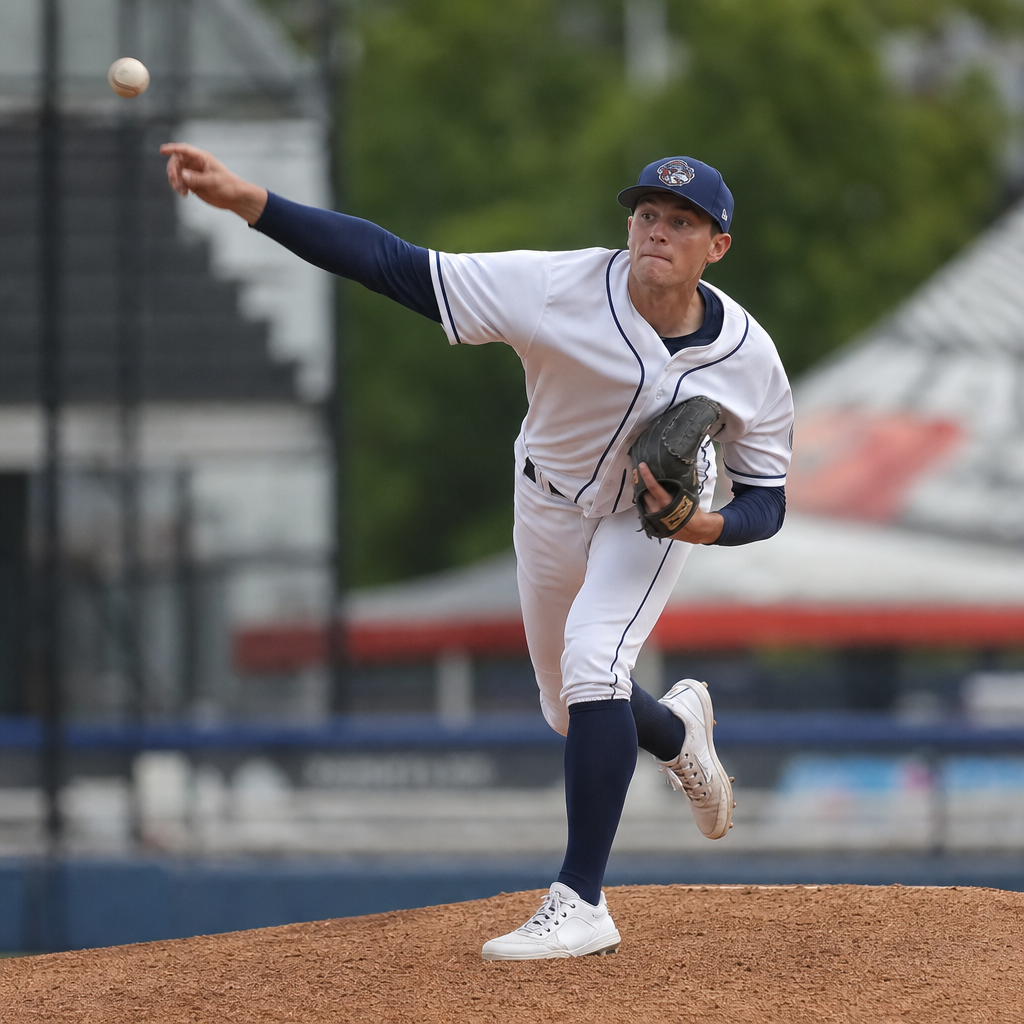
The art of pitching is refined far from October spotlights, and the minor leagues have long been baseball’s most important laboratory for developing the techniques that shape the modern game. Pitching, in baseball terms, is not simply the act of throwing the ball toward home plate; it is the coordinated use of mechanics, velocity, movement, command, sequencing, deception, recovery, and game planning to retire hitters efficiently. When people discuss baseball development, they often focus on draft classes, top prospects, or major league debuts. In practice, the deepest technical work happens in bullpens, back fields, low-A rotations, college summer leagues, and rehab assignments. That is where grips are changed, deliveries are rebuilt, workloads are tested, and data is translated into habits that survive real competition.
I have seen this process up close in player-development settings where a pitcher arrived with a hard fastball and little else, then spent months learning how to shape a slider, repeat a delivery from the stretch, control his breathing under traffic, and hold velocity deeper into outings. Those changes rarely happen overnight. They are usually the product of the minor league system, which sits between amateur baseball and the majors as a proving ground for technique. College baseball contributes a different layer by supplying pitchers with structured competition, pitch-design exposure, strength programs, and early analytics literacy. Together, minor league and college environments influence nearly every pitching trend visible at the highest level.
This matters because pitching techniques now evolve faster than at any point in baseball history. High-speed cameras, Rapsodo, TrackMan, Hawkeye, biomechanical assessments, and force-plate testing have changed how coaches evaluate movement profiles and injury risk. At the same time, the goals remain classic: miss barrels, get ahead in counts, disguise intent, and stay healthy enough to take the ball every fifth day or enter three times a week. A hub article on this subject needs to connect all of those threads. The minor leagues do not merely polish talent. They standardize terminology, test new methods against professional hitters, and create the practical bridge between theory and execution that defines successful pitching development across miscellaneous areas of the game.
Why the Minor Leagues Matter Most in Pitching Development
The minor leagues matter because they provide innings, feedback loops, and controlled experimentation. A major league club cannot usually let a struggling young pitcher spend six weeks learning a new kick-change while trying to win a pennant. Double-A and Triple-A can. Low-A can let a prospect throw a sinker more often to see whether his vertical approach angle plays better at the knees. Arizona Complex League and Florida Complex League settings can shorten outings and isolate one developmental target at a time. In every affiliate, coaches can pair game usage with side-session work so changes are tested under pressure instead of existing only in a bullpen.
Historically, the minors have contributed to nearly every major shift in pitching technique. The widespread teaching of the four-seam fastball at the top of the zone was validated through developmental systems before it became a major league norm. Tunneling concepts, which emphasize making different pitches look the same out of the hand, were operationalized in the minors because young pitchers needed reps and video review to apply the concept. Sweepers, kick changes, seam-shifted wake discussions, and individualized arsenals were all sharpened below the majors first. The same is true for role development. Many relievers became effective only after a minor league conversion from starting, where shorter outings allowed fastball velocity to spike and one breaking ball to play up immediately.
College baseball feeds this pipeline by delivering pitchers with stronger foundations than in previous eras. Programs at schools such as Wake Forest, Vanderbilt, Tennessee, and LSU now use motion capture, edgertronic video, recovery protocols, and pitch-design sessions that once existed mostly in pro ball. Even so, the minors remain the place where techniques are stress-tested over a longer season, with travel, variable weather, older hitters, and less forgiving routines. That environment exposes whether a delivery holds together over five months, whether a slider still bites on the third day after a heavy throwing session, and whether command survives fatigue. Those are technical truths that only professional development settings reveal consistently.
Mechanical Refinement: Turning Raw Arms into Repeatable Deliveries
Mechanical refinement is the most visible contribution the minor leagues make to pitching technique. A delivery must create velocity and movement while preserving command and minimizing unnecessary stress. Minor league coordinators typically break mechanics into checkpoints: balance over the rubber, direction toward the plate, hip-shoulder separation, arm path efficiency, release consistency, and deceleration pattern. The goal is not to make every pitcher look identical. It is to find a repeatable pattern that fits the athlete’s body, arsenal, and role. A six-foot-six pitcher with long levers may need different timing cues than a compact right-hander with a lower slot and heavy sinker.
One common adjustment involves simplifying movement before foot strike. Many amateur pitchers drift, rush, or leak open with the front side, causing the arm to trail behind the body. In the minors, coaches use side-view video and marker-based analysis to show how timing affects release height and command. A pitcher who consistently misses arm-side and up often is not simply “wild”; he may be rotating too early or landing inconsistently. By adjusting tempo, stride direction, or hand break timing, organizations can improve both strike throwing and pitch shape. I have watched pitchers gain usable command not by aiming better, but by repeating their lower-half sequence more efficiently.
These changes are also tied to health. Arm action debates can become simplistic, but most clubs now agree that efficient sequencing matters more than forcing a universal look. Biomechanical screenings help identify red flags such as excessive trunk tilt, poor lead-leg blocking, or unstable landing patterns. The minor league setting is ideal for implementing these corrections because it offers daily supervision and enough competitive reps to confirm whether the new movement pattern actually transfers to games.
Pitch Design, Data, and Arsenal Construction
Pitch design is where the minors have transformed baseball most dramatically. Instead of describing a breaking ball as merely “sharp,” clubs now evaluate horizontal break, induced vertical break, spin efficiency, seam orientation, release differential, velocity band, and how each pitch pairs with the rest of the arsenal. Minor league pitchers are taught that raw stuff is not enough; pitches must work together. A rising four-seam fastball pairs well with a depth-oriented curveball because the shapes diverge vertically. A sinker may pair better with a sweeper or changeup, depending on handedness and release slot.
Modern player development departments use data tools to answer practical questions. Does the slider miss bats in-zone or only as chase? Does the changeup generate weak contact against opposite-handed hitters? Is the cutter distinct enough from the fastball to matter? If not, should it be scrapped? This process is often iterative. A pitcher may try a new grip in a side session, compare movement on Rapsodo, throw it in live batting practice, and then deploy it in a two-inning game sample before coaches decide whether the pitch belongs in the repertoire. The minors provide the volume and structure needed for that cycle.
| Development Area | Minor League Contribution | Typical Tool or Method | Practical Result |
|---|---|---|---|
| Fastball shape | Tests seam orientation, slot fit, and vertical approach | TrackMan, Hawkeye, bullpen video | More carry up in zone or better sink at bottom |
| Breaking ball design | Separates gyro slider, sweeper, and curve profiles | Rapsodo, Edgertronic, grip trials | Clearer movement identity and more swing-and-miss |
| Changeup development | Matches arm speed while altering movement and speed band | Catch-play grip work, live BP, data review | Better weapon versus opposite-handed hitters |
| Command training | Links miss patterns to mechanics and intent | Target drills, zone maps, game charts | Improved strike percentage and count leverage |
| Recovery and durability | Monitors workload and post-outing response | Force plates, strength testing, wellness reports | More consistent stuff across a full season |
A clear example is the industry-wide rise of the sweeper. Many pitchers once threw a short slider by default because that was the traditional teaching model. Minor league analysis showed that some arm slots and wrist positions produced far more lateral movement, creating a sweeper that played better off certain fastballs. Organizations began teaching the pitch intentionally rather than accepting whatever breaking ball emerged naturally. Similar evolution happened with changeups. Circle changes remain common, but split-changes, one-seam variants, and kick changes now appear because development staffs can identify which grip best complements each pitcher’s release and pronation pattern.
Command, Sequencing, and the Competitive Side of Technique
Pitching technique is not complete without command and sequencing. Command is the ability to locate a pitch intentionally within or around the strike zone, while control is simply throwing strikes. The minor leagues are where pitchers learn the difference. A prospect can overpower Class A hitters for a while with velocity, but Double-A exposes poor command quickly. That level is often called the separator because hitters punish predictable mistakes and lay off chase pitches that are not sold properly. As a result, minor league staffs teach location by intent: four-seamers above the belt, sinkers below the knees, glove-side breaking balls that finish off the plate, and changeups that start in fastball lanes.
Sequencing develops in tandem. Pitchers study hitter tendencies, count leverage, swing decisions, and how one pitch sets up the next. This work is more advanced than the old advice to “establish the fastball.” If a pitcher’s best weapon is a changeup, the right plan may be to show a first-pitch change to left-handers and use the fastball as a chase pitch above the zone later. Minor league catchers, analysts, and pitching coaches help test these plans in real games. Postgame review then becomes part of technical development. Why did a slider get taken for a ball? Was the previous fastball too far from the tunnel? Did the pitcher tip the grip? Those details are central to performance.
Relief roles provide another example. Minor league systems often teach short-stint sequencing differently from starter sequencing. A reliever can throw his best two pitches 85 percent of the time, attack max effort, and use velocity to collapse decisions. A starter needs broader mix, pace management, and solutions for a third time through the order. Learning those distinctions in the minors has improved both bullpen specialization and starter survival in the majors.
Workload, Recovery, and the Technique of Staying Healthy
Durability is a pitching skill, and the minor leagues have changed how baseball teaches it. Traditional development often focused on innings totals alone. Today, organizations track acute and chronic workload, between-start throwing volume, recovery markers, strength output, sleep, nutrition, and subjective readiness. That does not eliminate injury; pitching remains inherently stressful. It does, however, improve how clubs build routines that support technique over time. A pitcher whose lower half is fatigued will often lose posture, drag the arm, and miss command. Recovery work therefore is not separate from mechanics. It helps preserve mechanics.
Minor league programs usually map the entire week for starters: day-after flush work, mobility and tissue treatment, light catch progression, bullpen intensity, lower-body strength, movement prep, scouting review, and pregame activation. Relievers follow different templates based on usage frequency. These routines matter because good technique degrades under fatigue. Many organizations use mound force data, grip-strength trends, and wellness questionnaires to flag when a pitcher may need a lower-volume side session or extra recovery intervention. Colleges increasingly mirror these methods, giving pitchers a head start before entering pro ball.
There are tradeoffs. More data can lead to overcorrection if staffs chase perfect metrics and ignore feel. Not every pitcher benefits from the same between-start program, and not every low-slot arm should be rebuilt for perceived efficiency. The best minor league development groups balance measurement with observation. They ask whether the pitcher’s stuff, command, and recovery are actually improving. If the answer is yes, the process is working.
The Hub Value: Connecting Miscellaneous Topics Across Minor Leagues and College Baseball
As a hub within Minor Leagues and College Baseball, this topic connects several related subjects that readers often research together. One branch is pitcher role conversion, including when starters become relievers and how two-pitch arsenals are optimized. Another is the relationship between college workload and pro durability, especially for pitchers who arrive with heavy amateur innings or recent velocity jumps. Another is technology adoption, from wearable sensors to video-based pitch tipping checks. Readers also explore coaching philosophy, catcher influence on game calling, rehab assignments as teaching spaces, and how developmental goals differ by level from rookie ball to Triple-A.
The unifying theme is that minor league baseball turns scattered ideas into usable technique. It translates college training into professional routines, converts analytical findings into mound decisions, and provides the daily structure needed for repeatable improvement. If you are building a broader understanding of miscellaneous baseball development topics, start with pitching. It is the clearest example of how instruction, data, competition, and adaptation intersect.
The key takeaway is simple: major league pitching techniques are rarely invented fully formed at the top. They are built, tested, and refined in the minor leagues, with college baseball increasingly serving as the foundation beneath that process. Mechanics become repeatable there. New grips become real weapons there. Command, sequencing, recovery, and durability all become practical skills there. For players, coaches, parents, and serious fans, understanding that pipeline makes the game easier to read and player development easier to evaluate.
Use this hub as your starting point for the wider miscellaneous side of Minor Leagues and College Baseball. Follow the connected topics, compare methods across levels, and study how development choices shape performance. If you want to understand where baseball’s next pitching breakthrough will come from, look to the minors first.
Frequently Asked Questions
Why are the minor leagues so important to the evolution of pitching in baseball?
The minor leagues matter because they are where pitching is built, tested, corrected, and refined long before it appears on a major league mound. At that level, pitchers are not simply trying to get outs; they are learning how to repeat delivery mechanics, improve command, shape pitches more effectively, control tempo, hold runners, and execute game plans against different types of hitters. That developmental environment gives coaches, analysts, and players the freedom to experiment with adjustments that would be far more difficult to make under the pressure of a pennant race. In many ways, the minors serve as baseball’s research and development system for pitching.
This is also where modern pitching techniques often gain traction first. New grips, altered arm slots, refined breaking-ball shapes, improved changeup usage, and data-informed pitch sequencing are frequently introduced in player development settings before they become major league standards. Minor league affiliates allow organizations to compare results, monitor progress over time, and decide which methods help pitchers generate better movement, more swing-and-miss, weaker contact, or improved strike efficiency. The result is that the minor leagues have contributed enormously to how pitching is taught today, from biomechanical optimization to recovery routines and individualized arsenals.
What specific pitching techniques are most commonly developed in the minor leagues?
Several core pitching techniques are commonly developed in the minors, and they all work together rather than in isolation. Mechanics are usually the foundation. Pitchers spend significant time learning how to repeat their delivery consistently so they can throw strikes, maintain velocity, and reduce unnecessary stress on the arm and shoulder. From there, coaches focus on command within the strike zone, not just the ability to throw a pitch for a strike, but the ability to place it on the edges, above barrels, below the zone, or in locations that complement the next pitch in a sequence.
Pitch design is another major area of development. Minor league pitchers often refine the shape of their fastball, slider, curveball, cutter, or changeup through grip changes, wrist positioning, release-point adjustments, and feedback from video and tracking technology. A pitcher may learn that a riding four-seam fastball works best at the top of the zone, while a sinker pairs better with glove-side run and ground-ball intent. Others may strengthen a sweeper-like breaking ball or develop a split-change that better tunnels off the fastball. Beyond the pitches themselves, the minors also teach sequencing, deception, emotional control, scouting preparation, and in-game adaptability, all of which are essential to turning raw arm talent into effective pitching.
How do minor league coaches and development staffs help pitchers improve mechanics and command?
Minor league coaches play a central role by breaking pitching into teachable, measurable parts. They study a pitcher’s delivery from start to finish, including balance, direction, timing, posture, stride, arm path, release point, and follow-through. The goal is not to force every pitcher into one identical motion, but to help each player find a delivery that is efficient, repeatable, and suited to his physical attributes. That often involves bullpen work, side sessions, slow-motion video review, biomechanical analysis, and targeted drills that address specific issues such as flying open too early, missing arm-side, losing extension, or struggling to stay on top of a breaking ball.
Command development is approached with the same level of detail. Coaches may use catch play routines, target drills, game-situation bullpens, and pitch-location maps to teach pitchers how to execute with intent rather than merely throw hard. They also help pitchers understand why command is connected to mechanics, timing, and decision-making. A pitcher with inconsistent lower-half movement, for example, may miss the intended target no matter how strong his arm is. By identifying these patterns early in the minors, development staffs help pitchers build habits that support long-term success. This process is one of the clearest examples of the minor leagues’ contribution to modern baseball techniques: they turn broad concepts into personalized, practical instruction.
How has data and technology in the minor leagues changed the way pitchers are developed?
Data and technology have transformed minor league pitching development by giving players and coaches objective feedback that was not widely available in earlier eras. Tools such as high-speed cameras, motion-capture systems, ball-tracking devices, and biomechanical assessments now allow teams to analyze spin rate, spin efficiency, release height, vertical break, horizontal movement, extension, and pitch tunneling with remarkable precision. Instead of relying only on visual impressions, development staffs can now see exactly how a pitch behaves and why it succeeds or fails.
That has led to more individualized training plans. A pitcher might discover that his fastball plays better with a certain release angle, or that a small grip change adds sharper late movement to his slider. Another may learn that his delivery becomes less efficient when he rushes down the mound, affecting both command and pitch quality. Technology also helps monitor workload and recovery, which is essential for preserving health while building durability. Importantly, the minors are where many of these technology-driven changes are introduced and refined before pitchers reach the majors. The best organizations use data not to replace coaching instinct, but to strengthen it, combining measurable evidence with experience to create smarter, more effective pitching development programs.
What lasting impact have minor league pitching systems had on the modern major league game?
The lasting impact is enormous because many of the pitching principles now considered standard in the majors were first emphasized and systematized in player development. Today’s focus on pitch efficiency, customized arsenals, optimized fastball usage, tunneling, recovery protocols, and matchup-based sequencing reflects years of work done in minor league environments. The minors helped shift pitching instruction from a one-size-fits-all model to a more tailored approach in which every pitcher is evaluated according to his movement profile, body type, mechanics, and competitive style.
That influence can be seen every night in the major leagues. Pitchers arrive more prepared to attack hitters with specific plans, adapt during outings, and use their best weapons more intentionally. Relievers often reach the majors with highly developed out-pitches because those offerings were shaped in the minors. Starters are better equipped to manage lineups multiple times through because they learned sequencing and adjustment strategies early. Even broader trends, such as the value placed on strikeout stuff, induced weak contact, and injury-aware training, owe a great deal to minor league instruction. In short, the minor leagues have not merely supported pitching development; they have actively shaped the techniques, philosophies, and competitive standards that define modern baseball.