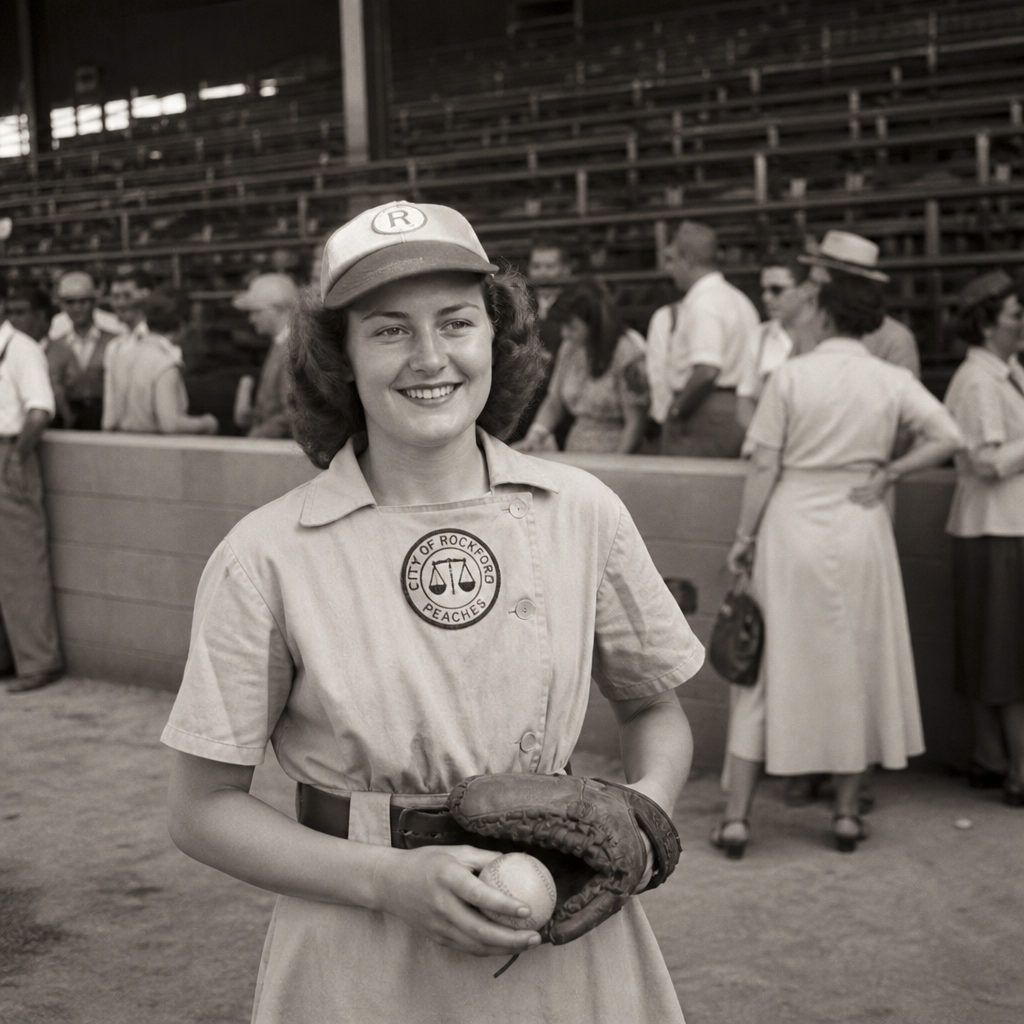
Celebrating women’s contributions to the history of baseball means telling a fuller, more accurate story of the sport itself. Baseball history is often presented through major league milestones, famous pennant races, and iconic men, yet women have shaped the game at every level: on the field, in front offices, in journalism, in scouting, in ownership, in labor advocacy, and in community programs that kept baseball alive across generations. When we talk about women in baseball, we are not discussing a side note. We are discussing players, executives, writers, physicians, umpires, entrepreneurs, and fans whose work changed how the game was played, promoted, governed, and remembered.
In practical terms, women’s contributions to baseball history include participation in early amateur and barnstorming clubs, wartime professional leagues, Negro Leagues ecosystems, youth development, statistical research, broadcasting, and modern leadership roles in Major League Baseball and affiliated organizations. The phrase also covers the cultural labor that often goes uncredited: organizing teams, securing facilities, running scorebooks, advocating for equal access, preserving archives, and building the audience that made baseball sustainable in local communities. I have worked with baseball history materials and community storytelling projects long enough to know that once women are placed back into the record, familiar timelines immediately become richer and more precise.
This matters for three reasons. First, it corrects historical omissions. Second, it gives current players and professionals a lineage, showing that today’s breakthroughs did not appear out of nowhere. Third, it improves how we teach the game. A baseball education that includes women is simply more accurate, and accuracy matters whether you are a student, a journalist, a coach, or a lifelong fan. As a hub article for the miscellaneous side of women in baseball, this guide connects the wide range of contributions that do not fit neatly into a single box but are essential to understanding the sport’s evolution.
Women played baseball long before organized institutions were ready to recognize them
Women have been playing baseball since the nineteenth century, even when newspapers treated their participation as novelty, spectacle, or social experiment. The 1866 Vassar College team is frequently cited because it offers documented evidence of women playing a recognizable form of baseball in an educational setting. Bloomer Girls teams later traveled widely, combining competitive play with entertainment and barnstorming economics. These clubs mattered because they demonstrated demand: women could draw crowds, handle travel, and compete seriously, even if promoters often framed them through gendered marketing.
Early participation also exposed the structural barriers women faced. Access to fields, equipment, coaching, and league membership was inconsistent. Social expectations around femininity shaped uniforms, publicity, and even rules. In many cases, women were allowed to appear in baseball spaces only when their presence could be commercialized or contained. Yet they still built playing traditions. That pattern repeats throughout baseball history: women entered through informal routes, excelled under constraints, and forced institutions to respond later.
Several pioneers stand out. Lizzie Murphy, a first baseman known as the “Queen of Baseball,” played against men and became the first woman known to play in an all-male major league exhibition game in 1922. Toni Stone, Mamie “Peanut” Johnson, and Connie Morgan broke into the Negro Leagues in the 1950s, proving again that elite baseball ability was never confined by gender. Their careers are central, not peripheral, because they reveal how talent persisted despite exclusion from the major league system.
The All-American Girls Professional Baseball League expanded the idea of who baseball was for
The All-American Girls Professional Baseball League, founded in 1943, remains the best-known chapter in the history of women in baseball, but it is often oversimplified. It was not merely a wartime substitute while men served in the military. It was a substantial professional enterprise with paid players, formal schedules, team travel, league administration, and evolving rules that moved from a softball-baseball hybrid toward a game closer to modern baseball. At its peak, the league drew strong attendance across Midwestern cities such as Rockford, Racine, South Bend, and Grand Rapids.
What the league proved was economically significant. Women could sustain a professional baseball product over multiple seasons, create local loyalty, and produce stars whose names mattered to fans. Players such as Dorothy Kamenshek, Sophie Kurys, Dottie Wiltse, and Joan Whitney Payson demonstrated high-level skill in hitting, fielding, baserunning, and strategy. The league’s existence also created jobs for managers, trainers, chaperones, publicity workers, and administrators, showing that women’s baseball history is not only about players.
At the same time, the league reflected the tensions of its era. Players were expected to meet beauty standards, attend charm school, and perform femininity as part of their professional obligations. That requirement did not erase their achievements, but it does show how access was negotiated through cultural compromise. Historians who ignore that tension miss the point. The AAGPBL expanded opportunity while still operating within restrictive social norms, and both realities belong in the historical record.
Black women in baseball history deserve central attention, not occasional mention
Any serious article celebrating women’s contributions to baseball history must give Black women specific and sustained attention. Segregation shaped opportunity at every level, and Black women often faced the combined barriers of racism and sexism. Toni Stone’s 1953 signing with the Indianapolis Clowns was not symbolic window dressing; she was a legitimate professional infielder replacing Hank Aaron on the roster after his contract was sold. Mamie Johnson won games as a pitcher for the Clowns and became one of the few women to play in the Negro Leagues. Connie Morgan also played second base for the Clowns, bringing speed, poise, and baseball intelligence to the infield.
These players were exceptional athletes, but their significance goes beyond individual resilience. They reveal the flexibility and competitive reality of Black baseball institutions, which sometimes made room for talent in ways that white organized baseball would not. They also expose the cost of exclusion. Because major league organizations did not provide equivalent pathways, many Black women with baseball ability never received sustained professional development, reliable compensation, or archival preservation. That is why public history work, museum interpretation, and oral history projects are so important in this subtopic.
Effa Manley deserves equal emphasis. As co-owner and business manager of the Newark Eagles, she was one of the most influential executives in Negro League history and remains the first woman inducted into the National Baseball Hall of Fame. Manley handled contracts, promotion, public relations, and civil rights advocacy with unusual skill. When people ask whether women shaped baseball off the field, her career gives a decisive answer: absolutely, and at the highest strategic level.
Women transformed baseball far beyond playing roles
One reason this miscellaneous hub matters is that many of the most influential women in baseball history worked outside the batter’s box. Owners, executives, scouts, physicians, lawyers, broadcasters, and writers all changed the game’s infrastructure. Ila Borders became widely known as a pioneering pitcher in men’s independent and college baseball, but equally important are women such as Kim Ng, who became the first female general manager in MLB history when the Miami Marlins hired her in 2020 after decades of respected front-office work. Her appointment was historic because it confirmed what insiders already knew: women had long developed the expertise to run baseball operations.
Broadcasting and journalism offer another example. Women who covered baseball were often denied clubhouse access for decades, which materially limited reporting. Pioneers including Claire Smith changed that reality through persistence and professionalism. Smith’s reporting career, recognized by the Baseball Writers’ Association of America with the J.G. Taylor Spink Award, helped redefine who could author baseball’s public narrative. Once women entered these roles in larger numbers, the sport gained better reporting, broader sourcing, and more complete storytelling.
Medical and performance roles have also expanded. Women now serve as athletic trainers, physical therapists, analysts, and team doctors throughout professional and amateur baseball. These positions may seem modern, but they belong in the same longer history of contribution: women repeatedly entered baseball where expertise was needed, then had to prove they belonged despite established bias.
Baseball culture changed because women built institutions, memories, and access points
Baseball is not sustained by games alone. It survives through institutions, archives, youth pipelines, and local traditions, and women have played decisive roles in all of them. In museum work and historical preservation, women archivists, researchers, and educators have recovered photographs, scorecards, scrapbooks, oral histories, and family collections that would otherwise be lost. In my experience, some of the most valuable baseball history does not begin in a formal archive. It begins in a box of clippings preserved by daughters, sisters, widows, librarians, and community volunteers who understood that these stories mattered before major institutions did.
At the grassroots level, women have organized Little League participation, school programs, booster groups, and travel logistics that make baseball possible. This labor is easy to overlook because it is often unpaid or categorized as support work rather than baseball work. That distinction is misleading. If someone secures uniforms, coordinates transportation, raises funds for field maintenance, and recruits players, that person is shaping baseball’s future. The sport’s developmental system depends on these contributions.
| Area of contribution | How women shaped baseball history | Example |
|---|---|---|
| Professional play | Expanded the visible talent pool and challenged exclusionary rules | AAGPBL players; Toni Stone; Mamie Johnson |
| Executive leadership | Directed teams, contracts, scouting, and baseball operations | Effa Manley; Kim Ng |
| Media and storytelling | Documented the game and broadened whose experiences were recorded | Claire Smith and later women broadcasters |
| Youth development | Built participation pathways through schools, clinics, and local leagues | Coaches, organizers, and baseball mothers in community programs |
| Preservation | Saved artifacts and oral histories that corrected the historical record | Museum educators, librarians, and family historians |
This broader lens helps answer a common question: why are women’s contributions to baseball history sometimes hard to see? The answer is not lack of impact. It is that baseball culture has often celebrated visible game action while undervaluing administrative, educational, and memory-making labor. Once you know where to look, women are everywhere in the sport’s development.
Modern baseball is still being reshaped by women, and the pipeline is stronger than many people realize
Today’s conversation about women in baseball is often framed around firsts, and firsts matter. Alyssa Nakken became the first female on-field coach in major league history when she coached for the San Francisco Giants. Rachel Balkovec became the first woman to manage a Minor League Baseball affiliated team with the New York Yankees organization. Veronica Alvarez has contributed as a player, coach, and national team leader. Women’s baseball is also visible internationally through the Women’s Baseball World Cup, governed by the World Baseball Softball Confederation, which has helped standardize elite international competition.
Still, focusing only on headline firsts can obscure the bigger picture. The real story is pipeline growth. MLB’s development programs, Girls Baseball initiatives, youth showcases, and increasing college and amateur opportunities are producing more trained players, coaches, and evaluators. USA Baseball has invested in girls’ identification camps and women’s national team structures, giving talented athletes clearer routes to elite play. That does not mean equity has been achieved. Access remains uneven by geography, income, and institutional support, and softball still absorbs many athletes who might prefer baseball if equivalent opportunities existed.
Even so, progress is measurable. More women are working in player development, biomechanics, analytics, and strength departments than at any previous point in baseball history. Organizations now use technologies such as Hawk-Eye, Rapsodo, and TrackMan across development systems, and women are among the analysts and coaches interpreting that data. The future of women in baseball will not be defined by a single league or symbolic gesture. It will be built through sustained access to training, competition, leadership, and decision-making roles.
How to explore the women in baseball hub more effectively
As a sub-pillar hub, this page works best when it helps readers navigate the topic with context. If you are building knowledge on women in baseball, start with broad historical eras, then move into specific themes: early pioneers, the AAGPBL, Black women in baseball, front-office leadership, media barriers, international competition, and youth participation. That sequence mirrors how historians usually assemble a complete picture, from chronology to institutions to legacy.
It also helps to compare baseball history across levels. Major League Baseball gets the most attention, but important breakthroughs often happened in independent leagues, the Negro Leagues, colleges, amateur clubs, and community programs. Looking only at MLB creates distorted conclusions because MLB did not control every meaningful baseball opportunity. Some of the most important evidence for women’s baseball history lives outside official major league records.
Use reliable sources as you continue through this hub. The National Baseball Hall of Fame, Society for American Baseball Research, Negro Leagues Baseball Museum, USA Baseball, and established newspaper archives are especially useful. Oral histories are valuable too, but they should be checked against contemporaneous reporting, scorebooks, and team documents when possible. That combination of archival evidence and lived testimony usually produces the clearest account.
Women’s contributions to the history of baseball are broad, foundational, and impossible to reduce to a novelty chapter. Women played the game early, sustained professional leagues, starred in barnstorming and Negro League contexts, ran teams, reported stories, preserved archives, developed young athletes, and now hold leadership positions once considered unreachable. When these contributions are placed together, baseball history looks less like a closed tradition and more like a contested, evolving culture shaped by many kinds of expertise.
The main benefit of studying this subject is clarity. You understand the sport better when you see who actually built it. You also gain a more useful framework for following current developments, from girls baseball programs to front-office hiring and international competition. This hub is designed to support that deeper view by connecting the miscellaneous but essential threads that make women in baseball such a rich field of study.
If you want to keep exploring, move next into the individual articles linked from this women in baseball section and follow one strand at a time. Start with the pioneers, then the leagues, then the modern leaders, and the larger history will come into focus.
Frequently Asked Questions
Why is it important to celebrate women’s contributions to the history of baseball?
Celebrating women’s contributions to baseball matters because it gives the sport a fuller, more accurate history. Baseball is often remembered through major league championships, legendary male players, and famous moments on the field, but that version of the story leaves out many of the people who helped build, sustain, and expand the game. Women have influenced baseball as players, executives, owners, writers, scouts, organizers, advocates, and educators. Their work shaped how teams operated, how fans understood the sport, and how baseball remained connected to communities across generations.
Recognizing these contributions also changes how we think about baseball itself. It shows that the game was never developed by one type of person in one type of role. Women helped preserve baseball culture during times of social change, opened professional pathways in places where exclusion was once the norm, and challenged long-standing assumptions about who belongs in the sport. When their achievements are included, baseball history becomes richer, more honest, and more representative of the people who actually made the game what it is today.
What roles have women played in baseball throughout history?
Women have played important roles in nearly every part of baseball history. On the field, women have participated as players in organized leagues, barnstorming teams, amateur competition, and exhibitions that demonstrated both skill and public interest in women’s baseball. Off the field, women have had a profound impact in front offices, ownership groups, scouting departments, broadcasting, journalism, public relations, player development, and community outreach. They have also contributed through administrative leadership, historical preservation, and labor advocacy connected to fairness, access, and professional opportunity within the sport.
Just as important, many women sustained baseball at the local and cultural level. They ran youth programs, organized community events, supported teams financially and socially, documented baseball stories as reporters and historians, and helped pass the game from one generation to the next. This broad range of influence shows that women’s baseball history is not limited to a few exceptional individuals. It is woven into the everyday life of the sport, from neighborhood diamonds to major professional institutions.
Did women only contribute to baseball during special periods like wartime?
No. Wartime often receives the most attention because it created highly visible opportunities for women in professional baseball, but women’s contributions were never confined to a single era. Focusing only on wartime can unintentionally suggest that women stepped in temporarily and then disappeared, which is not true. Women were involved in baseball before those years, during them, and long after them in evolving and often underrecognized ways.
Across different periods, women continued to shape baseball through participation, leadership, media coverage, business operations, and advocacy for inclusion. Even when opportunities were limited by social expectations or institutional barriers, women still found ways to influence the sport and keep its culture alive. Understanding this continuity is essential because it reveals women not as occasional exceptions in baseball history, but as consistent contributors whose presence has been part of the game all along.
How have women influenced baseball beyond playing on the field?
Women have had a major impact on baseball beyond playing by helping define how the sport is run, covered, and remembered. In front offices and executive roles, women have contributed to team operations, player evaluation, business strategy, marketing, and long-term organizational planning. In journalism and broadcasting, women have informed fans, documented milestones, and expanded public understanding of the sport with reporting, analysis, and storytelling that shaped baseball’s cultural reach.
Women have also influenced baseball through scouting, legal and labor work, education, and community engagement. They have advocated for fairer professional environments, opened doors for future generations, and built programs that connect young people to the game. In many cases, their work has strengthened baseball not only as a competition, but as a civic and cultural institution. This wider perspective is especially important because it reminds readers that baseball’s history is not only about who swung the bat or threw the pitch. It is also about who built the systems, protected the stories, created opportunities, and kept the sport meaningful within everyday life.
How can fans and readers better honor women’s place in baseball history today?
One of the best ways to honor women’s place in baseball history is to seek out a broader range of stories and treat them as central, not secondary, to the sport. Fans can read biographies, visit museums and archives, support documentaries and historical projects, and learn about women who contributed as players, executives, journalists, owners, and advocates. Paying attention to local baseball history can also be valuable, since many important contributions happened in communities, schools, and regional programs that do not always receive national attention.
It also helps to support the present as a way of respecting the past. That means recognizing women working in baseball today, encouraging inclusive opportunities in youth and professional settings, and challenging outdated narratives that frame women as outsiders to the game. When fans, educators, and media creators consistently include women in baseball conversations, they do more than correct the record. They help build a future in which the history of baseball is told with greater accuracy, respect, and depth.