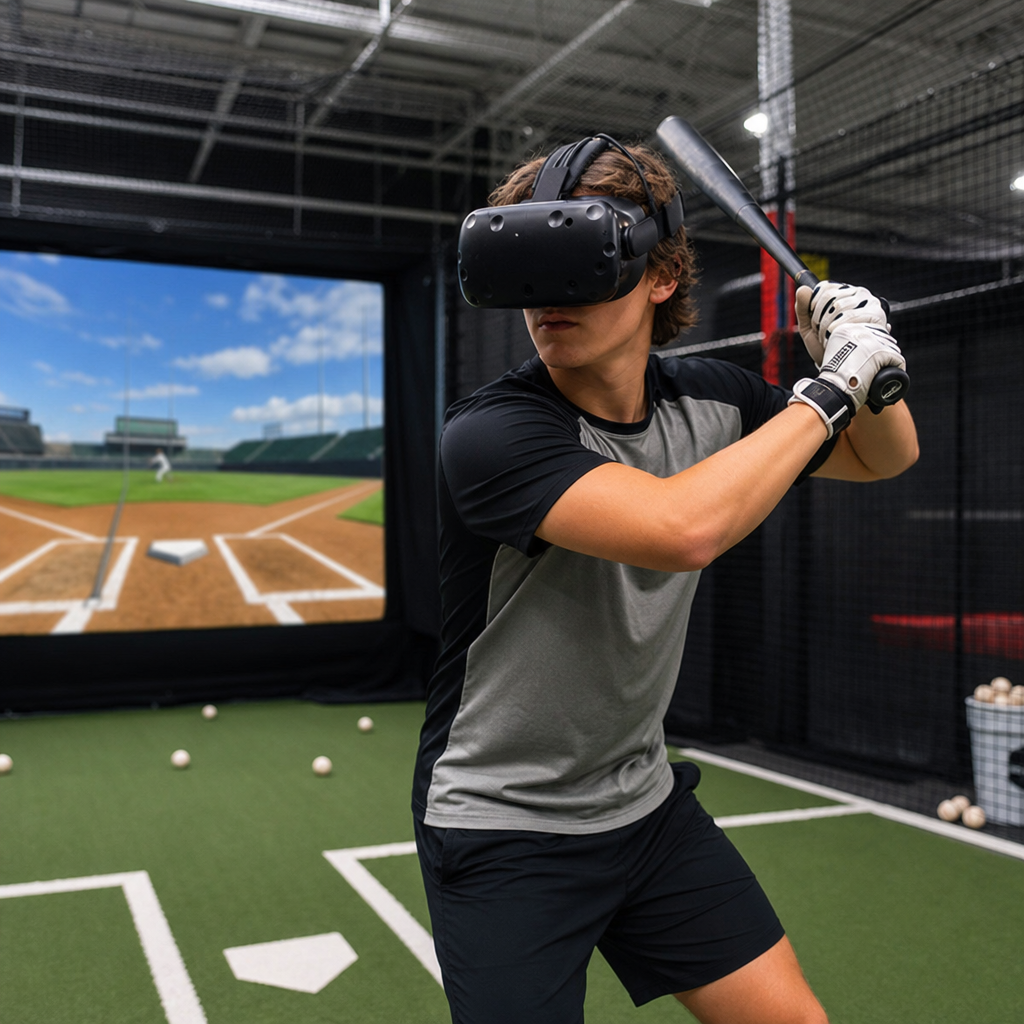
Virtual reality is changing baseball training from a video review exercise into an immersive, repeatable practice environment where hitters, pitchers, catchers, and fielders can rehearse game situations without waiting for live reps. In baseball, virtual reality usually means a headset-based simulation that places a player inside a digitally reconstructed batter’s box, mound, or defensive alignment, often using real pitch data, motion capture, and stadium visuals. Augmented reality overlays digital information onto the real world, while mixed reality blends both; those tools matter too, but virtual reality has become the clearest example of how technology’s impact on the game now reaches daily drills, player development, scouting, coaching communication, and injury management.
I have seen the difference between traditional cage work and immersive pitch-recognition sessions firsthand: players who struggle to describe what they missed on video can often identify the problem after a few headset sessions because the timing, angle, and decision pressure feel closer to competition. That practical value explains why professional organizations, college programs, and private academies have invested in systems from WIN Reality, Trajekt Arc, and custom club-built platforms. The appeal is straightforward. Baseball development is constrained by time, arm health, roster limits, weather, and access to quality competition. A virtual system can create hundreds of swings against a specific release point, rehearse defensive reads off the bat, or let a catcher study a baserunner’s jump tendencies before a series begins.
As a hub within the broader discussion of innovations and changes in baseball, this article connects training technology to the larger ecosystem of modern player development. The same forces driving bat sensors, Hawkeye tracking, biomechanical analysis, pitch design labs, and data-informed coaching also drive virtual reality adoption. The central question is not whether technology belongs in baseball; that debate is over. The real question is where virtual reality delivers measurable value, where it falls short, and how teams should integrate it with field work instead of treating it like a gimmick. Understanding that balance matters for coaches building smarter drills, parents evaluating training programs, and players trying to turn information into better decisions at game speed.
What Virtual Reality in Baseball Drills Actually Does
Virtual reality baseball drills are designed to train perception, decision-making, and situational awareness in ways standard repetition cannot always match. A hitter can stand in a simulated batter’s box against a left-handed reliever with a low slot and face twenty sliders that begin on the same tunnel as a fastball. A pitcher can review a virtual model of opposing hitters and practice sequence planning. An infielder can rehearse first-step reactions, pre-pitch positioning, and double-play feeds from game-like camera perspectives. The technology does not replace physical mechanics work; it complements it by compressing experience. Instead of waiting weeks to see a rare pitch shape or a specific game situation, players can encounter it immediately and repeatedly.
The strongest use case is pitch recognition. Hitting coaches have long known that swing quality depends on reading the ball early, identifying spin, and deciding in milliseconds whether to attack. Traditional drills like colored-ball recognition, machine work, and film study help, but virtual reality adds representative design. The release point, ball flight, count, handedness, and stadium background can all be modeled to approximate real competition. Systems can import data from TrackMan, Rapsodo, and Hawkeye, letting players train against realistic velocity bands, induced vertical break profiles, and horizontal movement patterns. When done well, that specificity improves transfer because the brain is not just seeing generic pitches; it is learning the exact visual cues tied to actual opponents.
Coaches also use virtual reality because it reduces wear and tear. A team can give hitters fifty high-leverage decision reps without taxing a live arm. A pitcher returning from injury can study sequencing and batter reactions while throwing less volume. During congested schedules, headset work preserves preparation when batting practice time is short. This efficiency has become especially valuable in player development systems where staff must individualize plans across large groups. A prospect with chase issues can train edge recognition. A catcher can rehearse receiving decisions and game-calling logic. A baserunner can study leads, pickoff timing, and secondary breaks. The common thread is that virtual drills target the cognitive side of performance, the part that often separates tools from production.
Where Virtual Reality Fits in the Modern Baseball Technology Stack
Virtual reality makes the most sense when viewed alongside the rest of baseball’s technology stack. Player development departments already rely on bat sensors such as Blast Motion, ball-tracking tools such as Rapsodo and TrackMan, markerless motion capture, force plates, and optical systems like Hawkeye. Each tool answers a different question. Bat sensors describe swing speed, attack angle, and connection. Ball-tracking systems explain pitch shape, exit velocity, and launch characteristics. Motion capture analyzes kinematics. Virtual reality answers a separate but equally important question: what did the player perceive, and how quickly did he act on it?
That distinction matters because baseball is not solved by mechanics alone. A swing can look efficient in the cage and still fail in games if the hitter recognizes spin late or freezes on borderline pitches. I have worked with players whose batting practice metrics improved for weeks without corresponding game results; once we paired those drills with decision-training sessions, the transfer improved because the athlete practiced seeing the right information sooner. That is why the best organizations do not isolate virtual reality. They connect it to scouting reports, biomechanics, and objective performance data. If a hitter expands against sweepers below the zone, the training plan can combine video, bat path work, and targeted virtual pitch tracking. Technology becomes useful when each tool informs the next step.
| Technology | Primary Use | Best Question It Answers | Example in Training |
|---|---|---|---|
| Virtual reality | Perception and decisions | Did the player read and choose correctly? | Hitter tracks sliders from a specific pitcher |
| Hawkeye/TrackMan | Ball flight and outcomes | What did the pitch or batted ball do? | Analyze ride, sweep, exit velocity, launch angle |
| Rapsodo | Pitching and hitting feedback | How efficient was the pitch or contact? | Measure spin efficiency and contact quality |
| Motion capture | Body movement analysis | How did the body create the action? | Identify pelvis rotation timing in a swing |
| Blast Motion | Bat sensor metrics | What was the bat doing? | Track attack angle and rotational acceleration |
As this hub for technology’s impact on the game expands into related articles, those tools will keep reappearing because they are interdependent. Virtual reality links especially well with video analysis, wearables, automated scouting databases, and machine-fed training environments. It helps translate raw data into game-like understanding. Numbers tell a player that an opposing fastball averages 18 inches of induced vertical break; immersion lets him experience what that fastball looks like from release to decision point. That bridge between analytics and feel is one reason teams increasingly place virtual reality inside hitting labs rather than treating it as a separate novelty station.
Applications for Hitters, Pitchers, Catchers, and Fielders
Hitters remain the most obvious beneficiaries. A well-built virtual reality hitting program trains swing decisions, timing, and opponent-specific preparation. Before a series, a batter can face digital versions of likely starters and key bullpen arms. During development cycles, younger players can train against premium velocity they rarely see in person. This matters because the jump between levels is often a visual shock as much as a physical one. High fastballs that look hittable on video can beat a hitter simply because the decision window is shorter than expected. Virtual reps narrow that gap by exposing players to realistic speed and shape before they encounter it live.
Pitchers benefit in a different way. They can use virtual environments to understand hitter behavior, test sequencing concepts, and improve game planning. For example, a pitcher with a four-seam fastball and cutter may review how his release slot appears to opposite-handed hitters and examine whether his pitches tunnel effectively. Some organizations pair this with scouting heat maps and swing-take profiles, helping pitchers rehearse count-specific choices. There is also value in mental skills. Young pitchers often rush when traffic builds; recreating stressful innings in a headset can support breathing routines, tempo control, and decision discipline without adding physical workload.
Catchers may be the most underrated users of the technology. Receiving and throwing are physical skills, but game management is deeply cognitive. A catcher can study hitters’ swing decisions, rehearse sequencing with virtual pitcher arsenals, and practice anticipating dirt-ball blocks or bunt reads. Pop-time training still happens on the field, yet virtual preparation improves the catcher’s ability to process a full inning: who runs, who chases, who takes first-pitch strikes, and how a pitcher’s miss pattern changes under pressure. That is actionable baseball intelligence, not abstract data.
Fielders and baserunners also gain value when simulations are designed well. Outfielders can read balls off the bat from realistic angles, especially in parks with difficult lighting or wall configurations. Infielders can rehearse positioning and first-step reactions against hitter tendencies. Baserunners can study pitcher holds, left-handed move variations, and delayed-steal opportunities. These are not headline-grabbing uses, but they reflect where technology’s impact on the game becomes most practical: improving anticipation in moments that decide innings.
Benefits, Limits, and What Good Implementation Looks Like
The benefits of virtual reality in baseball drills are real and measurable when expectations are realistic. First, it increases repetition without corresponding physical stress. Second, it supports individualized training by targeting specific pitch types, tendencies, and situations. Third, it improves communication because coaches can show rather than merely tell. Fourth, it creates cleaner feedback loops. If a player repeatedly misidentifies a pitch family or expands in one zone, that pattern appears quickly. In my experience, players often buy into the process once they see a direct connection between the simulation and a game mistake they remember vividly.
Still, limitations matter. Headset training does not replicate the full kinesthetic demands of live baseball. Depth perception, swing intent, visual comfort, and emotional stakes differ from competition. Some players adapt to the technology immediately; others need short sessions to avoid fatigue or motion discomfort. There is also a design problem. Low-quality simulations can create poor transfer if pitch shapes, release cues, or temporal timing are inaccurate. More data is not automatically better. Without a clear coaching objective, players can drown in information and mistake novelty for progress.
Good implementation follows a simple rule: pair immersive training with on-field execution and objective review. A hitter might complete a ten-minute session focused on layoff decisions against glove-side breaking balls, then move to machine work reproducing a similar visual window, then review swing decisions on video. A pitcher might build a game plan in virtual scouting, throw a constrained bullpen around that plan, and compare results to command metrics. The best programs use short, focused sessions, not marathon headset blocks. They track whether chase rate, hard-contact rate, first-step efficiency, or swing-take decisions actually improve. If performance does not move, the drill design changes.
Cost and access are additional considerations. Professional clubs can build integrated labs; many youth programs cannot. That does not mean the technology is irrelevant outside the highest levels, but buyers should evaluate software quality, data compatibility, coaching support, and practical use frequency before investing. A system that sits idle becomes expensive furniture. A system tied to a weekly development process becomes a force multiplier.
The Future of Technology’s Impact on the Game
Virtual reality will not be the final stage of baseball training technology, but it is already a foundational one. The next wave is likely to involve deeper integration with biometric feedback, automated scouting databases, and more adaptive simulations that change based on a player’s responses in real time. As computing improves, drills will become more individualized, with systems adjusting pitch mix, defensive alignment, and situational pressure based on the user’s history. That progression fits the larger direction of the sport: more precise development, more efficient communication, and tighter links between analytics and skill acquisition.
For anyone following innovations and changes in baseball, the key takeaway is simple. Technology’s impact on the game is greatest when it helps players make better decisions faster, with less wasted effort and clearer feedback. Virtual reality does exactly that when coaches use it with intent. It sharpens pitch recognition, supports scouting preparation, reduces unnecessary physical load, and turns abstract data into felt experience. It is not magic, and it does not replace batting practice, bullpens, or defensive reps. It makes those reps smarter. If you are building a modern baseball development plan, start by identifying one decision problem you need to solve, then use virtual reality as part of a connected training system rather than a standalone attraction.
Frequently Asked Questions
1. How is virtual reality used in baseball training?
Virtual reality in baseball training places players inside a headset-based simulation that recreates game situations in a controlled, repeatable way. Instead of only watching video after a practice or game, athletes can step into a digital batter’s box, stand on a virtual mound, receive pitches as a catcher, or react as an infielder or outfielder. These environments are often built using real pitch-tracking data, motion capture, stadium visuals, and situational game scenarios, which makes the experience far more interactive than traditional film study.
For hitters, VR can be used to track pitch type, speed, release point, and strike-zone location without the physical wear of taking hundreds of swings. Pitchers can rehearse sequencing, mechanics, and decision-making against simulated hitters. Catchers can sharpen receiving, framing reads, and game-calling awareness, while fielders can improve first-step reactions, positioning, and situational recognition. Coaches also use VR to expose players to specific opponents, allowing them to recognize tendencies and rehearse likely in-game situations before they ever step on the field.
One of the biggest advantages is repetition. Live reps are limited by time, staffing, fatigue, and logistics. Virtual reality allows players to revisit the same pitch, at-bat, or defensive look as many times as needed. That means training can become more deliberate, more personalized, and more efficient, especially when the goal is improving recognition, timing, and decision-making rather than simply accumulating volume.
2. What are the main benefits of virtual reality baseball drills compared with traditional practice?
The biggest benefit of virtual reality baseball drills is that they let players train the mental and perceptual side of the game with high repetition and low physical stress. In traditional practice, a hitter may only face a limited number of quality pitches in a cage or batting practice session. In VR, that same hitter can see dozens or even hundreds of game-like pitches in a short period of time, learning to identify spin, velocity, release height, and location patterns without overloading the body. That is especially valuable during a long season when preserving energy matters.
VR also makes training more specific. A coach can build drills around left-handed breaking balls, elevated fastballs, two-strike counts, bunt defenses, stolen-base situations, or a particular opposing pitcher’s arsenal. Traditional drills often have to simplify game conditions because of practical constraints. Virtual simulations can recreate those conditions on demand, giving players more realistic decision-making opportunities. This kind of targeted preparation helps bridge the gap between practice and competition.
Another major advantage is consistency. Live practice varies based on the quality of the thrower, the pace of the session, and available resources. A virtual environment can deliver the same scenario repeatedly, which is ideal for skill development and progress tracking. It also creates useful data. Many systems record reaction times, swing decisions, gaze behavior, timing, and recognition performance, giving coaches measurable feedback instead of relying only on observation. Traditional training still matters, but VR adds a layer of precision and repeatability that is difficult to match on the field alone.
3. Can virtual reality help baseball hitters improve timing and pitch recognition?
Yes, and this is one of the strongest use cases for virtual reality in baseball. Hitting is heavily dependent on visual processing, anticipation, and split-second decisions. A batter must read the pitcher’s delivery, pick up the ball early, identify pitch type, judge location, and decide whether to swing in a very small time window. VR allows hitters to rehearse that entire sequence repeatedly, which can improve how quickly and accurately they process what they see.
Pitch recognition training in VR is especially valuable because it can simulate realistic release points, pitch tunnels, and ball flight patterns using actual data. Hitters can practice identifying fastballs, sliders, curveballs, changeups, and cutters from specific pitchers or pitcher profiles. They can also work on approach-based drills, such as laying off low breaking balls, attacking first-pitch fastballs, or handling two-strike sequences. Even when no full swing is taken, the visual training alone can sharpen recognition and decision quality.
Timing also benefits because hitters can calibrate their load and move sequence to game-like tempo. The more often a player sees realistic velocity and movement in a context that feels competitive, the more prepared they may be when facing similar pitches live. That said, VR is best viewed as a complement rather than a total replacement for physical hitting work. It can train eyes, brain, and approach exceptionally well, but players still need live swings, contact feedback, and physical mechanics work to translate those gains fully into on-field performance.
4. Is virtual reality useful only for hitters, or can pitchers, catchers, and fielders benefit too?
Virtual reality is useful across nearly every position in baseball, not just for hitters. Pitchers can use VR to study how their pitch shapes and sequences play against different hitter types, rehearse attacking zones, and improve situational planning. For example, a pitcher can work through simulated at-bats with runners on base, practice getting ahead in counts, or test different sequencing strategies against left-handed and right-handed hitters. This kind of rehearsal can strengthen game planning and sharpen execution under pressure.
Catchers can benefit in several ways as well. VR can support pitch recognition from the receiving perspective, improve reactions to blocked balls, and help with game management scenarios. Since catchers are heavily involved in reading hitters, calling pitches, and responding to base-runner threats, immersive simulations can build awareness that goes beyond simple drill work. They can rehearse bunt coverages, force plays at the plate, first-and-third situations, and communication responsibilities without needing a full team on the field.
Fielders also gain value from VR, especially in areas like positioning, reaction time, and situational decision-making. Infielders can work on reads off the bat, double-play feeds, bunt responsibilities, and throw-selection choices. Outfielders can train route recognition, first-step reactions, wall awareness, and cut-off decisions. Because many defensive mistakes come from hesitation or poor reads rather than lack of effort, simulated reps can help players become more instinctive. In short, VR is not limited to one skill group; it is a versatile tool for baseball IQ, visual processing, and situational preparation across the roster.
5. Does virtual reality replace live baseball practice, or is it best used as a supplement?
Virtual reality is best used as a supplement to live baseball practice, not a complete replacement. Baseball is still a physical sport that depends on mechanics, strength, timing, feel, and real-world adaptation. Hitters need to feel the bat move through the zone and make contact. Pitchers need to throw from an actual mound and manage their bodies through real deliveries. Fielders need to move on dirt and grass, judge real hops, and make throws under game-speed pressure. VR cannot fully reproduce all of those physical and sensory demands.
Where virtual reality excels is in extending and sharpening practice beyond the limits of live reps. It can prepare a player mentally before cage work, reinforce lessons after a bullpen or game, and allow extra repetition without adding physical wear. For injured players, it can also be a valuable way to stay engaged with timing, recognition, and tactical preparation while full physical activity is limited. For teams managing heavy schedules, travel demands, or weather constraints, VR offers a practical way to maintain skill development when full on-field work is not possible.
The most effective programs usually blend VR with traditional coaching, video review, strength work, and live practice. In that model, virtual reality becomes part of a complete player development system. It helps players see more, understand more, and prepare more efficiently, while live training ensures those gains translate into actual performance. Used that way, VR is not a gimmick or novelty. It is a high-value training tool that can make baseball practice smarter, more targeted, and more game-ready.