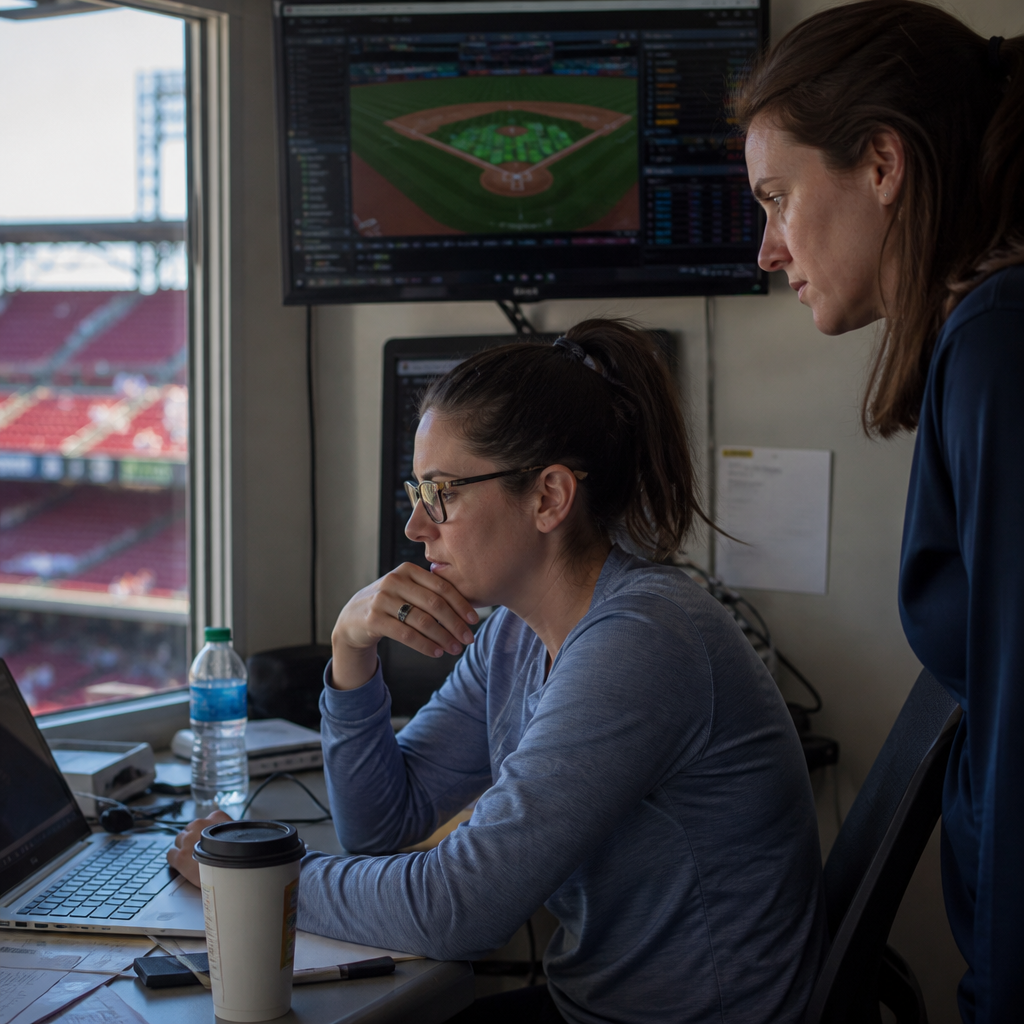
Women’s contributions to baseball strategy and analytics have reshaped how teams evaluate talent, prevent injuries, design game plans, and communicate decisions across front offices and clubhouses. In baseball, strategy refers to the choices that influence winning on the field and building a roster off it, from defensive positioning and bullpen sequencing to draft models and player development plans. Analytics is the disciplined use of data, video, biomechanics, and probability to answer baseball questions more accurately than intuition alone. This topic matters because the modern game is built on information, and women have been central to that shift even when their work was overlooked. I have seen this firsthand in baseball operations settings where the best ideas gained traction not because of title or background, but because the analysis was precise, testable, and useful to coaches under pressure. As a hub within the broader Women in Baseball conversation, this article connects the miscellaneous but essential ways women have influenced competitive decision-making, research methods, communication systems, and organizational culture.
The history is broader than a list of firsts. Women have served as analysts, strategists, researchers, coaches, medical specialists, and executives who turned raw information into competitive advantage. Their contributions span amateur scouting databases, major league advance reports, pitch design labs, wearable sensor interpretation, and performance science programs tied to return-to-play timelines. Some worked publicly in high-profile roles, while others influenced outcomes behind the scenes by standardizing reports, improving model quality, or translating technical findings into language players trusted. Understanding these contributions gives fans a more accurate view of baseball’s evolution and gives organizations a clearer map for how good strategy actually gets built: through interdisciplinary teams, rigorous evidence, and communication strong enough to survive the speed of a season.
How Women Changed Baseball Decision-Making
Women entered baseball strategy and analytics through multiple pathways, including economics, statistics, engineering, medicine, software development, video analysis, and traditional baseball operations. That variety mattered. Baseball problems are rarely isolated. A lineup optimization question can overlap with player fatigue, platoon exposure, weather, travel, and the opposing bullpen’s usage pattern. In front offices I have worked around, the strongest analysts were the ones who could move from a spreadsheet to a baseball conversation without losing accuracy. Women in these roles helped normalize that standard.
Kim Ng is often discussed for executive leadership, but her significance also lies in process discipline. Long before becoming a general manager, she built a reputation for detailed roster management, rule knowledge, and transaction strategy. Those are strategic skills, not administrative footnotes. Similarly, Rachel Balkovec’s background in strength and conditioning, biomechanics, and hitting development illustrates how strategy is no longer separate from applied performance science. Bianca Smith’s coaching path, grounded in player development and communication, reflects another truth of analytics: information only matters when athletes can use it during competition.
Analytical influence also came through coding, model maintenance, and information design. Baseball operations departments need clean data pipelines, consistent definitions, and report formats coaches can absorb quickly. Women contributed materially to these systems, especially as clubs expanded research and development staffs after the PITCHf/x era and later with Statcast. The result was not symbolic inclusion. It was better decision infrastructure.
Key Strategic Areas Shaped by Women
Women have influenced nearly every major analytical layer of baseball, from pregame planning to long-term player valuation. The impact is easiest to understand by looking at the specific baseball questions teams try to answer and the methods used to answer them.
| Strategic area | Typical question | Analytical methods | Practical impact |
|---|---|---|---|
| Advance scouting | How should we attack this lineup or pitcher? | Heat maps, swing decisions, pitch usage trends, video tagging | Clearer game plans for hitters, pitchers, and catchers |
| Defensive positioning | Where does a batter most often hit the ball by count and pitch type? | Spray charts, expected contact models, batted-ball classifications | More outs converted on balls in play |
| Player development | Which adjustment will most improve performance? | Bat tracking, biomechanical assessments, high-speed video | Targeted training plans and faster skill gains |
| Health and workload | How much stress can a player handle safely? | Force plate data, recovery metrics, acute-chronic workload models | Lower injury risk and smarter return-to-play timing |
| Roster construction | Which players provide undervalued production? | Projection systems, aging curves, market comparisons | Better contracts, trades, and depth planning |
Each area requires both technical fluency and baseball fluency. An analyst may identify that a hitter chases elevated fastballs after seeing soft stuff below the zone, but that insight must be translated into a sequencing recommendation the pitching coach and catcher trust. Many women excelled in that translation layer, which is one reason their influence expanded as teams became more information-dense. Baseball does not reward analysis that sits in a dashboard unread. It rewards analysis that changes behavior in the cage, bullpen, video room, and dugout.
Notable Figures and What Their Work Represents
No single article can name every woman who shaped baseball strategy and analytics, but several figures illustrate the range of contributions. Kim Ng represents command of roster rules, organizational process, and executive decision-making at the highest level. Her career with the White Sox, Yankees, Dodgers, MLB, and Marlins showed that strategic authority includes labor rules, waiver timing, option management, international considerations, and long-term roster architecture. Those details often determine whether a club preserves depth over a six-month season.
Rachel Balkovec represents the convergence of player development, biomechanics, and communication. Her work demonstrated that mechanical instruction is strongest when informed by objective measurement but delivered in athlete-centered language. That matters because players do not compete in technical jargon. They compete with simple cues built from deeper analysis. When an instructor can connect force production, movement efficiency, and bat path to a practical swing thought, analytics becomes performance.
Sarah Gelles, now with the Houston Astros after work in the commissioner’s office and with the Baltimore Orioles, represents another important dimension: translating policy, operations, and analytical thinking into coordinated baseball decisions. Jenny Cavnar and other women in broadcast have also contributed indirectly to baseball literacy by explaining strategic concepts such as pitch tunneling, leverage index, expected outcomes, and defensive alignment in accessible language. Public understanding shapes internal acceptance more than teams admit.
There are also women in sports science, orthopedic medicine, nutrition, and performance research whose names are less visible but whose work alters strategy every day. A medical director refining throwing progression benchmarks affects bullpen availability. A performance analyst validating sleep and travel recovery protocols affects lineup decisions. A nutrition specialist helping a player sustain strength through August affects power output and injury resilience. Baseball strategy is now distributed across specialties, and women have been essential in building that network.
How Analytics, Scouting, and Coaching Now Intersect
One of the biggest changes in baseball has been the collapse of old boundaries between scouting, coaching, and analytics. Years ago, clubs often treated scouts as eyes, coaches as instructors, and analysts as model builders. That division no longer works. Effective organizations ask all three groups to challenge each other and align around evidence. Women helped accelerate this integration because many entered the sport from interdisciplinary backgrounds and were comfortable moving between domains.
Consider pitch design. A team might use Hawk-Eye tracking, Edgertronic cameras, and Rapsodo data to evaluate spin axis, induced vertical break, seam effects, and release characteristics. But the strategic question is not simply whether a slider has good shape. It is whether that slider pairs effectively with the pitcher’s fastball, fits the target zone profile, can be commanded consistently, and remains healthy for the arm over time. Solving that requires analysts, coaches, and medical staff to share a common framework. Women working in research, player development, and health performance have been part of that shared framework across professional and college baseball.
The same is true for amateur evaluation. Scouting reports now incorporate motion capture, exit velocity history, swing decisions, and biomechanical risk factors alongside makeup, competition level, and positional projection. The best departments do not replace human judgment with models; they improve human judgment with better evidence. That balance is where many women made durable contributions, especially in report design, cross-checking protocols, and quality control.
Barriers, Progress, and the Cost of Being Overlooked
Progress has been real, but barriers have also been persistent. Women in baseball strategy and analytics have often faced credibility tests that male peers did not, especially in clubhouses and on-field environments where authority has historically been coded as masculine. They have dealt with under-recognition, narrower hiring pipelines, fewer mentors, and the burden of representing more than themselves in every room. Those obstacles matter because they affect retention, not just access.
From an organizational perspective, overlooking women is not merely unfair; it is inefficient. Baseball departments that restrict who gets heard reduce the number of quality hypotheses they can generate and test. In practical terms, that can mean slower adoption of useful technology, weaker communication between departments, and blind spots in player care. Diverse staffs do not guarantee good decisions, but homogeneous ones often miss obvious questions. I have watched meetings improve when someone with a different training background challenged a familiar assumption about player value or injury risk. Better strategy usually starts there.
MLB has increased internships, fellowships, and visibility for women in baseball operations, and more teams now employ women in research, player development, coaching, and health performance. Yet representation remains uneven, especially in senior baseball decision roles. The next step is not symbolic hiring. It is building repeatable promotion pathways, mentorship networks, and evaluation standards that reward actual impact.
Why This Hub Matters for the Women in Baseball Topic
As a miscellaneous hub under Women in Baseball, this page matters because strategy and analytics cut across every other subtopic. Front office leadership, coaching, sports science, broadcasting, medicine, scouting, and player development all meet here. If another article focuses on women executives, this hub connects that work to roster modeling and transaction strategy. If another article covers women coaches, this page explains how data and teaching intersect. If another article examines women in sports medicine, this hub shows how health data affects in-game choices and season planning.
That connective role mirrors how baseball organizations actually function. Winning clubs do not separate information into neat silos for long. They integrate it into common decision cycles: prepare, execute, review, adjust. Women’s contributions to baseball strategy and analytics are therefore not a niche side story. They are part of the operating system of the modern game. For readers exploring Women in Baseball, this page provides the broad framework needed to understand how influence travels from a report, model, or lab session to a draft board, batting order, or postseason matchup plan.
The central lesson is simple: when women have been given access to baseball’s hardest problems, they have solved them in ways that improved performance, sharpened strategy, and modernized organizations. Their impact is visible in player development plans that are more individualized, in scouting processes that are more evidence-based, in medical decisions that are more precise, and in front offices that treat information as a competitive asset. Baseball is smarter today because women helped make it smarter.
For fans, students, and professionals, the benefit of studying this history is practical as well as corrective. It clarifies how modern baseball works and highlights the skills that matter now: statistical reasoning, communication, video interpretation, biomechanical literacy, and decision-making under uncertainty. It also shows where the sport still needs progress. Read the related Women in Baseball articles, follow the careers of women shaping teams now, and use this hub as a starting point for understanding the people behind the game’s best strategic ideas.
Frequently Asked Questions
How have women influenced modern baseball strategy and analytics?
Women have played a meaningful role in expanding how baseball organizations think about winning, both on the field and in the front office. Their contributions have helped teams move beyond older habits such as relying only on traditional scouting impressions or broad statistics and toward more integrated decision-making that combines data, video review, biomechanics, probability, and player-specific context. In practice, that has shaped everything from defensive alignments and bullpen usage to draft strategy, player development systems, and risk management. Women working in baseball operations, research and development, coaching, sports science, and performance departments have helped create frameworks that make strategy more precise, repeatable, and evidence-based.
One of the most important areas of influence has been interdisciplinary thinking. Strong baseball strategy today rarely comes from a single source. It often comes from analysts, coaches, medical staff, player development personnel, and decision-makers working together to answer practical questions: Which pitch mix gives this pitcher the best chance to succeed? Which swing change can improve contact quality without increasing injury risk? Which defender should be shaded a few steps differently against a certain hitter? Women have been part of building and refining those collaborative systems, helping clubs translate complex information into choices that players and staff can actually use. That bridge between numbers and baseball application is a major reason analytics has become central to modern strategy rather than a separate, abstract department.
Women have also influenced the communication side of analytics, which is often overlooked but essential. Data only matters if it changes behavior in useful ways. Presenting information clearly to coaches, executives, and players requires trust, timing, and context. Women in strategy and analytics roles have helped organizations improve how insights are explained, challenged, and applied, making analytical work more actionable across the clubhouse. Their impact is not limited to producing models; it includes shaping the culture that allows better strategic decisions to take hold.
What kinds of strategic decisions in baseball are affected by analytics work led or supported by women?
The scope is broad because baseball strategy touches nearly every part of competition and roster construction. On the field, analytics informs decisions such as defensive positioning, catcher game-calling preparation, pinch-hitting matchups, base-running aggression, and bullpen sequencing. For example, a team might use historical tendencies, pitch movement data, and contact profiles to determine the best way to attack a lineup inning by inning. Women working in analytical and strategic roles contribute to building the models, reports, and game-planning systems that support those calls. Their work can help a coaching staff understand not just what tends to happen, but why a certain plan gives the club a better chance to win in a specific game state.
Off the field, the influence is equally significant. Teams rely on strategy and analytics in the draft, international scouting, trades, free agency, and player development. That means evaluating amateur players with projection models, identifying underappreciated skills in professional players, estimating injury risk, and deciding where development resources should be invested. Women contributing in these areas have helped clubs improve how they identify talent, compare players across leagues and levels, and plan for long-term roster value. A strategic decision might involve whether to pursue a power hitter with swing-and-miss concerns, convert a starter into a reliever, or redesign a minor leaguer’s pitch arsenal. Analytics helps quantify those choices, and women have been central to the processes that turn raw information into roster decisions.
Another major category is performance optimization. This includes using biomechanics, wearable technology, force-plate data, high-speed video, and recovery metrics to support healthier and more effective players. Strategic value comes from knowing when to push development, when to adjust workloads, and when to alter mechanics or training plans. Women in baseball performance and analytics settings have helped connect these measurements to practical coaching decisions, improving not only individual outcomes but also organizational planning. In that sense, their work affects both daily tactics and the broader architecture of a winning team.
Why is women’s participation in baseball analytics important for the future of the game?
Women’s participation matters because better baseball decisions come from broader expertise, stronger collaboration, and a wider range of perspectives applied to the same competitive problems. Baseball strategy is not a static formula; it evolves as teams learn more about player performance, injury prevention, and competitive inefficiencies. When organizations include talented women in analytics, strategy, player development, and leadership roles, they expand the pool of ideas and improve the quality of problem-solving. That is especially important in a sport where small advantages accumulate over long seasons and can separate playoff teams from everyone else.
It is also important because the future of baseball depends on integrating technical knowledge with human understanding. The next generation of strategy is not simply about having more data. It is about asking better questions, designing smarter systems, and delivering information in ways that help people perform under pressure. Women have contributed meaningfully to that evolution by working across disciplines and helping teams connect analytical rigor with real-world baseball environments. Their presence strengthens front offices and clubhouses by making the game’s information systems more thoughtful, responsive, and effective.
There is a longer-term industry effect as well. Visibility matters. When women succeed in baseball analytics and strategy roles, it expands the sense of who belongs in those spaces and encourages more talented people to enter the field. That creates a healthier pipeline for teams seeking researchers, coaches, performance specialists, and executives who can move the sport forward. For baseball to keep innovating, it needs access to the widest possible range of capable minds. Women’s participation is not symbolic; it is directly connected to the sport’s ability to adapt, compete, and improve.
How do women in baseball analytics help teams prevent injuries and improve player development?
Injury prevention and player development are two of the clearest examples of how analytics creates value, and women have contributed to both areas through research, monitoring systems, communication, and applied performance planning. Injury prevention in baseball often involves identifying risk factors before they become serious problems. Teams study workloads, movement patterns, recovery trends, throwing intensity, strength metrics, and biomechanical markers to understand when an athlete may be vulnerable. Women working in sports science, biomechanics, medical analytics, and performance strategy help interpret those signals so that coaches and medical staff can adjust training, mechanics, or usage patterns before a minor issue becomes lost playing time.
That work is especially important for pitchers, whose health is tied closely to workload, velocity, mechanics, and recovery. Analytical tools can reveal changes in arm slot, spin efficiency, extension, stress patterns, or fatigue indicators that might otherwise be missed. But the goal is not only to collect information. The goal is to turn it into practical decisions, such as modifying a bullpen schedule, changing pitch usage, reducing acute workload spikes, or redesigning strength programs. Women contributing in these departments help organizations build systems that balance performance gains with durability, which is one of the hardest strategic challenges in baseball.
In player development, the impact is similarly deep. Development plans are now highly individualized, often combining bat-tracking data, pitch-shape analysis, contact quality metrics, biomechanics, and video review. Women in analytics and development roles help identify what a player does well, where hidden upside exists, and which interventions are most likely to produce improvement. For a hitter, that might mean optimizing swing decisions rather than overhauling mechanics. For a pitcher, it might mean changing seam orientation, refining a breaking ball shape, or improving lower-half efficiency. The strategic value comes from making development more targeted and measurable. By helping teams understand not just where a player is, but how that player can improve safely and sustainably, women have contributed to stronger player pipelines and better long-term roster planning.
What challenges have women faced in baseball strategy and analytics, and how is the sport changing?
Women entering baseball strategy and analytics have often had to navigate barriers that were both structural and cultural. Baseball has long been a male-dominated industry, and that has historically affected hiring patterns, mentorship access, networking opportunities, and assumptions about who is seen as an authority in technical or competitive discussions. In some cases, the challenge has not been a lack of expertise but the extra burden of having to prove credibility in rooms where women were underrepresented. That can make advancement more difficult even when the quality of the work is high.
Another challenge has been visibility. Many contributions in analytics happen behind the scenes, which can make it harder for emerging professionals to receive public recognition or become role models for the next generation. Because baseball strategy and analytics often rely on internal systems, proprietary models, and collaborative workflows, some of the most important contributors are not widely known outside the sport. Even so, their influence is felt in the decisions teams make every day. As more women take on visible roles in baseball operations, player development, coaching, and executive leadership, the industry is becoming better at recognizing that excellence in strategy is not tied to a single background or profile.
The sport is changing through deliberate hiring, expanded internship and fellowship pathways, stronger professional networks, and a greater understanding that diverse organizations make better decisions. Teams increasingly value people who can combine technical skills with communication, creativity, and applied baseball judgment. That shift creates more opportunities for women to contribute at high levels and to shape the next phase of the game’s evolution. Progress is ongoing rather than complete, but the direction is clear: women are not just participating in baseball strategy and analytics, they are helping define its standards, methods, and future.