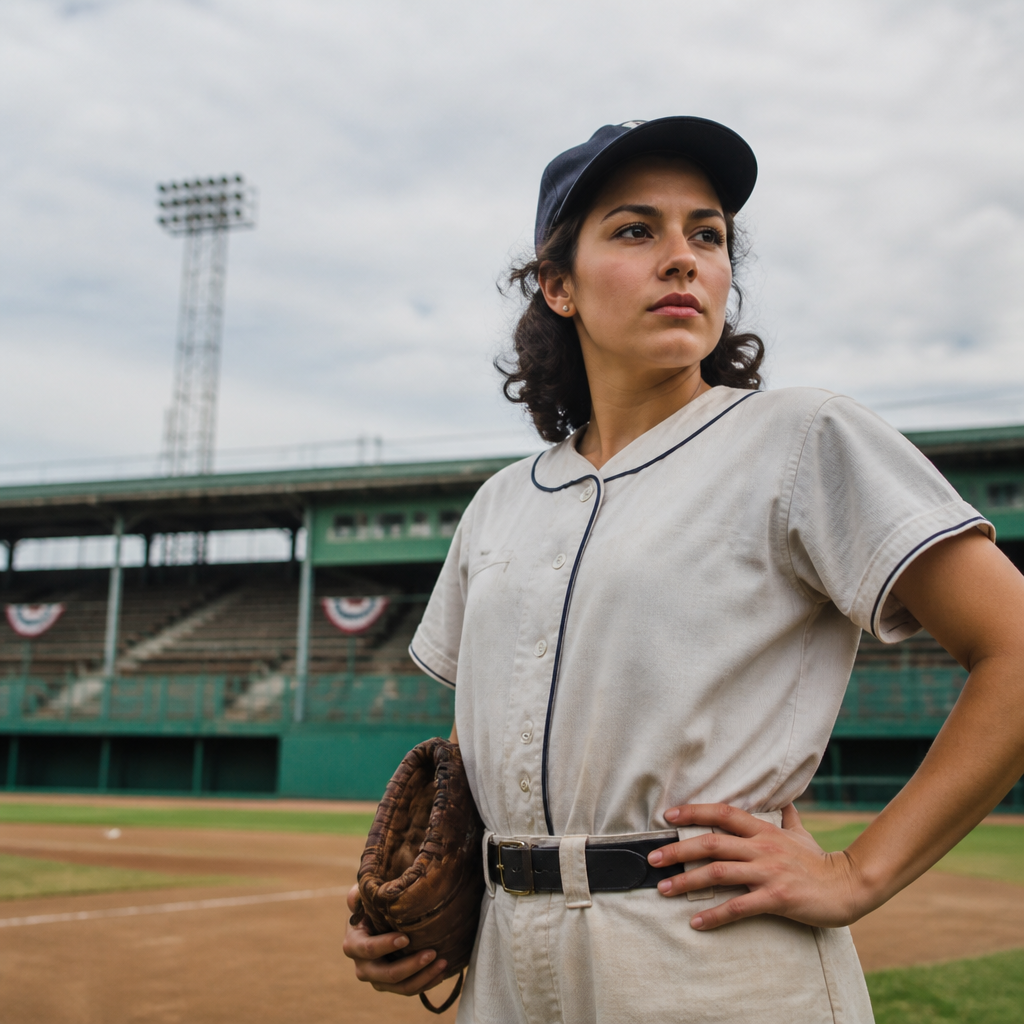
Baseball’s integration story is usually told through the achievements of men, yet pioneering women pushed against exclusion long before the sport admitted that talent and determination were not limited by gender. In the “Women in Baseball” landscape, the miscellaneous category matters because many of the most influential breakthroughs did not happen in one league, one decade, or one role. They appeared in barnstorming teams, segregated circuits, front offices, press boxes, ownership groups, and youth development programs. To integrate baseball, women had to challenge separate barriers at once: formal rules, cultural assumptions, media neglect, and the economics of professional sport.
In practical terms, integrating baseball means opening access to participation, employment, leadership, and recognition across every level of the game. It includes women playing on boys’ and men’s teams, serving as executives and coaches, scouting talent, owning clubs, umpiring games, and gaining equal legitimacy in baseball history. I have worked with baseball archives and development programs long enough to see how often these stories are fragmented. A player’s contract fight is separated from a journalist’s access battle or an executive’s hiring milestone, even though each changed what baseball institutions considered acceptable.
This hub article brings those threads together. It explains why women’s baseball history is not a side note but a central part of the sport’s unfinished integration. It also points readers toward the major names, organizations, and turning points that define this miscellaneous branch of the topic. From the Bloomer Girls to Toni Stone, from Ila Borders to Kim Ng, and from the All-American Girls Professional Baseball League to Baseball For All, the pattern is clear: each advance widened the game’s talent pool and forced baseball to become more honest about its own values.
Early pioneers who challenged baseball’s gender boundaries
Women entered baseball almost as soon as the game became organized, but they were rarely welcomed on equal terms. In the late nineteenth and early twentieth centuries, barnstorming clubs such as the Bloomer Girls used touring schedules to bring women players before large crowds. These teams often mixed serious competition with theatrical promotion because that was one of the few viable business models available to women in sport. Even so, the baseball was real. Women fielded, hit, traveled relentlessly, and proved to spectators that skill was not inherently male.
Lizzie Murphy stands out as a foundational figure. A first baseman known for power and defensive reliability, she became the first woman to play in a major league exhibition when she appeared with the Boston Red Sox in 1922. That appearance did not transform policy overnight, but it mattered because it created a public record of female participation at a level baseball culture claimed was impossible. Jackie Mitchell’s 1931 strikeouts of Babe Ruth and Lou Gehrig in an exhibition for the Chattanooga Lookouts became another flashpoint. Some dismissed the event as a stunt, yet the reaction itself exposed baseball’s anxiety about women’s legitimacy.
The women who followed were not simply asking for symbolic inclusion. They were contesting labor rules, roster norms, and commercial assumptions about who could draw crowds. Their impact is easiest to understand by comparing them with other early integration fights in baseball. Before institutions change, independents test the boundary. Women did that through semipro competition, exhibition tours, and newspaper campaigns that forced executives and fans to confront what they were excluding.
Black women and the struggle to integrate professional baseball
No account of pioneering women in baseball is complete without Black women who faced both racial segregation and gender discrimination. Toni Stone, Mamie “Peanut” Johnson, and Connie Morgan occupy a critical place in baseball history because they played in the Negro Leagues when organized white baseball excluded Black players and nearly all professional baseball excluded women. Their careers showed that integration was never a single-issue fight.
Toni Stone became the first woman known to play regularly as a professional in a major men’s Negro League when she joined the Indianapolis Clowns in 1953. She played second base, a demanding position that required range, timing, and quick decision-making. Stone reportedly faced hostility not only from opponents and fans but also from teammates who resented the publicity around her presence. That is a familiar pattern in integration history: a pioneer is judged not against average standards but against impossible ones. Stone still held her place.
Mamie Johnson and Connie Morgan followed in 1953 and 1954, further proving Stone was not an exception. Johnson, a pitcher for the Clowns, won games with command, movement, and poise despite limited opportunities. She had earlier been denied entry into the All-American Girls Professional Baseball League because she was Black. Morgan replaced Stone at second base and brought her own style of calm efficiency. Together, these women exposed baseball’s layered exclusions more clearly than any official statement could.
| Pioneer | Primary role | Historic significance | Key barrier challenged |
|---|---|---|---|
| Toni Stone | Second baseman | Regularly played in the Negro Leagues with men | Race and gender exclusion in pro baseball |
| Mamie Johnson | Pitcher | One of the first Black women to pitch in the Negro Leagues | Restricted access to women’s and men’s leagues |
| Connie Morgan | Second baseman | Sustained the presence of women in Negro League lineups | Assumptions about infield play and durability |
| Lizzie Murphy | First baseman | Played in a major league exhibition with the Red Sox | Public resistance to women in elite competition |
When readers ask who integrated baseball for women, the accurate answer is that many women did, in different arenas, under unequal conditions. Stone, Johnson, and Morgan deserve central placement because they demonstrated professional competence under the harshest combination of barriers.
The All-American Girls Professional Baseball League and its limits
The All-American Girls Professional Baseball League, founded in 1943, remains the best-known women’s league in United States baseball history. Popular memory often reduces it to wartime novelty, but that misses its real significance. The league operated through 1954, drew substantial attendance in several Midwestern cities, and developed skilled players who adapted to evolving rules, travel demands, and public scrutiny. For many communities, it was proof that women’s baseball could be commercially viable when given structure and promotion.
Its players were athletes first, despite the league’s effort to package them within conventional femininity. Charm school requirements, skirted uniforms, and image management revealed the compromise at the heart of the enterprise. Women were allowed to play, but only if ownership could reassure audiences that gender norms were still intact. That tension is why the league belongs in any discussion of integration. It expanded opportunity while also policing the form that opportunity could take.
The league’s importance extends beyond nostalgia. It created records, statistics, scouting patterns, and player development pathways that later advocates could point to when arguing for renewed investment in girls’ baseball. It also showed how quickly institutions can disappear when they are not fully embedded in the sport’s power structure. Once men returned from World War II and Major League Baseball reasserted cultural dominance, the women’s league lost momentum. The lesson is blunt: visibility alone does not guarantee permanence. Sustainable integration requires infrastructure, media attention, and leadership commitment.
Women entering men’s leagues, colleges, and independent baseball
After the decline of the All-American Girls Professional Baseball League, women still pursued baseball, often through spaces not built for them. At the college and independent professional levels, these efforts became important tests of whether modern baseball would judge players by ability or by precedent. Ila Borders is one of the clearest examples. A left-handed pitcher, Borders played college baseball at Southern California College and later pitched professionally in independent leagues during the 1990s. Her career mattered because it happened in a media era that documented performance more rigorously than earlier periods.
Borders did not merely make rosters; she competed. That distinction matters. Token appearances can be dismissed, but innings pitched, outs recorded, and clubhouse responsibilities force a baseball organization to answer practical questions. Can the player help us win? Can the team function normally? In Borders’s case, the answer was yes. Her path also revealed persistent resistance, including hostile crowds and skepticism from baseball insiders who treated her presence as an experiment rather than employment.
Other women challenged barriers through college baseball programs, high school participation cases, and amateur men’s leagues. These stories often become legal or administrative battles because baseball lacks the broad women’s participation pipeline seen in softball. When a talented girl wants baseball rather than softball, she frequently has to seek an exception instead of entering a normal pathway. That is one reason organizations such as Baseball For All have been so influential. They provide tournaments, national visibility, and a direct answer to a basic question parents ask: where can girls who love baseball actually play?
Integration beyond the field: executives, coaches, scouts, and umpires
True baseball integration is not just about who takes the field. It also concerns who evaluates talent, builds organizations, teaches players, and makes strategic decisions. In my experience, front-office integration changes a sport more quietly than a headline player debut, but often more permanently. When women enter decision-making roles, they influence hiring, development, culture, and resource allocation across years.
Kim Ng’s appointment as general manager of the Miami Marlins in 2020 was historic because it broke a barrier at one of baseball’s highest operational levels. Ng had spent decades building credibility with the Chicago White Sox, New York Yankees, Los Angeles Dodgers, and Major League Baseball. Her promotion was not a symbolic leap; it was the overdue recognition of elite baseball expertise. Likewise, coaches such as Alyssa Nakken in Major League Baseball and Rachel Balkovec, who became the first woman to manage a Yankees-affiliated minor league team, proved that instruction and leadership are baseball skills, not gendered traits.
Women have also advanced as scouts, analysts, trainers, and umpires. Each role attacks a different stereotype. Scouts undermine the assumption that women cannot assess tools and projection. Analysts disprove the idea that authority in baseball operations comes from a narrow playing background. Umpires challenge the old belief that control of the game’s rules belongs only to men. These developments matter for fans as well as professionals, because representation changes what young players imagine when they picture a baseball career.
Media, memory, and why these stories still need a hub
Women’s baseball history is still under-documented relative to its significance. Mainstream coverage spikes around firsts, then fades. Archives remain incomplete. Statistics for many early players are scattered across local newspapers, scorebooks, museum collections, and oral histories. That creates a distorted public memory in which women seem to appear briefly and disappear, when in reality they have been continuously present in baseball culture for more than a century.
A hub page on this miscellaneous branch serves an important purpose. It connects player biographies, league histories, legal fights, coaching milestones, and development programs into one navigable framework. Readers looking for Toni Stone often also need context about the Negro Leagues. Readers interested in Kim Ng should also see how women entered baseball administration over time. Readers searching for girls baseball opportunities need both history and current resources. Strong topic architecture mirrors how people actually learn: by moving from one question to the next.
This area also benefits from careful language. “Women in baseball” is not interchangeable with “women’s baseball.” The first includes every role women hold within the sport. The second refers more specifically to women playing baseball, often in dedicated competitions. Keeping that distinction clear helps readers, researchers, and youth organizations understand the landscape.
The journey to integrate baseball was never linear, and it is still not finished. Pioneering women opened the sport through exhibition games, Negro League careers, wartime professional leagues, independent ball, front-office leadership, coaching, scouting, and grassroots development. Their shared achievement was larger than any single first. They forced baseball to widen its definition of who belongs.
For readers exploring the “Women in Baseball” topic, this miscellaneous hub offers the broad context needed to understand every related article. The key takeaway is simple: women did not wait for baseball to invite them in; they proved, repeatedly and publicly, that exclusion was the sport’s failure, not theirs. That history strengthens today’s case for better pipelines, better coverage, and better opportunities at every level.
If you are building out your knowledge of women in baseball, use this page as your starting point. Follow the stories of the players, executives, and advocates named here, then connect them to leagues, policy changes, and modern development programs. The more completely these pioneers are studied, the more accurately baseball can understand its past and shape its future.
Frequently Asked Questions
Why is it important to include women in the story of baseball’s integration?
It is important because baseball’s integration was never only about who crossed a single color line or who appeared on a major league field first. It was also about who challenged the deeper assumptions that the sport used to exclude people in the first place. Women did that work in visible and invisible ways for generations. They played when they were told they should not play, organized teams when no one would invite them in, reported on the game when press boxes resisted them, and entered business and leadership positions that had long been treated as male territory. When people focus only on male milestones, they miss a broader truth: integration in baseball was a long struggle against layered barriers involving race, gender, access, authority, and legitimacy.
Women’s contributions matter especially in a “miscellaneous” view of baseball history because many of the most influential breakthroughs did not fit neatly into one league, one era, or one job title. Some women were athletes on barnstorming teams, some worked in segregated baseball spaces, some opened doors in scouting, ownership, administration, journalism, or community leadership. Together, they expanded the definition of who belonged in baseball. Including women in the integration story gives readers a more accurate and complete history of the game, showing that progress often came through many smaller acts of resistance rather than one dramatic turning point.
Who were some of the pioneering women who helped integrate baseball culture and opportunity?
Several women stand out because they challenged baseball’s limits from very different directions. Toni Stone is one of the clearest examples. She played professional baseball in the Negro Leagues, taking the field in a world that questioned both her talent and her presence because she was a woman. Her career demonstrated that ability, discipline, and competitiveness were not defined by gender. Mamie “Peanut” Johnson and Connie Morgan also made history in the Negro Leagues, proving that women could compete in elite-level professional environments even when nearly every structural force in baseball was aligned against them.
Other pioneers changed the sport from outside the batter’s box. Effa Manley, co-owner and executive of the Newark Eagles, played a major role in baseball operations and Black baseball history, showing that women could shape teams, business decisions, and the broader direction of the sport. In journalism and public-facing roles, women fought for access to clubhouses, interviews, and professional recognition, helping normalize the idea that baseball expertise was not exclusively male. Over time, women also entered front offices, coaching pathways, umpiring discussions, and ownership circles. What connects these figures is not that they all followed the same route, but that each widened baseball’s boundaries. Their careers collectively helped integrate the culture of the game, even when formal institutions moved slowly.
How did women face both gender discrimination and racial exclusion in baseball?
Many women in baseball encountered more than one barrier at once. For Black women in particular, exclusion was shaped by both racism and sexism, creating a much narrower path into the sport. A player such as Toni Stone did not simply have to prove she was skilled enough to play; she also had to endure the social hostility directed at a Black woman entering a professional baseball space. That meant facing skepticism from fans, opponents, media, and sometimes even teammates, all while carrying the burden of being treated as an exception instead of an athlete.
This double standard affected opportunity at every level. Women were often denied training resources, fair evaluation, financial support, media respect, and long-term career stability. Their achievements were frequently described as novelty rather than excellence, which minimized the seriousness of their work. Even when they succeeded, institutions often failed to preserve their stories with the same care given to male players and executives. That is why recovering this history is so important. The journey to integrate baseball was not just a fight to enter the game, but a fight to be acknowledged as fully belonging there. Understanding the overlap of racial and gender discrimination reveals how difficult these women’s accomplishments truly were and why their place in baseball history deserves sustained attention.
Did women’s impact on baseball integration extend beyond playing on the field?
Absolutely. In many ways, some of the most lasting integration work happened off the field. Women influenced baseball as executives, owners, journalists, advocates, and organizers, often in spaces where authority itself was being contested. Effa Manley is a prime example of a woman whose leadership affected baseball at an institutional level. Her work in ownership and management demonstrated that women could help shape roster decisions, team operations, public engagement, and the business strategy of the sport. That kind of influence challenged the idea that baseball leadership had to look one way.
Women in journalism also played a vital role by claiming the right to report on baseball seriously and professionally. Gaining access to press boxes and clubhouses was part of integration because information, storytelling, and public memory are forms of power. If women were excluded from covering the game, they were also excluded from shaping how the game was understood. In later decades, women entered front-office roles, player development, and other decision-making positions that helped redefine baseball expertise. These changes mattered because integration is not complete when a door opens for a few players; it deepens when women are present throughout the sport’s structure, from performance to policy to public narrative.
What can modern readers learn from the journey of pioneering women in baseball?
Modern readers can learn that progress in sports history is rarely simple, immediate, or confined to one celebrated moment. The women who pushed baseball toward greater inclusion often did so without guaranteed recognition, institutional support, or historical credit. Their journeys show that change is often built by people who insist on participating before a system is ready to welcome them. That lesson applies not only to baseball, but to leadership, media, and culture more broadly. It reminds readers that access is usually won through persistence, credibility, and the willingness to challenge traditions that claim to be neutral but are actually exclusionary.
Readers can also learn to value the broader ecosystem of baseball history. Integration did not happen only on the diamond and not only through major league milestones. It happened in barnstorming tours, Black baseball circuits, ownership offices, newsrooms, and community networks. By paying attention to pioneering women, readers gain a fuller picture of how baseball evolved and who forced that evolution forward. Their stories encourage a more honest conversation about who gets remembered, who gets overlooked, and how historical narratives can be expanded to include those who transformed the game without always receiving the spotlight they earned.