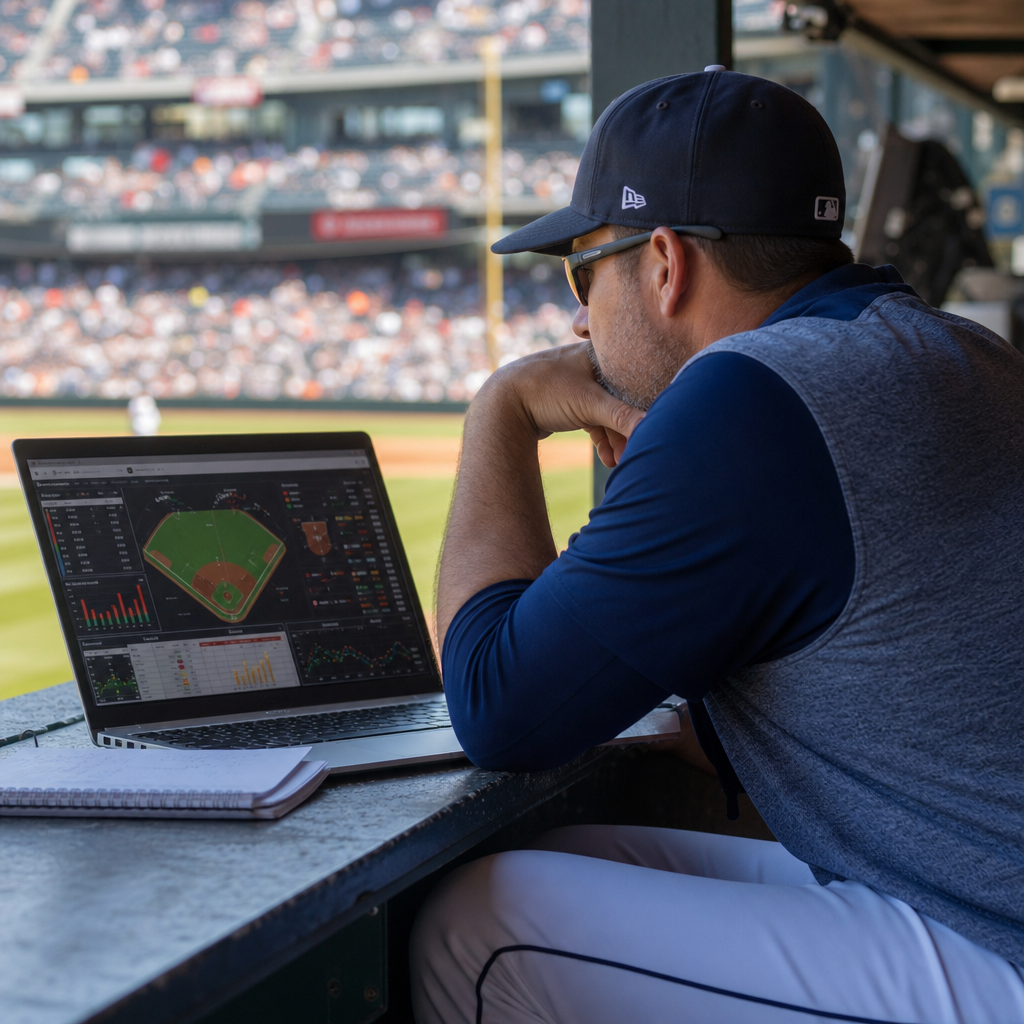
Baseball strategy used to lean on intuition, scouting notebooks, and traditions passed from one dugout generation to the next. Today, the sport operates in the analytics age, where data is changing baseball strategies at every level, from front-office roster construction to pitch sequencing in a two-strike count. In simple terms, baseball analytics refers to the collection, measurement, and interpretation of game information to improve decisions. That information includes obvious statistics such as on-base percentage and slugging percentage, but it now extends to tracking data on pitch movement, bat speed, launch angle, route efficiency, pop time, spin rate, and even defender starting position by hitter tendency.
This shift matters because baseball is a game of repeated events, and repeated events create patterns. When teams can measure those patterns accurately, they can find edges that were invisible a generation ago. I have seen this change firsthand in the way coaches prepare series reports, how player development staffs design training plans, and how broadcasters explain strategy to fans. What once sounded radical, such as valuing a walk nearly as much as a single or moving infielders into extreme shifts, has become mainstream because the data repeatedly proved where runs are actually created and prevented. The result is not just more information, but a different understanding of what winning baseball looks like.
Technology’s impact on the game reaches far beyond a spreadsheet. High-speed cameras, radar-based tracking systems, force plates, wearable sensors, and machine-learning models now influence how clubs evaluate talent, prevent injuries, optimize swing paths, and set lineups. This article serves as a hub for that broader topic by showing how baseball analytics evolved, which technologies changed the sport most, how strategy on the field has adapted, and where the limits of data still require human judgment. If you want to understand modern baseball strategy, you have to understand how information is gathered, translated into action, and weighed against the realities of player health, psychology, and competition.
How baseball analytics evolved from box scores to tracking systems
For most of baseball history, teams worked with partial information. Traditional stats such as batting average, runs batted in, pitcher wins, and fielding percentage offered useful snapshots, but they did not isolate individual contribution very well. A hitter could bat .300 while rarely walking and producing modest power. A pitcher could earn 20 wins because his team scored often, not because he dominated. Early analytical thinkers pushed the game toward better measures, especially on-base percentage, slugging percentage, and eventually OPS, which combined the two. Those metrics reframed offense around avoiding outs and creating extra bases, concepts that connect directly to run scoring.
The modern revolution accelerated when clubs adopted event-level and tracking data. Systems such as PITCHf/x, Statcast, Hawk-Eye, and TrackMan transformed analysis by measuring what actually happened to the ball and the body in motion. Instead of saying a fastball looked lively, teams could quantify velocity, vertical break, horizontal movement, release point consistency, and spin efficiency. Instead of describing a batted ball as crushed, they could measure exit velocity and launch angle. This level of precision changed player evaluation because it separated process from outcome. A line drive hit at 105 miles per hour directly at a fielder is often better process than a weak bloop that falls in for a single.
Once clubs had better data, they reorganized baseball operations around it. Analysts joined scouting departments. Coaches began receiving concise reports tied to game planning. Player development groups built individualized models for hitters and pitchers. This did not eliminate old-school expertise; it made it more testable. A scout’s note that a prospect creates easy carry at the top of the zone can now be paired with induced vertical break and approach angle. That blend of observation and measurement is the real hallmark of the analytics age.
How data changed offensive strategy
The clearest offensive shift has been the reevaluation of what makes a productive plate appearance. Teams now prioritize on-base skill, hard contact, and swing decisions more than simple batting average. Walk rate, chase rate, zone contact rate, and expected weighted on-base average help clubs identify whether a hitter’s approach is sustainable. In practical terms, that means hitters are trained to swing at pitches they can damage and to accept strikeouts as a tradeoff if the approach also generates more walks and extra-base power. The league-wide rise in home runs during the 2010s was driven partly by this philosophy and partly by better understanding of launch angle optimization.
I have worked through enough swing reports to know that launch angle is often misunderstood. Teams are not telling every hitter to hit towering fly balls. They are trying to help each player produce batted-ball shapes that fit his physical tools. For a strong pull hitter, the ideal attack might be lifting inside fastballs to the pull side. For a speed-oriented contact hitter, a better profile may involve line drives, low chase rates, and pressure on defenders. Data sharpened these distinctions. Bat tracking and high-speed video can show where a hitter loses time in the swing, while heat maps reveal zones where he does the most damage. That allows tailored adjustments instead of generic advice.
Offensive strategy also changed through matchup planning. Teams study pitcher arsenals, release traits, and attack patterns to build game plans for individual series. If a pitcher steals strikes with backdoor sweepers to left-handed hitters, the plan may emphasize taking that pitch early until two strikes. If a reliever struggles to hold runners, clubs may become more aggressive on the bases even in an era otherwise less focused on steals. The data does not merely describe hitters; it informs situational tactics that once relied more heavily on instinct.
How data changed pitching strategy and defense
Pitching strategy may be where analytics has had the most dramatic visible effect. Teams learned that certain pitch shapes play better in certain locations. A high-spin four-seam fastball thrown at the top of the zone can miss barrels because hitters swing under it, especially when paired with a breaking ball that moves on a different plane. Sinkers and sweepers, meanwhile, can be designed to generate ground balls or chase swings depending on usage. Pitch design labs now use Edgertronic cameras, Rapsodo units, and biomechanics analysis to help pitchers alter grips, seam orientation, and release characteristics with measurable intent.
Role definition changed too. Starters are no longer expected to pace themselves for complete games, and bullpens are built around leverage rather than rigid innings. Data on times through the order showed that many pitchers become less effective the third time they face a lineup. That evidence supported faster hooks and more specialized relief usage. Openers, bulk relievers, and matchup-driven bullpen chains emerged from this environment. While some fans dislike the reduced prominence of the complete game, the strategic logic is clear: preventing runs often means distributing high-quality innings more efficiently.
Defensive positioning was another major frontier. Before recent rule changes limited shifts, teams used spray charts and batted-ball probabilities to place fielders where hitters most often hit the ball. The extreme infield shift against pull-heavy left-handed batters became common because the numbers supported it. Even with shift restrictions, positioning still matters enormously. Outfielders now align using carry profiles, batter tendencies, park dimensions, and pitcher contact patterns. Catchers frame pitches, control the running game, and manage game plans with data support. Defense is no longer just athletic reaction; it is pre-pitch information translated into better starting positions.
| Technology or Metric | What It Measures | Strategic Effect on Baseball |
|---|---|---|
| Statcast | Exit velocity, launch angle, sprint speed, catch probability | Improves hitter evaluation, defensive positioning, and baserunning decisions |
| Hawk-Eye | Ball and player tracking in three dimensions | Refines pitch movement analysis, fielding routes, and biomechanical review |
| Rapsodo/TrackMan | Pitch velocity, spin rate, spin axis, movement profile | Supports pitch design, arsenal shaping, and bullpen development |
| Edgertronic cameras | High-speed grip and release details | Helps pitchers adjust seam orientation and improve pitch efficiency |
| Expected statistics | Quality of contact independent of outcome | Separates sustainable performance from short-term luck |
Player development, health, and roster construction in the analytics age
The biggest organizational advantage often comes before game day. Analytics transformed player development by making instruction more individualized and measurable. Instead of telling a pitcher to throw his slider harder, a development coach can define a target velocity band, movement shape, and release cue, then test the change immediately with ball-tracking data. Instead of asking a hitter to stay through the middle, a hitting department can evaluate bat path, attack angle, contact point, and swing decisions against specific pitch types. This precision speeds learning because players receive feedback connected to objective evidence.
Health and workload management are equally important. Baseball seasons are long, and the sport’s repetitive movements create overuse risk, especially in shoulders, elbows, hips, and hamstrings. Teams use force plates, motion capture, and workload monitoring to identify signs of fatigue or mechanical stress. No model can predict injury perfectly, but good systems improve decision quality. A pitcher whose velocity is stable but whose arm slot, recovery markers, and command profile are drifting may need intervention before pain appears. Smart organizations treat this data as a warning system, not a crystal ball.
Roster construction also changed because front offices can price skills more accurately. They look for undervalued traits, such as plate discipline, defensive versatility, bat-to-ball skill paired with latent power, or pitchers with unusual movement profiles that can be optimized. Tampa Bay, Los Angeles, and Cleveland have repeatedly demonstrated how strong analytical infrastructure can stretch payroll. The lesson is not that money does not matter; it clearly does. The lesson is that information can make spending more efficient. Clubs that identify fit, project aging curves realistically, and understand how their player development system amplifies certain strengths gain a durable edge.
The limits of analytics and what comes next
Data is changing baseball strategies, but it does not answer every question by itself. Models depend on assumptions, and baseball remains a human game filled with small samples, emotional swings, weather effects, and opponent adjustments. A hitter may grade well by expected metrics while pressing mechanically or mentally. A pitcher may add velocity in the lab yet struggle to trust the new shape under pressure. I have seen plans that looked airtight in reports fail because the player could not execute them consistently in competition. Context matters, and so does communication. The best analysts I have worked with do not flood coaches with dashboards; they translate complex evidence into simple decisions players can use.
There are also broader debates about aesthetics and balance. Analytics contributed to the strikeout surge, all-or-nothing hitting, and defensive positioning patterns that many believed reduced action on the field. Rule changes such as the pitch clock, bigger bases, and shift limits show that leagues respond when strategy and entertainment drift apart. That does not mean analytics failed. It means every sport sets boundaries around optimization. Teams adapt to those boundaries, then new strategies emerge. Already, clubs are rethinking contact quality, baserunning aggression, catcher throwing value, and athletic versatility within the current rules.
The future of technology’s impact on the game will likely center on better integration rather than just more data. Biomechanics, bat tracking, injury modeling, and tactical scouting are becoming parts of one connected system. As tools improve, the competitive edge will come from asking better questions, not simply collecting more numbers. For teams, coaches, and fans, the key takeaway is straightforward: baseball strategy is now built on evidence as much as instinct. Understanding that shift makes the modern game easier to follow and far more interesting to study. If you want to explore innovations and changes in baseball, start here, then follow each branch of this topic to see how technology continues to reshape the sport on and off the field.
Frequently Asked Questions
What does “analytics” actually mean in modern baseball?
In modern baseball, analytics means using data to guide decisions that were once based mostly on observation, instinct, and tradition. At its core, baseball analytics is the process of collecting, measuring, and interpreting information from games, practices, scouting, and player development in order to improve performance and strategy. That information can include familiar numbers such as batting average, ERA, and strikeouts, but it also extends much deeper into advanced metrics and tracking data. Teams now study things like exit velocity, launch angle, spin rate, chase rate, pitch movement, sprint speed, defensive range, and win probability in specific game situations.
What makes the analytics age different is not just the amount of information available, but how quickly teams can act on it. Front offices use data to evaluate talent, assign player value, and identify underappreciated skills in the market. Coaches use it to shape lineups, defensive positioning, bullpen usage, and baserunning decisions. Players use it to refine swings, adjust pitch grips, improve conditioning, and understand opponent tendencies. In other words, analytics is not a separate part of baseball anymore. It is woven into nearly every decision the sport makes, from amateur scouting and player development to in-game tactics in the ninth inning.
How is data changing in-game baseball strategy?
Data is reshaping in-game strategy by giving teams a clearer picture of what works, when it works, and against whom it works best. Managers and coaches now use analytical models to inform lineup construction, pitching changes, defensive alignments, stolen base attempts, sacrifice decisions, and late-game matchups. For example, instead of relying only on a hitter’s overall batting average, teams can look at how that batter performs against a specific pitch type, velocity band, arm slot, or reliever profile. That level of detail allows clubs to make more targeted decisions in real time.
Pitching strategy is one of the clearest examples. Teams no longer think only in terms of throwing strikes and changing speeds. They now analyze which pitch shapes produce weak contact, which locations generate swings and misses, and which sequences are most effective in certain counts. A pitcher may be instructed to use a high fastball to set up a breaking ball below the zone because the data shows that combination creates poor swing decisions. Defensively, teams also use hitter spray charts and batted-ball tendencies to position fielders where balls are most likely to be hit. Even with recent rules limiting extreme shifts, analytics still influences where defenders start, how they move pre-pitch, and how teams prepare for specific hitters. The result is a more customized, evidence-based style of baseball strategy that tries to maximize every small advantage.
How have analytics changed the way teams build rosters and evaluate players?
Analytics has transformed roster construction by helping teams look beyond traditional statistics and identify skills that may have been undervalued in previous eras. Rather than judging a hitter only by batting average or RBIs, clubs now examine on-base percentage, slugging efficiency, swing decisions, contact quality, and performance against different pitch types. For pitchers, teams study strikeout rate, walk rate, spin efficiency, pitch movement, release consistency, and underlying indicators that may reveal whether a player’s current results are sustainable. This broader analytical view allows organizations to make smarter decisions in trades, free agency, arbitration, and the draft.
One major effect of this shift is that teams are better at spotting hidden value. A player with average traditional numbers may still be highly desirable if the data shows elite bat speed, strong plate discipline, excellent defensive range, or a pitch profile that can be optimized by a new coaching plan. Analytics also helps teams project future performance rather than simply reward past results. That matters because winning organizations are not just asking who played well last season; they are asking who is most likely to help them win next season and beyond. As a result, roster decisions are now more predictive, more nuanced, and more closely tied to fit within a team’s broader competitive strategy.
Does analytics replace traditional scouting and baseball instincts?
No, analytics does not replace traditional scouting or baseball instincts. The most successful organizations combine all three. Data is extremely valuable because it can reveal patterns, confirm strengths and weaknesses, and reduce decision-making based on assumptions. But numbers do not always capture everything that matters. Scouts still evaluate body language, work ethic, athletic projection, coachability, makeup, and how a player responds to failure or pressure. Coaches and experienced baseball people also bring context that raw data alone cannot fully provide, especially when interpreting how a player might adapt to a new role, competition level, or environment.
In practice, the best teams use analytics as a tool, not a substitute for expertise. A scouting report may identify that a prospect has unusual feel for changing speeds, while pitch-tracking data may explain exactly why the deception works. A coach may notice that a hitter looks uncomfortable on inside velocity, while heat maps and swing-path data can confirm the weakness and suggest a correction. Instinct still matters in the dugout and in player development, but analytics sharpens those instincts by grounding them in evidence. The modern game is not really a battle between numbers and baseball knowledge. It is a blend of both, and that balance is what drives the smartest decisions.
Why has analytics become so important at every level of baseball?
Analytics has become essential because the sport is more competitive, more measurable, and more efficient than ever before. At the professional level, the difference between winning and losing can be incredibly small, so teams are constantly searching for edges. Data helps them understand those edges with greater precision. At the college, amateur, and developmental levels, analytics gives players and coaches a clearer framework for improvement. Instead of guessing why a pitcher is getting hit hard or why a hitter is struggling to drive the ball, they can use measurable information to diagnose the problem and build a plan to fix it.
Technology has also made analytics far more accessible. High-speed cameras, radar systems, bat sensors, motion capture tools, and advanced video platforms are now widely used throughout the sport. That means data is no longer limited to a few front offices with large budgets. More organizations, coaches, and players can use it to develop skills, prevent injury, prepare for opponents, and make smarter strategic choices. Ultimately, analytics matters because it turns baseball from a game guided mostly by memory and feel into one supported by repeatable evidence. It does not take the human element out of the sport, but it does give teams a better chance to make informed decisions in a game where small advantages often decide everything.