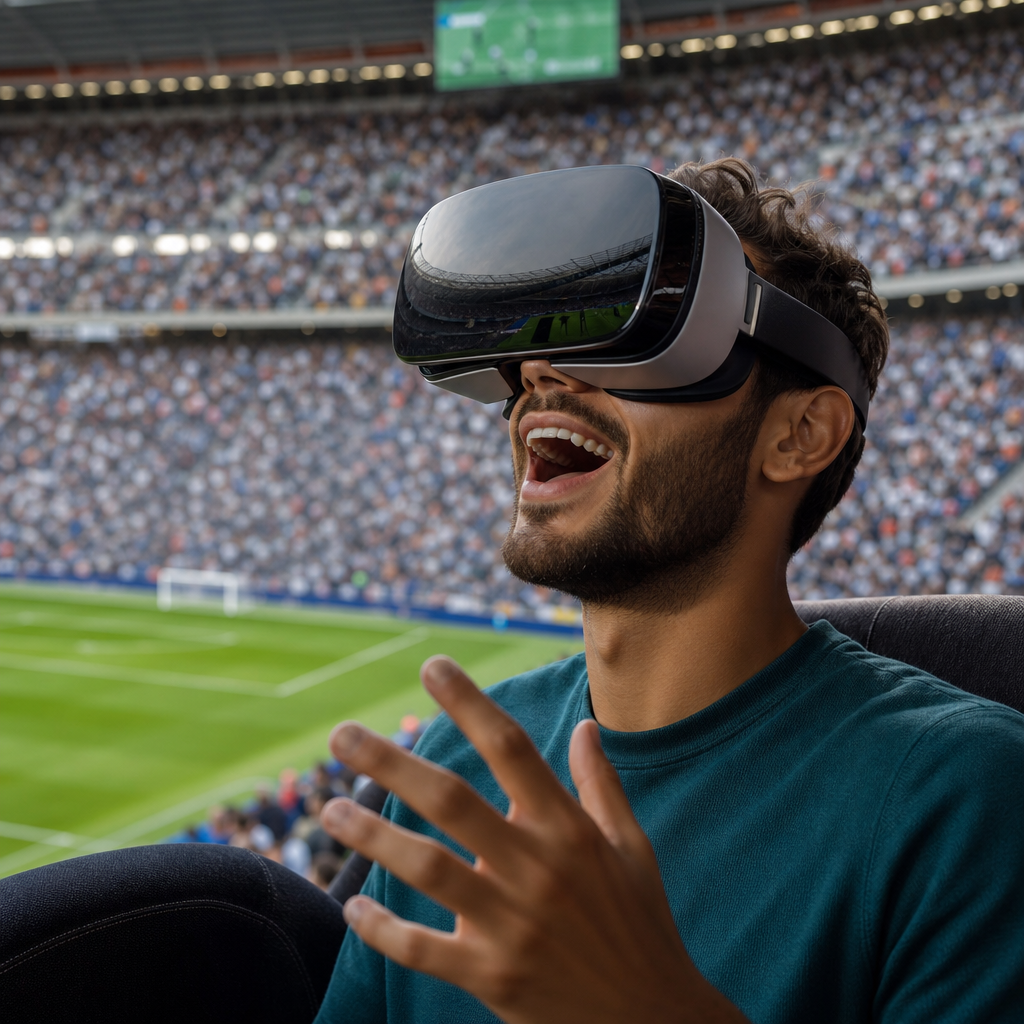
Virtual reality stadiums are moving from novelty to strategic priority, and for baseball organizations, they may become the next major leap in fan experience. A virtual reality stadium is a persistent digital venue, accessed through a headset, mobile device, or desktop interface, that recreates or reimagines the ballpark environment for live games, archived content, social interaction, commerce, and branded entertainment. In practical terms, it blends immersive media, real-time data feeds, spatial audio, digital twins, and interactive community features into one destination. The question is not whether immersive fan platforms will exist, but how quickly teams, leagues, broadcasters, and technology partners can make them useful enough to become habitual.
That matters because baseball is balancing several pressures at once. Attendance remains valuable, but teams also need deeper engagement from younger, global, and digitally native audiences who may never visit the physical park. Media rights are fragmenting, second-screen behavior is standard, and fans increasingly expect personalization rather than a one-size-fits-all broadcast. In my work with digital fan journeys, the most successful products are the ones that reduce distance: distance from the game, from other supporters, and from the team’s commercial ecosystem. Virtual reality stadiums promise all three. They can place an overseas fan behind home plate, let season-ticket holders host remote watch parties, and turn passive viewing into measurable participation.
For a baseball innovation hub, this topic sits at the center of future trends and predictions because it touches nearly every adjacent change. It connects to wearable data, volumetric capture, sports betting interfaces, dynamic sponsorship, digital collectibles, ticketing, accessibility design, and international fan growth. It also raises real constraints: headset adoption is uneven, production costs are high, and many experiences marketed as immersive are still little more than 360-degree video. To understand whether virtual reality stadiums represent the next step in fan experience, it helps to separate the technology stack from the business model, the hype from actual use cases, and short-term experiments from long-term infrastructure.
What a virtual reality stadium actually includes
A true virtual reality stadium is more than a camera feed placed inside a headset. The strongest versions combine several layers. First is environment replication: a digital twin of the ballpark, often built from lidar scans, photogrammetry, CAD files, and broadcast reference imagery. Second is live event integration: game video, pitch data, Statcast-style tracking, scorebug information, and synchronized audio delivered with low enough latency to preserve the feeling of being present. Third is social presence: avatars, voice chat, private suites, public concourses, and shared reactions. Fourth is interactivity: selecting camera angles, pulling up player cards, watching replays in three dimensions, or entering branded mini-experiences between innings. Fifth is commerce: merchandise, concessions tie-ins, seat upgrades, and sponsor activations embedded natively into the venue.
Baseball is particularly suited to this model because the sport already supports layered attention. A fan can follow pitch sequencing, defensive alignment, bullpen movement, and historical context without losing the rhythm of the game. In an immersive stadium, that translates into optional overlays that deepen understanding instead of interrupting it. Imagine a fan switching from the standard outfield view to a hitter’s eye perspective, then opening a strike-zone visualization tied to swing decisions, then joining friends in a virtual club level during a pitching change. That sequence feels natural in baseball because the game has built-in pauses and analytical richness. Sports with continuous action can struggle to surface information without overwhelming viewers; baseball can use immersion to make complexity enjoyable.
Why teams and leagues are investing now
The timing is driven by converging improvements in hardware, software, and audience behavior. Headsets such as Meta Quest devices and Apple Vision Pro have made higher-resolution displays, hand tracking, and spatial interfaces more visible to mainstream consumers, even if total penetration remains modest. At the same time, game engines like Unreal Engine and Unity have matured enough to support real-time venue rendering, avatar systems, and live service updates. Cloud delivery, edge computing, and 5G have also improved the feasibility of lower-latency streams. On the demand side, fans became more comfortable with remote participation during the pandemic years, and many now treat live sports as a social digital event as much as a television program.
From the business perspective, virtual reality stadiums answer a problem executives discuss constantly: how to increase fan lifetime value beyond ticket buyers and local cable viewers. A team can sell one seat once in a physical park, but a digital venue can host unlimited remote users, segmented by price tier and geography. That creates inventory. There can be premium virtual dugout seats, sponsor-backed public plazas, educational kids zones, alumni rooms, and international language communities. Broadcasters can integrate alternative commentary streams. Teams can collect first-party behavioral data about what fans watch, click, and discuss. In every pilot I have reviewed, the core strategic attraction is not the headset itself; it is the possibility of building a richer, owned platform around live baseball.
Key use cases that could define the fan experience
The most compelling use case is remote presence that feels social rather than solitary. Fans do not simply want a virtual chair in the stadium; they want to share the game. A well-designed experience lets families in different cities sit together, talk naturally through spatial audio, celebrate home runs, and still focus on the field. That matters for baseball, where fan rituals are as important as the action. Another major use case is perspective control. Traditional broadcasts make one editorial choice for everyone. In virtual reality, a fan can move from behind the plate to first base, activate a bullpen cam, or enter a replay theater that freezes a double play and lets them inspect positioning from multiple angles. This kind of agency turns spectators into participants.
There is also a significant education opportunity. Newer fans often find baseball difficult to decode, especially around pitch design, defensive shifts, and roster strategy. A virtual stadium can onboard them with optional explainers layered into the environment. If a pitcher throws a sweeper, the system can display movement compared with a four-seam fastball. If a manager calls for an intentional walk setup, a quick prompt can explain the leverage logic. Teams looking to grow younger audiences should not overlook this. The best digital products lower the learning curve without patronizing experienced supporters. In that sense, virtual reality can make baseball more accessible intellectually, not just geographically.
| Use case | How it works | Value for baseball fans | Main challenge |
|---|---|---|---|
| Remote social seating | Private or public virtual sections with avatars and voice chat | Replicates the communal feeling of attending together | Moderation and audio quality |
| Multi-angle live viewing | User chooses camera positions and immersive replays | Greater control than a standard broadcast | Production complexity and latency |
| Interactive analytics overlays | Live pitch, hit, and fielding data appear on demand | Makes advanced baseball easier to understand | Information overload if poorly designed |
| Virtual hospitality | Brand lounges, alumni rooms, premium suites, and events | Creates new premium experiences for remote fans | Convincing users to pay recurring fees |
| Global fan community spaces | Language-specific or team-specific gathering areas | Expands reach beyond local markets | Rights management across regions |
The technology and operational hurdles
Despite the promise, the barriers are substantial. Low latency is the first nonnegotiable requirement. If a fan hears a home run reaction on social media before seeing the swing in the virtual stadium, immersion collapses. Delivering synchronized video, data, audio, and social interactions at scale is technically demanding. Volumetric video, which could eventually allow fans to view live plays from almost any angle, remains bandwidth intensive and expensive to produce. Even high-quality 180-degree or 360-degree capture can expose stitching artifacts, weak depth cues, and comfort issues if camera placement is wrong. Motion sickness still affects some users, especially in poorly optimized applications with inconsistent frame rates or unnatural movement.
Then there are rights and workflow issues. Baseball media ecosystems involve teams, leagues, regional sports networks, national broadcasters, streaming partners, and sponsors, all with negotiated boundaries. A virtual reality stadium sits awkwardly across those lines because it is part broadcast, part game environment, part commerce platform, and part social network. Someone must own the user relationship, billing, advertising rules, highlight rights, and moderation standards. Production crews also need new capabilities. Building a digital twin, mapping sponsorship placements, integrating player tracking, and maintaining live synchronization requires collaboration between broadcast engineers, 3D artists, cloud architects, and fan experience teams. This is not a simple extension of the standard game telecast.
How teams can make immersive stadiums commercially viable
Commercial success will depend on product design more than spectacle. Fans will pay for recurring utility, not one-time curiosity. The strongest model is likely a tiered offering. A free layer can include highlights, a communal plaza, and sponsor-supported experiences. A mid-tier subscription can unlock live watch rooms, advanced camera choices, archived games, and team-specific communities. A premium layer can add virtual suites, member-only events with alumni or analysts, and commerce perks linked to the physical club. Teams should resist the temptation to make everything premium at launch. I have seen digital fan programs stall when they monetize too early and fail to establish routine behavior first.
Sponsorship will also evolve inside virtual venues. Static logo placement is the least interesting option. More effective activations are utility-based: a branded stats lab, a skills challenge tied to bat speed, or a travel partner hosting virtual road-trip hubs for away games. Because digital environments are measurable, teams can offer sponsors richer metrics than signage impressions, including dwell time, interaction rate, repeat visitation, and downstream purchases. There are risks, though. If the environment becomes cluttered with intrusive ads, fans will abandon it quickly. The best commercial strategy mirrors the best ballpark strategy: protect the core experience, then add revenue layers that feel native to why fans showed up.
Predictions for baseball over the next decade
Over the next three years, expect more pilots than fully mature products. Most organizations will test special-event immersive streams, virtual clubhouses, spring training experiences, and postseason companion rooms rather than attempt full-season always-on stadiums. In five years, the leaders will likely be teams and media companies that treat the virtual venue as part of a broader fan platform, not a standalone gimmick. They will connect identity, ticketing, loyalty programs, betting where legal, fantasy products, and archival content into one account system. By the early 2030s, if hardware becomes lighter and more affordable, virtual attendance could become a recognized category alongside in-person attendance and conventional streaming.
Several outcomes are especially likely in baseball. First, digital twins of iconic parks such as Fenway Park, Wrigley Field, and Dodger Stadium will become year-round destinations for nostalgia, historical storytelling, and sponsored events, not just live games. Second, minor league and international baseball may adopt immersive venues faster in selected markets because they can experiment more freely with pricing and presentation. Third, accessibility features will improve markedly. Fans who cannot tolerate crowded stadiums, have mobility limitations, or live far from MLB markets may find virtual attendance meaningfully better than a standard broadcast. The most important prediction, however, is simple: virtual reality stadiums will not replace physical ballparks. They will extend the baseball audience by making presence scalable.
Virtual reality stadiums are the next step in fan experience only if the industry treats them as service design, not technology theater. For baseball, the opportunity is real because the sport rewards layered viewing, conversation, history, and analysis, all of which translate well to immersive environments. The winning products will solve concrete fan needs: feeling closer to the game, sharing it with others, understanding it better, and accessing it from anywhere. They will also respect limits. Headsets are not universal, rights are complex, and no digital replica can fully replace a summer night in a packed park. But replacement is the wrong benchmark. The right benchmark is expansion.
As a hub topic within future trends and predictions, virtual reality stadiums connect directly to smart venues, personalized media, advanced analytics, digital commerce, accessibility, and global fan growth. That makes this subject essential for anyone tracking innovations and changes in baseball. The next decade will reward organizations that build immersive products with patience, discipline, and a clear editorial philosophy. Start by evaluating the fan journey you want to improve, the rights you control, the partners you need, and the audience segment most likely to return regularly. Then build from utility outward. If baseball gets that sequence right, virtual reality stadiums will become less of a futuristic experiment and more of a practical new doorway into the sport.
Frequently Asked Questions
What is a virtual reality stadium, and how is it different from simply streaming a game online?
A virtual reality stadium is a persistent digital venue designed to recreate, extend, or completely reimagine the ballpark experience in an immersive environment. Unlike a standard live stream, which usually places fans in a passive viewing role, a VR stadium allows them to enter a shared space through a headset, mobile device, or desktop interface and interact with the game, the venue, and other fans in real time. It combines immersive video, 3D spatial design, live data feeds, social features, digital commerce, and branded experiences into one connected environment.
The key difference is presence. In a traditional stream, fans watch a broadcast chosen by the production team. In a virtual stadium, they may be able to switch vantage points, explore virtual concourses, view player stats layered into the environment, attend sponsor activations, chat with friends as avatars, or revisit archived highlights in a way that feels spatial and interactive. This moves the experience from media consumption to participation. For baseball organizations, that distinction matters because it opens up new ways to engage audiences before, during, and after games rather than limiting fan interaction to the duration of a broadcast window.
Why are baseball organizations starting to treat virtual reality stadiums as a strategic priority?
Baseball organizations are increasingly looking at virtual reality stadiums as more than a novelty because they address several important business and audience challenges at the same time. First, they expand access. Not every fan can attend games in person, and not every fan wants the same kind of viewing experience. A VR stadium can serve local supporters, out-of-market audiences, international fans, younger digital-native consumers, and corporate partners through a single platform that scales beyond physical seat inventory.
Second, VR stadiums create new inventory for monetization and sponsorship. A physical ballpark has finite signage, hospitality, and retail opportunities. A virtual venue can offer dynamic branded spaces, interactive sponsor zones, premium digital seating, virtual merchandise, collectible experiences, and ticketed access to exclusive content. That makes the digital stadium not just a marketing tool, but a potentially meaningful revenue channel.
Third, they strengthen fan engagement across the full season and beyond it. Baseball has a long calendar and a deep archive, which makes it especially well suited to persistent digital experiences. Teams can use virtual environments for live game viewing, spring training content, historical exhibits, community events, fantasy integrations, and offseason engagement. In that sense, the VR stadium becomes a year-round fan hub rather than a one-time tech showcase. For organizations trying to build stronger loyalty and more direct relationships with fans, that is a compelling strategic advantage.
How could a virtual reality stadium improve the fan experience during live baseball games?
A well-designed virtual reality stadium can make live baseball more immersive, customizable, and socially engaging. One of the biggest opportunities is perspective. Fans may be able to choose from multiple seating views, field-level angles, dugout-adjacent positions, or even data-enhanced viewpoints that are impossible in a traditional stadium or on a normal broadcast. That creates a more personalized way to follow the game, especially for fans who want deeper context around pitch sequencing, defensive positioning, player matchups, or in-game analytics.
Another major benefit is interactivity. Instead of simply watching innings unfold, fans could enter themed lounges, join watch parties, react with other supporters in real time, answer trivia, access instant replays, or examine live stat overlays without leaving the environment. Baseball is particularly suited to layered experiences because the pace of play allows room for storytelling, analysis, and social interaction between pitches and innings. A VR stadium can enhance those moments without distracting from the game itself if the design is handled thoughtfully.
It can also make the event feel more communal. One challenge with digital viewing is that it often lacks the atmosphere of the crowd. Virtual environments can reintroduce that shared energy by letting fans gather in branded sections, celebrate big plays together, and participate in synchronized moments such as seventh-inning stretch activities or postgame content. If done well, the result is not just a more advanced broadcast, but a more complete digital version of what fans value about being part of baseball culture.
What kinds of technology and infrastructure are needed to make a virtual reality stadium work well?
Delivering a strong virtual reality stadium experience requires much more than a headset and a 3D model of a ballpark. At the foundation is a real-time content pipeline capable of combining live video, game data, audio, graphics, and user interaction with low latency. Fans expect live sports to feel immediate, so synchronization is critical. If the immersive environment lags too far behind the actual game or the social layer feels delayed, the experience quickly loses credibility.
There is also the platform layer to consider. Because not all fans will use dedicated VR hardware, organizations typically need a flexible approach that supports headsets, mobile devices, desktops, and possibly smart TVs or gaming consoles. That means building for cross-platform accessibility without sacrificing quality. On top of that, developers need strong spatial design, avatar systems, moderation tools, payment integration, identity management, and analytics to understand how fans move through and engage with the virtual venue.
Equally important is operational readiness. Teams and their partners must think about content production workflows, rights management, sponsor integration, customer support, accessibility, and cybersecurity. The best virtual stadiums will not succeed on technical novelty alone; they will succeed because the underlying infrastructure supports a smooth, intuitive, reliable fan journey. In practice, that requires collaboration among media teams, venue operators, technologists, commercial departments, and league stakeholders.
Are virtual reality stadiums likely to replace the physical ballpark experience?
No, the more realistic expectation is that virtual reality stadiums will complement and extend the physical ballpark rather than replace it. The in-person experience remains central to baseball because it offers atmosphere, tradition, local identity, and emotional connection that are difficult to duplicate fully in digital form. The smell of the stadium, the crowd reaction after a home run, the rhythm of being at the park with family or friends, and the sense of occasion tied to a live event all remain powerful reasons fans attend games in person.
What virtual stadiums can do is expand the definition of attendance and make the fan relationship more continuous. They give organizations a way to include people who cannot be there physically, offer premium experiences beyond seat capacity, and create new forms of access around archived content, community, and commerce. They can also strengthen the physical venue by encouraging fan discovery, supporting ticket sales, deepening sponsor programs, and keeping supporters engaged between games.
In that sense, the strongest future model is likely hybrid. Physical stadiums will continue to anchor the live sports experience, while virtual stadiums become a parallel layer that broadens reach and adds new dimensions of interaction. For baseball organizations, that is why the concept matters so much: it is not about replacing the ballpark, but about building a more flexible, scalable, and immersive version of fandom around it.