The economics of college baseball shape who gets recruited, how teams travel, what facilities players use, and whether a program can compete over the long term. In practical terms, college baseball economics means the full financial system behind a program: institutional support, ticket sales, donations, sponsorships, conference distributions, scholarship allocation, coaching salaries, capital projects, and operating expenses such as equipment, recruiting, medical care, and travel. I have worked with athletic department budgeting discussions and facility planning reviews, and one lesson is constant: baseball is rarely judged on one line item. It sits inside a broader athletics portfolio where football, men’s and women’s basketball, donor priorities, enrollment strategy, and Title IX all influence what is possible.
That complexity matters because baseball is an expensive sport with limited direct revenue at most schools. A competitive roster needs year-round development, specialized staff, indoor space for bad-weather training, and reliable travel funding for nonconference scheduling. Yet unlike football, baseball usually does not generate enough gate or media income to pay for itself. The result is a sport where financial health depends on subsidies, fundraising strength, and smart facility choices as much as wins and losses. For families, coaches, administrators, and fans, understanding these economics explains why two programs in the same division can look completely different in scholarships, stadium quality, and recruiting reach.
As a hub for miscellaneous topics within minor leagues and college baseball, this article connects the major financial questions that sit behind the game. It covers how programs are funded, where facilities fit into the budget, why scholarships are structured the way they are, how conference affiliation changes spending power, and what separates sustainable investment from flashy overspending. If you want to understand why one school builds a player development center while another postpones field repairs, or why a successful coach can still face budget limits, the answer is almost always economic rather than purely athletic.
How college baseball programs are funded
Most college baseball programs operate on a mixed funding model rather than a single revenue stream. The core sources are institutional support from the university, student fees at some schools, athletic department reallocations, conference distributions, ticket sales, concessions, private donations, booster club contributions, camps, and occasional corporate sponsorship. At public universities, state budget pressure can indirectly affect baseball because cuts to higher education often reduce what the institution can transfer into athletics. At private colleges, the issue is usually endowment strength, tuition dependence, and donor willingness to support sports infrastructure.
At the Division I level, baseball budgets vary dramatically. Power conference programs may spend several million dollars annually when salaries, scholarships, travel, recruiting, and facility debt service are counted together. Mid-major programs often operate far leaner, and many rely on careful scheduling to contain flight costs and hotel nights. Division II, Division III, NAIA, and junior college programs usually face tighter margins still, though some community colleges and smaller private schools make baseball a strategic enrollment tool and therefore spend aggressively relative to their level. In those cases, roster size can help tuition revenue, which changes the economics in a way that does not show up in a simple profit-and-loss statement.
The key point is that “funded” does not always mean “self-sustaining.” In my experience, athletic departments often evaluate baseball by mission fit, campus visibility, alumni engagement, and student recruitment, not direct profitability. A program that loses money can still be viewed as valuable if it supports enrollment goals, donor relations, conference standing, and community presence. That is why baseball survives and even expands at some schools despite modest ticket revenue.
Scholarships, roster management, and the real cost of talent
One of the most misunderstood parts of college baseball economics is scholarship structure. Baseball has traditionally been an equivalency sport in NCAA Division I, meaning coaches divide a limited pool of scholarship aid across many players rather than awarding full rides to everyone. That forces roster management decisions with clear financial consequences. A staff may stretch aid across pitchers, catchers, and middle infielders while expecting some families to cover a large share of tuition and housing. At high-tuition private schools, even a meaningful percentage scholarship can still leave a major bill. At in-state public schools, the same partial award can feel much more affordable.
This scholarship model affects recruiting geography. Programs with strong academic aid packaging, in-state tuition advantages, or donor-backed support can assemble deeper rosters without technically outspending rivals on athletic aid alone. Name, image, and likeness opportunities have also added a new variable. While baseball NIL money generally trails football and basketball, collectives and local partnerships can still help retain older players or attract transfers. The economics of talent acquisition now include tuition discounting, academic grants, cost-of-attendance support, and external compensation opportunities.
Roster limits, redshirts, junior college transfers, and the transfer portal all influence budgeting too. Coaches now need more flexible planning because player movement can change scholarship commitments quickly. A program that expects a junior college ace to fill weekend innings may redirect development spending elsewhere. A portal-heavy strategy can reduce long-term development risk but may require more recruiting travel, video evaluation subscriptions, and quicker scholarship decisions. Talent is never just a recruiting question; it is a budget allocation question.
Facilities as capital investment, recruiting tool, and operating expense
Facilities are where college baseball economics become visible. Stadium seating, turf installation, lighting, batting cages, strength spaces, nutrition areas, clubhouses, sports medicine rooms, technology systems, and indoor practice buildings all signal investment level to recruits and donors. But a baseball facility is not only a recruiting brochure. It is a capital asset with construction costs, maintenance obligations, depreciation, staffing needs, and sometimes debt service. A school that installs synthetic turf may spend heavily upfront but reduce rainouts, lower some maintenance labor, and increase event usage. A natural grass field may offer tradition and lower initial expense, but it can become more costly if climate and usage patterns demand constant restoration.
Programs increasingly frame facility spending around player development. A modest stadium renovation may have less competitive impact than adding pitching labs, force plates, bat-tracking systems, high-speed cameras, and indoor work areas that support daily training. Tools such as TrackMan, Rapsodo, HitTrax, Blast Motion, and force-measurement platforms have changed how coaches justify spending. When a donor asks what a new player development center accomplishes, the answer is no longer vague prestige. Staff can point to pitch design, swing decisions, workload monitoring, and injury mitigation.
| Facility investment | Primary economic benefit | Main tradeoff |
|---|---|---|
| Indoor practice building | More training days, better development in cold or wet climates | High construction and utility costs |
| Synthetic turf field | Lower weather disruption, multiuse scheduling, fewer cancellations | Large upfront installation and eventual replacement expense |
| Player development lab | Data-driven improvement, stronger recruiting pitch, better retention | Technology subscriptions and specialist staffing needs |
| Stadium seating and premium areas | Improved fan experience and donor hospitality revenue | Return depends on attendance demand |
The strongest facility plans tie each project to recruiting outcomes, player development metrics, and campus use. The weakest plans chase aesthetics without a maintenance strategy. I have seen schools unveil attractive spaces that quickly strain operations because cleaning, staffing, equipment replacement, and HVAC costs were underestimated. Sustainable baseball facilities are built with lifecycle cost in mind, not just ribbon-cutting impact.
Operating budgets: travel, staffing, equipment, and game-day reality
Daily baseball spending is less glamorous than a new stadium, but it determines competitive consistency. Travel is often the largest controllable cost after personnel and scholarships. Because baseball schedules include frequent weekend series and long nonconference trips, geography matters. Western programs can face higher airfare and hotel costs than schools in dense regional footprints. Cold-weather teams often pay more early in the season because they must travel south for playable conditions. Bus versus air decisions, guarantee games, and shared travel with softball or other teams can all shift the ledger.
Staffing is another major line item. The head coach salary gets attention, but modern programs also budget for assistants, directors of operations, strength staff, athletic trainers, sports dietitians, academic support, analysts, and sometimes dedicated pitching or hitting technology coordinators. A school may save money by limiting support positions, but that choice affects player development and recruiting efficiency. Equipment costs add up as well: uniforms, catcher’s gear, bats where allowed, balls, protective screens, mound clay, portable technology units, and video systems. Medical spending has become more significant as programs invest in recovery tools, imaging access, and injury prevention protocols.
Game-day economics are typically modest compared with football, yet they still matter. Attendance influences concession sales, parking, local sponsorship appeal, and donor entertainment value. Well-run baseball events can strengthen alumni relationships even when the direct revenue line remains small. That indirect value is one reason schools continue improving fan amenities, streaming production, and hospitality spaces.
Conference affiliation, media exposure, and market size
Conference alignment shapes baseball economics more than many casual fans realize. Membership affects travel burden, media visibility, scheduling strength, postseason access, and donor perception. Programs in major conferences generally benefit from stronger overall athletic department distributions and brand exposure, even if baseball itself is not the primary driver of those dollars. A baseball coach in the SEC, ACC, or Big 12 may recruit with resources that reflect the whole conference ecosystem, not just baseball ticket receipts.
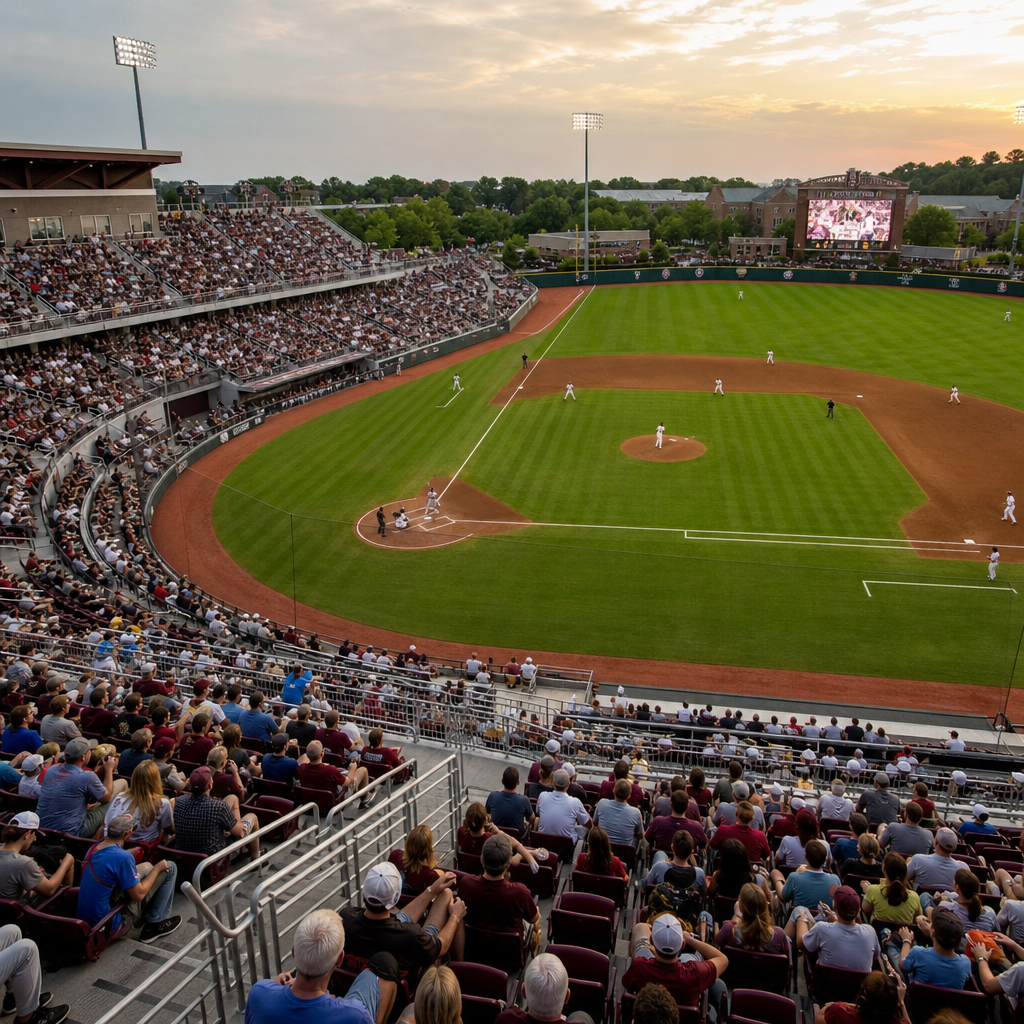
Market size also matters, but not in a simplistic way. A school in a large metropolitan area may have stronger sponsorship potential and alumni density, yet it may also compete with professional teams and many entertainment options. A smaller college town can create a more concentrated fan base, making baseball a meaningful local event. Mississippi State’s Dudy Noble Field is a clear example of how culture and community attachment can turn college baseball into a major draw. On the other hand, many urban programs play in quality venues with far lower attendance because baseball is one option among many.
Streaming and digital coverage have improved the picture for many schools. Even when rights fees are limited, consistent broadcasts increase sponsor inventory and keep alumni connected. Exposure supports fundraising, and fundraising supports the roster and facilities. The chain is indirect, but it is real.
Donors, boosters, and the politics of capital campaigns
Private giving often decides whether a baseball program merely survives or meaningfully advances. Capital campaigns for ballparks, clubhouses, and indoor facilities usually depend on lead gifts, naming opportunities, and sustained booster involvement. Annual funds cover smaller but essential needs such as travel enhancements, nutrition, summer school support, and technology purchases. In many departments, baseball sits behind football and basketball in donor priority, so advancement staff must build a case that investment in baseball serves broader institutional goals.
That case works best when it is specific. Donors respond to defined outcomes: reducing weather-related practice loss, improving player health, modernizing recruiting spaces, or creating a venue the community can use. They respond less well to generic promises about “keeping up.” Transparent stewardship matters. If a school raises money for a clubhouse renovation and then diverts attention from maintenance, credibility erodes quickly. The best baseball fundraising operations provide regular updates, measurable milestones, and a clear explanation of what university funds cover versus what philanthropy must support.
Why some programs thrive and others fall behind
The difference between a stable program and a struggling one is rarely just win-loss record. Strong programs align funding, facilities, staffing, and recruiting identity. They know whether they are built around regional development, transfer supplementation, elite pitching, or offensive depth, and they invest accordingly. They avoid spending on prestige items that do not fit strategy. They also plan for replacement cycles, coaching turnover, and conference volatility.
Programs fall behind when budgets are fragmented, facilities age without reserve planning, and leadership treats baseball as an afterthought. Deferred maintenance is especially damaging because recruits notice it immediately. So do players already on campus. Once a program loses retention momentum, costs can rise because coaches chase quick fixes in the portal instead of developing depth internally. Financial discipline does not mean spending less in every category; it means spending coherently with a multi-year purpose.
For readers exploring the wider minor leagues and college baseball landscape, this hub topic matters because money shapes everything downstream: roster quality, player development, scheduling strength, fan experience, and even the pathway from amateur baseball to professional opportunity. College baseball funding and facilities are not side issues. They are the infrastructure of competitive success. The central lesson is straightforward: the healthiest programs combine institutional commitment, disciplined operating budgets, smart scholarship strategy, and facility investments that improve daily player development rather than simply looking impressive on opening day. If you are evaluating a school, covering the sport, or supporting a program, follow the economics first, then follow the wins. Use this hub as your starting point and explore the connected articles to compare divisions, program models, and baseball development paths in more detail.
Frequently Asked Questions
What does “the economics of college baseball” actually include?
The economics of college baseball covers far more than a team’s visible wins and losses. It includes every revenue source and every expense that determines how a program operates year to year. On the revenue side, that can mean institutional support from the university, donor contributions, booster club giving, ticket sales, sponsorships, camp income, conference distributions, and in some cases media-related revenue. On the expense side, it includes coaching salaries, athletic scholarships, recruiting budgets, team travel, equipment, uniforms, facility maintenance, sports medicine, strength and conditioning support, academic services, and administrative overhead. Capital spending also matters, especially when programs invest in stadium renovations, indoor practice facilities, player development spaces, turf fields, lighting, locker rooms, and training rooms.
What makes college baseball especially interesting financially is that it often operates in a different economic tier than football and men’s basketball. Many baseball programs are important to a university’s athletic identity, but they do not always generate enough direct revenue to pay for themselves. That means their sustainability frequently depends on broader athletic department priorities, school-level subsidies, donor enthusiasm, and strategic budgeting. In practical terms, the economics of college baseball affects who a school can recruit, how often a team can travel by air instead of bus, whether student-athletes have access to advanced training technology, and how competitive the program can remain over time. In short, college baseball economics is the full financial framework that supports, limits, or accelerates a program’s growth.
How are college baseball programs typically funded?
Most college baseball programs rely on a mix of funding streams rather than one dominant source. A significant portion of funding often comes from institutional support, either directly from the university or through the athletic department’s shared budget structure. Donor giving is also a major factor, especially for programs trying to improve facilities, endow scholarships, or increase recruiting and operating resources. Ticket sales can help, but for many schools they represent only a modest piece of the total budget unless the program has a particularly large fan base or a strong tradition of attendance. Sponsorships, licensing, camps, concessions, and conference-related distributions can also contribute, but their impact varies widely by division, conference, market size, and program visibility.
The key reality is that not all funding is equally flexible. A large donor gift for a new clubhouse does not necessarily help cover annual travel costs, and a school may be willing to fund coaching positions without fully funding every scholarship equivalency available. That is why two programs with similar win totals can have very different financial foundations. Some are supported by deep donor networks and long-term capital planning, while others operate with tighter margins and must make more trade-offs in recruiting, staffing, and scheduling. Strong funding usually reflects a combination of institutional commitment, alumni engagement, conference affiliation, and a clear vision for baseball’s role within the athletic department.
Why do facilities matter so much in the financial health of a college baseball program?
Facilities matter because they influence both the expense side and the revenue side of the equation. From a cost perspective, quality facilities can reduce long-term maintenance problems, improve training efficiency, and help a program operate more consistently in different weather conditions. Indoor practice spaces, modern bullpens, recovery areas, and well-designed strength facilities support athlete development and can reduce disruptions that affect performance. From a competitive standpoint, facilities are one of the most visible signals a program sends to recruits, families, coaches, and donors. A strong facility footprint can improve recruiting outcomes, help retain coaching talent, and create momentum that leads to more support from alumni and booster groups.
Facilities also shape the fan and donor experience. A well-maintained stadium with better seating, hospitality areas, lighting, video boards, and premium spaces can increase attendance, improve game-day revenue opportunities, and make fundraising easier. Donors often respond to tangible projects because they can see exactly where their money is going, whether that is a player development center, a renovated clubhouse, or an upgraded press box. At the same time, facilities are expensive to build and maintain, so they require careful planning. A flashy capital project without a sustainable operating model can strain a program later. The best facility strategies are not just about appearance; they are about aligning infrastructure with recruiting goals, player development needs, donor priorities, and long-term financial sustainability.
How do scholarships and roster rules affect the economics of college baseball?
Scholarships are one of the most important and misunderstood parts of college baseball economics. Because baseball scholarship structures often require schools to spread limited aid across a relatively large roster, coaches and administrators must make highly strategic decisions about how financial aid is allocated. That means scholarship budgeting directly affects recruiting strategy, roster composition, player retention, and competitive depth. A program with more flexibility in scholarship support, whether through athletic aid, academic aid alignment, or broader institutional resources, often has a meaningful advantage in attracting and keeping talent.
Roster management also has economic implications beyond scholarships alone. Every additional player adds some level of cost through equipment, travel, medical support, meals, apparel, coaching attention, and facility usage. At the same time, larger rosters can create competition and depth, which may help a team over a long season. Programs therefore have to balance competitive benefits with budget constraints. The economics become even more complex when considering the relationship between scholarships, transfer activity, player development timelines, and recruiting classes. Schools that manage these pieces well tend to build more stable, efficient programs. Schools that miscalculate scholarship distribution or roster size can end up spending inefficiently while still falling behind competitively.
Can a college baseball program be financially successful even if it is not a major revenue producer?
Yes, absolutely. Financial success in college baseball does not always mean turning a direct profit in the way people might think about a professional sports franchise. For many colleges and universities, a baseball program is financially successful if it is sustainable, competitive, aligned with institutional goals, and able to justify continued investment. A program can provide value by enhancing school visibility, strengthening alumni engagement, improving student-athlete outcomes, supporting enrollment and campus culture, and contributing to the overall athletic brand. In that sense, success is often measured by return on mission as much as return on revenue.
That said, financial discipline still matters. A healthy program typically has a realistic operating budget, controlled travel and staffing costs, a dependable fundraising base, and a facility plan that does not overextend resources. It also benefits from leadership that understands where baseball fits within the athletic department’s broader priorities. Some of the strongest programs are not necessarily the ones making the most money at the gate; they are the ones with consistent support, smart allocation of resources, and a long-term plan for recruiting, development, staffing, and capital needs. When funding and facilities are managed strategically, a college baseball program can be economically sound and competitively relevant even without being a headline revenue sport.