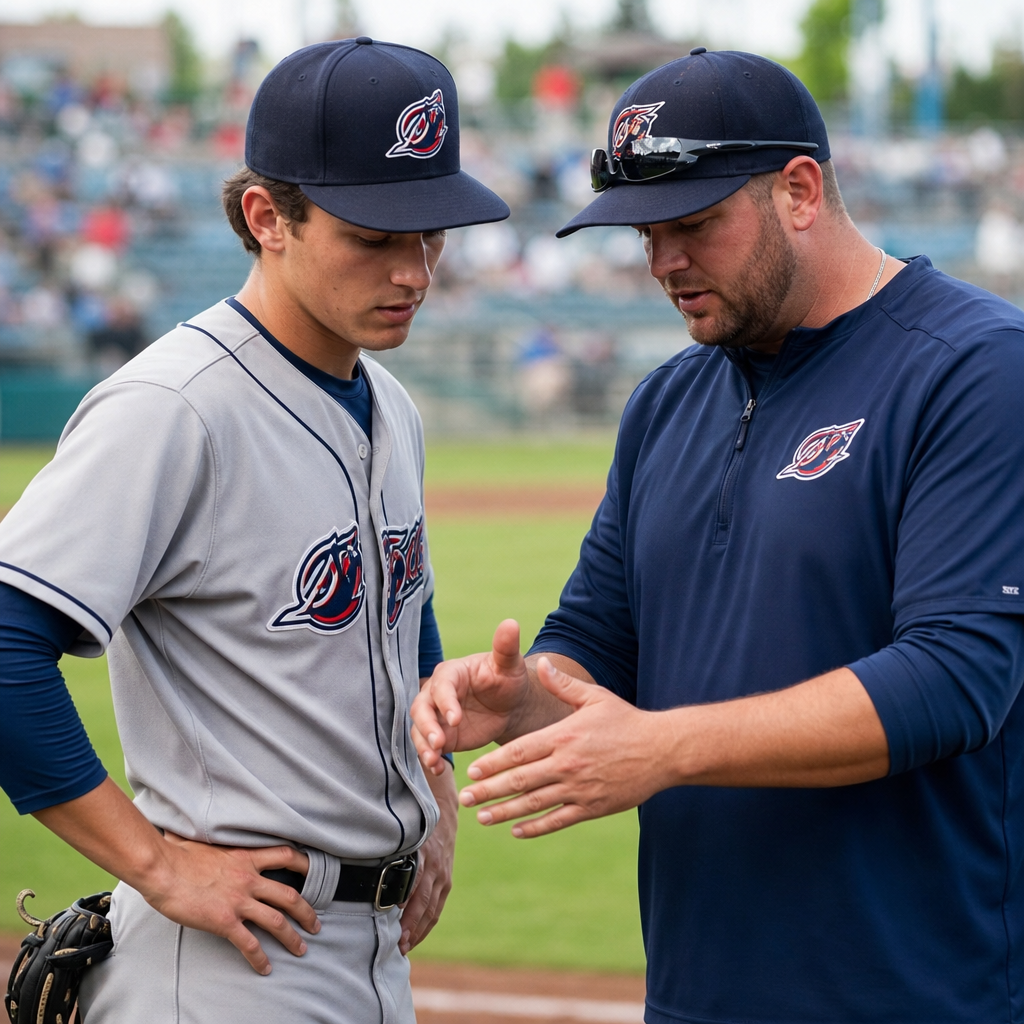
Minor league coaches rarely appear on highlight reels, yet they shape the mechanics, routines, and decision-making that determine whether raw talent becomes major league production. In professional baseball, player development means the structured process of turning amateur signees, international prospects, and depth players into athletes who can execute against better competition over a 140-game season and, for a smaller group, in the majors. Coaches at rookie ball, Single-A, High-A, Double-A, and Triple-A are central to that process because they translate front-office plans into daily habits. I have seen the difference firsthand: the players who improve fastest are not always the most gifted, but the ones whose coaches identify one fix, reinforce it every day, and connect it to game results. For anyone following minor leagues and college baseball, understanding these coaches matters because they explain why some organizations keep producing useful players while others cycle through prospects without turning tools into dependable skill.
What minor league coaches actually do every day
The public often imagines minor league coaches as simplified versions of big league managers, but their job is broader and more instructional. A hitting coach may spend the afternoon on bat path efficiency, then review swing decisions after the game with video from Synergy or TrackMan-enabled systems. A pitching coach can move from discussing four-seam carry and vertical approach angle to managing a starter’s between-start throwing plan, recovery work, and fielding practice. Position coaches work on first-step reads, relay footwork, tag application, pre-pitch posture, and communication. Strength and conditioning staff, athletic trainers, and performance coordinators overlap with the coaching group, so development is collaborative rather than isolated.
At the affiliate level, coaches are also translators between departments. The front office may set organizational goals such as improving zone contact, reducing chase rate, or increasing sweep on a breaking ball, but players need those priorities turned into drills they can feel. Good coaches know when to use data and when to simplify. A 20-year-old infielder does not need a lecture on biomechanics before first pitch; he may only need one cue about staying through the middle of the field or clearing his hips on a double-play feed. The best staffs present information in layers, matching the player’s age, confidence, and learning style.
Development in the minors is also different from pure winning, and coaches must balance both. They still prepare lineups, manage bullpens, and teach game awareness, but their success is judged by growth. If a pitcher is required to throw more changeups in hitter’s counts, his short-term ERA may rise even while his long-term outlook improves. If a catcher is focusing on one-knee receiving, his framing and throwing times may fluctuate before stabilizing. Coaches protect that process. They create an environment where players can fail in service of better future outcomes without feeling lost.
Why player development depends on trust, repetition, and communication
Mechanical instruction is only part of player development. Trust is what allows instruction to stick. Most minor leaguers are living on modest salaries, riding buses overnight, adjusting to new cities, and dealing with promotions, injuries, and release anxiety. When a coach earns credibility through consistency, players accept harder truths about their game. That is especially important for prospects coming from college baseball, where many were stars and now face professional pitchers with sharper command, better carry, and more advanced sequencing. The emotional adjustment is real, and coaches are often the first people who keep a player from spiraling after a bad month.
Repetition is the second pillar. Improvement rarely comes from one breakthrough conversation. It comes from controlled, measurable work repeated until it becomes automatic under stress. For hitters, that may mean daily machine work to recognize velocity at the top of the zone, short-box drills for pitch recognition, or opposite-field rounds to improve adjustability. For pitchers, it could be grip experimentation, plyo-ball work, flat-ground command sessions, and post-outing video review. Players develop because coaches build routines that survive fatigue, travel, and slumps.
Communication is the third pillar because modern development is information-dense. Organizations collect data from Rapsodo, Hawk-Eye, blast sensors, force plates, and high-speed cameras. None of that matters unless coaches can explain what is actionable. A productive coach might tell a pitcher, “Your slider shape is fine, but your release height is drifting and hitters are seeing it early,” instead of burying him in numbers. The same principle applies to fielders learning positioning and hitters managing swing decisions. Clear communication shortens the gap between analysis and performance.
How coaches shape hitters, pitchers, and defenders
Every player enters pro ball with strengths, but coaches decide how those strengths are sharpened. With hitters, the focus is usually a blend of swing mechanics, plate discipline, and game planning. A player with elite bat speed may still need help controlling the strike zone. Coaches use heat maps, swing-decision grades, and attack-angle feedback to determine whether the issue is timing, approach, or contact quality. When I have watched effective hitting coaches at work, they rarely rebuild a swing just because it looks unusual. They identify what limits performance against better pitching, then target that bottleneck first.
Pitching development is even more individualized. Some arms need velocity gains through strength work and mechanical efficiency. Others already throw hard and need command, better secondary shapes, or a plan for facing hitters multiple times. Modern pitching coaches often classify arsenals by movement profile, release traits, and batter handedness. A sinker-slider pitcher may be taught to attack right-handers differently than a four-seam/curveball starter with steep vertical movement. Coaches also teach holding runners, fielding bunts, controlling tempo, and reading swings, because run prevention is broader than strikeout rate.
Defense and baserunning receive less public attention but often determine who reaches the majors as a bench player or role-specific contributor. Infield coaches refine footwork angles, exchange speed, and internal clocks. Outfield instructors teach route efficiency, wall work, and throwing mechanics to preserve carry and accuracy. Catching coaches are especially influential because their players manage game calling, receiving, blocking, pop times, and pitcher relationships simultaneously. Many backup catchers stay in professional baseball because coaches helped them turn game-management skill into a reliable asset. That pattern appears across positions: the minor league coach helps a player find the one above-average tool that can carry him upward.
The tools and standards that make coaching more effective
Technology has changed player development, but it has not replaced coaching judgment. TrackMan and Hawk-Eye provide pitch characteristics, exit velocity, launch angle, and defensive movement data. Rapsodo helps pitchers understand spin efficiency and induced movement. Edgertronic cameras reveal hand position, seam orientation, and contact detail too fast for the naked eye. Force plates and motion-capture systems can show how efficiently a player creates force through the ground. Used correctly, these tools help coaches separate symptoms from causes.
Baseball standards also matter. Organizations now borrow from motor learning, workload monitoring, and evidence-based strength programming instead of relying only on tradition. Coaches align throwing progressions with medical staff, use objective benchmarks during rehab, and structure bullpens with clear intent rather than random volume. Hitting groups increasingly distinguish between training for bat speed, contact accuracy, and swing decisions because each demands different practice design. The best coaches are not anti-technology or blindly pro-technology; they use tools to support observable change.
| Development area | Common coaching tool | What it helps answer | Practical example |
|---|---|---|---|
| Pitch design | Rapsodo, TrackMan | Does the pitch have usable velocity, spin, and movement? | A coach adjusts a slider grip to add sweep against same-side hitters. |
| Hitting mechanics | High-speed video, bat sensors | Is the barrel entering the zone on time and staying through contact? | A hitter shortens his load after video shows late launch against velocity. |
| Defense | Video review, positioning data | Are first steps and routes efficient? | An outfielder improves reads by rehearsing pre-pitch setup and crossover timing. |
| Workload management | Wellness reports, force plates | Is fatigue affecting performance or injury risk? | A starter’s between-start work is reduced after lower-body output drops. |
Real-world examples of coaching impact in the minors
Organizations with strong development reputations repeatedly show how much affiliate coaches matter. Tampa Bay has long been praised for aligning instruction from level to level, allowing players to hear the same language about approach and execution as they move upward. Cleveland has developed pitchers by pairing analytical clarity with pitch-usage discipline. Los Angeles and Baltimore have invested heavily in technology and communication, but the real advantage comes when coaches convert that information into routines players can repeat every day. The organizational philosophy only becomes real when a coach in Bowling Green, Akron, Tulsa, or Aberdeen teaches it on the field.
The path from college baseball to pro ball offers another useful example. Many college hitters arrive with strong production, then struggle against professional velocity bands and breaking-ball quality. Coaches help them adapt by narrowing early-count plans, improving swing decisions, and introducing machine settings that replicate high-spin fastballs and sweepers. College pitchers often face the opposite challenge: they may have dominated with one quality pitch, but pro ball requires a full arsenal and more precise execution. Minor league coaches build those missing pieces without discarding what made the player successful in college.
Not every success story belongs to a top prospect. Coaches also rescue careers for players who would otherwise be labeled organizational depth. A corner infielder may learn first base and improve swing decisions enough to become a call-up option. A reliever with fringe command may simplify his mix and become useful in leverage. A catcher might never hit much, but if he learns to receive, prepare pitchers, and control the running game, he can sustain a long career. These outcomes are common in the minors, and they are usually traced to patient coaching rather than a sudden miracle adjustment.
Challenges, tradeoffs, and why this hub matters
Minor league coaching is not easy, and the limits are real. Staffs work with large rosters, uneven facilities, constant travel, and players from different language backgrounds. Development timelines can be interrupted by injuries, promotions, and front-office directives. There is also tension between standardization and personalization. An organization needs a shared philosophy, but players are not identical. A coach who forces every hitter into the same movement pattern or every pitcher into the same shape profile will miss individual strengths. Good development systems solve this by standardizing language, checkpoints, and objectives while leaving room for customized execution.
Another challenge is evaluation. Fans often judge coaches by affiliate win-loss records or by whether a famous prospect reached the majors, but that is too narrow. Better questions are: Did the player’s strike-zone judgment improve? Did the pitcher gain a usable secondary offering? Did the defender become playable at a premium position? Did the coach help the player adjust after failure? Those are the indicators that predict organizational health over time. They also explain why this miscellaneous hub matters within the broader minor leagues and college baseball landscape. It connects player development, scouting translation, performance science, mental skills, injury management, and roster building into one practical topic.
The clearest takeaway is simple: minor league coaches are the infrastructure behind player growth. They teach the fundamentals that survive pressure, they interpret technology without overwhelming athletes, and they build trust in a setting where failure is constant. When you follow prospects, track farm systems, or compare organizations, do not stop at tools and rankings. Look at the coaches, the routines, and the development language that support them. That is where careers are quietly made. Explore the rest of this subtopic hub to go deeper into college-to-pro transitions, developmental methods, and the overlooked systems that keep baseball talent moving forward.
Frequently Asked Questions
Why are minor league coaches so important to player development in professional baseball?
Minor league coaches are essential because they are the people who turn talent into repeatable performance. A prospect may arrive with raw tools such as bat speed, arm strength, athleticism, or a sharp breaking ball, but those traits alone do not guarantee success over the long grind of a professional season. Coaches help players translate ability into professional habits, consistent mechanics, and better in-game decisions. That means teaching a hitter how to recognize spin earlier, helping a pitcher repeat his delivery under fatigue, or showing a young infielder how to position himself based on scouting information and game situation.
Just as important, these coaches work in the daily reality of development rather than the spotlight of game highlights. They supervise early work, cage sessions, bullpen plans, conditioning routines, defensive drills, recovery schedules, and postgame review. At the rookie ball, Single-A, High-A, and Double-A levels, players are often adjusting not only to better competition but also to the demands of a 140-game season, travel, failure, and the need to improve while still competing. Minor league coaches provide the structure that keeps that process moving forward. Their impact is often invisible to fans, but within an organization, they are central to whether a player stagnates, survives, or eventually contributes in the majors.
What do minor league coaches actually teach beyond basic baseball skills?
Minor league coaching goes far beyond simply telling players how to swing, throw, or field. At this level, development is holistic. Coaches teach routines, preparation, adaptability, emotional control, and professional standards. For example, a hitting coach is not only focused on the swing path itself but also on timing mechanisms, pitch selection, approach with two strikes, how a player responds after a bad at-bat, and how to build a pregame routine that keeps adjustments manageable over a long season. A pitching coach is not only refining velocity or movement but also game planning, sequencing, controlling the running game, recovering between outings, and understanding when a pitcher’s body language or mechanics suggest fatigue.
They also teach players how to process information. Modern player development blends traditional instruction with data, video, and performance tracking. Coaches help players use that information without becoming overwhelmed by it. A player may hear about launch angle, chase rate, spin efficiency, or vertical break, but those terms only matter if a coach can connect them to simple, actionable changes. In addition, coaches serve as translators between organizational philosophy and individual need. Not every player learns the same way, so successful coaches tailor instruction based on age, experience, confidence, physical maturity, and learning style. In many cases, what separates a strong development coach from an average one is the ability to make complex concepts practical and repeatable.
How do minor league coaches influence a player’s mental approach and long-term growth?
The mental side of player development is one of the most important and least visible parts of a minor league coach’s job. Baseball is built on failure, and the minor leagues add extra pressure because players are trying to improve, compete, and earn promotions at the same time. Young hitters go through extended slumps. Pitchers lose command for weeks. Position players may struggle with unfamiliar assignments or positional changes. Minor league coaches help players handle those moments without letting short-term frustration derail long-term progress.
Good coaches create perspective. They teach players how to separate process from outcome, which is critical in a sport where a hard-hit ball can become an out and a poor pitch can still produce a harmless result. They encourage routines that stabilize performance, such as between-pitch breathing, postgame review habits, and clear pregame goals. They also help players understand what the organization values at each stage of development. Sometimes a pitcher is asked to throw a changeup in key counts, even if it leads to rough box-score results, because the long-term value of developing that pitch is greater than the short-term goal of surviving one outing. Likewise, a hitter may be challenged to improve swing decisions rather than simply chase batting average. Coaches reinforce patience, resilience, and self-awareness, all of which are necessary for a player to progress from talent to dependable professional.
How do coaches at different minor league levels contribute to development from rookie ball to Double-A?
Each level of the minor leagues presents a different developmental challenge, and coaches adjust their priorities accordingly. At rookie ball and in the lower levels, the emphasis is often on foundations. Players are learning professional routines, adapting to better instruction, and beginning to understand how much more precise the game becomes at each step. Coaches may focus heavily on basic defensive positioning, body control, strike-zone awareness, pitch usage, tempo, and the daily discipline required to stay physically and mentally prepared. This stage is often about building repeatability and introducing organizational language and expectations.
As players move into Single-A and High-A, coaches typically work on sharpening tools into usable skills. Raw athleticism must start producing more reliable game actions. Hitters are expected to make better swing decisions and handle more advanced sequencing. Pitchers must command secondary pitches more consistently, execute game plans, and recover effectively between appearances. Defensive expectations also rise, with more attention to reads, internal clock, situational awareness, and communication.
By Double-A, development often becomes more advanced and more selective. This is where many organizations believe true prospect status is tested, because players are facing opponents with stronger command, better scouting awareness, and fewer obvious weaknesses. Coaches at this level often focus on refining major league-caliber habits, helping players make quicker adjustments, and preparing them for the strategic detail of upper-level baseball. The instruction becomes less about broad correction and more about fine-tuning. Across all levels, the coach’s role evolves, but the mission stays consistent: help the player meet the demands of tougher competition while building skills that can hold up over time.
Why don’t minor league coaches get more public recognition if their impact is so significant?
Minor league coaches usually work outside the public eye because their contributions are gradual, developmental, and difficult to capture in a single moment. Fans tend to remember home runs, strikeouts, walk-off plays, and major league debuts. What they do not always see is the months or years of instruction behind those moments: the grip change that improved a breaking ball, the stance adjustment that helped a hitter cover the inner half, the defensive footwork drilled every afternoon, or the confidence rebuilt after a rough stretch. Development rarely happens in a straight line, and the people guiding that process often remain anonymous unless a player later speaks publicly about their influence.
There is also a structural reason. Minor league baseball is designed to support the major league roster, so the spotlight naturally follows the players who arrive in the big leagues and the staff working there. Yet inside organizations, minor league coaches are often highly valued because they shape the pipeline itself. They help determine whether a club can produce contributors internally rather than constantly relying on expensive outside solutions. In that sense, their impact reaches far beyond individual players. Strong coaching at the lower levels improves organizational depth, reinforces a consistent development philosophy, and creates a more sustainable path to major league success. They may be unsung publicly, but within player development departments, their role is understood as foundational.