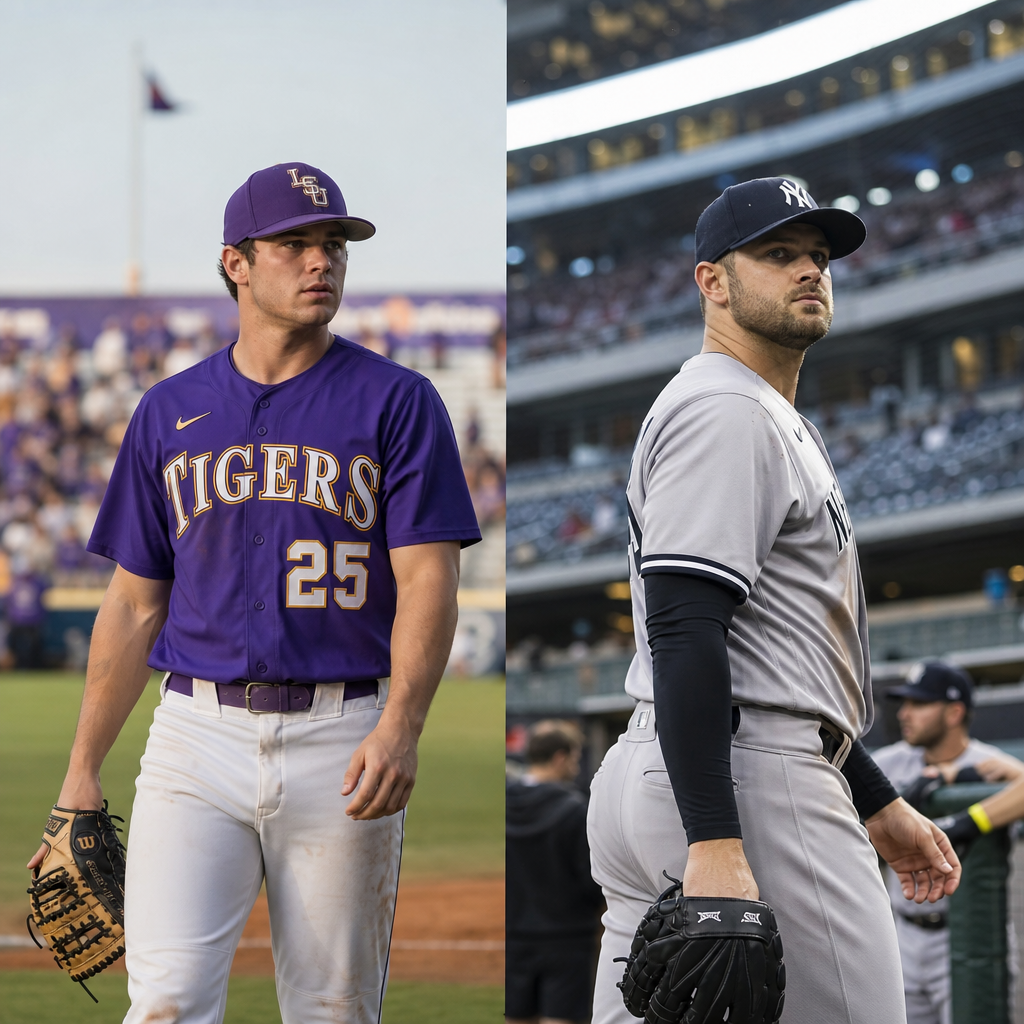
Moving from college baseball to professional baseball is one of the most demanding transitions in American sports because the jump changes everything at once: competition level, schedule volume, financial reality, player development expectations, and the daily structure of life. College players often arrive with strong tools, polished routines, and a track record of success, but professional baseball asks for a different kind of durability. The game becomes a job, not a semester-based season, and every decision starts to influence long-term advancement.
When people say “the majors,” they usually mean Major League Baseball, but the path runs through affiliated minor league systems, complex leagues, spring training environments, and development checkpoints that are far less visible than draft night. “Transitioning to professional baseball” means adapting from NCAA, junior college, or NAIA competition into an organization’s player development system, where performance is measured not only by batting average or ERA, but also by swing decisions, velocity characteristics, biomechanics, recovery quality, and how quickly a player can absorb coaching.
I have worked around players making this jump, and the common misconception is that talent alone carries the move. It does not. The players who handle the transition best understand the professional calendar, learn how roster movement works, build routines that survive bus travel and fatigue, and treat development data as part of their craft rather than as criticism. This matters because the margin between moving up and getting released is small. A college star can become organizational depth quickly if he does not adjust, while a less celebrated player can rise by showing consistency, coachability, and physical resilience over a long season.
As a hub page for miscellaneous topics within minor leagues and college baseball, this guide explains the full landscape: what changes after college, how the draft and signing process works, what daily life looks like, what teams evaluate, where players struggle, and how families can support the process. If you want a clear answer to what it really takes to go from college to the majors, start with this: professional baseball rewards adaptable players who can stay healthy, learn fast, and perform under relentless repetition.
Understanding the Path from Campus Baseball to an MLB Organization
For most players, the first formal step is the MLB Draft, though some enter pro ball as nondrafted free agents. Draft status matters because it affects signing bonus size, organizational investment, and often the amount of developmental runway a player receives. Still, draft round is not destiny. Every year, college seniors sign for modest bonuses and force their way onto prospect boards through pitch design gains, defensive versatility, or improved swing decisions. Professional scouting departments care about present skill, projection, and traits that can scale against better competition.
College baseball itself is not one uniform feeder system. Division I players typically face the strongest weekly competition, but junior colleges produce many pro players because they offer regular playing time and draft flexibility. NAIA and Division II programs also send players into affiliated baseball, especially pitchers with velocity growth or position players with standout athletic markers. Scouts build reports using live looks, TrackMan data, bat speed measures, 60-yard times, arm strength, and makeup observations. By the time a player signs, the organization usually has a detailed idea of what it wants to build.
After signing, players are assigned into a development chain that may include rookie-level environments, Single-A, High-A, Double-A, and Triple-A. The exact starting point depends on age, polish, organizational need, and health. College players often begin higher than high school signees because they are older and have more game experience, but that advantage disappears quickly if the performance does not hold. Double-A is commonly described inside the industry as the biggest separator because mistakes get punished and opponents can execute advanced plans consistently.
Roster movement is another major adjustment. In college, a player usually knows his team and role for months at a time. In pro ball, promotions, rehab assignments, releases, trades, and option decisions can reshape a clubhouse overnight. Players have to learn that instability is normal. The professionals who stay grounded tend to focus on what they control: preparation, communication with coaches, and readiness when opportunity opens.
The Biggest Differences Between College Baseball and Professional Baseball
The most obvious difference is volume. A strong college team may play around 56 regular-season games before postseason play. A full minor league season can push a player past 130 games, with travel, early work, strength sessions, and night games compressing recovery time. Pitchers feel this through innings management and between-start routines. Position players feel it in soft-tissue maintenance, sleep discipline, hydration, and mental fatigue. Over six months, small habits become career factors.
Another difference is the quality of information. College programs increasingly use advanced technology, but pro organizations integrate data into nearly every layer of instruction. Hitters review chase rate, zone-contact percentage, attack angle, exit velocity bands, and swing decisions by pitch type. Pitchers evaluate induced vertical break, horizontal movement, spin efficiency, release height, extension, and arsenal fit. Catchers are graded on receiving, game-calling adaptability, and throw quality, while defenders are assessed through first-step efficiency and positional versatility. The language of development becomes more technical, and players need to understand it without losing athletic freedom.
Competition also changes in a subtle but decisive way. In college, weekend aces and elite conference opponents create high-level tests, but there is still wider variance across rosters. In pro ball, even lower-level players often have one carrying tool that can alter a game. A reliever may have a true plus fastball. A bench outfielder may run elite times and defend at a premium level. A backup catcher may have advanced receiving skills that keep him employed for years. The floor rises, and surviving requires complete baseball competency, not just one standout trait.
Financial and lifestyle realities are equally important. Even with recent pay improvements in the minors, most players are not living comfortably. Housing, nutrition, equipment needs, off-season training, and family support all matter. College players used to structured academic support may find the professional environment more independent. No one is checking class attendance anymore. Instead, the player has to self-manage meals, sleep, recovery, and offseason progress. That independence separates mature professionals from talented but inconsistent prospects.
What Professional Organizations Actually Evaluate
Players often assume organizations only want immediate statistics, but front offices and development staffs balance outcomes with underlying indicators. A hitter batting .240 can still be viewed positively if he controls the strike zone, impacts the ball in productive launch windows, and handles velocity and spin in ways that project upward. Conversely, a hitter batting .310 with poor swing decisions may be seen as vulnerable if the contact quality is weak or the approach depends on lower-level mistakes. The same is true for pitchers. ERA matters, but strikeout rate, walk rate, chase generation, quality of contact allowed, and pitch-shape sustainability often matter more.
Coaches also evaluate routine quality. Can the player make meaningful adjustments between series? Does he show up early for treatment? Does he understand reports and execute game plans? Is he mentally available after failure? In professional baseball, makeup is not a vague character label. It shows up in repeatable behaviors under stress. The players who rise fastest are usually the ones who can absorb information, maintain confidence without denial, and compete with emotional control.
Defensive value is often underestimated by college stars. In pro ball, roster flexibility creates opportunity. An infielder who can handle shortstop, second, and third has more paths to stay on the field. An outfielder with center-field competence carries more value than a corner-only player with similar offense. A catcher who blocks well and manages pitchers may advance despite modest hitting. Organizations are not only selecting the best pure talent; they are building usable rosters across levels.
| Area | College Emphasis | Professional Emphasis |
|---|---|---|
| Hitting | Production, lineup role, game results | Decision quality, contact quality, projection against better stuff |
| Pitching | ERA, innings, weekend reliability | Stuff characteristics, command trends, arsenal optimization |
| Defense | Primary position competence | Versatility, range, arm utility, run prevention value |
| Preparation | Team routine directed by staff | Self-management, recovery discipline, adjustment speed |
Medical history and physical durability are constant evaluation points. Strength gains help, but pro clubs want strength that supports availability, not just better testing numbers. Shoulder integrity, hamstring resilience, workload history, and recovery behavior all influence internal decisions. The best ability in a long season remains availability.
Daily Life in the Minor Leagues: Travel, Routine, and Mental Adjustment
The romance of “playing pro ball” fades quickly when players meet the daily grind. Early work can start in the afternoon, followed by batting practice, meetings, treatment, game preparation, the game itself, postgame lifting or recovery, and then overnight bus travel. Nutrition is inconsistent unless the player plans carefully. Sleep can become fragmented. Clubhouse energy fluctuates because players are competing for advancement while trying to be good teammates. Learning to function inside that environment is a professional skill.
For pitchers, routine is identity. Starters need a between-start structure that includes recovery, mobility, throwing progression, scouting review, strength work, and bullpen intent. Relievers face a different challenge: staying physically ready amid uncertain usage. Position players need equally disciplined systems for cage work, defensive prep, sprint exposure, and recovery. The players who last are rarely the ones doing the most; they are the ones doing the right things consistently.
Mental adjustment is where many transitions stall. In college, players often have established status. In pro ball, everyone was a standout somewhere. Failure arrives more often, and there is less time to process it. A hitter can go 2-for-20 against arms that expose a hole. A pitcher can lose conviction when a pitch shape that dominated in college gets tracked easily by professional hitters. The answer is not blind positivity. It is honest feedback, fast learning, and a routine strong enough to prevent emotion from hijacking performance.
Support systems matter here. Veteran teammates, coordinators, sports psychologists, and trusted family members can all help a player maintain perspective. The best organizations communicate clearly and create individualized plans, but even elite systems cannot remove the need for self-awareness. A player who knows how to ask good questions and apply coaching will move faster than one waiting to be rescued.
Training, Nutrition, and Skill Development That Translate Upward
Professional advancement depends on targeted improvement, not generic hard work. In the offseason, hitters often need plans centered on pitch recognition, bat speed, strength at useful movement angles, and swing decisions under game-like constraints. Pitchers need throwing programs tied to command, velocity maintenance, recovery markers, and pitch design goals. Tools such as TrackMan, Rapsodo, Blast Motion, force plates, and high-speed video are common because they connect feel to measurable change. Used well, these tools clarify development. Used poorly, they create noise and overcorrection.
Nutrition is no longer optional detail. The long season punishes underfueling. Players who consistently consume enough protein, hydrate aggressively, and plan travel meals recover better and hold performance longer. Body composition goals should match positional demands. A catcher may need different mass and mobility priorities than a center fielder. A starting pitcher may need to protect power output deep into the season, while an infielder may prioritize repeat sprint quality and rotational resilience. There is no single ideal baseball body, but there are clear physical requirements for each role.
Skill development must also match game reality. I have seen players dominate winter workouts and then stall because practice did not transfer. Effective development is specific. Hitters should train against velocity, ride, sweep, and decision pressure. Pitchers should practice executing arsenals to actual game targets, not simply chasing radar-gun highs in isolated bullpens. Defenders should train first-step reads, throwing from multiple slots, and communication under speed. The question is always the same: will this help the player win pitches and outs against better competition?
Common Obstacles, Career Timelines, and How Families Can Help
The biggest obstacle is assuming progress will be linear. It rarely is. Players may repeat levels, change positions, alter mechanics, or move from starter to reliever. Some break out after a pitch-design change or swing adjustment in their mid-twenties. Others peak early and struggle once opponents find weaknesses. Because baseball development is uneven, timelines vary widely. A polished college reliever might reach the majors quickly. A position player with tools but raw approach may need years. Patience is essential, but so is realism. Not every professional player reaches MLB, and honest evaluation protects careers.
Injuries are another major obstacle. Elbow and shoulder issues remain common for pitchers, while hitters frequently battle hamstring, wrist, oblique, and hand problems. Prevention is never perfect, but load management, sleep, movement quality, and communication reduce avoidable risk. Players who hide pain to appear tough often create bigger setbacks. Professional toughness includes reporting issues early enough to manage them.
Families can help by understanding what support actually looks like. It is not constant technical advice from the stands or panic after a bad week. It is stable encouragement, financial planning where possible, respect for the player’s routine, and emotional steadiness during demotions or slumps. Agents, advisors, and college coaches can also provide perspective, especially around signing decisions, offseason training choices, and whether to pursue independent leagues or other opportunities if affiliated baseball closes.
The transition from college to the majors is not one leap. It is a chain of adaptations: getting drafted or signed, surviving the minors, improving specific skills, staying healthy, and earning trust at each level. The players who make it usually combine talent with durable habits, honest self-assessment, and a willingness to evolve. If you are building your path through minor leagues and college baseball, use this hub as a starting point, then map your own process with the same discipline professional organizations expect every day.
Frequently Asked Questions
What is the biggest difference between college baseball and professional baseball?
The biggest difference is that professional baseball transforms the sport from a seasonal competitive experience into a full-time occupation built around long-term performance, consistency, and development. In college, players balance games, training, classes, and campus life within a relatively structured academic calendar. In pro baseball, that structure changes completely. The season is much longer, the travel is more demanding, and the expectation is that a player will show up ready to compete, recover, adjust, and repeat that process almost every day for months at a time. That level of repetition exposes every weakness in a player’s routine, whether physical, mental, or emotional.
Another major shift is the quality and depth of competition. In college, even top programs can face uneven talent from one series to the next. In professional baseball, nearly every player was a standout somewhere before arriving. That means mistakes are punished more often, and success depends less on flashes of ability and more on execution, discipline, and adaptability. A hitter may face better command and more advanced secondary pitches than ever before, while a pitcher quickly learns that pro hitters can punish any pitch left in a vulnerable spot.
There is also a philosophical change. College baseball often prioritizes winning within the season, while professional organizations focus heavily on player development, projection, and role definition. A player might be asked to change mechanics, alter an approach at the plate, add a pitch, refine defensive positioning, or embrace a completely new routine because the organization is thinking about what that player can become over several years, not just what helps this weekend. That can be a difficult adjustment for players who are used to succeeding with the style that got them drafted. In professional baseball, talent gets you in the door, but professionalism, durability, and the ability to make adjustments determine how long you stay.
How does the professional baseball schedule affect players coming out of college?
The professional schedule is one of the most difficult parts of the transition because it tests physical stamina, mental endurance, and daily discipline all at once. College players are used to a demanding season, but the pro calendar is much more relentless. Instead of building around a class schedule and a concentrated spring season, players enter an environment where games, workouts, recovery, travel, meetings, and preparation stretch across a much longer period with fewer natural breaks. The result is that fatigue becomes part of the job, and players must learn how to perform even when they do not feel fresh.
This matters because professional baseball rewards consistency more than short bursts of excellence. A player can no longer rely only on adrenaline, talent, or weekend intensity. He has to develop routines that support his body and mind over time: sleep habits, nutrition, hydration, mobility work, pregame preparation, postgame recovery, and emotional reset. Players who fail to establish those habits often see their performance decline as the season wears on, not because they lack ability, but because they are not yet prepared for the volume of work the game demands.
The schedule also affects how players think about slumps and success. In college, a bad week can feel enormous because the season is shorter and every series carries major weight. In pro ball, players must zoom out. There are too many games to ride every high or panic after every low. Learning to stay even-keeled is essential. The players who transition best are usually the ones who understand that the professional schedule is not just about surviving more games. It is about building a repeatable lifestyle that allows performance to hold up over a long season, under constant evaluation, with very little room for poor preparation.
What role does player development play after a college athlete enters professional baseball?
Player development becomes central the moment a college athlete enters professional baseball. Even players who arrive with strong résumés, polished mechanics, and significant college success quickly discover that organizations are not simply looking at what they are now. They are evaluating what they can become. That means every part of a player’s game may be studied in detail, from swing decisions and bat path to movement profiles, velocity trends, defensive efficiency, recovery habits, and mental approach. Professional baseball is far more data-driven and individualized than many players expect, and development plans are often tailored to specific long-term goals.
For some players, this is exciting because it offers resources they may never have had before, including advanced analytics, video breakdown, strength and conditioning support, nutrition guidance, and specialized coaching. For others, it can be uncomfortable. A pitcher who dominated in college with command and competitiveness may be told he needs to improve pitch shape or add velocity. A hitter who posted strong numbers may be asked to adjust swing mechanics, refine zone control, or alter his approach against certain pitch types. These changes can feel disruptive, especially when a player is proud of the style that brought him success.
The key is understanding that professional development is rarely about tearing a player down. It is about increasing the margin for success against better competition. The athletes who make the strongest transition are usually the ones who stay coachable without becoming passive, ask smart questions, embrace feedback, and learn how to blend organizational instruction with their own feel for the game. Development in pro baseball is not a one-time adjustment. It is an ongoing process of refinement. Players who treat that process seriously give themselves a much better chance to move through the system and handle the demands of higher levels.
How do finances and lifestyle change when a player moves from college baseball to the professional ranks?
The financial and lifestyle adjustment can be more dramatic than many people realize. In college, much of a player’s daily environment is built into the institution. Housing, meals, training resources, transportation support, and a structured schedule are usually part of the experience in some form. Once a player enters professional baseball, especially in the minor leagues, he often has to become much more self-managed very quickly. Even with improved support systems in recent years, the lifestyle still demands maturity, planning, and practical decision-making that many young athletes are navigating for the first time.
Financially, the early professional years are not always glamorous. While getting drafted or signing a contract is a major achievement, day-to-day life in pro baseball may involve tight budgets, shared housing, long bus rides, unfamiliar cities, and constant movement. Players have to learn how to manage money responsibly, maintain healthy habits on the road, and create routines without the built-in framework of campus life. That includes finding ways to eat well, recover properly, stay organized, and handle downtime productively. Those off-field details may not attract much attention from fans, but they directly affect performance.
Lifestyle changes also include a shift in identity and accountability. In college, players are often surrounded by teammates their own age, coaches who see them daily in a school setting, and a support network that is relatively stable. In pro baseball, the environment can feel more fluid and more transactional. Rosters change, promotions and demotions happen, and players are constantly being evaluated. That reality can be motivating, but it can also be emotionally taxing. The players who adapt well tend to approach professional baseball like a career from day one. They learn to handle money carefully, protect their routines, communicate effectively, and take ownership of their lives beyond the field.
What helps a college player successfully transition and eventually reach the major leagues?
The players who transition most successfully usually combine talent with adaptability, resilience, and a professional mindset. Raw ability still matters, of course, but once a player enters pro baseball, nearly everyone around him is talented. What separates players over time is the ability to make adjustments without losing confidence, stay consistent through failure, and take responsibility for daily preparation. Reaching the major leagues is rarely about dominating right away. More often, it is about showing that your game can hold up as the environment gets harder, the scouting gets better, and the margin for error gets smaller.
One of the most important factors is routine. Players who learn how to prepare with purpose tend to create more stable performance over a long season. That includes early work, strength maintenance, recovery, film study, mental preparation, and honest self-assessment. It also includes understanding that success in professional baseball is often incremental. A hitter may need to improve swing decisions before the numbers fully show it. A pitcher may need to sharpen fastball command or build trust in a secondary pitch before advancing. Progress is not always linear, and players who expect immediate results often struggle when development takes time.
Mental toughness is another major piece of the puzzle, but not in the simplistic sense of just being intense or confident. Real mental toughness in professional baseball means staying composed during slumps, accepting coaching, handling failure without panic, and maintaining belief while continuing to work on the right things. It also means understanding the business side of the game without becoming distracted by it. Promotions, setbacks, role changes, and roster movement are all part of the journey. The players with the best chance to reach the majors are usually the ones who stay committed to improvement, embrace the realities of the professional game, and prove over time that they can perform, adapt, and endure.