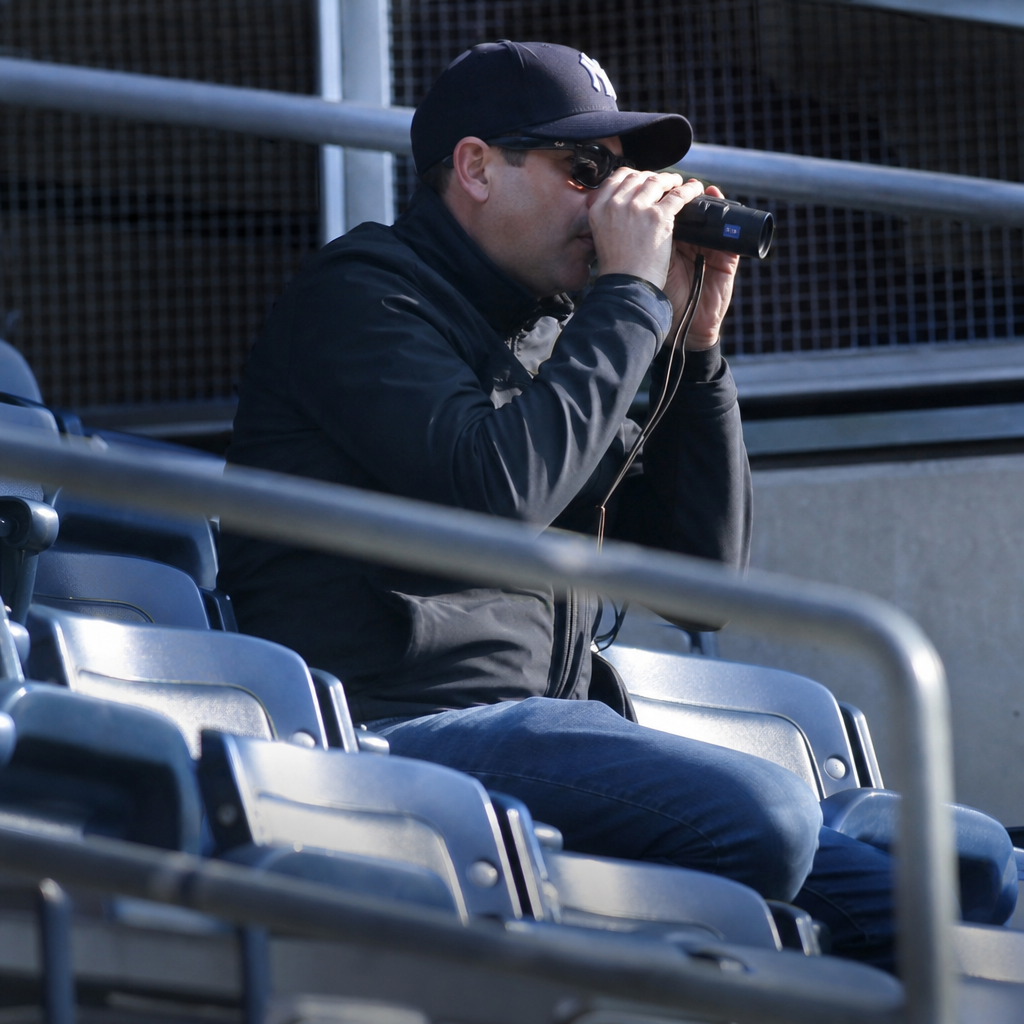
The Yankee Stadium spy incident sits at the strange intersection of baseball folklore, gamesmanship, and modern concerns about surveillance. In the broad landscape of sports controversies, it represents a category that does not fit neatly into gambling scandals, labor disputes, steroid cases, or sign-stealing systems built on replay technology. Instead, it belongs to a miscellaneous class of baseball scandals where suspicion, competitive paranoia, and the limits of rule enforcement collide. That makes it an ideal hub topic within scandals and controversies, because it connects to many recurring questions fans ask: what counts as espionage in baseball, how much information gathering is legal, and when does a clever tactic become a scandal?
In baseball, espionage usually means any deliberate attempt to gather strategic information about an opponent through hidden observation, deception, unauthorized access, or technology. The methods can range from a coach with binoculars to employees using cameras, dugout relays, wearable devices, or improperly obtained scouting reports. Yankee Stadium has long served as a natural stage for such stories. It is one of the sport’s most visible venues, a place where rivalry, media attention, and postseason pressure magnify even small incidents into enduring narratives. When an accusation surfaces there, it rarely stays local.
I have worked through enough archival reporting, league memos, and historical accounts to know that many so-called spy incidents in baseball begin with ambiguity. A suspicious person is spotted in a restricted area. An unfamiliar device appears near the dugout. A team employee seems too interested in bullpen traffic, catcher signs, or lineup cards. Sometimes the allegation dissolves under scrutiny. Sometimes it reveals a real violation. What matters is not only what happened in one moment at Yankee Stadium, but what the episode says about baseball’s evolving rules of competitive intelligence.
This article treats the Yankee Stadium spy incident as a hub for the miscellaneous side of baseball controversy. It explains the historical roots of on-field spying, the kinds of conduct that trigger accusations, the difference between legal scouting and illegal surveillance, and why the ballpark itself became linked with espionage claims. It also maps how these incidents are investigated, how Major League Baseball evaluates evidence, and how public memory often turns fragmented reports into legend. The result is a clearer way to understand why baseball espionage scandals remain so compelling even when the facts are incomplete.
Why baseball has always attracted espionage claims
Baseball invites information theft because the sport is built on repeated, visible signals and highly granular tactical decisions. Catchers flash signs. Coaches relay bunt calls. Bullpens prepare relievers in open sight. Advance scouts chart tendencies pitch by pitch. Even without hidden technology, the game offers a large amount of observable intelligence. That creates a constant gray area: teams are expected to study opponents aggressively, but they are not allowed to use prohibited means to decode and transmit information in real time.
The history is older than television. In the dead-ball era, clubs hired skilled sign readers. By midcentury, opposing staff members watched from scoreboards, center-field vantage points, and distant seats. Bobby Thomson’s famous 1951 pennant-winning home run remains tied to the New York Giants sign-stealing operation at the Polo Grounds, where a telescope and buzzer system were reportedly used to relay catcher signs. That case is essential context because it shows that baseball espionage is not a digital-age invention. Technology changed the scale and speed, but not the impulse.
Yankee Stadium naturally appears in these stories because the Yankees have been a central target and central actor in baseball’s competitive ecosystem for more than a century. Rivals wanted any edge against a dominant franchise. Meanwhile, the Yankees operated under the same incentives as everyone else: gather information, protect secrets, and stretch every legal advantage. In that environment, suspicious behavior around dugouts, tunnels, camera wells, or clubhouse access could quickly become front-page controversy, especially during October games when every pitch carried outsized importance.
What people mean by the Yankee Stadium spy incident
The phrase does not always refer to one universally agreed event. In baseball conversation, it often works as shorthand for several Yankees-related allegations involving unauthorized observation, suspicious personnel movement, or improper intelligence gathering at Yankee Stadium. Some accounts center on individuals caught where they should not have been. Others describe employees using visual aids or monitoring areas connected to bullpen use, catcher signs, or opponent preparation. Because reporting has varied by era, the phrase often blends documented facts with retold clubhouse lore.
That ambiguity is important. Not every suspicious episode becomes a formal league scandal. A true espionage case requires evidence: access records, video, witness statements, confiscated devices, or a clear chain showing how information moved from observer to player. Without that, the incident may remain in the category of accusation rather than proven misconduct. Baseball history is full of such half-documented episodes, especially before the league standardized video oversight and security protocols in the late 2010s.
What makes Yankee Stadium cases especially sticky in public memory is the combination of rivalry and symbolism. If a disputed incident occurs in Kansas City or Milwaukee, it may fade. At Yankee Stadium, the same episode can become a national talking point within hours. The venue represents power, money, media saturation, and postseason stakes. That means even a minor confrontation involving a suspicious staffer can be framed as emblematic of baseball’s oldest competitive anxieties.
Legal scouting versus illegal surveillance
The core question in any baseball spy controversy is simple: was the team collecting information in a permitted way, or was it using unauthorized methods to gain a real-time competitive edge? Traditional scouting is legal. Teams can watch games, chart tendencies, analyze public video, study pitcher sequencing, and assign advance scouts to decode visible patterns. Baserunners on second base may try to read signs and relay them by body language, because that information comes from normal in-game observation.
Illegal surveillance begins when a club uses prohibited technology, restricted locations, deceptive access, or unauthorized intermediaries. MLB has drawn increasingly clear lines around live video feeds, wearable devices, in-game electronic communication, and off-field personnel relaying signs to the batter. The distinction matters because baseball accepts cunning but rejects concealed systems that overwhelm the natural balance between pitcher and hitter. I have found that many fan arguments collapse because they ignore timing: studying signs after a game is analysis, but transmitting decoded signs before the next pitch is the violation that changes outcomes.
| Activity | Generally Permitted? | Why It Matters |
|---|---|---|
| Advance scout charts opponent tendencies from the stands | Yes | Uses open observation available to both clubs |
| Runner on second relays signs to the hitter | Yes | Part of ordinary in-game gamesmanship |
| Staff member uses live camera feed to decode signs | No | Creates an artificial real-time advantage |
| Unauthorized person enters restricted area near dugout or tunnel | No | Raises access and surveillance concerns |
| Club uses postgame video to improve future sign systems | Yes | Permitted retrospective analysis |
This framework helps explain why a Yankee Stadium spy incident can seem trivial to one observer and serious to another. If the conduct involved ordinary scouting, it was probably legal. If it involved hidden monitoring or improper access tied to live tactical information, it crossed the line. The challenge for investigators is proving which side of that line the incident occupied.
How stadium design and staff movement feed suspicion
Ballparks are operationally complex places. Security staff, television crews, clubhouse attendants, analytics employees, grounds crew members, and visiting clubhouse personnel all move through overlapping but controlled spaces. Yankee Stadium, old and new, has always had layered infrastructure: dugout tunnels, camera positions, bullpen sightlines, service corridors, press areas, luxury seating, and restricted clubhouse routes. In practice, that complexity creates opportunities for misunderstanding and, in rare cases, exploitation.
During my review of baseball controversy patterns, one recurring feature stands out: many spying allegations begin not with an obvious gadget but with a person who seems out of place. A staffer lingers near a tunnel entrance. An employee with a credential appears to watch bullpen signals instead of doing assigned work. A member of the visiting team notices someone repeatedly occupying the same vantage point with no clear broadcast or security function. In a high-pressure environment, players and coaches are trained to notice anomalies, and they often interpret them through the lens of competitive threat.
Yankee Stadium amplifies this because there are more eyes on everything. National broadcasts add camera crews. Postseason games increase security layers. Rival teams arrive already primed for suspicion because of the stakes and the venue’s mythology. That does not prove wrongdoing, but it explains why espionage stories emerge so easily there. The architecture of a major stadium provides both cover for legitimate work and opportunity for unauthorized observation.
How Major League Baseball investigates suspected spying
When a club raises an espionage complaint, MLB does not rely on rumor alone. Investigators typically seek credential logs, security footage, replay-room records, device usage, witness interviews, and internal communications. Since the commissioner’s office strengthened video rules after several public controversies, clubs operate under more explicit compliance procedures. Replay rooms are monitored more closely, nonessential devices face restrictions, and teams know that unauthorized technology use can trigger fines, draft penalties, suspensions, and reputational damage.
The evidentiary standard matters because baseball has learned from past scandals. In the 2017 Red Sox Apple Watch case and the later Houston Astros sign-stealing investigation, the central issue was not abstract suspicion but demonstrable systems for relaying information. League investigators needed proof of method and transmission. The same logic would apply to any Yankee Stadium spy incident. A person merely being present is suspicious; a person capturing live signs and relaying them is actionable.
There is also a practical challenge. Baseball games generate noise, partial sightlines, and fragmented testimony. One coach may swear a staffer was signaling the dugout. Another may insist he was checking bullpen readiness. Memories sharpen around rivalry and often become more certain after the fact than they were in the moment. That is why credible investigations favor physical evidence over clubhouse conviction. In a stadium filled with cameras, credentials, and electronic logs, the strongest cases are the ones that produce a verifiable trail.
Why these incidents matter beyond one accusation
The value of the Yankee Stadium spy incident as a hub topic lies in what it reveals about baseball culture. First, it shows that the sport has always balanced respect for cunning with fear of systemic cheating. Fans admire a sharp-eyed baserunner who decodes signs naturally. They react very differently to a hidden camera network or a staffer operating from restricted space. The line is moral as much as technical: the game accepts intelligence, but not intelligence gathered through concealed institutional machinery.
Second, espionage controversies expose how trust works between opponents and between clubs and the league. Every team believes others push the rules. The league’s job is to define boundaries clearly enough that competition remains legitimate. When enforcement is inconsistent, suspicion spreads. That is one reason miscellaneous scandals deserve serious attention. They may seem smaller than the Black Sox scandal or the steroid era, but they shape how players interpret fairness on a nightly basis.
Finally, these incidents show how baseball stories harden into legend. A disputed report from Yankee Stadium can outlive the documentation that would confirm or refute it. Over time, the phrase spy incident may describe a mood as much as an event: a belief that in the sport’s most famous venue, someone is always watching, decoding, and searching for the extra inch that separates a flyout from a pennant swing.
For readers exploring scandals and controversies, that is the central takeaway. The Yankee Stadium spy incident is more than a curiosity. It is a gateway into baseball’s long argument over observation, technology, access, and competitive ethics. If you want to understand the miscellaneous side of baseball scandal, start here, then follow the connected stories: sign stealing, unauthorized video, clubhouse security breaches, and the many gray-area episodes that never become formal discipline but still alter how teams guard information. Baseball’s espionage history is not background noise. It is part of how the sport defines what winning fairly actually means.
Frequently Asked Questions
What was the Yankee Stadium spy incident?
The Yankee Stadium spy incident refers to a long-circulating baseball story in which hidden observation, suspicious behavior, and competitive intelligence gathering became part of the folklore surrounding games at Yankee Stadium. Unlike more clearly documented scandals involving gambling, performance-enhancing drugs, or electronically assisted sign stealing, this episode occupies a murkier space. It is remembered less as a single universally agreed-upon crime and more as a symbol of baseball’s long tradition of trying to gain an edge through watchfulness, decoding, and strategic secrecy. In that sense, the “spy” label captures both the drama of the allegation and the uncertainty that has always surrounded it.
What makes the incident so intriguing is that it reflects a period when clubs, coaches, and players often operated in a gray zone between legal observation and improper surveillance. Baseball has always rewarded teams that can anticipate pitches, recognize signals, and notice patterns, but controversy arises when those efforts appear to go beyond ordinary on-field awareness. The Yankee Stadium story persists because it sits exactly at that boundary. It is not simply about whether someone watched too closely; it is about how far a team could go before gamesmanship turned into something fans and rivals would call espionage.
Why does this incident stand apart from other baseball scandals?
This incident stands apart because it does not fit the standard categories that usually define baseball controversy. Most major scandals can be placed into a recognizable framework: gambling threatens the integrity of outcomes, steroid use challenges the fairness of athletic performance, labor disputes concern economics and power, and technology-driven sign stealing raises questions about digital rule-breaking. The Yankee Stadium spy incident, by contrast, belongs to a less tidy class of controversies built on suspicion, rumor, interpretation, and the culture of competitive paranoia. It is not remembered primarily because of a formal punishment or a definitive investigative report, but because of what it suggests about the sport’s obsession with hidden advantage.
That ambiguity is exactly why the story has lasted. Baseball is a sport deeply invested in signs, signals, routines, and patterns, so any allegation of spying resonates immediately with fans and historians. At the same time, the lack of a neat, universally accepted conclusion gives the incident a legendary quality. It becomes a case study in how baseball polices behavior that may be technically difficult to detect, socially normalized in some settings, and fiercely condemned in others. In short, the scandal matters not because it is the biggest, but because it reveals how hard it can be to separate acceptable strategy from unacceptable intrusion.
Was spying or sign watching considered normal in baseball at the time?
To a degree, yes. Baseball has long tolerated, and even admired, a certain level of observational cunning. If a runner on second base picked up a catcher’s signs and relayed them to the batter without the aid of outside tools, many within the sport viewed that as part of the game. Coaches looked for tendencies, players studied habits, and entire teams tried to decode patterns. This kind of gamesmanship was often treated as evidence of baseball intelligence rather than dishonesty. The line was never whether teams tried to learn something; the line was how they learned it.
That distinction is central to understanding the Yankee Stadium spy incident. Allegations of spying become controversial when they suggest hidden devices, off-field vantage points, coordinated surveillance, or methods that exploit architecture and personnel in ways ordinary opponents cannot match. Even before modern technology transformed sign stealing into a major league-wide issue, baseball culture recognized that some forms of information gathering felt different from on-field cleverness. The Yankee Stadium story matters because it dramatizes that uneasy divide. It reminds us that baseball has always operated with unwritten rules as well as written ones, and many scandals emerge precisely when someone appears to violate the spirit of fair competition before the rulebook fully catches up.
Why has the Yankee Stadium spy incident remained part of baseball folklore?
The incident has endured because baseball folklore thrives on stories that combine uncertainty, rivalry, and the possibility of secret knowledge. Fans are naturally drawn to tales in which a famous ballpark becomes more than a setting and instead feels like an active part of the drama. Yankee Stadium, with its iconic status and association with power, pressure, and championships, is the perfect backdrop for a story involving espionage. When a scandal cannot be fully settled, it often becomes even more durable, because each generation can reinterpret it through the concerns of its own era.
In earlier decades, the story could be told as colorful baseball trickery or old-school gamesmanship. In more recent years, it has taken on a sharper relevance because audiences now think more seriously about surveillance, privacy, technology, and institutional oversight. What once sounded like a quirky anecdote can now be understood as part of a broader conversation about how organizations monitor opponents and exploit information. That shift gives the Yankee Stadium spy incident unusual staying power. It survives not just because it is dramatic, but because it keeps meaning something new every time the sport revisits questions about ethics, competitive boundaries, and the methods teams use to win.
What does the Yankee Stadium spy incident tell us about baseball and modern surveillance concerns?
At its core, the incident shows that baseball has long been a proving ground for arguments that now exist everywhere in modern life: when does observation become intrusion, when does innovation become cheating, and how should institutions regulate advantages that emerge faster than rules can adapt? Even if the original episode belongs to an earlier era, its themes feel contemporary. The sport depends on information, and whenever information can be gathered secretly, interpreted quickly, and turned into a competitive edge, controversy follows. That is why this story still resonates. It anticipated a world in which surveillance is not merely a matter of watching, but of converting what is seen into power.
The lasting lesson is that baseball scandals are not always about the most obvious forms of wrongdoing. Sometimes the most revealing controversies are the ones that expose uncertainty in the culture itself. The Yankee Stadium spy incident highlights how leagues struggle to enforce boundaries when technology, architecture, personnel, and intent all overlap. It also reminds fans that sports ethics are rarely static. What seems acceptable in one generation may be condemned in the next, especially once the methods become more systematic or invisible. In that respect, the incident is more than a strange baseball footnote. It is a window into how competition, secrecy, and rule enforcement evolve together.