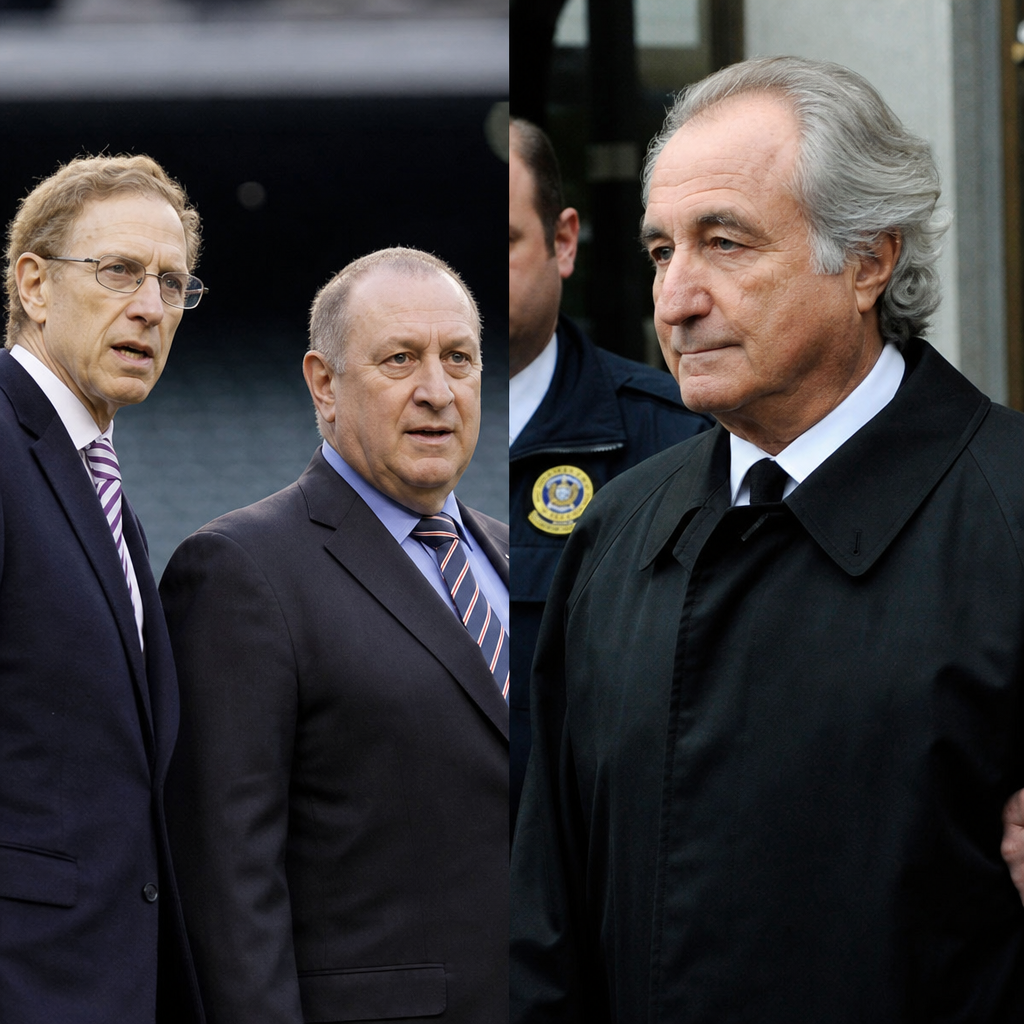
The Wilpon-Madoff scandal shows how financial fraud can destabilize a baseball franchise, damage public trust, and reshape the business side of a sport that fans often treat as pure entertainment. At its center were the New York Mets, team owners Fred Wilpon and Saul Katz, and Bernard L. Madoff, whose investment operation turned out to be the largest Ponzi scheme in modern American history. For baseball readers, this story matters because it was never just about one owner losing money. It affected payroll decisions, debt structure, ownership stability, legal exposure, and the competitive future of a major league club. It also became a reference point whenever fans, journalists, or league officials discussed owner liquidity, transparency, and the hidden risks behind a team’s balance sheet.
In practical terms, the scandal linked two worlds that usually seem separate: Wall Street fraud and roster construction. A Ponzi scheme is a fraudulent investment operation in which returns paid to earlier investors come from money contributed by newer investors rather than legitimate profits. When Madoff’s empire collapsed in December 2008, the losses rippled through charities, pension funds, family offices, and wealthy individuals. The Mets’ ownership group was among the most prominent names caught in that collapse. Because the Wilpons had longstanding financial ties to Madoff, questions quickly moved from private investment losses to whether those losses impaired the team’s ability to operate at its prior spending level.
I have worked through many ownership controversy cases, and this one stands out because the public record offered unusually clear evidence of how off-field finance can shape on-field outcomes. The Mets were not merely embarrassed by association. They faced lawsuits, intense media scrutiny, and pressure to recapitalize while trying to remain competitive in the National League East. The scandal became a case study in why baseball ownership cannot be evaluated only by market size or ticket revenue. Liquidity, leverage, concentration risk, and governance discipline matter just as much. For a hub covering miscellaneous scandals and controversies, this episode belongs near the top because it cuts across fraud, sports management, league oversight, and fan confidence.
Understanding the Wilpon-Madoff scandal also helps explain later debates about the sale of the Mets, the role of Major League Baseball in supervising club finances, and the reputational cost of staying too close to a disgraced financier. The essential questions are straightforward: How did the relationship begin, what did the owners know, what did the lawsuit allege, how did it affect baseball operations, and what lessons did the sport learn? Answering those questions directly gives readers a durable framework for evaluating not just this case, but future controversies involving owner wealth, debt, and hidden financial exposure.
How the Wilpons Became Entangled With Bernard Madoff
Fred Wilpon and Saul Katz built a close business relationship with Bernard Madoff over many years. Madoff was not an obscure figure in finance. He had served as chairman of NASDAQ, cultivated an image of stability and exclusivity, and attracted affluent clients who believed his steady returns reflected sophisticated strategy rather than manipulation. For the Wilpon circle, Madoff was both a money manager and a trusted personal contact. That level of trust matters because it explains why the connection went beyond a routine investment account. According to public reporting and later litigation, entities associated with the Wilpons and Katz had substantial sums tied to Madoff-related accounts, and they also withdrew significant amounts over time.
The timing of the fraud’s collapse was especially damaging. Madoff was arrested in December 2008, during a period when the broader economy was already under severe stress from the global financial crisis. In baseball terms, that meant any owner suddenly needing liquidity would find refinancing harder, sponsorship markets less forgiving, and discretionary spending under pressure. The Mets had opened Citi Field in 2009, a major capital project with debt obligations and high expectations. Losing access to Madoff-linked wealth during that moment intensified the sense that the franchise was exposed from several angles at once.
Public discussion quickly split into two issues. The first was simple financial loss: how much money the owners and their related entities had actually lost. The second was legal and ethical exposure: whether the Wilpon and Katz families had merely been victims or whether they had received fictitious profits that should be clawed back for the benefit of other victims. That distinction became central to the trustee litigation. It also shaped how fans interpreted every Mets move, from payroll restraint to front-office messaging. A franchise in New York usually projects financial power. During this period, the Mets increasingly looked constrained, defensive, and uncertain.
The Trustee Lawsuit and the Core Legal Claims
The most consequential legal action came from Irving Picard, the court-appointed trustee responsible for recovering money for victims of Madoff’s fraud under the Securities Investor Protection Act process. Picard sued parties linked to the Mets’ ownership, arguing that they had withdrawn more from Madoff accounts than they had invested and therefore should return large sums. Early claims and headlines pushed the possible exposure into the billion-dollar range, which immediately raised existential questions about whether the Wilpons could continue controlling the team.
The legal theory had two layers. One involved “fictitious profits,” meaning paper gains or cash withdrawals generated by fraudulent account statements rather than real investment performance. The other involved whether the defendants had ignored warning signs and therefore lacked a good-faith defense. That second point was explosive because it touched the owners’ knowledge and diligence. The Wilpons and Katz denied wrongdoing and maintained that they, too, were victims deceived by Madoff. Their argument was not frivolous. Madoff deceived banks, regulators, sophisticated investors, and market professionals for years. Still, the trustee’s side pointed to red flags, including unusually consistent returns and private concerns raised by some insiders, to argue that the defendants should have been more skeptical.
In 2011, U.S. District Judge Jed Rakoff made a ruling that narrowed Picard’s claims. He held that the trustee could not pursue certain categories of recovery based on amounts invested too far outside the two-year look-back period for actual fraud claims under applicable bankruptcy law. That decision materially reduced the immediate threat. It did not end the case, but it changed the leverage. In 2012, the parties settled. The settlement was widely reported as $162 million, far below the most dramatic earlier figures. That outcome mattered because it gave the Mets’ ownership a survivable path, even if the reputational damage remained severe.
What the Scandal Meant for the Mets’ Baseball Operations
Fans naturally ask whether the Madoff scandal changed the Mets on the field. The answer is yes, although not always in a simple one-to-one way. Ownership finances influence payroll flexibility, willingness to absorb mistakes, appetite for long-term contracts, and tolerance for front-office risk. During the post-2008 period, the Mets looked more cautious than a large-market team typically would. They were not stripped to the studs overnight, but the club’s margin for error narrowed. Deferred spending, selective retrenchment, and concern about cash flow became part of the operating environment.
One visible sign was the contrast between the Mets’ market size and their practical spending behavior. New York clubs are expected to act aggressively in free agency and player retention. Instead, the Mets often appeared trapped between the need to remain competitive and the need to preserve liquidity. The organization also explored ways to raise capital. In 2011, the Mets sold minority shares in the team to outside investors, a move broadly understood as a response to financial pressure tied to the Madoff fallout and related debt concerns.
| Issue | Direct Effect on the Mets | Why It Mattered |
|---|---|---|
| Madoff collapse in 2008 | Loss of a trusted source of perceived wealth and liquidity | Reduced financial flexibility during a recession |
| Trustee litigation | Potential large clawback liability | Created uncertainty around ownership stability |
| Citi Field era debt pressure | Higher sensitivity to revenue and financing conditions | Limited room for aggressive payroll expansion |
| Minority stake sales in 2011 | Infusion of outside capital | Helped address cash needs without immediate control change |
| Longer-term reputational damage | Persistent fan and media skepticism | Affected trust in ownership’s public claims |
Baseball operations never happen in a vacuum. General managers can propose moves, but owners set the ultimate economic boundary. In this period, every major Mets decision was interpreted through the lens of the scandal. If the team passed on a player, fans assumed money was tighter than acknowledged. If executives insisted payroll choices were strategic, that explanation competed with the obvious reality of ownership stress. Even when baseball reasons were valid, the credibility gap was real. That is one of the overlooked consequences of an ownership scandal: it contaminates routine decision-making because the audience no longer trusts the baseline explanation.
Media Coverage, Public Perception, and MLB Oversight
The Wilpon-Madoff story received relentless coverage because it combined celebrity finance, New York sports, and courtroom drama. Outlets including The New York Times, The Wall Street Journal, ESPN, and Sports Illustrated treated it as both a business crisis and a baseball crisis. That dual framing was accurate. A franchise owner’s personal finances become baseball news when they threaten payroll, debt service, or long-term control of the club. The Mets could not keep the scandal compartmentalized.
Public perception hardened around a few themes. First, many fans believed the owners had either been reckless or insufficiently curious about returns that appeared abnormally smooth. Second, there was frustration that one of baseball’s richest-market teams behaved more like a constrained mid-market club. Third, there was distrust of official reassurances. In my experience, once an ownership group is seen as financially opaque, every public statement gets audited by fans for signs of spin. The Mets lived in that environment for years.
Major League Baseball also had an interest in stability. MLB does not publicly micromanage every owner’s portfolio, but it does care about franchise solvency, debt compliance, and orderly operations. The league approved ownership structures, monitored borrowing, and had every reason to avoid a chaotic collapse in one of its flagship markets. While MLB did not seize the team or force an immediate sale during the core Madoff years, league awareness and quiet pressure were part of the backdrop. This matters for the broader scandal hub because many sports controversies reveal an important truth: leagues prefer private containment, but financial crises eventually become governance tests.
Long-Term Consequences and Why This Case Still Matters
The immediate legal crisis eased with the 2012 settlement, but the long-term consequences lasted much longer. The Mets remained under Wilpon and Katz control for years after, yet the franchise never fully escaped the shadow of the scandal. The team’s eventual sale to Steve Cohen in 2020 closed one chapter, though the sale had multiple causes beyond Madoff alone. Even so, it is difficult to understand the weakened position of the prior ownership group without the fraud’s aftereffects. Damaged credibility, financial strain, and years of public skepticism changed the franchise’s trajectory.
This case still matters because it provides clear lessons about concentration risk and due diligence. Wealth that looks stable on paper can vanish if it depends on one opaque manager. Sports owners, like any business owners, need diversified assets, independent verification, and governance systems that do not rely on personal trust. Madoff exploited intimacy and reputation. That pattern repeats in many frauds. People do not only buy returns; they buy certainty, access, and social belonging. When those incentives override skepticism, losses spread far beyond the original investment account.
For readers exploring scandals and controversies in baseball, the Wilpon-Madoff episode belongs in the miscellaneous hub because it intersects with nearly every non-game issue that can affect a franchise: fraud, litigation, debt, ownership succession, media scrutiny, and league supervision. It also reminds fans that baseball is a capital-intensive industry where personal fortunes and club fortunes can become dangerously intertwined. If you want to understand why financial transparency matters in sports, start here, then follow the links across the broader scandal landscape to compare how other off-field failures changed teams, reputations, and competitive outcomes.
Frequently Asked Questions
What was the Wilpon-Madoff scandal, and why did it matter so much in baseball?
The Wilpon-Madoff scandal refers to the financial fallout involving New York Mets owners Fred Wilpon and Saul Katz after Bernard L. Madoff’s investment empire was exposed as a massive Ponzi scheme. Wilpon and Katz had long-standing financial ties to Madoff, and when his fraud collapsed in 2008, the damage extended far beyond their personal finances. Because they were principal owners of one of Major League Baseball’s most visible franchises, the crisis quickly became a baseball story as much as a Wall Street one.
What made the scandal especially significant in baseball was the way it exposed how vulnerable a sports franchise can be to off-field financial misconduct. Fans often think of teams in terms of wins, losses, trades, and payroll, but ownership liquidity matters just as much. When the Mets’ ownership was linked to a financial catastrophe of that scale, questions emerged about the club’s stability, its ability to retain players, spend in free agency, and operate competitively. The scandal also damaged public confidence, because it suggested that the business structure behind a beloved franchise could be far shakier than most fans realized.
In broader terms, the episode became a cautionary tale about the intersection of wealth, trust, and professional sports. It showed that even iconic teams are not insulated from financial fraud, and that the reputational consequences can be just as severe as the monetary ones. For baseball, it was a reminder that ownership decisions off the field can directly shape what happens on it.
How were Fred Wilpon and Saul Katz connected to Bernard Madoff?
Fred Wilpon and Saul Katz were not random victims who happened to invest with Bernard Madoff through distant channels. They had a long personal and business relationship with him that dated back years. Madoff was seen by many in elite financial and social circles as trustworthy, sophisticated, and consistently successful. Like many others, Wilpon and Katz entrusted substantial sums to his operation and reportedly viewed him as a reliable steward of their wealth.
The connection mattered because Madoff’s firm did not simply lose money through bad investing; it was revealed to be fraudulent at its core. A Ponzi scheme pays older investors with money from newer investors rather than legitimate profits, creating the illusion of steady returns. That meant the financial picture presented to investors was false, and many account balances were effectively fictional. When the scheme imploded, the consequences for Wilpon and Katz were severe, particularly because their personal and business finances had been intertwined with those investments.
Their ties to Madoff also fueled legal and public scrutiny. A trustee appointed to recover funds for Madoff victims pursued claims against various investors, including those who had withdrawn more money than they had originally invested. In the case of the Mets’ ownership group, this raised the stakes dramatically. The issue was no longer just whether they had lost money, but whether funds connected to the team and its owners might be subject to recovery efforts. That possibility intensified concerns about the franchise’s financial health and placed the Mets at the center of one of the most widely discussed sports-business controversies of the era.
How did the Madoff collapse affect the New York Mets as a franchise?
The collapse of Madoff’s fraud had a real and visible impact on the Mets’ business operations and public image. Once the scale of the losses and legal exposure became known, the franchise faced questions about cash flow, debt, ownership stability, and future spending. In practical terms, this created uncertainty around whether the Mets could continue operating with the same financial flexibility expected of a major-market team in New York.
One of the most immediate consequences was the perception that the club had become more financially constrained. Fans and analysts began connecting ownership’s off-field losses to on-field decisions, including payroll limitations, reduced aggressiveness in acquiring talent, and a more cautious approach to long-term commitments. Whether every baseball decision was directly caused by the scandal is debatable, but the broader sense of instability was unmistakable. In sports, perception can become part of reality, especially when it affects negotiations, media coverage, and fan expectations.
The Mets also had to deal with the reputational burden of being associated with a historic fraud. The team itself was not the architect of Madoff’s scheme, but its ownership’s entanglement meant the franchise could not avoid the story. Public discussion shifted from baseball performance to financial survival, legal risk, and whether Major League Baseball might eventually need to intervene if conditions worsened. That was a striking development for a franchise with a large fan base and major cultural significance. The scandal did not just hurt balance sheets; it altered how the Mets were viewed as a business and as a competitive organization.
Did the scandal lead to lawsuits or pressure on the Mets’ ownership structure?
Yes, the scandal led to major legal pressure, especially through efforts by the trustee overseeing the recovery of assets for Madoff victims. The central legal question involved whether certain investors, including entities tied to Wilpon and Katz, had withdrawn more from Madoff’s operation than they had actually invested. If so, those “net winnings” could potentially be clawed back to help compensate other victims who suffered losses when the scheme collapsed.
That legal pressure created intense concern around the Mets’ ownership structure because any large financial judgment or settlement could affect the owners’ ability to support the franchise. The prospect of prolonged litigation raised the possibility that ownership might need to sell stake in the team, bring in outside capital, or significantly restructure its finances. In that sense, the scandal placed the Mets in a vulnerable position even before any final legal resolution was reached.
Ultimately, the case did not result in a forced loss of control in the most dramatic sense many had feared, but it did contribute to a period of financial stress and ownership recalibration. The Mets sought additional investors, and the broader episode underscored how legal exposure tied to an owner’s private financial dealings can spill directly into franchise governance. For baseball observers, this was a powerful example of how ownership is not merely symbolic. The financial credibility and legal standing of a team’s owners can shape everything from strategic planning to long-term competitiveness.
What lessons did baseball and sports business take from the Wilpon-Madoff scandal?
The biggest lesson was that no sports franchise, no matter how established or valuable, is immune from the consequences of financial fraud. Teams may look like permanent cultural institutions, but they are still businesses dependent on liquidity, leverage, investor confidence, and sound ownership judgment. The Wilpon-Madoff scandal showed that when those foundations crack, the effects can ripple into roster construction, public relations, and league-level concern.
Another major lesson involved due diligence and concentration risk. Trusting a seemingly reputable financial figure is not the same as verifying how money is actually being managed. The scandal highlighted the danger of relying too heavily on one source of wealth or one investment relationship, especially when that wealth underpins a high-profile asset like a professional sports team. For leagues, owners, and lenders, the episode reinforced the importance of transparency, diversification, and scrutiny of financial practices behind the scenes.
Just as importantly, the scandal changed how many fans and commentators think about ownership in sports. It reminded the public that the health of a franchise is influenced not only by front-office strategy or player development, but also by the financial integrity of the people at the top. In baseball, where ownership stability can shape a team for decades, that is a profound lesson. The Wilpon-Madoff saga remains relevant because it revealed how quickly the line between financial misconduct and competitive sports reality can disappear.