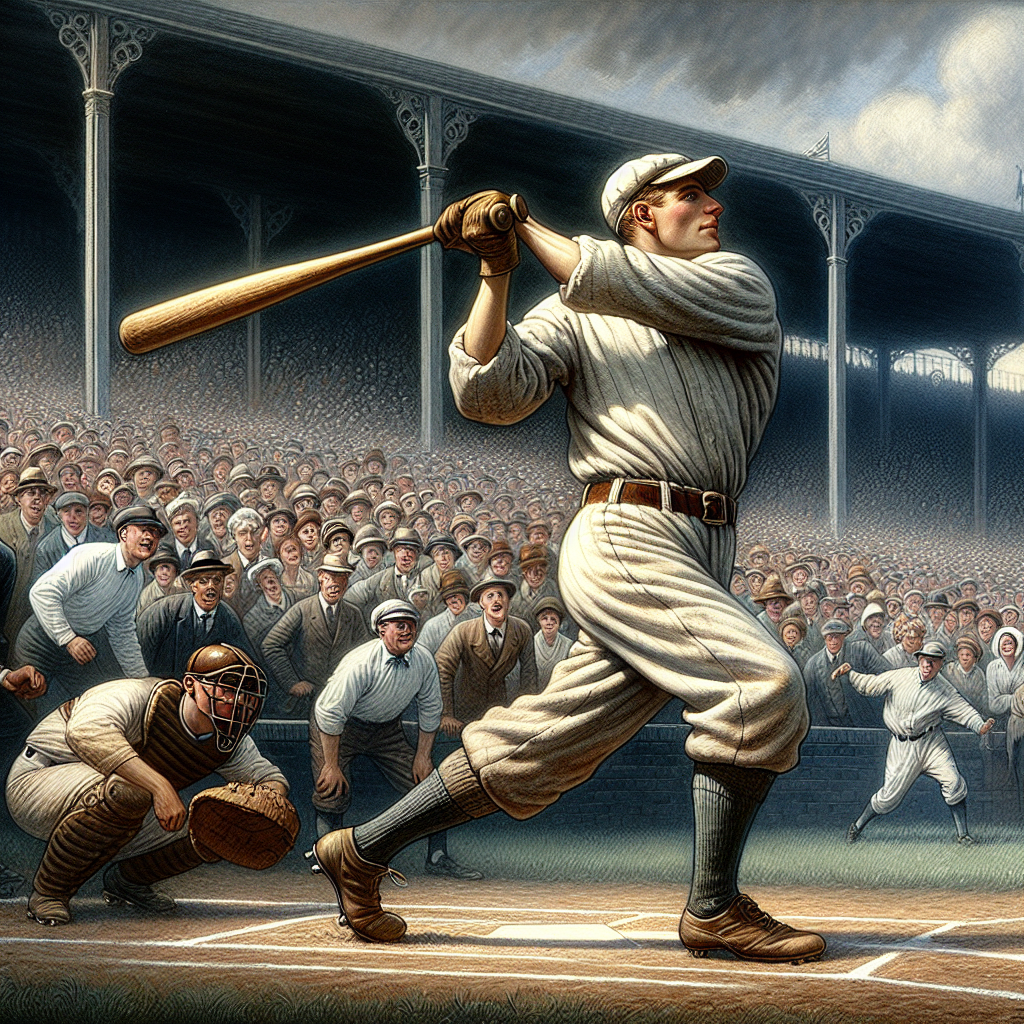
When discussing the legendary players in baseball history, Chuck Klein’s name stands out. Known for his incredible batting prowess, Klein’s career spanned both the pre-war and post-war eras of the sport. He left an indelible mark on the game and an enduring legacy within the Phillies’ franchise. Nicknamed “The Hoosier Hammer,” he was a key figure in the Philadelphia Phillies lineup, turning the Baker Bowl into a home run haven. This article takes a deep dive into the life and career of Chuck Klein, examining his early years, rise to prominence, major achievements, and lasting impact on the world of baseball.
Early Years and Career Beginnings
Born Charles Herbert Klein on October 7, 1904, in Indianapolis, Indiana, Chuck Klein displayed a natural aptitude for sports from a young age. While growing up, he excelled in baseball and spent his teenage years honing his skills on local sandlot teams. His first break came in 1927 when he was signed by the Fort Wayne Chiefs, a farm team in the Central League. His performance caught the attention of higher-level scouts, and soon Klein found himself moving up the ranks.
In 1928, Klein was sold to the Philadelphia Phillies, marking the beginning of his Major League Baseball career. The outfielder quickly made a name for himself with his strong batting and exceptional fielding skills. In his rookie year, he posted a .360 batting average with 11 home runs, an early indication of the stellar career that lay ahead. His success was not just a result of raw talent; Klein was known for his rigorous training and keen understanding of the game, qualities that would serve him well throughout his career.
Peak Years with the Philadelphia Phillies
Chuck Klein’s years with the Philadelphia Phillies were nothing short of spectacular. By 1930, he had become one of the most feared hitters in the league. That year, he not only batted .386 but also led the league with 445 total bases, a record that stood until surpassed by Sammy Sosa in 2001. Remarkably, Klein also hit 40 home runs and drove in 170 runs, numbers that underscore his offensive might.
The Baker Bowl, the Phillies’ home park, played a significant role in Klein’s success. The stadium, known for its hitter-friendly dimensions, provided the perfect backdrop for Klein’s slugging capabilities. He became synonymous with the venue, earning the moniker “The Slugger of Baker Bowl.” Klein’s consistency and power made him a staple in the All-Star selections, and in 1932, he became the first modern National League player to win the Triple Crown.
Record-Breaking Achievements
Klein’s career is marked by a series of record-breaking achievements that have cemented his place in baseball history. In addition to his Triple Crown win, he led the league in home runs four times (1929, 1931, 1932, and 1933) and in RBIs in 1931 and 1933. Moreover, he set a National League record with 44 home runs in 1929, a feat unmatched until the steroid era.
One of Klein’s most notable records came in 1931 when he hit safely in 26 straight games, a club record that stood for decades. He was awarded the National League MVP Award in 1932, further solidifying his status as one of the premier players of his era. These accolades are even more impressive when considering the level of competition at the time, including legendary players like Babe Ruth and Lou Gehrig.

Struggles and Comebacks
Despite his impressive start and numerous accolades, Klein’s career was not without its struggles. After being traded to the Chicago Cubs in 1934, his performance started to decline. Factors such as age, injuries, and the less favorable dimensions of Wrigley Field contributed to a dip in his batting stats. During the mid-1930s, Klein saw a decline in his home run totals and batting average, raising concerns about his longevity in the sport.
Nevertheless, Klein demonstrated remarkable resilience. He returned to the Phillies in 1936 and began a comeback that would see him regain some of his former glory. By 1939, he was once again a force to be reckoned with, hitting .306 and making valuable contributions to the team. This period of resurgence showcased Klein’s tenacity and determination to succeed despite adversities, adding another layer of admiration to his already impressive legacy.
Klein’s Legacy and Hall of Fame Induction
Chuck Klein’s legacy extends beyond his statistical achievements and record-breaking performances. He was a trailblazer who helped define an era of power hitting, and his influence on the game can still be felt today. Klein’s approach to hitting, characterized by his explosive power and disciplined eye at the plate, set a benchmark for future generations of sluggers.
In recognition of his contributions to the sport, Klein was inducted into the Baseball Hall of Fame in 1980, a testament to his enduring impact on baseball. His Hall of Fame induction ceremony was a moment of pride not only for Klein but also for the generations of fans who had witnessed his achievements. Even today, Klein’s name is often mentioned in discussions about the greatest hitters of all time, proving that his legacy is well and truly secure.
Conclusion
Chuck Klein remains a giant in the annals of baseball history. From his early years in Indiana to his peak years with the Philadelphia Phillies and eventual Hall of Fame induction, Klein’s journey is a compelling narrative of talent, hard work, and perseverance. His contributions to the sport, both in terms of records and influence, have left an indelible mark.
As the “Slugger of Baker Bowl,” Klein’s legacy continues to inspire not only Phillies fans but also baseball enthusiasts worldwide. His story serves as a reminder of what is possible when one combines natural talent with relentless dedication. Whether you’re a long-time follower of baseball history or a newcomer eager to learn about the legends of the game, Klein’s life and career offer a rich tapestry of achievements worth exploring.