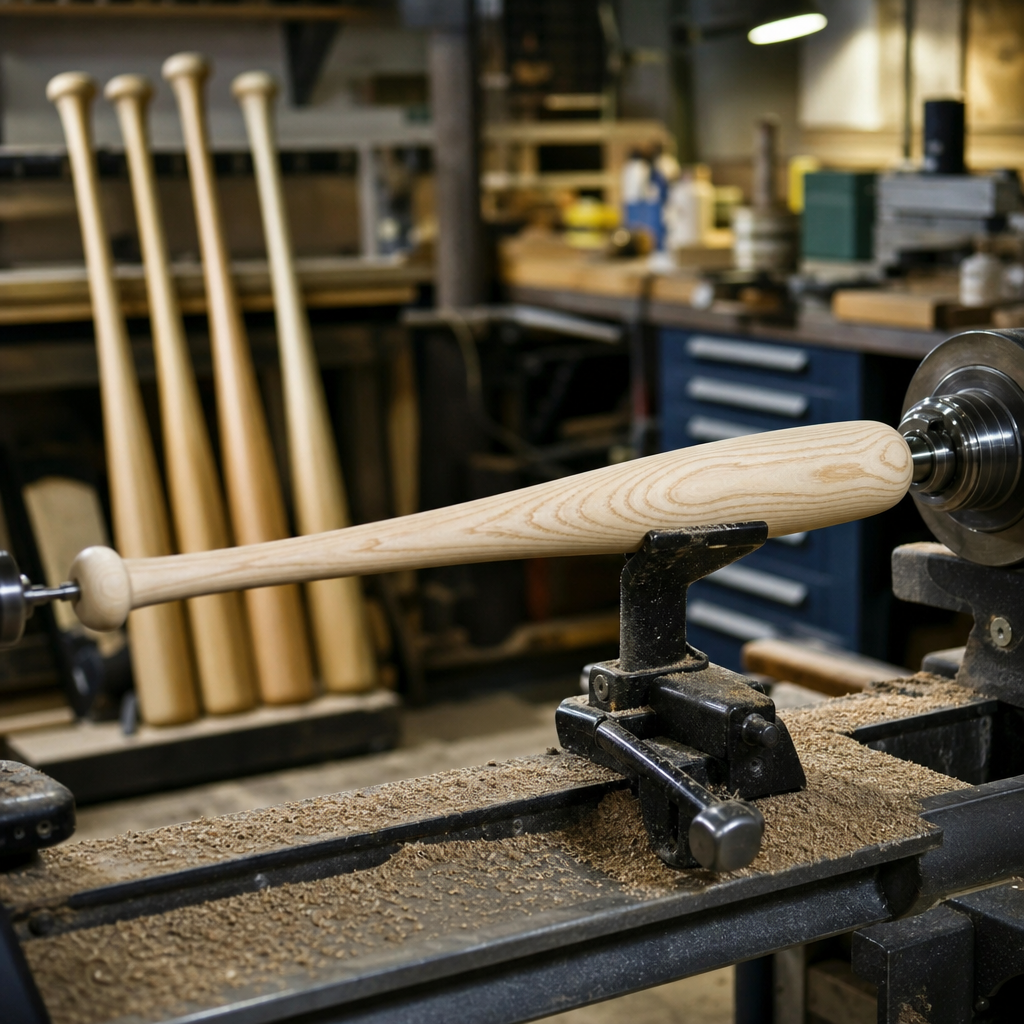
Baseball bat design sits at the intersection of physics, materials science, manufacturing, and rulemaking, and few pieces of sports equipment show technological change as clearly as the bat. When people ask why one bat feels balanced, another feels end-loaded, or why metal and composite models can drive the ball differently from wood, they are really asking about mass distribution, stiffness, energy transfer, vibration control, and standards set by governing bodies. In my experience working through bat specifications, player feedback, and performance testing, the biggest misunderstanding is that a bat is just a shaped stick with a brand label. In reality, every inch of barrel diameter, every fraction of an ounce in swing weight, and every material choice changes how the bat moves through the hitting zone and how it behaves at impact.
The science behind baseball bat design matters because hitting is a time-compressed event. A pitched baseball reaches the plate in roughly four-tenths of a second, and the collision between ball and bat lasts about one millisecond. In that tiny window, the hitter depends on a tool engineered to maximize controllable bat speed, transfer energy efficiently, and minimize painful or distracting vibration. Designers therefore work within a set of competing goals: increase performance without breaking league rules, improve feel without sacrificing durability, and help different player types generate repeatable contact. A youth player learning swing mechanics, a college hitter chasing exit velocity, and a professional using ash, maple, or birch all need different design solutions. Understanding the underlying science makes those differences easier to evaluate and explains why modern bat development has become a central part of technological advancements in equipment across baseball.
How Bat Physics Determines Performance
The fundamental job of a baseball bat is to convert the hitter’s motion into ball speed at contact. Three concepts dominate that process: bat speed, collision efficiency, and point of contact. Bat speed is strongly affected by swing weight, which is not the same thing as total weight. Two 30-ounce bats can swing very differently if one stores more mass in the barrel. That barrel-loaded model has a higher moment of inertia, meaning it resists rotational acceleration more strongly. Stronger hitters may prefer that extra mass because, once moving, it can deliver more momentum through the ball. Contact-oriented hitters often favor a more balanced design because it is easier to accelerate and control.
Collision efficiency depends on how much energy is lost during impact. With wood bats, the barrel is relatively stiff, so the collision behaves differently than it does with many aluminum or composite bats, whose walls can flex and rebound. This trampoline effect can increase the speed of the outgoing ball, which is why non-wood bats are regulated so carefully in amateur play. Designers measure bat performance using laboratory testing and field validation, often looking at batted-ball speed, durability under repeated impacts, and consistency across different parts of the barrel. The sweet spot is not a single magic dot; it is a zone where vibration is lower, energy transfer is better, and mishits are less punishing.
Another critical variable is the coefficient of restitution, or COR, a measure of how lively a collision is. Bat standards have evolved beyond simple COR limits in many leagues, but the concept still helps explain design choices. A more elastic barrel can return more energy to the ball, though only within legal boundaries. Designers also analyze modal behavior, which describes how the bat vibrates in specific patterns after impact. If contact occurs near a node, the hands feel less sting. This is not just about comfort. Reduced negative feedback can help a hitter maintain confidence and repeat swing mechanics over a long season. Good bat design therefore blends measurable physics with the human realities of feel, fatigue, and adjustment.
Materials Science: Wood, Aluminum, and Composite Construction
Material selection defines much of a bat’s identity. Traditional wood bats remain the standard in professional baseball, and the three most common species are ash, maple, and birch. Ash has long grain and a more flexible feel, which some hitters associate with whip through the zone. Maple is denser and harder, creating a stiffer barrel and often a solid, compact contact feel. Birch sits between them, combining some of ash’s flexibility with some of maple’s hardness. Over the years, Major League Baseball has tightened wood-bat standards, including slope-of-grain requirements and ink-dot testing, to reduce multi-piece failures and improve safety.
Aluminum bats changed amateur baseball because they offered lighter swing weights, greater durability, and more forgiving performance across the barrel. Most aluminum bats are made from high-strength alloys, often designated by series such as 7046 or C555. These alloys let manufacturers tune wall thickness, barrel responsiveness, and dent resistance. Early metal bats were notorious for high performance and a distinct ping, but modern designs are engineered under stricter testing systems. Multiwall barrels and variable wall thickness allow companies to redistribute material strategically, improving pop while staying inside certification limits. In practical terms, that means a bat can feel lively without acting unpredictably.
Composite bats use layered carbon fiber and resin systems, giving engineers much more freedom to tune stiffness and vibration than wood or one-piece aluminum allows. Because composites can be oriented in specific fiber directions, a manufacturer can stiffen one region of the barrel, soften another, and shape the handle’s feedback profile with precision. Composite construction also supports larger sweet spots in some designs, although these bats may require a break-in period as repeated impacts alter the barrel response slightly. I have seen players underestimate that point; a fresh composite bat can feel different after a few hundred legal swings. Hybrid bats combine alloy barrels with composite handles, aiming to deliver the barrel response of metal and the vibration dampening of composite. Each material family therefore brings distinct tradeoffs in feel, durability, cost, weather sensitivity, and regulated performance.
Barrel Shape, Weight Distribution, and Handle Engineering
The geometry of a baseball bat is as important as the material. Barrel diameter influences contact area and mass placement. A larger barrel can increase forgiveness, but it also changes aerodynamics and swing weight. Handle diameter affects grip pressure and perceived control. Taper design, the transition from handle to barrel, influences flex behavior and how energy moves during the swing. Knob shape changes how the lower hand anchors the bat, which can alter comfort and even bat path for certain hitters. These details sound small until you compare two nearly identical models and realize one consistently arrives on time while the other drags through the zone.
Weight distribution is usually described through balanced versus end-loaded designs. Balanced bats place mass more evenly, reducing rotational resistance and helping hitters who prioritize quick hands, plate coverage, and late decision-making. End-loaded bats shift more mass toward the barrel, increasing perceived heft at the end of the swing and often appealing to stronger hitters trying to drive the ball with authority. Neither design is universally better. The right choice depends on swing mechanics, pitch velocity, bat length, and the hitter’s strength-to-control profile. A youth player moving to a longer bat often benefits from balance first, while an advanced power hitter may gain more from a controlled end load.
Engineers also focus on handle and connection systems because vibration management is now a major design category. One-piece bats generally feel stiffer and can offer more immediate energy transfer, which many hitters describe as a direct or crisp response. Two-piece bats, by contrast, use a connection joint between handle and barrel, often reducing harsh vibration and allowing independent tuning of each section. Brands have developed proprietary connection pieces, elastomer inserts, and internal dampers to limit sting and improve feel on mishits. In practice, these systems do not erase poor contact, but they can make repeated hitting less punishing and support confidence over hundreds of swings.
| Design Feature | What It Changes | Typical Benefit | Common Tradeoff |
|---|---|---|---|
| Balanced weighting | Lowers swing weight | Faster bat speed and control | Less barrel momentum for some hitters |
| End-loaded weighting | Shifts mass toward barrel | Greater power potential | Harder to accelerate and adjust |
| One-piece construction | Creates stiffer feel | Direct feedback and solid contact sensation | More vibration on mishits |
| Two-piece construction | Separates handle and barrel behavior | Reduced sting and tuned flex | Some hitters dislike the softer feel |
| Composite barrel | Allows layered stiffness tuning | Large sweet spot and vibration control | Higher cost and break-in concerns |
| Alloy barrel | Uses metal wall response | Durability and game-ready performance | Can feel harsher in cold weather |
Testing Standards, Safety Rules, and Why Regulation Shapes Innovation
No explanation of baseball bat design is complete without discussing standards. Performance rules exist because equipment can alter the game significantly, especially in youth, high school, and college baseball. In the United States, BBCOR is the key standard for high school and NCAA play. BBCOR, short for Batted Ball Coefficient of Restitution, is intended to keep non-wood bats performing more like wood in terms of energy transfer. Youth leagues may use USABat standards, while travel baseball often relies on USSSA rules, which historically have allowed hotter-performing bats than BBCOR models. These distinctions matter. A bat legal in one league may be illegal in another, even if the size looks the same.
Testing covers more than simple impact liveliness. Labs examine barrel compression, wall response, durability, and performance after repeated use. Certification marks are not decorative; they indicate that a model passed the governing standard in a defined configuration. This is why shaving or rolling a bat is both illegal and dangerous. Bat shaving removes material from the inside barrel wall to increase flex, while rolling can artificially speed up composite break-in. Both modifications can push performance beyond legal limits, reduce structural integrity, and expose players and teams to penalties. Coaches and parents sometimes focus only on immediate pop, but rules exist to protect fairness and player safety.
Wood-bat regulations also influence design and manufacturing. After concerns about broken maple bats sending sharp fragments onto the field, MLB and wood suppliers adopted stricter quality-control practices. Manufacturers now pay closer attention to billet quality, grain orientation, moisture content, and profile approval. The result is a bat market where engineering is not simply about making the hottest possible product. It is about optimizing legal performance, reliability, and consistency under the scrutiny of formal testing. Innovation therefore happens inside a controlled space. That pressure has produced better quality assurance, more data-driven development, and clearer fit between bat models and player needs.
Manufacturing Technology, Data Analysis, and the Future of Bat Design
Modern bat development depends heavily on advanced manufacturing and measurement tools. Computer-aided design lets engineers model wall thickness, taper geometry, and mass distribution before a prototype is ever swung. Finite element analysis helps predict stress concentrations, barrel deformation, and failure points under impact loads. In composite production, layup schedules determine how carbon fiber sheets are stacked and oriented, affecting flex patterns and durability. In metal bats, precision forming and heat treatment influence strength and responsiveness. Even wood-bat makers increasingly use billet scanning, moisture monitoring, and tighter machining tolerances to reduce variability between pieces.
Player testing has also become more sophisticated. High-speed cameras, bat sensors, motion-capture systems, and ball-tracking tools such as HitTrax, Rapsodo, and TrackMan allow designers and coaches to connect bat specs with swing outcomes. Instead of relying only on a hitter saying a model feels good, teams and manufacturers can compare attack angle, connection quality, swing speed, time to contact, exit velocity, and vibration feedback. I have found that this data often confirms something players feel but cannot easily describe. For example, a hitter may say a bat gets stuck; the numbers may show that the swing slows slightly in the final phase because the bat’s moment of inertia is too high for that player’s pattern.
The future of baseball bat design will likely focus on finer customization rather than unlimited raw performance. Rules will continue to cap how lively bats can be, so competitive advantage will come from better fit, more consistent manufacturing, and smarter use of data. Expect more precise personalization in handle shape, knob style, taper profile, and swing weight matching. Composite science will keep improving, especially in durability and temperature stability, while wood-bat makers will continue refining quality control and profile design. Sustainability may also grow in importance as manufacturers examine sourcing, waste reduction, and longer product life cycles. The science behind baseball bat design is therefore not a finished story. It is an ongoing process of balancing biomechanics, material innovation, and regulation to help hitters perform within the structure of the game.
Baseball bat design shows how technological advancements in equipment can reshape performance without changing the essence of baseball. The key lessons are straightforward. Bat speed and collision efficiency are governed by physics, not marketing claims. Materials matter because wood, alloy, and composite constructions each produce distinct combinations of feel, durability, and legal performance. Geometry matters because barrel size, taper, handle design, and weight distribution directly influence swing behavior. Regulation matters because standards such as BBCOR, USABat, and league-specific wood rules define the limits within which innovation can happen. Once you understand those principles, choosing or evaluating a bat becomes a technical decision grounded in evidence rather than guesswork.
For readers exploring innovations and changes in baseball, this topic works as a hub because it connects to player development, safety, manufacturing, analytics, and league policy at the same time. A better bat is not simply a hotter bat. It is one that matches the hitter, survives repeated use, complies with standards, and delivers predictable feedback at game speed. That is the real science behind baseball bat design, and it explains why equipment technology remains one of the most important drivers of change in the sport. Use this foundation to compare bat materials, study certification rules, and evaluate how emerging manufacturing methods are influencing the next generation of baseball equipment.
Frequently Asked Questions
Why do some baseball bats feel balanced while others feel end-loaded?
The difference comes down to mass distribution, not just total weight. A balanced bat places more of its mass closer to the handle, which makes it feel easier to start and stop during the swing. An end-loaded bat concentrates more mass toward the barrel, increasing the bat’s moment of inertia and giving it a heavier feel as it moves through the hitting zone. Even if two bats have the same listed length and weight, they can swing very differently because of how that weight is positioned along the bat’s axis.
From a physics standpoint, balanced bats generally allow for quicker bat speed and more controllable swing mechanics, which is why many contact hitters prefer them. End-loaded bats can deliver more momentum at contact when swung effectively, making them appealing to stronger hitters who can handle the added swing resistance. This is one reason players often describe one model as “whippy” and another as “powerful.” They are feeling the effect of rotational dynamics in real time.
Designers adjust this balance profile through barrel shape, wall thickness, handle geometry, taper design, and the materials used in each section of the bat. In metal and composite bats, engineers have especially fine control over where mass is placed, because they are not limited in the same way as solid wood billets. The result is that bat “feel” is not accidental. It is engineered very deliberately to suit different swing styles, strength levels, and performance goals.
How do wood, aluminum, and composite bats differ in performance?
Each material changes how the bat behaves at impact, how it vibrates, and how consistently it performs over time. Wood bats are solid, relatively simple in construction, and prized for their traditional feel and direct feedback. Because the barrel is a single piece of material, wood bats tend to have less trampoline effect than non-wood models. That means they reward precise contact and expose mishits more clearly, which is one reason they remain the standard at the professional level.
Aluminum bats, often made from one-piece or multi-piece metal alloys, can be engineered with thinner walls than wood. This allows the barrel to flex slightly at impact, creating what is commonly called the trampoline effect. That flex can increase the efficiency of energy transfer to the ball under legal performance limits. Aluminum bats are also durable and highly tunable, letting manufacturers vary stiffness, balance, and barrel response to fit different player preferences.
Composite bats take tunability even further. By layering carbon fiber and resin systems in different orientations, engineers can control stiffness, vibration damping, and barrel performance with remarkable precision. Composite construction also allows designers to redistribute weight strategically, often producing larger sweet spots and more tailored swing profiles. However, composites can behave differently as they break in, and in many leagues their performance is closely monitored because material behavior can evolve with repeated use. In short, wood emphasizes tradition and feedback, aluminum emphasizes durability and responsiveness, and composite design emphasizes advanced engineering control.
What is the “sweet spot” on a baseball bat, and what makes it larger on some bats?
The sweet spot is not a single magical point but a practical zone where contact feels best and performance is most efficient. Technically, several related concepts are involved, including the center of percussion, vibration nodes, and the region where energy transfer to the ball is maximized. When a ball is struck near this area, the hitter typically experiences less sting in the hands, more stable bat behavior, and better exit results. That is why players can often tell immediately when they have “barreled” a ball, even before seeing where it goes.
The size and location of the sweet spot depend on the bat’s length, barrel design, material stiffness, wall construction, and overall mass distribution. In wood bats, the sweet spot tends to be smaller and more sensitive to exact contact location. In aluminum and composite bats, manufacturers can engineer the barrel walls and internal structure to create a more forgiving hitting zone. This does not mean every hit becomes perfect, but it can reduce performance drop-off on near-miss contact compared with a traditional wood design.
Vibration behavior also plays a major role. If impact occurs near a vibration node, less shock travels into the hands, which contributes to the sensation of clean contact. Composite materials, in particular, can damp certain high-frequency vibrations more effectively than wood or stiffer one-piece metal designs. So when players talk about a bat having a “big sweet spot,” they are usually describing a combination of efficient energy transfer, better forgiveness across the barrel, and a more comfortable feel on imperfect contact.
How does bat stiffness affect power, feel, and vibration?
Bat stiffness influences how the bat bends, recoils, and transmits sensation during the swing and at contact. A stiffer bat generally feels more direct and immediate, with less flex in the handle or barrel. Some players like this because it creates a crisp, connected feel and can make the bat seem more predictable. Other players prefer a bat with a bit more flex, especially in multi-piece metal or composite designs, because it can feel smoother through contact and reduce harsh feedback in the hands.
In terms of power, stiffness interacts with many other factors rather than acting alone. A barrel that flexes within legal limits can contribute to efficient energy return to the ball, but too much or too little stiffness for a player’s swing can reduce consistency. The handle section matters as well. More flexible handles can change perceived comfort and timing, while stiffer handles may transmit more vibration but offer a firmer response. That is why two bats with similar barrel sizes can feel completely different once a player starts hitting with them.
Vibration control is especially important because poor vibration management can make a bat feel harsh, even if its raw performance is strong. Composite materials often help here because their layered construction can absorb and damp unwanted frequencies. Manufacturers also use connection pieces, internal dampers, and specific wall geometries to tune feel. In practical terms, stiffness is part of a larger design system. It affects not only ball exit potential but also confidence, comfort, and a player’s ability to repeat a good swing.
Why are baseball bat designs regulated, and what standards do manufacturers have to meet?
Bat design is regulated to preserve competitive balance, protect player safety, and maintain the intended character of the game at different levels. Without standards, manufacturers could push materials and barrel performance to the point where batted-ball speeds become excessive, changing offense dramatically and increasing risk for pitchers and infielders. Governing bodies therefore set limits on dimensions, materials, performance metrics, and in some cases even how the bat must behave after repeated use.
At the youth, high school, college, and professional levels, the rules can differ significantly. Wood-bat leagues often specify approved wood species, barrel dimensions, and construction requirements. Non-wood leagues may require certification under standards such as BBCOR or USA Baseball rules, depending on age and competition level. These standards are designed to cap performance so that non-wood bats behave more like wood in certain respects, particularly in how fast the ball can come off the barrel. Testing protocols evaluate factors such as barrel response, durability, and compliance under controlled conditions.
For manufacturers, meeting these standards is both a technical and legal necessity. Engineers must design bats that deliver strong feel and performance while staying within measured limits for barrel behavior and construction. That often means extensive lab testing, prototype iteration, and quality control during production. For players and parents, certification marks are more than labels. They indicate that a bat has been built to fit a specific rule set and is eligible for sanctioned play. In other words, bat regulation is not just bureaucracy. It is a central part of how the sport balances innovation with fairness and safety.