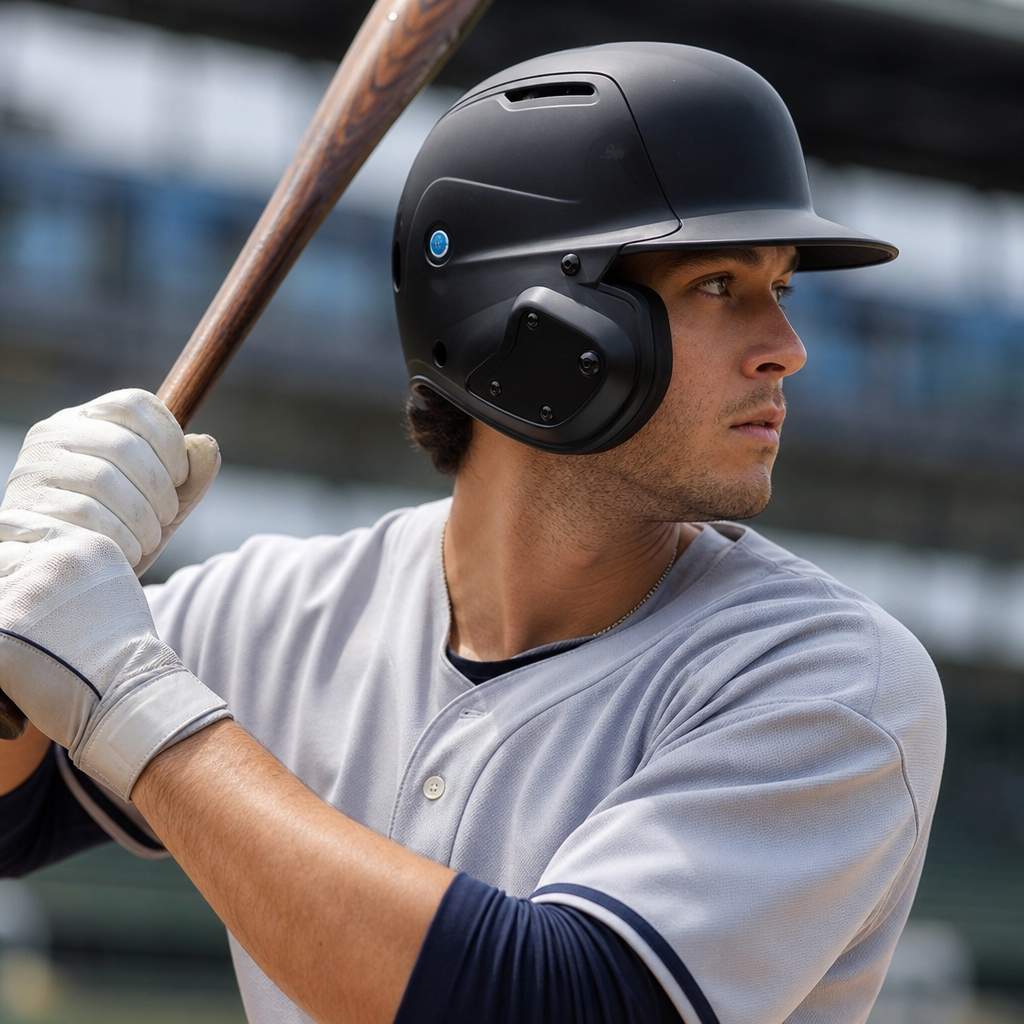
Smart helmets are redefining batting protection by turning a once-passive piece of equipment into an active safety system, and that shift matters for every level of baseball. In simple terms, a smart helmet is a batting helmet enhanced with sensors, impact monitoring, communication features, fit technology, or connected software designed to improve player safety and decision-making. Traditional batting gear has long focused on hard shells, energy-absorbing liners, and face guards, but new models and prototypes now add data collection, wireless alerts, and better customization. As baseball continues to balance performance, player development, and injury prevention, smart helmets sit at the center of a larger conversation about technological advancements in equipment.
This topic matters because head injuries remain one of the sport’s most serious risks. A baseball can leave the pitcher’s hand at more than 95 miles per hour in professional play, and even youth pitchers generate enough speed to cause severe harm when a batter is struck. Add foul tips, backswings, collisions, and base-running incidents, and the case for better protective gear becomes obvious. In my work reviewing equipment trends and safety standards, I have seen a clear pattern: when technology produces measurable safety gains without compromising comfort or visibility, adoption accelerates. Batting helmets are following the same path already seen in football headgear, hockey visors, and connected performance wearables.
Understanding smart helmets starts with a few key terms. Impact attenuation refers to a helmet’s ability to reduce the force transmitted to the head. Sensor arrays measure events such as linear acceleration, rotational acceleration, temperature, or fit pressure. Connectivity usually means Bluetooth or near-field data transfer to a sideline device or app. Certification remains separate from smart features; a connected helmet still needs to meet recognized safety standards such as those issued through NOCSAE for baseball batting helmets. That distinction is important. Technology can add insight, but baseline protection still begins with shell integrity, liner design, retention, and proper sizing.
As a hub within technological advancements in equipment, smart helmets connect to several related topics: advanced materials, custom manufacturing, wearable sensors, injury analytics, and rule-driven design changes. They also raise practical questions coaches, parents, and players ask immediately. Do smart helmets actually prevent concussions? Are they legal in games? Do sensors work reliably after repeated impacts? Can youth programs afford them? The most useful answer is nuanced. No helmet can eliminate concussion risk, because the brain moves within the skull during impact. However, better materials, improved fit, jaw and face protection, and accurate impact detection can reduce exposure, improve response protocols, and support safer equipment choices over time.
How smart batting helmets work
Most smart batting helmets build on the same protection architecture found in high-end conventional models: an ABS or polycarbonate shell, a liner made from foam or other energy-management material, and a fit system that stabilizes the helmet during motion. The smart layer adds electronics or adaptive components. Some designs embed accelerometers and gyroscopes to detect sudden impacts. Others include communication modules that send an alert to a trainer’s tablet when a hit exceeds a preset threshold. More advanced concepts combine impact sensing with fit mapping so staff can identify whether a player wears the helmet correctly or whether pressure points suggest a poor match.
The main value of these systems is not that they diagnose brain injury on their own. They do not. Instead, they create a faster, more objective record of notable head-impact events. That record matters because athletes often minimize symptoms, and coaches may miss the exact severity of a foul ball off the helmet in a noisy game environment. A smart helmet can flag the incident instantly, helping trigger a sideline evaluation using established assessment tools and return-to-play protocols. In practice, this shortens reaction time and reduces the chance that a meaningful hit goes undocumented.
Manufacturers and sports technology developers are also experimenting with materials that respond differently to various impact types. Multi-density foams, 3D-printed lattice liners, and slip-plane concepts are all relevant here. A liner designed to compress efficiently under lower-speed impacts may perform differently from one optimized for high-speed direct blows. The best helmet designs balance these scenarios rather than chasing a single test result. In baseball, where impacts can be highly localized from a hard, small ball, shell shape and localized reinforcement matter just as much as broad energy absorption.
Safety benefits, limits, and evidence
The primary safety benefit of smart helmets is improved incident detection paired with stronger protective design. If a batter takes a 90 mile-per-hour fastball off the ear flap, the equipment’s job is first to reduce force transmission and maintain structural integrity. Its second job, if smart-enabled, is to capture usable information. That information may include impact magnitude, point of contact, and time stamp. In organized settings, those details support medical follow-up and equipment review. Over a season, teams can also identify patterns, such as repeated foul-tip exposure in certain drills or poor fit among younger players sharing helmet sizes.
Still, the limitations are real. Sensor thresholds do not equal a diagnosis. False positives and false negatives can occur, particularly if devices are poorly calibrated or if the helmet shifts independently from the head. Battery management, durability, and water resistance also affect reliability. A feature that works in a lab but fails after months of sweat, heat, bag transport, and repeated use is not solving a real baseball problem. That is why practical validation matters as much as marketing claims. Programs considering adoption should ask for test methodology, certification documentation, update support, and replacement guidance.
One of the clearest lessons from helmet safety across sports is that fit changes outcomes. A certified helmet worn too loose, too high, or with the wrong padding set can underperform. Smart systems that help monitor fit may offer more day-to-day value than headline-grabbing analytics. In youth baseball especially, where players grow quickly and equipment is often handed down, sizing discipline is inconsistent. Coaches who think technologically should still start with basics: measure head circumference, verify manufacturer sizing charts, inspect shells for damage, and replace helmets according to wear, impact history, and league requirements.
| Feature | What it does | Safety value | Key limitation |
|---|---|---|---|
| Impact sensors | Detect major hits and log data | Speeds sideline response | Cannot diagnose concussion |
| 3D-printed liners | Create tuned energy absorption zones | Can improve fit and force management | Higher manufacturing cost |
| Face and jaw guards | Add coverage to exposed areas | Reduce facial fracture risk | May affect comfort or sightlines |
| Connected apps | Store impact history and equipment records | Supports monitoring over time | Needs privacy controls and maintenance |
Materials, design, and standards shaping the future
Helmet innovation in baseball is advancing through materials science as much as electronics. Shells remain dominated by durable thermoplastics, but the internal story is changing faster. Expanded polypropylene, vinyl nitrile foams, and lattice structures created through additive manufacturing allow engineers to tune density and deformation characteristics in ways older one-piece padding could not. That means a helmet can be designed with different response zones around the temple, ear flap, forehead, and crown. For batting applications, these location-specific solutions are important because impact geometry is rarely uniform.
Another design trend is mass customization. Instead of forcing every player into a few generic shell and pad combinations, manufacturers can increasingly use digital scans, modular fit kits, and 3D-printed inserts to create a more stable fit. I expect this area to become especially influential in elite amateur and professional baseball, where organizations already invest heavily in motion capture, bat sensors, and biomechanical analysis. Once teams understand that a custom fit can improve both safety and confidence in the box, personalized helmets become easier to justify. Better stability may also improve the quality of sensor readings by reducing unwanted helmet movement.
Standards will determine how quickly these products move from novelty to normal equipment. In baseball, recognized certification remains the gatekeeper for legal play. NOCSAE performance standards, league rules, and manufacturer compliance are nonnegotiable. Smart features will not replace that framework; they must sit on top of it. The strongest products will be those that clearly separate certified protective performance from optional digital services, while still integrating both seamlessly. Programs should also watch for independent lab testing, transparent impact criteria, and clear statements about whether software updates alter device thresholds or data interpretation.
Adoption in youth, high school, college, and pro baseball
Adoption will not look the same at every level of the sport. Youth baseball is the largest opportunity because participation numbers are broad and parents are highly motivated by safety, but it is also the most price-sensitive market. A local travel program may welcome impact alerts and better fit guidance, yet hesitate if connected helmets cost multiples of standard models. For this segment, the winning products will likely be durable, simple, and app-light, with optional team dashboards rather than mandatory subscriptions. Ease of cleaning and battery-free operation may matter more than advanced analytics.
High school and college programs are more likely to adopt smart helmets when athletic trainers can act on the data. In those environments, documented impacts can be folded into concussion protocols, inventory management, and season-long equipment audits. Colleges in particular have the staffing and sports medicine infrastructure to evaluate whether the data improves care. They also have stronger incentives around risk management and player welfare. If a university can show that connected protective equipment helps staff identify incidents faster and maintain better records, the purchasing case becomes much stronger.
Professional baseball may be slower in public rollout but faster in targeted experimentation. Clubs often test new equipment quietly, comparing comfort, visibility, heat retention, and player acceptance before making any visible change on the field. Veteran hitters are famously sensitive to helmet feel, peripheral vision, and weight balance. Any smart feature that compromises routine will face resistance, regardless of its theoretical benefit. The future pro model is likely to be subtle: low-profile sensors, highly customized liners, and integrated jaw protection that looks and feels like a natural extension of today’s premium gear.
What teams and families should evaluate before buying
Choosing a smart batting helmet should begin with the same checklist used for any protective equipment, then expand into technology-specific questions. First, confirm certification for the level of play. Second, verify fit, coverage, and compatibility with any required face guard or jaw guard. Third, inspect build quality, liner durability, and replacement policies. Only then should buyers evaluate smart functions such as impact logging, battery life, mobile software, warranty support, and data export. This sequence matters because a mediocre helmet with fancy electronics is still a mediocre helmet.
Buyers should also think about workflow. Who receives alerts during a game? What happens after an impact flag appears? Is there a written protocol for removing the player, checking symptoms, documenting the event, and deciding on medical follow-up? I have seen connected gear disappoint not because the hardware was poor, but because no one defined responsibility. Technology is most valuable when it supports a repeatable process. For families, that may simply mean having a record to share with a physician. For teams, it means integrating equipment data into training room operations and coaching communication.
Privacy and data stewardship deserve equal attention. A helmet that records impact events is producing health-adjacent information, especially when linked to a named athlete over time. Schools and clubs should know where data is stored, who owns it, how long it is retained, and whether it can be shared with third parties. Reliable vendors explain these points clearly. As this sub-pillar hub on technological advancements in equipment shows, the future of baseball gear is not just smarter hardware. It is a smarter system connecting protection, design, medical response, and informed purchasing decisions.
Smart helmets represent the most important shift in batting gear since extended ear coverage and sport-specific impact standards became mainstream. They combine better materials, more precise fit, optional facial protection, and connected monitoring in one product category with obvious relevance to every player who steps into the box. The central point is straightforward: smart helmets do not make baseball risk-free, but they can make protection more responsive, measurable, and individualized. That is a meaningful improvement in a sport where a single pitch can change a season or a life.
For coaches and program directors, the practical lesson is to treat smart helmets as part of a full safety ecosystem. Start with certified equipment, correct sizing, routine inspection, and clear injury protocols. Then evaluate whether impact sensors, custom liners, or connected records would solve a specific problem in your setting. For parents, the takeaway is equally clear. Ask better questions, prioritize fit and standards before features, and look for products backed by transparent testing rather than vague claims. Good technology earns trust when it supports sound decisions.
As the broader market for technological advancements in equipment grows, smart helmets will influence adjacent categories, from catcher’s gear to training wearables and recovery tools. They are the hub because they sit where safety, data, and player confidence intersect. If you are building a safer baseball program or researching the future of batting gear, use this page as your starting point, then explore the connected topics of materials, sensors, standards, and custom equipment to make smarter choices next.
Frequently Asked Questions
What is a smart batting helmet, and how is it different from a traditional helmet?
A smart batting helmet is an advanced version of a standard batting helmet that combines core protective materials with digital safety and performance features. Traditional helmets are designed primarily to shield the head through a hard outer shell, impact-absorbing padding, and, in some cases, face protection. Those fundamentals still matter, but smart helmets go further by adding technologies such as impact sensors, fit-adjustment systems, communication tools, and connected software that can track events and provide useful data to coaches, trainers, and parents.
The biggest difference is that a traditional helmet is passive, while a smart helmet is active. A passive helmet protects at the moment of impact. An active helmet is built to do that and also detect force, record collision information, alert staff to possible safety concerns, or help ensure a more secure and consistent fit. In some designs, smart helmets may also integrate mobile apps or cloud-based dashboards that make it easier to review impact history over time. That can be especially valuable in youth, high school, college, and professional baseball programs where monitoring player safety is becoming more data-driven.
Importantly, smart features do not replace the basic purpose of batting gear. The shell construction, liner quality, certification standards, and overall fit still remain the foundation of protection. What smart technology adds is visibility. Instead of relying only on what players or observers think they saw, teams can gain more objective information about how hard an impact was, whether a helmet was properly secured, and whether follow-up evaluation may be warranted. That shift is why smart helmets are increasingly viewed as the future of batting gear rather than a short-term novelty.
How do smart helmets improve player safety in baseball?
Smart helmets improve player safety by making protection more responsive, measurable, and proactive. At the most basic level, they still function as batting helmets and are intended to reduce injury risk from pitches, foul balls, bats, or accidental contact. What changes with smart technology is the ability to gather useful information during and after an impact. Embedded sensors can detect force events and help identify when a player may need additional attention, even if the incident did not initially appear serious from the dugout or stands.
This matters because not all potentially dangerous impacts look dramatic in real time. A player may stay in the box, jog to first, or tell a coach they feel fine. Smart impact monitoring can create another layer of awareness by flagging hits that exceed preset thresholds or by logging repeated lower-level impacts over time. That does not mean the helmet diagnoses a concussion or injury on its own. Rather, it provides data that can support better medical judgment and faster response. In organized settings, that information may help athletic trainers make more informed decisions about sideline evaluation and return-to-play protocols.
Fit is another major safety advantage. A helmet that shifts too much, sits too high, or feels unstable may not perform as intended during a collision. Some smart helmets incorporate fit technology that helps players and staff confirm the helmet is seated correctly and consistently. Others may support communication features that improve coordination between athletes and coaches in training environments. Together, these innovations move batting protection beyond simple impact resistance and toward a more complete safety system that emphasizes prevention, detection, and timely follow-up.
Can a smart helmet detect concussions or automatically diagnose head injuries?
No smart batting helmet should be treated as a tool that automatically diagnoses a concussion or any other head injury. This is one of the most important points for players, parents, and coaches to understand. Smart helmets can detect impact events, measure motion, and provide alerts or stored data, but they do not replace medical evaluation. A hard hit to the helmet does not always result in a concussion, and a concussion can sometimes occur even when the impact data does not seem extreme. Human assessment remains essential.
What smart helmets can do is improve the decision-making process after a potentially dangerous event. If a player is hit by a pitch or takes a foul ball off the helmet, the system may record details such as force level, direction, or timing. That information can prompt staff to remove the athlete for a closer check, compare the event with baseline expectations, or document the incident for follow-up. In that role, the helmet acts as an early-warning and record-keeping device rather than a diagnostic instrument.
The best way to think about smart helmet technology is as a support system for established safety protocols. If an athlete shows signs such as dizziness, headache, confusion, light sensitivity, nausea, or unusual behavior, they should be evaluated by qualified medical personnel regardless of what the helmet data says. Likewise, if the helmet flags a significant impact, that alert should be taken seriously even if the athlete insists they feel normal. Smart gear is most valuable when it works alongside trained observation, medical expertise, and responsible return-to-play standards.
Are smart batting helmets worth it for youth players, high school teams, and amateur leagues?
For many programs, the answer is yes, especially when safety oversight, injury awareness, and long-term player development are priorities. Youth and amateur baseball often involve a wide range of skill levels, inconsistent reporting of symptoms, and limited on-site medical coverage. In those environments, any technology that helps coaches and parents identify potentially serious impacts can offer meaningful value. A smart helmet can add structure to safety decisions by documenting events instead of leaving everything to memory or guesswork.
That said, whether a smart helmet is “worth it” depends on budget, league goals, and the quality of the product. Teams should look beyond marketing claims and evaluate practical factors such as safety certifications, durability, battery life, comfort, ease of cleaning, app reliability, and data privacy. A helmet with impressive technology but poor fit or poor usability may not deliver real-world benefits. For younger players in particular, comfort and proper sizing are critical. If the helmet is too heavy, too complicated, or uncomfortable, athletes may resist wearing it correctly, which undermines the entire purpose.
There is also a broader value question. Even if a smart helmet does not prevent every injury, it may strengthen a league’s safety culture. When players know impacts are being monitored and coaches have better information, it encourages more serious attention to equipment, technique, and post-impact evaluation. For high school and travel programs, smart helmets may also provide a way to standardize documentation and communication with parents after an incident. In short, they are not mandatory for every team, but for organizations that want a more modern and proactive approach to batting protection, they can be a worthwhile investment.
What should buyers look for when choosing a smart helmet for batting safety?
Buyers should start with the same criteria that matter for any batting helmet: certified protection, proper fit, quality materials, and suitability for the player’s age and level of competition. Smart features are important, but they should come after the fundamentals. A helmet must meet relevant baseball safety standards and feel secure on the player’s head without excessive movement. The shell design, liner construction, ventilation, and face guard compatibility all remain essential. If the protective base is not strong, the technology on top of it will not compensate.
From there, evaluate the smart functions in practical terms. Ask what the sensors actually measure, how impact alerts are delivered, whether the system stores historical data, and who can access that information. Look for clear explanations rather than vague promises. Buyers should also consider battery performance, charging requirements, software updates, and how easy the helmet is to manage across a full team roster. If the helmet relies on an app, the app should be stable, easy to use, and useful for coaches or parents who are not highly technical.
Comfort and durability are equally important. The best smart helmet is one that players will wear correctly every time. That means it should not feel bulky, distracting, or unbalanced at the plate. Teams should also review data privacy policies, especially when minors are involved, and check whether the manufacturer has strong customer support. Finally, it helps to think long term: choose a helmet from a brand that appears committed to product testing, safety innovation, and ongoing software support. In a category where technology is evolving quickly, reliability and trust matter just as much as features.