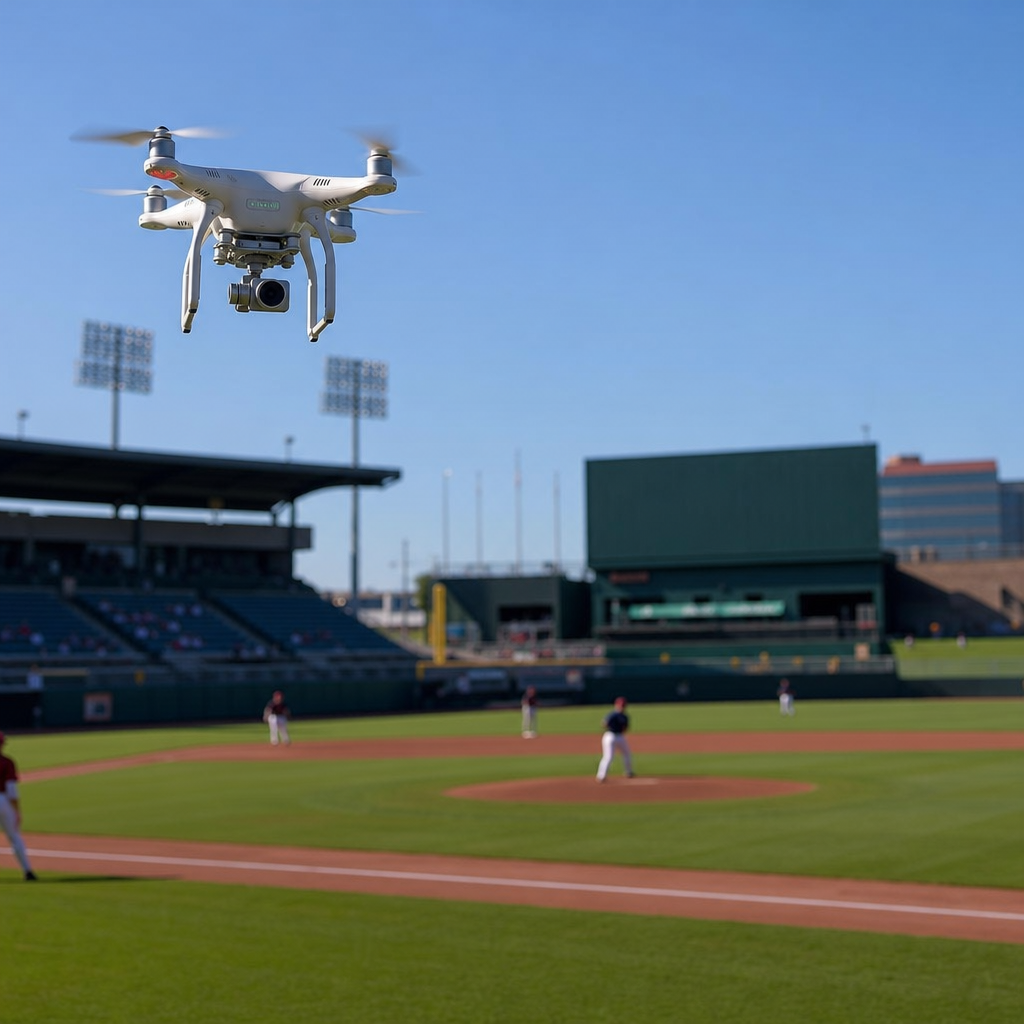
Drones have moved from novelty gadgets to practical tools in baseball, reshaping how games are filmed, how players train, and how organizations study performance across every level of the sport. In baseball, a drone usually means a small unmanned aircraft system equipped with stabilized cameras, programmable flight paths, live video transmission, and safety controls that allow operators to capture angles impossible for fixed stadium cameras or handheld rigs. Broadcasting refers to the live or recorded presentation of games for television, streaming, social platforms, and team media, while training covers player development, biomechanics review, defensive positioning, bullpen sessions, and practice design. This matters because baseball is a sport built on space, timing, and repeatable movement. The field is large, action unfolds in bursts, and meaningful details often happen away from the ball. Over the past several seasons, I have seen teams, media crews, and private instructors use drone footage to reveal routes, spacing, release points, and decision-making patterns that traditional views regularly miss.
The role of drones in baseball broadcasting and training sits inside a broader shift toward data-rich, visually immersive coverage. Fans expect cinematic presentation, analysts want better context, and coaches need efficient ways to review movement and tactics without installing permanent camera systems everywhere they work. A center-field camera can show pitch movement, and a high-home angle can show infield alignment, but neither can smoothly track a relay throw from the warning track or display the geometry of a first-step break in the outfield. A drone can. At the same time, using drones well requires more than buying hardware. Operators must comply with aviation rules, understand stadium safety protocols, coordinate with production crews, and know when an aerial angle adds insight instead of distraction. For baseball organizations building a modern innovation strategy, drones are no longer side experiments. They are emerging as a flexible bridge between storytelling, player development, and operational analysis.
How drones improve baseball broadcasting
Drones expand baseball broadcasting by delivering dynamic overhead and tracking shots that complement, rather than replace, standard camera positions. In live production, the greatest value comes before first pitch, during transitions, and in controlled moments such as batting practice, stadium flyovers, crowd arrival sequences, weather context, and scenic establishing shots. These visuals help networks and clubs communicate place, scale, and atmosphere. During recorded features, drones become even more useful. A production team can trace the dimensions of Fenway Park’s odd angles, follow the path from bullpen to mound, or show how far a center fielder shades toward the gap against a specific hitter. Those are not just pretty images. They provide spatial explanation.
From my experience around sports video workflows, the strongest drone segments are designed around questions viewers already have. How much ground does a shortstop cover on a shift? Why is a relay lane difficult at a particular ballpark? What does a pitcher’s fielding practice drill look like from directly above? Aerial footage answers those questions quickly. Modern drones from DJI, Autel, and Skydio can record stabilized 4K or higher video, hold position accurately with GPS and vision sensors, and repeat programmed routes for consistent storytelling. That consistency matters for recurring shows and comparative analysis. If a team media department captures the same batting practice pattern every month, viewers can see changes in swing path, opposite-field approach, and defensive setup with far more clarity than a ground-level clip provides.
There are limits. Most professional leagues and venues place strict restrictions on flight near spectators, and the Federal Aviation Administration in the United States regulates remote pilot certification, airspace authorization, and operations over people. As a result, drones rarely hover freely over live major sporting action. The practical broadcasting model is controlled use in open stadium periods, pregame windows, exterior coverage, spring training complexes, minor league parks, and documentary production. Even with those constraints, the impact is real: better scene setting, better tactical explanation, and better content for digital channels that need fresh visuals every day.
Where drones fit inside player training and development
In training, drones are most valuable when coaches need a moving overhead view of baseball actions that unfold across space. Outfield defense is the clearest example. A drone can show a player’s pre-pitch positioning, first read, crossover step, route efficiency, and closing angle on line drives or balls hit into the gap. That single perspective helps coaches diagnose whether the problem is reaction time, footwork, anticipation, or starting depth. Catchers and infielders also benefit. During bunt defense, first-and-third plays, cutoffs, and relays, aerial video reveals spacing errors and communication gaps that are hard to identify from dugout-level footage.
Pitching and hitting applications are growing as well, especially in practice environments. A drone positioned safely beyond the action can capture the relationship between mound, plate, and fielders during live batting practice or simulated games. Pitching coordinators can review fielding mechanics on comebackers, PFP footwork, and timing to bases. Hitting instructors can pair overhead drone footage with bat-sensor data, ball-flight tracking from systems like TrackMan or Rapsodo, and side-view video to understand how a swing decision translated into contact quality and spray direction. The drone does not replace high-speed biomechanics cameras. Instead, it adds tactical context.
Player development staffs increasingly work with synchronized datasets. A fly ball rep might include Hawkeye or Blast Motion metrics, coach notes, and an aerial clip tagged in software such as Hudl, Synergy, or BATS. That integrated workflow is where drones earn their place. The footage becomes searchable evidence tied to a coaching cue. When an outfielder improves jump efficiency, the coach can show exactly how the player’s setup changed. When a baserunner rounds second too wide, the video makes the correction obvious in seconds.
| Use case | What the drone shows best | Baseball benefit |
|---|---|---|
| Outfield defense | First step, route shape, closing angle | Improves reads and positioning |
| Infield systems | Shift spacing, relay lanes, bunt coverage | Reduces tactical breakdowns |
| Pitcher fielding practice | Footwork to first, home, and third | Speeds reaction and cleaner mechanics |
| Baserunning | Turns, leads, and tag-up paths | Creates more efficient running lines |
| Broadcast features | Ballpark geometry and scene-setting shots | Explains strategy and improves storytelling |
Specific baseball scenarios where aerial footage changes decisions
The best way to understand drone value is through practical baseball scenarios. Consider outfield route training. A coach may notice that a right fielder reaches deep balls late despite solid sprint speed. Ground video suggests hesitation, but drone footage often shows the real issue: the player opens his hips the wrong way on the first move, creating a curved route instead of a direct line. Correcting that pattern can turn a fringe defender into an average one because route efficiency in baseball is often more important than raw speed alone.
Another scenario is defensive alignment. Teams now position fielders using hitter tendencies, count context, and pitcher profiles. Aerial review lets coaches evaluate whether players are standing where the card says they should be and whether those spots still make sense against real batted-ball distributions. In amateur baseball, where positioning discipline is inconsistent, this can produce immediate gains. I have seen infield groups understand cutoff depth and double-play spacing much faster after one overhead review session than after several verbal walkthroughs.
Baserunning is similarly well suited to drones. Overhead footage exposes whether a runner drifts on a steal break, rounds the bag too high, or mistimes a secondary lead. These are details that cost runs over a season. For catchers and coaches, drones can also clarify throw lanes and backup responsibilities on first-to-third plays. In bullpens and live at-bat sessions, aerial footage can reveal how defenders react off the bat and whether team drills replicate true game spacing. That matters because many training setups unintentionally compress the field, leading players to practice movements that do not match competition.
Broadcasting teams also use these same scenarios editorially. A package explaining why a left-center gap is difficult in a specific park becomes much stronger when a drone traces the fence line and warning-track shape. A postseason feature on elite defense gains authority when viewers can see the route map instead of hearing only praise. Good aerial baseball coverage turns abstract coaching language into visible, understandable proof.
Operational realities: safety, rules, staffing, and cost
Any serious discussion of drones in baseball must address operational constraints. Safety comes first. Rotors, battery systems, radio links, and crowded venues create nontrivial risk, so organizations need trained pilots, written procedures, weather thresholds, emergency landing plans, and clear communication with venue operations. In the United States, commercial operators generally need an FAA Part 107 certificate, and flights near stadiums may involve Temporary Flight Restrictions, local permissions, or complete bans depending on the event. Insurance is standard, and responsible crews maintain maintenance logs, propeller checks, firmware discipline, and geofencing awareness.
Staffing matters almost as much as hardware. A drone operator who understands baseball can anticipate where the useful frame will develop, just as a good game camera operator reads swings and throws. The best setups pair the pilot with a visual observer and, on larger shoots, a producer who knows the exact tactical point being filmed. Without that planning, footage becomes cinematic but shallow. With planning, one ten-minute flight can produce clips for coaching review, social media, sponsor features, and broadcast packages.
Cost has fallen enough that colleges, academies, and well-run high school programs can justify limited drone use. A capable production drone may cost less than a permanent multi-camera installation, though batteries, training, software, insurance, and replacement cycles add up. Weather is another limitation. Wind affects stability, rain grounds flights, and bright midday sun can reduce visual clarity on dirt and grass boundaries. Battery life usually ranges from roughly twenty to forty minutes depending on model and conditions, so efficient shot lists are essential. Drones are useful, not magical. They work best as part of a planned video and analytics system rather than as a standalone answer.
The future of drones in baseball innovation
The next phase of drone use in baseball will be defined by integration, autonomy, and smarter analysis rather than by louder highlight shots. We are already seeing software that can tag plays automatically, stabilize moving subjects, and link video clips with tracking data. As object recognition improves, drones will become better at following defensive drills, maintaining safe framing, and repeating exact routes for comparative training sessions. That repeatability is crucial for development because coaches need before-and-after evidence, not one-off visuals.
Broadcast innovation will likely expand first in shoulder programming, documentaries, and direct-to-consumer team content. Those formats allow more controlled flying and more time to explain strategy. Expect richer ballpark explainers, overhead telestration, and virtual overlays that connect drone footage with Statcast-style information such as launch direction, route efficiency, or spray charts. In training environments, expect more combined workflows where a coach reviews an aerial clip beside wearable sensor outputs and bat-or-ball tracking metrics in one dashboard. The real advantage is not the drone itself; it is the quality of decisions the footage supports.
For baseball organizations building an innovation roadmap, drones deserve hub-level attention because they connect several priorities at once: fan engagement, coaching clarity, content differentiation, and operational flexibility. They also point toward a larger lesson within innovations and changes in baseball. The most valuable technologies are not the ones that simply look advanced. They are the ones that make baseball easier to see, understand, teach, and improve. Drones do exactly that when used with discipline. If you are mapping the future of baseball broadcasting and training, start by identifying one recurring problem in visibility or instruction, test an aerial workflow around it, and build from evidence rather than trend chasing.
Frequently Asked Questions
How are drones changing baseball broadcasting?
Drones are changing baseball broadcasting by giving production teams access to camera angles and motion shots that were previously difficult, expensive, or impossible to achieve with traditional setups. In a baseball environment, fixed stadium cameras are excellent for standard game coverage, but they are limited by their mounted positions. A drone can move above the outfield, glide along the perimeter of the ballpark, or provide sweeping establishing shots that immediately make a broadcast feel more immersive. This added mobility helps networks show the scale of the stadium, the energy of the crowd, defensive positioning, weather conditions, and the overall atmosphere in a much more cinematic way.
They also improve storytelling. Broadcasters are no longer confined to static views between innings or before first pitch. A drone can capture team warmups, fan arrivals, field-preparation routines, and dramatic aerial transitions going into commercial breaks or replay packages. In some settings, drones may also be used during practice sessions, batting practice, or pregame coverage to create dynamic content for live television, streaming platforms, and social media. The result is a more modern, visually engaging presentation that helps teams and media outlets hold viewer attention in a crowded digital landscape.
At the same time, the most effective use of drones in broadcasting is usually strategic rather than constant. They are best deployed when they add context, motion, and perspective without distracting from the game itself. Because baseball is a sport built on anticipation, spacing, and field geometry, aerial footage can be especially valuable in helping viewers appreciate positioning, stadium design, and the relationship between players and the playing surface. When integrated well, drones do not replace traditional broadcast cameras; they expand the visual language of baseball coverage.
What role do drones play in baseball training and player development?
Drones are becoming valuable tools in baseball training because they allow coaches, players, and performance staff to study movement patterns from angles that ground-based cameras cannot easily provide. A drone equipped with a stabilized camera can record defensive drills, baserunning sequences, batting practice layouts, pitching sessions, and team positioning from overhead or elevated perspectives. That bird’s-eye view is especially useful because baseball is a sport of spacing, timing, and coordination. Coaches can see how infielders move before a ground ball, how outfielders react to contact, how catchers and middle infielders communicate, and how runners take leads and turn bases.
For player development, drones can support video review in a practical and highly visual way. Instead of relying only on side-angle or behind-the-plate footage, coaches can compare routes, footwork, throwing lanes, cutoff alignment, and team defensive shape from above. This is particularly helpful for training players to understand not just their own mechanics, but also how they function within a larger system. For example, a coach can use drone footage to show whether a center fielder took an efficient path to the ball, whether infield shifts were positioned correctly, or whether a baserunner made the optimal turn at second base.
Drones can also contribute to organization-wide development by creating a consistent video record across different levels of the sport, from youth and high school programs to college and professional systems. That consistency helps evaluators compare players in similar drill environments and gives athletes clearer visual feedback. While drones are not a replacement for biomechanical analysis tools, radar systems, or close-up skill cameras, they are an effective complement. They add a tactical, spatial layer to training that can sharpen decision-making, team coordination, and situational awareness.
Are drones safe and legal to use at baseball games and practices?
Drones can be safe and legal in baseball settings, but only when they are operated within clear rules, professional safety protocols, and applicable aviation regulations. Safety is the first concern because baseball venues contain athletes, coaches, officials, fans, staff, lighting structures, and other obstacles that create a complex operating environment. A drone used near a field should have features such as stabilized flight, geofencing support where appropriate, obstacle awareness, return-to-home programming, reliable signal transmission, and a qualified operator who understands both the aircraft and the venue. Many organizations also establish restricted flight zones, minimum distance requirements, and approved operating windows to reduce risk.
Legality depends on where the drone is being flown, who is operating it, and for what purpose. In many countries, including the United States, drone operations are regulated by aviation authorities, and commercial use often requires compliance with licensing, registration, and operational rules. Stadium environments may involve additional restrictions related to temporary flight limitations, event security, local ordinances, or venue-specific policies. Even outside live games, operators may need permission from the field owner, school, team, or tournament organizer. Insurance, risk assessment, and documented operational procedures are also increasingly common for professional and collegiate environments.
During games, especially in front of large crowds, drone use is often more restricted than during practices or closed training sessions. That is why many baseball organizations use drones for pregame content, empty-stadium filming, practice analysis, promotional material, or controlled training scenarios rather than continuous in-game operation directly over active play. The safest and most effective approach is to treat drone deployment as a specialized production or training activity, not a casual add-on. When used by trained personnel under the right conditions, drones can provide significant value while maintaining player, staff, and spectator safety.
What are the biggest benefits of drone footage for coaches, analysts, and teams?
The biggest benefits of drone footage in baseball come down to perspective, efficiency, and insight. From an elevated or overhead angle, coaches and analysts can see the game in a way that better reflects strategy and spacing. This is especially important in baseball because many important details are not fully visible from standard sideline or dugout cameras. Defensive alignment, relay positioning, communication gaps, baserunner decision-making, and route efficiency become much easier to evaluate when the entire field can be viewed in motion from above.
For coaches, this means more precise teaching. Instead of telling a player that their first step was late or that their angle to the ball was inefficient, they can show it visually. For teams, this can improve practice quality because drone footage makes it easier to review drills immediately and identify recurring issues across multiple players at once. A single aerial recording may reveal whether a whole defensive unit is slow to rotate, whether cutoff men are drifting out of ideal lanes, or whether outfielders are consistently misjudging depth. That kind of broad tactical feedback is difficult to capture with narrow-angle cameras alone.
For analysts and player-development staff, drone footage can also support richer performance evaluation. It can be combined with other technologies, such as tracking data, motion analysis, and scouting reports, to create a more complete picture of how a player performs in real baseball situations. Beyond technical analysis, there are practical benefits too. Drones can reduce the need for elaborate camera rigging in some environments, produce high-quality visual content for internal review and public-facing media, and help organizations document training sessions efficiently. In short, drone footage gives baseball decision-makers a more comprehensive view of both individual execution and team structure.
Will drones become a standard part of baseball coverage and development in the future?
Drones are very likely to become a more standard part of baseball coverage and development, although their role will probably continue to be specialized rather than universal. The technology already fits several needs within the sport: broadcasters want more dynamic visuals, teams want better training footage, analysts want clearer spatial context, and digital media departments want engaging content for online audiences. Because drones can serve all of those goals at once, they are well positioned to become a routine tool across professional organizations, colleges, training academies, and even advanced amateur programs.
That said, wider adoption will depend on how well organizations manage regulation, safety, cost, and workflow integration. Drones are most useful when they are part of a planned system, not just flown occasionally for dramatic visuals. Teams that get the most value from them typically have clear use cases, such as filming defensive drills, capturing promotional content, studying baserunning patterns, or enhancing pregame and postgame storytelling. As drone software improves, flight paths become easier to automate, camera stabilization becomes stronger, and live transmission becomes more reliable, the barrier to practical use will continue to fall.
In the long term, drones may become a normal supporting layer within baseball’s broader technology ecosystem. They are unlikely to replace fixed broadcast cameras, replay systems, tracking tools, or traditional coaching observation, but they do something those tools often cannot: they connect movement, space, and context in a single view. That makes them especially valuable in a sport where positioning and anticipation matter so much. As teams and broadcasters continue looking for competitive and creative advantages, drones are poised to play an increasingly important role in how baseball is shown, taught, and understood.