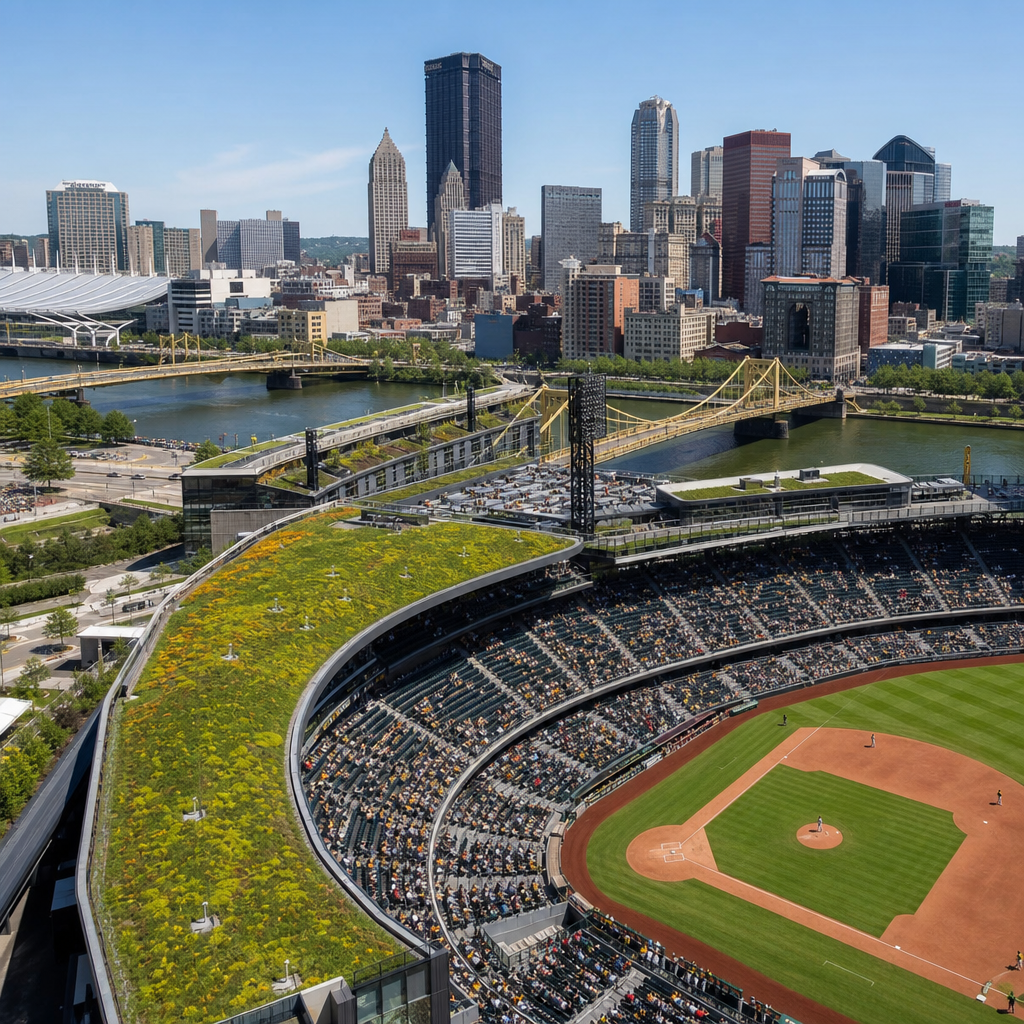
Baseball stadiums are being redesigned around a simple idea: the ballpark should entertain fans without wasting energy, water, land, or materials. The green stadium is a baseball arena that reduces environmental impact through efficient building systems, cleaner transportation, smarter operations, and healthier food and waste practices. In my work reviewing venue upgrades and sustainability plans, I have seen that the most effective projects are not cosmetic. They combine architecture, engineering, procurement, and day-to-day operations so that environmental gains also improve resilience, fan comfort, and long-term costs.
This matters because baseball venues are resource-intensive facilities. A modern stadium uses large amounts of electricity for lighting, scoreboards, concessions, refrigeration, elevators, and broadcast infrastructure. It consumes water for restrooms, kitchens, cleaning, and in some parks irrigation. It generates tons of waste in a few hours through cups, trays, food scraps, and packaging. Event traffic adds another layer through car trips, buses, rideshare activity, and deliveries. As climate risks increase, teams and municipalities also have to think about heat, intense rain, grid strain, and public expectations. Sustainable innovations in baseball arenas address these pressures directly while creating a better game-day experience.
For readers exploring innovations and changes in baseball, this hub covers the core systems that make a stadium meaningfully greener. It defines the technologies, explains how they work in plain language, and shows where tradeoffs exist. It also points toward related topics this sub-pillar supports, including smart stadium design, fan experience technology, venue accessibility, maintenance modernization, and sports facility economics. If you want to understand how baseball arenas are evolving beyond the field itself, start with the physical plant. Buildings lock in decades of energy use and operating practices. When a team installs LEDs, on-site solar, low-flow fixtures, composting systems, or transit-first planning, the effect compounds over every homestand and every concert, festival, or postseason game hosted there.
The strongest sustainable stadium strategies share three traits. First, they measure performance with recognized frameworks such as LEED, ENERGY STAR, building automation analytics, and waste-diversion reporting. Second, they treat sustainability as operations, not just construction. Third, they match local conditions. A retractable-roof venue in a hot climate has different priorities from an open-air northern park with winter snow loads. What follows is a deep dive into the specific innovations shaping the green stadium and why they are becoming central to the future of baseball arenas.
Energy efficiency and electrified building systems
Energy is usually the fastest place for a baseball stadium to cut emissions and operating expense. The foundational upgrade is LED lighting. Compared with older metal halide systems, LED sports lights use less electricity, reach full brightness instantly, and allow precise controls for dimming, zoning, and entertainment effects. That matters in baseball because lighting demand changes by inning, concourse zone, cleaning schedule, and event type. LEDs also improve color rendering for broadcasts and can reduce maintenance because fixtures last much longer. Across large venues, those gains become substantial when field lights, concourses, parking areas, suites, kitchens, back-of-house corridors, and signage are upgraded together.
The next layer is building automation. A modern stadium should not cool, heat, or ventilate every space the same way all day. Good controls tie together occupancy schedules, weather forecasts, utility rates, and equipment status. In practice, that means club areas can be conditioned before gates open, kitchen exhaust can respond to actual cooking load, and empty meeting rooms can drift to setback temperatures. I have seen venues save meaningful amounts simply by commissioning systems properly and fixing simultaneous heating and cooling, a common problem in large facilities. Demand management is especially important during summer peaks, when utilities charge more and grid stress is highest.
Electrification is becoming a defining innovation. Instead of relying on on-site combustion for some heating loads, stadium operators increasingly evaluate heat pumps, electric kitchen equipment, and electric service vehicles. Electrification works best when paired with envelope improvements such as better glazing, insulation, vestibules, and air sealing, because reducing load makes electric systems more practical and cost-effective. There are limits: some facilities still need hybrid approaches for resilience or for very high-temperature process loads. But the direction is clear. As regional power grids add cleaner generation, an electrified baseball arena usually gets cleaner over time without rebuilding the whole plant.
Renewable power, storage, and resilient infrastructure
On-site renewable energy is highly visible, but the real value goes beyond symbolism. Solar arrays on roofs, parking canopies, or adjacent structures can offset a portion of daytime load, especially for offices, retail areas, and pregame operations. In some cases, solar over parking delivers a double benefit by generating power and shading vehicles, which improves fan comfort in hot weather. Stadiums usually cannot meet all demand with on-site generation because events create large peaks, yet even partial production lowers purchased electricity and demonstrates credible action.
Battery storage adds strategic value. A battery can reduce demand charges by discharging during short peaks, provide limited backup for critical systems, and support participation in utility demand response programs. That matters for stadium economics because many utility bills are driven not just by total kilowatt-hours but by the highest interval of power draw. For a baseball venue with giant scoreboards, air conditioning, and simultaneous concession activity, shaving peaks can produce outsized savings. Some operators also examine microgrid design, where solar, storage, and backup generation are coordinated so essential operations can continue during outages or severe weather.
Resilience should be treated as part of sustainability, not a separate issue. A green stadium that fails during heat waves, smoke events, flooding, or grid disruptions is not truly future-ready. Designers now evaluate stormwater capacity, elevated electrical gear in flood-prone areas, redundant communications, shaded queuing zones, and emergency ventilation strategies. These features protect revenue and safety. They also matter for community use, because many stadium districts serve as gathering points during emergencies. A resilient arena can support public sheltering, logistics, or recovery activities more effectively than a conventional venue.
Water stewardship, field management, and landscape design
Water use in baseball parks extends far beyond the field. Restrooms, kitchens, cleaning, cooling systems, and laundry can consume significant volumes over a season. The basic conservation toolkit includes low-flow faucets, dual-flush or ultra-efficient toilets, waterless urinals where appropriate, leak detection, and submetering by end use. Submetering is one of the least glamorous but most important upgrades because it tells operators where losses are happening. Without it, teams may only see a monthly utility bill and miss irrigation drift, hidden fixture leaks, or abnormal kitchen consumption.
Field management presents a special case. Natural grass remains central to baseball aesthetics and playability, but it can be maintained with far less waste than many people assume. Smart irrigation controllers use weather data, soil moisture readings, and evapotranspiration rates to water only when needed. Native or climate-appropriate landscaping around the venue further reduces irrigation demand while supporting local biodiversity. In dry regions, captured rainwater or reclaimed water may be used for nonpotable applications, subject to code and public health requirements. In wet climates, stormwater systems focus more on detention, filtration, and runoff quality before water leaves the site.
Water quality is as important as quantity. Parking lots and exterior plazas can carry oils, litter, and sediments into local waterways during rain events. Permeable paving, bioswales, rain gardens, and green roofs help slow runoff and filter pollutants. These features also reduce heat buildup and can improve the visual character of the stadium district. When combined well, they are not decorative extras. They are part of the venue’s functional infrastructure and often help projects comply with municipal stormwater rules while improving neighborhood relationships.
Materials, construction, and circular waste systems
A sustainable baseball arena starts with what it is made from and continues with what it throws away. During construction or major renovation, teams can lower embodied carbon by preserving existing structures where feasible, specifying recycled steel content, using supplementary cementitious materials in concrete, and choosing lower-impact finishes. Adaptive reuse often has a larger climate benefit than a full rebuild because the carbon already invested in the structure is retained. That does not mean every old park should remain untouched, but it does mean demolition should never be treated as a default solution.
Operational waste is where fans notice change fastest. Successful venues simplify sorting, standardize packaging, and train vendors repeatedly. Compostable serviceware only works when the local waste hauler and compost facility accept the exact products being used. Otherwise, “green” packaging can contaminate recycling or end up in landfill. Clear bin design matters too. People sort better when the opening shape matches the item and the signage shows real concession products sold on site. In audits I have reviewed, contamination often drops when arenas reduce bin choices in high-traffic areas and place staff near stations early in the season.
| Stadium waste stream | Best practice | Why it works |
|---|---|---|
| Aluminum and plastic bottles | Front-of-house bins with item-specific signage | Captures high-volume recyclables with less contamination |
| Food scraps | Back-of-house separation in kitchens and suites | Staff control improves compost quality and consistency |
| Cardboard | Dedicated loading dock baling area | Produces cleaner material and lowers hauling frequency |
| Used cooking oil | Closed collection for recycling | Creates a recoverable stream and reduces spill risk |
Donation and reuse programs extend the circular approach. Unsold edible food can be redirected through qualified recovery partners when local regulations and food safety procedures are met. Building materials, furniture, and equipment from renovations can sometimes be salvaged rather than discarded. These programs require planning, storage, chain-of-custody controls, and realistic labor budgeting, but they produce both environmental and community benefits.
Transportation, food systems, and fan-facing operations
For many events, transportation emissions rival or exceed building emissions. A genuinely green stadium therefore looks beyond the gates. The strongest districts are linked to rail, bus, protected walking routes, and secure bicycle parking. Teams can support lower-carbon travel through bundled transit tickets, preferential parking for carpools, electric vehicle charging, and game-day messaging that tells fans exactly which route is easiest. Good transportation planning is practical, not moralizing. Fans choose transit when it is simple, safe, and competitive on time.
Food and beverage operations are another high-impact area. Local sourcing can reduce transport distance for some products, but the bigger sustainability gains usually come from menu engineering, refrigeration efficiency, and waste prevention. Plant-forward options matter because beef and dairy generally carry higher greenhouse gas intensity than grains, legumes, and many vegetables. The goal is not to eliminate traditional ballpark food; it is to expand choice and reduce avoidable waste. Better forecasting, batch cooking, and dynamic restocking can shrink spoilage without hurting service levels.
Fan-facing communication determines whether innovations succeed. If a stadium installs refill stations, fans need visible wayfinding and clear bottle policies. If compost and recycling are offered, bins must be where decisions happen, not hidden near exits. If shade structures or cool zones are part of climate adaptation, guests should see them on maps and in the team app. The most effective sustainable innovations in baseball arenas feel intuitive. Fans notice comfort, speed, cleanliness, and convenience first. Environmental performance improves when those benefits are designed into the experience rather than added as a lecture.
Measuring results and building the innovation roadmap
The final innovation is disciplined measurement. Stadium sustainability programs succeed when operators track energy use intensity, peak demand, water use per attendee, waste diversion, transit mode share, and indoor environmental quality. Baselines matter. Without a pre-upgrade benchmark, it is impossible to prove whether a retrofit delivered the expected return. Recognized tools help. LEED offers a structured framework for design and operations, ENERGY STAR benchmarking helps compare performance, and computerized maintenance management systems document whether equipment is being serviced well enough to sustain savings. Public reporting can strengthen credibility if the metrics are consistent year to year.
This hub should guide deeper exploration across the broader innovations and changes in baseball landscape. From here, readers can move into connected subjects such as smart sensors for crowd and building analytics, evolving turf science, accessible venue design, modular construction, premium space retrofits, and the business case for sports infrastructure investment. Sustainable innovation touches all of them because efficiency, resilience, and fan expectations now shape every serious stadium project. Owners that treat sustainability as a side program usually end up paying more later through retrofits, utility volatility, or reputational pressure. Owners that integrate it early build better assets.
The green stadium is not one technology or one certification plaque. It is a coordinated operating model for baseball arenas: efficient lighting and HVAC, cleaner power, smarter water use, durable materials, credible waste systems, lower-carbon transportation, and transparent measurement. These upgrades reduce environmental impact, but they also make venues more comfortable, resilient, and cost-aware. For teams, municipalities, and fans, that is the main benefit. A stadium can honor baseball tradition while adopting modern infrastructure that works better in every season. Use this hub as your starting point, then explore each innovation in depth to see how the future ballpark is being built right now.
Frequently Asked Questions
What makes a baseball stadium “green” in practical terms?
A green baseball stadium is not defined by one visible feature, such as solar panels or a recycling station. It is the result of many coordinated decisions that reduce the venue’s environmental impact across design, construction, and day-to-day operations. In practical terms, that means using high-efficiency lighting, heating, cooling, and ventilation systems; reducing water use through low-flow fixtures, drought-tolerant landscaping, and rainwater reuse; selecting durable, lower-impact building materials; and creating waste systems that support recycling and composting instead of sending everything to landfill.
Transportation is also a major part of the equation. Many of the most effective stadium sustainability strategies focus on how fans, workers, and teams get to and from the ballpark. Venues that support public transit, bike access, pedestrian-friendly entry points, and electric vehicle charging can reduce emissions far beyond what the building itself saves. Food operations matter as well. Sourcing more local products, cutting single-use plastics, donating surplus food, and improving compost collection all contribute to a greener overall system.
The key point is that a truly sustainable ballpark is not a branding exercise. It is a high-performing facility designed to entertain large crowds while using less energy, less water, fewer raw materials, and smarter operating practices. The best green stadiums treat sustainability as part of the building’s core infrastructure, not as an add-on.
Which sustainable innovations have the biggest impact in modern baseball arenas?
The biggest impacts usually come from the systems that operate every day at full scale. Energy efficiency is often the first major opportunity. LED field lighting, concourse lighting controls, occupancy sensors, efficient chillers, advanced building automation systems, and better insulation can significantly lower energy demand. In large venues, even modest efficiency improvements add up quickly because the facility has extensive lighting, ventilation, refrigeration, kitchens, scoreboards, and event infrastructure.
Water-saving measures are another high-impact area, especially in stadiums with large restrooms, food service areas, and irrigated landscapes. High-efficiency plumbing fixtures, leak detection systems, native planting, weather-based irrigation controls, and the use of captured rainwater or recycled water for non-potable needs can dramatically reduce water consumption. In regions facing drought or long-term water stress, these measures are especially valuable.
Waste reduction and materials management also deliver substantial results. Stadiums generate large volumes of cups, trays, food scraps, cardboard, packaging, and maintenance materials in a short period of time. Well-designed composting and recycling programs, along with concessions that use clearly sortable serviceware, can greatly improve diversion rates. During construction or renovation, reusing structural components, specifying recycled-content materials, and choosing products with longer lifespans can reduce embodied environmental impact.
Finally, transportation planning often has one of the broadest carbon benefits. A stadium that is connected to rail, bus lines, shuttle networks, bike routes, and walkable surrounding development can reduce game-day emissions at a metropolitan scale. In many cases, that transportation piece is just as important as the building technology inside the stadium walls.
How do sustainable stadium upgrades improve the fan experience, not just environmental performance?
One of the most common misconceptions is that sustainability requires compromise. In reality, many green upgrades directly improve comfort, convenience, and overall game-day quality. LED lighting can provide better visibility and more dynamic show elements while using less electricity. Improved ventilation and smarter climate control can make indoor clubs, suites, and enclosed concourses more comfortable. Water-efficient plumbing upgrades often come with newer, more reliable fixtures, which improves restroom performance during peak demand.
Better site planning can also create a smoother arrival and departure experience. When a stadium is integrated with transit, bike parking, shaded walkways, and clearer pedestrian circulation, fans spend less time stuck in traffic and more time enjoying the event. Upgraded food programs can be another major benefit. Many sustainable venues use their environmental goals to introduce fresher ingredients, more local sourcing, plant-forward menu options, and reduced packaging waste. That often leads to a higher-quality concessions experience, not a lesser one.
There is also a growing health and comfort dimension. Sustainable materials and better air handling can support healthier indoor environments. More shade, better heat mitigation, and improved stormwater design can make outdoor areas more usable in changing weather conditions. Fans may not always notice the engineering behind these improvements, but they do notice when a stadium feels easier to navigate, cleaner, cooler, brighter, and more thoughtfully designed. That is why the best sustainability projects succeed: they serve both environmental goals and the people in the seats.
Are green baseball stadiums more expensive to build or renovate?
They can involve higher upfront costs in some areas, but that does not tell the full story. Certain sustainable features, such as high-performance mechanical systems, on-site renewable energy, water reuse infrastructure, or advanced building controls, may increase initial capital costs. However, these investments often lower operating expenses over time through reduced utility bills, lower maintenance needs, and better system performance. In a venue that hosts frequent games, concerts, and events, those savings can be meaningful over the life of the facility.
It is also important to distinguish between unnecessary premium spending and smart integrated design. The most cost-effective projects are usually planned early, when architects, engineers, operators, and ownership groups can align sustainability goals with the overall renovation or construction scope. When sustainability is integrated from the beginning, rather than layered on late as a special feature, it often becomes much more affordable. For example, a better building envelope can reduce the size of mechanical systems needed, and durable materials can reduce replacement cycles.
There are financial benefits beyond utility savings as well. Sustainable stadiums may strengthen eligibility for incentives, improve brand reputation, attract sponsors aligned with environmental goals, and meet evolving regulations more easily. Some features also reduce operational risk, especially in areas affected by heat, drought, rising energy costs, or waste restrictions. So while the answer is not simply “green costs less,” it is equally inaccurate to assume sustainable stadium design is just an expensive extra. In many cases, it is a long-term value strategy.
What should teams and stadium operators prioritize if they want to make their ballparks more sustainable?
The first priority should be measurement. Before making major claims or investments, teams and operators need a clear baseline for energy use, water consumption, waste generation, transportation patterns, and procurement practices. Without data, it is difficult to know where the biggest opportunities are or which upgrades will deliver the strongest return. A thorough audit often reveals that some of the most effective improvements are operational, not just structural.
From there, operators should focus on the highest-impact categories. Energy systems are usually near the top of the list, especially lighting, HVAC, refrigeration, and controls. Water management should follow closely, particularly in high-use restrooms, kitchens, and landscaping areas. Waste systems deserve equal attention because they require both infrastructure and staff training to work well. If bins are poorly labeled, back-of-house sorting is weak, or vendors use incompatible packaging, diversion programs tend to underperform.
Transportation and procurement should not be treated as secondary issues. Encouraging transit use, coordinating with local agencies, adding bike infrastructure, and supporting lower-emission fleet options can reduce a stadium’s broader footprint in ways that building upgrades alone cannot. On the purchasing side, teams can influence sustainability through food sourcing, cleaning products, construction materials, packaging standards, and vendor requirements.
Most importantly, operators should aim for systems that endure. The strongest sustainability programs are supported by staff training, public communication, realistic targets, and regular performance review. Fans can play a role, but long-term success depends on operational discipline behind the scenes. In my experience reviewing venue upgrades and sustainability plans, the projects that perform best are the ones that connect architecture, engineering, concessions, maintenance, and transportation into one consistent strategy.