Enhanced replay technology has become one of baseball’s most consequential modern innovations because it changes how fairness is defined, measured, and defended on the field. In practical terms, enhanced replay technology refers to the combination of high-speed cameras, synchronized broadcast feeds, frame-by-frame review software, centralized officiating, and formal challenge rules used to reexamine disputed plays. I have worked on baseball content and rules analysis long enough to see the shift clearly: arguments that once ended with a manager kicking dirt now move into video rooms, timing protocols, and evidence thresholds. That change matters because fairness in baseball is not an abstract ideal. It determines wins, player value, postseason access, contract incentives, public trust, and the credibility of umpiring itself.
Baseball has always balanced tradition against accuracy. Before replay expansion, a missed call was often treated as part of the game’s texture, even when television viewers could see the mistake within seconds. That gap between what fans knew and what umpires could correct became increasingly hard to defend as camera quality improved. A safe call at first base, a trapped ball ruled a catch, or a missed home run boundary decision no longer disappeared into memory; it was replayed from six angles in real time. Enhanced replay technology emerged from that pressure. It was designed not to eliminate human officiating, but to create a structured method for correcting clear errors without stopping the sport from functioning.
For readers exploring innovations and changes in baseball, replay is a hub topic because it connects to almost every other modernization debate. Pitch tracking, automated strike zones, wearable sensors, bat and ball data, scheduling reforms, pace-of-play rules, and broadcast analytics all raise the same foundational question: when technology can reveal more truth, how should the sport use it? Replay is where baseball has already answered that question in operational form. The system defines reviewable plays, sets challenge limits, relies on the MLB Replay Operations Center, and uses the standard of clear and convincing evidence to confirm or overturn calls. Understanding replay therefore helps explain the sport’s broader approach to innovation.
It also matters because fairness is not identical to perfection. A system can improve accuracy while introducing delay, inconsistency, or confusion if its rules are poorly designed. The real story of enhanced replay technology is not that cameras simply “fix mistakes.” The story is that baseball has built a governance structure around evidence. When does a manager challenge? Which angles count? What happens when the video is inconclusive? How much time should a review take before the cure becomes as frustrating as the original error? Those operational details are what make replay one of the most revealing deep dives in modern baseball, and they show why the technology has genuinely changed the game’s fairness.
How enhanced replay technology works in Major League Baseball
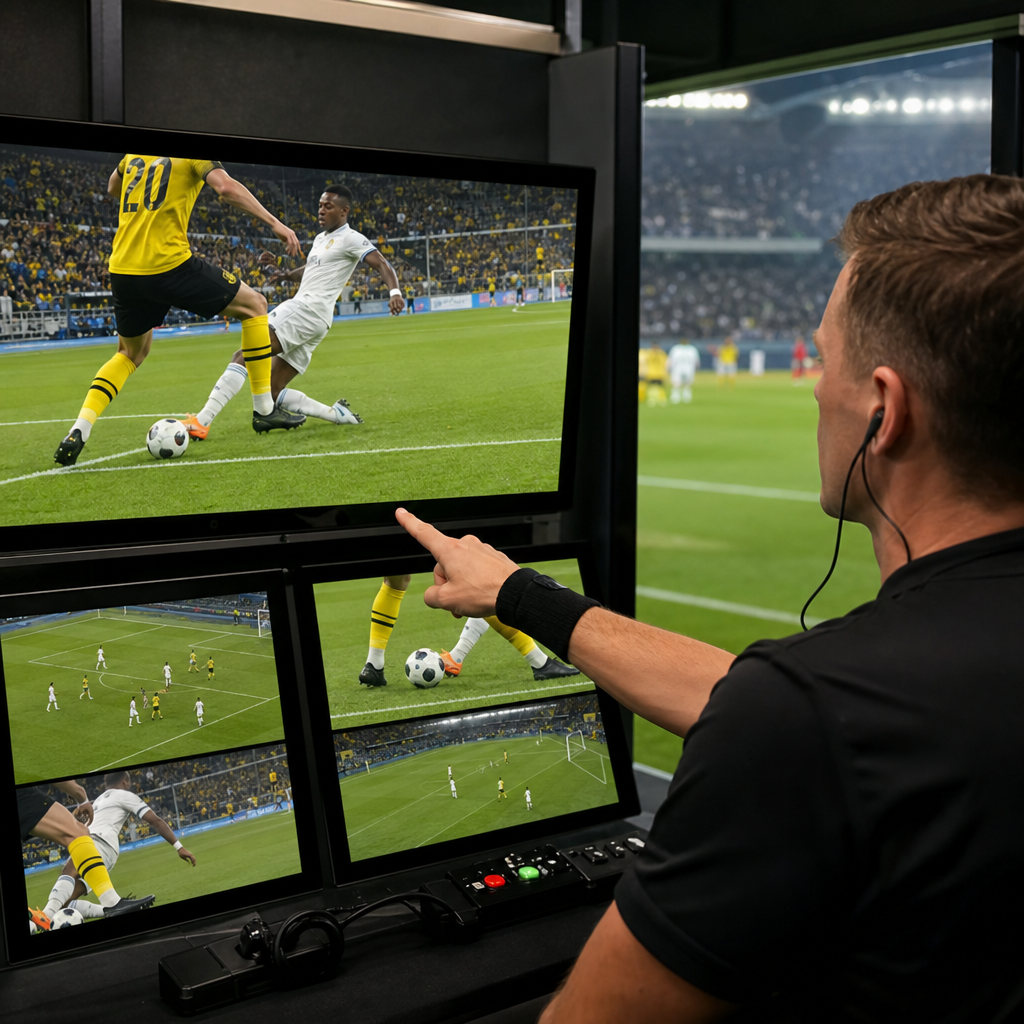
Major League Baseball’s replay system combines on-field umpire decisions with centralized video review. Managers can challenge certain calls, while some situations, such as boundary home run reviews, may be crew-initiated depending on the circumstances and inning. Once a review begins, the umpires communicate with the Replay Operations Center in New York, where trained officials examine all available broadcast and ballpark camera angles. The review standard is critical: the original call is overturned only when there is clear and convincing evidence that it was wrong. If that threshold is not met, the call stands. That distinction preserves the authority of the original ruling while still allowing correction of obvious mistakes.
In plain terms, the technology stack matters as much as the rulebook. High-frame-rate cameras can separate a tag from a hand reaching the base by fractions of a second. Synchronized feeds allow reviewers to align bat, ball, glove, and runner movement across multiple angles. Zoom and frame advance help isolate the exact moment of touch, transfer, or boundary contact. I have seen many fans assume replay is just “watching TV again,” but the professional system is more exact than that. Review officials compare not just a single broadcast shot, but every available perspective, including in-house ballpark feeds that may never appear on the public telecast.
The system is also narrower than many casual observers think. Balls and strikes are not currently subject to standard replay review in MLB games, and judgment areas remain protected unless the rules specifically allow review. That limitation reflects baseball’s longstanding attempt to preserve game flow and the role of umpires rather than turning every disputed moment into litigation. Still, the set of reviewable plays is broad enough to affect outcomes regularly: force plays, tag plays, catches in the outfield, fan interference, fair or foul determinations in some contexts, hit-by-pitch decisions linked to reviewable outcomes, and home run boundaries all fall within replay’s practical influence.
Where replay has improved fairness most clearly
The clearest fairness gain from enhanced replay technology is the correction of outcome-changing calls. Before replay expansion, a missed call at first base or on the bases could permanently alter a game even when the evidence of error was obvious to millions of viewers. Replay reduces that disconnect. A runner called out on a stolen base can be ruled safe when the tag missed by an inch. An outfielder who trapped a sinking line drive can no longer rely on a sell job if the video shows the ball touching grass. A home run that hooks just inside the foul pole can be distinguished from a loud foul ball with far more confidence than any crew could achieve unaided.
Several categories especially benefit from technology because human perception is weakest under speed, distance, or angle compression. Bang-bang plays at first base happen around 90 feet of acceleration and one decisive step on the bag. Swipe tags involve a glove moving across a body while the runner’s hand reaches for a base edge invisible from one side. Boundary calls near the wall require tracking the ball, glove, fence line, and fan reach simultaneously. These are precisely the moments in which cameras outperform the naked eye. In fairness terms, replay works best when it addresses events that are physically difficult to judge live, not merely controversial.
Another major improvement is consistency across ballparks. Because MLB uses a centralized review center, the process does not depend entirely on the local crew’s perspective or the host broadcaster’s storytelling. That centralization matters for competitive integrity over 162 games. Teams need confidence that a challenge in Seattle is evaluated under the same evidentiary standard as a challenge in Atlanta or New York. Central review does not guarantee universal agreement, but it creates procedural uniformity. In my experience analyzing disputed plays over multiple seasons, that procedural standardization is one of replay’s most underrated benefits because fairness depends on repeatable process as much as correct individual outcomes.
The tradeoffs: delays, limits, and the “stands” problem
Replay improves accuracy, but it introduces costs that baseball cannot ignore. The most obvious is time. Even an efficient review interrupts game rhythm, cools pitchers, freezes baserunners, and changes the emotional tempo of a close inning. MLB has worked to reduce review length, and average times have generally been measured in well under two minutes in recent seasons, but the perception of delay can feel longer when tension is high. For a sport also trying to improve pace, every extra stoppage has strategic and entertainment consequences. Fairness, in other words, includes timely adjudication, not just eventual correctness.
The second tradeoff is inconclusive evidence. Fans often assume that slow motion should produce certainty, yet many angles are blocked, off-axis, or too distant to isolate first contact. That is why the “call stands” outcome exists. It does not mean the original call was proven correct; it means the video did not satisfy the threshold to overturn it. This distinction is legally and operationally sound, but it can be unsatisfying for audiences who see replay as a truth machine. In practice, some of the most contentious reviews are not bad uses of technology. They are examples of technology reaching its evidentiary limit.
| Replay factor | Fairness benefit | Main limitation | Real baseball example |
|---|---|---|---|
| High-speed cameras | Separates tag, touch, and transfer timing | May still lack the decisive angle | Swipe tag at second on a steal attempt |
| Central review | Applies a common standard across parks | Can feel distant to fans in the stadium | Boundary home run review in different venues |
| Manager challenges | Lets teams contest likely errors | Challenge strategy may affect later innings | Using a challenge early on a first-base out call |
| Clear evidence threshold | Protects against overturning calls on guesswork | Creates frustrating “stands” decisions | Blocked plate tag with no unobstructed angle |
A third tradeoff is strategic behavior. Managers and replay coordinators must decide whether preserving a challenge is more valuable than contesting a marginal call now. That adds tactical depth, but it also means access to correction is not purely automatic. Better-prepared clubs often gain an edge through sharper communication between the dugout, clubhouse video staff, and coaching personnel. That is fair in one sense, because preparation is part of professional sport, but it also means replay is not just a camera system. It is a decision system, and organizational competence affects how much fairness a team actually extracts from the rules.
How replay changes players, managers, and umpires
Enhanced replay technology has changed behavior on the field. Runners are more likely to stay on the bag through tags because they know a brief loss of contact can be exposed frame by frame. Fielders work harder on secure transfers after catches, especially on double-play turns and diving plays, because replay can reveal the ball moving at the moment of exchange. Catchers and infielders are taught to apply cleaner tags rather than relying on theatrical sweeps that once might have fooled an umpire from one angle. These are not cosmetic changes. They show the technology shaping technique, which is one reason replay influences fairness beyond the reviewed plays themselves.
Managers now operate with a new layer of information management. Most clubs use dedicated replay coordinators who monitor every close play and communicate rapidly to the bench on whether a challenge is advisable. The best coordinators are not simply hunting for reversals; they understand reviewable categories, available camera tendencies, and the practical likelihood of clear evidence. I have spoken with analysts who describe this as a blend of rules expertise and risk management. A manager’s ejection used to be a visible assertion of disagreement. Today, the more valuable skill is often restraint followed by a fast, well-informed challenge decision.
For umpires, replay has not removed pressure, but it has redefined accountability. Elite crews still need positioning, timing, rules command, and game control, yet they work knowing that some calls can be audited immediately. That can be uncomfortable, but it has also protected umpires from the lasting damage of obvious misses. Instead of becoming the story for weeks, a corrected call may become little more than a brief review note. Importantly, replay has pushed officiating toward process transparency. The public may not hear every conversation from New York, but it understands there is a formal mechanism for correction, and that has strengthened trust in many situations.
Replay as the hub for baseball’s broader technology future
If this subtopic is about deep dives into specific innovations, replay is the hub because it established baseball’s template for technology adoption. The sport did not jump directly from pure human judgment to fully automated decision-making. It introduced a hybrid model: human officials make live calls, technology checks certain outcomes, and a rule standard governs when intervention is justified. That same structure appears in debates over the automated ball-strike challenge system used in testing, Statcast-based defensive positioning analysis, and ball-tracking applications in player development. Replay proved that technology works best in baseball when it is integrated into rules, workflow, and accountability rather than bolted on as spectacle.
Replay also teaches a broader lesson about fairness: precision must serve legitimacy. Fans accept review when they believe it corrects meaningful errors under a stable standard. They resist it when reviews feel endless, opaque, or disconnected from common sense. That balance will matter even more as baseball evaluates future tools. Hawk-Eye camera systems already support tracking applications across professional sports, and MLB’s technology ecosystem continues to expand. The central question remains the one replay forced into the open: not whether technology can detect more, but which truths the sport is willing to operationalize, at what cost, and under whose authority.
Enhanced replay technology has changed baseball’s fairness by replacing some irreversible human error with structured, evidence-based correction. It works because it targets high-impact plays, uses centralized review, and respects a defined proof standard rather than pretending every angle delivers certainty. It also has limits: delays matter, some calls remain inconclusive, and strategy influences when teams can seek review. Still, the overall effect is unmistakable. Players adjust technique, managers rely on replay intelligence, umpires operate within a more transparent accountability system, and fans see a sport trying to align outcomes with observable reality.
As a hub within innovations and changes in baseball, replay deserves close study because it connects rule design, officiating philosophy, competitive integrity, and fan trust. It is the clearest modern example of baseball modernizing without fully abandoning human judgment. If you want to understand where the sport is headed next, start here, then explore related advances in strike-zone automation, tracking systems, and performance analytics. Replay shows that the best baseball innovations do not simply add technology; they use it to make the game more credible, more consistent, and more fair.
Frequently Asked Questions
What is enhanced replay technology in baseball, and how does it actually work?
Enhanced replay technology is the modern review system baseball uses to revisit disputed plays with much greater precision than traditional on-field judgment alone. It combines multiple tools and procedures: high-speed cameras positioned around the stadium, synchronized broadcast angles, frame-by-frame playback software, centralized review officials, and formal challenge rules that determine when and how a team can request a review. Instead of relying solely on what one umpire saw in real time, the system allows officials to reconstruct a play from several perspectives and at different speeds to determine whether the original call should stand or be changed.
In practice, the process begins when a manager challenges a call or when a review is automatically triggered under league rules. Video from multiple camera feeds is sent to a centralized operations center, where trained officials examine the play. They look for visual evidence that is clear enough to overturn the original ruling. That standard matters because replay is not meant to guess at what might have happened; it is meant to confirm whether the evidence conclusively shows the call was wrong. If the video does not clearly disprove the call on the field, the ruling typically stands.
What makes the technology “enhanced” is not just the presence of video, but the systemization of the entire review process. Baseball has moved beyond occasional television replays and into a structured officiating environment built around consistency, timing, evidentiary standards, and centralized decision-making. That shift has changed replay from a broadcast convenience into an institutional fairness mechanism. It does not eliminate every gray area, but it gives the sport a more defensible way to evaluate close plays that can affect runs, innings, games, and even postseason outcomes.
How has enhanced replay technology changed the idea of fairness in baseball?
Enhanced replay technology has fundamentally changed fairness in baseball by moving the conversation away from whether mistakes are simply “part of the game” and toward whether avoidable mistakes should still be allowed to decide important moments. For decades, fairness in baseball often meant accepting human judgment, even when everyone in the stadium and at home could see a missed call on replay. Today, fairness is increasingly defined as the sport’s willingness to use available tools to correct obvious errors when the stakes justify intervention.
This shift matters because fairness is no longer understood only as equal treatment under the same rules; it is also measured by the accuracy of how those rules are applied. If one runner is called safe when he is out, or a tag is ruled late when slow-motion review shows it was on time, the issue is not merely frustration. It is a question of whether the competitive outcome reflects actual performance. Enhanced replay technology helps protect that link between what happened and what is officially recorded as having happened.
At the same time, replay has expanded fairness into a procedural concept. Teams now have defined opportunities to challenge calls, officials follow standardized review protocols, and the league can centralize decisions to reduce local inconsistency. That structure helps create a sense that fairness is being defended systematically rather than informally. Even when fans disagree with a final ruling, they can see that a formal process was used, evidence was examined, and a review standard was applied. In that way, replay has not just corrected calls; it has reshaped expectations about accountability, transparency, and trust in the game’s officiating.
Does enhanced replay technology make baseball more accurate, or does it create new problems?
It clearly improves accuracy in many of the game’s most consequential situations. Close plays at bases, boundary calls, tag plays, force outs, and questions about whether a runner touched the bag can now be reviewed with tools that are far more precise than the naked eye in real time. In those situations, enhanced replay technology has made it much harder for plainly incorrect calls to survive unchallenged. That alone is a major competitive improvement, especially in a sport where one run or one out can change everything.
But increased accuracy does not mean the system is perfect. Replay can introduce new problems, especially when the available video is inconclusive or when the rules themselves are complex. A play can be slowed down to such a degree that it reveals technical details no one perceived live, raising questions about whether the game is judging baseball actions or microscopic visual events. Fans and players sometimes feel that replay replaces common-sense outcomes with hyper-literal readings of contact, possession, or timing. In that sense, the technology can sharpen not just evidence, but controversy.
There is also the issue of pace. Reviews can interrupt momentum, affect pitcher rhythm, cool off hitters, and create long pauses in otherwise tense moments. Even when the final call is correct, the delay can alter the emotional and strategic flow of the game. So the real answer is that enhanced replay technology improves factual accuracy while also creating operational and philosophical challenges. Baseball has accepted that trade-off because correcting major mistakes is considered worth the cost, but the debate now centers on how to preserve accuracy without letting review overcomplicate or over-slow the sport.
Why does centralized officiating matter in replay review?
Centralized officiating matters because it gives baseball a more uniform and controlled way to evaluate disputed plays across all ballparks and game situations. Instead of relying on different local crews or inconsistent access to video, a centralized replay center can apply the same review protocols, evidentiary standards, and interpretation framework from one game to the next. That is important for fairness because consistency is a major part of legitimacy. Teams and fans are more likely to trust the process if they believe the same kind of play will be judged in the same way regardless of where it happens.
Another advantage is technical coordination. A central replay hub can work with synchronized feeds, specialized review software, and trained personnel whose sole focus is analyzing video quickly and accurately. On-field umpires are managing the live game, crowd noise, pressure, positioning, and immediate communication. Centralized officials can step back from that environment and concentrate on the visual record itself. That separation can reduce some of the noise and subjectivity that naturally come with live decision-making.
Just as importantly, centralized officiating strengthens baseball’s claim that replay is not an improvised correction tool but a formal part of the rules-enforcement structure. It signals that the league is taking responsibility for how fairness is administered. Of course, centralization does not eliminate disagreement, and controversial reviews still happen. But it creates a clearer chain of authority and a more standardized review process, both of which are essential when a sport is trying to show that fairness is not just a value it talks about, but one it actively manages.
Will enhanced replay technology continue to change baseball in the future?
Yes, and likely in ways that extend beyond simple call reversal. Replay technology has already changed expectations around officiating, and future developments will probably make review faster, more integrated, and more data-driven. Better camera placement, higher frame rates, improved synchronization, and smarter review interfaces could reduce uncertainty on close plays and shorten decision times. As those tools improve, baseball may refine challenge rules, expand or narrow reviewable categories, and continue adjusting the balance between game flow and evidentiary precision.
There is also a broader cultural shift underway. Once a sport adopts advanced review technology, it becomes difficult to argue that obvious mistakes should remain uncorrected just to preserve tradition. That means replay influences not only officiating but the philosophy of rule enforcement. Fans, players, managers, and broadcasters begin to expect a level of institutional accountability that older versions of the game did not provide. Over time, that expectation can shape everything from umpire evaluation to broadcast presentation to the wording of rules themselves.
Still, the future of enhanced replay technology will depend on how baseball answers a central question: what kind of fairness does it want to prioritize? If the goal is maximum accuracy at any cost, replay may become even more expansive. If the goal is practical fairness within a flowing game, the league may focus on faster reviews and clearer standards rather than broader intervention. Either way, enhanced replay technology is no longer a side feature. It is part of how modern baseball defines credibility, settles disputes, and protects competitive integrity in an era where the visual record can no longer be ignored.