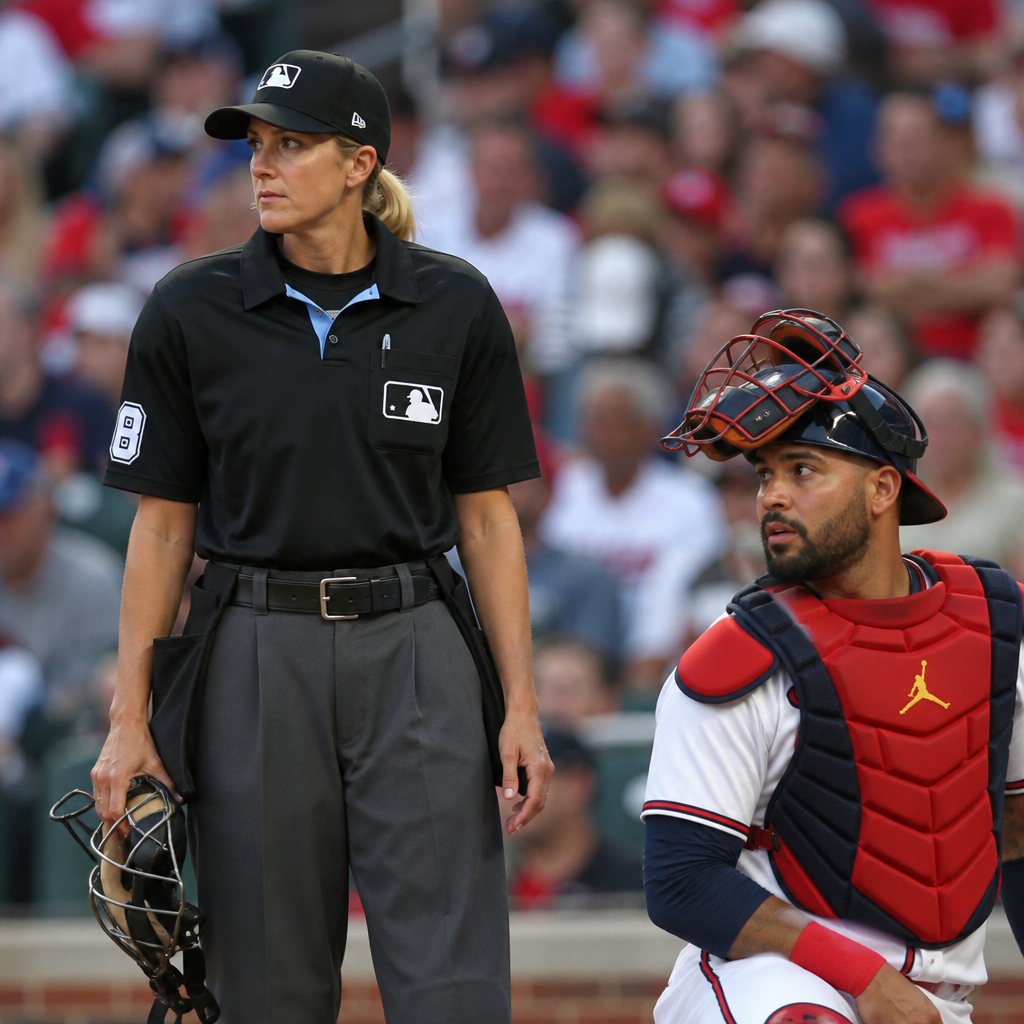
The rise of women umpires in professional baseball marks one of the sport’s most important shifts in modern leadership, visibility, and talent evaluation. An umpire is the on-field official responsible for enforcing rules, managing game flow, and making judgment calls on balls, strikes, outs, fair balls, and player conduct. For decades, professional baseball treated that authority role as almost exclusively male, even while women steadily expanded their presence across playing, coaching, scouting, analytics, and front-office work. That old barrier is now weakening, not through symbolism alone, but through training, performance, and institutional change.
This topic matters because umpires shape every level of baseball. They are not background figures; they are central operators in a highly technical environment that demands rules mastery, emotional control, communication skill, physical positioning, and split-second decision-making. When women enter that pipeline and advance on merit, the story is bigger than representation. It affects hiring practices, development systems, mentorship, and the way young athletes understand who belongs in positions of authority. I have worked around baseball development settings where one visible woman in an officiating role changed the tone immediately. Players adjusted assumptions, coaches recalibrated language, and younger girls in the stands saw a career path they had never been shown clearly before.
In professional baseball, “women umpires” usually refers to women working in affiliated or independent leagues, the minor league system, international competitions, or assignments connected to Major League Baseball development. The issue is not whether women can umpire; that has been answered repeatedly by performance. The real questions are how the pathway works, why progress has been slow, what barriers remain, and which figures have moved the profession forward. This hub article addresses those questions directly and connects the broader miscellaneous landscape of women in baseball through the lens of officiating, one of the clearest measures of institutional trust.
How women entered the professional umpiring pipeline
The modern pathway for umpires typically begins with formal training at professional umpire schools, followed by evaluation, placement in rookie or entry-level leagues, and years of advancement through the minors. Women reached that pipeline long before the public paid close attention. Bernice Gera became a landmark figure in the 1970s when she fought for the right to umpire professional baseball. Her legal challenge against organized baseball established an early precedent that exclusion could be contested. Although her on-field professional tenure was brief, its significance was lasting: the profession could no longer credibly claim that women simply did not belong.
Later generations built on that breach. Professional umpire schools such as the Wendelstedt Umpire School and the MiLB Umpire Training Academy became key gateways because baseball increasingly professionalized the route into officiating. That matters for women because standardized instruction narrows the room for arbitrary gatekeeping. A prospect is evaluated on plate work, base mechanics, timing, rules knowledge, game management, and fitness. Those benchmarks do not eliminate bias, but they make it harder to disguise bias as quality control. In my experience, the most credible breakthroughs in baseball happen when subjective culture is forced to answer to objective performance criteria.
Another critical factor has been visibility at amateur and international levels. Women have umpired college baseball, high-level youth tournaments, and events under the World Baseball Softball Confederation umbrella. These assignments matter because they place women in demanding competitive environments where mechanics, rules administration, and pressure management are publicly tested. Once that work is documented and normalized, professional clubs and league offices have fewer excuses for treating women officials as unknown quantities.
Trailblazers who changed what professional baseball considered possible
No discussion of women umpires in professional baseball is complete without naming the individuals who made institutional change unavoidable. Bernice Gera opened the legal and cultural argument. Pam Postema became one of the most recognized modern pioneers after working in the minor leagues and reaching the Triple-A level. Her career showed both progress and resistance: she was close to the major leagues, highly visible, and widely discussed, yet never received the MLB promotion many believed she had earned. That gap is part of the history, not a footnote. It demonstrated that access to the pipeline did not guarantee equal advancement.
Ria Cortesio later became the first woman to umpire in the South Atlantic League, another signal that the developmental system was changing, if unevenly. More recently, Jen Pawol has become the clearest contemporary example of sustained advancement. Pawol worked her way through the minor leagues, handled increasingly difficult assignments, and in 2024 became the first woman to umpire a spring training game in Major League Baseball since Gera’s era. That assignment mattered because spring training under MLB oversight is not ceremonial. It is a proving ground where timing, credibility, mechanics, and poise are visible to supervisors, clubs, broadcasters, and players.
What separates these trailblazers from symbolic firsts is competence under routine scrutiny. Umpires are reviewed constantly. Supervisors track strike zone consistency, replay-related judgment, positioning errors, pace of play administration, conflict handling, and crew communication. One reason women umpires have changed minds inside baseball is simple: repeated high-level work is harder to dismiss than any press release. When a woman handles a tense extra-inning game, manages appeals correctly, and maintains control after a bench-clearing dispute, she is not representing an abstract cause. She is demonstrating professional baseball skill in the exact language the sport respects.
Why advancement has been slow and what barriers still matter
Progress has been real, but it has not been fast. The biggest reason is that umpiring is one of baseball’s most tradition-bound career ladders. Advancement depends on school selection, early assignments, evaluation quality, travel endurance, networking, and years of low-visibility labor in difficult conditions. Minor league umpiring involves modest pay, constant relocation, physical strain, and a narrow promotion funnel. Those realities affect all umpires, but they can hit women harder when the profession still lacks broad peer representation, established mentorship lines, and a long history of inclusive workplace habits.
Clubhouse logistics and travel culture have also mattered more than outsiders often realize. In baseball operations, many barriers do not begin as written policy; they survive as unexamined routines. Separate facilities, safety considerations on the road, evaluator assumptions about “fit,” and resistance from managers or fans can all influence whether a woman’s path feels sustainable. I have seen organizations make progress only after they stop treating inclusion as an announcement and start treating it as operations work. If travel, reporting lines, anti-harassment standards, and performance review systems are not built carefully, a candidate can be put in a position where success requires absorbing friction that colleagues never face.
There is also the problem of distorted scrutiny. Women umpires are often discussed as novelties, which creates an unfair feedback loop. A male umpire can have an ordinary bad game and remain just another developing official. A woman may have the same game and see it interpreted as evidence about women generally. That is not professional evaluation; it is stereotype maintenance. Baseball improves when supervisors judge each umpire by the same measurable standards over time, not by how unusual their presence feels to a crowd.
| Barrier | How it appears in pro baseball | What helps solve it |
|---|---|---|
| Narrow pipeline | Few openings from umpire schools to affiliated leagues | Transparent selection criteria and wider recruitment |
| Bias in evaluation | “Fit” language used instead of measurable performance | Standardized reviews of mechanics, rules, and game management |
| Isolation | Limited female peer network in travel-heavy assignments | Formal mentorship and stronger league support systems |
| Operational gaps | Inadequate facilities, travel planning, or reporting channels | League-level protocols and accountability |
| Public novelty framing | Each mistake treated as a referendum on all women | Consistent media coverage focused on actual umpiring quality |
What professional umpiring demands and why women are meeting the standard
Professional baseball umpiring is a technical trade. Plate umpires track velocity, movement profiles, catcher presentation, batter posture, and the strike zone in real time, then reset instantly for checked swings, foul tips, stolen bases, and potential collisions at the plate. Base umpires must read hops, angles, tags, timing windows, obstruction, interference, and force-play status while adjusting footwork and sightlines. This is trained craft, not intuition. The industry’s best teaching emphasizes seeing the whole play, arriving set, making a call from balance, and separating timing from anticipation.
Women succeeding in this environment do so for the same reason any umpire succeeds: preparation and repeatable mechanics. There is no alternative path. Professional schools drill stances, slot position, rotations, signals, appeal procedures, and the Official Baseball Rules until they become instinctive. Video review now adds another layer. Umpires can study head height, stride pattern, call cadence, and missed-angle causes in ways that were impossible for earlier generations. Technology has not made the job easy, but it has made development more evidence-based, which benefits candidates who may once have been screened through tradition more than performance.
Another reason women are meeting the standard is that modern baseball is less tolerant of vague authority. Players, managers, and league offices want consistency. They may complain in the moment, but over a season they respect officials who know the rules, explain decisions clearly, and hold emotional composure. That favors umpires who are rigorously trained and professionally self-aware. In practical terms, a woman who handles pace rules cleanly, enforces foreign-substance checks correctly, and maintains a stable zone will earn credibility the same way any strong umpire does: through reliable work that survives review.
The broader impact on women in baseball beyond officiating
Women umpires matter far beyond the baseline question of who calls balls and strikes. They reinforce a larger truth across women in baseball: authority roles change culture faster than visibility roles alone. When girls and young women see someone enforce the rules in professional baseball, they are seeing a woman trusted with judgment under pressure. That image supports every adjacent pathway, including coaching, player development, strength and conditioning, analytics, communications, and executive leadership. It tells the sport that women are not guests in baseball spaces; they are decision-makers.
This is why a hub article on miscellaneous women in baseball topics belongs to officiating as much as to playing history or front-office progress. Umpiring intersects with labor conditions, media framing, training institutions, legal access, and organizational design. It also creates natural internal pathways for readers exploring the wider subject. Someone interested in women coaching in the minor leagues should also understand officiating, because both fields face similar questions about authority, evaluation, and advancement. Someone reading about women in baseball operations should understand umpiring because it reveals how leagues convert diversity language into actual standards, budgets, facilities, and promotions.
The public effect is significant too. Every visible, competent woman umpire makes it harder for baseball to fall back on outdated assumptions. Broadcast crews adapt, fans recalibrate, and youth programs gain a practical talking point when recruiting girls into officiating clinics or leadership programs. The benefit is cumulative. Change rarely arrives because one moment convinces everyone. It arrives because hundreds of ordinary professional moments remove the illusion that old exclusions were based on merit.
What comes next for women umpires in professional baseball
The next phase will depend less on firsts and more on volume. Baseball needs more women entering umpire schools, more women receiving serious developmental assignments, and more women advancing deep enough into the minor league system to normalize the promotion conversation. That requires investment in recruitment, mentoring, and operational support, but it also requires patience. Umpire development is slow by design. The profession values seasoning because game management improves through repetition across levels, ballparks, and conflict situations.
There are reasons for confidence. MLB’s developmental ecosystem is more data-driven than it once was. Supervisors can evaluate consistency more systematically, international tournaments expand the visibility of qualified women officials, and the sport now has recent examples readers, coaches, and aspiring umpires can name. The objective should not be token inclusion or a ceremonial appointment. It should be a durable pipeline in which women are recruited, trained, assessed, promoted, and retained under the same demanding standards applied to everyone else.
The rise of women umpires in professional baseball is ultimately a story about baseball becoming more honest about where excellence can come from. The evidence is already on the field: women have learned the rules, passed through elite training, managed professional games, and earned increasingly important assignments. The task now is to widen the path and judge performance without distortion. If you are building out your understanding of women in baseball, use this subject as a lens for the whole landscape. Follow the trailblazers, study the pipeline, and pay attention to the systems that turn opportunity into lasting change.
Frequently Asked Questions
Why is the rise of women umpires in professional baseball such a significant development?
The growing presence of women umpires in professional baseball is significant because it represents a long-overdue shift in who is seen as qualified to hold authority on the field. Umpires are central to the game. They enforce the rules, control tempo, manage conflict, and make immediate judgment calls that affect every inning. For generations, that level of authority was treated as an almost exclusively male role, even as women made progress in other parts of baseball such as front-office leadership, broadcasting, player development, and coaching. Seeing women step into professional umpiring challenges that outdated assumption directly.
It also matters because it broadens the sport’s understanding of talent. Professional baseball works best when advancement is based on preparation, consistency, composure, and rules expertise rather than tradition or stereotype. Women umpires have demonstrated that the core skills required for the profession are not gendered. Their emergence signals that baseball is becoming more serious about evaluating officials on performance and readiness instead of old expectations about who “looks” like an umpire.
Beyond the field, this change has symbolic and practical impact. Visibility matters in sports culture. When players, coaches, executives, and fans regularly see women in decision-making roles during games, it helps normalize inclusion at every level of the sport. That shift can influence hiring pipelines, mentorship opportunities, and youth participation for years to come. In that sense, the rise of women umpires is not just about representation in one position; it is about expanding the leadership structure of baseball itself.
What does a professional baseball umpire actually do, and what skills are needed to succeed?
A professional baseball umpire does far more than call balls and strikes. Umpires are responsible for applying the rulebook in real time, maintaining order, monitoring player conduct, handling appeals, judging safe and out calls, ruling on fair and foul balls, and keeping the game moving under pressure. At higher levels of baseball, they also work as a crew, which means communication, positioning, and teamwork are essential. Every game requires constant focus because a single missed mechanic or lapse in concentration can affect a play, an inning, or the tone of the entire contest.
Success in umpiring depends on a combination of technical knowledge and mental discipline. A strong umpire must know the rules thoroughly, but rules knowledge alone is not enough. They must also develop precise timing, field awareness, strong mechanics, clear signaling, and the confidence to make difficult calls decisively. Good judgment under pressure is especially important, because umpires often make split-second rulings in front of athletes, coaches, and fans who may immediately challenge them.
Physical readiness is another major part of the job. Umpires spend long games on their feet, move quickly into position, and must stay sharp through heat, travel, and demanding schedules. Emotional control is equally important. The best umpires remain steady even when games become tense or controversial. That is one reason the rise of women umpires has been so meaningful: it highlights that excellence in this profession comes from training, resilience, command, and consistency, not from fitting a traditional image of who has historically occupied the role.
What barriers have women historically faced in becoming professional baseball umpires?
Women pursuing professional umpiring have historically faced both structural and cultural barriers. Structurally, baseball long operated through pipelines that were built with men in mind, from training access to hiring assumptions to advancement opportunities. In many cases, women were not openly encouraged to pursue officiating, were underrepresented in development programs, or had fewer examples of women who had successfully advanced through the system. That lack of precedent can make an already difficult profession even harder to enter.
Culturally, women often had to confront skepticism about their authority before they ever made a call. Because umpires serve in a visible leadership position, bias can show up quickly and publicly. Some women have had to prove not just that they know the game, but that they belong in a role people were conditioned to associate with men. That means the challenge has often been twofold: meeting the same demanding professional standard as everyone else while also navigating extra scrutiny, doubt, or resistance.
There is also the issue of isolation. In male-dominated professions, being one of the only women in a crew, a training environment, or a league can create added pressure. Every performance may be seen as representing more than just the individual. Even so, women who have advanced in professional umpiring have helped erode those barriers by demonstrating competence, calm, and professionalism over time. Their progress has been especially important because it creates visibility for the next generation, making it easier for future candidates to imagine a real pathway into the profession.
How are women umpires changing the culture and future of professional baseball?
Women umpires are changing professional baseball by helping redefine what leadership looks like on the field. Because umpires occupy a position of direct authority, their presence has an immediate cultural effect. It sends a clear message that command of the game is earned through expertise, judgment, and professionalism. That message matters not only to fans, but also to players, coaches, youth participants, and decision-makers across the sport.
Their impact is also shaping the game’s development systems. As more women enter umpire training programs and move through professional levels, baseball gains a wider talent pool and a more inclusive model for identifying high-level officials. That can improve the overall quality of officiating by ensuring that strong candidates are not overlooked because of outdated assumptions. In that sense, inclusion is not separate from excellence; it supports excellence by allowing the profession to draw from more qualified people.
Just as importantly, women umpires contribute to baseball’s long-term credibility as a modern sport. Professional leagues are increasingly judged not only by tradition and competition, but by whether their leadership pathways are open, fair, and merit-based. When women are visible in officiating roles, it reinforces the idea that baseball is evolving without losing its core standards. The rules remain the same, the expectations remain high, and the job remains demanding. What changes is the sport’s willingness to recognize excellence in a broader range of people.
What does the rise of women umpires mean for young fans, aspiring officials, and the future of the sport?
For young fans and aspiring officials, the rise of women umpires expands what feels possible in baseball. Representation is not just symbolic; it helps shape ambition. When girls and young women see female umpires working professional games, they can more easily picture themselves in leadership roles within the sport. That matters in a game where many paths beyond playing, including umpiring, coaching, scouting, and administration, have historically seemed less visible to women.
It also gives baseball a stronger future pipeline. Young people are more likely to pursue careers they can clearly imagine, and visible role models can help turn interest into action. As women umpires gain prominence, more aspiring officials may seek training, attend umpire schools, and commit to the development process. Over time, that can create a healthier and more competitive officiating system, which benefits the sport at every level.
For baseball as a whole, this moment reflects a broader evolution in how the game values talent and leadership. The rise of women umpires does not lower standards or change the seriousness of the profession. If anything, it reinforces the importance of mastery, preparation, and accountability by making it clear that the job belongs to those who earn it. That is good for the sport’s integrity, good for its image, and good for the generations who will define baseball in the years ahead.