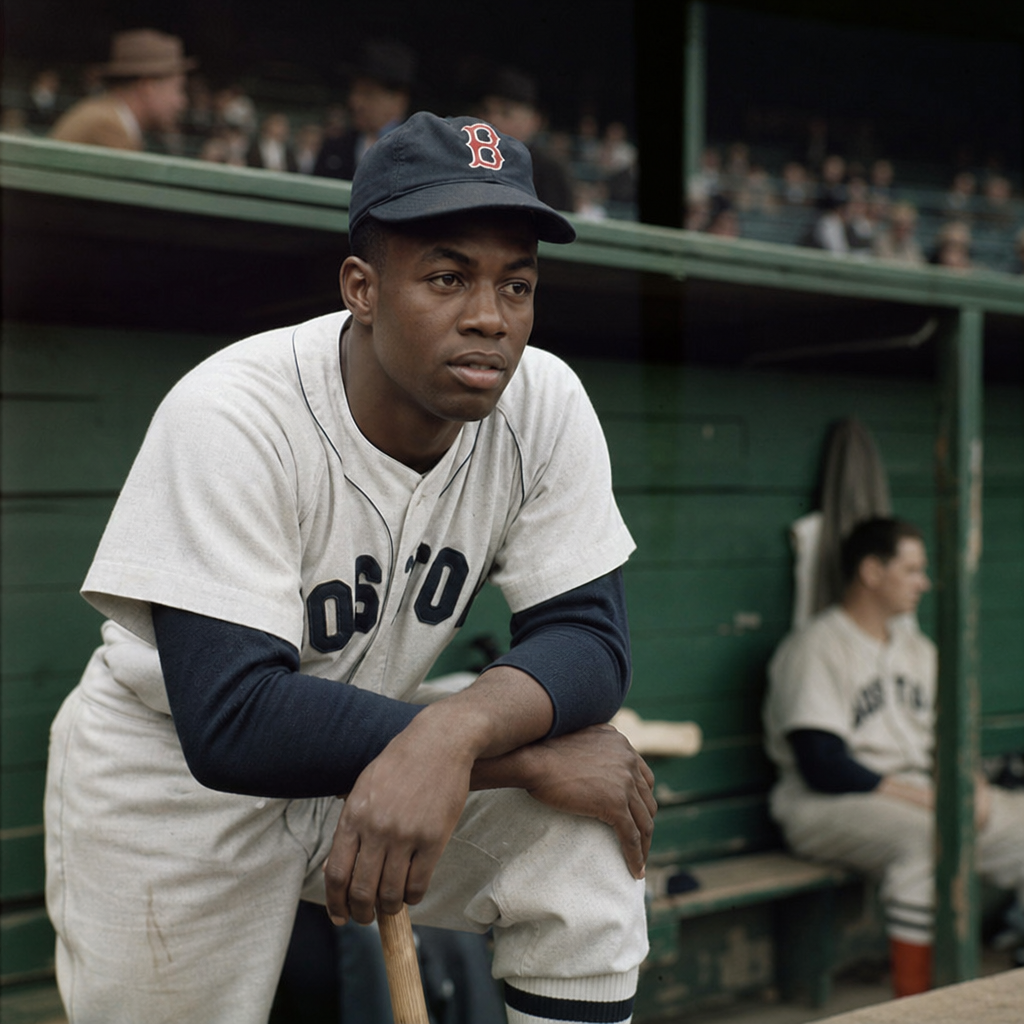
The Pumpsie Green incident is not a single outburst preserved in one newspaper clipping; it is a compact way to describe how racism shaped the Boston Red Sox before, during, and even after the club finally promoted Elijah “Pumpsie” Green in 1959. Green became the first Black player to appear in a Red Sox game, twelve years after Jackie Robinson integrated Major League Baseball with the Brooklyn Dodgers in 1947. That delay matters because it was not accidental, not merely a baseball decision, and not explainable by bad luck. It reflected a broader institutional culture in which ownership, scouting, roster construction, and public messaging all worked against integration.
When people search for the Pumpsie Green incident, they are usually asking several related questions at once. What exactly happened with Green? Why were the Red Sox the last major league team to integrate? Was there one racist act, or a longer pattern? And how should the story fit into the wider history of baseball scandals and controversies? The clearest answer is that Green’s debut was the visible endpoint of a long controversy involving discriminatory tryouts, exclusionary decision-making, and a franchise reputation that lagged behind the rest of the sport.
As a hub within a broader scandals and controversies topic, this article covers the full miscellaneous cluster around the incident: the famous 1945 tryout for Jackie Robinson, Sam Jethroe, and Marvin Williams; owner Tom Yawkey’s role and legacy; the team’s delayed integration; Green’s major league experience; and the modern reassessment of what happened. I have worked through this history the same way I approach other sports controversies: by separating myth from documented fact, then tracing how a single incident becomes shorthand for a system. In this case, the system is more important than any one game, quote, or headline.
Defining terms helps. In baseball history, integration refers to the admission and regular use of Black players on major league rosters after decades of exclusion under the color line. Racism in this context includes both explicit prejudice and policies that produced discriminatory outcomes without needing a public slur attached to every decision. A controversy is a sustained dispute over conduct, responsibility, and interpretation. The Pumpsie Green incident belongs in all three categories because it combines historical exclusion, organizational accountability, and an argument over whether the Red Sox were simply late or uniquely resistant. The evidence supports the stronger conclusion: Boston’s delay was exceptional, and it damaged both people and baseball outcomes.
Why the Red Sox were last to integrate
The essential fact is straightforward: every other major league team had integrated before the Red Sox did. Green debuted on July 21, 1959, called up from Triple-A Minneapolis after the team purchased his contract. By then, Black stars were already transforming pennant races across baseball. Robinson, Roy Campanella, Larry Doby, Willie Mays, Hank Aaron, Ernie Banks, and many others had proved that the supposed baseball reasons for exclusion were empty. The Red Sox still waited. That is why historians treat the franchise as a case study in institutional resistance rather than ordinary delay.
Tom Yawkey, the longtime owner, sits at the center of that discussion. Yawkey remains a complicated figure in Boston memory because he spent heavily, was personally popular in some circles, and presided over successful teams in certain eras. But on integration, the historical record is harsh. Former players, writers, and researchers consistently described the Red Sox as inhospitable to Black talent under his ownership. No serious account of the Pumpsie Green incident can avoid that point. Even when direct documentary proof is thinner than modern readers might want, the pattern of decisions is overwhelming evidence of organizational bias.
The delay was not harmless symbolism. It narrowed the Red Sox talent pool during years when Black and Afro-Latino players were changing the game. Teams willing to scout the Negro Leagues and Black amateur circuits gained access to elite speed, power, and pitching. Boston, by contrast, often behaved as if integration were a public-relations burden instead of a competitive necessity. That choice had baseball consequences. A club that claims to care only about winning cannot ignore an entire category of premier talent for more than a decade and then insist race had nothing to do with it.
The 1945 Fenway Park tryout and why it still matters
The most cited episode before Green’s debut is the April 16, 1945 tryout at Fenway Park for Jackie Robinson, Sam Jethroe, and Marvin Williams. The event was arranged under political pressure, especially from Boston City Council member Isadore Muchnick, who challenged the Red Sox to justify their exclusion of Black players. The tryout has often been described as a sham, and that description is justified. Contemporary accounts and later historical work indicate the club had no genuine intention of signing any of the players. Robinson, of course, would later integrate the National League with Brooklyn. Jethroe went on to win the 1950 National League Rookie of the Year Award with the Boston Braves. The Red Sox let both pass.
That single day matters because it eliminates the familiar excuse that the team simply did not encounter major league caliber Black talent. They saw it directly. Robinson’s athleticism, Jethroe’s speed, and Williams’s ability were not hidden. The issue was not lack of access; it was refusal. In practical terms, the tryout functions as one of the clearest pieces of evidence in the broader racism controversy. If a team auditions future stars and still remains all white for years, the burden of explanation shifts entirely to the organization.
The Red Sox were hardly alone in baseball’s racist past, but the 1945 tryout makes their role unusually concrete. Other clubs integrated grudgingly, slowly, or opportunistically. Boston staged a public exercise that looked inclusive while preserving exclusion. That difference is important when ranking baseball scandals and controversies. Some incidents involve words. Others involve structures. The Fenway tryout combined both politics and performance, showing how institutions can answer criticism without changing behavior.
Pumpsie Green’s debut and the reality behind the milestone
Green’s debut on July 21, 1959, against the Chicago White Sox should have been a proud baseball milestone. Instead, it arrived burdened by everything the franchise had delayed. Green, an infielder with athletic ability and a strong minor league track record, entered a clubhouse and a city already aware of what his presence represented. He was not just a rookie trying to stay in the majors. He was the living rebuttal to a decade of Red Sox inaction.
In baseball terms, Green was useful, though not a superstar. Across parts of four seasons with Boston, he played 327 games, batting .246 with a .348 on-base percentage and defensive versatility around the infield. Those numbers matter because they cut against a common distortion in race controversies: the idea that if the first barrier-breaker was not an immediate Hall of Fame talent, the breakthrough was somehow less significant. Green did not need to be Mays or Aaron for the integration story to matter. The issue was that Boston had denied opportunity for so long that Green’s call-up became historically loaded beyond his stat line.
Accounts from Green and others also make clear that integration did not end discrimination. He encountered racial hostility from fans and the ambient prejudice of the era. In later interviews, Green spoke with notable restraint, but restraint should not be mistaken for absence of harm. Many pioneering Black players learned to describe abuse carefully because they were expected to survive it quietly. That context is essential when evaluating the Pumpsie Green incident as a controversy rather than a feel-good first.
How the controversy fits into the wider miscellaneous scandals hub
Within a miscellaneous sports scandals framework, the Pumpsie Green story belongs alongside controversies that are less about one explosive event and more about a pattern finally becoming impossible to ignore. The franchise’s racial history intersects with politics, media image, civic identity, and competitive failure. That breadth makes it a true hub topic rather than a narrow biography page.
Readers exploring this subtopic usually want to understand how related threads connect. The table below shows the core issues that branch from the Green incident and explain why it remains central in Red Sox history.
| Subtopic | What happened | Why it matters |
|---|---|---|
| 1945 tryout | Jackie Robinson, Sam Jethroe, and Marvin Williams were given a Fenway workout under public pressure | Shows the team had direct access to Black talent and still chose not to sign it |
| Tom Yawkey era | Ownership presided over the majors’ last integration | Links individual choices to organizational culture and long-term responsibility |
| Green’s 1959 debut | Pumpsie Green became Boston’s first Black major leaguer | Marks the formal end of segregation on the roster, but not the end of racial tension |
| Talent loss | Boston ignored or undervalued Black players for years | Demonstrates that racism hurt on-field performance as well as moral standing |
| Modern reassessment | Journalists, historians, and the club have revisited the legacy | Shows how teams confront, soften, or clarify uncomfortable history |
Seen this way, the incident is both specific and expansive. Specific, because Green’s promotion is a dateable event with identifiable participants. Expansive, because it opens into the larger subject of how sports organizations normalize exclusion while insisting they are merely following custom. That pattern appears in many leagues and eras, which is why this story continues to attract attention outside Boston.
Myths, defenses, and what the historical record supports
Several defenses of the Red Sox recur whenever this history is discussed. One claim says the team was simply conservative, not racist. Another says there is no single memo proving a discriminatory policy, so the accusation is exaggerated. A third points out that many institutions in 1940s and 1950s America were segregated, implying Boston should not be judged too harshly. None of these arguments holds up well.
First, conservative baseball judgment does not explain rejecting available Black talent after rival teams had already demonstrated its value. Second, organizations often discriminate through habits, networks, and gatekeeping rather than neatly archived directives. Historians assess patterns, outcomes, and contemporaneous testimony, not just smoking-gun paperwork. Third, widespread racism is context, not absolution. If anything, it makes the teams that broke barriers earlier more notable and the teams that resisted longer more culpable.
There is also a modern temptation to sanitize the story by treating Green as the final chapter in a problem solved by his arrival. That framing is incomplete. Integration is not a switch flipped by one debut. It is a process involving scouting, promotions, clubhouse treatment, media narratives, and front-office opportunity. Boston’s later history, including debates about race involving fans and players in more recent decades, suggests the organization has repeatedly had to revisit the same underlying issue: whether it confronts racial reality honestly or defensively.
Legacy, memory, and what the incident teaches now
The lasting lesson of the Pumpsie Green incident is that delayed justice is not neutral. The Red Sox did not merely arrive late to an inevitable change; they helped preserve an exclusionary order long after baseball had begun breaking it down. Green’s debut deserves recognition, but the stronger moral emphasis belongs on the years that made his debut overdue.
For Red Sox history, this controversy forces a more mature reading of the franchise. Boston can celebrate Ted Williams, the Impossible Dream season, and four modern World Series titles while still acknowledging that one of baseball’s wealthiest and most visible clubs failed a basic test of equality. Serious sports history is capable of both truths at once. In fact, credibility depends on holding them together instead of choosing comfort.
For readers using this page as a hub, the key takeaway is simple. The Pumpsie Green incident is not miscellaneous because it is minor. It is miscellaneous because it connects multiple strands of controversy: race, ownership, symbolism, competitive neglect, and historical memory. If you want to understand why the Red Sox were the last team to integrate, start with the 1945 Fenway tryout, follow the Yawkey era, and then view Green’s 1959 debut as the breakthrough that exposed the delay. From there, explore related articles on Robinson, Jethroe, baseball integration, and Boston’s broader racial controversies. The benefit of studying this story closely is clarity: it shows exactly how institutions hide prejudice inside routine decisions, and how history eventually names that pattern for what it is.
Frequently Asked Questions
What does the phrase “The Pumpsie Green incident” actually refer to?
The phrase “The Pumpsie Green incident” does not usually point to one isolated confrontation, one headline, or one dramatic moment captured in a single box score. Instead, it serves as a shorthand for a much larger historical reality: the Boston Red Sox’s long resistance to racial integration and the conditions surrounding Elijah “Pumpsie” Green’s arrival in the major leagues in 1959. Green’s debut was historically important because he became the first Black player to appear in a Red Sox game, but the significance of that event lies just as much in how late it happened as in the fact that it happened at all.
By the time Green reached Boston, Jackie Robinson had already integrated Major League Baseball with the Brooklyn Dodgers in 1947, and many other franchises had signed and developed Black talent. The Red Sox stood apart for all the wrong reasons. Their delay was not simply a matter of scouting preference or bad baseball timing. Historians and journalists have repeatedly treated it as evidence of an organizational culture shaped by racial exclusion, institutional hesitation, and leadership unwilling to move when the rest of the sport was changing. In that sense, the “incident” is really a system: discriminatory thinking, missed opportunities, reputational damage, and the burden placed on Green when he finally arrived.
So when people use that phrase, they are usually talking about the broader story of racism around the franchise before, during, and after Green’s promotion. It includes the Red Sox’s failure to integrate sooner, the symbolism attached to Green as a barrier-breaker, and the uncomfortable truth that his debut did not suddenly erase the hostile environment that made his arrival so delayed and so historically charged in the first place.
Why was Pumpsie Green’s 1959 debut such a major moment in Red Sox and baseball history?
Pumpsie Green’s debut mattered because it marked the end of the Boston Red Sox’s status as the last Major League Baseball team to integrate. That distinction is central to understanding why his first appearance carried such historical weight. Green was not just another rookie being called up; he was entering a franchise that had resisted change for more than a decade after the color barrier had already been broken elsewhere in the sport. His debut therefore became both a personal achievement and a public reckoning.
The timing is what makes the moment especially significant. Robinson debuted in 1947, and by 1959 Black players had already transformed baseball across the league. They were stars, everyday contributors, and central figures on championship teams. The Red Sox, meanwhile, had delayed so long that Green’s promotion exposed how out of step the organization had become. This was not just about image. It had competitive consequences as well. Boston had passed on opportunities to recruit and develop Black talent during years when other clubs were strengthening their rosters by doing exactly that.
Green’s debut also matters because of the burden attached to being “the first.” Firsts are often celebrated in hindsight, but they are rarely easy in the moment. Green entered a clubhouse, a city, and a fan culture where race was still an active force in shaping expectations and treatment. He was expected to represent progress while also dealing with the pressure, isolation, and scrutiny that come with breaking a barrier. That makes his place in history larger than his statistics alone. He symbolizes a long-overdue change, but also the human cost of forcing one player to carry the weight of an institution’s delayed moral and social responsibility.
Was the Red Sox delay in integrating really about racism, or was it just a baseball decision?
The historical record strongly supports the conclusion that racism played a major role in the Red Sox’s delayed integration. While teams often describe personnel decisions in the language of baseball judgment, scouting, roster fit, or timing, those explanations are not enough to account for why Boston remained all-white so long after the rest of the league had begun to integrate. The delay was too extreme, too visible, and too consistent with broader social patterns to be dismissed as a neutral sports decision.
One reason historians reject the “just baseball” explanation is that the Red Sox had chances to engage with Black talent and failed to act meaningfully. Over time, this pattern became part of the club’s identity. In baseball, organizations that truly want to win usually search for talent wherever it can be found. The Red Sox’s reluctance to do so suggests that race was influencing who was seen as acceptable, promotable, and worth investing in. That is why the issue is often framed as institutional racism rather than merely individual prejudice. It was embedded in decisions, priorities, and delays at the organizational level.
It is also important to understand racism here not only as open hostility, but as exclusion, avoidance, and the maintenance of unequal systems. A franchise did not need to issue a public declaration of segregation for racism to shape its actions. It could happen through excuses, inertia, selective standards, and leadership unwilling to challenge discriminatory assumptions. In the Red Sox case, that broader pattern helps explain why Green’s debut came so late and why the event is remembered not simply as a sports milestone, but as evidence of how racism operated inside one of baseball’s most famous institutions.
How did Pumpsie Green’s promotion affect the team’s legacy and public image?
Pumpsie Green’s promotion changed the Red Sox’s legacy, but not in a simple or instantly redemptive way. On one level, his debut allowed the franchise to finally cross a line it should never have taken so long to reach. It ended the embarrassment of being the last major league team to integrate and gave the organization a historical first it could later point to. But on another level, Green’s arrival permanently tied the Red Sox to a story of delay, resistance, and racial exclusion. In other words, the debut closed one chapter while cementing the team’s association with another.
That is why the moment remains so powerful in public memory. For many fans and historians, Green’s debut is not remembered as a proud example of leadership. It is remembered as proof of how late the Red Sox were and how much pressure had built around their refusal to change. Rather than making the team look forward-thinking, the moment exposed the cost of its backwardness. The club’s image suffered because integration arrived in Boston only after years of avoidance had already damaged its moral standing and baseball reputation.
Over the long term, Green’s story has become essential to any honest discussion of the Red Sox’s history. It complicates nostalgic narratives by forcing attention onto issues of race, power, and institutional accountability. The team’s later achievements do not erase that past. Instead, Green’s promotion remains a reference point that reminds people the Red Sox were not merely late to integrate; they were historically, conspicuously late. That reality continues to shape how the franchise is evaluated, especially when conversations turn to civil rights, baseball culture, and the responsibilities of sports organizations in moments of social change.
Why is the Pumpsie Green story still important today?
The Pumpsie Green story still matters because it shows how racism in sports is often structural, not just personal. Many people are comfortable condemning obvious acts of prejudice, but Green’s history forces a deeper conversation about what happens when an institution delays fairness, rationalizes exclusion, and then treats a long-overdue correction as though it were ordinary business. His story reminds readers that injustice is not always a dramatic event with a single villain. Sometimes it is a pattern of decisions that compounds over years and shapes who gets opportunities, recognition, and support.
It also matters because sports history plays a powerful role in public memory. Baseball is often presented as a mirror of American life, and the Red Sox case reflects wider truths about race in the United States during the mid-twentieth century. The fact that such a prominent franchise lagged so far behind reveals how deeply segregationist thinking and discriminatory practices could persist even in highly visible, competitive institutions. Green’s debut therefore helps modern audiences connect baseball history to broader themes of civil rights, social change, and the difference between symbolic progress and genuine equality.
Finally, the story remains important because it asks present-day organizations and fans to think critically about accountability. Celebrating a breakthrough is not enough if the conditions that made the breakthrough necessary are ignored. Remembering Pumpsie Green means recognizing both his courage and the failure of the institution that kept the door closed for so long. That balance is what gives the story enduring value. It is not simply a tale about one player making history; it is a case study in how institutions resist change, how individuals carry the burden of that resistance, and why honest remembrance still matters today.