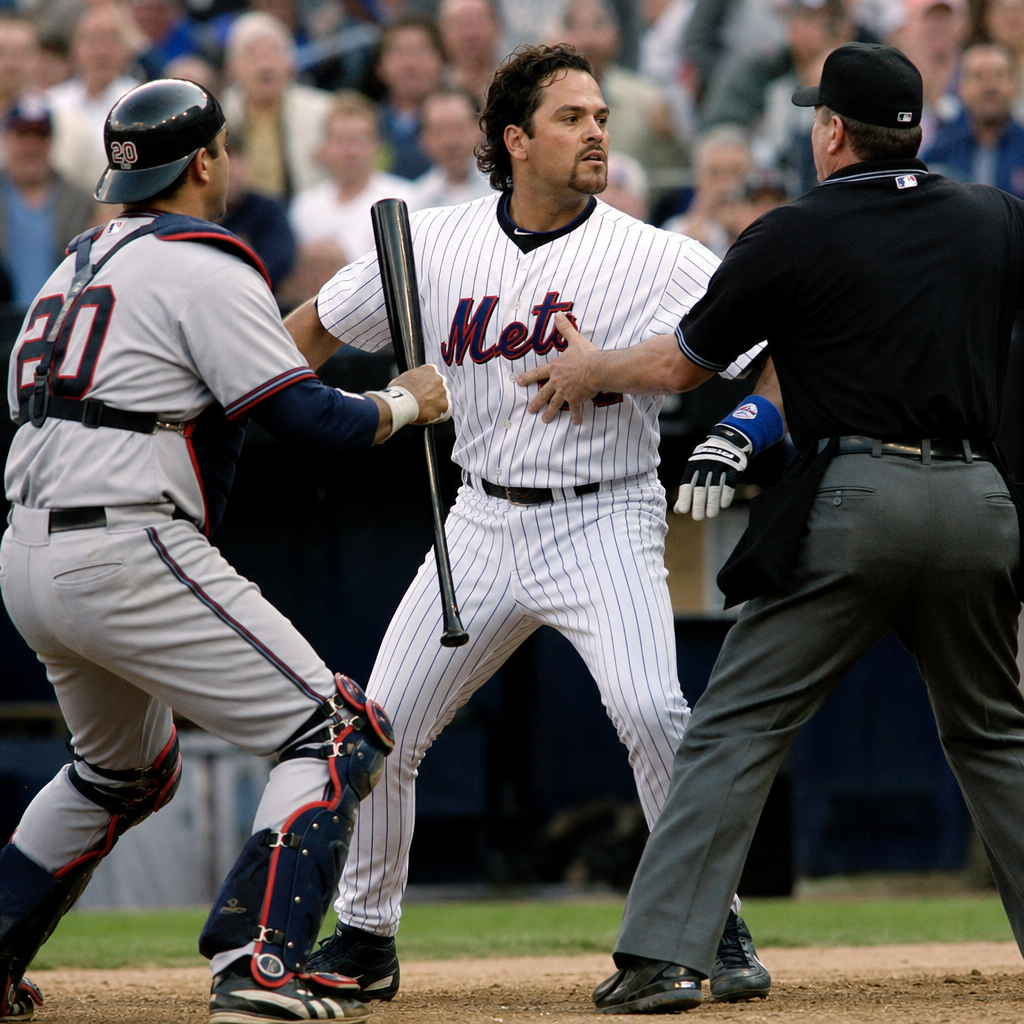
The Mike Piazza bat incident remains one of the most replayed and misunderstood moments in modern baseball, not because a rule was broken, but because a splintered bat turned an ordinary regular-season game into a symbol of New York’s fiercest baseball tension. As a scandal-and-controversy hub topic, the incident sits inside the broader “miscellaneous” category because it crosses several lines at once: equipment suspicion, player safety, media escalation, crowd psychology, and the way a single play can redefine a rivalry. When fans search for the Mike Piazza bat incident, they usually want three answers immediately: what happened, why Roger Clemens threw part of the bat, and whether the act was intentional. Those are fair questions, but the full story matters more. I have covered enough baseball controversies to know that isolated clips rarely explain the emotional temperature on the field. This moment was not created from nothing. It grew out of a charged Subway Series, previous inside pitches, two strong personalities, and a city eager to turn every confrontation into a referendum on toughness, respect, and team identity.
In simple terms, the Mike Piazza bat incident refers to Game 2 of the 2000 World Series between the New York Mets and New York Yankees, when Piazza shattered his bat on a pitch from Clemens, and Clemens picked up a jagged barrel fragment and fired it toward the first-base line as Piazza ran to first. Piazza was left staring back in disbelief, benches did not fully clear, and the image became instant tabloid fuel. The controversy was powerful because intent is difficult to prove, while danger was obvious to everyone watching. A bat shard is not a baseball; it is unpredictable, sharp, and capable of causing injury. The league reviewed the play, public debate intensified, and the incident joined the permanent archive of October baseball flashpoints. As a hub article, this page explains the event itself, the rivalry context around Mets-Yankees hostility, the rules and safety questions involved, the media reaction, and why the play still matters when discussing baseball scandals and controversies that do not fit neatly into gambling, steroids, or sign stealing.
What happened in Game 2 of the 2000 World Series
The core facts are straightforward. On October 22, 2000, at Yankee Stadium, Roger Clemens faced Mike Piazza in the first inning of Game 2. Clemens threw an inside pitch, Piazza swung, and his bat exploded. The ball rolled into fair territory near the mound while the thick barrel end of the bat skidded and spun in front of Clemens. Instead of simply stepping away from it, Clemens scooped up the broken piece and flung it hard toward the first-base side as Piazza ran up the line. The throw did not strike Piazza, but it was close enough, and forceful enough, to create instant outrage. Piazza threw up his arms as if asking what Clemens was doing. The umpiring crew calmed the moment, and play resumed, but television replays ensured the scene would not disappear.
Why was the reaction so immediate? Because baseball players understand broken-bat geography. Fragments can ricochet anywhere, and the mound area is one of the most dangerous spots in that split second after contact. Pitchers have to protect themselves. At the same time, veteran players also know the difference between reflexive self-protection and a deliberate secondary action. Clemens had time to gather and throw the shard. That is why the incident looked less like panic and more like anger. Major League Baseball did not issue a suspension, but the visual evidence fixed public opinion. For many Mets fans, and plenty of neutral viewers, the act crossed a line of sportsmanship. For Yankees supporters, the argument was usually that the moment happened fast and that Clemens reacted instinctively to debris moving near him. The controversy has survived because both interpretations can be stated, but only one matches the slow-motion sequence comfortably.
The rivalry context that made the incident explode
No baseball controversy exists in a vacuum, and this one was amplified by the unique pressure of a Yankees-Mets World Series. The 2000 Subway Series was the first World Series meeting between the clubs since 1956, and New York media treated it like a citywide civil conflict. Every comment became ammunition. Every hard slide, brushback pitch, or dugout stare was inflated by front-page coverage, sports radio, and local television. I have seen rivalries create selective memory in real time, and this series was a textbook example. Fans were not evaluating isolated baseball plays; they were scoring moral points for their borough, their family history, and their idea of which franchise represented “real” New York.
There was also existing tension between Clemens and Piazza before the World Series. Earlier in the 2000 season, Clemens hit Piazza in the head with a fastball during an interleague game. Piazza suffered a concussion and missed time. Clemens insisted the pitch got away from him, which is plausible on a technical level because even elite pitchers lose command arm-side and up. But intent was already being debated months before October. Once the bat-throw happened, many observers connected it to the earlier beaning automatically. That connection may not prove motive, but it absolutely shaped perception. In controversy analysis, prior incidents matter because audiences build narratives from patterns, not just single snapshots. The bat incident felt threatening partly because the public had already filed Clemens-Piazza under unfinished business.
Why intent is so hard to judge, and why the play still looked dangerous
Intent is the central legal and ethical question in almost every sports controversy. Did the player mean to cause harm, to intimidate, or simply react under stress? In baseball, where reaction times are measured in fractions of a second, those distinctions matter. A 95-mile-per-hour pitch reaches the plate in roughly four-tenths of a second. A screaming line drive gives a pitcher almost no time to think. Broken bats produce irregular motion, and players are trained to protect themselves first. That is the strongest defense of Clemens: he saw an object near him and reacted aggressively in the same instinctive sequence used to field a ball.
Yet the problem with that defense is mechanical. Fielding a ball and throwing a pointed bat fragment are not equivalent actions. The shard was visibly separate from the ball. Clemens bent, gripped it, and launched it in the direction of a runner. That sequence introduced a new hazard after the initial danger had passed. Even if one accepts that fear triggered the motion, the action itself remained reckless. Professional sports discipline often distinguishes between premeditation and recklessness, but both can warrant condemnation when player safety is involved. This is why the Mike Piazza bat incident belongs in any serious review of baseball controversies. It reveals how an action can be judged unacceptable even when absolute proof of malicious intent is unavailable.
Rules, discipline, and how baseball handles unusual on-field conduct
Baseball’s rulebook is highly specific about bats, balls, interference, and equipment standards, but unusual confrontations often fall under broader authority granted to umpires and the league office. Umpires can warn, eject, or report conduct they view as unsportsmanlike or dangerous. The commissioner’s office can then review video and issue fines or suspensions for actions deemed detrimental to the game. In this case, Clemens was not ejected and was not suspended afterward, a result that remains controversial. The absence of formal punishment did not settle the matter; it shifted the verdict into the court of public opinion.
That gap between rulebook outcome and fan judgment is common in “miscellaneous” scandals. Some of the most enduring controversies are not rulebook slam dunks. They involve discretionary enforcement, ambiguous intent, and inconsistent precedent. MLB has long relied on case-by-case review for incidents involving thrown equipment, mound confrontations, or behavior that technically occurs during live play but carries a separate threat component. The challenge is consistency. If a player throws a helmet in frustration and it endangers someone, discipline is possible. If a batter flips a bat and it is interpreted as taunting, benches may warn but punishment often varies. The Piazza-Clemens moment exposed how hard it is for baseball to impose clear standards on nonstandard acts in the middle of action.
| Issue | What viewers asked | Most grounded answer |
|---|---|---|
| Was Clemens protecting himself? | Did he react instinctively to debris? | Partly possible, but the follow-through throw went beyond self-protection. |
| Was the bat thrown at Piazza? | Did he target the runner directly? | The fragment was thrown toward the first-base line, near Piazza’s path. |
| Was there prior bad blood? | Did earlier events shape the moment? | Yes, the earlier hit-by-pitch incident made the act look more hostile. |
| Did MLB punish Clemens? | Was there a suspension or fine? | No suspension followed, which fueled debate about inconsistency. |
| Why does it still matter? | Is it more than a strange replay? | It became a case study in rivalry escalation, safety, and perception. |
Media amplification and the creation of a permanent controversy
If the same play happened in a low-profile June game between nonrivals, it would still be notable, but it would not have become cultural shorthand. The New York media ecosystem made permanence inevitable. Newspapers ran freeze-frame photos. Sports talk radio dissected body language for days. National broadcasts replayed the sequence from every available angle. Before social media existed in its current form, this was how viral sports outrage worked: front pages, call-in shows, clubhouse quotes, and nightly recap loops. The result was not just attention but mythmaking.
Piazza was a compelling central figure for that coverage. He was a star catcher, a middle-of-the-order hitter, and one of the Mets’ defining names. Clemens, meanwhile, already carried a reputation for intimidation and combative competitiveness. Those established personas gave editors an easy frame: slugger versus fireballer, victim versus aggressor, Mets indignation versus Yankees defiance. That frame simplified the story, but it also helped preserve it. In baseball memory, incidents survive when they can be explained in one sentence and shown in one clip. “Roger Clemens threw Mike Piazza’s broken bat at him” is one of those sentences. Even people who forget the inning, score, or date usually remember the image.
What the incident says about baseball culture and player safety
The lasting value of revisiting this controversy is not outrage for its own sake. It is that the play highlights several truths about baseball culture. First, the sport tolerates a surprising amount of emotional brinkmanship as long as it fits familiar rituals such as inside pitching, hard takeout slides, or verbal retaliation. Second, baseball draws an uneven line between accepted intimidation and actionable danger. Third, players and fans often excuse borderline conduct when it comes from competitors they admire for toughness.
From a safety perspective, the incident is simpler than the intent debate. Throwing a broken bat fragment creates needless risk. That conclusion does not require mind reading. Modern baseball has become more explicit about avoidable danger, from home-plate collision rules to slide restrictions and concussion protocols. In 2000, the sport was less systematic in that language, but the principle was already obvious. You do not add a second dangerous act to a live play. The incident also foreshadowed a broader shift in how audiences evaluate stars. Greatness no longer shields conduct automatically. Fans still celebrate edge and intensity, yet they increasingly expect elite players to control those impulses under pressure.
Why this moment belongs in a “miscellaneous” scandals hub
Some controversies fit clean categories. Gambling scandals involve betting. Performance-enhancing drug cases involve testing, suspensions, and records. Sign-stealing controversies revolve around illegal information transfer. The Mike Piazza bat incident resists that neat sorting, which is exactly why it belongs in a comprehensive miscellaneous hub. It is an equipment incident, a rivalry incident, a safety incident, and a media incident at the same time. It also shows that scandals are not always about hidden schemes. Sometimes they emerge from a visible, split-second action that forces everyone to argue over motive and meaning afterward.
For readers exploring the broader landscape of baseball controversies, this case is useful because it teaches a method. Start with the clip, then ask what happened immediately before it, what rules applied, what discipline followed, how the media framed it, and why the public still remembers it. That framework works for beanball disputes, dugout confrontations, disputed umpire interactions, and many other episodes that live outside the sport’s larger institutional scandals. In that sense, the Mike Piazza bat incident is more than a famous replay. It is a model example of how a single charged moment can absorb rivalry history, shape reputations, and stay relevant long after the box score is forgotten.
The key takeaway is clear: the Mike Piazza bat incident endures because it combined danger, ambiguity, and New York rivalry pressure in one unforgettable World Series image. The facts are simple enough for any fan to grasp, yet the meaning remains contested, which is exactly why the moment still drives debate. Clemens may have acted in anger, reflex, or some mix of both, but throwing the bat fragment created a second and unnecessary risk. Piazza’s reaction, the prior history between the players, and the absence of major league discipline turned that risk into a lasting controversy.
As a hub within the broader scandals-and-controversies landscape, this episode represents the kind of event that does not fit standard categories but still matters deeply to baseball history. It reveals how sports controversies are built: context sharpens perception, media hardens memory, and rivalry magnifies every action. If you are mapping the most important miscellaneous baseball controversies, this incident deserves a central place because it sits at the intersection of safety, sportsmanship, and spectacle. Use this page as your starting point, then continue through related articles on on-field altercations, equipment disputes, and rivalry flashpoints to understand how baseball’s most memorable controversies take shape.
Frequently Asked Questions
What exactly was the Mike Piazza bat incident, and why did it become such a major story?
The Mike Piazza bat incident refers to a dramatic moment during a 2000 game between the New York Mets and the New York Yankees when Piazza’s bat shattered on contact and a large piece of it flew toward Yankees pitcher Roger Clemens. In a split second that has been replayed countless times, Clemens picked up part of the broken bat and threw it toward the first-base line as Piazza ran to first. Technically, the play itself did not center on an obvious rules violation, which is one reason the controversy became so enduring. Instead, the incident grew into a major story because it combined danger, confusion, and high emotional stakes in the middle of baseball’s most intense city rivalry.
What made it resonate far beyond a normal broken-bat play was the context surrounding it. Piazza had already been at the center of a tense and widely discussed confrontation with Clemens earlier that season, when a fastball struck Piazza in the head. Whether fans believed that pitch was intentional or accidental, suspicion had already attached itself to every interaction between the two stars. So when the bat shattered and Clemens reacted in a way that looked aggressive, strange, or even threatening depending on the viewer, the moment instantly took on symbolic meaning. It was no longer just debris on the field; it became a flashpoint in an already loaded personal and cross-town conflict.
The media amplified the scene because it was visually unforgettable and emotionally easy to frame as a rivalry boiling over. Slow-motion replays invited debate over intent, body language, and judgment. Fans on both sides projected their own loyalties onto the event, making it a kind of cultural Rorschach test. That combination of spectacle, existing bad blood, and interpretive ambiguity is exactly why the incident remains one of the most discussed moments of that era.
Did Mike Piazza use a corked or altered bat, and was there any evidence to support that suspicion?
One of the most persistent subplots of the incident involved suspicion about Piazza’s bat itself. Because the bat shattered so dramatically, some observers immediately speculated about whether it had been altered, particularly whether it might have been corked. In baseball, a corked bat is one that has been hollowed out and filled with a lighter material in an attempt to change swing characteristics. That possibility gave the story an added layer of scandal, because it shifted the focus from a frightening on-field moment to questions about equipment integrity and competitive fairness.
However, the speculation far outpaced the evidence. Investigators and league officials examined the remains of the bat, and there was no conclusive finding that Piazza had used a corked or illegally modified bat in the way rumor suggested. In fact, much of the public conversation reflected how quickly baseball controversy can expand when an unusual visual event occurs under maximum spotlight. Broken bats are not automatically signs of cheating. Wood grain, point of contact, velocity, and simple bad luck all play major roles in how a bat fractures. A violent break may look suspicious, but appearance alone is not proof of tampering.
The reason this question still lingers is that the incident sat at the intersection of uncertainty and rivalry. Yankees fans, Mets fans, national commentators, and tabloid media all had incentives to push dramatic interpretations. Once the idea of a corked bat entered the discussion, it became part of the mythology even without definitive support. That is often how baseball lore works: a fragment of suspicion can survive long after the official picture is much less sensational. In Piazza’s case, the lasting historical takeaway is that the allegation became part of the controversy, but it was never firmly substantiated in a way that changed the official understanding of the event.
Why was Roger Clemens’s reaction viewed as so controversial if no clear rule violation occurred?
Clemens’s reaction became controversial because it appeared instinctive to some people and hostile to others, and that gap in interpretation drove the entire debate. After the broken bat barrel came near him, Clemens grabbed the piece and flung it away while Piazza was running up the line. Defenders argued that the pitcher had only a split second to respond to a dangerous object flying into his space and then acted on adrenaline. Critics saw something very different: a player already linked to prior tension with Piazza making a reckless or antagonistic gesture in the middle of live play.
Baseball controversies often become bigger when there is no single rulebook answer that settles the matter. If Clemens had clearly attacked a player, the league response would have been more straightforward. If he had calmly moved away from the debris, there would have been little to debate. Instead, the act sat in a murky middle ground. The movement looked bizarre enough to invite outrage but ambiguous enough to avoid universal agreement. That ambiguity is precisely what allowed the clip to endure in sports media for years.
The wider emotional backdrop also mattered. Because of Clemens’s earlier hit-by-pitch incident involving Piazza, many fans and commentators judged the bat toss through a lens of accumulated distrust. In rivalry settings, context heavily influences interpretation. The same action in a low-profile game between neutral opponents might have been described as chaotic or careless. In this case, it was read as a possible escalation in a feud. That is why the controversy attached not just to what Clemens did, but to what people believed it revealed about intent, temperament, and the atmosphere of that Yankees-Mets era.
How did the incident reflect the larger Yankees-Mets rivalry and New York media environment at the time?
The Piazza bat incident became a perfect expression of the Yankees-Mets rivalry because it compressed so many elements of that relationship into one unforgettable image: star power, resentment, borough identity, media intensity, and competing claims to legitimacy. At the time, the Yankees represented a dynasty with national prestige, while the Mets occupied a more volatile but deeply passionate role in the city’s baseball ecosystem. Every meeting between the clubs carried extra emotional weight because fans were not just comparing teams; they were defending identities and histories.
In that environment, a strange and dangerous on-field moment was never going to remain just a baseball play. New York’s tabloids, sports radio, and television coverage turned the incident into a citywide argument almost immediately. The replayability of the footage made it ideal for media escalation. Every angle could be used to support a different narrative: Clemens was defending himself, Clemens was acting wildly, Piazza’s bat was suspicious, the Mets were being targeted, the Yankees were being vilified, and so on. The city’s media machinery thrived on exactly this kind of ambiguity because it kept debate alive across multiple news cycles.
The incident also tapped into crowd psychology. Fans in the stadium and at home were primed to interpret every movement through tribal loyalty. That is a hallmark of major rivalries: ordinary uncertainty gets converted into certainty by allegiance. One side sees provocation, the other sees overreaction. As a result, the bat incident became more than a contested play. It became a story people used to explain what they already felt about both teams. In that sense, it remains one of the clearest examples of how rivalry can magnify a fleeting moment into a lasting symbol.
Why does the Mike Piazza bat incident still matter in baseball history today?
The incident still matters because it illustrates how baseball history is shaped not only by championships and statistics, but also by moments of confusion that expose the sport’s emotional and cultural fault lines. The play itself lasted only seconds, yet it touched on player safety, equipment suspicion, retaliation narratives, officiating limitations, and the power of replay to turn ambiguity into obsession. Those themes remain highly relevant in modern sports, where every unusual sequence can be examined from dozens of angles and argued over in real time.
It also endures because it involved major figures at a peak moment in the sport’s visibility. Mike Piazza was one of the most recognizable players of his generation, and Roger Clemens was one of the era’s most dominant and polarizing pitchers. Add the Yankees-Mets cross-town dynamic and the broader pressure of New York baseball, and the result was a controversy with unusual staying power. Fans remember not just what happened, but how it felt: tense, strange, combustible, and unresolved.
Perhaps most importantly, the incident remains a case study in how sports narratives are built. The longest-lasting baseball controversies are often not the ones with the clearest answers, but the ones that leave enough uncertainty for myth to grow around them. The Piazza bat incident survives because it never settled neatly into a single category. It was not simply cheating, not simply an accident, not simply a fight, and not simply a media creation. It was all of those themes brushing up against each other at once. That layered quality is why it still gets discussed as one of the defining controversy moments of turn-of-the-century baseball.