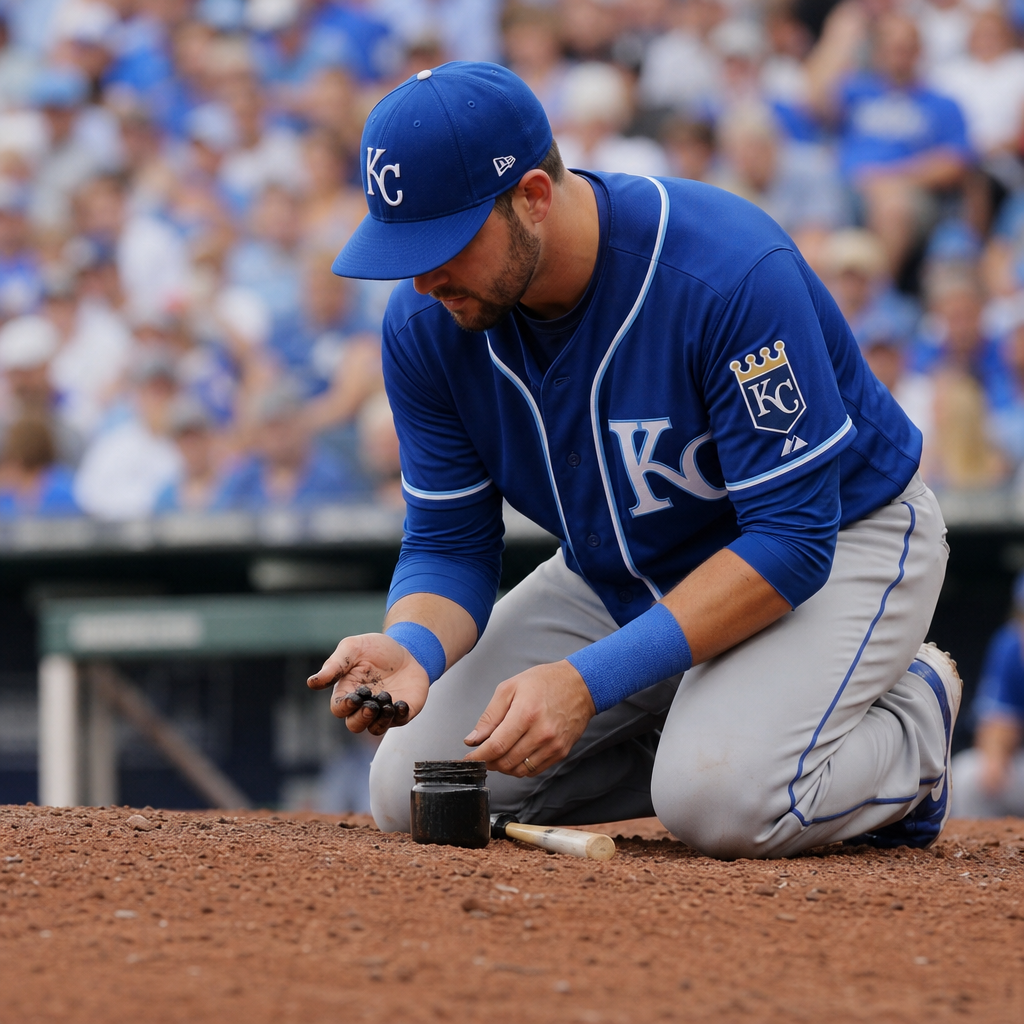
The Kansas City Royals pine tar appeal remains one of baseball’s clearest examples of a tiny equipment detail exploding into a defining rules controversy. At its center was a seemingly narrow question: how much pine tar could appear on a hitter’s bat before an umpire should remove the bat, nullify a play, or call the batter out? The answer, which surfaced dramatically in 1983 and reshaped how Major League Baseball handled equipment violations, still matters because it shows the tension between the written rulebook, common sense, competitive fairness, and league authority. As a hub within baseball’s broader scandals and controversies landscape, this episode also connects to a larger miscellaneous class of disputes: incidents that do not fit neatly into gambling, performance enhancement, or sign stealing, yet changed how the sport is governed.
Pine tar is a sticky brown substance players apply to bat handles to improve grip, especially in humid weather or under pressure. Rule 1.10 in the era limited how far up the handle pine tar could extend, traditionally eighteen inches from the knob. The stated purpose was practical, not competitive balance in the modern sense. Excess pine tar could discolor baseballs and require more frequent replacement. It was not a rule designed to prevent hitters from gaining extra power or to protect pitchers from an unfair physical disadvantage. That distinction became crucial on July 24, 1983, when Royals star George Brett hit a dramatic two-run home run against the New York Yankees, only to see the play erased after Yankees manager Billy Martin asked umpires to inspect the bat.
I have worked through this case repeatedly when studying baseball governance because it is one of the best teaching tools for understanding how leagues interpret intent versus literal wording. The Royals’ appeal did not merely restore a home run. It established an enduring precedent: not every technical violation deserves the most severe available penalty, especially when the violation has no meaningful effect on the competitive action that decided the game. For readers exploring miscellaneous baseball controversies, that is why this incident deserves hub status. It touches umpire discretion, league office power, protest procedure, gamesmanship, replay before replay existed, and the difference between exploiting a rule and honoring the game’s purpose.
What Happened in the Pine Tar Game
The incident occurred at Yankee Stadium with the Royals trailing 4-3 in the ninth inning. George Brett faced Goose Gossage and launched a two-run home run that appeared to give Kansas City a 5-4 lead. As Brett rounded the bases, Billy Martin approached home plate umpire Tim McClelland and requested that Brett’s bat be checked for excessive pine tar. Martin knew the rulebook well and had reason to suspect the bat exceeded the permitted limit. Umpires measured the pine tar against the width of home plate, a common field expedient because the plate is seventeen inches across and close enough to the rule’s eighteen-inch limit for practical comparison.
The umpires determined that the pine tar extended too far up the bat. McClelland then called Brett out, wiping away the home run and ending the game as a Yankees victory. Brett’s furious sprint from the dugout became one of baseball’s most replayed images because it captured the emotional force of what looked, to players and fans, like a legal hit being overturned by a technicality unrelated to the ball leaving the park. In clubhouse conversations and later rule interpretations, that reaction mattered. Players across the league understood the difference between an altered bat designed to increase performance and a legal bat with too much sticky substance on the handle. Brett’s bat fit the second category.
The Royals formally protested, and American League president Lee MacPhail reviewed the case. His ruling reversed the umpires’ application of the penalty. MacPhail concluded that the excessive pine tar rule was intended to keep baseballs clean, not to invalidate an otherwise legitimate hit. He reinstated Brett’s home run, restored the Royals’ 5-4 lead, and ordered the game resumed from the point immediately after the home run. When the game was completed weeks later on August 18, 1983, Kansas City preserved the lead and won. The appeal therefore changed the official result, but its deeper importance lies in the league’s statement that rules must be interpreted in light of purpose, not merely literal text detached from context.
Why the Rulebook Became the Real Battlefield
The controversy turned on a core legalistic question within sports administration: when a written rule specifies a condition and a penalty, can officials impose that penalty automatically even if the violation is administrative rather than competitive? At the time, the bat rule limited pine tar placement, and another provision could support removing an illegal bat from play. Billy Martin argued from the strongest textual position available. If the bat violated the rule, then the play should not stand. McClelland and the crew accepted that reading in real time, which is understandable because umpires are trained to enforce black-letter rules under pressure without the luxury of appellate reflection.
MacPhail’s reversal rested on a better hierarchy of interpretation. Baseball rules have long distinguished between equipment that fundamentally alters performance and equipment irregularities that mainly affect administration. A doctored baseball, corked bat, or hidden substance intended to deceive can attack the integrity of competition. Pine tar above eighteen inches does not. The league therefore treated the violation as one that should have resulted in bat removal, not retroactive nullification of the home run. That approach aligned punishment with harm. In practical governance terms, it prevented managers from using delayed technical objections to erase completed plays that were not competitively tainted.
This is one reason the case remains essential in discussions of miscellaneous sports controversies. It is not a cheating scandal in the classic sense, because the benefit conferred by excess pine tar was marginal and indirect. It is not simply an umpiring blunder either, because the crew applied a plausible reading of the text available to them. It sits in the gray area where gamesmanship, textualism, and administrative common sense collide. Those are often the hardest controversies for leagues to resolve because they expose whether governance is principled or opportunistic.
Billy Martin, George Brett, and the Strategy Behind the Protest
Billy Martin’s role deserves careful treatment because the incident is often simplified into villain versus victim. Martin was not inventing a fake complaint. He had reportedly noticed Brett’s bat earlier and understood the rule’s language. In a close game against a division rival, raising the issue after a go-ahead home run was a strategic act, but strategy is part of managing. Martin had a long reputation for mastering edge-case rules, much like managers who challenge substitutions, batting order errors, or mound visit limits today. From that perspective, he did what a detail-oriented manager is paid to do: search for any lawful path to preserve a win.
George Brett, however, represented the equally powerful player perspective. He had hit a real home run off an elite closer. Nothing about the swing, ball flight, or game situation suggested artificial enhancement. In player culture, the ruling felt disconnected from baseball reality. I have found that this distinction is central when explaining why the incident still resonates. Fans accept penalties more readily when they can see how a violation produced the result. Here, they could not. Brett’s anger was memorable not only because it was theatrical, but because it articulated the instinctive fairness test that most observers applied immediately.
The league office ultimately sided with that fairness test, but without dismissing the underlying rule. That balance matters. MacPhail did not declare the pine tar limit meaningless. He effectively said the proper remedy was prospective, not retroactive. Remove the bat, warn the club, and continue. That kind of calibrated response is often the difference between good governance and arbitrary enforcement.
What the Appeal Changed in Baseball Administration
After the appeal, Major League Baseball clarified how excessive pine tar should be handled. The sport moved toward the principle that if pine tar extends beyond the allowed area, the bat should simply be removed from play once discovered, rather than using the violation to erase previous action unless a more serious illegality is involved. This clarification helped close a loophole that rewarded tactical ambushes. Managers could no longer hold a technical objection in reserve and deploy it only after an unfavorable outcome. That was a meaningful administrative improvement because sports rules work best when they deter violations consistently, not when they invite selective exploitation.
The case also became a standard reference point for protest and appeal procedures. In baseball, not every disputed call is protestable. Judgment calls such as balls and strikes are final. Misapplication of a rule is different. The Royals’ success demonstrated that league appeals exist precisely for situations where officials apply the wrong remedy under the rulebook. For front offices, managers, and media analysts, the pine tar appeal became a textbook example of why understanding the difference between judgment and interpretation matters. That distinction still shapes how clubs evaluate whether to challenge officiating decisions through formal channels.
There was also a symbolic impact. The incident reinforced that the commissioner’s office and league presidents are not merely ceremonial overseers; they are appellate bodies responsible for preserving the game’s credibility. When those offices function well, they do more than settle a single game. They create precedent that guides future conduct across the league.
How This Incident Fits the Miscellaneous Controversies Hub
The pine tar appeal belongs in a miscellaneous controversies hub because it illustrates a category of baseball scandal that is procedural rather than criminal, ethical rather than corrupt, and memorable because of rule interpretation instead of hidden conspiracy. This category includes disputed forfeits, lineup card errors, fan interference rulings, suspended-game resumption debates, and unusual applications of equipment standards. These incidents often produce lasting rule changes because they reveal weaknesses in drafting, enforcement, or remedy design.
What links these cases is not subject matter but structure. First, a narrow rule exists for a practical reason. Second, a high-leverage moment exposes ambiguity in that rule. Third, one side uses the text aggressively while the other appeals to intent and fairness. Fourth, the league office or later rulemakers clarify the standard to prevent recurrence. The Royals pine tar appeal follows that sequence almost perfectly, which is why it serves as an ideal gateway article for readers exploring miscellaneous baseball controversies in depth.
| Controversy Type | Typical Trigger | Core Question | Usual League Response |
|---|---|---|---|
| Equipment dispute | Bat, ball, glove, or substance issue | Did the item alter play or violate administration rules? | Clarify remedy and future enforcement |
| Rule misapplication | Incorrect penalty or restart procedure | Did officials enforce the right consequence? | Appeal review and precedent-setting ruling |
| Procedural protest | Lineup, substitution, or suspended game issue | Was the game administered correctly? | Formal league interpretation |
| Gamesmanship controversy | Manager exploits little-known provision | Is the tactic smart strategy or abuse of process? | Rule rewrite to close loopholes |
Lessons for Modern Baseball and Sports Governance
The strongest lesson from the Kansas City Royals pine tar appeal is that penalties must match the nature of the violation. If a rule exists to prevent stained baseballs, the remedy should address stained baseballs. It should not erase a valid home run absent evidence that the excess substance materially affected the hit. Modern leagues across sports have increasingly embraced this proportionality principle. In the NFL, NBA, and international soccer, administrators now spend considerable energy distinguishing competitive fouls from procedural defects because public trust depends on sanctions making intuitive sense.
Another lesson is that precision in rule drafting matters less than many people assume if remedies are poorly designed. A rule can be written clearly and still create injustice when paired with an excessive or manipulable penalty. Baseball learned that in 1983. The cleaner solution was not merely better measurement of pine tar, but better specification of what happens when excess is found. This is why high-quality rulebooks define both offense and consequence with equal care.
Finally, the controversy demonstrates that memorable scandals are not always about malice. Sometimes they arise because everyone involved is acting rationally within a flawed system. Martin sought advantage, umpires enforced text, Brett defended competitive fairness, and MacPhail restored proportionality. Understanding that layered reality helps readers analyze other miscellaneous controversies without reducing them to easy heroes and villains.
Why the Pine Tar Appeal Still Endures
More than four decades later, the pine tar game endures because it produced a rare combination of drama, legal intrigue, photographic memory, and genuine institutional consequence. Many controversies create outrage and then fade. This one changed the record, refined rule enforcement, and gave baseball a durable case study in how to balance literal language with the game’s underlying purpose. It also remains accessible. Even casual fans can understand the central tension immediately: should too much sticky substance on a bat handle cancel a home run that clearly left the park? Because the answer feels obvious, the controversy continues to serve as a powerful teaching example.
For anyone exploring baseball’s scandals and controversies, this episode offers an ideal starting point for the miscellaneous branch of the subject. It shows how seemingly small technical rules can carry enormous stakes, how smart managers test the boundaries of governance, and how appeals can correct outcomes when enforcement loses sight of intent. The Kansas City Royals pine tar appeal was not merely a bizarre moment from 1983. It was a rulebook controversy that strengthened baseball by forcing the sport to define fairness more carefully. If you are building a deeper understanding of baseball’s most consequential disputes, use this case as your hub and then follow the trail into the many other procedural controversies that shaped the game.
Frequently Asked Questions
What was the Kansas City Royals pine tar controversy?
The Kansas City Royals pine tar controversy refers to the famous 1983 incident commonly known as the “Pine Tar Game,” when Royals star George Brett hit a dramatic late home run against the New York Yankees, only to have it taken away after Yankees manager Billy Martin argued that Brett’s bat had too much pine tar on it. Pine tar is a sticky substance hitters apply to the handle of a bat for better grip, and Major League Baseball rules at the time limited how far it could extend up the bat. When umpires inspected Brett’s bat, they determined that the pine tar went beyond the permitted distance and called him out, erasing the home run and ending the game in New York’s favor on the field.
What made the moment so significant was not just the call itself, but what it revealed about baseball’s rulebook. A technical equipment rule suddenly overrode a decisive game action, and that created immediate controversy. The Royals protested, arguing that the purpose of the pine tar restriction was not to prevent unfair hitting advantages, but to protect baseballs from discoloration and damage. That distinction became crucial. The episode remains one of the clearest examples in sports of how a narrow, literal reading of a rule can clash with common sense, competitive fairness, and the intent behind the regulation.
Why was pine tar on a bat such a big issue in Major League Baseball?
Pine tar became a major issue because baseball has always paid close attention to equipment rules, even when the violation seems small. The substance itself was not banned outright for hitters; players routinely used it to improve grip, especially in humid weather or high-pressure situations. The problem was that the rules limited how much of the bat could be covered. Under the rule in effect at the time, pine tar was not supposed to extend more than 18 inches from the handle. On paper, that sounds straightforward. In practice, however, it created a gray area: if a player exceeded the limit, what exactly was the proper penalty?
That uncertainty turned a routine bat inspection into a rules controversy. The Yankees’ challenge was strategic, and Billy Martin understood that enforcing the rule at exactly the right moment could reverse a damaging result. The debate quickly moved beyond whether Brett technically violated the measurement limit. The deeper issue was whether too much pine tar actually changed the competitive outcome of a play. Many baseball people believed it did not. Excess pine tar might stain baseballs or create maintenance problems, but it was not widely seen as a form of cheating that should erase a home run. That mismatch between the seriousness of the violation and the severity of the penalty is why the issue became so important and so enduring.
What happened with the Royals’ appeal, and why was the original call overturned?
After the umpires called George Brett out for excessive pine tar, the Kansas City Royals filed a formal protest with the league. American League president Lee MacPhail reviewed the incident and ultimately ruled in the Royals’ favor. His decision focused on the intent of the pine tar rule rather than a purely literal application of it. MacPhail concluded that the bat should have been removed from play because it did not conform to the equipment restriction, but that the violation did not justify nullifying the home run or calling Brett out. In other words, the proper remedy was to take away the bat, not the hit.
This distinction became the heart of the controversy and the reason the case still gets cited in discussions about sports governance. MacPhail recognized that the rule existed mainly to keep pine tar from transferring excessively onto baseballs, not to police offensive performance in a way that could reverse game-defining plays. Because no unfair competitive advantage tied directly to the home run had been established, the original out call was considered an improper penalty. The game was later resumed from the point of Brett’s home run, and the Royals ultimately won. The appeal succeeded because it persuaded the league that rule enforcement must align with the rule’s actual purpose, not just its wording in isolation.
How did the pine tar incident change baseball rules and rule interpretation?
The pine tar incident had a lasting effect on how Major League Baseball handled equipment violations and interpreted rules more broadly. Most importantly, it clarified that not every technical infraction should carry the most extreme possible consequence. Before the controversy, there was room for umpires and managers to weaponize a rule whose practical purpose had little to do with undoing offensive plays. After the incident, baseball moved toward a more sensible framework: if a bat had too much pine tar, the bat could be removed or corrected, but a hit would not automatically be erased simply because of that excess coating.
The case also became a textbook example of the importance of distinguishing between the letter of the rule and the spirit of the rule. In baseball, many rules exist for maintenance, safety, pace, or administrative clarity rather than to define cheating in the most serious sense. The Royals’ appeal highlighted that officials must understand why a rule exists before deciding how to enforce it. That lesson has carried forward into later debates involving foreign substances, replay, sticky materials, and other equipment issues. Even decades later, the Pine Tar Game is used as a reminder that a well-run sport needs rules, but it also needs fair, proportional judgment when those rules are applied.
Why does the Kansas City Royals pine tar appeal still matter today?
The Kansas City Royals pine tar appeal still matters because it captures a timeless problem in sports: what should happen when a technical violation collides with a major competitive moment? Fans, players, managers, and league officials still wrestle with that exact question in modern controversies. Whether the topic is equipment legality, replay review, player substances, or procedural infractions, the same core tension remains: should officials enforce the rule exactly as written, or should they consider intent, impact, and fairness? The pine tar case remains one of the strongest historical examples of why that balance matters.
It also endures because it is such a vivid story. George Brett’s emotional reaction, Billy Martin’s gamesmanship, the umpires’ measurement of the bat, and the league’s later reversal all combined to create one of baseball’s most unforgettable rulebook dramas. But beyond the spectacle, the appeal helped define a more rational approach to officiating. It showed that leagues must protect the integrity of competition without allowing technicalities to produce outcomes that feel disconnected from common sense. For anyone studying baseball history, sports law, officiating, or governance, the Royals’ pine tar appeal remains a landmark case in how rules should be interpreted when the stakes are highest.