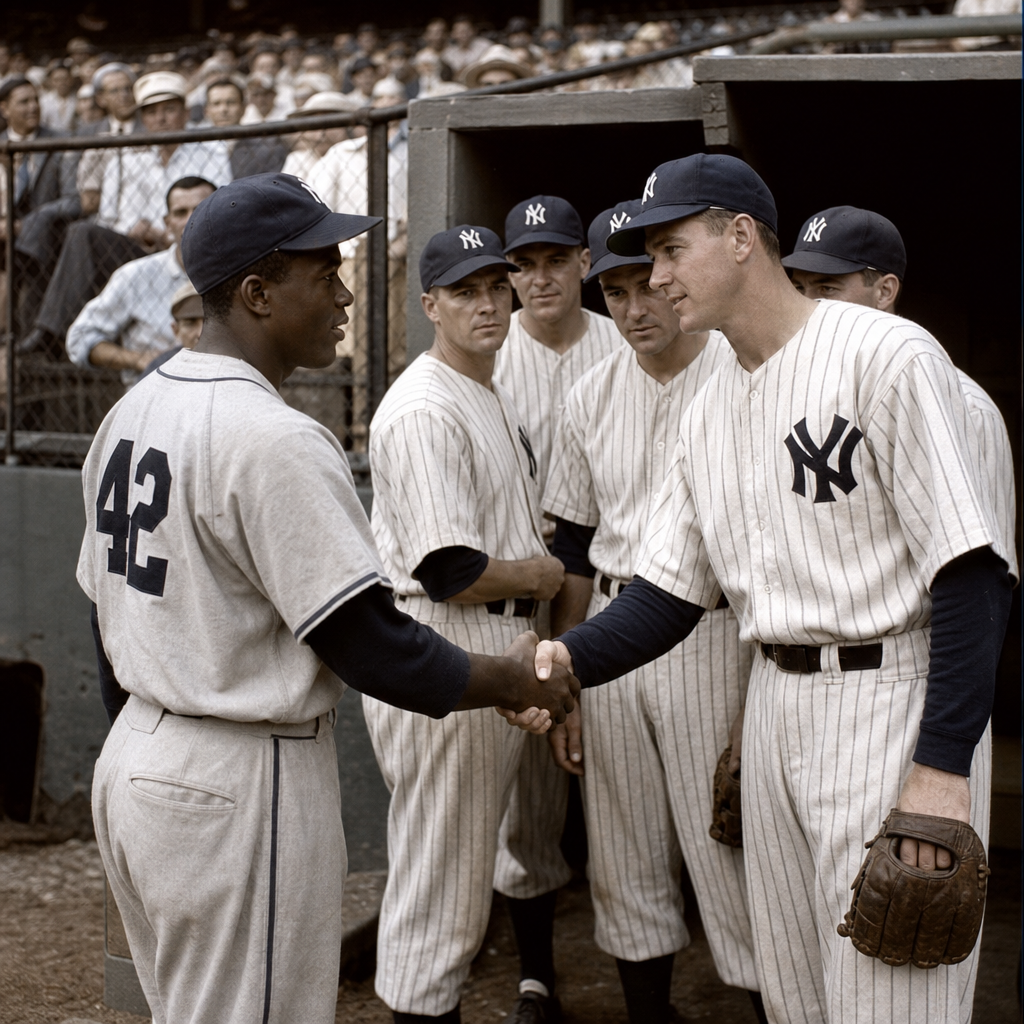
Baseball’s color line was the unwritten but rigorously enforced system that barred Black players from Major League Baseball and many affiliated institutions until the mid-twentieth century. In practical terms, segregation in baseball meant more than separate teams. It shaped player development, fan culture, media coverage, labor rights, travel, salaries, and the historical record itself. Integration, likewise, was not a single triumphant moment in 1947. It was a contested, uneven process that began with exclusion in the nineteenth century, accelerated when Jackie Robinson joined the Brooklyn Dodgers, and continued through decades of resistance, tokenism, and delayed opportunity.
This subject matters because baseball has long called itself the national pastime. When a sport claims that status, its policies become a mirror of national values and national failures. I have spent years reviewing game accounts, league records, oral histories, and front-office correspondence, and one lesson is constant: the color line was never an accidental custom. Owners, executives, writers, and some players defended it through policy and habit even when Black talent was plainly visible. At the same time, Black owners, managers, journalists, and communities built thriving institutions in response, especially through the Negro leagues.
As a hub article under scandals and controversies, this page covers the full scope of baseball segregation and integration, then points naturally toward related topics such as the Negro leagues, Jackie Robinson, Cap Anson, Branch Rickey, Kennesaw Mountain Landis, barnstorming, minor league integration, and the slow inclusion of Black managers and executives. The core questions are straightforward. What was the baseball color line? How was it enforced? Who challenged it? Why did integration take so long? And what changed after the barrier formally fell? Answering those questions requires looking at power, money, public opinion, and the business structure of organized baseball, not just memorable headlines.
Baseball segregation also belongs in the broader history of American segregation. Formal law did not need to specify every act of exclusion when private institutions could cooperate to produce the same result. Major League Baseball had no durable written rule openly stating that Black players were banned, but club owners and league officials acted as though such a rule existed. That ambiguity helped defenders deny responsibility while maintaining control. It also complicates modern debates, because the absence of one famous signed document can obscure the reality of a system that everyone inside the game understood.
How the color line formed and hardened
In the nineteenth century, baseball was more fluid than later mythology suggests. Black players appeared on some integrated teams in the 1870s and 1880s, most notably Moses Fleetwood Walker and his brother Weldy Walker in professional settings. Their presence proved that integration was possible before segregation hardened. Yet as the sport professionalized, white owners increasingly aligned with the racial norms of the era. Players such as Cap Anson objected to competing against Black athletes, and clubs often yielded rather than challenge a star’s prejudice. Those repeated decisions mattered because precedent in baseball has enormous force. A denied exhibition game, a canceled contract, or a quiet gentleman’s agreement could become industry practice almost overnight.
By the 1890s, the barrier had become entrenched across major and high-level minor leagues. Black players were pushed into independent clubs, all-Black teams, and unstable regional circuits. The system was maintained through contract discrimination, blacklist behavior, selective scheduling, and pressure from white players who threatened not to take the field. Organized baseball’s reserve system deepened the damage by concentrating labor power in owners’ hands. When the same employers controlled league access, travel arrangements, and affiliation networks, exclusion in one place spread everywhere. Kennesaw Mountain Landis, the first commissioner, later cultivated an image of neutrality, but during his long tenure he never forced integration despite his broad powers over the sport.
The result was a dual baseball economy. White major leagues enjoyed superior facilities, stronger press relationships, and institutional legitimacy. Black baseball, denied those resources, adapted with creativity and relentless entrepreneurship. Teams barnstormed across the country, scheduling games wherever they could draw crowds. Owners had to think like promoters, travel managers, and civic diplomats at once. That burden was unfair, but it also produced a distinct baseball culture built around community support, showmanship, and tactical excellence. Understanding segregation requires recognizing that exclusion did not suppress talent; it redirected talent into parallel institutions that mainstream baseball then pretended were inferior.
The Negro leagues were a response to exclusion, not a side note
The Negro leagues were the most important institutional answer to baseball segregation. Rube Foster, one of the game’s central architects, organized the Negro National League in 1920, creating a more stable structure for Black professional teams. Other leagues followed, including the Eastern Colored League and later the Negro American League. These circuits varied in financial strength and governance, but they established schedules, pennant races, championships, and star systems that gave Black baseball national visibility. Players such as Satchel Paige, Josh Gibson, Buck Leonard, Cool Papa Bell, and Oscar Charleston were not mythical figures elevated by nostalgia. They were elite professionals recognized by contemporaries as major talents.
From my own work comparing newspaper accounts, one persistent mistake stands out: people treat the Negro leagues as a simple precursor to integration rather than a complete baseball world. In reality, they were businesses rooted in Black neighborhoods, churches, newspapers, and civic organizations. The Pittsburgh Crawfords and Homestead Grays drew substantial crowds. The East-West All-Star Game in Chicago became a major annual event. Black sportswriters, especially at papers such as the Pittsburgh Courier and Chicago Defender, covered trades, strategy, payroll disputes, and league politics with the same seriousness white papers reserved for the American and National Leagues.
Segregation imposed severe constraints, however. Team finances were often fragile because stadium access depended on white landlords or awkward rental arrangements. Travel could be exhausting and dangerous under Jim Crow conditions. League schedules were frequently disrupted by weather, transportation limits, and the economic temptation of lucrative barnstorming dates. Statistical recordkeeping suffered because many games were exhibitions, independent contests, or unevenly documented. None of that means the quality was low. It means the business environment was unstable by design. When modern researchers reconstruct Negro league statistics, they are not inventing greatness. They are restoring evidence that discriminatory institutions failed to preserve.
Why integration happened when it did
Integration accelerated in the 1940s for several converging reasons. World War II intensified national arguments about democracy and hypocrisy. Black veterans returned demanding fuller citizenship. Black newspapers increased pressure on the majors, and some white journalists became less willing to defend exclusion. Meanwhile, the quality gap that owners claimed to see was impossible to sustain when Negro league stars regularly excelled in exhibitions against white players. The economic logic also shifted. A club that signed elite Black talent could gain wins and attract new fans at a relatively low acquisition cost compared with bidding for established white stars.
Branch Rickey, president and general manager of the Brooklyn Dodgers, understood both the moral issue and the competitive advantage. His strategy was not spontaneous idealism. It was careful, calculated disruption. Rickey selected Jackie Robinson in 1945 after assessing athletic ability, military service, temperament, and capacity to withstand intense abuse. Robinson was assigned first to the Montreal Royals, where he integrated the International League in 1946, then debuted with Brooklyn in 1947. That path reflected baseball’s layered power structure. The Dodgers needed proof that a Black player could excel on the field, survive in the clubhouse, and avoid giving segregationists an excuse to claim failure.
Robinson succeeded under conditions few athletes have ever faced. He endured beanballs, spikes-high slides, racial slurs, hotel discrimination, and isolation from some teammates. Yet he also stole home, won Rookie of the Year, helped the Dodgers to the pennant, and altered the industry’s risk calculations. Once one club proved the barrier could be broken without financial collapse, integration became a competitive question. Owners who refused to sign Black players were no longer merely upholding custom. They were potentially weakening their rosters on purpose.
| Factor | How it sustained segregation | How it pushed integration |
|---|---|---|
| Labor control | Owners controlled access through league affiliations and contracts | Innovative clubs saw excluded talent as undervalued labor |
| Public opinion | Racist norms reduced pressure on executives for decades | Black press and wartime politics increased scrutiny |
| Competitive balance | Teams claimed Black players were untested | Success in exhibitions and scouting disproved that claim |
| Leadership | Commissioners declined to intervene decisively | Rickey and a few others acted before league consensus formed |
Integration was uneven, incomplete, and often exploitative
The standard story ends too soon. After Robinson, Larry Doby integrated the American League with Cleveland in 1947, but many clubs moved slowly or cynically. The Boston Red Sox did not integrate until 1959, becoming the last major league team to do so. Some organizations signed only one Black player to signal compliance while preserving a largely segregated system below the surface. Others converted Black stars from the Negro leagues into minor league depth, limiting opportunity through biased evaluations. Integration also damaged Black baseball institutions. As major league clubs signed star players without compensating Negro league owners fairly, the leagues lost gate attractions, financial stability, and long-term viability.
This is one of the hardest truths in the history. Integration was necessary and just, but it was not administered justly. White-owned major league organizations profited from access to Black talent while Black-owned clubs, which had sustained professional baseball under exclusion, were often left to collapse. There was no meaningful reparative framework, no equitable transfer system, and no broad effort to absorb Black executives, managers, scouts, or front-office leaders into the major league structure. In other industries, we would plainly call that extraction. Baseball’s celebratory memory too often ignores it.
Progress also varied by geography and level. Minor league integration could be brutal in the South, where local law and custom intensified risks around housing, dining, and policing. Even in integrated clubhouses, Black players were frequently segregated on the road. Some were praised as symbols while being denied the ordinary dignity white teammates received automatically. The lesson is clear: breaking the major league color line did not instantly dismantle baseball segregation. It opened a door, but many locks remained in place.
Lasting effects on baseball and why the controversy still matters
The color line changed who entered the Hall of Fame, whose records were preserved, which communities controlled baseball revenue, and how fans learned the game’s history. Its effects remain visible in debates over statistical comparison, franchise memory, and representation in leadership roles. Recent recognition of Negro league statistics as major league records was an essential corrective because it places Black excellence within the same historical frame from which it was excluded. That decision matters for players such as Josh Gibson and for younger fans who deserve an honest record.
The controversy still matters because inclusion on the field did not guarantee equity off it. Baseball has continued to face criticism over Black participation rates, hiring pipelines, youth access, and the underrepresentation of Black managers, executives, and owners. Those are not separate issues from the old color line. They are part of its long afterlife. When a system excluded families from wealth, visibility, and institutional influence for generations, the consequences do not disappear because a commissioner issues a statement or a team retires a number.
For readers exploring this miscellaneous hub, the next step is to go deeper into the connected stories: the rise of the Negro leagues, the role of Black newspapers, Robinson’s first seasons, Doby in Cleveland, Paige’s late major league debut, resistance from clubs such as the Red Sox, and the overlooked contributions of Black women in baseball business and community organizing. Baseball’s color line was a scandal because it was deliberate. Integration was historic because people forced change against entrenched power. To understand the sport honestly, follow those linked stories, compare institutions rather than myths, and judge baseball by what it did, not what it later claimed to value.
Frequently Asked Questions
What was baseball’s color line, and how was it enforced?
Baseball’s color line was an unwritten but powerful system of racial exclusion that kept Black players out of Major League Baseball and much of organized white professional baseball for decades. Although it was not always codified in a single official rule, it operated through agreements among team owners, executives, league officials, scouts, and the broader baseball establishment. By the late nineteenth century and into the twentieth, Black athletes were systematically denied contracts with major league clubs, excluded from most minor leagues, and shut out of many pathways that led to recognition, advancement, and financial security within the sport.
Its enforcement depended on custom, pressure, and institutional cooperation. Owners did not need to publicly announce a ban for it to function effectively. If one club refused to sign Black talent, and the rest of the league followed suit, exclusion became self-sustaining. This system extended beyond rosters. It affected where players could compete, where teams could travel, which hotels they could use, how newspapers covered them, and whether their achievements were recorded with the same seriousness as those of white players. The color line was therefore not just about who stepped onto a major league field. It was a full social and economic barrier that shaped careers, communities, and baseball history itself.
How did segregation affect Black players beyond simply keeping them out of the major leagues?
Segregation affected nearly every part of a Black player’s professional life. The most obvious consequence was exclusion from Major League Baseball, but the impact ran much deeper. Black players were denied access to the highest salaries, the best facilities, broader media exposure, long-term financial stability, and the prestige that came with playing on the biggest stage. Many extraordinary athletes had to build their careers in the Negro Leagues and on independent teams, where the level of play was often exceptional but the economic conditions were less stable because those leagues operated outside the power structure and resources of white organized baseball.
Travel could be difficult and humiliating. Because of Jim Crow laws and racial discrimination, Black teams and players often faced restricted lodging, limited dining options, hostile crowds, and dangerous road conditions. Their labor rights were also shaped by segregation. Players frequently had less bargaining power, fewer legal protections, and fewer institutional supports. Even the historical record was affected. Inconsistent scorekeeping, uneven press coverage, and the tendency of mainstream baseball writers to ignore or minimize Black baseball meant that many achievements were underdocumented or forgotten for years. Segregation also influenced fan culture, creating separate baseball worlds that reflected broader racial divisions in American society. At the same time, Black communities built rich sporting traditions, local loyalties, and institutions around Black baseball, making it not only a site of exclusion but also one of resilience, creativity, and excellence.
Why is it misleading to treat integration as a single event in 1947?
It is misleading because integration was a process, not a one-time breakthrough. Jackie Robinson’s debut with the Brooklyn Dodgers in 1947 was unquestionably historic, but it did not instantly erase the structures of segregation across baseball. Many teams moved slowly, resisted change, or signed only a small number of Black players under tightly controlled circumstances. Some franchises delayed integration for years, and discrimination persisted even after Black players began entering the majors. The barriers did not vanish simply because one team crossed the line first.
Integration unfolded unevenly across leagues, cities, front offices, clubhouses, and fan bases. Black players often faced racist abuse from opponents, spectators, and sometimes even teammates. Opportunities were also selective. Teams were more willing to sign certain players while continuing to exclude others, especially at positions shaped by racist stereotypes about leadership, intelligence, or marketability. Black managers, executives, and scouts remained rare, even as Black players proved indispensable on the field. In addition, integration had unintended consequences for Black baseball institutions, especially the Negro Leagues, which lost star players and revenue without receiving equal benefits from the major league system. So while 1947 stands as a landmark, the broader story of integration includes conflict, compromise, delay, and lasting inequality long after the symbolic barrier was first broken.
What role did the Negro Leagues play during the era of segregation?
The Negro Leagues were central to Black baseball during segregation, serving as professional homes for players who were barred from the major leagues and much of organized white baseball. They were not merely a backup system created by exclusion. They were vital institutions in their own right, featuring elite talent, innovative styles of play, strong regional identities, and deep ties to Black communities. Teams and leagues provided entertainment, employment, civic pride, and spaces of cultural gathering at a time when segregation limited access to many public institutions. For many fans, Black baseball was a source of joy and dignity as well as competition.
The Negro Leagues also functioned as major sites of player development, business organization, and historical achievement. They produced some of the greatest players in baseball history, many of whom demonstrated major league caliber ability long before integration. At the same time, the leagues operated under intense structural disadvantages. They had fewer financial resources, less stable scheduling, and less support from the white press and baseball establishment. Barnstorming, irregular league arrangements, and difficult travel conditions were often economic necessities rather than signs of lesser quality. When integration began, major league teams benefited enormously by signing top Black talent, but Black team owners and Negro League institutions were rarely compensated fairly for that loss. That makes the Negro Leagues essential not only as evidence of exclusion, but also as proof of Black excellence, entrepreneurship, and community-building in the face of systemic discrimination.
How did the end of the color line change baseball, and what problems remained after integration began?
The end of the color line transformed baseball by widening the talent pool, challenging the legitimacy of racial exclusion, and forcing the sport to confront at least part of its own inequality. As Black players entered the major leagues, they reshaped competition with extraordinary skill, athleticism, and intelligence. Integration improved the quality of play and made it harder for baseball to maintain the fiction that segregation had ever been based on merit. It also had broader cultural significance. Because baseball held a powerful place in American public life, integration in the sport became an important symbol in the larger struggle over race, citizenship, and democracy in the United States.
But the problems did not disappear. Black players were often integrated into white-controlled institutions on unequal terms. They could be welcomed for their talent while still facing discrimination in housing, pay, promotions, and public treatment. Representation in leadership positions remained limited, and some long-standing assumptions about who was “fit” to be a catcher, pitcher, manager, or decision-maker persisted. The decline of the Negro Leagues also created painful tradeoffs. Integration opened doors for individual players, but it weakened Black-owned teams and business networks that had sustained communities for decades. Even the remembrance of this history has been uneven, with Black contributions too often sidelined in mainstream narratives. In that sense, ending the color line changed baseball profoundly, but it did not end baseball’s struggles with race, power, recognition, and historical memory.