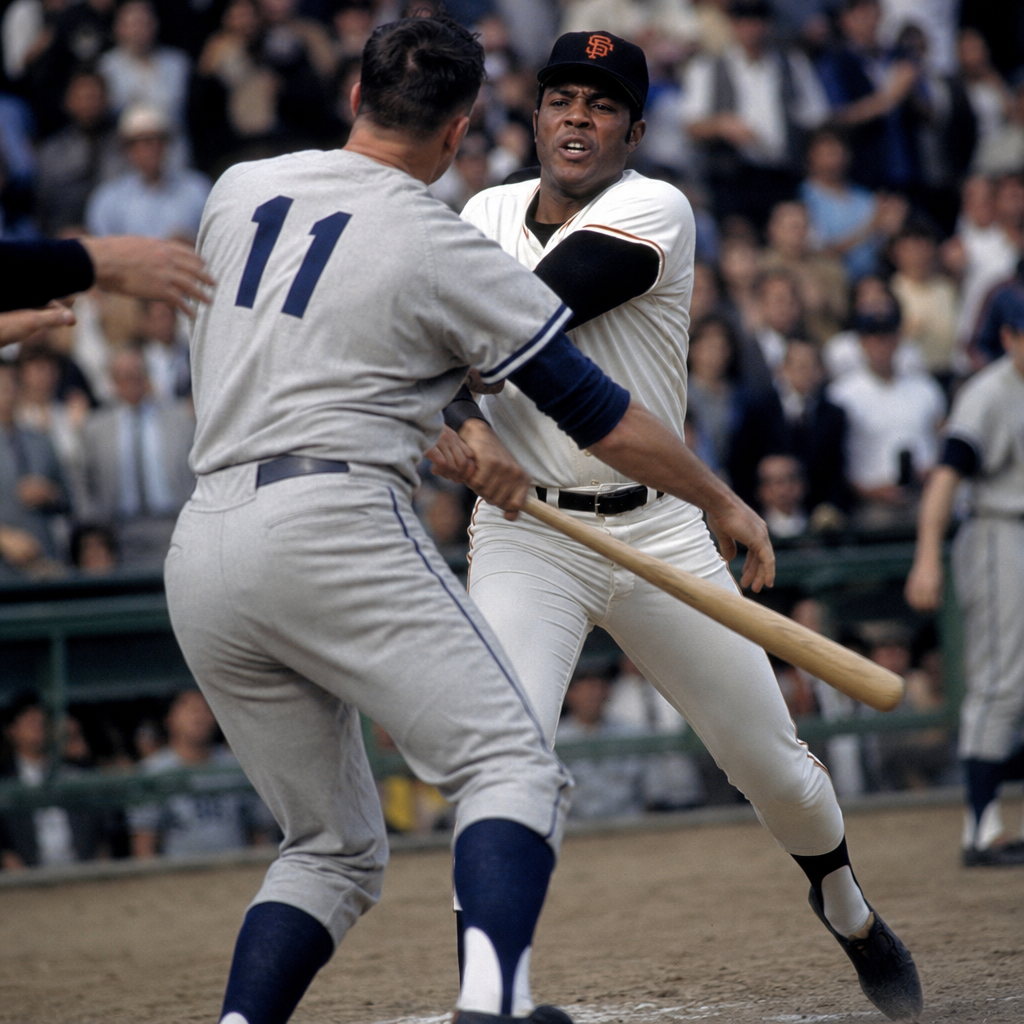
The Juan Marichal bat incident remains one of baseball’s most infamous on-field assaults, a flashpoint where competitive intensity turned into outright violence before a packed crowd and a national television audience. In baseball history, “the Juan Marichal bat incident” refers to the August 22, 1965 confrontation at Candlestick Park in which San Francisco Giants ace Juan Marichal struck Los Angeles Dodgers catcher John Roseboro on the head with a bat during a heated pennant-race game. The episode matters far beyond one ugly moment. It shaped league discipline, deepened one of sport’s fiercest rivalries, and became a lasting case study in how pressure, retaliation, and weak conflict management can produce chaos on the field. As a hub within the broader “Scandals and Controversies” category, this article also frames the incident within the wider world of miscellaneous baseball flashpoints: beanball wars, bench-clearing brawls, fan-incited disorder, and disciplinary controversies that do not fit neatly into gambling, performance-enhancing drugs, or ownership misconduct. I have covered enough historical incidents to know that the Marichal-Roseboro clash stands apart because it combined personal grievance, tactical intimidation, public embarrassment, and visible bodily harm in seconds. Understanding what happened, why it happened, and what followed helps readers evaluate later controversies with more precision. It also clarifies how Major League Baseball gradually developed stronger norms around player safety, umpire control, and league intervention when emotions threaten to overwhelm the game itself.
What Happened on August 22, 1965
The incident unfolded during a tense Giants-Dodgers game late in the 1965 National League pennant race, when every pitch carried strategic and psychological weight. Juan Marichal, already one of baseball’s premier pitchers, was facing Sandy Koufax, his Dodgers counterpart and another future Hall of Famer. The atmosphere was combustible before the first blow. Earlier, Dodgers pitcher Koufax had brushed back Giants hitters, and Roseboro, a tough, respected catcher known for his edge, returned the ball to Marichal on one pitch in a way that came close to Marichal’s ear. Marichal interpreted it as deliberate intimidation. Words followed. Roseboro stepped toward him. Marichal, still holding his bat from being at the plate, swung it and struck Roseboro on the head, opening a gash. Benches cleared immediately, and what should have been a marquee pitching duel became a violent brawl.
Several details are important because they explain why the scene burned into baseball memory. First, this was not a glancing shove or mound charge; it involved a wooden bat, which made the violence far more serious. Second, Roseboro was bleeding visibly, reinforcing the severity of the act. Third, the rivalry between San Francisco and Los Angeles already carried years of animosity dating back to their New York roots, so the confrontation felt like the rivalry’s darkest expression. Contemporary reports and later retellings sometimes differ on sequencing, but the core facts are stable: Roseboro’s throw back to the mound angered Marichal, Marichal perceived a threat, and he escalated in a way that could have caused catastrophic injury.
Why the Rivalry Made the Explosion More Likely
To understand the Juan Marichal bat incident, readers need the rivalry context. The Giants and Dodgers were not simply divisional opponents. By 1965 they were transplanted franchises carrying decades of resentment from New York into California, where pennant races sharpened every grievance. Players on both sides expected inside pitches, verbal needling, and strategic intimidation. In that era, baseball culture tolerated a level of retaliatory conduct that would draw instant ejections and suspensions today. Brushback pitches were common tools for reclaiming plate territory. Catchers often used hard tags, verbal pressure, and physical proximity to unsettle opponents. Umpires had fewer formal league-backed mechanisms for preemptive game management than crews use now.
I think it is essential not to flatten the event into “baseball was rougher then.” Roughness alone does not explain a bat strike. What the culture did allow, however, was a normalization of escalation. When pitchers were expected to answer inside pitching with more inside pitching, and when players viewed intimidation as legitimate craft, personal disputes could move rapidly from symbolic aggression to bodily danger. The Giants-Dodgers rivalry supplied the emotional accelerant. Marichal felt disrespected and threatened. Roseboro believed he was defending his club’s standards. In that environment, neither man was operating in a calm vacuum.
Immediate Consequences for Marichal, Roseboro, and MLB
The league responded by suspending Marichal for eight games and fining him, a significant punishment in 1965 but one that many observers then and now considered too light given the weapon involved. National League president Warren Giles imposed the discipline, and debate started immediately. Was the suspension intended as a deterrent, or was it softened because Marichal was a star during a pennant race? That question still shadows discussions of league consistency. Roseboro required medical attention for his head wound. He later pursued civil action, and the dispute eventually ended in a settlement. The legal dimension matters because it showed that internal baseball discipline was not enough to resolve harm caused on the field.
For Marichal, the stain lasted. Even with a brilliant career that included a 243-142 record, a 2.89 ERA, and Hall of Fame induction, the incident remained a permanent part of his public biography. For Roseboro, the moment became both a personal trauma and an identity marker, often overshadowing his substantial achievements as a four-time World Series champion and elite defensive catcher. Major League Baseball also learned a reputational lesson. Spectacle can draw attention, but uncontrolled violence undermines trust in the sport’s governance. Later disciplinary frameworks across decades became more structured partly because highly visible failures create institutional memory.
How Historians and Fans Interpret Responsibility
Responsibility in the Marichal-Roseboro incident is not symmetrical. Roseboro may have used gamesmanship, but Marichal chose to swing a bat at an opponent’s head. That fact sets the moral baseline. At the same time, serious historical analysis considers provocation, game context, and baseball norms without using them as excuses. This is where many summaries fail. They either sanitize the event as “tempers flared” or overdramatize it without explaining the competitive logic that produced the confrontation. The better interpretation is that baseball’s accepted tactics created the spark, while Marichal’s personal decision created the violence.
Over time, both men offered reflections that softened public memory without erasing accountability. Roseboro and Marichal reconciled years later, and Roseboro publicly supported Marichal’s Hall of Fame candidacy. That reconciliation is important because it demonstrated human complexity: a victim can forgive, and an offender can express remorse, while the act itself remains indefensible. Historians often cite this reconciliation to show that baseball controversies can evolve from rage to perspective. Still, forgiveness should not be mistaken for exoneration. The incident remains a benchmark for unacceptable on-field conduct.
Where This Incident Fits Among Miscellaneous Baseball Controversies
As a miscellaneous scandals hub, this page should help readers classify related controversies that fall outside cleaner categories like steroids or sign stealing. The Marichal case sits at the intersection of violence, retaliation, officiating control, and league discipline. Comparable miscellaneous incidents include bench-clearing fights, intentional-hit-by-pitch chains, collisions intensified by grudges, fan interference that sparks disorder, and disciplinary disputes involving unequal punishment. These incidents matter because they test baseball’s unwritten rules against its written ones.
| Controversy type | What defines it | Representative example | Main issue raised |
|---|---|---|---|
| On-field violence | Physical assault beyond ordinary play | Marichal striking Roseboro with a bat | Player safety and league discipline |
| Beanball retaliation | Intentional pitches used as payback | Repeated inside-pitch wars in pennant races | Where gamesmanship becomes assault risk |
| Bench-clearing brawls | Team-wide confrontations after a trigger event | Modern bullpen-to-infield fights | Collective accountability and ejections |
| Fan-driven disorder | Spectator actions alter safety or play | Objects thrown onto the field after a call | Security protocols and crowd control |
| Disciplinary controversy | Debate over whether MLB punished fairly | Star players receiving shorter suspensions | Consistency and credibility |
This framework helps readers navigate the subtopic. Not every scandal involves cheating for competitive gain. Some involve rage, institutional weakness, and a failure to contain foreseeable danger. That is exactly why the Marichal incident remains central to miscellaneous controversy coverage.
What the Incident Reveals About Baseball’s Unwritten Rules
Baseball has always operated with formal rules and powerful informal codes. The unwritten rules historically covered bat flips, showmanship, slide etiquette, and retaliation for perceived disrespect. In my experience reviewing old game footage and player testimony, the most dangerous controversies emerge when unwritten rules are enforced through physical harm. Roseboro likely believed a close return throw communicated toughness and territorial control. Marichal believed he had been intentionally menaced. Neither action appears in the rulebook as an approved enforcement mechanism, yet both fit the era’s internal code.
The problem with unwritten rules is selective interpretation. What one player sees as standard hard-nosed baseball, another sees as humiliation. Umpires can penalize a thrown ball, a charge, or a strike, but they cannot easily police private meaning. That ambiguity makes emotional regulation crucial. Modern MLB has tried to reduce this gray area through stricter warnings, replay-supported accountability, and faster suspensions for intentional dangerous conduct. The Marichal incident remains a vivid argument for why informal justice fails when players become judge and executioner in real time.
Media Coverage, Legacy, and Modern Lessons
Media coverage turned the fight into a national morality play. Newspapers emphasized blood, star power, and rivalry, while later television retrospectives framed the event as both shocking and emblematic of a harder era. That dual framing still shapes public memory. Some older fans recall it as evidence of baseball’s raw authenticity. Most modern observers see it more plainly: an unacceptable assault in a sport that too often romanticized retaliation. The lesson for current players, coaches, and leagues is practical. Preventive officiating matters. So does consistent punishment. So does public language from managers and broadcasters, because when authority figures celebrate vengeance, they normalize the next escalation.
The incident also offers a roadmap for readers exploring related hub articles under scandals and controversies. If you are studying baseball violence, connect this case to beanball culture and modern suspension policy. If you are studying rivalry psychology, compare it with other emotionally loaded series where symbolic disrespect led to dangerous outcomes. If you are studying governance, examine how leagues balance deterrence, due process, and star treatment. The Juan Marichal bat incident endures because it was not random. It exposed structural tensions baseball had long tolerated.
The enduring takeaway is straightforward: the Juan Marichal bat incident was not merely a fight, but a failure of competitive boundaries in one of baseball’s most pressurized environments. It showed how rivalry, accepted intimidation tactics, and inadequate restraint can turn elite competition into physical harm within seconds. The historical record is clear. Roseboro’s actions may have aggravated Marichal, yet Marichal’s choice to use a bat created the defining act of violence. The league’s response, while meaningful for its time, also revealed the persistent problem of whether sports authorities punish stars with the same firmness applied to everyone else. For readers using this page as a miscellaneous scandals hub, that is the wider value of the case. It provides a lens for understanding other controversies involving retaliation, benches clearing, fan disorder, and inconsistent discipline. These episodes are not side stories. They shape policy, public trust, and the way future incidents are judged. Baseball has made progress through stricter safety standards and more transparent enforcement, but the core lesson remains current in every era and at every level of the game: once players decide to settle grievances with weapons or reckless force, sport gives way to preventable violence. Explore the related controversies in this subtopic with that standard in mind, and you will read baseball history more clearly, critically, and honestly.
Frequently Asked Questions
What happened in the Juan Marichal bat incident?
The Juan Marichal bat incident took place on August 22, 1965, during a tense game between the San Francisco Giants and the Los Angeles Dodgers at Candlestick Park. In one of baseball’s most shocking moments, Giants pitcher Juan Marichal struck Dodgers catcher John Roseboro in the head with a bat after a series of escalating confrontations at home plate. The game was already charged because the Giants and Dodgers were locked in a fierce National League pennant race, and every pitch carried emotional weight. Roseboro had returned the ball closely past Marichal’s head after a pitch, and Marichal reacted angrily. Words were exchanged, tempers flared, and the situation exploded into violence in front of thousands of fans and a national television audience.
What made the incident especially infamous was not just that a fight broke out, but that a bat was used as a weapon in live game action. Roseboro suffered a head wound, and the field quickly descended into chaos as players, coaches, and umpires rushed in. Although baseball had already seen bench-clearing fights and brushback pitches, this crossed a line even in a sport known for intimidation and emotional confrontations. The event instantly became one of the darkest and most talked-about scenes in baseball history, remembered as a moment when competitive intensity gave way to outright assault.
Why did Juan Marichal strike John Roseboro with a bat?
The incident did not come out of nowhere. It developed from the long-standing hostility between the Giants and Dodgers, one of the fiercest rivalries in American sports, and from the immediate pressure of a pennant-race game in late August 1965. Tensions had already been rising during the contest because both teams were playing with postseason urgency. Inside pitching, close plays, and emotional reactions were common in that era, and players often operated under an unwritten code that accepted intimidation up to a point. In this atmosphere, even a routine exchange between pitcher and catcher could be interpreted as a deliberate provocation.
According to the commonly accepted account, Roseboro threw the ball back to Marichal in a way that came very close to Marichal’s head, whether intentionally or not. Marichal believed Roseboro was trying to intimidate him or send a message on behalf of the Dodgers after earlier inside pitches. When Roseboro and Marichal exchanged angry words, Marichal lost control and swung his bat. That decision was immediate and emotional rather than strategic, but it reflected how quickly resentment, rivalry, and perceived disrespect could boil over in that era’s baseball culture. Even so, while the reasons help explain the buildup, they do not excuse the act itself, which was widely condemned as a serious breach of sportsmanship and safety.
How was the Juan Marichal bat incident handled by Major League Baseball?
Major League Baseball responded by suspending Juan Marichal and fining him, making clear that the league viewed the attack as far more serious than an ordinary on-field altercation. At the time, the punishment was significant by the standards of the mid-1960s, though many observers then and since have argued that it was still too lenient given the violence involved and the injury Roseboro suffered. Marichal was suspended for several games, fined, and publicly criticized, and the incident dominated sports headlines well beyond San Francisco and Los Angeles. It became a national story because it raised broader questions about player conduct, league discipline, and whether baseball’s culture of intimidation had been allowed to go too far.
The aftermath also played out outside formal league discipline. Roseboro required medical attention, and the image of a catcher bleeding after being struck by a bat became one of the defining visuals of baseball violence. The event damaged Marichal’s reputation, even though he remained one of the game’s most brilliant pitchers. For years, discussion of his Hall of Fame legacy was tied not only to his achievements on the mound but also to this moment of loss of control. In that sense, MLB’s official punishment was only part of the consequence. The larger penalty was historical: the incident became permanently attached to Marichal’s name and to baseball’s uneasy relationship with aggression.
What impact did the incident have on Juan Marichal, John Roseboro, and baseball history?
For Juan Marichal, the incident became the most infamous episode of an otherwise extraordinary career. He was one of the dominant pitchers of his generation, known for his high leg kick, durability, and fierce competitiveness, yet any discussion of his legacy almost inevitably includes the bat attack on Roseboro. It introduced a permanent contradiction into his public image: a Hall of Fame-level talent whose greatest moment of notoriety came from an act of violence rather than athletic excellence. That stain followed him for decades, especially when Hall of Fame debates revived public scrutiny of the incident and what it said about character and sportsmanship.
For John Roseboro, the attack became a defining and deeply personal moment. He was not just a participant in a famous brawl; he was the victim of a potentially catastrophic assault. Roseboro sustained injuries and had every reason to carry bitterness, yet one of the more remarkable long-term developments was that he and Marichal eventually reconciled years later. That reconciliation added an important human dimension to the story, showing that even one of baseball’s ugliest confrontations did not have to remain frozen in permanent hostility. In the broader history of the sport, the incident stands as a cautionary episode often cited in discussions about player safety, emotional control, retaliation, and the limits of baseball’s old-school acceptance of intimidation. It remains one of the clearest examples of how rivalry and pressure can become dangerous when boundaries collapse.
Why is the Juan Marichal bat incident still remembered today?
The incident remains unforgettable because it combined nearly every element that turns a sports conflict into a lasting historical flashpoint: two iconic rivals, a pennant race, a star pitcher, a national audience, a shocking weapon, visible injury, and immediate controversy. Baseball has seen many fights, hard slides, beanball wars, and bench-clearing arguments, but very few moments carry the same sense of sudden danger as a player being struck with a bat during an active game. That image lodged itself permanently in baseball memory. It was not just dramatic; it was disturbing, and that is a major reason it continues to be revisited in documentaries, retrospectives, biographies, and discussions of the sport’s most notorious incidents.
It also endures because it raises questions that are still relevant in modern sports. How should leagues punish violence? How much responsibility does a rivalry culture bear when players lose control? Where is the line between toughness and recklessness? And how should history evaluate great athletes whose careers include serious misconduct? The Juan Marichal bat incident is remembered not simply as a scandal from 1965, but as a case study in the consequences of anger unchecked by restraint. Its legacy survives because it speaks to both baseball’s emotional intensity and the danger that comes when competition stops being competitive and becomes violent.