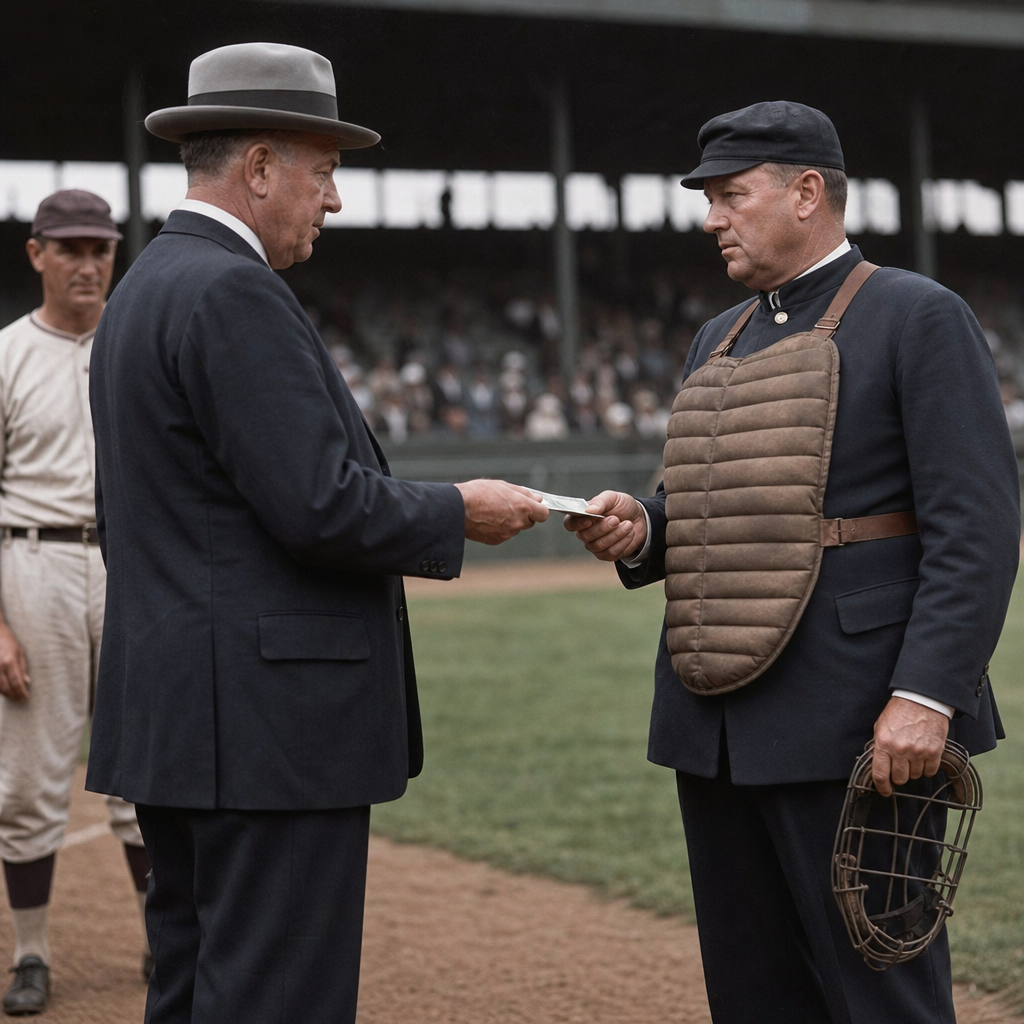
The umpire bribery scandal of the 1900s reveals how vulnerable early professional baseball was to corruption, weak governance, and private influence, and it remains one of the clearest windows into the sport’s struggle to build public trust. In this context, “1900s” refers broadly to the first decade of the twentieth century, when the American and National Leagues were still stabilizing, labor relations were tense, gambling hovered around ballparks, and the authority of umpires was both essential and deeply contested. An umpire bribery scandal is not a single neat event with one date and one guilty party; it is a cluster of allegations, attempted payoffs, suspected fixes, and disciplinary fights involving officials whose judgment could change pennant races, betting outcomes, and club finances. I have spent years reviewing newspaper archives, league statements, and baseball research collections from this era, and the recurring lesson is consistent: even unproven bribery claims damaged credibility because fans already believed owners, gamblers, and local power brokers could reach the men calling balls and strikes. That matters because baseball sold itself as a reliable public spectacle. If spectators thought a game could be bought through an umpire, then attendance, press confidence, and league legitimacy all suffered. Understanding these scandals also helps explain later reforms in umpire supervision, centralized discipline, gambling rules, and the broader campaign to present baseball as an honest national institution.
Why umpire bribery became a serious risk in early baseball
Early twentieth-century baseball created ideal conditions for bribery rumors and genuine corruption attempts. Umpires had enormous discretionary power. Before modern replay, standardized training pipelines, and extensive league offices, a single official often managed games with limited support, rough travel schedules, and little physical protection from angry crowds. Salaries were modest compared with the pressure attached to the role, and job security was uncertain. Owners publicly attacked umpires when calls went against their clubs, then privately demanded loyalty to league interests. In practice, that meant umpires were squeezed from every direction while being asked to embody neutrality.
Gambling intensified the problem. Betting on baseball was widespread and visible. Poolrooms, bookmakers, and racetrack-adjacent gambling circles followed pennant races closely, especially in major cities such as New York, Chicago, Cincinnati, and St. Louis. A player could influence only the limited situations he touched; an umpire could affect nearly every plate appearance through strike-zone interpretation, close safe-or-out calls, ejections, balk rulings, and game management. That made umpires attractive targets for gamblers looking for leverage. Even an attempted bribe, if reported, confirmed public fears that results might be manipulated from behind the plate rather than earned on the field.
The institutional framework was also weak. Ban Johnson in the American League and National League leadership figures such as Harry Pulliam tried to assert discipline, but the machinery for investigation was primitive. There were no sophisticated compliance departments, no electronic communications records, and no coordinated integrity units. Cases relied on testimony, newspaper accounts, and reputation. When a club, writer, or league executive accused an umpire of improper conduct, the evidence was often incomplete and politically entangled. As a result, scandals in this period frequently occupied a gray area between documented bribery attempts and corrosive suspicion.
The best-known cases, allegations, and league responses
Several incidents from the era illustrate how umpire bribery concerns surfaced. One of the most discussed involved Bill Klem, the National League umpire who debuted in 1905 and later became the profession’s standard-bearer. Klem’s fame rests partly on his refusal to be intimidated. Contemporary accounts and later histories repeatedly note that gamblers and club-connected intermediaries probed elite umpires, testing whether money or favors could influence calls. Klem cultivated a public image of absolute independence precisely because the sport needed officials whose reputations could survive those approaches. He was not known as a bribed umpire; he became prominent because the environment required visible resistance to bribery.
More directly scandalous were cases in which league presidents accused or removed umpires for associations viewed as improper. During the 1900s, baseball papers regularly covered disputes over officials seen socializing with gamblers, drinking with local fixers, or showing suspicious friendliness toward home clubs. In some cases the accusation was not that an umpire had accepted cash for a specific game but that he had placed himself in compromising circumstances that made bribery plausible. League executives understood that public confidence could collapse even without a courtroom-level standard of proof. Their response was often summary discipline: reassignment, suspension, forced resignation, or quiet nonrenewal.
The strongest documented pattern is therefore broader than one headline case. Baseball faced recurring episodes in which gamblers attempted contact, owners charged bias after crucial calls, and newspapers framed controversial series through the language of purchase, pressure, or influence. The scandal was systemic because the sport lacked a clean separation between officials and the betting culture surrounding parks and hotels. What the leagues learned, slowly, was that integrity depended not only on catching actual bribery but on reducing opportunities for access.
How bribery attempts usually worked in practice
Most bribery attempts in the 1900s did not look like dramatic envelopes exchanged in dark alleys. They were usually informal, deniable, and routed through intermediaries. A gambler might buy drinks, offer travel assistance, introduce an umpire to “friends,” or suggest that a close pennant race could be made easier to manage. Local political figures and saloon operators, who often sat near the sport’s business networks, could act as go-betweens. Because teams stayed in hotels where reporters, bettors, players, and officials mingled, access was easy. There were few of the physical or administrative barriers that later became standard in professional sports.
Influence could also be framed as hospitality rather than bribery. Free meals, entertainment, debt relief, or favorable introductions were all useful tools. An umpire under financial strain might not need a direct cash offer to feel pressure. Just as important, corruption could target future assignments rather than a single inning. If a local network convinced an official that cooperation would bring easier treatment, social protection, or a recommendation to league leadership, the incentive structure shifted even without a plainly illegal transaction.
The mechanics of game influence were subtle. Expanding the strike zone for one pitcher, delaying an ejection, warning one bench but not the other, or calling a key runner out on a stolen-base attempt could swing results without producing an obvious smoking gun. That is why so many early scandals remained unresolved. Baseball could sense manipulation long before it could prove it conclusively.
Why proving umpire corruption was so difficult
Proof was elusive because officiating is inherently interpretive. Even today, informed observers disagree on strike zones, obstruction calls, and game control. In the 1900s, with fewer camera records and less standardized mechanics, nearly every disputed decision could be defended as judgment. A corrupt umpire did not need to overturn ten obvious calls. He needed only to shade a handful of pivotal moments. That created plausible deniability and made honest mistakes look sinister in charged environments.
Newspaper culture added another complication. Beat writers were influential but often partisan, tied socially to clubs or cities, and operating in a competitive press market that rewarded sensational claims. If an owner believed an umpire had hurt his team, he could feed the narrative of bribery to sympathetic reporters. Rival leagues also weaponized integrity accusations. During the American League’s rise, public attacks on umpiring standards served strategic goals, not just truth seeking. Historians therefore treat many allegations cautiously. Some were credible warnings; others were political theater.
League investigations rarely met modern standards. Testimony could be private, records incomplete, and punishments discretionary. A respected umpire with allies might survive rumors that ended another man’s career. The absence of transparent procedure protected baseball from short-term embarrassment but fed long-term suspicion. Fans were asked to trust conclusions they could not inspect.
Common patterns across miscellaneous scandal cases
Because this article serves as a hub for miscellaneous controversies, it is useful to identify the patterns that connect scattered umpire bribery stories from the period. Whether the issue involved direct gambling influence, owner pressure, clubhouse favoritism, or off-field fraternization, the structure of the scandal was usually similar.
| Pattern | What it looked like in the 1900s | Why it mattered |
|---|---|---|
| Easy access | Gamblers, reporters, and club associates sharing hotels and trains with umpires | Created opportunities for pressure and covert offers |
| Low transparency | Private league discipline and inconsistent public explanations | Encouraged rumors even when leagues acted |
| Discretionary calls | Strike-zone variation, close force plays, ejections, and warnings | Allowed subtle manipulation that was hard to prove |
| Financial vulnerability | Modest pay, uncertain contracts, and harsh travel conditions | Made officials more exposed to inducements |
| Political use of scandal | Owners and rival leagues amplifying accusations after losses | Blurred legitimate integrity concerns with self-interest |
These patterns explain why the umpire bribery scandal of the 1900s cannot be reduced to one verdict. It was a recurring governance failure embedded in the sport’s daily operations. The specific names changed, but the vulnerabilities stayed remarkably constant until leagues professionalized control over officials.
The public reaction and damage to baseball’s reputation
Fans in this period did not need definitive proof to react strongly. Ballpark violence against umpires, while not constant, was common enough to shape policy. Spectators threw objects, rushed fields, and treated controversial calls as evidence of dishonesty rather than mere error. Club owners sometimes encouraged that mood by attacking officials in the press, especially when gate receipts depended on keeping local anger directed outward. The result was a dangerous cycle: leagues needed umpires to enforce order, yet public rhetoric made those umpires appear purchasable and illegitimate.
The press amplified every disputed pennant race. If a team lost a crucial series amid questionable calls, the language of bribery spread quickly because it matched what readers already feared about gambling’s place in baseball. That reputational damage mattered commercially. Professional baseball in the early 1900s was still competing for loyalty, media attention, and civic respectability. Any hint that its contests were manipulated threatened the business foundation of the game.
This is one reason later scandals, especially the 1919 Black Sox affair, hit so hard. The public had already lived through years of rumors about influence and purchased outcomes. Umpire bribery allegations formed part of that prehistory. They taught fans that corruption was imaginable, which made later proof of game-fixing easier to believe.
The reforms that emerged and their lasting significance
Baseball’s answer was gradual professionalization. Leagues raised expectations for umpire conduct, tightened supervision, and increasingly valued officials whose reputations could stand above local politics. Ban Johnson aggressively marketed the American League as cleaner and more orderly, while leading umpires such as Bill Klem projected personal authority as a form of institutional credibility. Over time, multi-umpire crews, more standardized mechanics, clearer league discipline, and stronger central offices reduced the space in which bribery attempts could thrive.
Just as important, baseball learned that integrity policy had to address appearances as well as proven guilt. Restricting contact with gamblers, reducing social mingling around teams, and publicly defending respected umpires were practical steps. The sport also moved toward firmer anti-gambling norms that would later be embodied in Rule 21 and in the commissioner system established after 1920. Those later reforms did not emerge from nowhere. They were shaped by the lesson of the 1900s: if the public thinks officials can be bought, the game itself loses value.
For readers exploring miscellaneous scandals and controversies, the umpire bribery story is essential because it links many subtopics at once: gambling, weak league governance, media manipulation, labor precarity, and the uneven modernization of professional sports. It reminds us that corruption is rarely just about bad individuals. Usually it grows where institutions leave access unguarded, incentives misaligned, and accountability opaque. Early baseball eventually recognized that truth. The simplest takeaway is also the most durable one: fair competition depends on trusted officials, visible rules, and constant vigilance. If you are building out this subtopic, use this article as your starting hub and continue into the related cases on gambling, ownership misconduct, and league discipline to see how the full controversy landscape fits together.
Frequently Asked Questions
What was the umpire bribery scandal of the 1900s, and why does it matter?
The umpire bribery scandal of the 1900s refers to a cluster of accusations, rumors, investigations, and public controversies involving efforts to influence baseball umpires during the sport’s unstable early modern era. In the first decade of the twentieth century, professional baseball was still trying to establish itself as a credible national business. The American League and National League were solidifying their power, owners were competing fiercely for money and prestige, and gambling was never far from the ballpark. In that environment, umpires occupied a uniquely sensitive position. A single official could shape the pace, emotion, and outcome of a game through calls on balls and strikes, safe or out decisions, ejections, and enforcement of conduct rules. Because of that power, umpires became natural targets for pressure, intimidation, and, at times, alleged bribery.
What makes the scandal historically important is not just whether every accusation was proven, but what the controversy revealed about baseball’s fragility. The sport lacked many of the institutional safeguards that fans now take for granted. Oversight was inconsistent, internal investigations were often opaque, and the line between personal relationships, owner influence, betting interests, and official authority could be uncomfortably thin. Even the suspicion that an umpire might be compromised was damaging, because baseball depended on public belief in fair competition. The scandal matters as a window into a larger story: early professional baseball was not merely building teams and schedules, it was building legitimacy. Questions about bribed umpires exposed how incomplete that project still was.
How vulnerable were early baseball umpires to corruption and outside influence?
Early baseball umpires were extremely vulnerable by modern standards. Their work was central to the sport, but their protection was weak. Many officials operated in hostile conditions, facing abuse from players, managers, owners, journalists, and crowds. Pay could be uneven, travel was demanding, and league administration did not always provide strong institutional backing. An umpire might be expected to maintain order in a tense game while absorbing public accusations from both sides and knowing that his reputation could be destroyed by a few controversial calls. That kind of environment created opportunities for manipulation, even before direct bribery entered the picture.
Outside influence took several forms. Gambling interests were the most obvious danger, because bettors had a financial motive to shape outcomes. But pressure also came from club officials, politically connected local figures, and influential members of the baseball world who wanted favorable treatment. A bribe did not always need to look like an envelope of cash. It could involve gifts, hospitality, debt relief, promises of future work, or more subtle social obligations. On top of that, the leagues themselves were still consolidating authority, so the disciplinary structure around umpires was often reactive rather than preventive. If an umpire was accused of bias, there might be outrage and denial, but not necessarily a transparent process that satisfied the public.
Another vulnerability was the nature of the game itself. Baseball produces countless judgment calls, many of them difficult to verify in an era before replay, television, or comprehensive statistical scrutiny. That meant corruption could hide inside ordinary controversy. A close call at first base, a narrow strike zone, or selective tolerance for aggressive play could all alter a game without leaving obvious proof. This ambiguity made umpires both powerful and exposed. They were indispensable to the sport’s operation, yet their authority rested heavily on trust, and trust was precisely what the scandal put at risk.
Was gambling the main force behind these scandals, or were there broader causes?
Gambling was a major force, but it was not the whole story. Betting culture around early twentieth-century baseball was widespread enough that it shaped the sport’s atmosphere even when no specific fix could be proven. Ballparks and surrounding urban social networks often brought together fans, bookmakers, political operators, and people looking for advantage. In such a climate, the temptation to influence an umpire was obvious. If one official could affect a close game, then anyone with money riding on the result had reason to try.
Still, broader structural causes made scandals possible. Weak governance was one of the most important. Baseball’s leadership was still trying to create stable rules, effective discipline, and a clear chain of authority across leagues and clubs. That meant enforcement could be inconsistent and heavily shaped by personalities. Labor tensions also mattered. Players, managers, and umpires all worked within a volatile system where control was concentrated at the top, grievances were common, and loyalty was often transactional. In that environment, resentment and opportunism could thrive side by side.
There was also the issue of public culture. Baseball was becoming a mass entertainment industry, and newspapers eagerly amplified disputes. Charges of dishonesty, favoritism, or corruption sold papers and fueled fan passions. Sometimes those accusations reflected real concern; other times they were strategic, exaggerated, or impossible to verify. But the cumulative effect was corrosive. It encouraged a climate in which many people believed the game could be bent by money, influence, or private arrangement. So while gambling was central, the scandal should really be understood as the product of a larger ecosystem: incomplete regulation, intense commercial pressure, personal networks, and a sport that had not yet fully secured its moral authority.
How did the scandal affect public trust in baseball during the first decade of the twentieth century?
The scandal damaged public trust because it struck at the core promise of sport: that games are decided by honest competition under neutral rules. Fans could tolerate bad calls, and they could certainly tolerate heated arguments, but bribery allegations suggested something worse than human error. They implied that outcomes might be shaped before or during the game by hidden interests. In a period when baseball was trying to present itself as orderly, respectable, and worthy of national attention, that was a serious threat to its image.
The effect on public trust was magnified by the position umpires held in the baseball drama. Umpires were visible authority figures, often isolated on the field and blamed by everyone. When suspicion attached to them, it became easy for fans to reinterpret ordinary losses as evidence of corruption. That kind of suspicion spreads quickly because it is difficult to disprove. A league might defend its officials, but if those defenses lacked transparency, they could sound like self-protection rather than accountability. As a result, the scandal did not need courtroom-level proof to influence public opinion. Repeated allegations alone could erode confidence.
At the same time, the controversy forced baseball’s leadership to confront the reality that credibility was one of the sport’s most valuable assets. Public trust was not automatic; it had to be earned through stronger administration, clearer discipline, and a visible commitment to integrity. In that sense, the scandal was both a crisis and a turning point. It exposed the limits of informal authority and pushed the sport toward more centralized efforts to protect its reputation. The lesson was enduring: baseball could survive angry fans and disputed calls, but it could not safely ignore persistent doubt about whether its contests were fair.
What long-term lessons did baseball learn from the umpire bribery controversies of the 1900s?
The long-term lesson was that integrity cannot depend on assumption, tradition, or personal honor alone. Early baseball learned, often painfully, that a sport seeking mass public trust needs systems as much as it needs rules. Umpires had to be more than nominally independent; they had to be seen as independent. That required better supervision, clearer standards of conduct, stronger league authority, and more serious responses to conflicts of interest. Even when the evidence in particular cases was murky, the damage caused by suspicion taught baseball that prevention and credibility were inseparable.
Another lasting lesson involved governance. The scandal showed that weak administrative structures invite both actual corruption and credible accusations of corruption. When oversight is fragmented, discipline inconsistent, and investigations unclear, every controversial moment becomes fertile ground for distrust. Baseball’s later reforms in areas such as league control, commissioner power, anti-gambling messaging, and institutional discipline all grew out of the recognition that the game’s legitimacy needed to be actively guarded. The sport’s leadership eventually understood that public confidence was part of the business model, not a secondary concern.
Finally, the umpire bribery controversies remain historically significant because they reveal how professional baseball matured. The issue was never just about a few disputed calls or a handful of suspect relationships. It was about whether a rapidly commercializing national pastime could create rules, offices, and norms strong enough to resist private influence. That challenge did not disappear after the 1900s, but the scandals of that era made the stakes unmistakable. They reminded everyone involved that trust is easier to lose than to rebuild, and that the authority of the game depends on the perceived honesty of the people who enforce it.