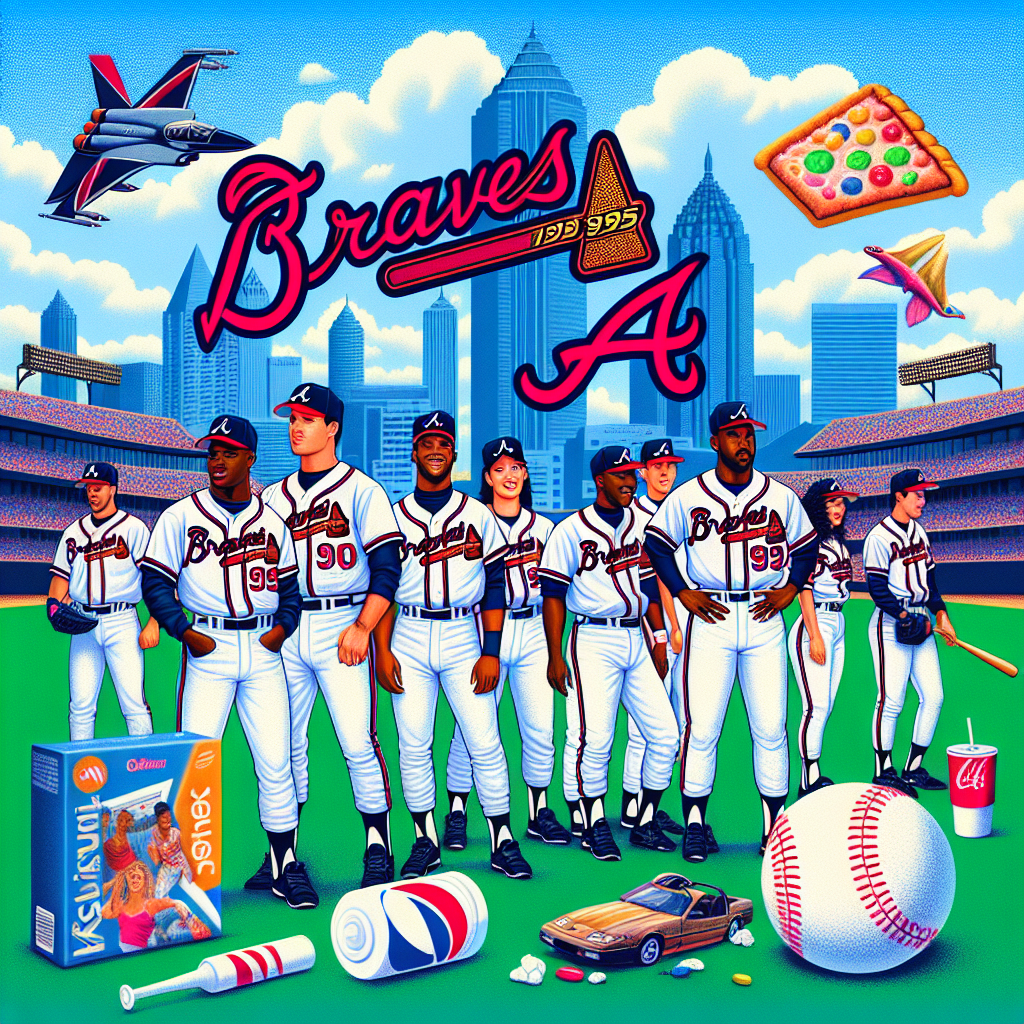
The 1995 Atlanta Braves were the pinnacle of baseball success in the 1990s. As a defining team of the decade, the Braves had an impressive mix of youthful talent, seasoned veterans, and an indomitable spirit. Led by manager Bobby Cox and general manager John Schuerholz, the Braves showcased a unique blend of pitching, hitting, and defense that dominated their competition. Emerging from a challenging early part of the decade, the ’95 Braves found their stride, embodying the grit and greatness that represented their era.
Coming off a labor strike that cut the 1994 season short, baseball needed a storybook season in 1995. The Braves provided just that with their superb execution and team camaraderie. Central to their success was the astonishing pitching, with future Hall of Famers Greg Maddux, Tom Glavine, and John Smoltz at the helm. Their prowess on the mound was complemented by potent hitters and a well-rounded defense that left fans in awe.
Once regular-season play resumed in late April 1995, the Braves quickly established themselves as the team to beat. Despite the shortened 144-game schedule, they dominated their competition, showcasing resilience and skill that carried them through to the playoffs and beyond. The team’s consistency and ability to perform under pressure were paramount in their success, forming a defining moment in baseball history.
In this article, we will journey through the highlights of the 1995 Atlanta Braves season, exploring the key players, pivotal moments, and the strategic moves that carved their path to glory. Analyzing their strengths and recalling their standout games provides a comprehensive understanding of why this team is often heralded as one of the greatest of all time.
Pitching Dominance
The cornerstone of the 1995 Atlanta Braves was undeniably their pitching staff. Spearheaded by the legendary trio of Greg Maddux, Tom Glavine, and John Smoltz, the Braves’ rotation was the stuff of nightmares for opposing batters. Greg Maddux, known for his precise control and strategic pitching, was unstoppable. His performance during the season earned him his fourth consecutive Cy Young Award, a feat that showcased his sheer dominance on the mound.
Tom Glavine, another stalwart of the rotation, provided a perfect complement to Maddux’s precision with his crafty left-handed delivery. Glavine’s ability to force groundouts and limit home runs made him a reliable ace who could go deep into games, keeping the bullpen fresh. Meanwhile, John Smoltz brought a combination of power and finesse, striking out batters with ease and serving as the fierce competitor that the Braves needed during high-pressure situations.
Undoubtedly, it wasn’t just the big three doing all the work. The supporting cast, including Steve Avery and the seasoned Mark Wohlers in the closer role, were integral to the Braves’ pitching success. The balance in the bullpen ensured that the team could maintain its competitive edge throughout the season, regardless of the innings.
Statistics alone can’t capture the intimidation factor that the Braves’ rotation imposed upon their foes. However, their collective ERA and strikeout counts were among the league’s best, providing a numerical testament to their prowess. The resulting synergy of their starting rotation and bullpen gave the Braves a strategic advantage, consistently setting the stage for their offensive lineup to secure victories.
Offensive Firepower
While the Braves’ pitching staff garnered much of the acclaim, their offensive firepower was equally critical to their success. A blend of seasoned veterans and youthful talent fueled Atlanta’s run production, with several key players stepping up at pivotal moments. At the heart of the offense was Chipper Jones, the fresh-faced rookie who quickly cemented his role as a future Braves legend.
Jones, a versatile switch-hitter, provided a consistent and powerful bat in the Braves’ lineup. His .265 batting average and 23 home runs during the regular season were evidence of his impactful contribution. Complementing Jones was the veteran leadership of Fred McGriff, affectionately known as “The Crime Dog.” McGriff’s powerful swings and clutch hits were instrumental in driving in runs and keeping opposing pitchers on their toes.
Additionally, the Braves were bolstered by the likes of David Justice and Ryan Klesko. Justice’s power-hitting prowess, combined with Klesko’s batting consistency, ensured that the team could generate offense from multiple points in the lineup. Their contributions throughout the season were critical in maintaining the momentum needed to secure the divisional title.
Unlike other teams overly reliant on a couple of star players, the Braves’ offensive depth was integral to their success. The strategic hitting and timely base running from lesser-known players kept opponents guessing, providing a multi-dimensional offensive strategy that propelled them far into the postseason.
Fielding and Defense
In baseball, great defense often goes hand in hand with pitching success. The 1995 Braves were no exception, priding themselves on stellar defensive plays that stymied their opposition. Manager Bobby Cox emphasized the importance of defense, instilling a team-wide commitment to error-free play.
Shortstop Jeff Blauser and second baseman Mark Lemke formed a formidable double-play duo. Their quick reflexes and solid fielding mechanics minimized infield hits and thwarted numerous scoring opportunities for their opponents. Blauser, in particular, had a knack for making difficult plays look routine, contributing to the team’s defensive robustness.
The outfield defense was equally impressive, with players like Marquis Grissom patrolling center field. Grissom’s speed and positional awareness allowed him to make spectacular catches and provide crucial backup to the pitching staff. His arm strength further discouraged runners from taking extra bases, a testament to the Braves’ overall defensive acumen.
Catching, often an overlooked aspect of defense, was another strength for the Braves. Javy Lopez, the primary catcher, not only called excellent games but also had a cannon for an arm, discouraging base stealers and providing a reliable backstop for the elite pitching staff.
The combination of strategic fielding and defensive resilience ensured a balanced approach to each game, allowing the Braves to control not just the pace but also the flow of play. This comprehensive approach was yet another reason why the team thrived, making them a touchstone for defensive excellence in the league.
Pivotal Moments
The 1995 season was rife with pivotal moments that encapsulated the Braves’ journey to triumph. Among these moments was the National League Championship Series (NLCS) against the Cincinnati Reds. The Braves showcased their depth and resilience by sweeping the series in four games, a clear testament to their all-around dominance.
One standout moment from the NLCS came in Game 3 when the Braves were facing a tight contest. David Justice hit a crucial home run, providing a lead that the Braves would not relinquish. His heroics exemplified the team’s knack for coming through in clutch situations, a theme that persisted throughout their playoff run.
The World Series against the Cleveland Indians was another defining chapter. The series saw extraordinary performances, including Tom Glavine’s stellar outing in Game 6. Glavine pitched eight innings of one-hit ball, shutting down the potent Indians’ lineup and setting the stage for the Braves’ championship clinch. His performance was so impactful that it earned him the World Series MVP award.
Of course, who could forget the final out of Game 6? A routine fly ball caught by centerfielder Marquis Grissom, followed by the ensuing celebrations, signified not just a World Series win but also the culmination of years of hard work and near-misses. It was a moment of unadulterated joy for Braves fans and a fitting end to a season of exceptional brilliance.
Legacy and Impact
The legacy of the 1995 Atlanta Braves extends far beyond their championship. Their dominance in the 1990s redefined what it meant to be a consistently excellent team. They set a standard for future teams, showcasing that a blend of outstanding pitching, balanced offense, and stellar defense could lead to sustained success.
The Braves’ success in 1995 proved that patience, strategic management, and trust in player development could yield rewards. After years of near-misses, the Braves’ championship was a testament to their organizational commitment to building a contending team. The foundation laid by this squad influenced the team’s philosophy, guiding them through subsequent seasons and maintaining fan engagement and loyalty.
Furthermore, the individual accolades and career milestones achieved by players from the 1995 team only further cement their status in the annals of baseball greatness. Greg Maddux, Tom Glavine, and John Smoltz’s contributions to the game have been immortalized with their Hall of Fame inductions, while Chipper Jones’ illustrious career started gaining momentum with this season.
Their success also paved the way for future generations of players to aspire to the same heights, bringing a renewed sense of inspiration to aspiring baseball athletes. The 1995 Braves exemplified how teamwork, dedication, and strategic brilliance could lead to achieving one’s loftiest goals, making their story timeless in the world of sports.
Conclusion
Reflecting on the 1995 Atlanta Braves, one can’t help but marvel at the constellation of talent, strategy, and determination that defined their season. From the masterful pitching rotation to the timely hitting and indefatigable defense, every element of the team worked in harmonious concert to achieve baseball immortality.
The triumph of the ’95 Braves was more than just a moment of glory; it was the realization of a vision built over years of unwavering commitment. It was about overcoming obstacles, learning from near-misses, and never losing sight of the ultimate prize. The Braves’ journey through the 1995 season serves as a powerful narrative in the realm of sports, where preparation meets opportunity, and talent meets execution.
As fans reminisce on the golden days of the 1995 Braves, they do so with pride and admiration. The team’s achievements aren’t merely historical footnotes but stand as a North Star guiding future teams and players. The lessons from their season transcend the confines of the baseball diamond, teaching us about perseverance, unity, and the relentless pursuit of excellence.
In capturing the essence of the 1995 Atlanta Braves, one captures a pivotal chapter in baseball lore, a chapter that continues to inspire and ignite the passion of baseball enthusiasts around the globe. This team didn’t just win a championship; they embodied the spirit of a decade and left a legacy enduring and far-reaching. The 1995 Braves were not just champions; they were, indisputably, the team of the ’90s.
Frequently Asked Questions
1. What made the 1995 Atlanta Braves such a dominant force in baseball?
The 1995 Atlanta Braves were a powerhouse team that excelled in all aspects of the game – pitching, hitting, and defense. Key to their dominance was perhaps the most legendary pitching rotation in MLB history with the trio of Greg Maddux, Tom Glavine, and John Smoltz. Maddux, in particular, was at the peak of his career, winning his fourth consecutive Cy Young Award in 1995. This formidable pitching squad effectively shut down opponents, maintaining low ERAs and high strikeout rates that were unparalleled.
On the offensive side, the Braves showcased a balanced lineup featuring both experienced hitters and rising stars. First baseman Fred McGriff and third baseman Chipper Jones provided the power, while veteran players like David Justice and Marquis Grissom delivered clutch performances. Their mix of strategic hitting, combined with foundational rock-solid defense, made them a well-rounded and adaptive team capable of tackling any challenge. The Braves’ success was further augmented by the adept leadership of manager Bobby Cox, whose strategic acumen and ability to motivate the team functionally synergized with General Manager John Schuerholz’s strategic roster assembly.
2. How did the 1995 season unfold for the Braves?
The trajectory of the Braves’ 1995 season was in many ways emblematic of their resilience and determination. The season was shortened to 144 games due to the players’ strike in the prior year, and the Braves seized the opportunity by starting strong and maintaining their momentum. Spearheaded by an indomitable pitching staff, they finished the regular season with 90 wins, dominating the National League East division.
During postseason play, the Braves advanced through the National League Division Series by defeating the Colorado Rockies, showcasing the depth of their lineup with pivotal contributions from nearly every spot on the roster. The subsequent matchup in the National League Championship Series against the Cincinnati Reds was another platform for the Braves to assert their pitching dominance as they swept the series in a swift fashion, underscoring their supremacy in the league.
The ultimate test came during the World Series against a strong Cleveland team. Despite facing capable opponents, the Braves’ combination of strategic in-game adjustments, clutch hitting, and the overpowering presence on the mound led them to a memorable six-game victory, clinching the championship. This triumph marked the first World Series title for the Braves since their relocation to Atlanta, solidifying their place in baseball history.
3. Who were some of the standout players on the 1995 Braves roster?
The 1995 Braves boasted an assembly of talent that left a lasting impact on the franchise and the league. Greg Maddux, known for his masterful control and strategic pitching, was a standout figure, with his presence on the mound often rendering opponents ineffective. Alongside him, Tom Glavine and John Smoltz rounded out a rotation that complemented each other’s style perfectly, creating an environment of fierce competition and mutual growth.
In the field, Chipper Jones was emerging as a future Hall of Famer, demonstrating prowess that belied his youth. He was instrumental in delivering pivotal hits when it mattered most, showcasing capabilities that foreshadowed his illustrious career. Fred McGriff provided consistent power and leadership, while David Justice and Marquis Grissom added valuable depth and an on-field tenacity that defined the Braves’ ethos. Additionally, closer Mark Wohlers was integral to sealing games, often coming in to shut down opponents in the later innings.
Off the field, manager Bobby Cox’s leadership style was central to maximizing the team’s potential. His tactical insights, coupled with General Manager John Schuerholz’s vision for the team, laid the foundation for what became an utterly dominant season for the Braves.
4. What was the significance of the Braves’ World Series victory in 1995?
The 1995 World Series victory was a defining moment for the Atlanta Braves, both as a franchise and in the broader context of Major League Baseball during the 1990s. This championship marked the culmination of a journey that saw the Braves evolve from perennial contenders to champions, a narrative arc that was artfully crafted over several seasons through strategic roster moves and astute player development.
Given the tumultuous backdrop of the preceding seasons, including the 1994 strike that left the season unfinished, the Braves’ triumph was more than just a victory on the field. It was a redeeming moment that symbolized the resilience and determination of a team and the wider baseball community. The sentiment of triumph extended beyond the organization to its fanbase in Atlanta and beyond, as it provided a reinvigorating force for baseball in a period of uncertainty.
For players, coaches, and fans alike, the championship was a celebration of collective effort, purpose, and the fruition of years of hard work and dedication. The win epitomized excellence and marked a high point in the era of Braves baseball, a feat that would be remembered and revered in baseball annals for generations.
5. How has the legacy of the 1995 Atlanta Braves endured in subsequent years?
The legacy of the 1995 Atlanta Braves remains an influential chapter in the history of not only the franchise but in baseball as a whole. This team set the standard for excellence and became the mold for subsequent Braves’ iterations, many of which benefitted from the structures and ethos established during the 1990s.
The Braves’ sustained success in the late 20th century, anchored by the 1995 championship, led them to a streak of 14 consecutive division titles from 1991 to 2005, a testament to the methodologies and philosophies ingrained during their Golden Era. The team’s emphasis on dominant pitching as a cornerstone strategy resonated deeply in the league and influenced how franchises approached team-building.
Individual players such as Greg Maddux, Tom Glavine, John Smoltz, and Chipper Jones each carved out Hall of Fame careers, their time during the 1995 season often seen as a formative period during which they honed the skills that would eventually define their careers. Their successes, along with the leadership of Bobby Cox, are enduring reminders of the caliber and spirit epitomized by the 1995 Braves.
Moreover, the team’s dynamic and open fan engagement helped establish a broad and committed fan base, who profoundly identify with the Braves’ era of excellence. This resonates through ongoing team cultures and remains a foundation upon which future successes are built. In essence, the 1995 Braves cultivated a lure of identity and success that continues to inspire fans and players alike to this day.