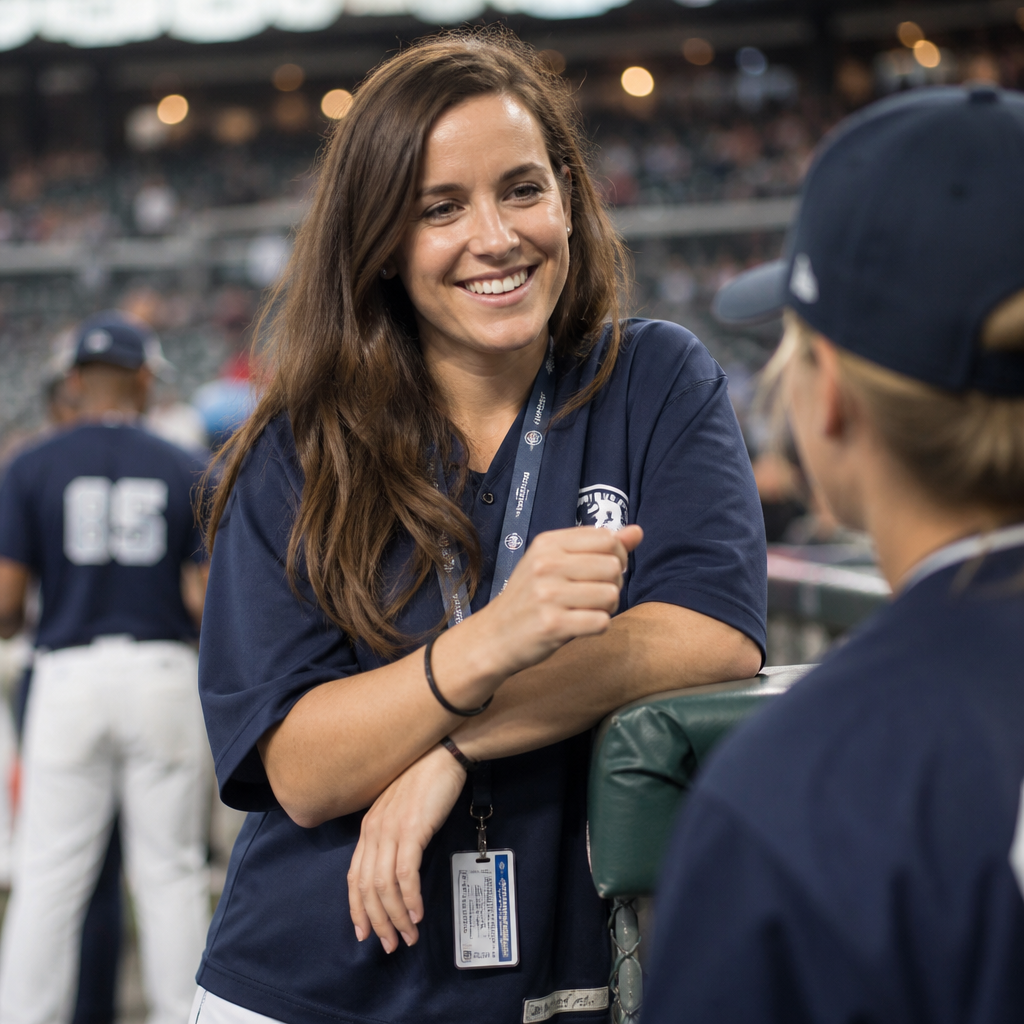
Baseball clubs have always relied on more than the players listed on a scorecard, and women have shaped those clubs in ways that are essential, varied, and too often overlooked. In the broad history of women in baseball, public attention usually settles on a few familiar images: pioneering players, wartime leagues, or occasional front-office breakthroughs. Yet the daily life of a club has long depended on women working in ticket offices, ownership groups, scouting departments, medical rooms, public relations teams, community foundations, analytics units, clubhouses, and family support networks. This wider story matters because baseball is an ecosystem. A club is not only a roster competing for wins; it is a business, a workplace, a civic institution, and a cultural symbol. When women influence any of those layers, they influence baseball itself.
For this hub article, “miscellaneous” does not mean marginal. It means the many contributions that do not fit neatly into a single category but together explain how clubs function and endure. Contributions can include formal leadership, such as ownership and executive decision-making; technical expertise, such as biomechanics or data analysis; communication roles, such as broadcasting and media relations; and sustaining labor, such as operations, travel coordination, and community engagement. It also includes the women around clubs whose work has historically been treated as invisible, from local organizers and sponsors to spouses and relatives who stabilized careers shaped by relentless travel, low pay, and uncertainty. Recognizing these roles provides a fuller, more accurate account of baseball history and a clearer view of where the sport is heading.
The topic matters now for practical reasons as well as historical ones. Clubs across Major League Baseball, Minor League Baseball, college baseball, and independent leagues are competing on information, player development, fan trust, and organizational culture. Those are areas where diverse talent measurably improves results. Research from McKinsey and Catalyst on corporate leadership has repeatedly linked broader representation to stronger decision-making and performance, and while baseball is a specialized industry, the principle applies. Better clubs ask better questions, challenge stale assumptions, and recruit expertise wherever they can find it. Women have been doing exactly that across baseball for decades. As this hub shows, celebrating their contributions is not a ceremonial gesture. It is a way to understand how clubs succeed, how opportunities expand, and where future reporting within this women in baseball section should go next.
Ownership, leadership, and the power to set a club’s direction
One of the clearest ways women have influenced baseball clubs is through ownership and executive leadership. Ownership matters because it establishes budget priorities, approves long-term strategy, shapes public accountability, and determines whether a club treats inclusion as branding or as policy. Women owners have been part of professional baseball history for generations, even when formal recognition lagged. Helene Hathaway Britton became the first woman to own a Major League club when she inherited the St. Louis Cardinals in 1911. Her tenure demonstrated that women were not outsiders to the economics of the game, even in an era hostile to female authority in business. More recently, figures such as Susan O’Malley, the first female president of an MLB team with the Los Angeles Dodgers, showed how executive authority could transform both operations and public image.
Modern examples are even more visible. Laura Ricketts, part owner of the Chicago Cubs, has been active on inclusion initiatives and civic engagement. Kim Ng’s appointment as general manager of the Miami Marlins in 2020 was not ownership, but it was a landmark in baseball leadership because the general manager translates a club’s philosophy into roster construction, development priorities, and resource allocation. Ng had previously built credibility through roles with the Chicago White Sox, New York Yankees, MLB, and the commissioner’s office. Her appointment mattered not simply as a first, but because it demonstrated a truth baseball had resisted: experience, judgment, and strategic ability were never the issue. Opportunity was. Clubs that elevate women to consequential leadership roles widen the range of baseball knowledge at the decision table and signal to future staff that advancement is realistic, not rhetorical.
Baseball operations, analytics, and player development expertise
Women have also changed clubs from inside baseball operations, where the sport’s competitive edge is often built quietly. Front offices now depend on analysts, coordinators, researchers, and development specialists who translate performance data into decisions on player acquisition, workload, pitch design, defensive positioning, nutrition, and injury prevention. These functions are central to winning. The growth of Statcast, TrackMan, Hawk-Eye, Rapsodo, and biomechanical assessment has made clubs hungry for technical skill, and women have increasingly entered those pathways. Rachel Balkovec’s rise through strength and conditioning, hitting development, and eventually managing the New York Yankees’ Low-A affiliate in 2022 offered one highly visible example of expertise moving through traditional barriers. She was not hired to symbolize progress. She was hired because clubs recognized her fluency in development methods that players use every day.
Other examples span many organizations and job titles. Sarah Gelles became general manager of the Baltimore Orioles after building a reputation in analytics and operations with the Houston Astros. Jenny Cavnar and other women in baseball media have helped translate complex strategy for fans, but inside clubs, women are doing equally important explanatory work for coaches and players. Analysts may show why a slider shape plays better off a four-seam fastball, why a hitter’s chase rate rises under certain count patterns, or why recovery times should be adjusted after high-intensity outings. Those recommendations affect lineups, transactions, and careers. The contribution is not abstract. If a club’s development department helps a pitcher add command through motion-capture review and individualized drills, that can mean a promotion, a roster spot, and millions of dollars in future value. Women working in those environments are shaping outcomes that appear on the field, even if fans never hear their names during a broadcast.
Scouting, coaching, and talent evaluation at every level
Scouting and coaching are often imagined as old-boy domains defined by intuition and clubhouse access, yet women have steadily expanded their presence in both. Talent evaluation requires deep pattern recognition, communication skill, and disciplined reporting. Scouts compare tools, performance environments, injury histories, makeup indicators, and future projections. Coaches convert those evaluations into changes a player can apply. Women in these roles help clubs avoid a narrow, self-referential culture in which the same assumptions are endlessly repeated. Alyssa Nakken’s appointment as the first full-time female coach in Major League Baseball with the San Francisco Giants was important because coaching is everyday authority. It means leading drills, reinforcing standards, explaining adjustments, and earning trust through competence over time. Nakken’s role showed that baseball knowledge is demonstrated in the work itself, not granted by tradition.
Scouting progress has been slower and remains uneven, especially in amateur and international markets where travel-heavy networks often reproduce existing demographics. Still, clubs and partner programs have created more entry points. MLB’s development initiatives, women-focused networking events at the Winter Meetings, and internship pipelines have helped, though access still depends heavily on mentorship and organizational will. The lesson is straightforward: clubs gain when they widen the evaluator pool. A scout who asks sharper questions about athletic projection, swing decisions, or signability is valuable regardless of gender. A coach who can connect with a struggling infielder or explain a baserunning read in practical terms strengthens the team. When baseball clubs celebrate women in scouting and coaching, they are recognizing a contribution that is both symbolic and operational. It changes who gets heard when future talent is being judged.
Communications, broadcasting, and shaping how fans understand a club
Baseball clubs do not speak only through press releases. They communicate through broadcasters, reporters, social media leads, public relations directors, in-game hosts, and content producers who frame what fans know about the team. Women have been central in this space for decades, and their influence extends beyond visibility. They shape trust. They explain injuries without speculation, give context to transactions, highlight community work, and humanize players who might otherwise appear only as statistics. Broadcasters such as Suzyn Waldman, Melanie Newman, and Beth Mowins have helped normalize expert female voices in game analysis and play-by-play, while club communications professionals often manage the daily bridge between baseball operations and the public. During controversy, that bridge matters immensely.
Good communications work can stabilize a club. Consider how teams handle a prospect promotion, a major injury, or a sensitive disciplinary issue. Clear messaging affects fan confidence, media scrutiny, sponsor relationships, and even player comfort. Women in media relations and content strategy often lead those processes. They coordinate interviews, prepare executives, monitor public response, and ensure that club storytelling is not detached from reality. This function has become more demanding in the social media era, where a misleading rumor can travel globally in minutes. Clubs now need communicators who can balance speed, accuracy, and institutional judgment. Women filling those roles are not merely presenting baseball to audiences. They are protecting a club’s credibility and helping define its relationship with the community that sustains it.
Club operations, health, community impact, and the overlooked infrastructure of success
Some of the most important women in baseball clubs work in roles fans rarely see at all. Team travel, game-day logistics, stadium operations, finance, legal affairs, mental skills support, athletic training, nutrition, grounds coordination, charitable foundations, and education programs are all parts of club life where precision matters. A poorly managed travel schedule affects rest and performance. A strong team dietitian can improve recovery and reduce avoidable fatigue. A skilled mental performance specialist can help a player regain routine after failure, which in baseball is constant. Women have advanced in each of these areas, and their contributions are best understood as infrastructure: the systems that keep clubs functional, healthy, and socially credible.
| Area | Typical contribution | Why it matters to a baseball club |
|---|---|---|
| Community relations | Runs clinics, charity programs, school partnerships | Builds local trust and long-term fan loyalty |
| Sports medicine | Coordinates rehab, prevention, recovery plans | Supports player availability and career longevity |
| Operations | Manages travel, schedules, credentialing, events | Reduces friction so players and staff can perform |
| Nutrition and mental skills | Improves routines, stress management, fueling | Strengthens performance consistency across a season |
Community work deserves special emphasis because clubs are civic institutions as much as entertainment businesses. Many women lead team foundations, youth outreach, and educational partnerships that introduce children to baseball and softball, provide scholarships, and connect clubs to neighborhoods beyond premium seating areas. These programs matter strategically. They cultivate future fans, strengthen political goodwill for stadium matters, and make the club more legible as a public asset. At the same time, there are limits to celebration. Community impact should not be used to mask unequal hiring or pay practices elsewhere in the organization. A balanced account recognizes both truths: women often lead the most trusted outward-facing work clubs do, and clubs still need to ensure that opportunity exists at every internal level as well.
The cultural legacy of women around clubs and what this hub connects next
Not every contribution comes with a title, and baseball history loses accuracy when it ignores that fact. Women have long sustained clubs as local business partners, scorekeepers, historians, volunteers, archivists, host families, and family members who absorbed the instability of baseball life. In the Negro Leagues, barnstorming circuits, small-town semipro teams, and minor league towns, club survival often depended on women organizing events, handling finances, promoting games, arranging housing, or preserving records that would otherwise disappear. These contributions are harder to quantify than WAR or payroll efficiency, but they are part of why baseball communities endured. They also explain why this miscellaneous hub belongs inside a larger women in baseball framework: many stories intersect with labor history, race, local journalism, education, and fandom rather than fitting a single neat category.
For readers exploring this subtopic, the main takeaway is simple. Women have not contributed to baseball clubs at the edges; they have helped build, explain, finance, manage, modernize, and preserve them. Some contributions are now public and celebrated, especially in leadership, coaching, and broadcasting. Others remain under-documented, particularly in operations, development support, and historical community labor. Both deserve attention. If you are building out a women in baseball content map, use this page as a starting point for deeper articles on executives, coaches, analysts, medical staff, broadcasters, owners, and local organizers. The benefit of taking that wider view is accuracy. You do not understand a baseball club by looking only at the field. Follow the full network of work around the team, and women are there in every era, helping the home team hold together and move forward.
Frequently Asked Questions
Why is it important to recognize women’s contributions to baseball clubs beyond what appears on the field?
It matters because a baseball club is much more than the nine players visible during a game. Every successful organization depends on a network of people handling operations, finances, player development, health, logistics, communications, and community relationships. Women have long been central to that network, even when their work was not publicly celebrated or formally documented. Recognizing those contributions gives a more accurate picture of how clubs actually function and succeed.
For many fans, baseball history is often told through statistics, championships, and star players. That approach can unintentionally leave out the people who built the conditions for those achievements. Women have worked in ticketing, bookkeeping, ownership, hospitality, marketing, scouting support, medical care, travel coordination, and countless other roles that keep a club stable and competitive. In many cases, they also served as institutional memory, preserving relationships and routines that helped organizations survive financial hardship, ownership changes, or shifts in the sport itself.
Giving women proper recognition also helps correct a narrow historical narrative. When articles and discussions focus only on a few exceptional “firsts,” readers may assume women’s involvement in baseball clubs has been rare. In reality, it has often been constant, practical, and foundational. Celebrating those contributions does not rewrite baseball history; it completes it. It shows that clubs have always been shaped by teamwork off the field as much as on it.
What kinds of roles have women historically held within baseball clubs?
Women have served in an impressively wide range of club roles, far beyond the limited categories many people expect. Historically, they have worked in front-office administration, ticket sales, finance, office management, promotions, concessions, event planning, public relations, and community outreach. These jobs were not peripheral. They were often the positions that kept revenue flowing, fans engaged, and daily operations organized.
Women have also played meaningful roles in ownership and executive leadership. In some eras, they stepped in during family transitions or periods of instability and helped preserve a club’s future. In others, they helped shape business strategy, branding, and long-term planning. Even when they were not given the highest title on paper, many women acted as decision-makers in practical terms, overseeing budgets, personnel matters, scheduling, and public-facing operations.
Beyond the business office, women have contributed to scouting, player support, training environments, and medical or rehabilitative care. They have coordinated travel, managed housing, supported minor league systems, handled media communication, and worked in stadium operations. In local and community-based clubs especially, women often wore several hats at once, moving between administrative, promotional, and interpersonal responsibilities in ways that made them indispensable. Looking at the full ecosystem of a club makes it clear that women have not just participated in baseball organizations; they have helped hold them together.
How have women influenced the culture and identity of baseball clubs?
Women have influenced club culture in ways that are both visible and subtle. Culture is not created only by managers and players; it grows out of daily habits, standards, communication styles, and the relationships that define an organization. Women working throughout baseball clubs have often shaped those elements by setting professional expectations, strengthening internal coordination, and building a sense of continuity between ownership, staff, athletes, and fans.
They have also played a major role in connecting clubs to their communities. Through outreach programs, charitable events, fan engagement initiatives, school partnerships, and local business relationships, women have frequently helped clubs become civic institutions rather than just sports enterprises. That kind of work matters deeply to a team’s identity. A club’s reputation is built not only on wins and losses, but also on how it treats its supporters, serves its city, and presents itself to the public.
Internally, women have often contributed to environments that are more organized, humane, and responsive. Whether in player care, communications, operations, or executive leadership, their presence has influenced how clubs solve problems and support people. In many organizations, women have been key figures in mentoring younger staff members, preserving workplace knowledge, and improving professionalism. Their impact on club identity is therefore not symbolic. It is structural, shaping how a baseball organization behaves, how it is remembered, and how it earns loyalty over time.
Why have many of these contributions been overlooked in traditional baseball history?
One major reason is that traditional baseball history has often favored dramatic, easily marketable stories: star athletes, iconic games, famous owners, and headline-making milestones. That framework naturally emphasizes what happened on the field or at the very top of the organizational chart. As a result, the essential work done behind the scenes has frequently been treated as secondary, even when it was critical to a club’s survival and success.
Another reason is historical recordkeeping. Many women worked in roles that were not always formally credited in media coverage, official histories, or archival materials. Newspapers and team publications in earlier decades often paid little attention to administrative, operational, or support positions unless there was something novel about a woman holding them. This means the documentary trail can be uneven, making some contributions harder to recover unless historians look closely at payroll records, correspondence, local reporting, oral histories, and family archives.
There is also a broader cultural factor. For a long time, work associated with organization, caregiving, communication, and support was undervalued across many industries, not just sports. Because women were disproportionately represented in those areas, their labor was often seen as expected rather than exceptional. Today, scholars, writers, and fans are increasingly challenging that old hierarchy by asking better questions about who made baseball clubs function on a daily basis. That shift is important because it moves the conversation from token recognition to genuine historical understanding.
How can fans, writers, and baseball organizations better honor women’s contributions to baseball clubs today?
The first step is to tell fuller stories. Fans and writers can look beyond a narrow list of famous names and highlight the women who contributed in administration, ownership, operations, medical support, scouting, communications, and community engagement. That means writing articles, recording oral histories, creating museum exhibits, and incorporating these contributions into mainstream baseball coverage rather than treating them as a side topic. When women’s work becomes part of the standard narrative of club history, recognition becomes more meaningful and lasting.
Baseball organizations can do even more by making this history visible within their own institutions. Teams can review archives, honor former staff members, feature women in anniversary materials, and create public programming that explains how clubs have actually operated across generations. They can also connect historical recognition to present-day opportunity by supporting equitable hiring, professional development, mentorship, and leadership pathways for women throughout the organization. Honoring the past is most credible when it is matched by real commitment in the present.
Fans have a role as well. They can support books, documentaries, and local history projects that recover overlooked stories. They can ask better questions when visiting ballparks, museums, and team events. They can also broaden their understanding of what makes a club successful. Celebrating women’s contributions is not about adding a footnote to baseball history. It is about recognizing that the life of a club has always depended on a far wider team than the one listed in the box score, and that women have been an essential part of that team all along.