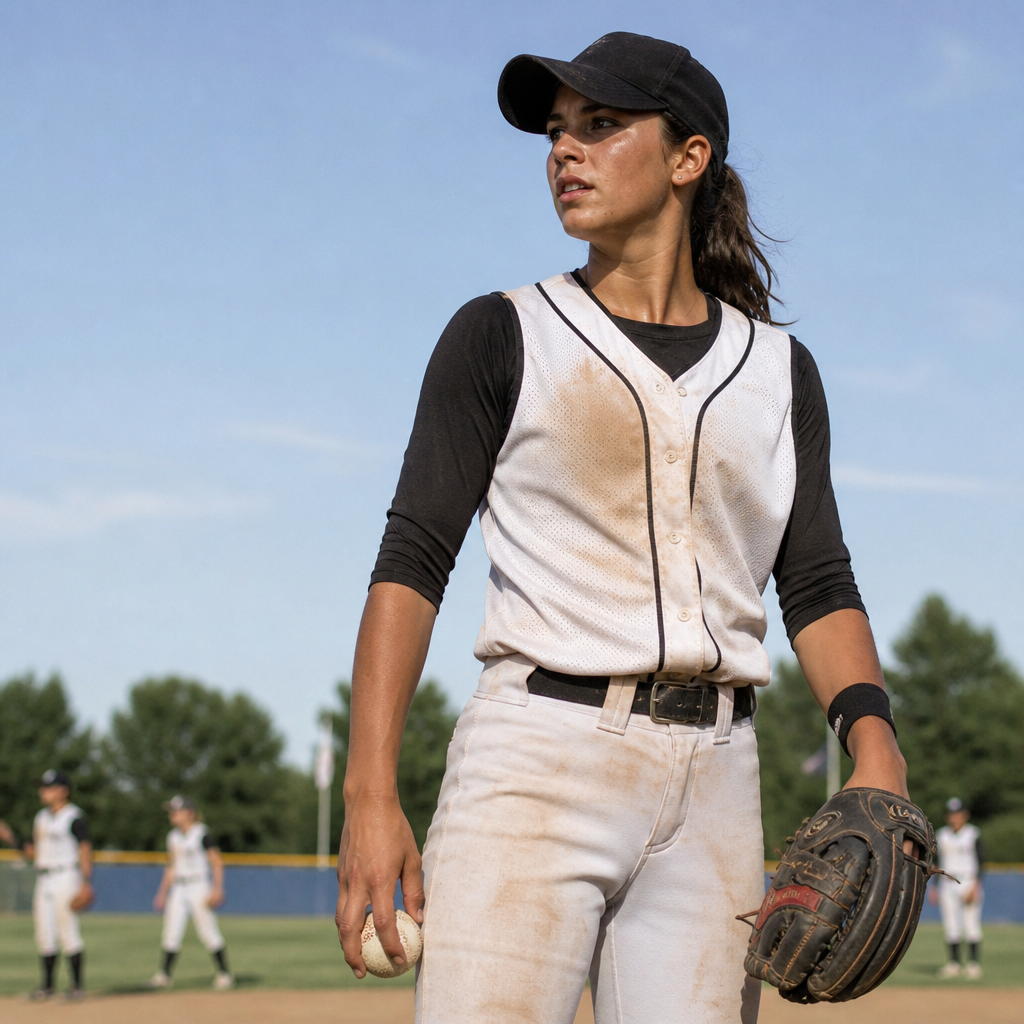
Playing hardball has never been only a men’s story. Women have competed in baseball since the nineteenth century, often in local clubs, barnstorming teams, wartime leagues, school programs, national squads, and professional experiments that challenged assumptions about who belongs on the diamond. In this hub article, “miscellaneous” means the wide range of experiences that do not fit neatly into one era, one league, or one country. It includes pioneers who played against men, girls shut out of Little League, women coaching from dugouts, athletes moving between softball and baseball, and modern players using social media, data, and international tournaments to build visibility. Understanding this broader landscape matters because baseball’s culture, pipeline, and opportunities have been shaped as much by exclusion and persistence as by box scores and championships.
Baseball, in this context, refers to the hardball version of the sport played on a larger field with overhand pitching from an elevated mound. That distinction matters because women have often been redirected toward softball, a sport with its own rich history but different mechanics, development pathways, and public perception. Hardball opportunities influence scouting, skill acquisition, and long-term careers. When a girl is told to switch sports because there is no team for her, the issue is not simply preference. It is access. The same is true for coaching licenses, umpiring tracks, front-office roles, media coverage, and sponsorship. Women in baseball have succeeded in every one of these areas, yet their progress has rarely followed a straight line. Gains in one generation have sometimes been forgotten by the next, forcing athletes and advocates to rebuild awareness and infrastructure from scratch.
This article serves as a hub for the women in baseball subtopic by connecting the scattered pieces. It answers practical questions searchers often have: When did women start playing baseball? Why were they excluded? What leagues and tournaments exist today? How do girls develop as baseball players when local pathways are limited? What roles beyond playing are opening up? The central point is simple. Women’s struggle in baseball has always been structural, not biological. The evidence is visible in every period where access was available and women performed, drew crowds, coached effectively, or represented their countries. Their success comes from skill, persistence, and organized support. Their barriers come from policy choices, cultural habits, and weak investment. Looking at the full picture makes current progress easier to understand and future action easier to plan.
Early pioneers, hidden histories, and the long fight for legitimacy
Women played baseball publicly long before the sport became a fully professional male institution. Bloomer girl teams toured the United States in the late nineteenth and early twentieth centuries, combining skilled play with entertainment, travel, and commercial survival. Because records were inconsistent, many players were documented poorly, and some teams used novelty marketing, later historians often treated them as sideshows. That misses the point. These clubs proved women could throw, field, hit, and draw paying audiences under difficult conditions. Players traveled constantly, faced financial instability, and competed in a culture that questioned their presence. The legitimacy problem was not lack of talent. It was lack of institutional respect.
That pattern continued into the twentieth century. Girls frequently learned baseball in sandlots, family games, and schoolyards, then hit a dead end once competition became organized by sex. The wartime All-American Girls Professional Baseball League, founded in 1943, remains the best-known example because it was centralized, documented, and later revived in public memory by the film “A League of Their Own.” Yet even that league reflected compromise. Players were elite athletes, but they were expected to present conventional femininity to calm critics. The league expanded opportunities while also packaging them carefully. Its closure in 1954 did not prove women lacked an audience. It reflected changing economics, television’s impact on attendance, and the absence of a stable long-term development system beneath the league.
Beyond the United States, women’s baseball histories emerged in places including Japan, Canada, Cuba, Australia, and parts of Latin America and Europe. Many of these stories remained local, preserved through federations, oral histories, and community archives rather than mainstream sports media. That is one reason the subject feels fragmented today. Searchers often find one famous league and assume the rest of the history is thin. In fact, the opposite is true. The record is broad but scattered, making hub pages and connected resources especially valuable for readers trying to see the whole field.
Barriers in youth baseball and the importance of equal access
The most decisive struggle usually begins before adulthood. Youth baseball determines who gets reps, coaching, confidence, and advanced competition. For decades, girls in many communities were blocked formally or informally from joining baseball teams. A landmark example came in 1974, when Maria Pepe’s case helped force Little League to allow girls. That decision mattered because local leagues are not just recreational spaces. They are gateways to instruction, travel ball, all-star selections, and social legitimacy. Once girls are excluded early, the pipeline narrows dramatically years before college or international play enter the picture.
Even where girls are technically allowed, practical barriers remain. Tryout bias is common when evaluators assume girls should prefer softball. Facilities and prime practice times may favor boys’ teams. Equipment can be an issue, especially when uniforms and protective gear are not ordered with girls in mind. More subtly, many talented girls become isolated. They may be the only girl on a roster, with no same-age peers sharing the experience. That can create pressure to represent an entire gender every time they play. Parents often become advocates by necessity, learning league rules, gathering video, finding private instruction, and traveling long distances to tournaments because the local structure is thin.
Skill development also suffers when athletes are pushed from baseball to softball too late to build sport-specific technique. Throwing mechanics, pitch design, baserunning angles, and defensive reads differ meaningfully between the sports. Strong softball players are strong athletes, but conversion is not seamless. A girl who wants baseball needs baseball reps. Countries and regions that understand this invest in girls’ baseball festivals, mixed-gender youth competition, and dedicated identification camps. Those programs do more than create teams. They normalize participation. Once coaches, families, and players can point to a visible pathway, retention improves and talent deepens.
Competition pathways today, from national teams to local clubs
Modern women’s baseball is more organized than many casual fans realize. The World Baseball Softball Confederation runs a Women’s Baseball World Cup, giving national teams a global championship structure. Japan has been especially dominant, combining a deep domestic talent base with sustained federation support. Countries such as Canada, the United States, Australia, Chinese Taipei, Hong Kong, Cuba, Venezuela, Mexico, and France have also developed competitive programs at different levels. These tournaments matter because they create standards, rankings, and visibility. They also give athletes a reason to stay in hardball when local club options are limited.
Domestic competition, however, varies sharply by country. Some players rely on mixed men’s leagues, others on women’s club championships, invitational tournaments, university baseball, or short-format showcase events. In Japan, women’s baseball has benefited from schools and clubs that treat the game seriously and create regular schedules. In North America, opportunities are improving but remain uneven, often depending on nonprofit organizers and regional associations. The most effective systems connect introductory play, youth competition, elite scouting, and coaching education instead of treating women’s baseball as a one-off festival.
| Level | Common opportunity | Main challenge | Why it matters |
|---|---|---|---|
| Youth | Local mixed leagues, girls clinics | Low numbers and uneven access | Builds fundamentals and retention |
| Teen | Travel ball, school teams, showcases | Scouting gaps and social pressure to switch sports | Determines advanced development |
| Adult amateur | Women’s clubs, mixed leagues | Limited schedule and travel costs | Keeps players active and visible |
| International elite | National team camps and World Cup events | Small funding base | Creates global recognition and standards |
For readers exploring related pages in a women in baseball hub, this is where internal navigation is useful: youth development, international tournaments, country-by-country leagues, and player profiles all branch naturally from this section. The broader lesson is that success requires continuity. A single national team appearance can inspire interest, but without year-round structures, that interest fades before the next generation can benefit fully.
Beyond the field: coaching, scouting, broadcasting, and front-office progress
Women’s success in baseball is not limited to players. In recent years, highly visible breakthroughs have come in coaching, player development, analytics, and executive leadership. Alyssa Nakken became the first woman to coach on the field in a Major League Baseball regular-season game with the San Francisco Giants, a symbolic milestone backed by substantial preparation and organizational trust. Kim Ng became the first female general manager of a major North American men’s professional team when the Miami Marlins hired her in 2020. Bianca Smith reached affiliated professional baseball as a coach in the Boston Red Sox system. Rachel Balkovec managed in the New York Yankees’ minor league organization, another first with practical significance because player development is baseball’s engine room.
These milestones matter for more than headlines. Coaching and front-office roles shape hiring norms, scouting priorities, and clubhouse expectations. When women are visible in decision-making roles, girls can imagine futures in baseball even if playing opportunities remain limited. There are still tradeoffs and limitations. One high-profile hire does not equal broad parity, and many women in the sport report pressure to be overqualified just to receive an initial chance. But the trend is real. Baseball organizations increasingly recognize that expertise in biomechanics, data analysis, communication, sports psychology, and game planning is not gendered. Competence is competence.
Broadcasting and journalism are part of the same ecosystem. Women calling games, reporting from clubhouses, and writing baseball analysis influence how audiences understand authority. Historically, gatekeeping in media helped reinforce the idea that baseball knowledge belonged to men. That assumption has weakened as women have become trusted analysts on television, radio, podcasts, and digital platforms. Better coverage also improves discovery. Fans searching for women’s baseball news can now find tournament streams, independent newsletters, federation updates, and archived interviews that were much harder to locate a decade ago.
Culture, media, and what real progress still requires
Public perception remains one of the most stubborn obstacles. Many people support women in baseball in theory but still treat their participation as unusual, inspirational, or temporary rather than normal competitive sport. Language matters here. Coverage that focuses only on novelty can erase performance. A pitcher with command, velocity variation, and situational intelligence should be discussed in those terms, not merely praised for courage. The same applies to coaches and executives. Real inclusion means women can be evaluated seriously, criticized fairly, and recognized for technical excellence rather than framed only as exceptions.
Media representation has improved because documentaries, social platforms, and historical projects have made overlooked stories easier to share. Yet visibility without infrastructure has limits. Viral clips can attract attention, but sustained progress depends on schedules, fields, coaching, travel budgets, and recurring competition. Governing bodies need clear participation data. Clubs need safe reporting systems and anti-harassment policies. Sponsors should fund development, not just campaigns around a single awareness month. Schools and community programs should treat baseball access as an equity issue, especially in places where softball is offered as the default answer to every girl who wants to play hardball.
The strongest case for women in baseball is not sentimental. It is practical and evidence-based. When access expands, participation rises. When competition improves, skill rises. When institutions invest consistently, audiences follow. Readers using this hub should explore connected topics such as pioneering players, youth access, international events, coaching breakthroughs, and baseball versus softball pathways. Taken together, they show a clear pattern: women have already proved they belong in baseball. The remaining question is whether leagues, schools, federations, and fans will build systems worthy of that fact. Support the game by watching, sharing, and backing organizations that create real opportunities.
Frequently Asked Questions
Why is women’s baseball history often described as broader than a single league or era?
Women’s baseball history is far bigger than any one famous moment, including wartime professional leagues that tend to dominate public memory. Women have been playing baseball since the nineteenth century in settings that ranged from local amateur clubs and touring barnstorming teams to school competitions, industrial leagues, national teams, and newer professional ventures. Some played on all-female teams, while others competed directly against boys and men. Others built baseball lives as coaches, organizers, advocates, and international representatives when formal opportunities to play were limited or denied. That is why the story is often described as “broader” or more miscellaneous: it does not fit neatly into one timeline, one country, or one institution.
This wider view matters because it shows continuity. Even when women were excluded from high-visibility leagues, they did not disappear from the sport. They kept finding ways to play, often in spaces that received little media coverage or historical preservation. Looking at the full landscape reveals a long struggle against rules, customs, and assumptions that treated baseball as naturally male. It also highlights success in many forms, from simply staying on the field to earning national-team honors, creating youth opportunities, or forcing baseball communities to rethink who belongs in the game.
What kinds of barriers have women faced in baseball over time?
The barriers have been both formal and informal, and they have changed shape across generations. In some cases, girls and women were explicitly shut out of Little League, school teams, college programs, or professional pathways because of written rules or institutional policies. In other cases, the exclusion was less official but just as powerful: coaches assumed girls should play softball instead, families were told baseball was not appropriate for daughters, and talented players struggled to find teams willing to take them seriously. These barriers affected access to coaching, competition, facilities, media coverage, sponsorship, and long-term development.
There were also cultural obstacles that went beyond simple roster spots. Women players were often expected to prove not only their skill but their legitimacy, enduring extra scrutiny about strength, appearance, femininity, or whether they “belonged” in a traditionally male space. Even highly accomplished players could be treated as exceptions rather than as evidence that women’s baseball deserved sustained investment. The result was a cycle: fewer opportunities led to less visibility, and less visibility was then used to justify fewer opportunities. Understanding these barriers helps explain why women’s baseball progress has often been uneven and why every breakthrough has required persistence on and off the field.
How have women succeeded in baseball despite exclusion and limited opportunities?
Women have succeeded in baseball by doing more than waiting for permission. Across different periods, they formed teams, joined traveling clubs, played in community leagues, crossed borders for international competition, and seized openings wherever they appeared. Some became standout players on boys’ or men’s teams when separate opportunities did not exist. Others represented their countries in women’s baseball tournaments and world-level events, helping demonstrate that women’s participation was not a novelty but a serious competitive tradition. These achievements matter because they show that talent and dedication were always present, even when institutions failed to support them.
Success has also taken structural forms. Women and their allies have challenged discriminatory rules, built development programs, mentored younger players, and pushed governing bodies to recognize women’s baseball as distinct from softball rather than treating the two as interchangeable. In many places, progress has come through incremental victories: gaining access to youth leagues, establishing girls’ baseball initiatives, expanding national-team competition, and preserving the stories of earlier pioneers so newer generations have a lineage to claim. In that sense, success is not only measured by championships or professional contracts. It is also measured by visibility, continuity, and the creation of pathways that did not exist before.
Why is it important to distinguish women’s baseball from softball in discussions of sports history?
It is important because baseball and softball are related but distinct sports, and treating softball as a substitute for baseball can erase women who specifically wanted to play baseball. For many girls, being directed toward softball was not simply an equal alternative; it was a sign that baseball was being reserved for boys. Historical accounts that collapse the two sports into one can unintentionally reinforce the idea that women did not really belong in baseball itself. That obscures the experiences of players who fought for baseball access, competed in baseball leagues, and developed baseball-specific skills, identities, and communities.
Recognizing the distinction also sharpens the historical record. It allows readers to see how gendered assumptions shaped sports participation and policy. Women’s baseball has its own pioneers, milestones, international competitions, and grassroots movements. At the same time, acknowledging this distinction does not diminish softball, which has its own rich and important history. Instead, it ensures that women baseball players are accurately represented and that their struggle is understood on its own terms. For an article about women’s struggle and success in baseball, that distinction is essential because it restores the specificity of what these athletes were actually fighting for: the right to play baseball, not merely the right to play some version of a bat-and-ball sport.
What does the future of women’s baseball look like, and what still needs to change?
The future of women’s baseball looks more promising than in many earlier eras because there is growing international participation, stronger historical awareness, and a clearer public understanding that women have always been part of the game. More development programs now identify girls who want to stay in baseball, and national teams in several countries have helped raise the sport’s profile. Digital media has also made it easier for players, coaches, and historians to share stories that were once ignored, helping build momentum across generations and across borders. This kind of visibility can inspire younger players and strengthen the case for more formal investment.
Still, major changes are needed for that promise to turn into a stable future. Women’s baseball needs deeper funding, better coaching pipelines, more regular competition, and clearer pathways from youth play to elite and professional levels. It also needs governing bodies, schools, and local leagues to stop treating girls’ baseball as unusual or temporary. Just as important, the history of women in baseball must continue to be documented and taught, because recognition shapes policy as much as performance does. When institutions understand that women’s baseball is not a new experiment but a long-standing part of the sport, it becomes harder to justify exclusion. The future will depend not only on talented players but on whether baseball’s leaders are willing to match that talent with meaningful opportunity.